The Rocky Horror Show

THE ROCKY HORROR SHOW

A Glorious Celebration of Freedom, Fantasy and Theatrical Anarchy

There are productions that entertain.

There are productions that move audiences.

And then there are productions that arrive like a glitter-covered meteor crashing through the roof of convention itself.

The Rocky Horror Show is one of those productions.

On the same day that I had experienced the emotional weight and dramatic intensity of theatre elsewhere, I found myself once again seated at the Pieter Toerien Theatre at Montecasino. Yet what unfolded before me could not have been more different. Where tragedy had demanded reflection, Rocky Horror demanded surrender.

Surrender to laughter.

Surrender to absurdity.

Surrender to music.

Surrender to freedom.

From the moment the house lights dimmed and the opening notes of Science Fiction Double Feature echoed through the theatre, it became clear that this was not simply a musical.

It was a celebration.

A carnival of imagination.

A love letter to outsiders.

A joyous rebellion against conformity.

And what a rebellion it was.

Fishnets, Corsets and Fair Warning

Before a single note was sung and before a single spotlight illuminated the stage, there was already a sense that this evening was going to be unlike any other.

The foyer itself felt like an extension of the performance.

Audience members arrived dressed for the occasion. Corsets. Fishnet stockings. Sequins. Leather. Feather boas. Elaborate makeup. The line between audience and performer seemed to disappear long before the curtain rose.

For those attending Rocky Horror for the first time, the experience can initially be surprising. There were men confidently dressed in fishnets and corsets, women embracing extravagant costumes and theatre lovers celebrating self-expression in all its forms.

At first glance it can feel unusual.

Then, very quickly, it becomes part of the joy.

Because Rocky Horror has never been interested in convention.

It has never asked permission to be different.

It has always celebrated individuality, freedom and the courage to embrace one’s authentic self.

Yet it is important to state clearly that this production is not intended for children.

The age restriction exists for good reason.

Parents considering bringing younger children should think carefully before purchasing tickets.

Rocky Horror is filled with adult humour, sexual innuendo, provocative costumes, suggestive choreography and themes designed for mature audiences. There are moments that will have adults roaring with laughter while simultaneously wondering whether they should be laughing quite so hard.

The show delights in making audiences blush.

It enjoys pushing boundaries.

It revels in discomfort before transforming that discomfort into comedy.

None of it feels malicious.

None of it exists merely to shock.

Rather, it is part of Rocky Horror’s long-standing tradition of challenging social norms and encouraging audiences to question why certain things make us uncomfortable in the first place.

This is not family theatre.

This is cult theatre.

Wild.

Untamed.

Unapologetic.

And all the more entertaining because of it.

The Strange and Wonderful World of Rocky Horror

For more than fifty years, Richard O’Brien’s creation has occupied a unique place in theatre history.

Part science-fiction parody.

Part horror comedy.

Part rock concert.

Part social revolution.

Rocky Horror gleefully tears apart expectations and invites audiences into a world where absolutely anything feels possible.

There are aliens.

There are mad scientists.

There are strange experiments.

There are creatures stitched together from fantasy and desire.

And at the centre of it all lies a message that has allowed the show to survive generation after generation.

Be yourself.

Without apology.

Without compromise.

Without fear.

That message continues to resonate because every audience contains people who have felt different at some point in their lives.

Rocky Horror celebrates those people.

It always has.

Craig Urbani: The Magnificent Frank-N-Furter

Every production of Rocky Horror stands or falls on the strength of its Frank-N-Furter.

It is one of musical theatre’s most demanding roles.

The performer must possess charisma, vocal excellence, comic timing, confidence and an almost supernatural ability to command attention.

Craig Urbani possesses all of those qualities in abundance.

His Frank-N-Furter is sensational.

The moment he stepped onto the stage, the atmosphere changed.

The audience leaned forward.

Eyes widened.

Smiles spread.

The room belonged to him.

Urbani does not simply perform Frank-N-Furter.

He inhabits him.

He struts.

He prowls.

He seduces.

He mocks.

He dazzles.

His performance of Sweet Transvestite was one of the defining moments of the evening, a masterclass in theatrical confidence and stage presence.

Yet beneath the glamour lies remarkable craftsmanship.

Every gesture feels intentional.

Every line lands perfectly.

Every musical phrase is delivered with precision.

This is a performer operating at the height of his powers.

Janet and Brad: The Heart of the Story

Amid all the madness stand two ordinary people.

Janet Weiss and Brad Majors.

They are our guides into this extraordinary world.

Léa Blerk delivers a magnificent Janet Weiss.

Her transformation from innocent sweetheart to liberated participant in Frank-N-Furter’s world is one of the production’s most fascinating journeys.

She captures Janet’s vulnerability, curiosity and awakening with remarkable skill and confidence.

Robert Everson brings warmth, sincerity and excellent comic timing to Brad Majors.

As the increasingly bewildered fiancé attempting to make sense of the insanity unfolding around him, Everson generates enormous laughter while maintaining the character’s humanity.

Together they provide the emotional anchor of the production.

Without Brad and Janet, the audience has no compass.

Without Léa Blerk and Robert Everson, the story loses its heart.

The Extraordinary Residents of the Castle

The supporting cast deserves enormous praise.

Schoeman Smit delivers a wonderfully sinister and eccentric Riff Raff.

Jasmine Minter shines as Magenta, balancing mystery, mischief and theatrical flair.

Anna Oliver brings infectious energy and heart to Columbia, creating one of the production’s most memorable presences.

Micah Stojakovic impresses as Rocky, embracing both the physicality and larger-than-life absurdity of Frank-N-Furter’s creation.

Zak Hendriks demonstrates tremendous versatility and comic energy throughout the evening.

Each performer contributes something unique.

Each helps build the wonderfully bizarre ecosystem that makes Rocky Horror work.

The Ensemble: The Lifeblood of the Production

Great musicals are built on ensemble excellence.

This production possesses it in abundance.

Alessia Gironi.

Anne Power.

Gabriella Knight.

Miguel De Sampaio.

Sasha Duffy.

Taya Pearson.

Tjaart Van Der Walt.

Together with the principal cast, they transform every scene into a living, breathing spectacle.

Whether singing, dancing, moving scenery or creating atmosphere, their contribution is invaluable.

The audience naturally notices the stars.

The theatre community understands the importance of the ensemble.

These performers are the engine room of the production.

Every movement matters.

Every harmony matters.

Every entrance matters.

Their commitment elevates the entire show.

The Music: A Soundtrack for Outsiders

Part of Rocky Horror’s enduring brilliance lies in its score.

The songs are unforgettable.

Science Fiction Double Feature immediately establishes the show’s love affair with classic B-movie horror and science-fiction cinema.

Dammit Janet introduces Brad and Janet’s seemingly perfect world.

Over at the Frankenstein Place creates mystery and anticipation.

Then comes The Time Warp.

One of the most iconic songs in musical theatre history.

The audience erupted.

Generations know the lyrics.

Generations know the dance.

Generations continue to celebrate its glorious absurdity.

Sweet Transvestite announces Frank-N-Furter’s arrival with unforgettable flair.

The Sword of Damocles introduces Rocky.

I Can Make You a Man further expands Frank’s outrageous vision.

Hot Patootie explodes with pure rock-and-roll energy.

Act Two continues the musical feast.

Touch-a Touch-a Touch Me generates enormous laughter.

Once In A While introduces a surprising emotional note.

Eddie’s Teddy injects further chaos and excitement.

Rose Tint My World transforms the stage into a surreal theatrical fantasy.

Don’t Dream It – Be It delivers the show’s central philosophy.

Wild and Untamed Thing becomes a joyous celebration of liberation.

Transit Beam accelerates the story toward its climax.

I’m Going Home provides a surprisingly touching farewell.

Finally, Science Fiction Double Feature returns to bring the journey full circle.

The score remains every bit as rebellious, infectious and exhilarating as it was decades ago.

The Creative Team Behind the Magic

Productions of this scale do not happen by accident.

They are built by artists working tirelessly behind the scenes.

Director Steven Stead deserves immense credit for understanding exactly what Rocky Horror should be.

Bold.

Funny.

Provocative.

Fearless.

Joyful.

Costume designer Terrence Bray delivers a visual feast.

The costumes are magnificent.

Extravagant.

Playful.

Daring.

Beautifully crafted.

The fishnets, corsets, sequins and outrageous designs honour Rocky Horror’s legendary aesthetic while feeling fresh and alive.

Greg King’s set design creates an extraordinary playground for the performers.

The castle becomes a character in its own right.

A place where fantasy, horror and comedy collide.

Lighting designer Faheem Bardien paints the production with colour, atmosphere and dramatic impact.

Every cue enhances the storytelling.

Every transition deepens the mood.

David Classen’s sound design ensures that every lyric, joke and musical moment lands with crystal clarity.

Kevin Kraak’s musical supervision keeps the production’s heartbeat strong from beginning to end.

Meanwhile choreographers Duane Alexander and Naolin Quinzin infuse the show with movement, rhythm and infectious energy.

Their work is visible in every dance sequence and every moment of physical storytelling.

The audience may applaud the performers.

The theatre community understands that productions like this are collective achievements.

Every department matters.

Every artist contributes.

Every creative hand leaves fingerprints on the final masterpiece.

Why Rocky Horror Endures

Many productions fade with time.

Rocky Horror refuses.

More than half a century after its debut, it remains one of the most beloved cult musicals ever created.

The reason is simple.

It celebrates freedom.

Not political freedom.

Not social freedom.

Personal freedom.

The freedom to be strange.

The freedom to be different.

The freedom to be unapologetically yourself.

Long before such conversations became commonplace, Rocky Horror was encouraging audiences to embrace individuality.

Its message remains timeless because the human desire for acceptance is timeless.

Final Curtain

The Rocky Horror Show is not conventional theatre.

It is not polite theatre.

It is not safe theatre.

It is joyous theatre.

It is rebellious theatre.

It is theatre wearing fishnet stockings and high heels while laughing directly in the face of convention.

This production at the Pieter Toerien Theatre was a triumph.

Craig Urbani delivered a star-making performance as Frank-N-Furter.

Léa Blerk and Robert Everson anchored the production with warmth, sincerity and charm.

Schoeman Smit, Jasmine Minter, Anna Oliver, Micah Stojakovic and Zak Hendriks enriched every scene they entered.

Alessia Gironi, Anne Power, Gabriella Knight, Miguel De Sampaio, Sasha Duffy, Taya Pearson and Tjaart Van Der Walt helped create an ensemble worthy of celebration.

Steven Stead and his creative team delivered a production overflowing with imagination, craftsmanship and joy.

By the final curtain, one truth remained undeniable.

Rocky Horror is not merely a musical.

It is an experience.

A celebration.

A declaration.

A glorious invitation to embrace the strange, reject conformity and dance proudly to the rhythm of your own Time Warp.

And on this unforgettable evening at Montecasino, the invitation was impossible to refuse.

Congratulations Steven Stead and the whole team for a great show and a deserved standing ovation. 

📸 : SamSays 

The Rocky Horror Show

THE ROCKY HORROR SHOW

A Glorious Celebration of Freedom, Fantasy and Theatrical Anarchy

There are productions that entertain.

There are productions that move audiences.

And then there are productions that arrive like a glitter-covered meteor crashing through the roof of convention itself.

The Rocky Horror Show is one of those productions.

On the same day that I had experienced the emotional weight and dramatic intensity of theatre elsewhere, I found myself once again seated at the Pieter Toerien Theatre at Montecasino. Yet what unfolded before me could not have been more different. Where tragedy had demanded reflection, Rocky Horror demanded surrender.

Surrender to laughter.

Surrender to absurdity.

Surrender to music.

Surrender to freedom.

From the moment the house lights dimmed and the opening notes of Science Fiction Double Feature echoed through the theatre, it became clear that this was not simply a musical.

It was a celebration.

A carnival of imagination.

A love letter to outsiders.

A joyous rebellion against conformity.

And what a rebellion it was.

Fishnets, Corsets and Fair Warning

Before a single note was sung and before a single spotlight illuminated the stage, there was already a sense that this evening was going to be unlike any other.

The foyer itself felt like an extension of the performance.

Audience members arrived dressed for the occasion. Corsets. Fishnet stockings. Sequins. Leather. Feather boas. Elaborate makeup. The line between audience and performer seemed to disappear long before the curtain rose.

For those attending Rocky Horror for the first time, the experience can initially be surprising. There were men confidently dressed in fishnets and corsets, women embracing extravagant costumes and theatre lovers celebrating self-expression in all its forms.

At first glance it can feel unusual.

Then, very quickly, it becomes part of the joy.

Because Rocky Horror has never been interested in convention.

It has never asked permission to be different.

It has always celebrated individuality, freedom and the courage to embrace one’s authentic self.

Yet it is important to state clearly that this production is not intended for children.

The age restriction exists for good reason.

Parents considering bringing younger children should think carefully before purchasing tickets.

Rocky Horror is filled with adult humour, sexual innuendo, provocative costumes, suggestive choreography and themes designed for mature audiences. There are moments that will have adults roaring with laughter while simultaneously wondering whether they should be laughing quite so hard.

The show delights in making audiences blush.

It enjoys pushing boundaries.

It revels in discomfort before transforming that discomfort into comedy.

None of it feels malicious.

None of it exists merely to shock.

Rather, it is part of Rocky Horror’s long-standing tradition of challenging social norms and encouraging audiences to question why certain things make us uncomfortable in the first place.

This is not family theatre.

This is cult theatre.

Wild.

Untamed.

Unapologetic.

And all the more entertaining because of it.

The Strange and Wonderful World of Rocky Horror

For more than fifty years, Richard O’Brien’s creation has occupied a unique place in theatre history.

Part science-fiction parody.

Part horror comedy.

Part rock concert.

Part social revolution.

Rocky Horror gleefully tears apart expectations and invites audiences into a world where absolutely anything feels possible.

There are aliens.

There are mad scientists.

There are strange experiments.

There are creatures stitched together from fantasy and desire.

And at the centre of it all lies a message that has allowed the show to survive generation after generation.

Be yourself.

Without apology.

Without compromise.

Without fear.

That message continues to resonate because every audience contains people who have felt different at some point in their lives.

Rocky Horror celebrates those people.

It always has.

Craig Urbani: The Magnificent Frank-N-Furter

Every production of Rocky Horror stands or falls on the strength of its Frank-N-Furter.

It is one of musical theatre’s most demanding roles.

The performer must possess charisma, vocal excellence, comic timing, confidence and an almost supernatural ability to command attention.

Craig Urbani possesses all of those qualities in abundance.

His Frank-N-Furter is sensational.

The moment he stepped onto the stage, the atmosphere changed.

The audience leaned forward.

Eyes widened.

Smiles spread.

The room belonged to him.

Urbani does not simply perform Frank-N-Furter.

He inhabits him.

He struts.

He prowls.

He seduces.

He mocks.

He dazzles.

His performance of Sweet Transvestite was one of the defining moments of the evening, a masterclass in theatrical confidence and stage presence.

Yet beneath the glamour lies remarkable craftsmanship.

Every gesture feels intentional.

Every line lands perfectly.

Every musical phrase is delivered with precision.

This is a performer operating at the height of his powers.

Janet and Brad: The Heart of the Story

Amid all the madness stand two ordinary people.

Janet Weiss and Brad Majors.

They are our guides into this extraordinary world.

Léa Blerk delivers a magnificent Janet Weiss.

Her transformation from innocent sweetheart to liberated participant in Frank-N-Furter’s world is one of the production’s most fascinating journeys.

She captures Janet’s vulnerability, curiosity and awakening with remarkable skill and confidence.

Robert Everson brings warmth, sincerity and excellent comic timing to Brad Majors.

As the increasingly bewildered fiancé attempting to make sense of the insanity unfolding around him, Everson generates enormous laughter while maintaining the character’s humanity.

Together they provide the emotional anchor of the production.

Without Brad and Janet, the audience has no compass.

Without Léa Blerk and Robert Everson, the story loses its heart.

The Extraordinary Residents of the Castle

The supporting cast deserves enormous praise.

Schoeman Smit delivers a wonderfully sinister and eccentric Riff Raff.

Jasmine Minter shines as Magenta, balancing mystery, mischief and theatrical flair.

Anna Oliver brings infectious energy and heart to Columbia, creating one of the production’s most memorable presences.

Micah Stojakovic impresses as Rocky, embracing both the physicality and larger-than-life absurdity of Frank-N-Furter’s creation.

Zak Hendriks demonstrates tremendous versatility and comic energy throughout the evening.

Each performer contributes something unique.

Each helps build the wonderfully bizarre ecosystem that makes Rocky Horror work.

The Ensemble: The Lifeblood of the Production

Great musicals are built on ensemble excellence.

This production possesses it in abundance.

Alessia Gironi.

Anne Power.

Gabriella Knight.

Miguel De Sampaio.

Sasha Duffy.

Taya Pearson.

Tjaart Van Der Walt.

Together with the principal cast, they transform every scene into a living, breathing spectacle.

Whether singing, dancing, moving scenery or creating atmosphere, their contribution is invaluable.

The audience naturally notices the stars.

The theatre community understands the importance of the ensemble.

These performers are the engine room of the production.

Every movement matters.

Every harmony matters.

Every entrance matters.

Their commitment elevates the entire show.

The Music: A Soundtrack for Outsiders

Part of Rocky Horror’s enduring brilliance lies in its score.

The songs are unforgettable.

Science Fiction Double Feature immediately establishes the show’s love affair with classic B-movie horror and science-fiction cinema.

Dammit Janet introduces Brad and Janet’s seemingly perfect world.

Over at the Frankenstein Place creates mystery and anticipation.

Then comes The Time Warp.

One of the most iconic songs in musical theatre history.

The audience erupted.

Generations know the lyrics.

Generations know the dance.

Generations continue to celebrate its glorious absurdity.

Sweet Transvestite announces Frank-N-Furter’s arrival with unforgettable flair.

The Sword of Damocles introduces Rocky.

I Can Make You a Man further expands Frank’s outrageous vision.

Hot Patootie explodes with pure rock-and-roll energy.

Act Two continues the musical feast.

Touch-a Touch-a Touch Me generates enormous laughter.

Once In A While introduces a surprising emotional note.

Eddie’s Teddy injects further chaos and excitement.

Rose Tint My World transforms the stage into a surreal theatrical fantasy.

Don’t Dream It – Be It delivers the show’s central philosophy.

Wild and Untamed Thing becomes a joyous celebration of liberation.

Transit Beam accelerates the story toward its climax.

I’m Going Home provides a surprisingly touching farewell.

Finally, Science Fiction Double Feature returns to bring the journey full circle.

The score remains every bit as rebellious, infectious and exhilarating as it was decades ago.

The Creative Team Behind the Magic

Productions of this scale do not happen by accident.

They are built by artists working tirelessly behind the scenes.

Director Steven Stead deserves immense credit for understanding exactly what Rocky Horror should be.

Bold.

Funny.

Provocative.

Fearless.

Joyful.

Costume designer Terrence Bray delivers a visual feast.

The costumes are magnificent.

Extravagant.

Playful.

Daring.

Beautifully crafted.

The fishnets, corsets, sequins and outrageous designs honour Rocky Horror’s legendary aesthetic while feeling fresh and alive.

Greg King’s set design creates an extraordinary playground for the performers.

The castle becomes a character in its own right.

A place where fantasy, horror and comedy collide.

Lighting designer Faheem Bardien paints the production with colour, atmosphere and dramatic impact.

Every cue enhances the storytelling.

Every transition deepens the mood.

David Classen’s sound design ensures that every lyric, joke and musical moment lands with crystal clarity.

Kevin Kraak’s musical supervision keeps the production’s heartbeat strong from beginning to end.

Meanwhile choreographers Duane Alexander and Naolin Quinzin infuse the show with movement, rhythm and infectious energy.

Their work is visible in every dance sequence and every moment of physical storytelling.

The audience may applaud the performers.

The theatre community understands that productions like this are collective achievements.

Every department matters.

Every artist contributes.

Every creative hand leaves fingerprints on the final masterpiece.

Why Rocky Horror Endures

Many productions fade with time.

Rocky Horror refuses.

More than half a century after its debut, it remains one of the most beloved cult musicals ever created.

The reason is simple.

It celebrates freedom.

Not political freedom.

Not social freedom.

Personal freedom.

The freedom to be strange.

The freedom to be different.

The freedom to be unapologetically yourself.

Long before such conversations became commonplace, Rocky Horror was encouraging audiences to embrace individuality.

Its message remains timeless because the human desire for acceptance is timeless.

Final Curtain

The Rocky Horror Show is not conventional theatre.

It is not polite theatre.

It is not safe theatre.

It is joyous theatre.

It is rebellious theatre.

It is theatre wearing fishnet stockings and high heels while laughing directly in the face of convention.

This production at the Pieter Toerien Theatre was a triumph.

Craig Urbani delivered a star-making performance as Frank-N-Furter.

Léa Blerk and Robert Everson anchored the production with warmth, sincerity and charm.

Schoeman Smit, Jasmine Minter, Anna Oliver, Micah Stojakovic and Zak Hendriks enriched every scene they entered.

Alessia Gironi, Anne Power, Gabriella Knight, Miguel De Sampaio, Sasha Duffy, Taya Pearson and Tjaart Van Der Walt helped create an ensemble worthy of celebration.

Steven Stead and his creative team delivered a production overflowing with imagination, craftsmanship and joy.

By the final curtain, one truth remained undeniable.

Rocky Horror is not merely a musical.

It is an experience.

A celebration.

A declaration.

A glorious invitation to embrace the strange, reject conformity and dance proudly to the rhythm of your own Time Warp.

And on this unforgettable evening at Montecasino, the invitation was impossible to refuse.

Congratulations Steven Stead and the whole team for a great show and a deserved standing ovation. 

📸 : SamSays 

Midnight In Parys

Midnight in Parys: A Meditation on Life, Death, Compassion and the Human Heart

There are evenings in the theatre that entertain. There are evenings that impress. And then there are evenings that stay with you long after the curtain call, following you home, lingering in your thoughts, demanding reflection and conversation.

Midnight in Parys, the latest play by South African theatrical giant Paul Slabolepszy, belongs firmly in that final category.

Presented at the intimate Studio Theatre of Pieter Toerien’s Montecasino Theatre complex and directed with precision and sensitivity by Bobby Heaney, this production is a triumph of writing, performance and humanity. Starring Bianca Amato and Paul Slabolepszy himself, Midnight in Parys is at once thoughtful, witty, heartbreaking and profoundly compassionate. It is a play that refuses easy answers while offering something perhaps even more valuable: understanding.

For those fortunate enough to have attended the opening performance, the experience felt less like watching a play and more like being invited into the private lives of two deeply complex individuals whose stories slowly unfold before us.

And what stories they are.

The Master at Work

Paul Slabolepszy occupies rare territory within South African theatre.

Over decades he has built a body of work distinguished not by spectacle or gimmickry but by his unwavering commitment to character. His greatest gift as a playwright has always been his ability to write people rather than archetypes.

His characters breathe.

They contradict themselves.

They make mistakes.

They carry wounds.

They reveal truths accidentally.

They hide behind humour.

They speak the language of real human beings.

In Midnight in Parys, Slabolepszy demonstrates once again why he stands among the most important playwrights South Africa has ever produced. The play’s dialogue is rich with wit, observation and emotional intelligence. Every revelation feels earned. Every conversation feels authentic.

The script trusts its audience.

Rather than overwhelming viewers with exposition, it allows relationships to develop organically. We spend time with the characters. We learn who they are. We begin to understand what motivates them. Then, just when we believe we have figured them out, new revelations emerge that reshape everything we thought we knew.

This is writing of the highest order.

Not because it is flashy.

Because it is honest.

“Thabiso” – A Personal Beginning

The evening began with a moment that immediately established a unique connection.

Early in the performance, the name “Thabiso” is mentioned and explored.

“It means joy.”

For me, that moment landed with unexpected force.

I am Thabiso.

To hear my own name spoken from the stage, and to hear its meaning acknowledged, created an instant bond with the work. It felt personal. It felt intimate.

I was overjoyed.

I was smiling before the story had even properly begun.

And from that moment forward I was completely invested.

Theatre possesses a unique ability to make audiences feel seen. Sometimes this happens through grand themes. Sometimes it happens through a single word.

That brief moment reminded me why live performance remains so powerful.

The stage reached out and shook hands with my own life.

I was hooked from the very beginning.

The Characters: Strangers Who Become Family

One of the production’s greatest achievements lies in its patient construction of character.

As audience members, we do not merely observe these individuals.

We come to know them.

The play grants us access to their fears, regrets, humour and vulnerabilities. Through carefully structured conversations and revelations, layers are peeled away until the audience finds itself emotionally invested in every decision and every confession.

The brilliance of the script lies in the fact that neither character exists simply to advance a plot.

Instead, the plot emerges from who they are.

Their histories matter.

Their choices matter.

Their emotional scars matter.

Their hopes matter.

As the evening progresses, the audience moves closer and closer to them until certain revelations provoke genuine gasps. Not because the twists are sensational, but because they carry emotional weight.

We care.

And because we care, the discoveries hit harder.

Exploring Euthanasia, Dignity and Moral Complexity

At its heart, Midnight in Parys grapples with profound questions.

Among the most significant is euthanasia and the difficult moral territory surrounding end-of-life decisions.

These are not simple issues.

Nor does the play pretend that they are.

Instead, Slabolepszy approaches the subject with remarkable empathy and intelligence. The script explores the tension between suffering and dignity, autonomy and responsibility, compassion and consequence.

It asks difficult questions.

Who gets to decide when suffering has become unbearable?

What does mercy truly mean?

Can helping someone die ever be an act of love?

Where do morality and compassion intersect?

The play offers no simplistic verdict.

Instead, it trusts audiences to wrestle with these questions themselves.

That trust is one of the work’s greatest strengths.

Self-Defence, Survival and Human Choice

The production also explores the concept of self-defence and the circumstances that push ordinary people toward extraordinary actions.

Again, Slabolepszy avoids easy judgement.

His characters are not symbols in an argument.

They are human beings confronting impossible situations.

The audience is invited to consider how individuals respond when placed under pressure and what choices become possible when survival is at stake.

The result is a work that feels deeply humane.

Rather than asking viewers to condemn or excuse, it asks them to understand.

Bianca Amato: A Performance of Extraordinary Depth

Having previously witnessed Bianca Amato in A Doll’s House, Part 2, I arrived with high expectations.

She exceeded them.

Amato delivers a performance of remarkable intelligence and emotional precision. Every line feels considered. Every silence carries meaning. Every gesture reveals character.

She possesses that rare ability to command attention without demanding it.

Her performance unfolds gradually, allowing emotional truths to emerge naturally rather than being forced upon the audience.

As revelations accumulate, she navigates the shifting emotional landscape with extraordinary confidence.

There is tremendous technical skill on display, but what audiences ultimately remember is the humanity.

The character feels real.

Completely real.

And that is perhaps the highest compliment one can offer an actor.

Paul Slabolepszy: The Playwright as Performer

Seeing Paul Slabolepszy perform his own work is a special experience.

The words carry an additional resonance because they originate from the very person speaking them.

Yet what makes his performance memorable is not the novelty of the playwright appearing on stage.

It is the quality of the acting itself.

Slabolepszy brings warmth, vulnerability, humour and emotional authenticity to the role. Decades of theatrical experience are evident in every moment.

His command of timing is masterful.

His understanding of silence is impeccable.

His ability to move between comedy and pathos feels effortless.

This was my first opportunity to watch him perform live.

It was an honour.

It was a privilege.

And it offered a powerful reminder that great playwrights often possess a profound understanding of performance because they understand people.

Bobby Heaney’s Direction

A script this rich requires direction that understands restraint.

Bobby Heaney provides exactly that.

His work never overshadows the material.

Instead, it elevates it.

The pacing allows tension to build naturally. Emotional moments are given room to breathe. Revelations land with impact because the production understands the value of patience.

The direction trusts both the actors and the audience.

In an age where many productions fear stillness, Heaney embraces it.

The result is a production that feels confident, mature and deeply engaging.

The Set: Intimacy as Strength

The Studio Theatre at Pieter Toerien proves the perfect home for this production.

The intimate environment creates a sense of closeness rarely achievable in larger venues.

There is nowhere to hide.

Not for the actors.

Not for the audience.

Every expression becomes visible.

Every shift in emotion becomes meaningful.

Every silence becomes palpable.

The set design complements this intimacy beautifully.

Rather than distracting from the story, it serves it. The environment feels lived in, believable and emotionally resonant.

The audience is not simply watching a location.

They are inhabiting it alongside the characters.

Lighting and Atmosphere

The lighting design deserves special praise.

Subtle and purposeful, it shapes mood without drawing attention to itself.

Changes in tone and emotional temperature are reflected through carefully considered lighting choices that guide the audience’s experience almost subconsciously.

The result is an atmosphere that feels immersive and emotionally textured.

Combined with the intimacy of the venue, the lighting helps create a world that feels simultaneously theatrical and deeply real.

A Play That Understands Humanity

Perhaps the greatest achievement of Midnight in Parys is its empathy.

The play understands people.

It understands loneliness.

It understands fear.

It understands regret.

It understands compassion.

Most importantly, it understands that human beings are rarely simple.

The work does not divide the world into heroes and villains.

Instead, it presents flawed individuals doing their best within circumstances that are often messy and painful.

There is healing in that perspective.

There is comfort in being reminded that complexity is part of being human.

The play feels.

The play listens.

The play understands.

And in understanding its characters, it understands its audience as well.

A Night to Remember

The opening performance of Midnight in Parys was more than an evening of theatre.

It was an encounter with great writing.

Great acting.

Great direction.

And great humanity.

It reminded me why Paul Slabolepszy remains one of South Africa’s theatrical immortals.

It confirmed Bianca Amato’s place among the country’s finest performers.

It showcased Bobby Heaney’s skill as a director of intelligence and restraint.

Most importantly, it demonstrated the enduring power of theatre to bring strangers together and allow them, for a few precious hours, to share in the emotional lives of others.

I attended the performance with SamSays, whose name fittingly appears in the credits, and together we witnessed something special.

Not merely a play.

An experience.

One of the finest days I have spent in a theatre.

A production that challenged, moved and inspired.

A production that left me thinking long after the final bow.

A production that reminded me exactly why we keep coming back to the theatre.

Because sometimes, in a darkened room, surrounded by strangers, we find pieces of ourselves reflected back from the stage.

And when that happens, theatre becomes something more than entertainment.

It becomes joy.

It becomes understanding.

It becomes healing.

It becomes unforgettable.

Congratulations Bobby Heaney for a great show and a deserved standing ovation.

📸 : SamSays 

Midnight In Parys

Midnight in Parys: A Meditation on Life, Death, Compassion and the Human Heart

There are evenings in the theatre that entertain. There are evenings that impress. And then there are evenings that stay with you long after the curtain call, following you home, lingering in your thoughts, demanding reflection and conversation.

Midnight in Parys, the latest play by South African theatrical giant Paul Slabolepszy, belongs firmly in that final category.

Presented at the intimate Studio Theatre of Pieter Toerien’s Montecasino Theatre complex and directed with precision and sensitivity by Bobby Heaney, this production is a triumph of writing, performance and humanity. Starring Bianca Amato and Paul Slabolepszy himself, Midnight in Parys is at once thoughtful, witty, heartbreaking and profoundly compassionate. It is a play that refuses easy answers while offering something perhaps even more valuable: understanding.

For those fortunate enough to have attended the opening performance, the experience felt less like watching a play and more like being invited into the private lives of two deeply complex individuals whose stories slowly unfold before us.

And what stories they are.

The Master at Work

Paul Slabolepszy occupies rare territory within South African theatre.

Over decades he has built a body of work distinguished not by spectacle or gimmickry but by his unwavering commitment to character. His greatest gift as a playwright has always been his ability to write people rather than archetypes.

His characters breathe.

They contradict themselves.

They make mistakes.

They carry wounds.

They reveal truths accidentally.

They hide behind humour.

They speak the language of real human beings.

In Midnight in Parys, Slabolepszy demonstrates once again why he stands among the most important playwrights South Africa has ever produced. The play’s dialogue is rich with wit, observation and emotional intelligence. Every revelation feels earned. Every conversation feels authentic.

The script trusts its audience.

Rather than overwhelming viewers with exposition, it allows relationships to develop organically. We spend time with the characters. We learn who they are. We begin to understand what motivates them. Then, just when we believe we have figured them out, new revelations emerge that reshape everything we thought we knew.

This is writing of the highest order.

Not because it is flashy.

Because it is honest.

“Thabiso” – A Personal Beginning

The evening began with a moment that immediately established a unique connection.

Early in the performance, the name “Thabiso” is mentioned and explored.

“It means joy.”

For me, that moment landed with unexpected force.

I am Thabiso.

To hear my own name spoken from the stage, and to hear its meaning acknowledged, created an instant bond with the work. It felt personal. It felt intimate.

I was overjoyed.

I was smiling before the story had even properly begun.

And from that moment forward I was completely invested.

Theatre possesses a unique ability to make audiences feel seen. Sometimes this happens through grand themes. Sometimes it happens through a single word.

That brief moment reminded me why live performance remains so powerful.

The stage reached out and shook hands with my own life.

I was hooked from the very beginning.

The Characters: Strangers Who Become Family

One of the production’s greatest achievements lies in its patient construction of character.

As audience members, we do not merely observe these individuals.

We come to know them.

The play grants us access to their fears, regrets, humour and vulnerabilities. Through carefully structured conversations and revelations, layers are peeled away until the audience finds itself emotionally invested in every decision and every confession.

The brilliance of the script lies in the fact that neither character exists simply to advance a plot.

Instead, the plot emerges from who they are.

Their histories matter.

Their choices matter.

Their emotional scars matter.

Their hopes matter.

As the evening progresses, the audience moves closer and closer to them until certain revelations provoke genuine gasps. Not because the twists are sensational, but because they carry emotional weight.

We care.

And because we care, the discoveries hit harder.

Exploring Euthanasia, Dignity and Moral Complexity

At its heart, Midnight in Parys grapples with profound questions.

Among the most significant is euthanasia and the difficult moral territory surrounding end-of-life decisions.

These are not simple issues.

Nor does the play pretend that they are.

Instead, Slabolepszy approaches the subject with remarkable empathy and intelligence. The script explores the tension between suffering and dignity, autonomy and responsibility, compassion and consequence.

It asks difficult questions.

Who gets to decide when suffering has become unbearable?

What does mercy truly mean?

Can helping someone die ever be an act of love?

Where do morality and compassion intersect?

The play offers no simplistic verdict.

Instead, it trusts audiences to wrestle with these questions themselves.

That trust is one of the work’s greatest strengths.

Self-Defence, Survival and Human Choice

The production also explores the concept of self-defence and the circumstances that push ordinary people toward extraordinary actions.

Again, Slabolepszy avoids easy judgement.

His characters are not symbols in an argument.

They are human beings confronting impossible situations.

The audience is invited to consider how individuals respond when placed under pressure and what choices become possible when survival is at stake.

The result is a work that feels deeply humane.

Rather than asking viewers to condemn or excuse, it asks them to understand.

Bianca Amato: A Performance of Extraordinary Depth

Having previously witnessed Bianca Amato in A Doll’s House, Part 2, I arrived with high expectations.

She exceeded them.

Amato delivers a performance of remarkable intelligence and emotional precision. Every line feels considered. Every silence carries meaning. Every gesture reveals character.

She possesses that rare ability to command attention without demanding it.

Her performance unfolds gradually, allowing emotional truths to emerge naturally rather than being forced upon the audience.

As revelations accumulate, she navigates the shifting emotional landscape with extraordinary confidence.

There is tremendous technical skill on display, but what audiences ultimately remember is the humanity.

The character feels real.

Completely real.

And that is perhaps the highest compliment one can offer an actor.

Paul Slabolepszy: The Playwright as Performer

Seeing Paul Slabolepszy perform his own work is a special experience.

The words carry an additional resonance because they originate from the very person speaking them.

Yet what makes his performance memorable is not the novelty of the playwright appearing on stage.

It is the quality of the acting itself.

Slabolepszy brings warmth, vulnerability, humour and emotional authenticity to the role. Decades of theatrical experience are evident in every moment.

His command of timing is masterful.

His understanding of silence is impeccable.

His ability to move between comedy and pathos feels effortless.

This was my first opportunity to watch him perform live.

It was an honour.

It was a privilege.

And it offered a powerful reminder that great playwrights often possess a profound understanding of performance because they understand people.

Bobby Heaney’s Direction

A script this rich requires direction that understands restraint.

Bobby Heaney provides exactly that.

His work never overshadows the material.

Instead, it elevates it.

The pacing allows tension to build naturally. Emotional moments are given room to breathe. Revelations land with impact because the production understands the value of patience.

The direction trusts both the actors and the audience.

In an age where many productions fear stillness, Heaney embraces it.

The result is a production that feels confident, mature and deeply engaging.

The Set: Intimacy as Strength

The Studio Theatre at Pieter Toerien proves the perfect home for this production.

The intimate environment creates a sense of closeness rarely achievable in larger venues.

There is nowhere to hide.

Not for the actors.

Not for the audience.

Every expression becomes visible.

Every shift in emotion becomes meaningful.

Every silence becomes palpable.

The set design complements this intimacy beautifully.

Rather than distracting from the story, it serves it. The environment feels lived in, believable and emotionally resonant.

The audience is not simply watching a location.

They are inhabiting it alongside the characters.

Lighting and Atmosphere

The lighting design deserves special praise.

Subtle and purposeful, it shapes mood without drawing attention to itself.

Changes in tone and emotional temperature are reflected through carefully considered lighting choices that guide the audience’s experience almost subconsciously.

The result is an atmosphere that feels immersive and emotionally textured.

Combined with the intimacy of the venue, the lighting helps create a world that feels simultaneously theatrical and deeply real.

A Play That Understands Humanity

Perhaps the greatest achievement of Midnight in Parys is its empathy.

The play understands people.

It understands loneliness.

It understands fear.

It understands regret.

It understands compassion.

Most importantly, it understands that human beings are rarely simple.

The work does not divide the world into heroes and villains.

Instead, it presents flawed individuals doing their best within circumstances that are often messy and painful.

There is healing in that perspective.

There is comfort in being reminded that complexity is part of being human.

The play feels.

The play listens.

The play understands.

And in understanding its characters, it understands its audience as well.

A Night to Remember

The opening performance of Midnight in Parys was more than an evening of theatre.

It was an encounter with great writing.

Great acting.

Great direction.

And great humanity.

It reminded me why Paul Slabolepszy remains one of South Africa’s theatrical immortals.

It confirmed Bianca Amato’s place among the country’s finest performers.

It showcased Bobby Heaney’s skill as a director of intelligence and restraint.

Most importantly, it demonstrated the enduring power of theatre to bring strangers together and allow them, for a few precious hours, to share in the emotional lives of others.

I attended the performance with SamSays, whose name fittingly appears in the credits, and together we witnessed something special.

Not merely a play.

An experience.

One of the finest days I have spent in a theatre.

A production that challenged, moved and inspired.

A production that left me thinking long after the final bow.

A production that reminded me exactly why we keep coming back to the theatre.

Because sometimes, in a darkened room, surrounded by strangers, we find pieces of ourselves reflected back from the stage.

And when that happens, theatre becomes something more than entertainment.

It becomes joy.

It becomes understanding.

It becomes healing.

It becomes unforgettable.

Congratulations Bobby Heaney for a great show and a deserved standing ovation.

📸 : SamSays 

An Ode to Motown

An Ode to Motown 

There is something quietly thrilling about seeing performers outside the frame that first introduced them to you. It disrupts familiarity. It redraws the boundaries of expectation. Sitting inside the theatre for the final dress rehearsal of An Ode to Motown, that disruption came early — and it came powerfully.

Lerato Mvelase was the first revelation. Known to many through the language of television — where her craft is contained within the borders of a camera lens — she arrived on stage as something altogether different. A vocalist. A narrator. A commanding presence. Her performance didn’t merely interpret the material; it carried it. She threaded the history of Motown through her voice with conviction and personality, revealing vocal depth and range that transformed surprise into admiration. On stage she expanded — larger, freer, and more electric — embodying the kind of theatrical vitality that only live performance can hold.

Opposite her stood Liesl Penniken, whose presence was striking before a single note landed. Beauty alone rarely sustains attention, but presence does — and hers commanded it. Watching her live felt immersive, as though the distance between performer and audience dissolved. Yet what defined the stage was not a singular spotlight but collective radiance: Tamara Dey, Hlengiwe Pearl, Anele Precious Mthethwa — artists whose elegance, charisma, and technical command recreated Motown’s romantic canon with confidence and swagger.

Their selections leaned into the emotional architecture that built the label’s legacy — love songs, yearning songs, songs of devotion and desire. Classics associated with Marvin Gaye and the Jackson 5 floated through the auditorium with warmth and familiarity. When “Lovin’ You” appeared — its softness and melodic intimacy filling the space — it reminded everyone present that the emotional centre of Motown has always been affection: romantic, communal, and nostalgic. These are songs designed to reconnect people with memory, and the audience responded instinctively, singing along without hesitation.

Seeing Tamara Dey return to the stage carried its own resonance — a reminder of artistic longevity and reinvention. Meanwhile, Hlengiwe Pearl and Anele Precious Mthethwa radiated vitality, balancing vocal strength with visual poise, demonstrating the precision and confidence that anchor ensemble work of this nature.

If the first act glowed with elegance and romance, the second shifted its gravitational centre. The entrance of the male performers altered the energy immediately — grounding the sound with bass, momentum, and physical dynamism. Familiar faces, possibly members of iComplete, stepped forward in tailored black attire that signalled cohesion and intent. Their presence sharpened the show’s rhythm, adding contrast and propulsion that elevated the production into full theatrical stride. It was here that the performance felt as though it truly lifted off — voices interlocking, choreography tightening, the atmosphere thickening with collective electricity.

Beyond the performers themselves, the production design deserves equal recognition. Sequined costumes, sculpted wigs, and textured styling evoked the visual mythology of Motown without slipping into imitation. The aesthetic achieved suggestion rather than replication — conjuring an aura rather than recreating a museum piece. It allowed nostalgia to exist not as reenactment, but as living memory.

That nostalgia became the emotional undercurrent of the evening. The theatre transformed into a communal archive of sound, where audience members sang freely, recollected openly, and shared in musical remembrance. Motown’s catalogue transcends generational boundaries; it is social glue disguised as melody. The rehearsal space, even in its unfinished state, vibrated with this shared participation.

One of the production’s most intriguing gestures arrived through its intellectual layering — weaving philosophical and historical fragments into the musical journey. References touching on Nietzsche and the inclusion of Martin Luther King Jr.’s voice expanded the narrative scope beyond entertainment, situating Motown within broader conversations about identity, struggle, joy, and human aspiration. These insertions reminded viewers that the music emerged from a particular historical consciousness — one shaped by resistance, imagination, and collective hope.

Anchoring the entire production was the live band — exceptional in both sensitivity and precision. Their musicianship ensured that the show never drifted into pastiche. They did not merely accompany; they animated, guided, and textured every transition. Live instrumentation granted the music immediacy, breathing elasticity and emotional responsiveness into songs that have lived decades beyond their origins.

What ultimately lingers after witnessing An Ode to Motown is not a singular performance moment but a composite feeling. The show operates as tribute, celebration, and emotional time capsule simultaneously. It honours the past while energising the present. It invites memory while delivering immediacy. And above all, it affirms that Motown’s spirit — its romance, its confidence, its communal joy — remains timeless.

This production does not simply revisit the music.
It reminds audiences why it never left them.

Choreography: Lulu Mlangeni

Musical direction: Margaret Motsage

Live band

Mpho Kodisang – Piano

Earl Joseph Baartman – Bass

Urbano Bay Nobela – Guitar

Tshepa Diale

Congratulations James Ngcobo and the whole team for a great show and a deserved standing ovation.

📸 : SamSays 

CATS

CATS

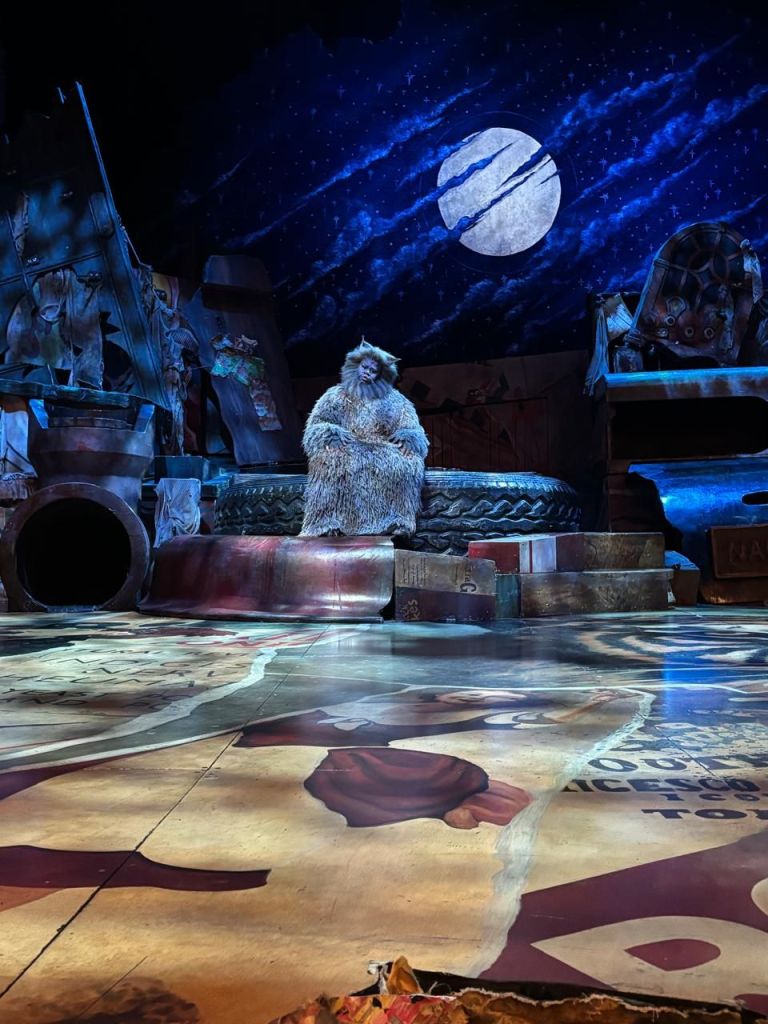
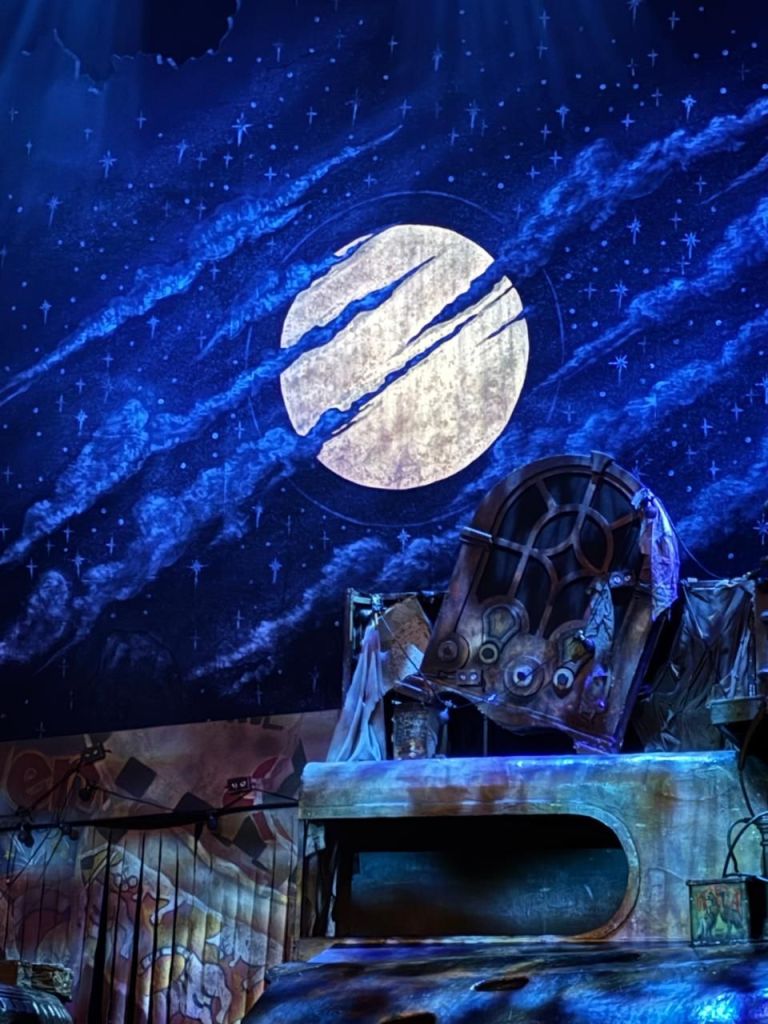
At the Teatro to watch a show about Cats. Cats are everywhere, fur naturalistic, fantastic make-up, the performers stayed in role the whole time. They were cats, inquisitive, sensual and alluring without meaning to. 

Andrew Lloyd Webber’s Cats is built on T. S. Eliot’s Old Possum’s Book of Practical Cats, a collection of poems that already resist conventional narrative. Webber doesn’t “adapt” them into a linear story—he creates a ritual. What you’re watching is less a plot-driven musical and more a ceremonial gathering: the Jellicle Ball.

Once a year, the Jellicle cats assemble to present themselves—body, memory, instinct, desire—so that one may be chosen to ascend to the Heaviside Layer and be reborn. That’s it. No villain, no quest, no romance arc. The drama is existential.

And that’s where cats become not just a choice, but the only possible choice.

Why cats? Why not people?

Cats exist in a perfect symbolic middle-ground:

They live with humans but are never owned by us in spirit.

They are domestic but untamed.

They are sensual without apology.

They are ancient, ritualistic, observant, and indifferent to morality.

In mythology and psychology, cats are liminal creatures—they cross thresholds. Think:

Egypt: cats as divine guardians (Bastet)

Folklore: witches’ familiars

Jungian symbolism: intuition, shadow, feminine power, erotic mystery

Humans on stage are burdened with social codes. Cats are not. By making the performers cats, Webber removes:

shame

realism

everyday morality

What’s left is pure archetype expressed through the body.

The archetypes on stage

Each Jellicle cat is not a “character” in the naturalistic sense—they are aspects of being:

Grizabella – the fallen goddess / the exiled erotic self / memory and regret

Rum Tum Tugger – the trickster libido, chaos, sex appeal incarnate

Old Deuteronomy – the wise patriarch, time itself embodied

Macavity – the shadow archetype, criminal instinct

Munkustrap – the storyteller, the chorus, order and observation

They are not meant to “change.” They present themselves. This is a parade of identities asking a cosmic question: Who deserves transcendence?

They stayed in rule as cats.

That discipline is everything.

The performers are not acting “sexy humans pretending to be cats.” They are humans suppressing their humanity to allow animal instinct to dominate. The choreography demands:

constant low center of gravity

prowling awareness

elastic spines

hands that behave like paws

eyes that never stop scanning

This creates a physical language that is:

predatory

playful

curious

unapologetically sensual

Cats don’t flirt the way humans do. 

They display. Stretching. Arching. Grooming. Staring. Retreating. Approaching again.

Sex appeal emerges not because it’s advertised—but because it’s inevitable.

Cats are erotic without intention. That’s the key difference. There’s no performance of desire for an audience—there’s just embodied confidence, physical intelligence, and instinctual presence.

The performers:

take up space without apology

move as if watched but unconcerned

exist in their bodies with ease and ownership

That reads as sexy because it taps into something ancient: desire before language.

It’s closer to:

dance

ritual

courtship

animal magnetism

Not titillation. Not seduction. Vitality.

Cats doesn’t want you to “believe” in cats singing. It wants you to submit to a different logic—dream logic, myth logic, body logic.

the set is oversized (you’re inside a cat’s world)

time feels suspended

the fourth wall dissolves

eye contact with the audience is frequent and unsettling

You’re not watching animals. You’re being observed by them.

They were nimble.

They were inquisitive.

They were agile.

And yes… they were sexy.

Because Cats is not about cats.

It’s about what humans look like when they remember they are animals first 🐾

Music: Andrew Lloyd Webber

Based on “Old Possum’s Book of Practical cats by TS Eliot

Associate director and choreography: Chrissie Cartwright

Music supervisor: Peter McCarthy

Assistant Choreographer and Director: Matt Krzan

Musical director: Louis Zurnamer

Resident director: Duane Alexander

Sound designer: David Creasly

Lighting designer: Howard Eaton

Gimbie cat choreographer: Bill Deamer

Orchestations by: David Cullen and Andrew Lloyd Webber

Cast

Cindy-Ann Abrahams

King B

Phoebe Charles 

Tatum Coleman

Noa Duckitt

Cassiel Eatock-Winnik

Ryan Flynn

Micheal Fullard

Che-Jean Jupp

Dylan Janse van Rensburg 

Congratulations Duane Alexander and the whole team for a great show and a deserved standing. 

📸: SamSays 
Pinocchio

Pinocchio

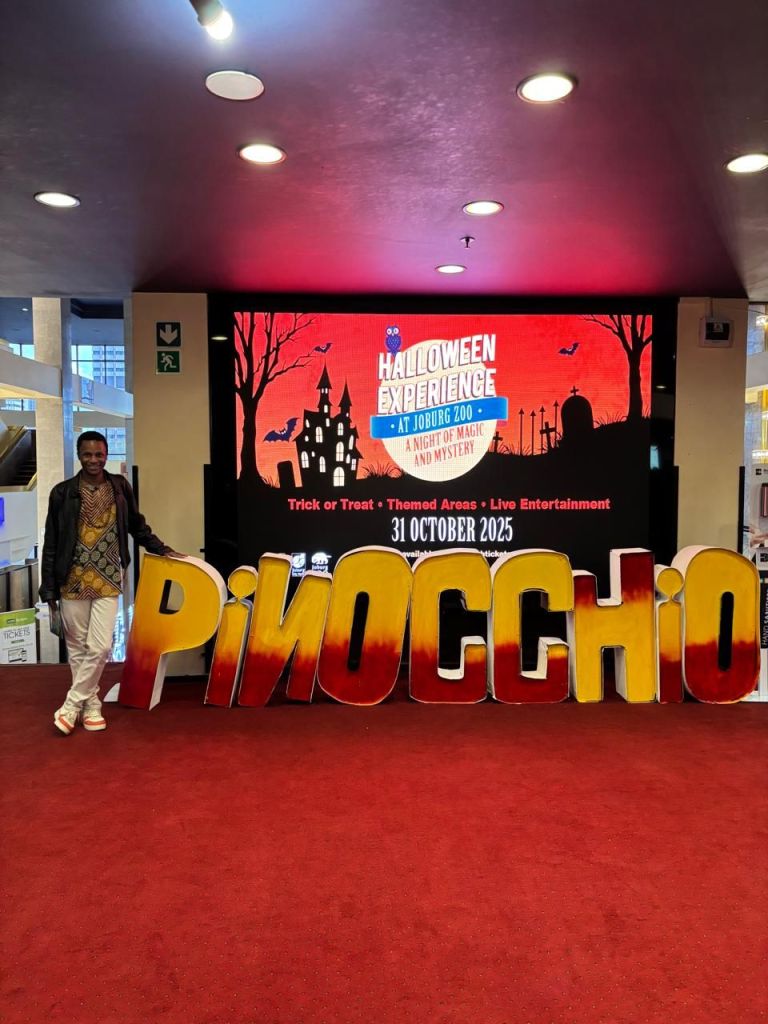
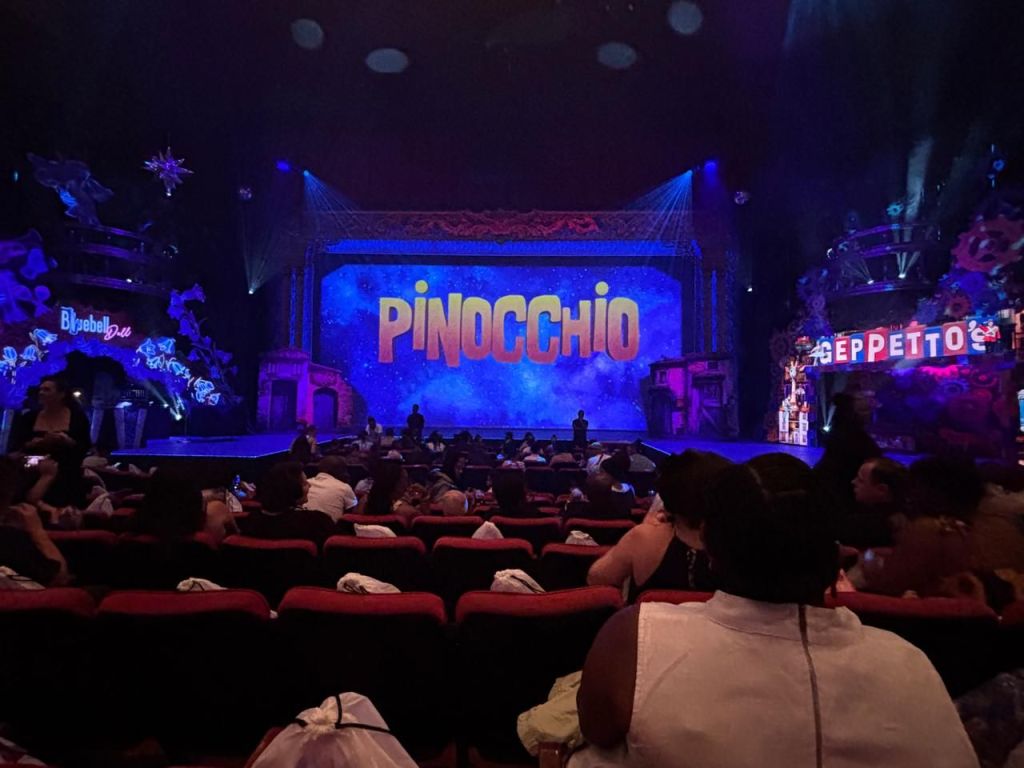
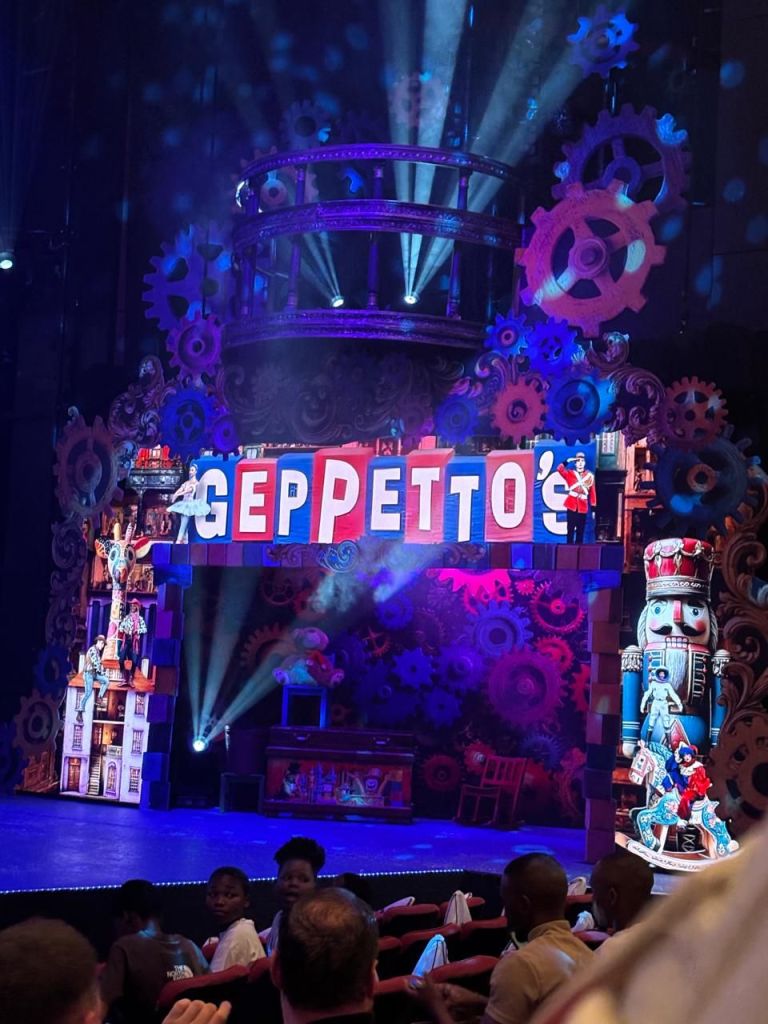
At Joburg Theatre for the opening of Janice Honeyman’s Pinocchio. So much excitement – we got goodie bags filled with sweets and snacks! Pinocchio is one of my favorite fairytale’s of all time. I love the character of Jiminy Cricket, Pinocchio’s conscience. We all need a moral campass to help us get through life.

The show doesn’t disappoint, colorful costumes and vibrant sets. Energetic, South African, interactive and beaming with life. Laduma! Madame Pussy Galore (The Fat Cat) and Madame Ill Fortunato (The Fox) are so humorous. They might have stolen the show, so effective as a comedic duo. A lot of comedic moments, I loved the puns and dramatic irony, breaking the fouth wall at times. Pest control was needed for Jiminy Cricket, he was doomed!

Pinocchio is the journey of a wooden puppet who magically comes to life and dreams of becoming a real boy. Katlego Nche plays Pinocchio, he is wonderful and he transforms into a real boy. Bongi Archi is a relatable father figure for Pinocchio. He can speak African languages, in fact, every character drifted off to their home languages once in a while, to convey a point or deliver comedic punchline. The show is filled with a lot of those, this is not just a kiddies show. There was also pop culture references and jokes for grown-ups. Singalong’s are a given and the audience participated and danced along. Laduma! CR7! SUII! Lesedi Rich is boundless energy as Lampwick Rich!

The sets colorful, larger than life, neon lights, full of imagination! Two acts with an interval, the whole journey is so much fun!

The actors
Katlego Nche – Pinocchio
Gina Shmukler – Bella Bouboulina
Sandi Dlangalala – Jiminy Cricket
Bongi Archi – Geppetto Spoletto
Lesedi Rich – Lampwick Spaghetti
Tiaan Rautenbach – Dame Arletti Spaghetti
Brenda Radloff – Madame Ill’ Fortunato (Fox)
Camilla Waldman – Madame Pussy Galore (Cat)
Mark Richardson – Senor Napolio Strombolio
Luciano Zuppa – Luciano Panzarotti
Noluthando Mathebula – Dainty Dolly

Costume Designer: Mariska Meyer

Set Designer and Builder: Enos Ramoroko

Lighting Designer: Johan Ferreira

Congratulations Janice Honeyman and the whole team for a great show and a deserved standing ovation.

📸: SamSays
Medea

Medea

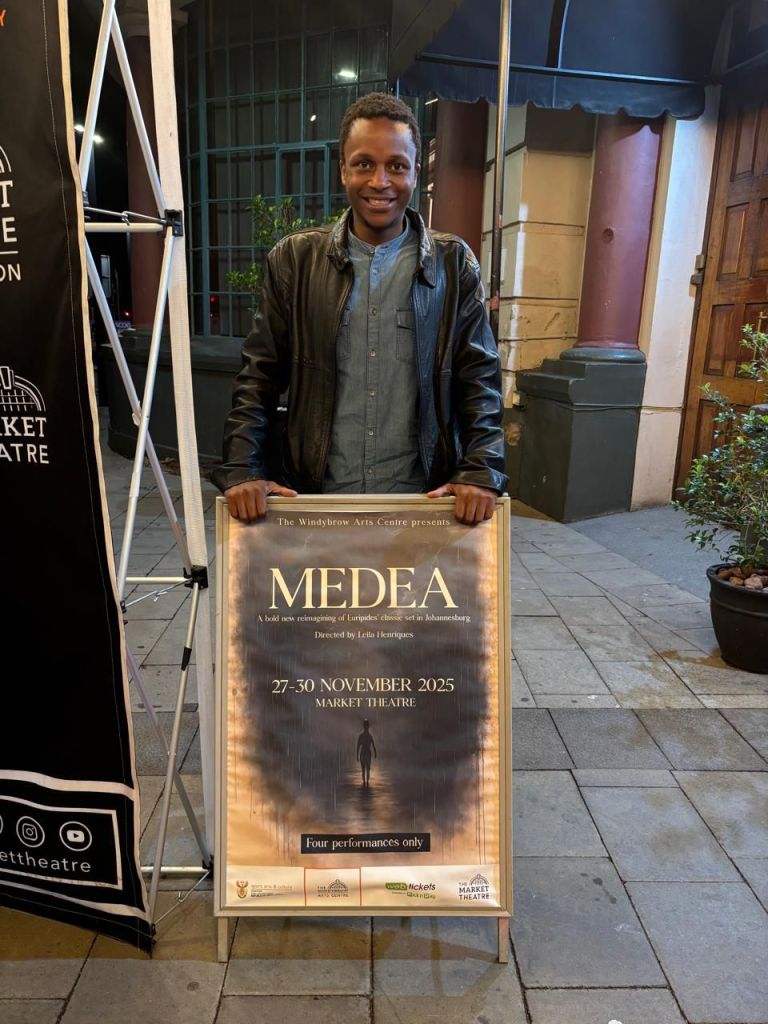
At the Market Theatre for the opening of Medea. A production by The Windybrow Arts Center. For 4 performances only, don’t miss it!

A Greek classic reimagined. So dramatic, Shakespearean, tragic! The performances so gripping and captivating – you can’t look away, they demand your attention. The dialogues and monologues so heartfelt and expressive, delivered with so much conviction. Love, betrayal, poison, death, Medea.

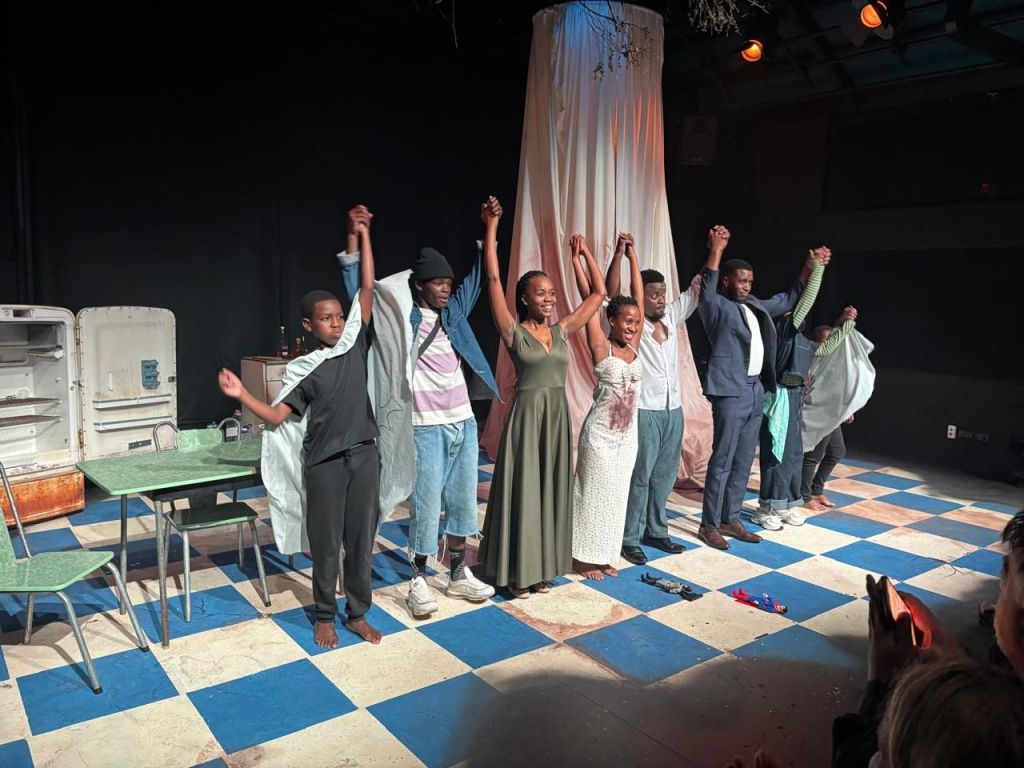
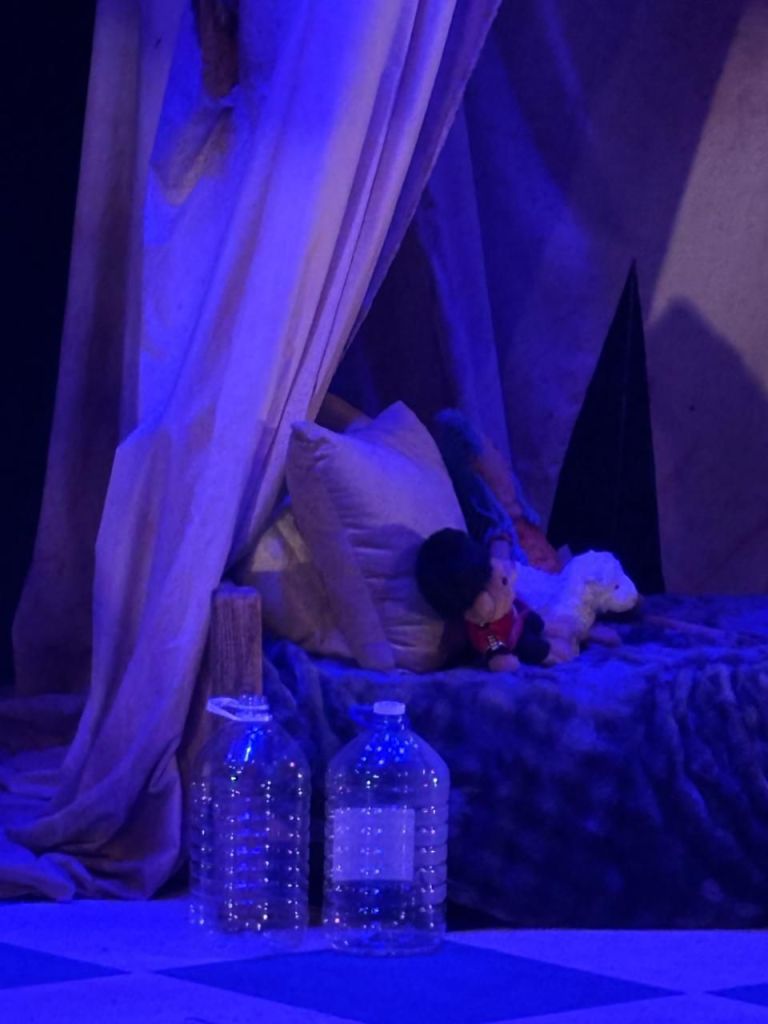
I can’t even lie, I was disgusted by Medea’s actions. To kill your own children not out of hatred but spite, revenge because she knew it would destroy Jason emotionally! The only memory of the children that prevailed was their superhero action figures (Superman and Batman) – a signifier of their innocence. They didn’t do anything to anyone, they were just playing and running around in their superhero capes. Until their despicable mother used them for her nefarious murderous ends. Deplorable, souless woman.

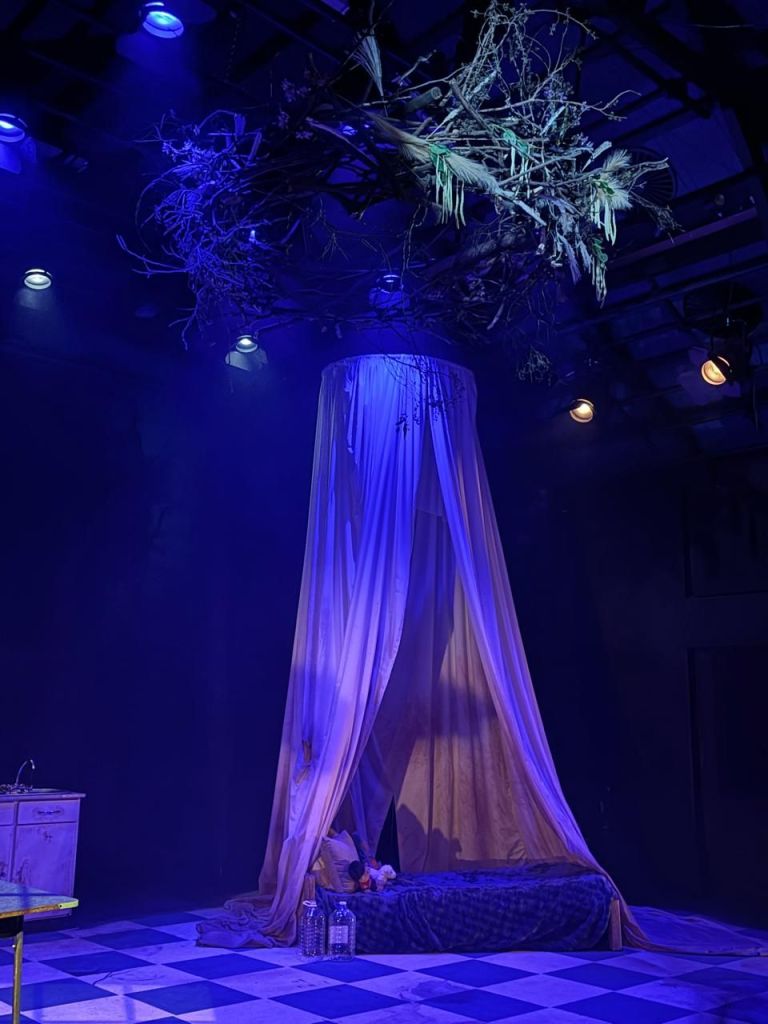
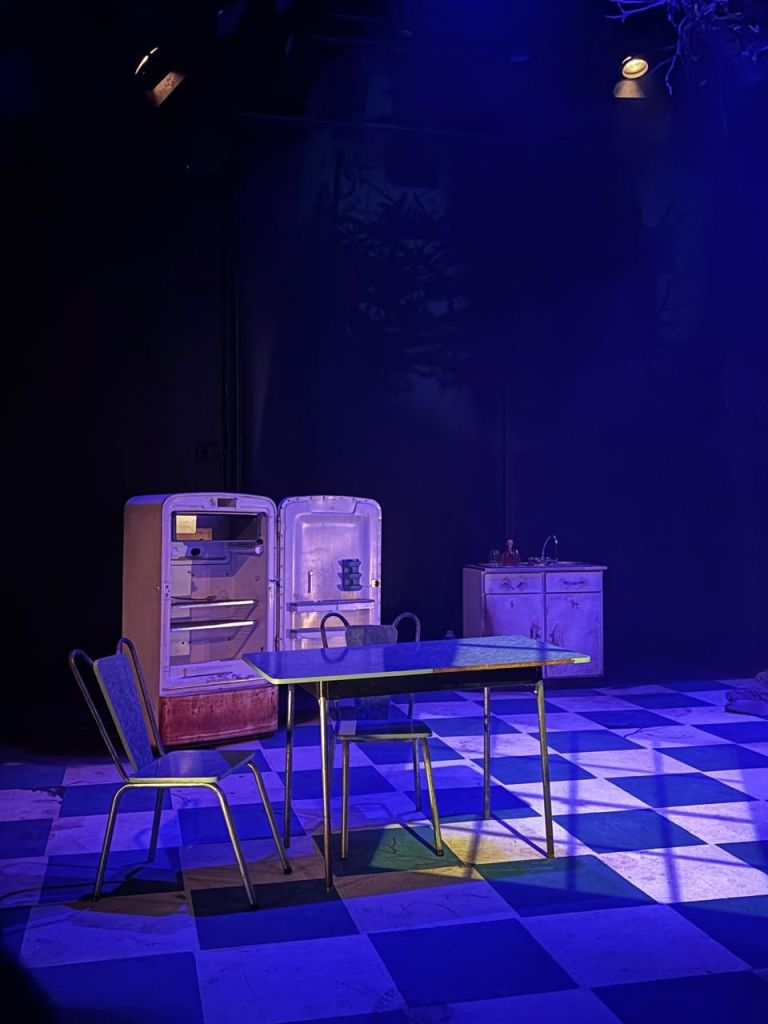
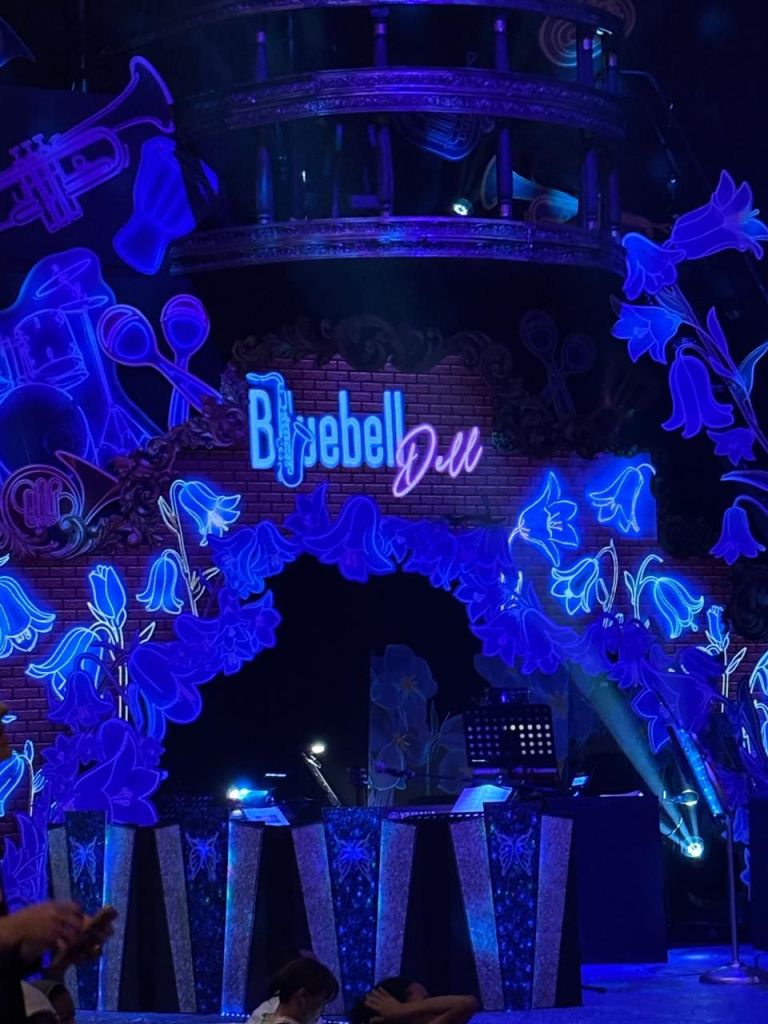
The performers were fantastic, portraying the darkside of human nature, revenge, betrayal, love, poison, death, Medea. I’ve never experienced such wickedness in my life. The props; rusted and old, there is no water, a sink there, a fridge there and table with chairs. A thorn crown hovers above the stage. Gofaone Bodigelo is fantastic as Medea, she never misses a beat, she is the pulse, fantastic monologues delivered with precision, feeling and emotion. The play also stars Thingo Mcanyana, Jack Mabokachaba and Londa Mkhize. Shakespearean, beautiful sets and utterly shocking.

Congratulations Leila Henriques and the whole team for a great show and a deserved standing ovation.

📸: SamSays
Joseph and the amazing technicolor dreamcoat

Joseph and the amazing technicolor dreamcoat

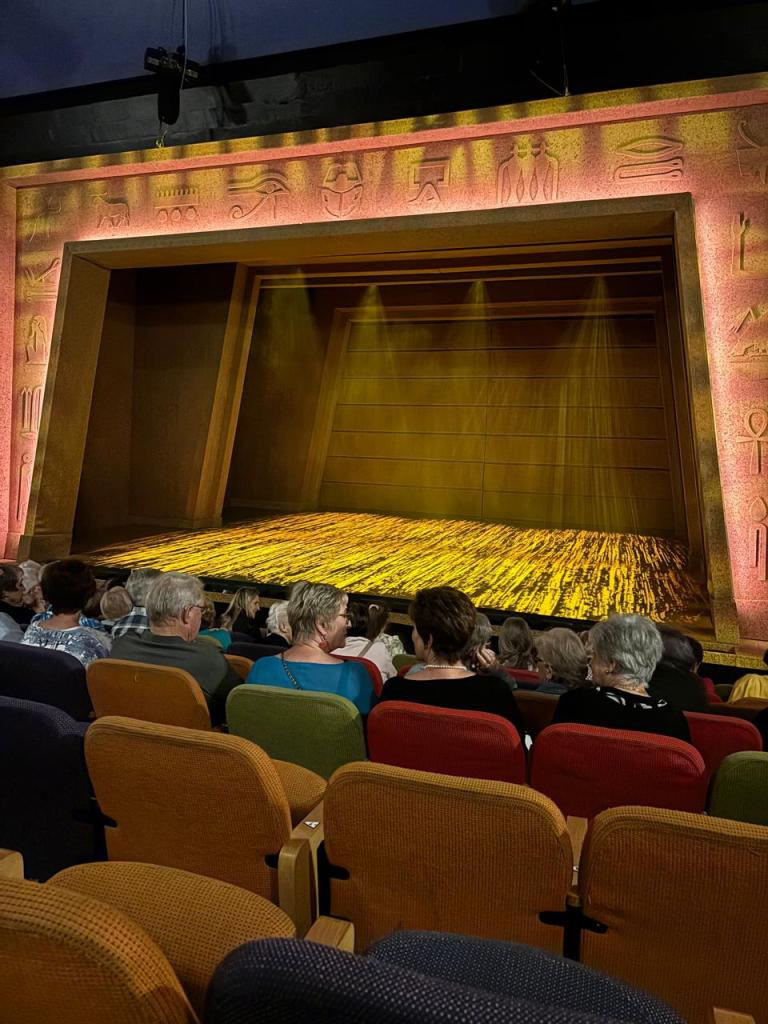
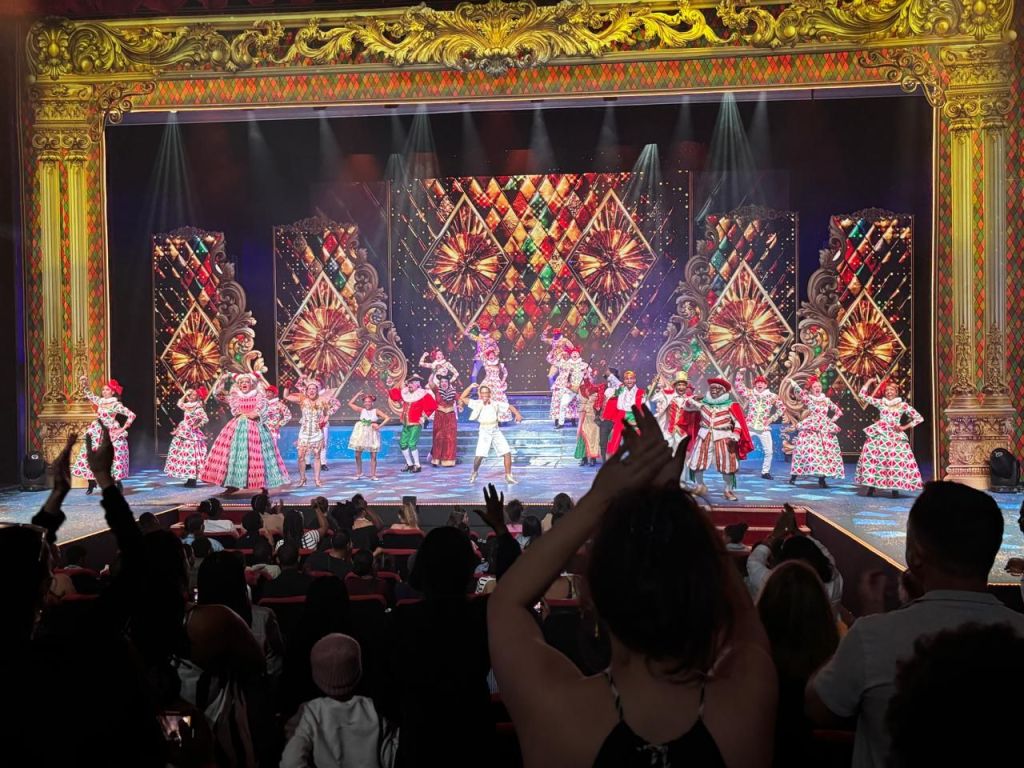
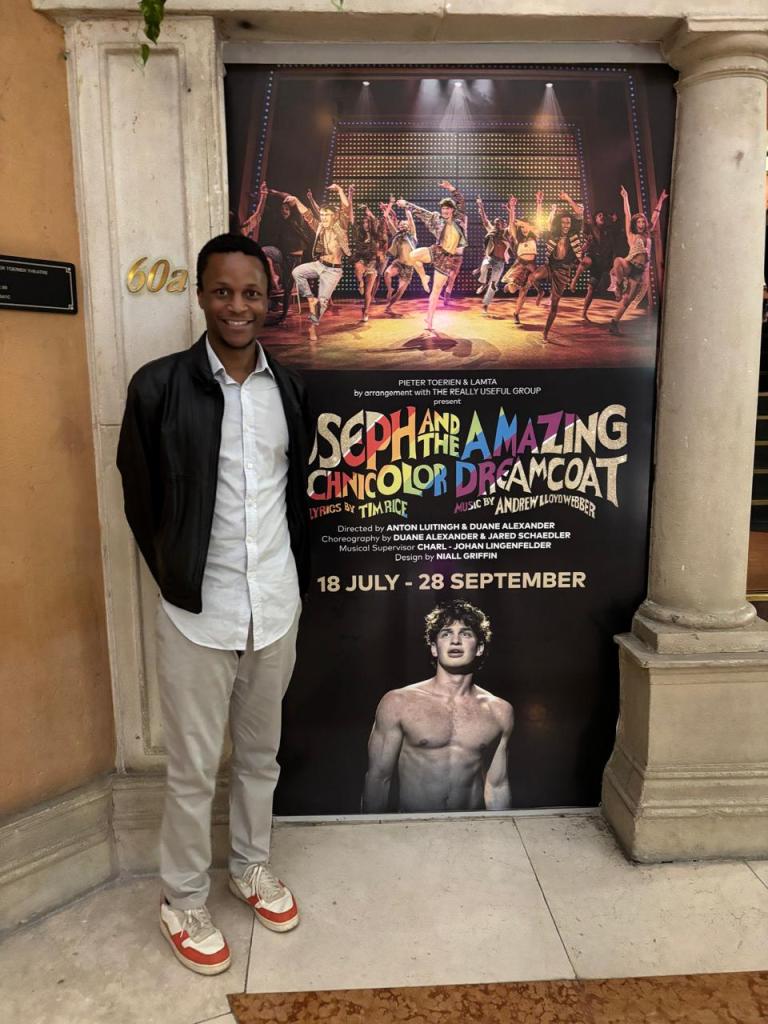
At Pieter Toerien to watch “Joseph and the amazing technicolor Dreamcoat”, LAMTA, Spring Awakening, that type of vibe. An outstanding show, vibrant energy, youthful, defined bodies, six packs, wonderful lighting, a set that illuminates, Egypt, the eye of horus, fantastic choreographed movement and dance and the best singing in the world. It’s an experience, the sound coops you in, high tempo, faster revolutions.

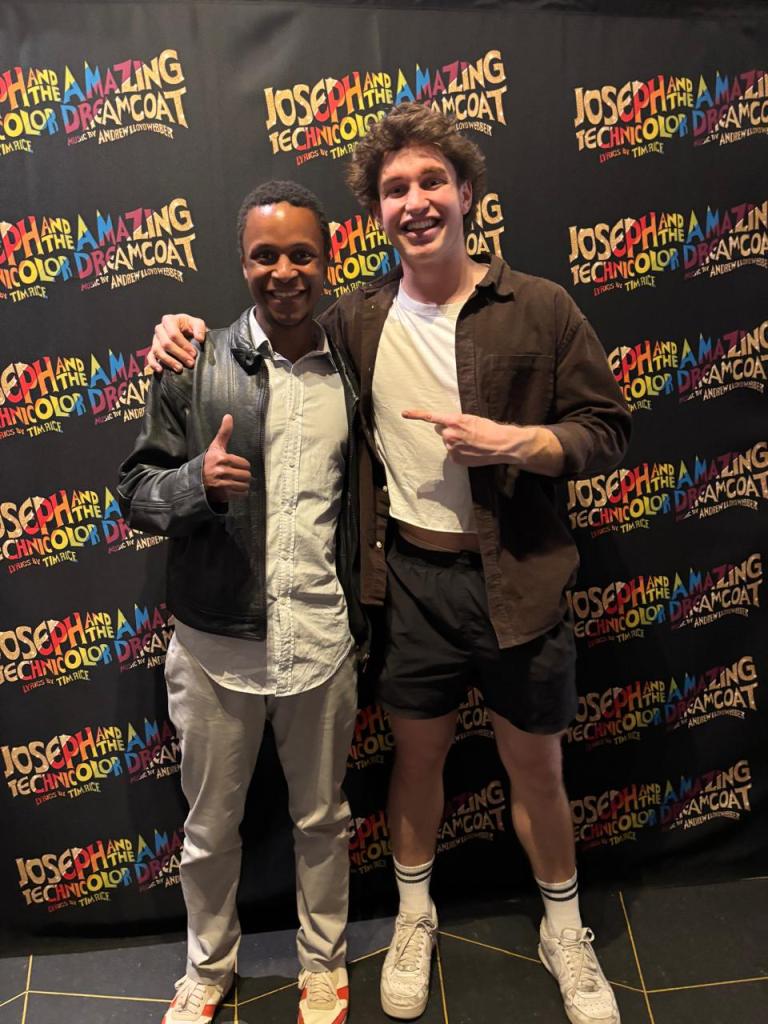
A musical by Andrew Lloydwebber (music) and Tim Rice (lyrics). The story follows Joseph, the favorite of Jacob’s 12 sons, who is given a magnificent multicolored coat. His jealous brothers sell him into slavery, and Joseph ends up in Egypt. Despite many hardships, including being falsely imprisoned, Joseph rises to power by interpreting Pharaoh’s dreams. Eventually, he is reunited with his family and forgives his brothers. No dialogue, it’s sung throughout. I took a picture with Joseph. A big credit to Duane Alexander and Jared Schaedler, the choreography is just awesome. The performers on the stage are incredible. They are lively and expressive, their bodies express liberation. They are free and happy. They do a lot, they become props, they carry and throw each other in the air, they run, they jump, they dance, the sing. The costumes are grand and the lighting moves the story. It’s an experience, you are in, you are in and what a journey it is.

Some of the songs performed are Any Dream Will Do, Close Every Door, Go, go Joseph, One more Angel in Heaven and Song of the King.

Congratulations Anton Luitingh and Duane Alexander for a great show and a deserved standing ovation.

📷: SamSays
Godspell

Godspell

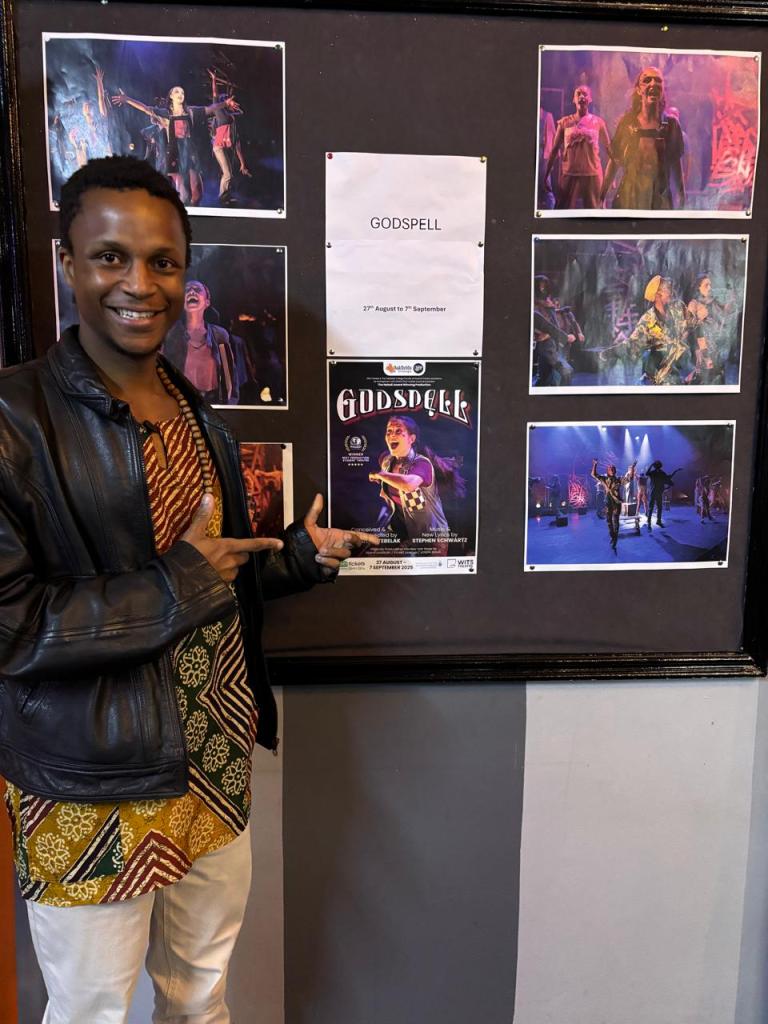
At the Wits Theatre to watch the Student Production of the Year, “Godspell”. So glad it was not preachy, you can’t be too sure when Jesus is the main character. He is a good, chilled guy in this production, he even has on his “Superman” shirt. He preaches compassion, joy and faith.

A musical conceived by John Micheal Tebelak with music and new lyrics by Stephen Schwartz. Godspell presents a series of parables, mostly drawn from the Gospel of Matthew, told through a framework of theatrical games, storytelling, and music. Jesus gathers a group of followers and teaches them lessons of love, humility, and service. The story culminates in a poignant reenactment of the Last Supper and the Crucifixion.

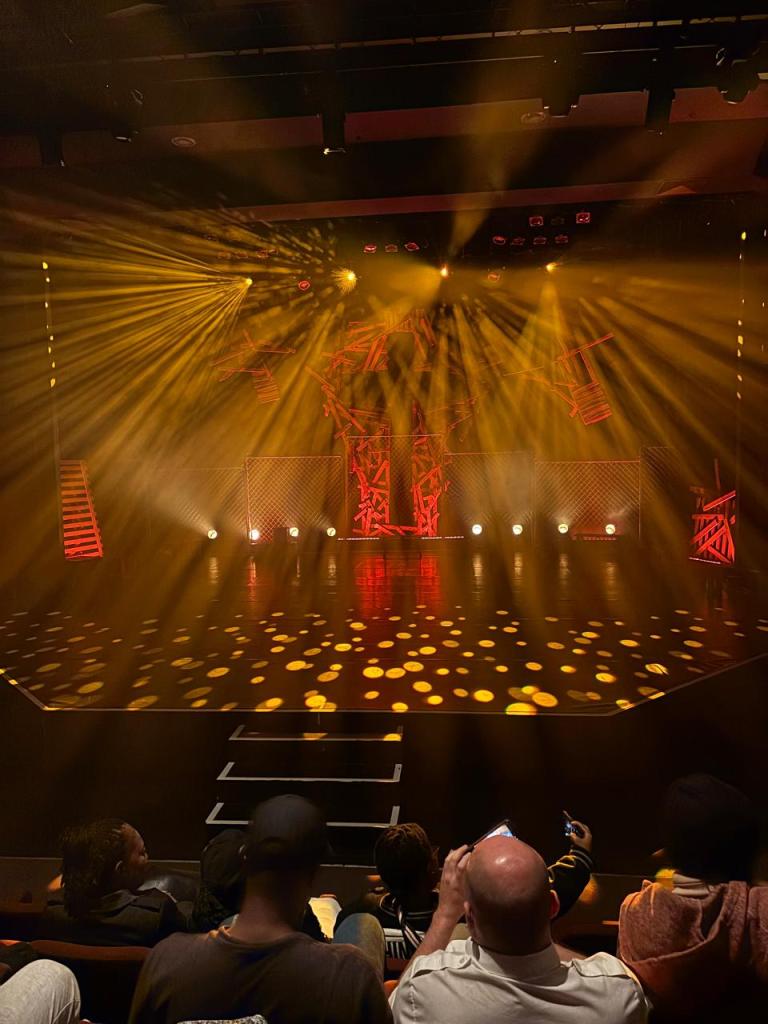
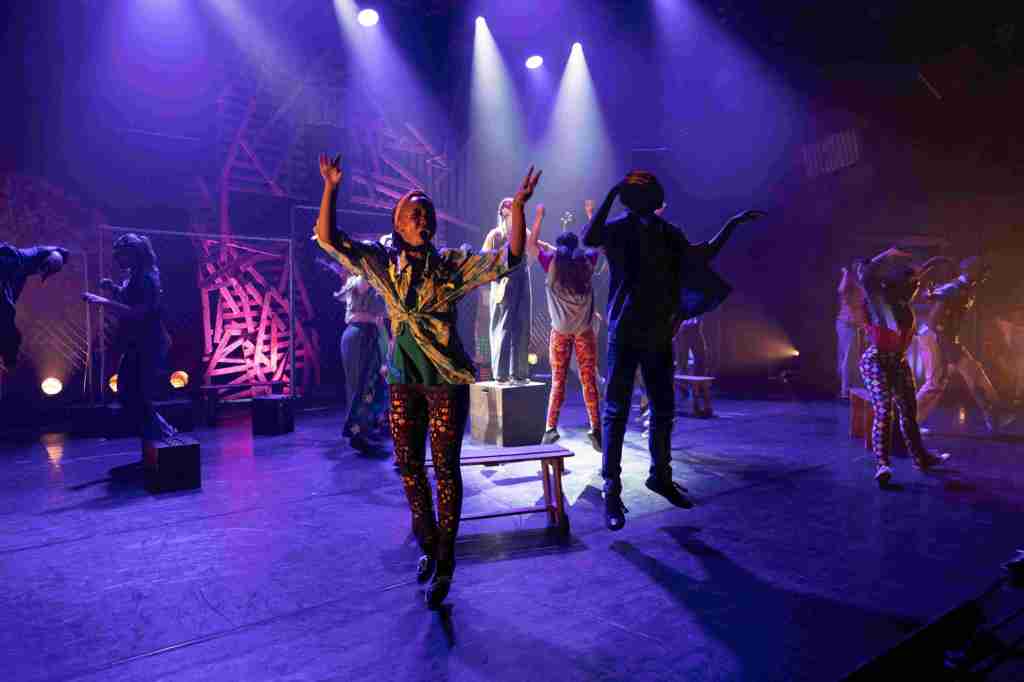
The set is simple, wide stage and a fence at the back. Behind the fence above is a big cross made of wood pallets, on either side of the big cross are small crosses also made of wood pallets. The set reinforces the Christian theme.

Yahto Kraft plays Jesus with Grant Towers as Judas. The followers of Jesus are the Oakfields College Musical Theatre and Dance Students from the first year to the final year. They all give their best, they are boundless energy, they are expressive and highly animated. They light-up, performing different dance styles. Wonderful team chemistry and choreographed movement. Costumes are colorful and bright with waterpaints on their faces. Everyone tells the story, everyone is involved in the story, everyone has a line, everyone has a role even if you are an echo backing up what the previous performer just uttered, often times they dramatized it to comedic effect. The singing and lighting are just irresistible. Some of the songs performed are; Day by day, Prepare Ye (The way of the Lord), All for the best, By my side, We beseech thee and other classics.
It’s the Naledi Award winning “Student Production of the Year” for a reason. They perform their hearts out, with precision, care and love for their craft.

Congratulations Tracey Human and the whole team for a great show and a deserved standing ovation.

📷: SamSays