Crime and punishment

Crime and Punishment: When an Idea Commits a Murder

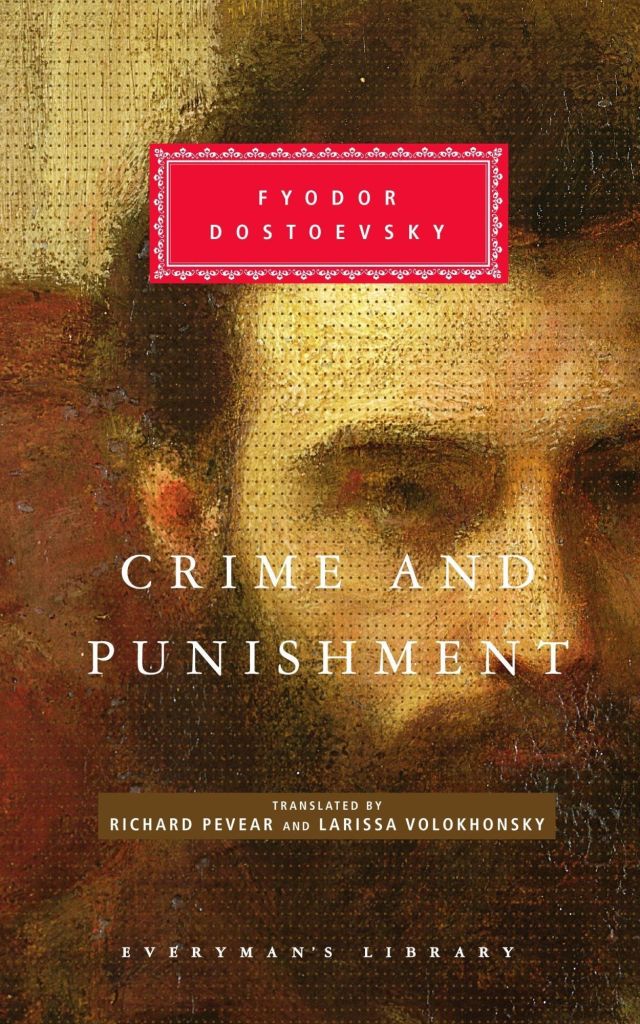
Fyodor Dostoevsky’s Crime and Punishment is often misread as a novel about guilt, redemption, or the psychology of crime. While it contains all these elements, at its core the book is something far more unsettling: a novel about an idea that takes physical form—and kills.

Dostoevsky does not begin with murder. He begins with thought. Specifically, with a modern thought: that reason, if pushed far enough, can replace morality.

Rodion Romanovich Raskolnikov is not merely poor, desperate, or unbalanced. He is intellectually intoxicated. His crime emerges not from impulse but from theory—from the belief that humanity is divided into two categories: the ordinary and the extraordinary. The former must obey the law; the latter may transgress it in the service of a higher purpose. History, he believes, is moved forward by such men. Napoleon becomes his unspoken model: a figure whose crimes were retroactively sanctified by success.

This belief marks Raskolnikov as the true heir of modern consciousness. Where the Underground Man remained paralyzed by self-awareness, Raskolnikov crosses the threshold into action. Dostoevsky escalates the philosophical problem posed in Notes from Underground: what happens when a man stops arguing with morality and attempts to overcome it?

The answer is not liberation. It is collapse.

The murder of the pawnbroker Alyona Ivanovna is not portrayed as dramatic or cathartic. It is clumsy, panicked, almost banal. Worse still, it does not go according to plan. Lizaveta’s unexpected appearance forces Raskolnikov into a second, unintended murder—already undermining the fantasy of rational control. The idea that crime can be clean, purposeful, and justified collapses at the very moment it is enacted.

From this point onward, Crime and Punishment becomes less a narrative and more a psychological autopsy.

Raskolnikov does not emerge empowered. He becomes feverish, disoriented, fragmented. His body rebels against his mind. He sleeps excessively, rambles incoherently, oscillates between arrogance and despair. Dostoevsky insists on a crucial truth: the psyche is not neutral territory. It cannot accommodate the lie that one is beyond good and evil.

This is one of Dostoevsky’s most radical claims. Punishment does not begin in the courtroom or the prison. It begins immediately, internally, and involuntarily. Long before the law reaches Raskolnikov, truth does.

What makes Raskolnikov’s suffering particularly modern is that it is not rooted in remorse for the victim. His torment stems from something more corrosive: the realization that he is not who he imagined himself to be. He wanted to prove his extraordinariness. Instead, he discovers his ordinariness in the most humiliating way possible—through weakness, confusion, and guilt.

Dostoevsky frames this as a metaphysical failure. Raskolnikov’s crime exposes the falsehood at the heart of rationalist morality: that human beings can reduce life to calculations without consequence. The novel relentlessly dismantles this notion. Every attempt Raskolnikov makes to justify himself only deepens his isolation.

Against him stands Sonya Marmeladova—perhaps the most misunderstood character in the novel. Sonya is often reduced to a symbol of Christian purity or passive suffering. In reality, she represents a radical ethical alternative to Raskolnikov’s logic.

Sonya does not justify suffering; she bears it. Forced into prostitution to support her family, she embodies moral degradation without moral corruption. Where Raskolnikov commits violence in the name of an abstract future good, Sonya sacrifices herself in the present for the survival of others. Dostoevsky places them in direct opposition: reason without love versus love without justification.

Crucially, Sonya never argues Raskolnikov out of his theory. She does not debate him. She listens, weeps, and remains. Dostoevsky suggests that salvation is not intellectual but relational. Truth does not arrive as a concept; it arrives as a presence.

This is why Raskolnikov’s confession does not occur in the interrogation room but in Sonya’s company. She gives him the cross not as a symbol of dogma but as a burden to be accepted. To suffer consciously, Dostoevsky implies, is already to begin returning to reality.

Porfiry Petrovich, the examining magistrate, represents another crucial dimension of the novel. Unlike conventional detectives, Porfiry does not rely on evidence alone. He relies on time, pressure, and psychological insight. He understands that Raskolnikov’s real enemy is not the law but himself.

Porfiry’s brilliance lies in his patience. He knows that guilt seeks expression, that the mind cannot indefinitely conceal what the soul knows. His interrogations are philosophical traps rather than procedural ones. In Porfiry, Dostoevsky anticipates modern psychology: crime as a form of confession delayed.

Yet even Porfiry does not complete the arc of punishment. That belongs to Siberia.

One of the novel’s most misunderstood aspects is its ending. Readers often expect a dramatic conversion or spiritual revelation. Instead, Dostoevsky offers something far more restrained—and far more honest. Raskolnikov does not suddenly become virtuous. He remains proud, resistant, emotionally distant. Redemption is not instantaneous; it is embryonic.

This is vital. Dostoevsky refuses cheap transcendence. Punishment, in the novel, is not the sentence imposed by the state but the slow dismantling of a false self. Siberia is not hell; it is exposure. Removed from his intellectual fantasies, Raskolnikov is finally forced to inhabit time, labor, and suffering alongside others.

Only at the very end does Dostoevsky allow the possibility—not the certainty—of renewal. The emphasis is deliberate. Redemption is not a narrative conclusion but a lifelong process. What matters is that Raskolnikov has ceased to believe in his own exceptionality.

This is the novel’s ultimate warning.

Crime and Punishment is not merely about murder; it is about what happens when human beings believe they can stand above moral law without paying a psychological and spiritual price. Dostoevsky foresaw a world increasingly governed by systems, ideologies, and rational justifications for violence. His novel asks a question that remains urgently relevant: what happens when ideas forget the human beings they consume?

Raskolnikov’s tragedy is not that he kills an old woman. It is that he tries to live as if love, conscience, and suffering are negotiable. Dostoevsky answers him with brutal clarity: they are not.

In the end, Crime and Punishment is not a condemnation of thought, but of thought severed from compassion. It insists that no theory, no matter how elegant, can absolve a human being from the reality of other human lives. And when an idea commits a murder, it does not remain intact. It destroys the mind that carried it.

That is Dostoevsky’s enduring terror—and his enduring truth.
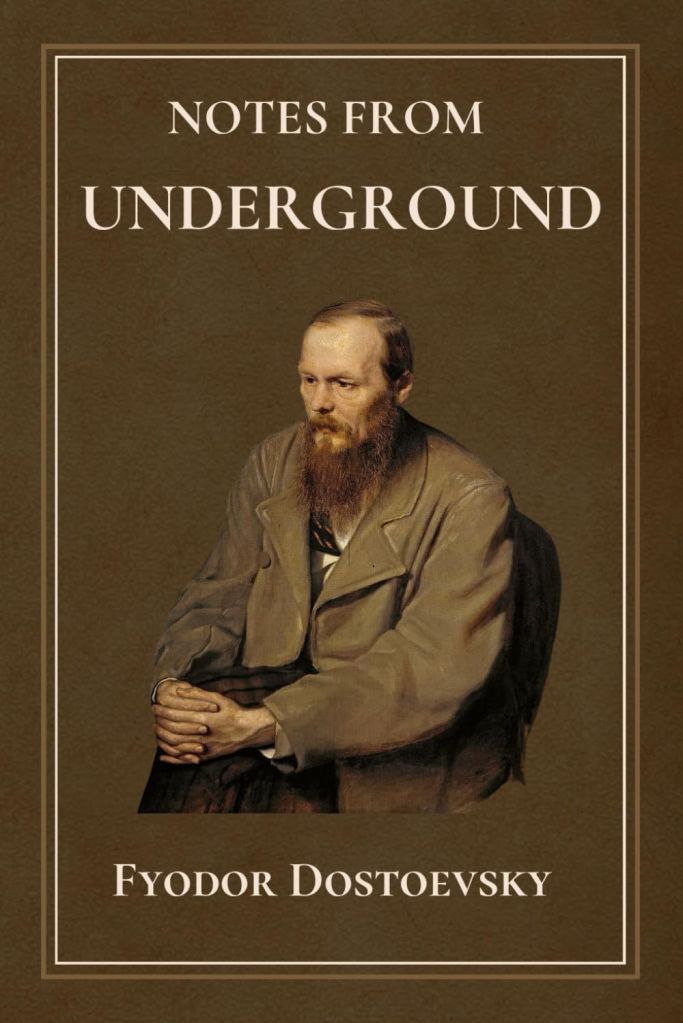
Notes from Underground

Notes from Underground and the Birth of Modern Consciousness

There is a reason Notes from Underground feels less like a novel than an exposure. It does not invite sympathy, nor does it offer development or redemption. Instead, it stages a consciousness that knows too much, feels too sharply, and cannot move without tripping over itself. What Dostoevsky gives us here is not a character to be understood, but a mode of being that would come to define modernity.

The Underground Man is not mad. He is not mistaken. He is, disturbingly, lucid. And it is this lucidity — corrosive, recursive, merciless — that makes him feel so contemporary. In him, Dostoevsky inaugurates a form of consciousness that no longer trusts reason, no longer believes in progress, and no longer experiences the self as unified or innocent. This is not the romantic self, nor the rational Enlightenment subject. It is something darker: a self conscious of its own consciousness, and trapped inside it.

Hyper-consciousness as Illness

“I am a sick man… I am a spiteful man.”

The opening declaration is not metaphorical. The Underground Man’s illness is not physical, nor even psychological in the clinical sense. It is excess awareness. He feels everything too much, thinks everything too far, anticipates every possible humiliation before it occurs. Action becomes impossible because action would require simplification, and simplification feels dishonest.

This is the first crucial break Dostoevsky introduces: consciousness is no longer a tool for clarity, but a source of paralysis. To be aware is not to be free; it is to be immobilised by competing motives, imagined judgments, and retrospective shame.

The Underground Man knows the reasons for action — and knows equally well the reasons against them. Every impulse is instantly undermined by reflection. Every desire is followed by contempt for having desired at all. What remains is inertia, accompanied by an inner monologue that never rests.

Modern consciousness begins here: not with doubt, but with self-surveillance.

The Collapse of Rational Optimism

Dostoevsky is writing against something very specific: the 19th-century belief that human beings, if shown their true interests, will act rationally and morally. The Crystal Palace — the utopian symbol of perfect rational organisation — looms in the background as an unspoken antagonist.

The Underground Man refuses this vision with fury.

He insists, scandalously, that human beings will choose suffering over happiness if happiness is imposed. That they will act against reason simply to prove they are free. That two times two equalling four is not liberation, but a wall.

This rejection is not philosophical abstraction; it is existential. A life governed entirely by rational calculation leaves no room for unpredictability, contradiction, or desire. It reduces the human being to a mechanism. The Underground Man’s spite is, at its core, a protest against being explained away.

Here, modern consciousness announces its rebellion: I would rather be wrong than reduced.

Freedom as Negativity

What is striking about the Underground Man is that he does not advocate an alternative system. He offers no better ethics, no new social arrangement. His freedom is purely negative. It exists only as refusal.

He will not be cured.

He will not be reconciled.

He will not be made happy by force.

This is not heroic resistance. It is ugly, self-defeating, often cruel. But it is recognisably modern. Freedom is no longer experienced as harmony between self and world, but as the ability to say no — even when that no leads to suffering.

The Underground Man prefers conscious misery to unconscious contentment. At least misery belongs to him.

This is a profound shift in the understanding of agency. Freedom becomes inseparable from self-sabotage. Choice is validated not by outcomes, but by its capacity to negate expectation.

Memory as a Weapon Turned Inward

If hyper-consciousness paralyses the Underground Man in the present, memory tortures him endlessly. He does not remember selectively; he remembers obsessively. Every slight is preserved, replayed, reimagined. Past humiliations are not digested — they are cultivated.

This is not nostalgia. It is a form of self-harm.

The Underground Man rehearses conversations that ended years ago, sharpening insults that were never delivered, reliving moments of shame with increasing cruelty toward himself. Memory becomes a private theatre of accusation, with the self as both defendant and prosecutor.

Here, Dostoevsky anticipates something deeply modern: the inability to let experience settle. The past does not recede; it accumulates. Identity becomes a sediment of unresolved moments.

Modern consciousness, in this sense, is haunted consciousness.

Self-Knowledge Without Consolation

What makes Notes from Underground so unsettling is that the Underground Man is rarely wrong about himself. He sees his own pettiness, his cowardice, his cruelty — and this insight does not redeem him. It merely adds another layer of contempt.

This is not the Socratic faith that self-knowledge leads to virtue. It is its inversion. Knowing oneself can deepen despair. Reflection does not heal; it corrodes.

Dostoevsky refuses the comforting arc in which awareness leads to growth. Instead, he presents consciousness as a closed circuit, feeding on itself. The Underground Man is not deluded — he is incapable of forgetting himself.

In this, Dostoevsky anticipates the crisis of modern subjectivity: when introspection no longer promises salvation, only endless recursion.

The Birth of the Anti-Hero

Before the Underground Man, literature gave us rebels, sinners, romantics, outcasts — but rarely this. This is not rebellion against society, but rebellion against coherence itself. The Underground Man does not want to belong, but neither does he want to escape. He wants to remain underground, where contradiction can be preserved without resolution.

He is not admirable. He is not instructive. He is not tragic in the classical sense. He is something new: an anti-hero whose defining trait is consciousness itself.

From this figure will descend a lineage of modern voices: fractured narrators, unreliable selves, interior monologues that expose rather than clarify. The Underground Man marks the moment when literature stops reassuring us that understanding leads somewhere better.

Why He Still Disturbs Us

The enduring discomfort of Notes from Underground lies in its refusal to distance the reader. The Underground Man does not represent a pathology safely contained in fiction. He articulates impulses we recognise and would rather deny: the pleasure of resentment, the intimacy of grievance, the strange comfort of self-inflicted misery.

He speaks from a place that modern life continually reproduces: the isolated self, over-informed, over-aware, inwardly verbose, outwardly inert. A consciousness flooded with explanations but starved of meaning.

Dostoevsky does not ask us to agree with the Underground Man. He forces us to acknowledge that this form of consciousness exists — and that it may be closer to us than we care to admit.

Conclusion: A Beginning, Not an Ending

Notes from Underground is not a diagnosis and not a prophecy. It is a beginning. With it, Dostoevsky cracks open the modern self and refuses to close it again.

The Underground Man is what remains when rational optimism collapses, when faith is wounded, when freedom turns inward and becomes destructive. He is the cost of consciousness without transcendence, awareness without grace.

In giving him a voice, Dostoevsky does not solve the problem of modern consciousness. He names it. And once named, it becomes impossible to ignore.

The underground is not beneath us.

It is within us.

The Big Bad Musical

The Big Bad Musical – Putting the Wolf on Trial and Fairy Tales on the Witness Stand

There is something magical about walking into a theatre for the very first time.

The architecture is unfamiliar. The corridors have no memories attached to them. Every light, every seat, every curtain feels like the beginning of a relationship waiting to happen.

That was my experience at the Roodepoort Theatre.

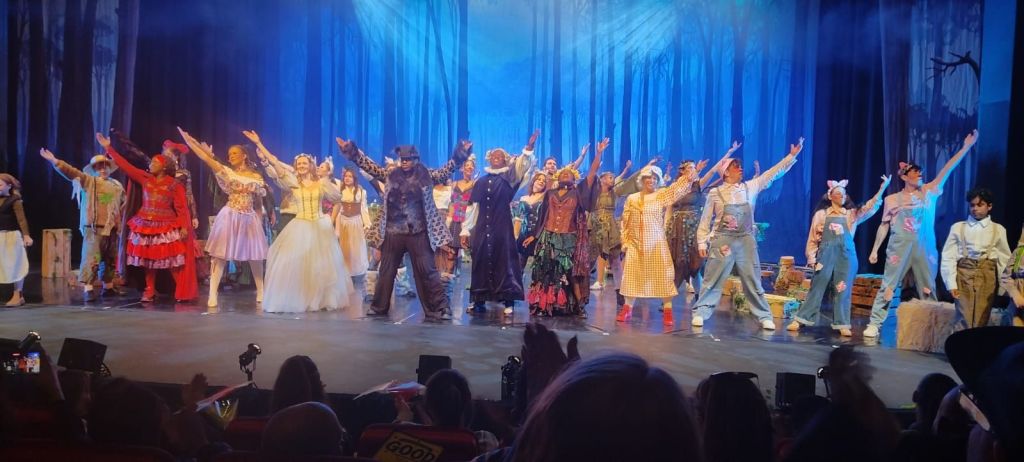
A beautiful venue with an undeniable sense of occasion. We were fortunate enough to sit right at the front, close enough to hear every laugh, witness every expression and become completely immersed in the world unfolding before us. It was my first visit, but if The Big Bad Musical is any indication of what this theatre offers, it certainly won’t be my last.

Produced by StageworxThe Big Bad Musical (16–30 July 2026) takes one of humanity’s oldest storytelling traditions—the fairy tale—and gleefully turns it inside out. Written by Alec Strum, with original music and lyrics by Bill Francoeur, additional music and new songs by Matthew Marinus, musical direction by Gemma Marinus, and directed by Timothy Le Roux, the production asks an unexpectedly profound question beneath all its comedy:

What if history has misunderstood the Big Bad Wolf?

It is a question that transforms the familiar into something wonderfully unpredictable.

Instead of lurking in dark forests waiting for innocent victims, the Wolf finds himself standing before a courtroom.

Justice, rather than revenge, takes centre stage.

The audience becomes the jury.

Suddenly childhood memories become evidence.


Every fairy tale needs heroes and villains.

This musical suggests that perhaps neither exists quite as neatly as we remember.

The courtroom setting is inspired. It allows beloved characters from different fairy tales to collide naturally while exposing how unreliable stories can become after centuries of retelling.

The Big Bad Wolf insists he has been the victim of terrible public relations.

The Fairy Godmother prosecutes with unwavering confidence.

The Evil Stepmother—ironically one of fairy tales’ most notorious villains—becomes the Wolf’s defence attorney.

Immediately the production announces its intentions.

Nothing is sacred.

Everything is funny.


The audience’s role elevates the experience beyond passive theatre.

We are no longer simply watching.

We are participants.

Jurors.

Every testimony, every joke and every musical number quietly asks us to make a decision.

Can someone escape their reputation?

Can a villain rewrite history?

Or are some actions impossible to forgive?

Personally, my verdict was simple.

Bad.

The Wolf may passionately insist he has become a vegan.

An admirable lifestyle choice.

Unfortunately, there remains the rather awkward matter of eating Red Riding Hood.

And her grandmother.

Eating people remains difficult to defend in any legal system.

Then there are the Three Little Pigs.

The Wolf openly admits he huffed.

He puffed.

He demolished a house.

When the evidence includes property destruction and attempted meals involving humans, centuries of “bad publicity” begin to resemble… accurate reporting.

The theatre itself reflected this delightful uncertainty.

Some audience members believed the Wolf had genuinely been misunderstood.

Others remained unconvinced.

Conversations erupted throughout the auditorium as strangers debated innocence and guilt like seasoned lawyers. After hearing the audience’s views, the Judge ultimately ruled the Wolf…

Bad.

Justice, it seems, prevailed.


One of the production’s greatest strengths is its refusal to treat its fairy-tale characters as cardboard cut-outs.

Every familiar face possesses personality.

They have opinions.

Flaws.

Vanity.

Humour.

Unexpected intelligence.

The production understands that audiences already know these characters.

Rather than introducing them, it reinvents them.


Musically, the production keeps its playful momentum through an energetic collection of songs that continuously push the story forward.

“Good or Bad” introduces the central question with infectious energy.

“Good Guy” cleverly explores reputation.

“Who’s Afraid of the Big Bad Wolf” transforms childhood familiarity into theatrical spectacle.

“The Wolf Likes Grandma’s Clothes” embraces absurdity with complete confidence.

“He Huffed and Puffed” turns one of literature’s most famous acts of destruction into comic musical theatre.

“I Cried Wolf” gives new life to another timeless tale.

Then comes perhaps the evening’s funniest question:

“How Does Nobody Know What a Tuffet Is?”

To be perfectly honest…

Neither do I.

The mystery remains unsolved.

“This Wolf’s a Vegan” may well be one of the production’s most delightfully ridiculous ideas, while “Good or Bad (Reprise)” provides a satisfying conclusion that reminds us the trial has never really been about wolves.

It has always been about judgement.


The performances breathe vibrant life into every page of the script.

Jessica Driver delivers a commanding Fairy Godmother whose authority never overshadows her wit. She balances courtroom confidence with fairy-tale sparkle, making for a delightful prosecutor determined to expose the truth.

Bulelo Landman embraces the challenge of portraying a Wolf who is equal parts charismatic, suspicious, amusing and perpetually defensive. His performance keeps the audience guessing, and even when his explanations become increasingly unbelievable, he remains thoroughly entertaining.

Among the evening’s greatest highlights is John Tsenoli as the Judge.

His timing is exceptional.

His reactions are priceless.

He anchors the courtroom while allowing the comedy to flourish around him, creating many of the production’s loudest laughs. Every entrance, interruption and verdict lands with confidence, proving that authority figures can be every bit as funny as the accused.

Siba Dyaphu delivers an inspired Evil Stepmother whose role as defence attorney is one of the production’s cleverest ideas. Watching one of fairy tales’ most infamous villains passionately defend another supposed villain creates delicious dramatic irony.

Kristy Suttner, portraying both Grandmother Hood and The Shepherd, demonstrates impressive versatility, giving two distinct personalities equal charm.

Evanca Moolman‘s Miss Muffet adds playful energy and perfectly complements the production’s whimsical spirit.

Neo Diabeng Kele captures Red Riding Hood with warmth, innocence and confidence, becoming an important emotional thread throughout the trial.

Jade Kabatznik, as Pig Three, contributes wonderfully to the production’s ensemble chemistry, while Aidan Mc Arthur Antonio, as Pig Two, ensures the pigs’ side of the story is heard with humour and conviction.

Malakai Marinus, portraying The Boy Who Cried Wolf, gives fresh life to another classic character, reminding us that truth has always been a complicated thing in fairy tales.

No performance feels forgotten.

Every actor contributes to a colourful theatrical tapestry where ensemble work matters just as much as individual brilliance.


Visually, the production delights in the familiar.

The costumes immediately identify each character while allowing their personalities to shine beyond the stories that first made them famous. The courtroom setting cleverly unifies characters from different fairy tales into a single believable world, creating an imaginative playground where wolves, pigs, fairy godmothers and nursery-rhyme legends coexist effortlessly.


Perhaps what impressed me most was the production’s understanding of comedy.

Comedy is rhythm.

Timing.

Listening.

Reaction.

The biggest laughs often arrive not through dialogue alone but through pauses, glances and perfectly timed expressions. The cast demonstrates an excellent understanding of this delicate craft, allowing the humour to arise naturally rather than forcing it.

The result is a production filled with warmth, laughter and genuine audience participation.


Performance art has always possessed a remarkable ability to reimagine familiar stories.

It asks us to return to worlds we thought we already understood, only to discover something entirely new waiting beneath the surface.

The Big Bad Musical achieves exactly that.

It transforms childhood nostalgia into an evening of laughter, music and surprisingly thoughtful reflection. It reminds us that stories evolve, perspectives shift and reputations can always be challenged—even if, after hearing all the evidence, the verdict remains exactly the same.

The Wolf had his day in court.

He pleaded his case.

He blamed bad publicity.

He even claimed to be vegan.

But some evidence simply cannot be ignored.

He ate people.

He destroyed homes.

And after hearing every witness, every song and every argument, the jury—and ultimately the Judge—reached the only conclusion that felt right.

Bad.

As the curtain fell and the applause echoed through the beautiful Roodepoort Theatre, one thing became abundantly clear.

Justice had been served.

And theatre, once again, reminded us why live performance remains one of humanity’s greatest art forms.

It invites us not merely to watch stories.

It invites us to become part of them.

Congratulations Timothy Le Roux and the whole team for a great show and a deserved standing ovation.

The Discovery of the unconscious

The Discovery of the Unconscious: A Divided Inheritance

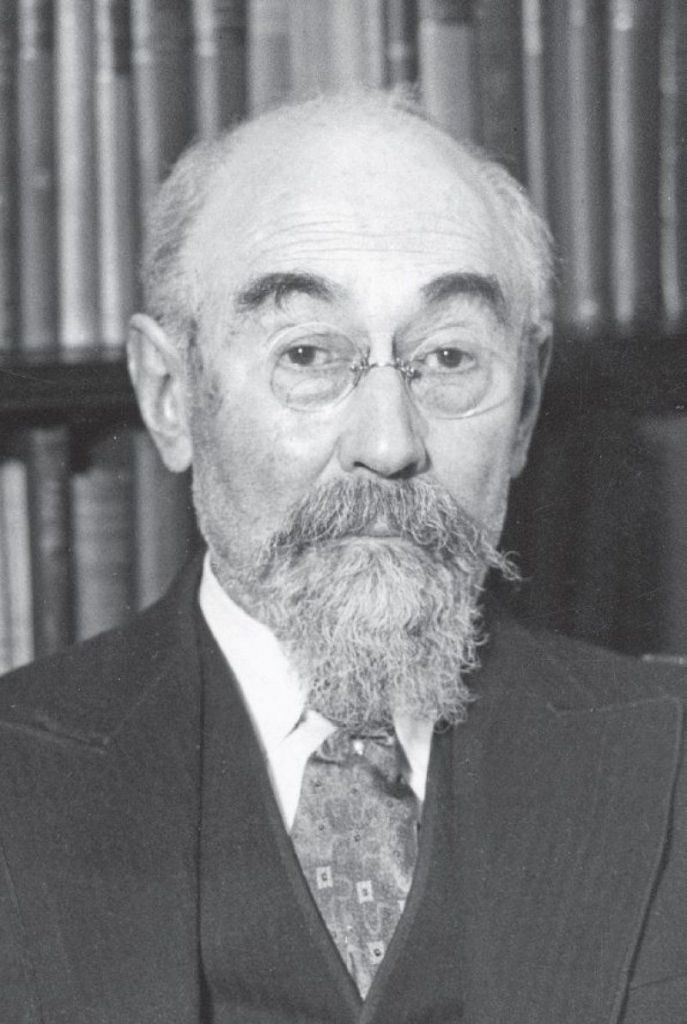
There is a temptation to speak of the unconscious as though it were a single territory—mapped, named, conquered. But what the history of depth psychology actually reveals is something more unsettled: the unconscious was not discovered once, but repeatedly, and each discovery contradicted the last.

What emerged between the late nineteenth and early twentieth centuries was not a unified theory of the hidden mind, but a series of competing visions of what it means to be human beneath consciousness. Freud, Jung, Janet, Adler, and Charcot were not collaborators in a single project; they were rivals in a struggle over meaning, causality, and agency. What they disagreed about—often bitterly—was not whether the unconscious existed, but what kind of thing it was.

Was it a storehouse of forbidden desire?

A fracture caused by trauma?

A symbolic inheritance older than the individual?

A mistaken life plan shaped by social striving?

Or simply a neurological mystery expressed through the body?

Each answer reshaped the modern self.

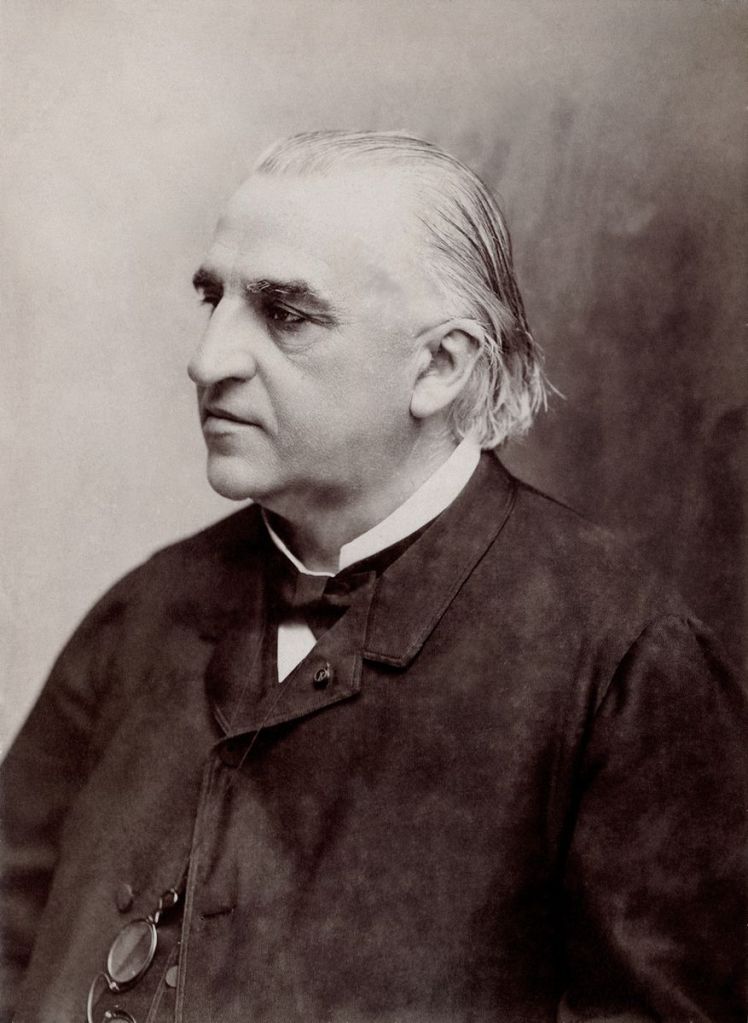
Charcot: Making the Invisible Visible

Jean-Martin Charcot stands at the threshold of the unconscious, not as its theorist, but as its exhibitor. At the Salpêtrière Hospital in Paris, Charcot demonstrated something deeply unsettling: the body could produce paralysis, convulsions, blindness, and pain without any organic lesion. Symptoms appeared, disappeared, and migrated under hypnosis.

This alone was enough to rupture the medical imagination of the time.

Charcot treated hysteria as a neurological condition, but his work undermined neurology itself. If suggestion could provoke symptoms, then symptoms were not merely mechanical failures. The body, it seemed, was responding to meanings it could not articulate.

Charcot did not ask why the symptoms appeared. He asked how they could be produced and reproduced. In doing so, he created the clinical space in which the unconscious could later be interpreted. He did not give it language, but he gave it a stage of evidence.

The discovery here was not theoretical. It was epistemological: what cannot be consciously intended can still act.

Janet: The Unconscious as Breakdown

Pierre Janet moved the inquiry inward. Where Charcot revealed the symptom, Janet investigated the structure of the mind that produced it. His central concept—dissociation—offered a vision of the unconscious radically different from Freud’s.

For Janet, the unconscious was not a reservoir of hidden wishes. It was the consequence of psychological failure.

Trauma, in Janet’s view, overwhelms the mind’s capacity to integrate experience. Certain memories, sensations, or impulses become split off, operating as autonomous systems. These dissociated elements do not seek expression; they repeat mechanically. Symptoms are not symbolic disguises but psychological automatisms.

What is striking about Janet’s model is its austerity. There is no drama of desire, no mythic depth. There is only a weakened capacity for synthesis. The unconscious is not mysterious—it is unfinished.

Janet’s therapy aimed not at interpretation but at restoration: strengthening consciousness, reconnecting fragments, stabilising attention. In many ways, his work anticipates contemporary trauma psychology, which treats symptoms less as messages than as frozen responses.

In Janet’s hands, the unconscious is not a secret life. It is what happens when experience exceeds the mind’s ability to hold it.

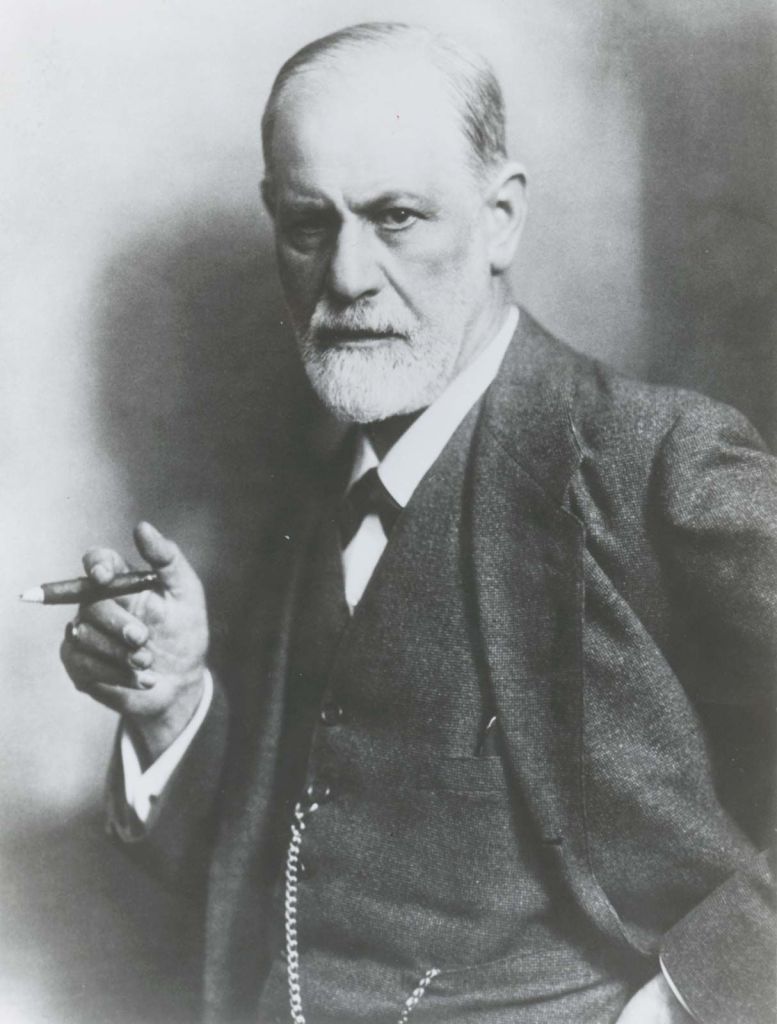
Freud: The Unconscious as Conflict

Freud inherits Charcot’s symptoms and Janet’s fragmentation—but transforms both into psychological drama. What Freud adds is meaning, and with it, conflict.

For Freud, the unconscious is dynamic. It does not merely contain forgotten material; it actively resists consciousness. Its contents—wishes, impulses, fantasies—are repressed because they are incompatible with social law, morality, or the ego’s self-image.

Symptoms, then, are compromises. They are the distorted fulfilment of forbidden desires. Dreams, slips of the tongue, neurotic rituals—all become expressions of a psyche divided against itself.

This is Freud’s radical move: he universalises the unconscious. It is not the result of trauma alone, nor a sign of weakness. It is constitutive of subjectivity.

To be human is to be in conflict with oneself.

Freud’s unconscious is also deeply historical. Childhood becomes the origin point of adult life, sexuality the organising force of the psyche. Whether one accepts these specifics or not, Freud’s larger claim endures: reason is not sovereign. Insight is hard-won, resisted, and never complete.

What Freud discovered was not simply the unconscious, but the unsettling idea that self-knowledge has an enemy within.

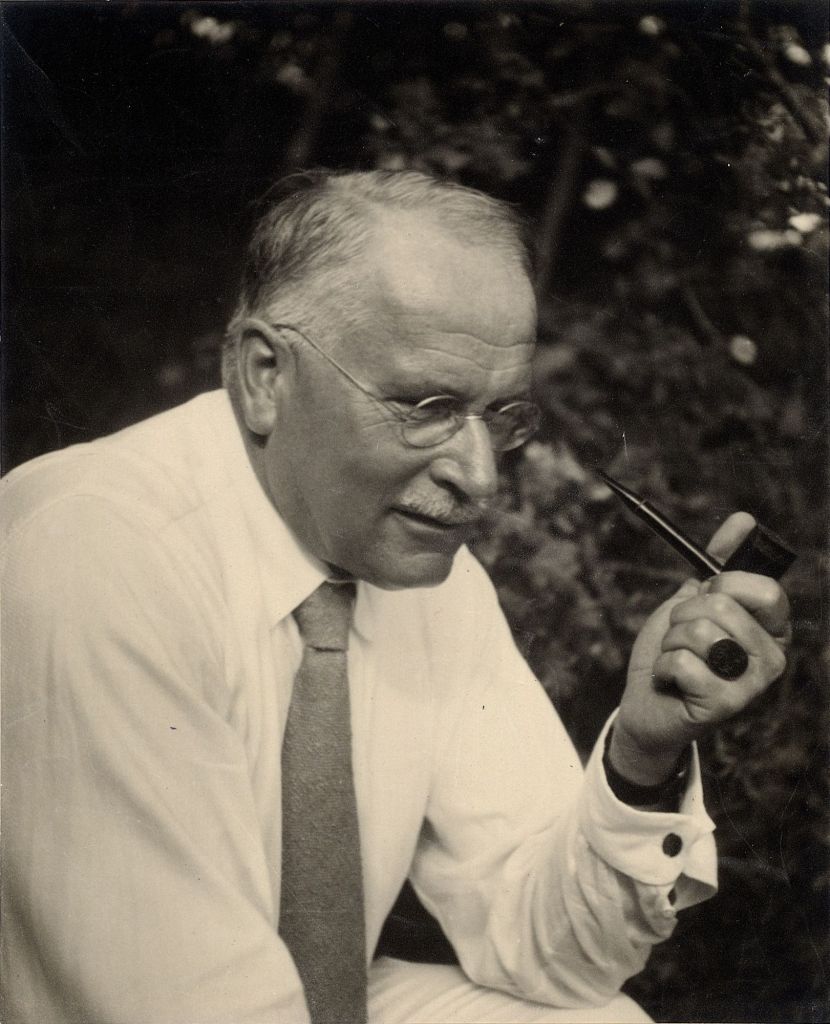
Jung: The Unconscious as Inheritance

Jung breaks with Freud at the point where desire becomes too small a language. For Jung, the unconscious cannot be reduced to personal history alone. Beneath the personal unconscious lies a deeper layer: the collective unconscious, structured by archetypes.

These archetypes are not inherited ideas but inherited forms—patterns of experience that shape how humans imagine, fear, love, and transform. Dreams, myths, and religious symbols are not disguises of repressed wishes; they are expressions of a psyche oriented toward meaning.

Where Freud sees conflict, Jung sees dialogue. Where Freud interprets, Jung listens.

Jung’s unconscious is not only disruptive; it is compensatory. It corrects the one-sidedness of consciousness, offering images that guide the individual toward wholeness. The goal is not mastery, but individuation: the slow integration of conscious and unconscious life.

This vision re-sacralises the psyche without returning to theology. It treats the unconscious as a source of wisdom—but at a cost. Jung’s symbolic language risks abstraction, and his universals can flatten historical and social specificity.

Still, Jung preserves something Freud discards: the idea that the unconscious is not merely a problem to be solved, but a dimension of being.

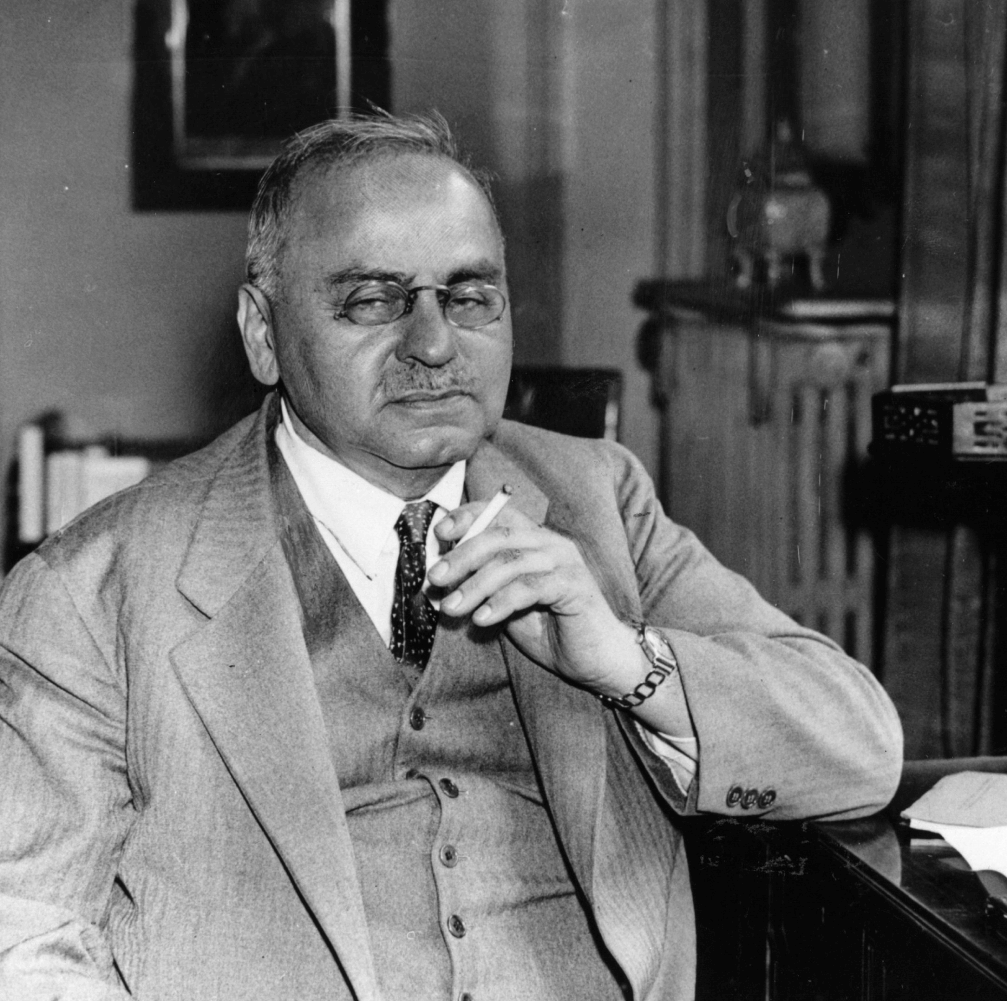
Adler: The Unconscious as Strategy

Alfred Adler offers the most pragmatic revision of depth psychology. Rejecting both Freud’s libido theory and Jung’s mythic structures, Adler reframes the unconscious in terms of purpose.

For Adler, behaviour is not driven by buried causes but by hidden goals. The unconscious is not where the past hides—it is where unexamined life strategies operate.

Feelings of inferiority, experienced early and universally, give rise to compensations. Personality becomes a creative response to perceived weakness. Symptoms, in this view, are not expressions of repressed desire or symbolic messages; they are mistaken solutions to life’s problems.

Adler’s emphasis on social interest grounds psychology in ethics and community. He insists that mental life cannot be understood in isolation from relational contexts. The unconscious is not a private abyss but a socially shaped orientation.

What Adler loses in depth, he gains in agency. His psychology asks not “What happened to you?” but “What are you trying to achieve?”

A Fragmented Discovery

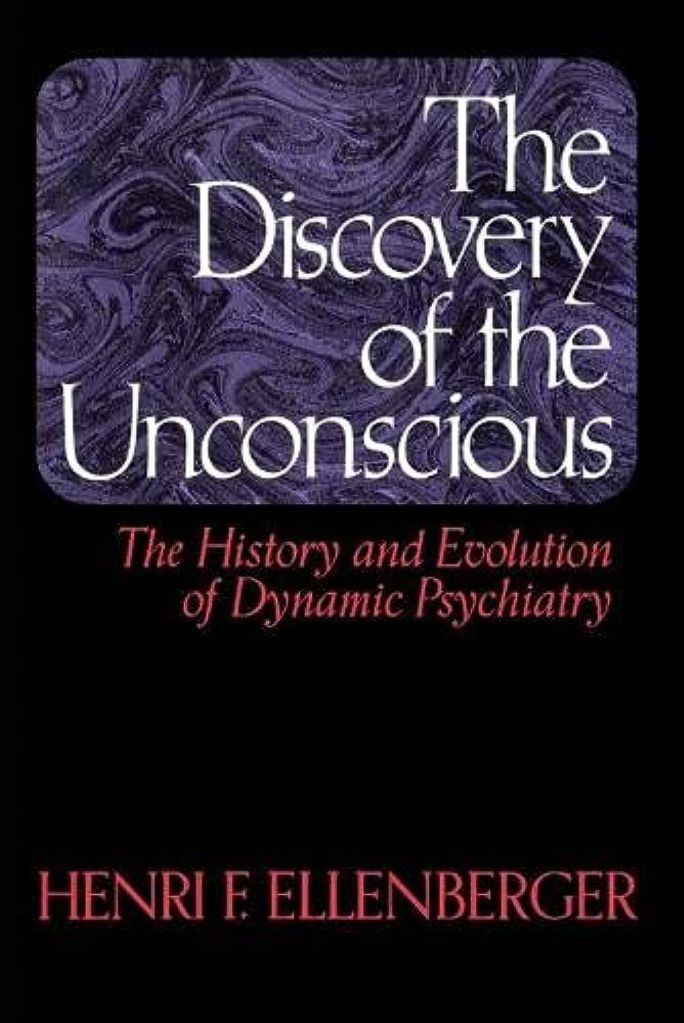
What Ellenberger’s history makes unavoidable is this: the unconscious has no single essence. Each thinker discovers what their method allows them to see.

Charcot finds the body responding to meaning.

Janet finds minds split by overload.

Freud finds conflict and repression.

Jung finds symbols and inheritance.

Adler finds strategy and striving.

Together, they dismantle the illusion of a unified self. The modern subject emerges as layered, divided, goal-oriented, symbolic, and socially embedded—all at once.

Perhaps the true discovery of the unconscious is not any particular theory, but the recognition that selfhood is unstable, and that understanding ourselves requires multiple, incompatible languages.

The unconscious resists closure because it names not a place, but a limit: the point where consciousness fails to account for what we do, feel, and become.

And that limit, once discovered, cannot be undiscovered.

Amy Winehouse: Three Albums, One Voice Refusing to Disappear

Amy Winehouse: Three Albums, One Voice Refusing to Disappear

Amy Winehouse did not arrive as a tragedy. She arrived as a mind.

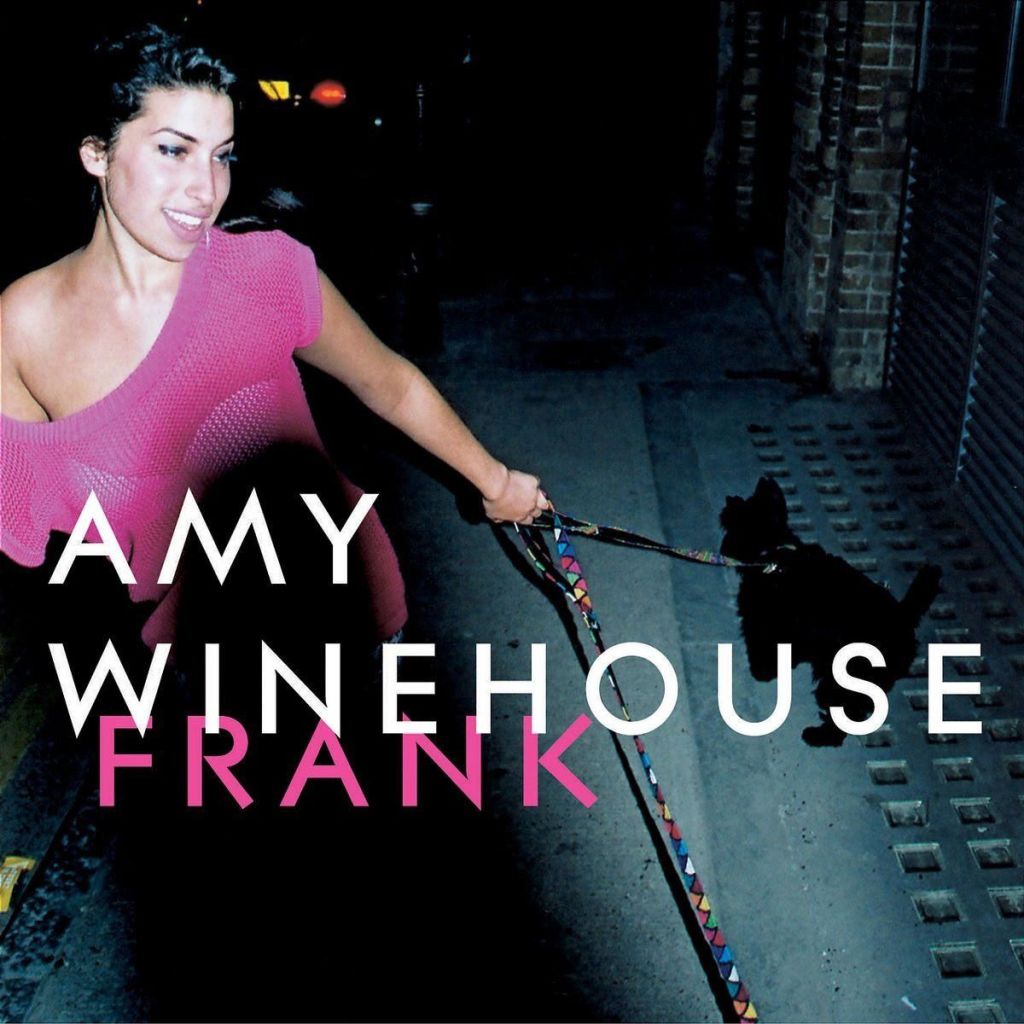
Frank (2003) is where that mind first announced itself — sharp-tongued, jazz-literate, emotionally guarded. At nineteen, Amy sang like someone already tired of being underestimated. Her voice moved with the looseness of jazz, but her lyrics cut with the precision of a young woman who had already learned how intelligence could function as armour. Frank is playful, cruel, observant. It is an album about control — emotional, sexual, intellectual. Here, Amy does not fall in love; she studies it. She names imbalance. She refuses emotional labour. Songs like “Stronger Than Me” and “Fuck Me Pumps” are not merely witty — they are defensive maneuvers. On Frank, Amy keeps herself at a distance. She is present, but never exposed.

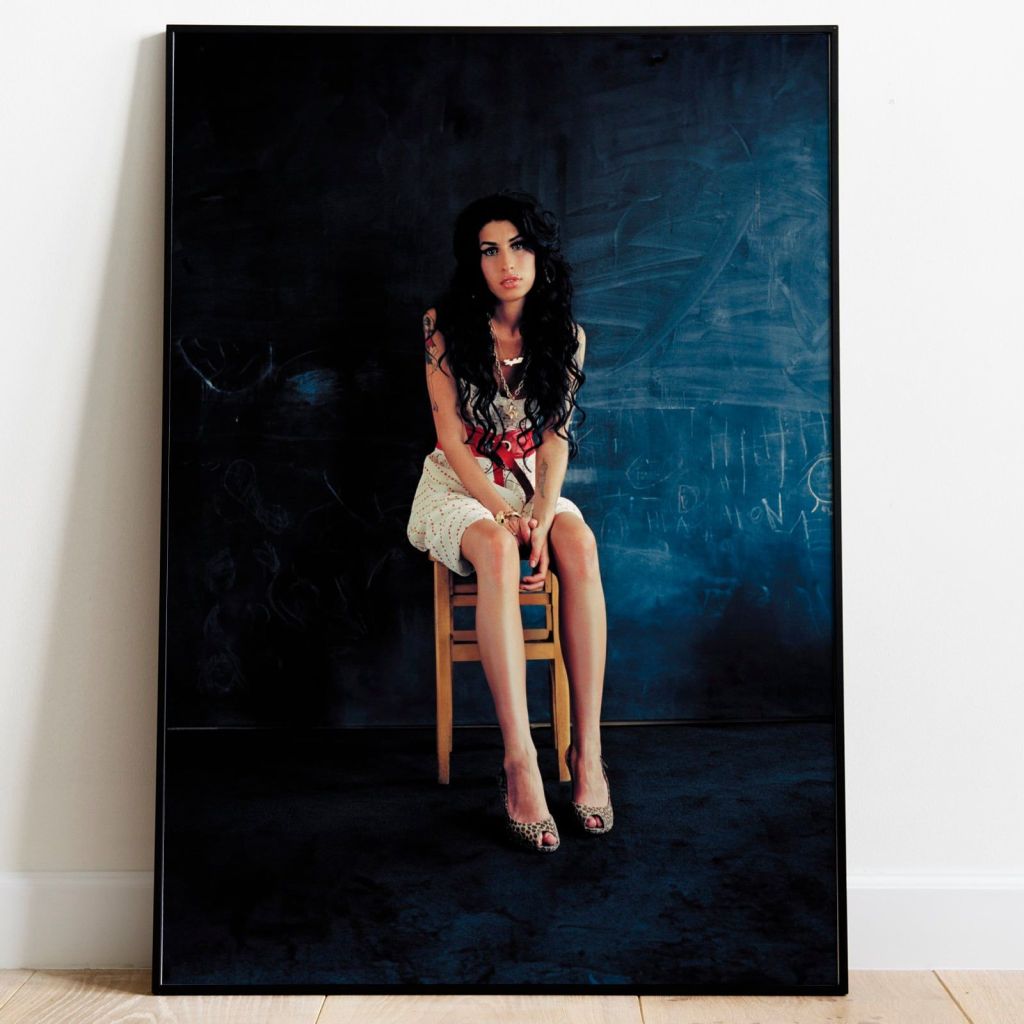
That distance disappears on Back to Black (2006).

This is the rupture. The collapse. The moment where wit can no longer protect the heart. Musically, Back to Black turns away from contemporary gloss and runs straight into the arms of Black American musical memory — Motown, girl groups, torch songs, the ghosts of Dinah Washington and Billie Holiday. Mark Ronson and Salaam Remi build a world that sounds timeless, but the pain inside it is immediate. There is no irony here, only clarity. Amy names her flaws without apology: “You Know I’m No Good.” She jokes her way around danger in “Rehab.” She stands at the edge of abandonment in the title track and does not scream — she accepts. Back to Black is devastating because it documents knowing better without doing better. Love is not redemptive; it is a losing game. And Amy sings this not as theory, but as lived fact.

If Frank is the mind and Back to Black is the wound, then Lioness: Hidden Treasures (2011) is the echo.

Released after her death, Lioness is not a statement album — it is residue. Demos, alternate takes, songs left unfinished. And yet, it may be the most intimate Amy ever sounded. Her voice here is closer to the microphone, closer to breath, closer to hesitation. There is less performance, more presence. Tracks like “Between the Cheats” and the original version of “Tears Dry on Their Own” strip away theatrical strength and leave vulnerability exposed. Listening to Lioness feels like being handed someone’s notebook without permission. It is not loud. It does not ask to be celebrated. It asks to be held carefully.

Together, these three albums form a rare and honest trilogy. Frank says: I know who I am.
Back to Black says: I lost myself.
Lioness whispers: I was still here.

What Amy Winehouse gave us was not just pain — it was articulation. She understood music history deeply, and she understood herself even more deeply. Her tragedy was not ignorance; it was awareness without rescue. And that is why her work endures. Not because she suffered, but because she told the truth while suffering — without polish, without moral framing, without asking for forgiveness.

To listen to Amy properly is to refuse to flatten her into myth. She was not only a voice. She was a writer, a thinker, a listener. Her albums do not beg for sympathy. They offer testimony. And if we are still listening — really listening — it is because that voice, cracked and brilliant, never lied.

The Bacchae – An African Choral Ballet

The Bacchae – An African Choral Ballet: A Night When Johannesburg Reimagined a Greek Tragedy

There are evenings at the theatre that entertain. There are evenings that impress. And then there are evenings that completely redefine what one believes theatre can be.

The opening night of The Bacchae – An African Choral Ballet at Johannesburg’s Joburg Theatre belonged firmly in that final category.

Presented through the extraordinary collaboration between Joburg Ballet, the UJ Choir, and the Johannesburg Philharmonic Orchestra, this was not merely a ballet. It was an operatic, choral, orchestral, theatrical and deeply African reimagining of one of humanity’s oldest tragedies. It was a production of immense ambition, staggering artistic confidence and astonishing execution.

As someone who considers Joburg Ballet one of South Africa’s greatest artistic institutions, my expectations were already incredibly high.

They somehow exceeded them.

The theatre was filled with anticipation long before the curtain rose. Every seat carried the electricity of expectation. Conversations buzzed throughout the auditorium as audiences gathered to witness something many already suspected would become an important moment in South African performing arts.

By the time the Epilogue concluded, there was no doubt.

This was a landmark production.


Ancient Greece Reborn Through Africa

The source material comes from The Bacchae, Euripides’ timeless tragedy written more than two thousand years ago.

Yet this production never felt like an ancient relic.

Instead, it felt immediate.

Relevant.

Alive.

The story follows Dionysus, the god rejected by his own people and denied his divinity by King Pentheus of Thebes. Dionysus returns to claim recognition—not simply through power, but by exposing human arrogance, pride and the illusion that reason alone can govern the world.

Standing opposite him is Pentheus, a ruler convinced that order and control are absolute.

Between them stand Agave, Cadmus, Tiresias and the citizens of Thebes, each forced to choose whether to resist or surrender to forces larger than themselves.

The tragedy is inevitable.

Pride meets divinity.

Order collides with ecstasy.

Human certainty collapses before the mysterious.

This African interpretation made those themes feel startlingly contemporary. Questions of leadership, identity, community, spirituality and power resonated far beyond the stage.


Neo Muyanga Creates a Modern Classic

The heartbeat of the production belongs to writer and composer Neo Muyanga.

His achievement cannot be overstated.

Rather than simply adapting Euripides, Muyanga creates an entirely new theatrical language where African musical traditions, classical orchestration and contemporary composition coexist naturally.

The score never merely accompanies the dancing.

It breathes.

It warns.

It mourns.

It celebrates.

Sometimes it whispers.

Sometimes it overwhelms.

The music possesses an almost spiritual quality, becoming another character inside the story rather than background accompaniment.

It feels ancient while sounding entirely modern.

It is haunting.

It is unforgettable.

It deserves to stand among the great original ballet scores produced in South Africa.


The Miracle of Movement

If the music is the soul, then the choreography by Mthuthuzeli November is the body’s language.

This is storytelling through movement at its highest level.

Not once did I feel the absence of spoken dialogue.

Every gesture carried meaning.

Every lift revealed emotion.

Every formation advanced the narrative.

The dancers did not simply execute choreography.

They became language itself.

There is extraordinary trust between every performer.

Every entrance is precise.

Every transition effortless.

Every ensemble sequence breathes together as though sharing one heartbeat.

November draws remarkable performances from every principal and every ensemble member.

The choreography demands supreme athleticism while never sacrificing emotional truth.

Technical excellence and dramatic storytelling become inseparable.

That is exceptionally rare.


The Story Told Across Three Acts

The production unfolds with magnificent dramatic architecture.

The Overture introduces Dionysus, Pentheus, Agave, Cadmus, Tiresias and the people of Thebes, quietly establishing relationships that will eventually explode into tragedy.

Act One witnesses the arrival of Dionysus and the gradual unsettling of the city. Through scenes including Community of ThebesCloak of Dionysus and the meeting between Cadmus and Tiresias, the tension grows almost imperceptibly.

By Act Two, ritual replaces certainty.

The Bacchanale sequence is hypnotic.

Pentheus enters determined to restore control, yet each encounter draws him deeper into Dionysus’ carefully constructed web. The temptation scene is especially compelling, demonstrating how pride often becomes the instrument of one’s own destruction.

Act Three delivers devastating inevitability.

The Rite of Dionysus gives way to the Tragedy of Pentheus before the cruel revelation reaches Agave with heartbreaking force.

The Denouement reminds us that this is not merely an ancient myth.

It is about us.

About every society that mistakes certainty for wisdom.

About every individual who refuses to see beyond themselves.

The Epilogue leaves silence where applause briefly hesitates—a silence born from genuine emotional impact.


Kitty Phetla: A Living Legend

Witnessing Kitty Phetla perform on stage was one of the great privileges of the evening.

She is not merely an accomplished dancer.

She is an institution.

A national treasure.

A legend of South African ballet.

Her portrayal of Dionysus possesses remarkable authority.

Every movement is economical yet filled with meaning.

She never needs exaggerated expression.

Presence alone commands attention.

She demonstrates exactly why generations of dancers regard her with such admiration.

Watching her felt like witnessing living history.


A Company Performing at the Highest Level

The entire cast deserves enormous praise.

Whether portraying divine power, royal authority, prophecy or the citizens of Thebes, every performer contributes to a unified artistic vision.

Monike Cristina, Latoya Mokoena, Revil Yon, Bruno Miranda, Mario Gaglione, Ryoko Yagyu, Chloe Blair, Ivan Domiciano and Thando Mgobhozi each bring individuality while serving the collective story.

No performance feels isolated.

Everything works together.

That unity is one of Joburg Ballet’s greatest strengths.

Their technical precision is breathtaking.

Their poise effortless.

Their grace astonishing.

Their artistry beyond question.


The UJ Choir: The Voice of the Gods

Perhaps the evening’s greatest surprise was the extraordinary impact of the UJ Choir.

Positioned at the rear of the stage, they became something far greater than musical accompaniment.

They became the conscience of the production.

Sometimes they sounded like ancient spirits.

Sometimes grieving citizens.

Sometimes divine judgement itself.

The sound was rich beyond description.

Haunting.

Powerful.

Beautiful.

There were moments when the harmony seemed to suspend time itself.

Under Choirmaster Sizwe Mondlane, the choir delivered a performance of exceptional discipline and emotional depth.

It is impossible to imagine this production without them.


The Johannesburg Philharmonic Orchestra

Supporting this immense artistic undertaking was the magnificent Johannesburg Philharmonic Orchestra.

Every phrase was played with sensitivity.

Every crescendo heightened the drama.

The orchestra provided the emotional landscape upon which dancers and singers built their performances.

Together with the choir, they created one of the most immersive theatrical soundscapes I have ever experienced.


Jay Pather’s Vision

Director Jay Pather deserves enormous recognition for bringing so many artistic disciplines into complete harmony.

Dance.

Music.

Theatre.

Choral performance.

Visual art.

African aesthetics.

Classical tragedy.

Nothing feels disconnected.

Everything serves one vision.

That level of artistic cohesion is extraordinarily difficult to achieve.

Yet throughout the evening the production flows naturally from beginning to end.


A Stage Painted in Africa

The visual world created by Jade Bowers together with the students of the UJ Faculty of Art deserves equal celebration.

The costumes burst with African identity.

Patterns.

Textures.

Colour.

Movement.

Everything feels intentional.

Nothing is decorative for its own sake.

The set complements rather than overwhelms the performers, allowing the dancers and music to remain central while creating an unforgettable visual identity.

Every scene becomes a moving painting.


Why This Production Matters

Productions like The Bacchae – An African Choral Ballet remind us why live performance remains irreplaceable.

No recording can reproduce the collective intake of breath before a dramatic reveal.

No screen can recreate the vibration of an orchestra filling a theatre.

No camera can fully capture the energy shared between dancers, choir and audience occupying the same space.

This production demonstrates what becomes possible when South Africa’s finest artistic institutions collaborate without compromise.

It honours an ancient Greek masterpiece while making it unmistakably African.

It celebrates classical ballet while embracing contemporary storytelling.

It respects tradition while refusing to be limited by it.


A Triumph for South African Theatre

When the final curtain fell, the standing ovation was immediate.

It was deserved.

Every artist involved had contributed something extraordinary.

Neo Muyanga had composed a modern masterpiece.

Mthuthuzeli November had transformed music into breathtaking movement.

Jay Pather had unified every artistic discipline into one unforgettable experience.

The UJ Choir and the Johannesburg Philharmonic Orchestra elevated the production to almost spiritual heights.

Jade Bowers and the UJ Faculty of Art created a visual feast rooted proudly in African identity.

And Joburg Ballet once again demonstrated why it stands among the finest ballet companies in the country.

This was not simply an opening night.

It was an artistic event.

One that reminded everyone fortunate enough to be inside Joburg Theatre why great theatre has the power to move us beyond words.

Long after the applause faded, one feeling remained.

Wonder.

And the certainty that The Bacchae – An African Choral Ballet is destined to be remembered as one of the defining achievements of South African performance.

Congratulations Jay Pather and the whole team for a great show and a deserved standing ovation. 

📸 : UJ Arts & Culture 

Tit for tat

Tit for tat

Don’t be a weak person
there is nothing admirable about a weak person
he is just weak.

A good person is one who has mastered his darkside.

The hero has to descend into chaos to instill order.

Tit for tat,
when someone pushes you
you push back
then you forgive and move on.

If that ends the game
then so be it,
never be a pushover.

Tit for tat,
hands wash each other
if someone turns their back on you,
you turn your back on them.

Don’t go out of your way to impress,
authenticity wins the press.

Be you,
be content with who you are.

If someone doesn’t see your value
then so be it
you stop providing the value.

Reciprocate goodness
when someone is good to you
let it flow
extend your hand so the relationship may grow.

Tit for tat,
when good intention is the star
it shows.

Tit for tat,
open where they open
close where they close
measured steps
it’s all a game.

Forgive and move forward
if they stall
then it’s all the same.

Tit for tat,
elevate those who elevate you
ignore those who ignore you.

It’s not deep
just life
you get what is meant for you.

Tit for tat,
water the seeds of others
so they may water yours.

Be flexible and yield
life will be flexible and yield
Tit for tat,
let that be your shield.

Tit for tat,
don’t be a weak person
there is nothing admirable about a weak person

he is just weak.

When someone pushes you
you push back
Never be a pushover.