Carmen

Carmen — When Ballet Becomes Seduction, Violence and Pure Theatre

There are moments when you leave a theatre having watched a performance, and there are moments when you leave having been reminded why you fell in love with the art form in the first place.

My visit to the Joburg Theatre for the opening night of Carmen, presented by Joburg Ballet from 25 September to 3 October 2026, was one of those moments.

This is ballet with heat in its veins.

This is ballet that seduces, teases, fights, laughs, smokes, flirts, threatens and ultimately breaks your heart. It is beautiful without being polite about it. It is classical technique meeting human instinct. And at its centre is Carmen herself, brought magnificently to life by Brazil’s Monike Cristina.

Thank you, Brazil.

Because Monike Cristina is something else.

She is not simply dancing Carmen. She becomes Carmen.

Veronica Paeper’s Carmen is a production that understands something fundamental about ballet: the human body can communicate what words cannot. A tilt of the head can be an invitation. A smile can be a weapon. A port de bras can become seduction. A sudden change in épaulement can expose jealousy, fear or desire. The choreography turns the vocabulary of ballet into the vocabulary of human behaviour.

And Monike Cristina understands every syllable.

She is the Goddess of Ballet.

There is an almost dangerous effortlessness to her performance. She moves through the stage with a smile, with musicality, with extraordinary control, and yet nothing about her feels mechanical. Her technique is immense, but technique never becomes the point. It is the foundation upon which personality is built.

Carmen is playful.

She is seductive.

She is alluring.

She is tempting.

She is mischievous.

She is dark.

She is violent.

She is vulgar.

She is unpredictable.

She is a femme fatale.

And Monike gives us every shade of her.

That is what makes her performance so intoxicating.

Seville Comes Alive

The story begins outside a cigarette factory in Seville, where the residents gather in the town square to watch the changing of the guard. Don José arrives with the new guard under the command of Captain Zuniga, immediately establishing the military order that will eventually collide with Carmen’s wild, untameable spirit.

Then comes midday.

The cigarette girls emerge from the factory.

And among them is Carmen.

She sees Don José and, almost immediately, there is attraction.

But this is not a conventional romantic encounter. Carmen does not wait for love to find her. She hunts it. She plays with it. She tests it.

The cigarette girls are summoned back into the factory, while Micaela arrives carrying a gift from Don José’s mother. She is his fiancée, gentle and sincere, but Don José is distracted. Something has already shifted. Carmen has entered the picture, and suddenly the safe future represented by Micaela feels very far away.

Then violence erupts.

Carmen becomes involved in a fight and is arrested. Don José is ordered to guard her.

It should be simple.

It isn’t.

Carmen persuades him to release her, and in doing so Don José finds himself imprisoned instead.

The curtain falls.

And already the spell has been cast.

What Paeper understands so beautifully is that Carmen is not simply a story about a woman who destroys a man’s life. It is a story about desire colliding with control. Carmen refuses to belong to anyone. Don José wants to possess what he cannot control. The tragedy begins long before the final confrontation.
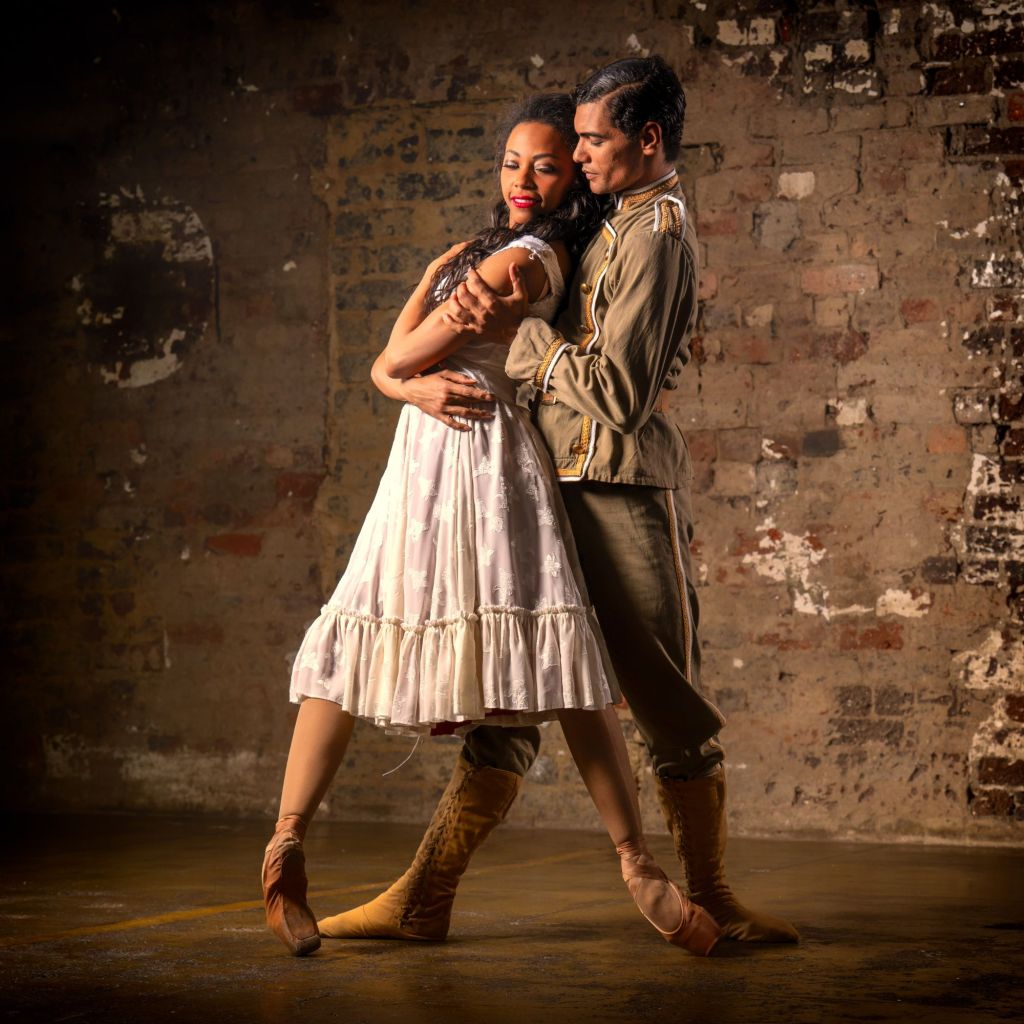
Monike Cristina: The Art of Being Irresistible

Watching Monike Cristina dance Carmen is almost unfair because she makes the extraordinary appear ordinary.

Her balances are exquisite. Her extensions are beautifully controlled. Her lines are magnificent. Her musicality is alive. Her transitions are fluid. Her épaulement carries character. Her use of the upper body gives Carmen a sensuality that goes beyond steps and positions.

And then there are the expressions.

Golden.

Perfect.

A smile appears and suddenly you understand Carmen.

A glance changes and suddenly the atmosphere shifts.

She can look playful in one instant and dangerous in the next.

That is the magic of an exceptional dramatic dancer: you don’t see the technique first. You see the person.

Monike makes Carmen feel completely alive.

There is a freedom in her movement that is almost intoxicating. Her body seems to understand the music before the music has finished speaking. Her phrasing is confident, her footwork precise, her balances assured, and her physicality allows the choreography to breathe.

There are moments when she performs feats that make you wonder how the human body is capable of doing what you have just witnessed.

And yet she smiles.

That is the extraordinary part.

Nothing looks laboured.

Nothing looks forced.

It simply happens.

Carmen walks into the room and owns it.

Monike walks onto the stage and does the same.

I am convinced there is nothing better in the world than watching Monike Cristina as Carmen.

She made me fall in love with ballet again.

Or perhaps she reminded me why I fell in love with it in the first place.

Act II — The Tavern of Lilas Pastia

A month has passed.

We move to the Tavern of Lilas Pastia, and the temperature rises.

Captain Zuniga has fallen under Carmen’s spell and dances with her. Then Escamillo, the famous Toreador, enters.

He too is immediately attracted to Carmen.

Of course he is.

How could he not be?

But Carmen’s heart and mind remain consumed by Don José.

The smugglers arrive and Carmen becomes involved in their conspiracy. When Don José arrives, she attempts to seduce him, but a bugle call summons him back to duty.

And Carmen is furious.

This is where the central conflict becomes even more apparent. For Carmen, love means freedom, instinct and surrender to desire. For Don José, duty still pulls at him. Carmen taunts him for placing his obligations above his love for her.

Captain Zuniga returns and orders Don José back to the barracks.

But jealousy has already taken over.

When Zuniga attempts to take Carmen into his arms, Don José attacks his own officer and wounds him.

There is no going back.

Don José is now hopelessly compromised and has no choice but to join the smugglers.

This is where Monike’s Carmen becomes particularly fascinating. She is not simply the object of everyone’s desire. She is the force that exposes everyone else’s weakness.

Men enter her orbit and begin revealing themselves.

Zuniga reveals his desire.

Escamillo reveals his attraction.

Don José reveals his obsession.

Carmen simply remains Carmen.

And that is her power.

Ballet That Fights

One of the most visually striking moments of the production is the fight involving the cigarette girls.

It is beautiful.

That sentence sounds contradictory until you see it.

The dancers kick.

They drag.

They pull hair.

They clash.

They attack.

And somehow, through the discipline of ballet, violence becomes choreography.

It is a remarkable demonstration of control.

Every movement has to be precise. Every kick must land safely. Every pull must be performed with trust. Every fall must be choreographed. The dancers have to create the illusion of chaos while maintaining absolute technical awareness.

And they do.

This is where ballet becomes something more than pretty movement.

The girls are fighting, but the lines remain beautiful.

The bodies remain coordinated.

The choreography remains musical.

The technique remains immaculate.

It is violence with épaulement.

It is aggression with musical phrasing.

It is theatrical conflict transformed into dance.

And Veronica Paeper deserves enormous credit for understanding that ballet does not have to remain trapped inside a world of delicate gestures and romantic idealism.

Her Carmen can be raw.

It can be sensual.

It can be funny.

It can be ugly.

It can be dangerous.

It can be vulgar.

It can be sexy.

It can be violent.

And it remains ballet.

Cigarettes, Attitude and the Unexpected

There were moments in this production that made me think: I have never seen ballet do this before.

There is smoking on stage.

There are gestures and attitudes that feel deliberately contemporary and confrontational.

And at one point Carmen appears to flip somebody off.

In ballet.

I have never seen that in ballet. Period.

And I loved it.

Because it tells us exactly who Carmen is.

She is not interested in behaving according to somebody else’s expectations.

The gesture is funny, shocking and completely character-driven. It breaks the distance between the classical art form and the messy reality of human behaviour.

That is what makes Paeper’s choreography so exciting.

She doesn’t destroy ballet’s elegance.

She weaponises it.

The classical vocabulary remains visible, but it is placed inside a world of cigarette factories, taverns, smugglers, jealousy, desire, fighting, flirtation and death.

The result is a ballet that feels theatrical in the fullest sense of the word.

Act III — The Mountains and the Death Card

The third act moves into a cave in the mountains.

The relationship between Carmen and Don José is changing.

Carmen’s passion is fading.

Don José’s is not.

He remains desperately in love with her.

Mercedes and Frasquita tell their futures through the cards, and Carmen turns one herself.

The death card.

It is one of the most powerful images in the entire story because the audience already knows that Carmen is moving towards something from which there may be no escape.

Then Escamillo arrives.

He invites Carmen and the others to the bullfight.

Don José, furious and jealous, challenges him.

The two men fight.

The smugglers separate them, and Escamillo leaves.

Then Micaela is discovered in the cave.

She brings news that changes everything: Don José’s mother is dying.

Reluctantly, he leaves with her.

But Carmen remains.

And the cards have already spoken.

The Ensemble: Because Carmen Is Not a One-Woman Show

It would be easy to allow Monike Cristina’s performance to dominate the conversation.

But that would be unfair to the production.

Carmen works because the entire company creates its world.

Revil Yon as Don José brings the necessary emotional vulnerability to the central male character. His Don José is caught between duty and desire, between the life he is supposed to live and the woman who has completely destabilised it.

Bruno Miranda’s Escamillo arrives with the swagger and physical confidence of the Toreador. He is a different kind of masculine presence from Don José: confident, celebrated and immediately magnetic.

Chloe Blair’s Micaela provides a beautiful contrast to Carmen. Where Carmen is fire, Micaela carries warmth and sincerity. Her presence gives Don José another possible life, one rooted in loyalty and tenderness.

Ivan Domiciano’s Captain Zuniga carries the authority of the military world while becoming another victim of Carmen’s irresistible magnetism.

Latoya Mokoena as Pasquita and Darragh Hourrides as Mercedes contribute to the vibrant female ensemble, while Sue Kirkland’s Madame of the Factory helps establish the social world surrounding the cigarette girls.

Albertus Dreyer as Lilas Pastia, Creagan Martin as the Pickpocket, Mothobisi Molopa as the Captain of the Guard, Brayden Stackling as the Fiesta Man, and Miles Carrott as the Chief Smuggler all contribute to the theatrical machinery of the production.

This is an ensemble piece.

Every dancer adds texture.

Every entrance contributes to the atmosphere.

Every body on stage helps construct Seville.

That is the magic of a ballet company working as one organism.

Act IV — The Bullring

Then comes the final act.

Outside the bullring, the spectators gather for the arrival of the Toreadors.

The atmosphere is festive.

But beneath the celebration sits tragedy.

Don José is in the crowd.

The procession enters.

And Carmen and Don José confront one another for the final time.

Everything has led here.

The attraction.

The seduction.

The jealousy.

The fighting.

The betrayal.

The cards.

The obsession.

The freedom.

The refusal to possess and be possessed.

And finally, the confrontation.

Carmen has always understood that passion can be both intoxicating and destructive. Paeper’s production allows that contradiction to live inside the movement.

The same woman who can make an audience smile can also make an audience uncomfortable.

The same choreography that can look exquisite can suddenly become brutal.

The same body that can float through a beautiful adagio can become a weapon.

That is Carmen.

Veronica Paeper’s Genius

Veronica Paeper’s choreography and production are the beating heart of this interpretation.

There is a confidence in the way she moves between classical ballet, character dance, theatrical gesture and flamenco influence.

The choreography never feels like ballet pasted onto a story.

It feels like the story has been translated into ballet.

That distinction matters.

The flamenco choreography by Gillian Bonegio adds another layer of Spanish character and rhythmic energy, giving the production a vocabulary beyond the purely classical.

The music of Georges Bizet remains the emotional architecture of the ballet. It is dramatic, seductive, playful and ominous, allowing the dancers to inhabit a score that seems almost designed for movement.

The scenery and costumes after the originals by Peter Cazalet create the visual identity of the world, while Vanessa Nicolau’s adaptation helps shape the theatrical journey.

Simon King’s lighting design deserves recognition too. Lighting in ballet is not decoration. It is atmosphere, focus and storytelling. It tells us where to look, when to feel tension and when the stage itself should seem to transform.

Together, these elements create a world that feels larger than the stage.

Seville becomes a character.

The factory becomes a character.

The tavern becomes a character.

The mountains become a character.

The bullring becomes the final arena in which Carmen’s fate is sealed.

Joburg Ballet at Its Best

I am a big fan of Joburg Ballet.

And productions like this remind me why.

There is something extraordinary about watching a South African company take a canonical work and make it feel alive here, in Johannesburg, in 2026.

This is not a museum piece.

It is not ballet preserved behind glass.

It is living theatre.

It is classical technique meeting contemporary theatrical instinct.

It is dancers who understand that a perfectly executed movement is only half the job. The other half is making the audience feel something.

And I felt everything.

The excitement.

The humour.

The seduction.

The violence.

The jealousy.

The beauty.

The danger.

The heartbreak.

And, above all, the sheer joy of watching dancers perform at an exceptional level.

Thank You, Brazil

But I have to return to Monike Cristina.

Because sometimes an artist arrives on stage and changes your perception of the entire performance.

That is what she did.

She is beautiful, but beauty alone is not enough.

She is technically brilliant, but technique alone is not enough.

She is expressive, but expression alone is not enough.

She has the rare combination of technique, musicality, theatrical intelligence, charisma, physical confidence and emotional instinct that makes a dancer unforgettable.

She does not merely execute choreography.

She inhabits it.

She does not merely perform Carmen.

She breathes Carmen.

And somehow she makes impossible feats look effortless.

There is something irresistible about her.

You watch her and you understand why everyone in the story falls for Carmen.

Of course they do.

Look at her.

Watch her.

Listen to the movement.

Watch the smile.

Watch the eyes.

Watch the way she turns.

Watch the way she uses her shoulders, her torso, her hands, her head.

Watch the confidence.

Watch the danger underneath the beauty.

Monike Cristina is Carmen.

And Carmen is Monike Cristina.

A Ballet Worth Falling In Love With

Carmen is everything I want ballet to be.

It is technically extraordinary, visually sumptuous, emotionally charged and dramatically fearless.

It has beautiful lines and impossible feats.

It has exquisite choreography and explosive character.

It has grace and vulgarity.

It has romance and violence.

It has humour and tragedy.

It has the discipline of classical ballet and the untamed spirit of Carmen herself.

And that is perhaps the greatest achievement of Veronica Paeper’s production: she understands that ballet does not have to choose between beauty and brutality.

It can be both.

It can kick, pull hair and drag someone across the stage and still look beautiful.

It can smoke a cigarette.

It can flirt.

It can seduce.

It can give somebody the finger.

It can fall madly in love.

It can become consumed by jealousy.

It can die.

And it can do all of this through the language of dance.

That is theatre.

That is ballet.

That is Carmen.

And that is Joburg Ballet.

From Monike Cristina’s intoxicating Carmen to Revil Yon’s Don José, Bruno Miranda’s Escamillo and Chloe Blair’s Micaela, from the ensemble to the designers, choreographers, musicians and production team, this is a company operating with remarkable commitment and precision.

Veronica Paeper has created something magnificent.

Monike Cristina has created something unforgettable.

And Joburg Ballet has once again reminded me why I am such a fan.

Carmen is at the Joburg Theatre from 25 September to 3 October 2026.

You can’t miss this.

Thank you, Joburg Ballet.

Thank you, Veronica Paeper.

And above all—

Thank you, Brazil, for Monike Cristina.

The Goddess of Ballet has arrived.

And she is Carmen.

📸 : Lauge Sorensen

The Sorrows of Young Werther

The Sorrows of Young Werther: Love, Impracticality, and the Romance That Could Never Survive

From the moment Werther begins to write, his fate is already sealed. Not because Charlotte belongs to another man, nor because society is cruel, but because Werther mistakes intensity for truth and feeling for destiny.

The Sorrows of Young Werther presents itself as a love story, but it is, more precisely, a story about what happens when love is entrusted to someone who cannot live in the world as it is.

Goethe wants us to feel with Werther. He succeeds brilliantly. But whether Werther deserves our full sympathy is another matter entirely.

A Heart Too Open for Its Own Good

Werther arrives in Wahlheim emotionally unguarded. He does not observe life; he absorbs it whole. Early diary entries pulse with delight:

“I am so happy, my dear friend, so absorbed in the exquisite sense of mere tranquil existence, that I neglect my talents.”

This line is charming — and already alarming. Werther abandons usefulness without hesitation. He does not seek balance. He seeks immersion.

His love story does not begin with Charlotte. It begins with a philosophy: life is meant to be felt, not managed.

That belief makes him magnetic. It also makes him unlivable.

Charlotte Appears — and Reality Quietly Enters

Charlotte is introduced not as a dream, but as a figure of action: feeding her siblings, organizing the household, moving easily between affection and responsibility. She is warmth anchored by duty.

Werther falls instantly. But crucially, Charlotte does not change her life to accommodate this love.

Albert exists from the beginning. Charlotte never hides this fact. Werther simply refuses to accept its implications.

What he loves in Charlotte is not merely her tenderness — it is her order. Yet he has no intention of sharing that order. He wants to orbit it, admire it, be transformed by it — without adopting its discipline.

This asymmetry dooms the romance before it fully begins.

Love Without Practicality

Werther’s letters soon reveal a dangerous pattern: emotion escalates, but action stagnates.

“Why must that which makes a man happy also become the source of his misery?”

The question is poetic — and evasive. 

Werther never asks what he might do differently. He does not seek distance, redirection, or restraint. He seeks justification.

Charlotte asks for boundaries. Werther experiences boundaries as violence.

Albert, by contrast, is quietly practical. He builds a life. He plans. He commits. Goethe does not portray him as cruel or small-minded — only unromantic.

Werther’s tragedy is not that Charlotte chooses Albert. It is that Werther could never be Albert — nor would he want to be.

Goethe’s Seduction of the Reader

This is where Goethe’s genius — and manipulation — becomes evident.

We read only Werther’s voice. We feel his anguish without interruption. His despair sounds noble because it is beautifully phrased.

“I have so much, and yet without her all is nothing.”

It is devastating. It is also untrue.

Werther has options: work, distance, friendship, change. But Goethe ensures we do not feel them emotionally, because Werther does not feel them himself.

Our sympathy is engineered.

Charlotte’s silence grows. Albert recedes into the background. The world narrows until only feeling remains.

The Return — and the Collapse

When Werther returns to Wahlheim after his failed attempt at professional life, something has hardened. His love has lost its innocence. It has become insistence.

Charlotte now actively resists. She asks him to stop visiting. She fears what his presence does to them both.

This is not romantic tension — it is danger.

Werther reads Ossian aloud, flooding the room with tragic longing, pushing emotion past the point of beauty into excess. 

Charlotte weeps. She begs him to leave.

And still, Werther does not choose withdrawal.

Werther’s Fate

Werther’s suicide is not impulsive. It is prepared, deliberate, almost ceremonious.

“I shall go before you… I shall see you again, and without the veil.”

Goethe frames the act as a final gesture of consistency. Werther remains true to himself — and that is precisely the problem.

He chooses death not because love was impossible, but because he could not imagine a version of himself that survived disappointment.

This is where sympathy must break.

Werther does not die for Charlotte. He dies for his idea of love — one that allows no compromise, no endurance, no growth beyond intensity.

A Romance Doomed from the Start

The love affair was never viable because it required Charlotte to abandon responsibility and Werther to acquire it.

Neither happens.

Charlotte chooses life as it must be lived. Werther chooses feeling as it wishes to be felt.

Goethe may invite us to weep for Werther, but he also leaves us with an uncomfortable realization: romantic excess can be as selfish as it is sincere.

Werther does not ask what love demands of him — only what it entitles him to feel.

Conclusion: Loving Too Much, Living Too Little

The Sorrows of Young Werther endures not because it celebrates romanticism, but because it exposes its limits. Goethe captures the intoxication of loving without restraint — and then follows it to its logical end.

Werther’s fate is tragic, yes. But it is also avoidable.

To read Werther honestly is to feel his pain — and then to step back and ask whether love that cannot survive reality deserves to be immortalized.

Perhaps Goethe’s true achievement is this tension: he lets us fall in love with Werther’s heart, even as he quietly reveals why such a heart cannot last.

PRIMA FACIE

PRIMA FACIE — WHEN THE LAW BECOMES THE WITNESS

Suzie Miller’s Prima Facie at The Market Theatre
17 September – 4 October 2026
How Now Brown Cow in association with The Market Theatre
Directed by Neil Coppen
Featuring Danica De La Rey Jones

There are performances you applaud.

There are performances you admire.

There are performances you discuss on the way home.

And then there are performances that seem to cast a spell over the room.

Danica De La Rey Jones’ performance in Suzie Miller’s Prima Facie belongs to the last category.

Magic.

Juju.

Pure, unexplainable theatrical magic.

I walked into The Market Theatre knowing I was about to watch a one-woman play. I walked out wondering how one human being could possibly have inhabited so many people, emotions, rooms, memories and realities for more than two hours without ever allowing the spell to break.

I have never experienced anything quite like it.

Prima Facie, presented by How Now Brown Cow in association with The Market Theatre and directed by Neil Coppen, is an extraordinarily demanding piece of theatre. It is intellectually sharp, emotionally brutal and structurally ingenious. It deals with rape, sexual violence, consent, evidence, trauma, the law, gender, class, power and the enormous distance between what happened to a person and what a legal system can actually prove happened.

But for all its difficult subject matter, this production never feels like a lecture.

It feels alive.

And at the centre of that life is Danica De La Rey Jones.

She is phenomenal.

THE MAGIC OF DANICA

I have a new favourite performer.

There is simply no other way to say it.

Danica De La Rey Jones is magic.

Watching her perform Tessa is like watching someone manipulate reality in front of you. She moves between characters without missing a beat. A change in posture, a shift in her eyes, a slight alteration in her voice, the smallest movement of her mouth—and suddenly we are somewhere else.

A different person is in the room.

A different memory.

A different emotional temperature.

A different world.

Her facial expressions are extraordinary. More than that, her microexpressions are extraordinary. The smallest movements communicate enormous amounts of information. Her eyes are constantly alive. They observe, calculate, remember, fear, seduce, challenge, laugh and break.

And that is perhaps what makes her performance so human.

Tessa is brilliant, but Danica never allows brilliance to become coldness.

She has personality.

She is funny.

She is animated.

She is vulnerable.

She is occasionally ridiculous.

She is ambitious.

She is angry.

She is frightened.

She is compassionate.

She is human.

That humanity is essential because Prima Facie is not simply the story of a lawyer discovering that the legal system has flaws. It is the story of a human being discovering that the intellectual architecture she has trusted her entire adult life cannot necessarily accommodate the reality of what has happened to her.

Danica understands that distinction.

She does not merely tell us Tessa’s story.

She makes us live inside Tessa’s mind.

For approximately two hours and ten minutes, she holds the entire room in the palm of her hand.

Alone.

No conventional ensemble.

No co-star waiting backstage to take over.

No safety net of another performer carrying the emotional weight.

Just Danica, the text, the space, the lighting, the sound and an audience.

And somehow, it is enough to fill the entire theatre.

More than enough.

TESSA: THE WOMAN WHO BELIEVED IN THE GAME

Suzie Miller introduces us to Tessa as a woman who has learned how to win.

Tessa comes from working-class origins and has climbed her way into a profession populated by people who did not necessarily begin where she did. She has fought her way upward and mastered the rules of the world she entered.

She is a criminal defence barrister.

And she is brilliant.

Tessa knows the law.

She understands the courtroom.

She understands witnesses.

She understands doubt.

She knows how to cross-examine.

She knows how to find weakness in an argument.

She knows how to manipulate a room.

She knows that emotion can become dangerous inside a courtroom and that the rules demand something more precise: evidence.

Facts.

Consistency.

Proof.

She believes in the system because the system has rewarded her.

The law is a game, and Tessa is exceptionally good at playing it.

There is something intoxicating about watching her at work.

She is fast.

Confident.

Witty.

Fearless.

She understands performance because the courtroom itself is a theatre.

There are roles.

There are costumes.

There are rituals.

There is an audience.

There is a person speaking and a person listening.

There are rules governing who gets to speak, what can be said, what can be challenged and what can be believed.

Tessa understands all of this instinctively.

And then the game becomes personal.

A brutal sexual assault tears through the architecture of her life.

Suddenly Tessa is no longer standing beside the accused.

She is on the other side.

She is the complainant.

The lawyer who understood the machinery of the justice system now has to place herself inside it.

That is where Miller’s central contradiction becomes devastating.

Tessa has spent her career understanding why a case must be proved.

Now she has to understand what it means when the thing that happened to you is real—but proving it is another matter entirely.

THE TITLE

Prima facie is a legal expression meaning, broadly, “at first sight” or “on the face of it.”

The title is devastatingly appropriate.

Because what does a legal system see?

What does a courtroom see?

What does a witness appear to be?

What does a victim look like?

What does a credible woman sound like?

What does trauma look like when translated into testimony?

The title becomes a question about appearances and assumptions.

At first sight, Tessa is successful.

At first sight, she is strong.

At first sight, she understands the law.

At first sight, she knows how the system works.

At first sight, perhaps she should be the perfect person to navigate it.

But human experience does not always present itself in a form that a courtroom can comfortably process.

That is the wound at the centre of Prima Facie.

WHEN THE DEFENCE LAWYER BECOMES THE ACCUSED

One of the most powerful aspects of Miller’s writing is the reversal.

Tessa has spent her career defending people accused of sexual violence.

She has cross-examined women.

She has challenged inconsistencies.

She has exposed uncertainty.

She has used the machinery of reasonable doubt.

She has participated in a system that demands evidence capable of surviving the adversarial process.

Then she becomes the woman sitting on the other side of the room.

And suddenly she understands the violence of the questions differently.

This is not simply hypocrisy.

That would be too easy.

Miller gives us something more uncomfortable.

Tessa believed in the rules.

She believed that applying them fairly was justice.

Her crisis comes when her own experience collides with the limitations of those rules.

The woman who once understood the courtroom as a place where truth could be tested discovers that truth and proof are not necessarily the same thing.

And this distinction becomes devastating when the person who has experienced trauma is expected to recount that trauma with perfect clarity.

Trauma is messy.

Memory is complicated.

Fear is irrational.

Human beings do not necessarily behave according to the neat logic expected of legal testimony.

And yet the courtroom demands coherence.

That tension is one of the central engines of Prima Facie.

THE COURTROOM AS THEATRE

There is something almost beautifully cruel about making this a one-person play.

Because Tessa’s world is already about performance.

She performs in court.

She performs professionally.

She performs confidence.

She performs competence.

She performs control.

Then Danica De La Rey Jones performs Tessa performing all of those things.

And beneath it all is the private person.

That creates layers upon layers of theatricality.

Danica can become Tessa.

Tessa can become the barrister.

The barrister can become the performer.

The performer can become the storyteller.

And the storyteller can suddenly break the illusion and speak directly into the emotional centre of the room.

This is why Danica’s performance feels almost supernatural.

She is not simply changing characters.

She is changing the audience’s perception of space.

One moment the theatre is a courtroom.

The next it is a law office.

Then a memory.

Then a private room.

Then a place of safety.

Then a place of terror.

Then a courtroom again.

And all of it is being created by one performer.

THE BODY REMEMBERS

One of the most difficult ideas in Prima Facie is that sexual violence does not end when the physical event ends.

The body remembers.

The mind remembers.

The environment remembers.

Language remembers.

And the legal process can become another site of trauma.

Tessa’s re-traumatisation through cross-examination is especially powerful because she knows exactly what is happening.

She knows the techniques.

She knows the strategy.

She understands why the questions are being asked.

She knows how a barrister thinks.

And that makes it worse.

There is no ignorance to protect her.

Her professional knowledge becomes part of her suffering.

The system she mastered becomes the system she must survive.

That is an extraordinary dramatic reversal.

CLASS, GENDER AND POWER

Tessa’s working-class origins matter.

Her journey into the upper reaches of the legal profession is not merely a motivational backstory. It tells us something about how she sees power.

She has entered a world that was not originally built around people like her.

She has succeeded by learning its language.

Its rules.

Its rituals.

Its codes.

She has become excellent at the game.

But Prima Facie asks whether entering a system and succeeding within it necessarily means the system has changed.

Tessa’s individual success cannot automatically dismantle the structures around her.

She can become powerful without becoming free from the structures that produced that power.

That is one of the play’s most uncomfortable ideas.

And when gender enters the equation, the discomfort deepens.

The legal system presents itself as neutral.

But the experiences of women entering that system do not always feel neutral.

Miller’s play interrogates the relationship between law and patriarchal power, particularly the ways evidentiary rules and the burden of proof can collide with the realities of sexual violence. The South African production itself describes the play as an examination of the “patriarchal power of the law.”

This is not an argument that every individual working within the law is malicious.

It is an examination of the machinery itself.

What happens when a system designed around particular assumptions about evidence encounters an experience that does not conform neatly to those assumptions?

DANICA’S EYES

I keep coming back to Danica’s eyes.

Because they are doing so much of the work.

There is life in them.

At one moment they sparkle with the confidence of a woman who knows she is the smartest person in the room.

Then they become playful.

Then suspicious.

Then frightened.

Then devastated.

Then furious.

Then empty.

Then alive again.

Those transitions are microscopic and enormous at the same time.

A lesser performer might announce every emotional transition.

Danica allows us to discover them.

That is the difference between acting and storytelling.

She trusts the audience.

She does not need to shout every emotion.

Sometimes she simply looks.

And the room understands.

NEIL COPPEN’S DIRECTION

Neil Coppen’s direction deserves enormous credit because a one-person production can easily become visually static.

This does not.

The stage has movement even when Danica is standing still.

The direction understands that the performer is the centre of the production, but not the only instrument.

Everything works around her.

The staging creates transitions without destroying the momentum of the storytelling.

The production understands that Prima Facie must feel like a journey rather than a speech.

Coppen allows Danica to move through the emotional architecture of the play with remarkable precision.

There is humour.

There is confidence.

There is acceleration.

Then the temperature changes.

The laughter disappears.

The room becomes heavier.

The silence becomes part of the storytelling.

And the production refuses to give us an easy escape.

There is no interval.

Julie-Anne McDowell even gave us some excellent advice before the performance: go to the bathroom beforehand, because once you leave the auditorium, you will not be allowed back in.

It sounds funny.

But artistically, it makes sense.

Prima Facie is not a show that wants to release you halfway through.

Once it begins, you are inside it.

And you stay there.

THE SET: A WORLD THAT CAN BECOME ANYTHING

The set design by Neil Coppen and Patrick Curtis, with set construction by Patrick Curtis and The Baxter Theatre, works in harmony with the production’s fundamental challenge: how do you create an entire world around one performer?

The answer is restraint.

Rather than overwhelming Danica, the environment gives her room.

The space can become courtroom, office, memory and psychological landscape.

That flexibility is crucial.

The set is not simply decoration.

It becomes part of the transformation.

The physical environment changes meaning depending on where Tessa is emotionally.

The same space can feel professional at one moment and threatening at another.

That is precisely what theatre can do better than almost any other medium.

A stage does not have to become a literal location.

It only has to make us believe.

And Prima Facie understands that.

LIGHTING THAT TELLS THE STORY

Tina Le Roux’s lighting design is irresistible.

It does not merely illuminate Danica.

It participates in the storytelling.

The lighting moves.

It breathes.

It changes the emotional geography of the stage.

It tells us where we are.

More importantly, it tells us how we should feel about where we are.

That is an important distinction.

Good lighting makes actors visible.

Great lighting becomes dramaturgy.

Here, light can create intimacy, tension, exposure, isolation and transformation.

The courtroom can feel clinical.

Memory can feel different.

Trauma can alter the atmosphere without requiring a literal change of scenery.

The lighting becomes another character.

And in a one-person production, that is invaluable.

COSTUME AS CHARACTER

Noluthando “Texture” Lobese’s costume design contributes another layer to Tessa’s transformation.

Costume is particularly important in a play where one performer must inhabit an entire world.

Tessa’s professional identity is inseparable from how she presents herself.

She is a barrister.

She understands presentation.

Appearance matters.

Authority matters.

Control matters.

Clothing becomes part of the armour.

But Prima Facie gradually exposes the human being underneath that armour.

The costume therefore becomes part of the larger visual language of the play: the public Tessa versus the private Tessa.

The professional identity versus the woman underneath it.

The person who knows what to do versus the person who has no idea what to do next.

SOUND, MUSIC AND THE INVISIBLE WORLD

Carl-Johan Lingenfelder’s sound design and original music are equally important.

Sound can be particularly powerful in a production about memory and trauma because sound does not always behave rationally.

A sound can transport us.

It can trigger memory.

It can create anticipation.

It can make an empty stage feel enormous.

In Prima Facie, sound helps prevent the one-person structure from feeling like a vacuum.

The world exists beyond the visible stage.

People exist beyond Danica.

Rooms exist beyond the physical set.

And memories exist beyond the present moment.

The soundscape therefore expands the production without overcrowding it.

THE WRITING: SUZIE MILLER’S TRAPDOOR

Suzie Miller’s writing is clever because she gives us Tessa before she gives us the catastrophe.

We get to know the woman who believes.

The woman who wins.

The woman who understands the rules.

The woman who thinks she understands justice.

That matters because when Tessa’s worldview collapses, ours does too.

Miller, herself a former lawyer, built the play around questions concerning the legal treatment of sexual assault and the collision between legal procedure and lived experience. The play emerged from her engagement with criminal law and her concern that something about how sexual assault is handled within the system did not adequately account for survivors’ realities.

The brilliance is in the structure.

The woman who knows how to dismantle someone else’s testimony is forced to experience the machinery from the opposite side.

The woman who believes in evidence discovers how difficult it can be to translate lived experience into evidence.

The woman who believes in justice discovers that justice is not necessarily synonymous with procedure.

And the woman who has spent her career mastering the rules is finally forced to ask whether the rules themselves are enough.

WHAT DOES JUSTICE ACTUALLY MEAN?

That may be the largest question Prima Facie leaves hanging over the audience.

Is justice simply the correct application of rules?

Is justice the discovery of truth?

Is justice punishment?

Is justice belief?

Is justice being heard?

Is justice surviving?

And what happens when those definitions contradict each other?

The play does not offer the comfort of an easy answer.

Instead, it leaves Tessa—and us—with the uncomfortable realisation that a system can be constructed around principles of fairness and still produce experiences that feel profoundly unfair.

That is the paradox.

And that paradox is what makes the play so powerful.

THE HEAVINESS

This is not an easy production.

It explores rape.

Sexual violence.

Trauma.

The interrogation of victims.

The burden of proof.

The adversarial legal process.

Gendered power.

Institutional structures.

The psychological consequences of being forced to repeatedly revisit an experience that has already damaged you.

There are moments when the production becomes difficult to watch.

It should.

The subject matter demands seriousness.

But what makes this production remarkable is that it does not confuse heaviness with monotony.

There is humour.

There is personality.

There is wit.

There is life.

And that makes the darkness darker.

Because we have seen Tessa laugh.

We have seen her enjoy herself.

We have seen her confidence.

We have seen her humanity.

So when that person begins to fracture, we understand what is being lost.

A ONE-WOMAN SHOW THAT FEELS LIKE AN ENTIRE COMPANY

This is ultimately where Danica De La Rey Jones becomes extraordinary.

She makes the impossible look effortless.

She carries characters.

She carries memories.

She carries the legal system.

She carries the emotional history.

She carries the jokes.

She carries the terror.

She carries the silences.

She carries us.

And she never makes the audience feel as though we are watching someone desperately trying to remember the next line.

Everything feels immediate.

Everything feels alive.

Everything feels dangerous.

That is why her performance feels like magic.

Juju.

Spellbinding.

The kind of performance that makes you forget your phone exists.

Forget the outside world.

Forget the time.

Forget that you are watching an actor.

For a while, there is only Tessa.

And Tessa is in trouble.

THE MARKET THEATRE AS THE ROOM FOR THIS STORY

There is also something fitting about experiencing Prima Facie at The Market Theatre.

The Market has always been a place where theatre can confront difficult questions.

Where art can disturb.

Where artists can take complicated human realities and put them directly in front of an audience.

This production belongs in that tradition.

It is not entertainment designed to make us comfortable.

It is theatre designed to make us feel.

To make us think.

To make us question.

To make us sit with something long after the lights have gone down.

And that is precisely what happened.

SOMETHING HAS TO CHANGE

The great achievement of Prima Facie is that it does not reduce its subject to a simple story of good people and bad people.

It asks bigger questions.

What happens when institutions are built around assumptions that do not adequately accommodate lived experience?

What happens when evidence becomes more important than experience?

What happens when trauma is expected to speak the language of reason?

What happens when a woman who understands the system better than most still finds herself vulnerable to it?

What happens when the person who once defended the rules becomes the person harmed by their limitations?

And what happens after that?

These questions do not end when Tessa leaves the courtroom.

They follow the audience home.

That is the power of theatre.

It does not have to solve the problem.

Sometimes it only needs to make the problem impossible to ignore.

FINAL VERDICT

I have watched theatre for years.

I have watched performers disappear into characters.

I have watched actors transform themselves.

I have watched productions that made me laugh, cry, think, rage and dream.

But I have never experienced anything quite like Danica De La Rey Jones in Prima Facie.

She is extraordinary.

She is unbelievable.

She is alive in every centimetre of the performance.

Her eyes speak.

Her face speaks.

Her body speaks.

Her silence speaks.

Her voice carries an entire universe.

And somehow she makes Tessa feel not like a character written on a page, but like a person who walked into The Market Theatre and told us the story herself.

That is a phenomenal talent.

Neil Coppen’s direction gives the performance its architecture.

Suzie Miller’s writing gives it its intellectual and emotional ammunition.

Neil Coppen and Patrick Curtis give it a world.

Patrick Curtis and The Baxter Theatre give that world physical form.

Tina Le Roux gives it light.

Noluthando “Texture” Lobese gives it visual identity.

Carl-Johan Lingenfelder gives it sound and atmosphere.

And Danica De La Rey Jones gives it a soul.

Together, they have created something powerful.

Something uncomfortable.

Something beautiful.

Something difficult.

Something necessary.

Prima Facie is a story about the law.

But ultimately, it is a story about people.

People who believe.

People who hurt.

People who remember.

People who survive.

People who question.

And people who discover that justice is much more complicated than simply knowing the rules.

The final thought is not an easy one.

It is a challenge.

Something has to change.

And after watching Danica De La Rey Jones hold an entire theatre in the palm of her hand for more than two hours, I left The Market Theatre with another thought entirely:

Magic is real.

Sometimes it walks onto a stage.

Sometimes it looks you directly in the eyes.

And sometimes, for two hours and ten minutes, it is called Danica De La Rey Jones.

Mr Duiker Sang the Blues

Mr. Duiker Sang the Blues: When Grief Takes the Stage

There are performances that entertain you.

There are performances that impress you.

And then there are performances that sit inside you.

They follow you out of the theatre. They occupy the silence of the drive home. They return to you when the lights are off and the world has become quiet enough for you to hear your own thoughts.

Mr. Duiker Sang the Blues is one of those performances.

At the Market Theatre, from 13 September to 4 October 2026, Dyondzo Kwinika’s award-winning short story has found a new life on stage. The work, winner of the inaugural 2025 DALRO Can Themba Merit Award, has been adapted for theatre by Kwinika and Greg Homann, with Homann directing. The production emerges from a literary tradition that places South African storytelling, memory and human complexity at the centre of the theatrical experience.

But describing Mr. Duiker Sang the Blues as simply a play about grief would be to make it smaller than it is.

This is a play about love.

It is about guilt.

It is about fathers and sons.

It is about the things people cannot say while there is still time to say them.

It is about mental health, suffering, masculinity, memory, shame and death.

And perhaps most painfully, it is about what happens when love arrives too late.

The Desmond Dube I Didn’t Know

I grew up watching Desmond Dube on Dube on 2 on SABC 2.

That Desmond Dube was funny.

He was light.

He was mischievous.

He understood the rhythm of a joke and the beautiful simplicity of making people laugh. He became familiar to generations of South Africans as an entertainer who could enter our living rooms and make the heaviness of the world disappear for a little while.

Then I sat in the Market Theatre and watched another Desmond Dube.

This Desmond Dube did not make me laugh.

He made me hurt.

He cried.

He mourned.

He felt.

He collapsed.

He sobbed uncontrollably.

And there was something almost startling about witnessing such a familiar entertainer stripped of the comedic armour through which so many of us had known him.

The actor disappears.

The character remains.

Desmond Dube becomes Ebenezer Duiker, a father carrying an unbearable weight. His performance is not built around grand theatrical declarations. It is built around emotional exposure. The body becomes an instrument of grief. The voice cracks. The face changes. The physicality deteriorates.

This is not the Desmond Dube of the television screen I grew up with.

This is a father who has been broken by loss.

And watching him break was devastating.

A Father, a Son and the Unbearable

At the heart of Mr. Duiker Sang the Blues is a family tragedy.

The story gradually brings us closer to these people until they cease being characters and become people we feel we know.

Ebenezer.

Evelyn.

Maru.

Josh.

The production allows us to understand them before it asks us to mourn them.

That distinction matters.

We are not simply told that something terrible has happened.

We are taken there.

We live inside the memories.

We encounter relationships.

We discover wounds.

We begin to understand the spaces between people.

And then the tragedy arrives with its full weight.

The father who crippled his son.

The son whose suffering becomes inseparable from the suffering of those around him.

The guilt that refuses to die.

The love that survives even when everything else has collapsed.

This is where Kwinika’s writing becomes particularly painful. The story does not make grief abstract. Grief has faces. It has names. It has history.

The people on stage are not symbols pretending to be human.

They are human beings carrying symbols of their own.

And by the time death becomes unavoidable, the audience has become invested.

We knew them.

Therefore, we mourned them.

The Cost of Silence

One of the most affecting elements of the play is its relationship with silence.

There are things that people say.

There are things that people leave unsaid.

And then there are things that become impossible to say because too much time has passed.

Kwinika’s original story was written from a place of guilt, silence and the unbearable, and the stage adaptation retains that emotional centre. The production’s official description similarly positions grief, memory, family and mental health at its core.

The silence in Mr. Duiker Sang the Blues therefore does not feel empty.

It feels occupied.

Occupied by regret.

Occupied by memory.

Occupied by everything that should have been said.

There is an uncomfortable truth buried within the play: sometimes the people closest to us are the people we understand least.

Sometimes love is present but poorly expressed.

Sometimes people hurt the people they love.

Sometimes suffering is hidden behind appearances.

Sometimes the person who appears strong is the person barely surviving.

And sometimes a family only begins to understand the full magnitude of someone’s pain after they are gone.

The Horned Animal

And then there is the animal.

The horned creature standing over the stage and looking into the performance space.

Looking at us.

Watching.

It is impossible not to notice it.

It almost feels divine.

A presence above the human drama.

An observer.

A witness.

God-like.

And yet there is something deeply significant about what this animal represents.

It is not a predator.

It eats grass.

It does not need to consume flesh to survive.

It exists in a completely different relationship with violence than the human beings whose story unfolds beneath its gaze.

That contrast becomes haunting.

Human beings carry violence within themselves.

We wound one another.

We carry resentment.

We punish.

We judge.

We misunderstand.

We destroy things we love.

And above all of this sits the animal.

Watching.

Perhaps the creature becomes a mirror.

Perhaps it becomes God.

Perhaps it becomes nature.

Perhaps it becomes the silent witness that human beings desperately want when their own lives have become too complicated to understand.

Or perhaps its meaning is deliberately left open.

That is the beauty of theatre.

A symbol does not always need to announce its answer.

Sometimes it simply needs to watch.

And the animal watches.

The stage watches.

The audience watches.

And suddenly we become aware that we too are witnesses.

Theatre Without Distance

The intimacy of the production is extraordinary.

The stage is positioned within the audience.

There is no enormous gulf separating performer from spectator.

No comfortable distance.

No great theatrical wall.

The performers are close.

They are almost eyeball to eyeball with us.

And that changes everything.

We are not merely watching these people.

We are in their space.

We are implicated in their pain.

The theatre becomes personal.

The room becomes smaller.

The story becomes closer.

Every breath matters.

Every movement matters.

Every silence becomes louder.

This is theatre stripped of unnecessary distance.

It is theatrical, poetic and deeply personal.

And because the audience is so close, performance becomes incredibly important.

There is nowhere to hide.

The actors cannot disappear behind spectacle.

The emotions have to be truthful.

The performances have to carry the room.

And they do.

Desmond Dube as Ebenezer

Desmond Dube’s Ebenezer is the emotional centre of the production.

His grief is physical.

It lives in his shoulders.

It lives in his voice.

It lives in his face.

It lives in the way his body seems to surrender to the enormity of what has happened.

There are moments when he appears to have no strength left to carry himself.

And then the tears come.

Not cinematic tears.

Not theatrical tears designed to tell the audience, this is the sad part.

These feel like tears from somewhere much deeper.

Dube allows Ebenezer to be ugly in his grief.

And that is important.

Grief is not always beautiful.

Sometimes it is embarrassing.

Sometimes it is violent.

Sometimes it is exhausting.

Sometimes it makes people behave in ways they never imagined possible.

Sometimes grief leaves a person lying on the floor because standing has become too difficult.

Dube gives us that man.

The broken man.

The father.

The human being.

And suddenly the actor I remember from comedy becomes an entirely different theatrical force.

Evelyn, Maru and Josh

Nomathamsanqa Ngoma brings Evelyn into the emotional architecture of the story with sensitivity and presence.

Tankiso Mamabolo’s Maru contributes to the complicated network of relationships through which the story unfolds, while William Harding’s Josh becomes part of the painful emotional landscape that the production gradually reveals.

Together, the four performers create something important: an ensemble.

Nobody exists merely to decorate another person’s story.

Everybody contributes to the emotional history of the room.

That is why the audience becomes invested.

We are not simply waiting for the plot to reach its conclusion.

We are discovering people.

And when you discover people, you become vulnerable to their loss.

Greg Homann and the Architecture of Grief

Greg Homann’s direction understands that this story does not need to be shouted.

The material already carries enormous weight.

The direction therefore allows the emotional power to emerge through proximity, movement, silence, music and performance.

The result is a production that feels intimate rather than excessive.

It trusts the audience.

It allows us to sit with uncomfortable moments.

It allows grief to breathe.

The adaptation by Dyondzo Kwinika and Greg Homann is particularly important because this is a story that began as literature.

The task of taking a short story from the page and placing it inside a room full of living bodies is enormous.

Words must become movement.

Memory must become theatrical action.

Description must become design.

Interior thought must become performance.

And Mr. Duiker Sang the Blues demonstrates what can happen when literature is allowed to become theatre rather than simply being transferred from one medium to another.

The Market Theatre has a long tradition of bringing significant literary works into theatrical form, and this production continues that relationship between South African writing and the stage.

The Poetry of Sound

The blues are not merely in the title.

They are in the atmosphere.

Yogin Sullaphen’s work as Sound Designer, Co-Composer and Musician, alongside Petunia Msani as Co-Composer and Chorus, gives the production an additional emotional language.

Music does not simply accompany the story.

It helps carry it.

There are moments when words cannot adequately express what the characters are experiencing.

Music enters that space.

The sound becomes memory.

The sound becomes mourning.

The sound becomes the emotional pulse underneath the dialogue.

And this is fitting for a story centred on an artist and the psychological price of artistic life.

The official production description calls the work a play-with-music and highlights its live, experimental and narrative-driven musical component.

There is something inherently blues-like about the emotional world of Mr. Duiker Sang the Blues.

The blues understands pain without requiring pain to become spectacle.

It understands longing.

It understands loss.

It understands the human need to turn suffering into sound.

Light, Space and the Living Stage

Thabo Pule’s lighting design deserves particular praise.

In an intimate production such as this, lighting cannot simply illuminate actors.

It has to sculpt emotional space.

It has to determine where our eyes go.

It has to create transitions between memory and presence.

It has to make the stage feel different even when the physical space has barely changed.

And the lighting here contributes enormously to the atmosphere.

Hailey Chisholm’s set design works in harmony with that intimacy.

There is no need for an enormous physical world when the emotional world is already enormous.

The stage becomes a psychological landscape.

Nelisiwe Xaba’s movement direction further expands that language, allowing bodies to communicate things that words cannot.

This is why the production feels poetic.

Its poetry is not only in the dialogue.

It is in the bodies.

The light.

The music.

The silence.

The space.

The gaze of the animal.

The audience sitting close enough to see everything.

Costume as Character

Noluthando “Texture” Lobese’s costume design contributes another layer to the world of the play.

Costume can tell us where people belong.

It can tell us how they see themselves.

It can establish time, identity and social context.

But more importantly, in a character-driven production, costume helps actors inhabit people.

The performers do not simply wear clothes.

They enter another emotional reality.

Every element of the production therefore feels connected.

Nothing exists entirely on its own.

Sound speaks to movement.

Movement speaks to lighting.

Lighting speaks to space.

Costume speaks to character.

And performance brings all of it to life.

Mental Health Without the Mask

Perhaps the most important conversation within Mr. Duiker Sang the Blues is the conversation about mental health.

Especially because artists are often expected to perform happiness.

The world loves the entertainer.

It loves the musician when the musician is on stage.

It loves the actor when the actor is making people laugh.

It loves the artist when the artist gives.

But what happens when the artist is suffering?

What happens when the performer goes home?

What happens when applause disappears?

What happens when the person behind the public image cannot perform anymore?

The production asks difficult questions about the cost of living with inner demons while the outside world expects talent, productivity, charisma and perfection.

The Market Theatre itself describes the play as an exploration of the psychological cost of creative talent and the ways mental-health challenges within the creative community can be hidden beneath performative joy and the pursuit of perfection.

This is an important conversation.

Because the artist is still a person.

The comedian still has sadness.

The musician still has fear.

The actor still has wounds.

The celebrated person still needs love.

And perhaps the most dangerous thing society can do is mistake someone’s ability to entertain us for evidence that they are okay.

The Audience Becomes Family

By the end, something remarkable has happened.

The audience has become emotionally involved.

We have laughed where there was laughter.

We have listened.

We have watched people struggle.

We have witnessed relationships fracture.

We have watched a father carry an almost impossible burden.

And eventually, we mourn.

Not because the production tells us to mourn.

Because it has made us care.

That is the difference between witnessing tragedy and experiencing it theatrically.

The play earns its emotional ending.

It takes us from beginning to end.

It tells us who these people are.

It allows us to understand their relationships.

It reveals the wounds.

It gives us enough time to become invested.

And then it asks us to confront the consequences.

That is storytelling.

When the Blues Become a Language for Grief

There is a reason the title stays with you.

Mr. Duiker Sang the Blues.

The blues are often understood as music born from suffering, but suffering is not the whole story.

The blues is also survival.

It is the transformation of pain into expression.

It is the decision to give suffering a voice.

That is what this production does.

It takes grief and gives it bodies.

It takes guilt and gives it language.

It takes mental anguish and gives it movement.

It takes death and gives it memory.

It takes a short story and gives it a stage.

And perhaps most importantly, it takes people who could easily become statistics in a conversation about mental health and turns them back into human beings.

People with names.

People with histories.

People who loved.

People who failed.

People who suffered.

People who hurt one another.

People who wanted to be understood.

People who deserved more time.

The Legacy of a Story

There is something fitting about Mr. Duiker Sang the Blues arriving at the Market Theatre through the Can Themba legacy.

The DALRO Can Themba Merit Award was created to nurture South African short-story writing and connect literary creation with further opportunities for writers. Kwinika’s story was selected from more than 250 submissions and published in When Water Wants To, before being developed for the stage.

That journey matters.

A story begins on a page.

Then somebody reads it.

Someone believes in it.

An award gives it another life.

A theatre gives it bodies.

Actors give it voices.

Designers give it an environment.

Musicians give it rhythm.

A director gives it shape.

And eventually an audience sits in the dark.

And listens.

This is how culture survives.

This is how stories travel.

This is how one person’s imagination becomes part of the collective memory.

A Must-See

Mr. Duiker Sang the Blues is poetic.

It is intimate.

It is beautifully performed.

It is deeply moving.

It is painful without being gratuitous.

It is theatrical without losing the humanity of its characters.

It is a story about death, but it is ultimately concerned with life: how we love, how we fail, how we suffer, how we remember and how we carry the people we have lost.

Desmond Dube gives us a performance that challenges everything I thought I knew about his range.

Nomathamsanqa Ngoma, Tankiso Mamabolo and William Harding complete an ensemble that gives the story emotional depth and humanity.

Greg Homann’s direction understands the power of intimacy.

Dyondzo Kwinika’s writing gives the production its soul.

Hailey Chisholm, Yogin Sullaphen, Petunia Msani, Noluthando “Texture” Lobese, Nelisiwe Xaba and Thabo Pule build the world around that soul through set, sound, music, costume, movement and light.

And somewhere above them all, that horned animal continues to watch.

It eats grass.

It does not eat flesh.

It watches humanity wrestle with itself.

Perhaps that is God.

Perhaps it is nature.

Perhaps it is memory.

Perhaps it is simply a witness.

But it watches.

And we watch.

And for a little while, inside the intimate darkness of the Market Theatre, four actors become a family, a story becomes a wound, music becomes mourning, and grief becomes theatre.

I walked into Mr. Duiker Sang the Blues expecting a play.

I walked out having mourned people I had never met.

That is the power of theatre.

That is the power of storytelling.

That is the blues.

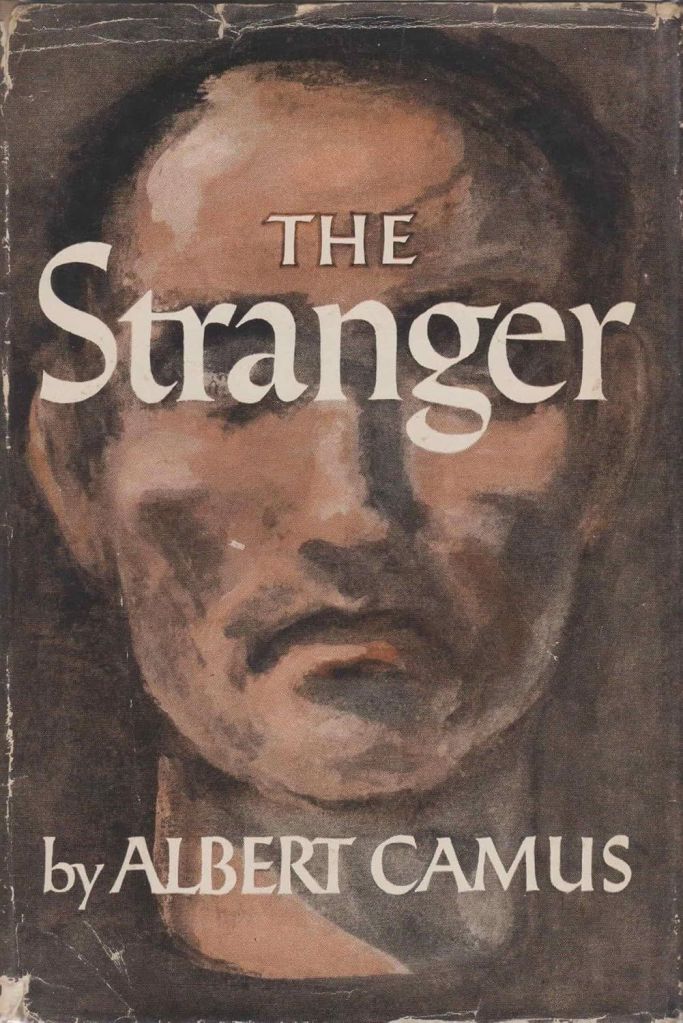
The myth of Sisyphus

Meursault and Sisyphus: Living Without Appeal in an Absurd World

Albert Camus’s The Stranger and The Myth of Sisyphus are not merely companion texts; they are two expressions of the same philosophical act. One dramatizes the absurd through narrative, the other theorizes it through philosophy. Together, they offer Camus’s most uncompromising answer to the problem of meaning in a world stripped of transcendence, God, and final justification. If The Myth of Sisyphus asks whether life is worth living once meaning collapses, The Stranger shows us what such a life looks like when lived to its bitter end.

At the heart of both works lies Camus’s concept of the absurd: the confrontation between humanity’s desperate need for meaning and the silent indifference of the universe. The absurd is not a feeling, nor a property of the world alone, but a relationship—a tension that cannot be resolved without either intellectual dishonesty or self-destruction. Camus insists that this tension must be lived, not escaped.

Meursault, the protagonist of The Stranger, is not a philosopher. He never articulates the absurd. He embodies it.

The Absurd Man: From Theory to Flesh

In The Myth of Sisyphus, Camus introduces the figure of the absurd man—one who lives fully aware that life has no ultimate meaning, yet refuses both suicide and false consolation. Suicide, for Camus, is a confession that life is not worth the trouble. Religion and metaphysical hope are equally evasive, offering answers where none exist. What remains is revolt: a constant, lucid defiance against meaninglessness.

Meursault is often misunderstood as apathetic, robotic, or emotionally deficient. But this reading misses Camus’s deeper intention. Meursault is not incapable of feeling; he simply refuses to lie. He does not pretend grief at his mother’s funeral. He does not feign belief in God when faced with death. He does not manufacture meaning where none presents itself. In this sense, Meursault lives the absurd condition more honestly than anyone around him.

His crime is not murder—society forgives murder easily enough—but refusal of illusion. He will not say that his mother’s death devastated him. He will not say that killing the Arab had a metaphysical cause. He will not say that he regrets life itself. In the courtroom, Meursault is judged less for what he did than for what he did not pretend to feel.

This is precisely the danger Camus identifies in The Myth of Sisyphus: society cannot tolerate those who expose its comforting fictions.

The Trial of Meaning

Meursault’s trial is not a legal proceeding; it is a metaphysical inquisition. The prosecutor reconstructs a narrative in which Meursault’s failure to cry at his mother’s funeral becomes proof of his moral monstrosity. The sun, the heat, the physical discomfort that Meursault cites as the immediate cause of the shooting are dismissed as absurd excuses—yet these are the only honest explanations available.

Camus is ruthless here. The court does not want truth; it wants coherence. It wants motive, remorse, redemption. In The Myth of Sisyphus, Camus argues that humans cannot bear a world that does not explain itself. Faced with the absurd, we rush to impose meaning—even if it must be fabricated.

Meursault’s refusal to cooperate with this fabrication seals his fate. He will not perform grief. He will not rehearse repentance. He will not appeal to God.

And so he must die.

Suicide, Execution, and the Refusal of Escape

The opening line of The Myth of Sisyphus is famously stark: “There is but one truly serious philosophical problem, and that is suicide.” Camus’s answer is unambiguous: suicide is an escape, not a solution. It annihilates the very consciousness that experiences the absurd tension.

Meursault, facing execution, arrives at the same conclusion without philosophy. He does not cling to hope of reprieve. He does not seek absolution. When the chaplain urges him to turn to God, Meursault explodes—not in fear, but in clarity. He recognizes that hope itself is the final lie.

This moment is crucial. Meursault does not despair. He awakens.

He accepts that the universe is indifferent—and in that acceptance, he feels free. For the first time, he understands that nothing has ever promised meaning, and therefore nothing has been taken from him.

Like Sisyphus, he reaches the summit.

Sisyphus and the Happiness of Defiance

In Greek myth, Sisyphus is condemned to roll a stone up a mountain for eternity, only to watch it fall back down. For Camus, this is the perfect image of the human condition. The labor is meaningless, repetitive, and eternal. And yet Camus concludes his essay with a startling assertion: “One must imagine Sisyphus happy.”

Why happy? Because Sisyphus knows his fate. He does not hope for escape. He does not pray for mercy. The moment he walks back down the mountain, conscious of his condition, the rock becomes his task. The gods’ punishment fails because Sisyphus refuses despair.

Meursault reaches the same state in his prison cell. Awaiting execution, he opens himself to the “gentle indifference of the world.” He wishes for a crowd of spectators who will greet his death with cries of hatred—not because he seeks suffering, but because hatred would confirm his final connection to life, to reality as it is, unsoftened by illusion.

This is not nihilism. It is revolt.

Living Without Appeal

Both The Stranger and The Myth of Sisyphus insist on a radical ethical position: live without appeal. Do not appeal to God, to destiny, to history, or to future redemption. Live with full awareness of death, contingency, and meaninglessness—and yet live intensely.

Meursault loves swimming, sex, sunlight, cigarettes, and the physical immediacy of the present moment. He does not live less than others; he lives more honestly. His tragedy is not that he dies, but that society cannot tolerate someone who exposes the groundlessness beneath its moral theatre.

Camus does not offer comfort. He offers clarity.

In a world without transcendence, dignity is found not in hope, but in lucidity. Not in resignation, but in revolt. Not in meaning, but in presence.

Meursault is Sisyphus without the mountain. Sisyphus is Meursault without the guillotine. Both teach us the same lesson: that even in an indifferent universe, the human refusal to lie—to oneself above all—remains a form of freedom.

And that freedom, fragile and fleeting as it is, is enough.

The Stranger

Meursault, the Sun, and the Crime of Indifference

Alienation, Absurdity, and Moral Judgment in Albert Camus’s The Stranger

Albert Camus’s The Stranger is one of the most unsettling novels of the twentieth century, not because of what its protagonist does, but because of what he refuses to do. Meursault does not grieve properly, does not lie convincingly, does not explain himself, and above all, does not pretend that life has an inherent meaning. For this, he is judged more harshly than for murder. In The Stranger, Camus stages a quiet but devastating trial—not only of Meursault, but of society itself, exposing how moral systems rely less on justice than on emotional conformity.

At its core, The Stranger is a novel about the crime of indifference. Meursault’s failure is not ethical in the traditional sense; it is existential. He does not deny morality—he simply experiences the world without illusion. In doing so, he becomes intolerable to a society that demands performance, sentiment, and metaphysical reassurance.

The Opening Shock: A World Without Consolation

“Mother died today. Or maybe yesterday, I don’t know.”

Few openings in modern literature are as famously dispassionate. From the first line, Camus establishes Meursault as a man fundamentally estranged from expected emotional responses. This is not cruelty, nor is it repression—it is a radical honesty. Meursault reports facts, not feelings. He experiences the world as a sequence of physical sensations: heat, light, fatigue, hunger, pleasure.

The funeral scene is crucial. Meursault does not cry. He smokes, drinks coffee with milk, notices the sun, and feels irritated by the heat. To the reader—and later to the courtroom—this behavior appears monstrous. Yet Camus subtly suggests something more disturbing: Meursault’s reactions are not false. They are simply unedited.

Society does not demand grief; it demands the appearance of grief. Meursault’s crime begins here, long before the murder, because he refuses to lie about what he feels—or does not feel.

The Sun as Fate: The Murder Without Motive

The murder of the Arab on the beach is one of the most discussed acts in modern literature precisely because it resists interpretation. There is no hatred, no ideology, no personal vendetta. Meursault does not kill out of anger or revenge. He kills because of the sun.

The heat is unbearable. The light blinds him. The knife flashes. The moment collapses into sensory overload. Camus strips the act of psychological depth, forcing us to confront a horrifying possibility: not all violence is meaningful.

This is Camus’s most radical claim. The universe does not operate according to moral logic. Events happen without reason, and humans desperately impose narratives afterward to make them bearable. The murder is absurd not because it is trivial, but because it lacks justification. It simply is.

When Meursault fires the gun, then fires four more shots into the lifeless body, it is less an escalation than a rupture—a moment where the absurd reveals itself fully. The sun, indifferent and overwhelming, becomes the true antagonist of the novel.

Love Without Illusion: Marie and Emotional Honesty

Meursault’s relationship with Marie further complicates our judgment of him. He enjoys her company, desires her physically, and experiences happiness with her. When she asks if he loves her, he answers honestly: it doesn’t mean anything, but he probably doesn’t.

This answer horrifies us—not because it is cruel, but because it violates the ritual language of love. Meursault does not pretend that emotions have metaphysical weight. He experiences pleasure, not transcendence.

Camus is not suggesting that Meursault is ideal; rather, he is asking whether lying about love is morally superior to telling the truth about it. Society prefers comforting falsehoods to uncomfortable sincerity. Marie accepts Meursault’s indifference more easily than the court does, because her expectations are human, not ideological.

The Trial: Judged for Not Crying

The second half of The Stranger transforms into a grotesque parody of justice. Meursault is not truly tried for murder; he is tried for failing to conform. The prosecutor focuses obsessively on Meursault’s behavior at his mother’s funeral, portraying him as a monster incapable of moral feeling.

This is the novel’s most devastating insight: society punishes emotional heresy more severely than violence. Meursault’s honesty threatens the symbolic order. If grief is optional, if love is contingent, if God is silent, then the foundations of meaning begin to crumble.

The courtroom becomes a theater of moral outrage, where sincerity is irrelevant and symbolism reigns supreme. Meursault is condemned not because he killed a man, but because he did not cry for his mother. The verdict is predetermined; the narrative must be preserved.

God, Refusal, and the Final Awakening

In prison, Meursault is offered one final escape: faith. The chaplain insists on repentance, on God, on eternal meaning. Meursault refuses violently. His outburst is not nihilistic—it is lucid.

He recognizes, finally and fully, that the universe is indifferent. And in that recognition, he experiences freedom. If life has no ultimate meaning, then it belongs entirely to the present moment. The absurd is not despair; it is clarity without consolation.

Meursault’s final wish—that the crowd greet his execution with cries of hatred—is often misunderstood. It is not masochism. It is coherence. He wants the universe to be honest with him, just as he has been honest with it. No false compassion. No illusions.

The Stranger as Existential Mirror

The Stranger endures because it asks a question that remains deeply uncomfortable: How much of morality is genuine, and how much is performance? Meursault is not a hero, but he is a mirror—reflecting the fragility of our moral certainties.

Camus does not ask us to imitate Meursault. He asks us to confront the absurdity we conceal beneath rituals, sentiments, and narratives. Meursault’s refusal to lie makes him intolerable, but it also makes him free.

In the end, The Stranger is not about murder, grief, or atheism. It is about the cost of honesty in a world that demands meaning. Meursault pays that cost with his life, but he dies awake—having finally embraced the gentle indifference of the world.

And perhaps that, Camus suggests, is the most honest ending available to us.

The denial of death

The Terror Beneath Civilization: Ernest Becker and the Denial of Death

Human beings are the only animals who know they will die. From this unbearable knowledge, Ernest Becker argues, everything else follows. The Denial of Death is not merely a work of psychology or anthropology; it is an indictment of civilization itself. Beneath our achievements, moral codes, love stories, political systems, and religious faiths lies a single, unspoken terror: the certainty of our own extinction.

For Becker, consciousness is not a triumph but a tragedy. To be self-aware is to stand at a distance from nature, to recognize one’s fragile body as temporary, replaceable, and doomed. The human mind, unable to tolerate this truth directly, constructs elaborate symbolic systems to protect itself. Culture is not an ornament of human life; it is a defense mechanism. Civilization, in Becker’s stark formulation, is a collective effort to deny death.

This is Becker’s unsettling claim: we do not live as we do because we seek truth, goodness, or beauty. We live as we do because we cannot bear the terror of being animals who must die.

Consciousness as a Curse

The human condition is paradoxical. We are biological organisms driven by instinct, hunger, and fear, yet we possess symbolic consciousness that allows us to imagine eternity, meaning, and transcendence. This split—between body and symbol, animal and god—is the source of our anxiety. We are “gods with anuses,” as Becker memorably puts it: capable of imagining immortality while rotting from within.

Unlike other animals, humans cannot simply live in the present. We remember the past, anticipate the future, and project ourselves into a world beyond our own lifetimes. This capacity for symbolic thought gives rise to art, language, and religion—but also to neurosis, guilt, and violence. Consciousness exposes us to a truth we are not equipped to endure: that everything we love, including ourselves, will disappear.

The problem is not death itself, but the awareness of it. Becker insists that human psychology is fundamentally shaped by this awareness. Our minds evolve not to confront mortality honestly, but to keep it at bay. Mental health, in this sense, is not a state of truthfulness but of successful repression.

Immortality Projects: How Humans Cheat Death

Becker’s most enduring concept is that of the immortality project. These are symbolic systems through which individuals seek to transcend death—not physically, but meaningfully. If the body must perish, then the self must be preserved in another form: legacy, reputation, nation, soul, or memory.

Religion offers literal immortality through the promise of an afterlife. Art offers symbolic immortality through lasting creation. Nation and ideology offer participation in something larger and more enduring than the individual. Even the modern career, with its obsession with achievement and recognition, functions as an immortality project: proof that one mattered, that one left a mark.

Becker does not dismiss these projects as childish illusions. On the contrary, he insists they are psychologically necessary. Without some form of symbolic transcendence, the individual collapses into despair. Depression, anxiety, and nihilism emerge when a person’s hero system—his sense of cosmic significance—fails.

What makes Becker dangerous is not that he exposes immortality projects, but that he refuses to romanticize them. These projects sustain life, but they also generate conflict. When one person’s symbolic meaning clashes with another’s, violence becomes inevitable.

Heroism and the Need to Matter

At the heart of every immortality project is heroism. Becker redefines heroism not as bravery or virtue, but as the belief that one’s life has objective significance in the universe. To live without heroism is to live with the unbearable sense that one’s existence is arbitrary and disposable.

Modern society has not eliminated this need; it has merely fragmented it. Where ancient cultures offered shared hero systems—religion, myth, sacred tradition—modernity leaves individuals to invent their own. The result is a proliferation of fragile identities constantly in need of validation.

Social media offers a perfect contemporary example: a digital arena for micro-heroism, where visibility, outrage, and moral performance substitute for lasting meaning. To be seen is to exist; to be ignored is to vanish. Becker helps explain why humiliation feels existential and why public recognition feels salvific. These are not trivial emotional reactions—they are encounters with symbolic death.

When a hero system collapses, the individual experiences not disappointment, but annihilation. Rage, fanaticism, and despair follow. This is not pathology at the margins of human behavior; it is its psychological core.

Love as a Dangerous Immortality Project

Perhaps Becker’s most disturbing insight concerns romantic love. In a secular age, love becomes the primary site of transcendence. We turn our lovers into gods, expecting them to redeem us from insignificance and mortality. The beloved becomes the guarantor of meaning, the witness who makes life real.

This burden is impossible to bear. No human being can sustain godhood. When the lover fails—as all humans must—love curdles into resentment, control, or despair. What begins as devotion becomes domination. Becker’s analysis exposes the dark underside of romantic idealism: love does not save us from death; it merely relocates our terror onto another person.

This insight resonates deeply with the great novels of psychological realism, where love so often becomes destructive. Becker offers the theory behind the tragedy: love collapses under the weight of immortality.

Evil as a Defense Against Death

Becker’s theory of evil is radical in its simplicity. People do not commit evil because they are cruel, irrational, or broken. They commit evil because they are defending their immortality projects. When another person or group threatens one’s symbolic universe, annihilation feels justified—even necessary.

War, genocide, ideological purges, and moral crusades all follow this pattern. The enemy must be destroyed not merely because they are wrong, but because they threaten meaning itself. Becker reveals that moral righteousness often masks existential panic. Violence becomes sacred when it is framed as a defense of ultimate values.

This is why evil is so often accompanied by certainty. Doubt weakens hero systems; fanaticism reinforces them. The more fragile the symbolic structure, the more violently it must be defended.

God Without Consolation

Becker’s relationship to religion is complex and frequently misunderstood. He does not simply reject God; he rejects religious systems that function as denial rather than confrontation. A God who exists merely to soothe anxiety becomes another psychological shield—dangerous not because it is false, but because it evades responsibility.

In this sense, Becker stands closer to Dostoevsky than to secular atheism. Like Ivan Karamazov, Becker refuses a God who excuses suffering or sanitizes terror. Faith that denies death becomes complicit in violence; faith that acknowledges terror without illusion may foster humility.

Becker does not offer salvation. He offers clarity—and that clarity is tragic.

Living with the Terror

Can human beings live without illusions? Becker’s answer is brutally honest: no. Complete confrontation with mortality would paralyze us. The goal is not to abolish denial, but to soften it—to recognize the symbolic nature of our hero systems without absolutizing them.

Wisdom, for Becker, lies in humility. To know that one’s meaning is constructed is not to abandon it, but to hold it lightly. Less certainty may mean less violence. Less cosmic self-importance may mean greater compassion.

The Denial of Death leaves us with no comforting resolution. It offers no program, no therapy, no redemption arc. It simply insists that beneath our most cherished ideals lies a terrified animal clinging to meaning. To face this truth is not to despair, but to see ourselves clearly—tragic, creative, and dangerous.

Civilization is built on denial. But within that denial, Becker suggests, lies the possibility of a quieter courage: not the courage to conquer death, but the courage to live honestly in its shadow.