SARAJEVO

SARAJEVO: WHEN THEATRE STOPS FEELING LIKE THEATRE

A haunting descent into love, war, betrayal, sexual violence and the unbearable intimacy of witnessing

There are plays you watch.

There are plays you experience.

And then there are plays that make you question the morality of sitting in a theatre seat at all.

SARAJEVO belongs to the last category.

I walked into Theatre on the Square in Sandton knowing that I was going to see an award-winning play. I knew the reputation. I knew the Naledi Awards had crowned it four times. I knew it had been celebrated for its writing, direction and performances.

I did not know that I would leave feeling as though I had witnessed something I was never supposed to see.

There is a warning waiting for you before you enter the auditorium:

“WARNING: THE PLAY DEPICTS THEMES OF SEXUAL VIOLENCE, EXPLICIT LANGUAGE AND THEMES OF AN ADULT NATURE.”

Believe it.

The warning is not decorative theatre etiquette. It is a door.

Behind that door are bullets, blood, profanity, desire, French kisses, nudity, fractured friendships, collapsing identities, sexual violence and human beings attempting to remain human while history tears the world apart.

And somehow, amid all of it, the most frightening thing is not the war.

It is how intimate everything feels.

The sex feels real.

The affection feels real.

The hatred feels real.

The friendships feel real.

The betrayal feels real.

And when violence arrives, it does not feel choreographed.

It feels lived.

That is the great achievement of SARAJEVO.

It does not simply tell us about war.

It makes us feel what it means to be close enough to smell it.


FOUR Naledis. ONE DEVASTATING PLAY.

The accolades tell their own story.

At the 21st Naledi Theatre Awards, covering productions staged during 2025, SARAJEVO won four major awards:

Best Production of a Play.

Best Director of a Play — Thorsten Wedekind.

Best Lead Performance in a Play (Female) — Aimée Mica Komorowsky.

Best Breakthrough Performance in a Play — Ivan Nedeljkovic.

It was also nominated in seven categories, including Best New South African Script/Adaptation, Best Supporting Performance in a Play (Male), and Best Theatre Set- and AV Design.

Those awards are impressive.

But after sitting through SARAJEVO, I understand something about awards:

Sometimes they are not really awards.

Sometimes they are attempts to put a frame around something that refuses to be contained.

SARAJEVO is one of those works.

Written by Aimée Mica Komorowsky and directed by Thorsten Wedekind, the play has its roots in the war-torn former Yugoslavia and centres on the collapse of friendship under the pressure of ideology, nationalism, fear and violence. The current production follows Mirela, Aleksander and Slobo, childhood friends whose shared world is progressively destroyed by conflict, while Peter, a South African photographer, enters their lives as an outsider and witness.

And that word matters:

witness.

Because ultimately, that is what the audience becomes.

Witnesses.

And SARAJEVO asks what happens when witnessing becomes unbearable.


BEFORE THE WAR: WHEN THEY WERE JUST PEOPLE

Before history turns them into categories, they are simply friends.

Mirela.

Aleksander.

Slobo.

Three people bound by childhood, familiarity and the ordinary intimacy of knowing another person before the world tells you what you are supposed to think about them.

That is what makes the destruction so painful.

They do not begin as enemies.

They begin as people who know one another.

They have memories.

They have jokes.

They have desire.

They have arguments.

They have bodies.

They have dreams.

They have a shared history.

And then Yugoslavia begins to fracture.

The political becomes personal.

National identity becomes weaponised.

Fear becomes a language.

The old world begins disappearing.

And the people who once occupied the same emotional territory suddenly discover that they are expected to belong to different sides.

This is one of the play’s most devastating insights:

war does not begin when the first bullet is fired.

It begins earlier.

It begins when people stop seeing one another as people.

It begins in suspicion.

In slogans.

In whispered accusations.

In the question of who belongs.

In the moment when someone’s name, ethnicity, religion or political identity becomes more important than the person carrying it.

The official production description speaks of “countless small fractures” — silences, suspicions and impossible choices — rather than one single event destroying the friendship.

And that is precisely why the play hurts.

The friendship does not simply explode.

It decays.

One crack.

Then another.

Then another.

Until eventually you look at the people who once loved one another and realise that the distance between them has become a battlefield.


ENTER PETER: THE CAMERA AND THE QUESTION OF WITNESSING

Then comes Peter.

A South African photographer entering this Balkan catastrophe from outside it.

He carries a camera.

And the camera is important.

Because Peter is not merely a character.

He is a question.

What does it mean to watch another person’s suffering?

What does it mean to photograph pain?

What does it mean to enter someone else’s war and then leave?

What does it mean to be an observer when observation itself changes the relationship between you and the people being observed?

Peter comes searching for something beyond the life he left behind, but the conflict gradually destroys the comfortable distinction between observer and participant.

And sitting in the auditorium, I felt the same problem being transferred onto me.

I was watching.

That was my job.

I had bought a ticket.

I had taken my seat.

The actors knew I was there.

The director wanted me there.

The theatre had invited me to witness.

But when the violence became unbearable, I began wondering whether witnessing is always morally innocent.

That is where SARAJEVO becomes psychologically dangerous.

Because it turns the audience into Peter.

We watch.

We cannot intervene.

We cannot stop the war.

We cannot rescue Mirela.

We cannot undo what has happened.

We cannot climb onto the stage and tell the characters that they are actors.

Because for approximately two hours, they do not feel like actors.

They feel like people.

And that is terrifying.


AIMÉE MICA KOMOROWSKY: NOT ACTING, BUT LIVING

I have watched great performances.

I have watched technically brilliant performances.

I have watched performances where I admired the actor’s control, timing, voice, physicality and emotional intelligence.

But Aimée Mica Komorowsky did something different to me.

She disappeared.

Mirela was not being performed in front of me.

Mirela was there.

Komorowsky is also the playwright, meaning the body inhabiting Mirela is the same artistic consciousness that created the world surrounding her. The Naledi judges recognised that extraordinary work by awarding her Best Lead Performance in a Play.

But an award does not explain what it feels like to watch her.

There were moments when I stopped seeing technique.

I stopped seeing choreography.

I stopped seeing theatre.

I saw a woman.

A woman loving.

A woman desiring.

A woman frightened.

A woman trying to understand what is happening to her country.

A woman trying to preserve some fragment of herself while the world around her becomes unrecognisable.

Her emotional life does not feel presented to us.

It feels exposed.

And that is why the performance is so devastating.

There is no protective glass between performer and audience.

She does not say:

“Look at me acting.”

She seems to say:

“Look at what happened to me.”

And that is a completely different relationship.


LOVE BEFORE DESTRUCTION

One of the reasons the play’s violence hits so hard is because SARAJEVO allows tenderness to exist first.

The lovers touch each other.

They kiss.

They flirt.

They laugh.

They fuck.

They desire.

There is nudity.

There are French kisses.

There is profanity so natural and constant that it becomes part of the texture of the world rather than some theatrical attempt to shock.

And this matters.

Because the play refuses to sanitise human beings.

War does not transform people into symbols.

They remain sexual beings.

They remain jealous.

They remain horny.

They remain affectionate.

They remain cruel.

They remain funny.

They remain frightened.

They remain capable of falling in love while bombs are falling around them.

This is one of the most important things SARAJEVO understands:

The body does not stop being a body because history becomes horrific.

People still want to touch.

They still want to be touched.

They still want to kiss someone.

They still want to sleep beside someone.

They still want to feel another human being against their skin and pretend, for a few seconds, that the outside world has disappeared.

And perhaps that is why the intimacy feels so dangerous.

The lovers are not merely having sex.

They are trying to preserve humanity.


THEN THE BULLETS BEGIN

The bullets become part of the soundtrack.

Not music.

Not melody.

Bullets.

Gunfire interrupts intimacy.

Violence interrupts conversation.

History interrupts desire.

The soundscape refuses to let the audience forget that somewhere beyond whatever private moment is occurring, the world is collapsing.

And that contrast is brutal.

A kiss.

A gunshot.

A touch.

A bullet.

A laugh.

A scream.

A moment of tenderness.

A moment of terror.

This is not war as spectacle.

It is war as intrusion.

The battlefield enters the bedroom.

The political enters the lovers’ embrace.

The national enters the personal.

And eventually there is nowhere left to hide.


THE RAPE: WHEN THE AUDIENCE BECOMES A BYSTANDER

Then comes the scene that I cannot simply describe as “disturbing.”

It is more complicated than that.

It is horrifying.

And what disturbed me most was not simply what was happening on stage.

It was the fact that I was watching it happen.

The warning had prepared me intellectually.

It did not prepare me emotionally.

The sexual violence is staged with an uncompromising physicality. The victim’s clothing is violently displaced; her bra is pulled down, her underwear is ripped away, and the assault proceeds before the audience.

There is no cinematic cutaway.

No convenient fade to black.

No comforting suggestion that something terrible has happened somewhere beyond our field of vision.

We see the violation.

We are forced to remain present.

And suddenly the theatre becomes morally uncomfortable.

Because the actor is not actually being raped.

I know that.

You know that.

The performer knows that.

But the image is real.

The humiliation is represented.

The body is exposed.

The struggle is visible.

The violence is communicated through physical action rather than safely narrated from a distance.

And the brain does something strange.

It understands the artifice while responding to the emotional reality.

That is where I became conflicted.

I felt like a bystander.

I felt complicit.

I wanted to look away.

But looking away felt like another form of participation.

And staying felt unbearable.

That is the genius — and the cruelty — of the staging.

The audience is denied the easy moral position of the spectator who can say:

“How terrible.”

We are made to experience something closer to:

“Why am I still sitting here?”

And then the answer arrives with brutal clarity:

Because I cannot stop it.

Because this is what bystanders experience.

Because watching violence without the power to intervene is its own psychological horror.

Because war creates millions of spectators who are not perpetrators, but who nevertheless find themselves standing near suffering with no ability to reverse it.

The scene is traumatic precisely because it does not allow sexual violence to become abstract.

It makes the violation bodily.

The pulled clothing.

The exposed flesh.

The forced penetration.

The struggle.

The terror.

The loss of control.

The humiliation.

And then the silence inside the audience.

That silence is almost as violent as the scene itself.

I could feel people processing what they had just seen.

No one knows what reaction is appropriate.

You do not laugh.

You do not applaud.

You do not want to breathe too loudly.

You sit there.

And you witness.

That is SARAJEVO at its most devastating.

It does not allow the audience to consume sexual violence comfortably.

It makes you sit with it.

And that is important because sexual violence in war is not simply about sex.

It is about power.

Possession.

Humiliation.

Control.

The destruction of dignity.

The reduction of a human being into a body that someone else believes they have the right to conquer.

The scene therefore becomes part of the larger argument of the play:

war does not only destroy buildings.

It destroys boundaries.

It invades bodies.

It corrupts intimacy.

It weaponises sex.

It turns the most private parts of human existence into battlefields.

And when the scene ends, the audience does not simply “move on.”

At least I couldn’t.

Something stays.


THE PSYCHOLOGY OF THE PLAY

The most frightening thing about SARAJEVO is that the violence is not its real subject.

Its real subject is what violence does inside people.

The play is psychological warfare disguised as historical drama.

Its battlefield is the mind.

The question is not merely:

Who is fighting whom?

It is:

What happens to a person when the world they understood collapses?

What happens when your childhood friend becomes your ideological enemy?

What happens when love becomes politically dangerous?

What happens when survival requires betrayal?

What happens when loyalty to your country conflicts with loyalty to your friend?

What happens when the person you once trusted becomes the person you fear?

And perhaps the darkest question:

How much of yourself can you surrender in order to survive before survival becomes another form of death?

That is where the play transcends Sarajevo.

It is about Sarajevo.

But it is not only about Sarajevo.

The production’s own creators describe its themes as identity, loyalty, betrayal and the human longing to hold onto something that is slipping away.

And those themes are universal.

Because every society has its versions of “us” and “them.”

Every generation invents categories.

Every political system can turn identity into ammunition.

Every friendship is vulnerable to ideology if the surrounding world becomes sufficiently poisonous.


THE COLLAPSE OF FRIENDSHIP

Perhaps the saddest character in SARAJEVO is not Mirela, Aleksander, Slobo or Peter.

Perhaps it is friendship itself.

Because friendship is supposed to exist before politics.

You know someone before you know their category.

You know how they laugh.

How they swear.

What they are afraid of.

What they look like when they are tired.

Who they love.

What makes them angry.

You know the human being.

Then society tells you:

No.

Forget the human being.

Look at the category.

Look at the flag.

Look at the ethnicity.

Look at the religion.

Look at the political allegiance.

And suddenly the person you once knew becomes a representative of something larger.

The friendship becomes impossible.

That is the tragedy.

War does not merely kill people.

Sometimes it kills the possibility that people can continue knowing one another.


THE SET: A WORLD THAT CANNOT REMAIN INTACT

The intimacy of Theatre on the Square becomes an important part of the production.

This is not a gigantic auditorium in which war can be safely converted into spectacle.

The theatre is close.

The audience is close.

The actors are close.

Bodies occupy the same emotional air as the spectators.

And that proximity makes everything more dangerous.

The stage becomes less like a constructed theatrical environment and more like a room in which something has gone horribly wrong.

The set does not need to compete with the actors.

It serves the psychological architecture of the play.

We are not invited into a museum reconstruction of Sarajevo.

We are brought into a world whose boundaries are constantly collapsing.

That is the appropriate visual metaphor.

The world itself is falling apart.

So the stage must feel unstable.

There is an extraordinary tension between the apparent simplicity of the theatrical environment and the enormous history being carried through it.

A room can become a home.

A home can become a place of intimacy.

That same intimacy can become a site of terror.

And suddenly the audience understands:

There is no safe room.

That is war.


LIGHTING: WHEN SAFETY DISAPPEARS

Lighting in a production like this cannot merely illuminate faces.

It has to manipulate psychological safety.

And SARAJEVO understands the power of darkness.

Light can create intimacy.

It can isolate a body.

It can expose.

It can conceal.

It can make a space feel private.

And then, in an instant, destroy that privacy.

That is particularly powerful when contrasted with the sexual intimacy of the play.

A kiss under one kind of light can feel almost sacred.

A body exposed under another can feel suddenly vulnerable.

The lighting therefore participates in the play’s central obsession:

visibility.

Who gets seen?

Who gets hidden?

Who is forced into the light?

Who disappears into darkness?

Peter carries a camera because he wants to see.

The audience sits in darkness because we want to see.

The characters are desperate to hide because being seen can become dangerous.

And the play keeps asking whether seeing is salvation or violation.


THE SOUND OF WAR

Then there are the bullets.

The gunfire is not merely an effect.

It becomes punctuation.

A sentence can be interrupted by a bullet.

A kiss can be interrupted by a bullet.

A memory can be interrupted by a bullet.

Silence can be interrupted by a bullet.

The sound of war becomes the sound of a world that no longer allows people to control the rhythm of their own lives.

And that is why the bullets become the soundtrack.

The war does not need a narrator.

It announces itself.


IVAN NEDELKOVIC: THE BREAKTHROUGH THAT HURTS

Ivan Nedeljkovic won the Naledi for Breakthrough Performance in a Play, while also being recognised in the Supporting Performance category for SARAJEVO.

And there is something remarkable about his presence.

Slobo is not simply another participant in a war.

He is another human being caught inside the machinery of history.

Nedelkjovic gives the character the instability that the play requires.

He can be affectionate.

He can be volatile.

He can be vulnerable.

He can become frightening.

He can seem like somebody you recognise.

And then something changes.

That change is essential.

Because the most terrifying monsters in history rarely begin as monsters.

They begin as people.

They begin with grievances.

With fears.

With loyalties.

With wounds.

With ideologies.

And then the ideology starts speaking louder than the human being.

That is what makes the performance so painful.


DAMON BERRY: THE OUTSIDER WHO CANNOT REMAIN OUTSIDE

As Peter, Damon Berry occupies the peculiar position of the outsider.

He is the camera.

The witness.

The foreign body inside this intimate catastrophe.

But the more he sees, the less possible it becomes for him to remain detached.

And that is another of the play’s great psychological ideas:

You cannot witness suffering forever without being changed by what you have witnessed.

Peter arrives with the possibility of observation.

He encounters reality.

Reality does not ask his permission before entering him.


ANDRÉ LÖTTER: ALEKSANDER AND THE HUMAN COST OF FRACTURE

André Lötter’s Aleksander exists at the centre of the play’s emotional architecture.

Because Aleksander is part of that original triangle.

The friendship matters because these people had a life before the war.

And that “before” becomes increasingly painful as the production proceeds.

Every memory becomes evidence of what has been lost.

Every moment of tenderness becomes a ghost.

The past does not disappear.

It becomes a haunting.


THORSTEN WEDEKIND: DIRECTION WITHOUT MERCY

Thorsten Wedekind won Best Director of a Play at the Naledi Awards.

After seeing SARAJEVO, I understand why.

Because he does not protect the audience.

He does not soften the ugliness.

He does not allow the production to become a tasteful historical drama about sad things that happened a long time ago.

He brings the audience dangerously close.

The production’s creators have described it as an intimate experience that asks audiences to come closer and hold their breath in shared silence.

That is exactly what the direction accomplishes.

Closer.

Closer to the actors.

Closer to the bodies.

Closer to the sex.

Closer to the profanity.

Closer to the violence.

Closer to the moral question.

And once we are close enough, there is nowhere to hide.


EXPLICITNESS AS TRUTH

Some audiences will be disturbed by the profanity.

Some will be shocked by the nudity.

Some will be uncomfortable with the sex.

Some will struggle with the violence.

Good.

Because SARAJEVO is not a play about comfortable people living in comfortable circumstances.

The explicitness is not there merely to titillate.

It creates texture.

People swear when they are frightened.

They swear when they are angry.

They swear when they fuck.

They swear when they are grieving.

They swear when they are trying not to cry.

The bodies are naked because bodies are naked.

People kiss because people kiss.

People have sex because people have sex.

People are violated because war destroys the boundaries that should protect the human body.

The play does not sterilise human existence.

And therefore, when the violence arrives, it does not feel like a sudden genre change.

It feels like the same world becoming monstrous.


THE CENTRAL QUESTION: WHAT DOES WAR DO TO LOVE?

This may be the question that stayed with me most.

Because SARAJEVO is not simply a war play.

It is a love story trapped inside a war.

And war is the ultimate enemy of intimacy.

Love says:

You are an individual.

War says:

You are a category.

Love says:

I know you.

War says:

I know what you represent.

Love says:

Come closer.

War says:

Choose a side.

And eventually the lovers, friends and witnesses are forced to decide whether they can continue seeing one another as human beings when the world around them insists that they see enemies.

That is the tragedy.

Not merely that people die.

But that people lose the ability to recognise one another.


WHY THE RAPE SCENE MATTERS

The sexual assault is not an ornamental shock tactic.

It is the moment when the play’s philosophy becomes physical.

Throughout SARAJEVO, the body is a place of intimacy.

The body kisses.

The body embraces.

The body desires.

The body makes love.

Then the body becomes a battlefield.

The rape destroys the meaning of touch.

That is why the scene is so traumatising.

A kiss earlier in the play communicates:

I trust you.

The assault communicates:

Your body no longer belongs to you.

The contrast is devastating.

The same physical language that previously expressed love becomes a language of domination.

And the audience is forced to witness the transformation.

That is not easy theatre.

It should not be.

Sexual violence should never be made comfortable.


THEATRE AS WITNESS

There is something uniquely cruel about live theatre.

A film can cut away.

A novel can turn the page.

A television series can pause.

But theatre happens in front of you.

The actor is breathing.

The audience is breathing.

The room is real.

The silence is real.

The bodies are physically present.

And so when SARAJEVO depicts violence, the mind knows it is theatre while the nervous system responds as though something real is unfolding in front of it.

That contradiction is the source of the production’s power.

I knew it was a play.

I knew nobody was actually being raped.

I knew the actors would eventually stand, breathe, change costumes and return to their lives.

But for those moments, the emotional truth was real.

And that is why I felt complicit.

The play had turned me into a witness.

And witnessing is uncomfortable because it carries responsibility.

What do we do with what we have seen?

What happens when the lights come back on?

Do we simply return to dinner?

Do we applaud?

Do we walk out into Sandton and continue our evening?

That is the uncomfortable brilliance of SARAJEVO.

It makes the distance between the theatre and the real world feel much smaller.


THE AFTERLIFE OF THE PERFORMANCE

The official material says the production is about friendship, love and the devastating human cost of war.

That is accurate.

But after experiencing it, I would add something:

It is about memory.

What survives when everything else has been destroyed?

A friendship?

A photograph?

A body?

A kiss?

A betrayal?

A name?

A story?

A theatre production?

The play itself becomes an act of remembering.

Its earlier iteration, Cheers to Sarajevo, was featured in the Routledge Handbook on Historical Reenactment and was connected to an international workshop examining sexual violence in war and its trans-generational effects. The work has also travelled internationally, including to festivals in Austria, Ottawa, Rwanda and Kosovo.

That history matters.

Because SARAJEVO is not simply pretending that something happened.

It is asking what it means to keep remembering that it happened.

And perhaps that is theatre’s most sacred function.

To refuse disappearance.


THE BEST PLAY IN SOUTH AFRICA?

After four Naledis, calling SARAJEVO one of South Africa’s best plays is not hyperbole.

The judges already made the institutional argument.

Best Production.

Best Director.

Best Lead Performance.

Best Breakthrough Performance.

But awards cannot explain the feeling of sitting in that auditorium.

For me, SARAJEVO became something more intimate.

It became the rare theatrical experience where I stopped analysing the craft because I was too busy surviving the experience.

I was not thinking:

Wonderful acting.

I was thinking:

Please let this end.

I was not thinking:

What clever staging.

I was thinking:

Why am I watching this?

I was not thinking:

What a convincing performance.

I was thinking:

This feels real.

And that is the highest compliment I can give Aimée Mica Komorowsky.

She did not make me believe that Mirela was real.

She made me forget that Mirela was fictional.


THE FINAL CURTAIN

When the lights eventually return, the war is not finished inside you.

The bullets have stopped.

The bodies are no longer moving.

The actors have become actors again.

The stage is a stage again.

The theatre is Theatre on the Square again.

Sandton is outside.

Johannesburg is outside.

The cars are moving.

People are talking.

Somebody is probably ordering dinner.

And yet something has changed.

Because for a short while, we were in Sarajevo.

We saw friendship disintegrate.

We saw ideology infect intimacy.

We saw love attempt to survive history.

We saw the human body become a battlefield.

We saw sexual violence represented without the comforting distance of abstraction.

We saw a photographer struggle with the morality of witnessing.

We saw people become strangers.

We saw strangers become witnesses.

And we were witnesses too.

That is what makes SARAJEVO haunting.

Not the bullets.

Not the nudity.

Not the profanity.

Not even the rape scene.

It is the realisation that the people on stage are not fundamentally different from us.

They want love.

They want safety.

They want belonging.

They want to be understood.

They want their friends to remain their friends.

They want to touch somebody and feel safe.

They want to wake up tomorrow.

And then history arrives.

That is all it takes.

History arrives.

And suddenly the ordinary becomes impossible.

SARAJEVO is a play about war, but its deepest subject is the fragile architecture of being human.

It asks how much violence a person can witness before they are changed.

How much ideology a friendship can withstand.

How much betrayal love can survive.

How much trauma a body can carry.

How much memory a generation can inherit.

And whether, after everything has been destroyed, we can still recognise one another.

That is why the warning at the entrance matters.

It tells you there will be sexual violence.

It tells you there will be explicit language.

It tells you there will be adult themes.

But it cannot warn you about the most devastating thing:

how real it will feel.

Because SARAJEVO does not feel acted.

It feels lived.

And perhaps that is why Aimée Mica Komorowsky’s Mirela broke something open in me.

Perhaps that is why the rape scene left me feeling like a bystander.

Perhaps that is why the intimacy felt almost indecent in its realism.

Perhaps that is why the bullets sounded less like theatrical effects and more like an invasion.

Perhaps that is why, when the curtain fell, I did not feel entertained.

I felt haunted.

And isn’t that what the greatest theatre sometimes does?

It does not give you an evening.

It gives you a wound.

SARAJEVO is that wound.

A wound shaped like friendship.

A wound shaped like war.

A wound shaped like love.

A wound shaped like a woman’s violated body.

A wound shaped like a photograph.

A wound shaped like a theatre seat from which you could do nothing but watch.

And when you finally walk back out into the world, you realise:

The play has ended.

But you are still its witness.


SARAJEVO

Written by: Aimée Mica Komorowsky
Directed by: Thorsten Wedekind
Mirela: Aimée Mica Komorowsky
Slobo: Ivan Nedeljkovic
Peter: Damon Berry
Aleksander: André Lötter

Venue: Theatre on the Square, Sandton
Return season: 5–22 August 2026
Awards: 4 × Naledi Theatre Awards

Best Production of a Play
Best Director of a Play — Thorsten Wedekind
Best Lead Performance in a Play (Female) — Aimée Mica Komorowsky
Best Breakthrough Performance in a Play — Ivan Nedeljkovic

Theatre remembers what history forgets.

The Return of Elvis Pisanie

The Return of Elvis du Pisanie: Memory, Masculinity, and the Theatre of Becoming

There are performances that entertain, and then there are performances that inhabit you—that sit in your chest long after the lights dim, long after the applause dissolves into the Johannesburg night. The Return of Elvis du Pisanie, written by Paul Slabolepszy and brought to life in a riveting one-man tour de force by Ashley Dowds at Theatre on the Square, belongs firmly in the latter category. This is not merely theatre—it is excavation. Of memory. Of masculinity. Of identity in post-apartheid South Africa. And above all, of the fragile, often fractured human spirit trying to reconcile boyhood dreams with adult realities.

Ashley Dowds does not simply perform this play—he conducts it. Alone on stage, he becomes an entire world: a son, a father, a dreamer, a broken man, a child clinging to illusion, and an adult confronting truth. His performance is nothing short of an acting masterclass.

There is an immediacy to his presence—a kinetic energy that never settles. He sweats, he trembles, he lunges forward into memory and recoils from it just as quickly. His body is not static; it is a living archive of experience. Every gesture feels earned. Every shift in posture signals a psychological transition. And then there is the voice: elastic, precise, and deeply expressive. He slips between characters with astonishing fluidity, modulating tone and rhythm in a way that feels almost musical. One moment comedic, the next devastatingly tragic—yet never jarring, never forced.

What makes Dowds’ performance so compelling is not just its technical brilliance, but its truthfulness. He does not “show” us emotion—he experiences it, in real time, in front of us. There is no safety net here. No ensemble to fall back on. And yet, he never misses a beat. He remains in complete flow, sustaining tension and engagement with remarkable control. It is theatre at its most exposed—and most alive.

At the heart of this production lies Paul Slabolepszy’s script—an extraordinary piece of writing that balances humour and heartbreak with surgical precision. The genius of the text lies in its restraint. It does not overreach. It does not attempt spectacle. Instead, it leans into intimacy, allowing the audience to sit uncomfortably close to Elvis’s inner world.

The narrative unfolds as a journey through memory—fragmented, nonlinear, and deeply personal. Elvis du Pisanie is not simply recounting his life; he is reconstructing it, trying to make sense of the boy he once was and the man he has become. The past bleeds into the present, and the boundaries between them blur.

Slabolepszy writes with an acute understanding of South African masculinity—particularly the emotional repression that often defines it. Elvis is a product of a world that taught him to suppress vulnerability, to perform toughness, to hide pain beneath bravado. And yet, beneath that surface lies a profound longing—for connection, for validation, for healing.

The script is laced with humour—sharp, observational, and often disarming. But this humour is never gratuitous. It serves a purpose: to reveal, to soften, to create space for the deeper emotional currents that run beneath. When the play turns toward tragedy—and it does, quietly but devastatingly—the impact is all the more profound.

At its core, The Return of Elvis du Pisanie is a story about returning—not just to a place, but to a self that has been buried under years of denial and disillusionment. Elvis’s journey is one of confrontation: with his childhood, with his father, with the illusions that once sustained him.

The figure of Elvis Presley looms large—not as a literal presence, but as a symbol. For young Elvis du Pisanie, Presley represents escape, glamour, possibility—a world beyond the confines of his reality. But as the narrative unfolds, this ideal begins to crack. The myth of Elvis becomes a mirror, reflecting the protagonist’s own disintegration.

There is a deep sense of loss embedded in the story. Loss of innocence. Loss of identity. Loss of connection. And yet, there is also a quiet resilience—a suggestion that confronting the past, however painful, is a necessary step toward reclaiming oneself.

The staging at Theatre on the Square embraces minimalism, and in doing so, amplifies the emotional intensity of the piece. The set does not overwhelm; it supports. It creates a space that feels both intimate and expansive—a psychological landscape rather than a literal environment.

Every prop, every placement feels intentional. Nothing is wasted. The simplicity allows the audience to focus entirely on the performer and the narrative. It also reinforces the idea that this is a story unfolding within the mind—a series of memories being revisited, reshaped, and re-experienced.

The theatre itself becomes a kind of confessional. The proximity between performer and audience collapses distance, drawing us into Elvis’s world in a way that feels almost intrusive—and therefore deeply affecting.

Music plays a subtle but significant role in the production. It does not dominate; it underscores. The echoes of Elvis Presley’s influence are felt rather than overtly imposed, creating an atmospheric layer that enriches the narrative without distracting from it.

The sound design is carefully calibrated—never overwhelming, always in service of the story. It punctuates key emotional beats, heightening tension and release. In a production so reliant on a single performer, these sonic elements act as silent collaborators, shaping the audience’s emotional journey.

The play engages with several interwoven themes, each explored with nuance and depth:

Masculinity: Elvis’s story is, in many ways, a critique of traditional masculine ideals. The pressure to be strong, to suppress emotion, to conform to rigid expectations—these forces shape his identity in ways that ultimately prove destructive.

Memory: The nonlinear structure reflects the nature of memory itself—fragmented, selective, and often unreliable. The past is not presented as fixed, but as something that is constantly being reinterpreted.

Myth and Identity: The figure of Elvis Presley serves as a mythic anchor—a symbol of aspiration and illusion. The protagonist’s relationship with this myth reveals the dangers of constructing identity around unattainable ideals.

Healing and Confrontation: At its heart, the play suggests that healing is not about forgetting, but about confronting—about facing the parts of ourselves we would rather avoid.

What makes this production truly exceptional is the seamless integration of all its elements: performance, text, design, and direction. Nothing feels out of place. Everything works in harmony to create an experience that is both intellectually engaging and emotionally resonant.

Ashley Dowds carries the weight of the entire production with extraordinary skill, but he is supported by a script that is nothing short of masterful. Together, they create a piece of theatre that is precise, powerful, and deeply human.

The Return of Elvis du Pisanie is more than a play—it is an experience. It challenges, it moves, it lingers. It reminds us of the power of theatre to tell stories that matter—to hold a mirror up to society, and to ourselves.

In a world increasingly dominated by spectacle, this production stands as a testament to the enduring power of simplicity, of storytelling, and of a single actor on a stage, fully committed, fully present, fully alive.

And in that space—sweating, shifting, remembering—something extraordinary happens.

We do not just watch Elvis du Pisanie return.

We return with him.

Congratulations Paul Slabolepszy and the whole team for a great show and a deserved standing ovation. 

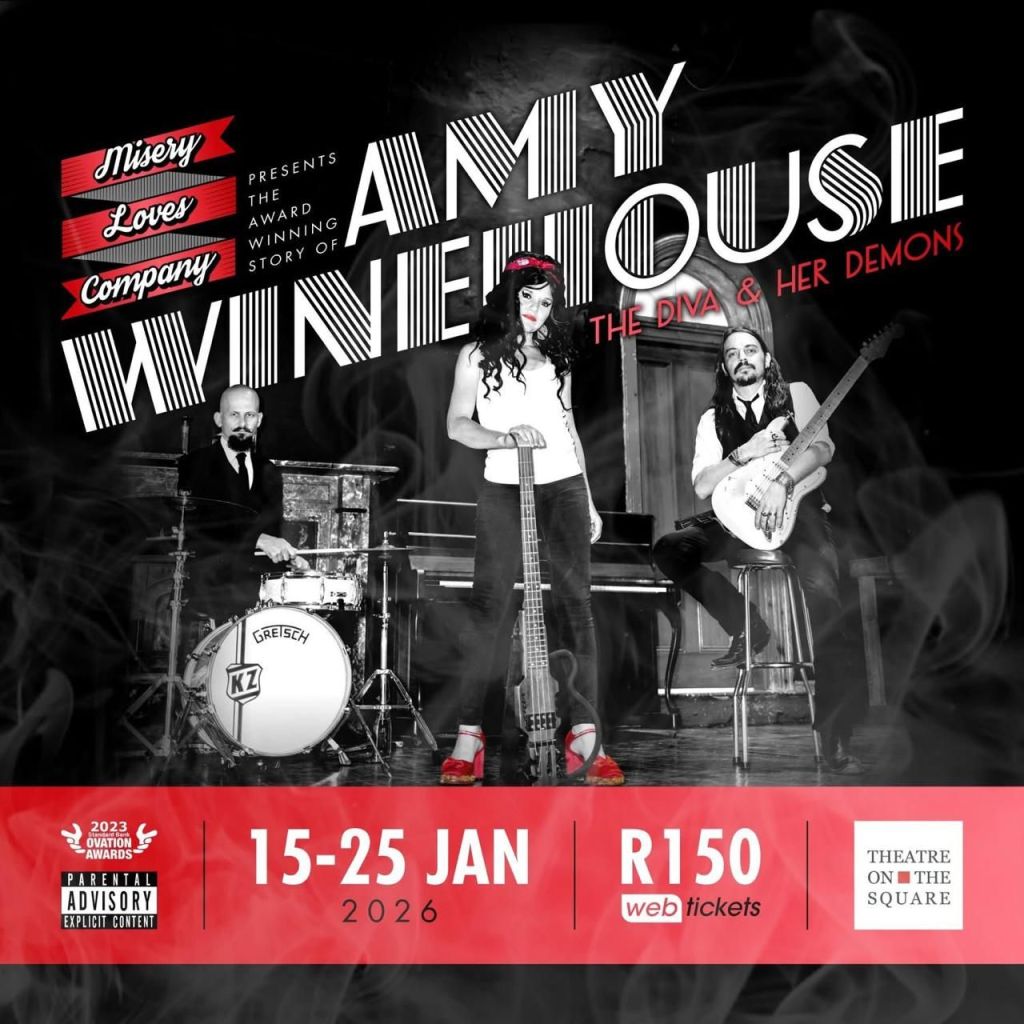
Amy Winehouse: The Diva and Her Demons

Amy Winehouse: The Diva and Her Demons

On the Square for the Amy Winehouse: The Diva and Her Demons show, I thought it was opening night. Melidah set things right. Tonight is the preview, opening night is on Friday. Finger too quick on the trigger, Friday is too far. I’ll watch the preview tonight and come back tomorrow for the opening!

I’ve been excited about the show ever since I heard it’s coming on the square. Amy Winehouse is my favorite artist of all time! Couldn’t see her live but tonight was the closest thing to a Amy Winehouse concert. Kerry Hiles was amazing on Judy Garland’s “A star is born” – Amanda Bothma duh but she really did it this time! That just might be the best tribute show of all time! Incredible show! Kerry simultaneously narrates Amy’s life, it’s informative, intimate and insightful, she talks Amy’s early days, her parents, Blake, smoking Marijuana, crack cocaine, alcoholism, Frank, fashion sense, winning 5 Grammy awards in one night, Tony Bennett, Back to Black and her ultimate demise. Songs off Frank, Back to Black and Lioness: Hidden Treasures were performed. I lost my mind when I heard “Cherry” – I didn’t expect that! I lost total control of my body when they performed “You’re Wondering Now” and “Monkey Man”.

Other songs performed were “Me and Mr. Jones”, “Addicted”, “Valerie”, “Love is a losing game”, “Rehab”, “Tears Dry on Their Own”, “Take the Box”, “Stronger Than Me”, “Our Day Will Come”, “Will You Still Love Me Tomorrow” and the posthumously Grammy award winning “Body and Soul” with Tony Bennett.

A perfect way to start off the new year! What are you waiting for? Go get your tickets now! They are only here for 10 days!

Kerry Hiles is on Vocals and the Bass.
Roscoe Nefdt plays the guitar.
Kristo Zondagh is on drums and suitcase – you’ll understand when you see the show.

The music is crispy fresh and reimagined. Kerry is mesmerizing on the vocals while Kristo lends his voice to the backup. I loved “Valerie”. It’s so cool they performed all the music that I loved. I couldn’t stop singing and dancing! What an experience! The theatre is going to have a hard time keeping me out – my spirit is screaming encore! I love Kerry Hiles even more now – she could never do wrong in my eyes.

Thank you Theatre on the square for bringing Amy Winehouse to me. My favorite artist of all time!

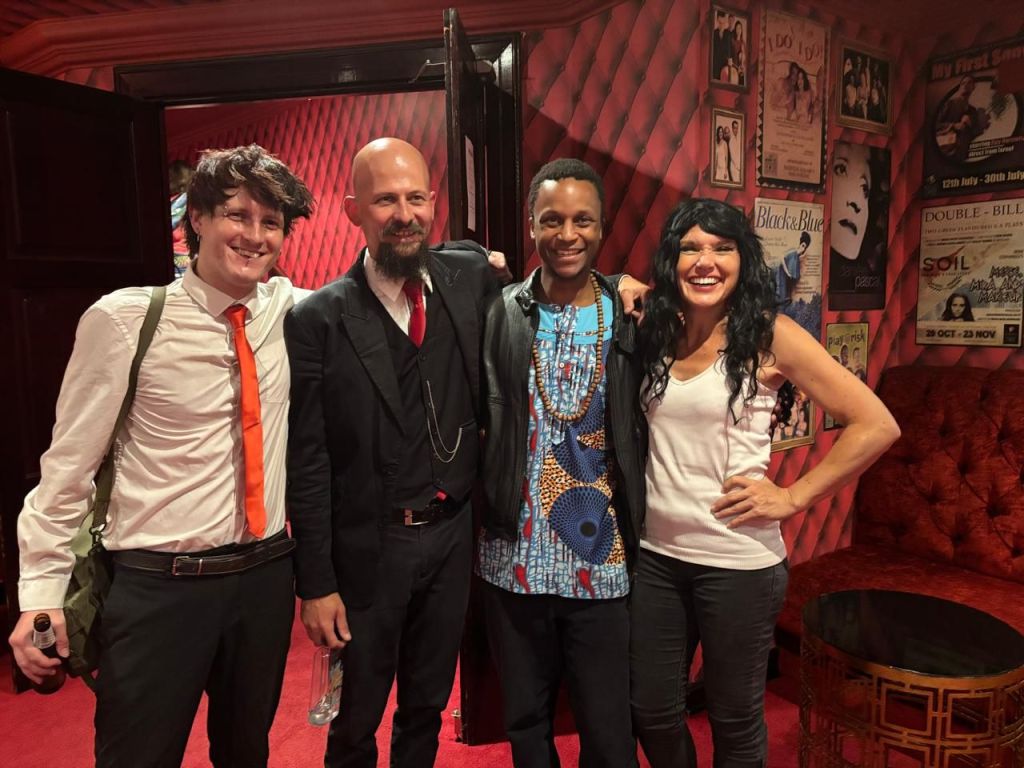
Congratulations Misery Loves Company for a great show and a deserved standing ovation.

📸: SamSays

Beauty in the broken

Beauty in the broken

On the square for the opening of “Beauty in the broken”. Theatre royalty, I love Theatre on the square.

The show chronicles Gaynor Youngs story, she tells the story. Once an actress, she fell 18 stories down an unguarded lift shaft backstage during a show at the State Theatre in Pretoria. The accident left her with extremely serious injuries: brain damage, many broken bones (including both arms, both legs, ribs, facial fractures). She was in a coma for five weeks, followed by months in hospital and a long rehabilitation process. Hearing was lost; she was totally deaf for 18 years. She also lost a large portion of her eyesight and was physically impaired from the accident. Over time, with a combination of therapies (physical, occupational, speech, etc.) and strong support from family, she regained many abilities. She credits her mother for helping her get back.

Kintsugi: an ancient Japanese practice that mounts and joins broken pieces with gold is central to the play. The idea that you can be better than before. Renewal: To love yourself with impunity. Gaynor was once broken, her dreams in the dust and she rebuilt herself, broken bones and all she fought back to get her dreams!

She’s back on the stage, doing what she loves, filling up theatres, inspiring everyone. The human spirit is so resilient. Life is a gift and we take it for granted sometimes. Stories like these remind us of how fragile life really is. How nothing is ever certain. How you have to fight for everything you have because life is always fleeting. You cannot be a victim, get up, show some strife – no one really cares.

A great touch that she was invited back to the State Theatre after many years for a Naledi Award – her speech so powerful. She talks about the woman she is now as opposed to what ifs. There’s love and gratitude for life in her tone. What a remarkable woman!

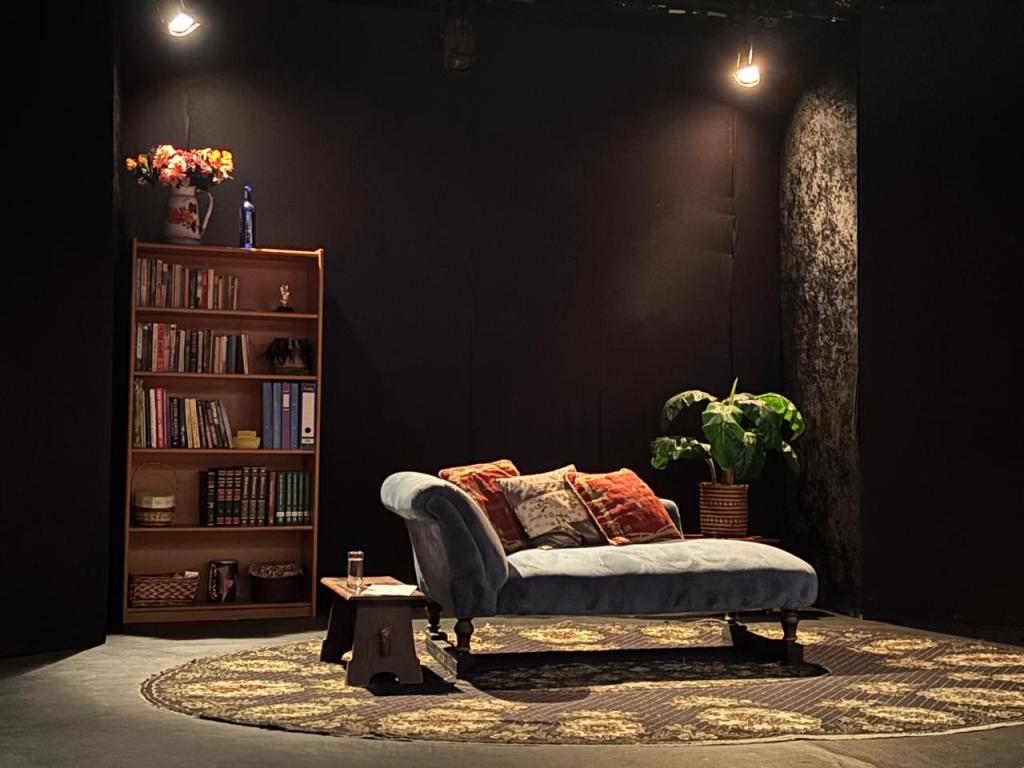
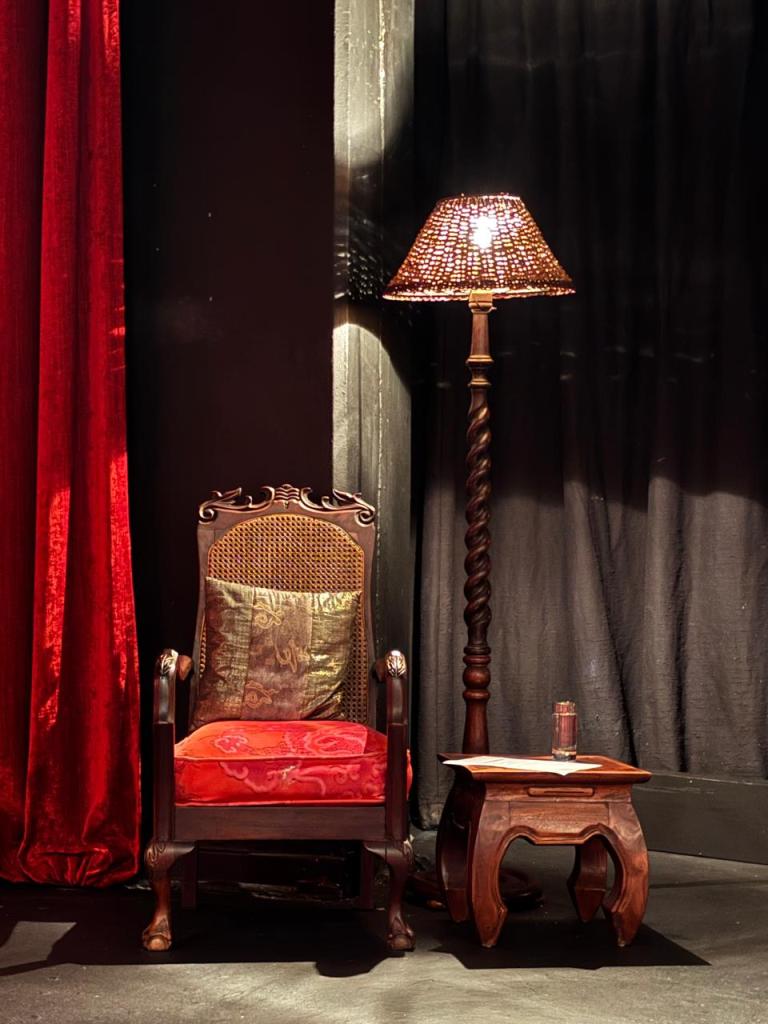
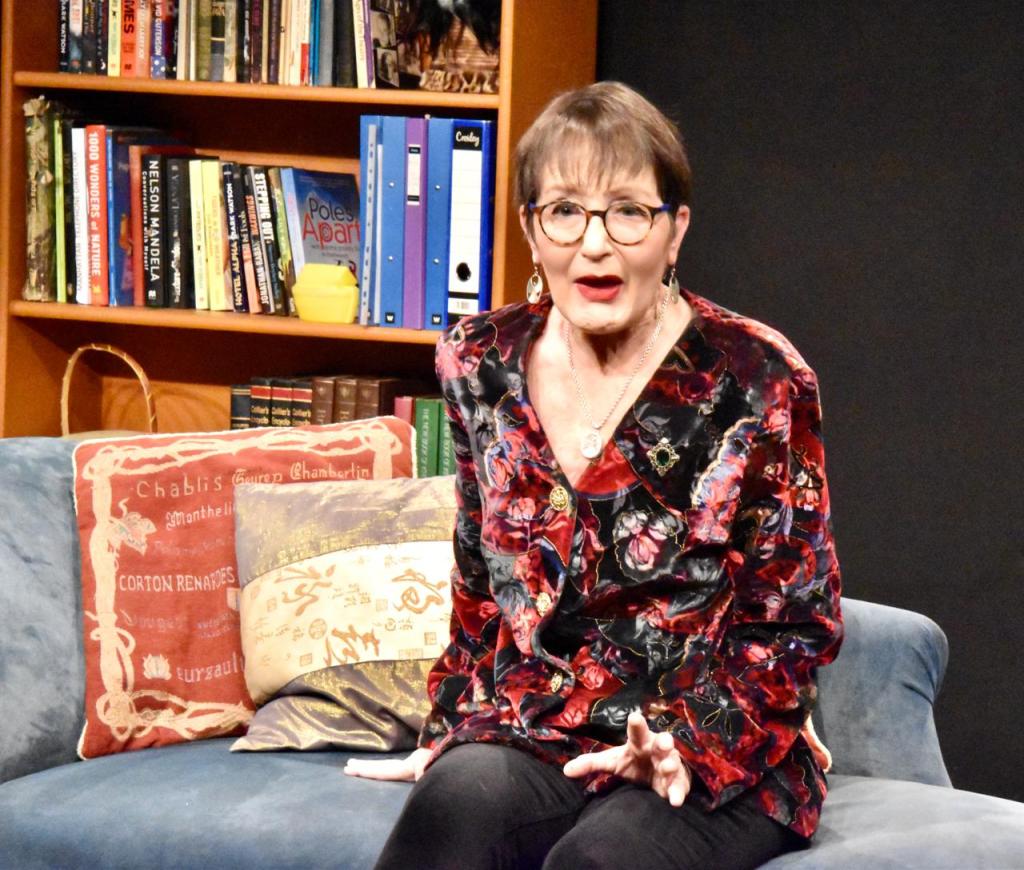
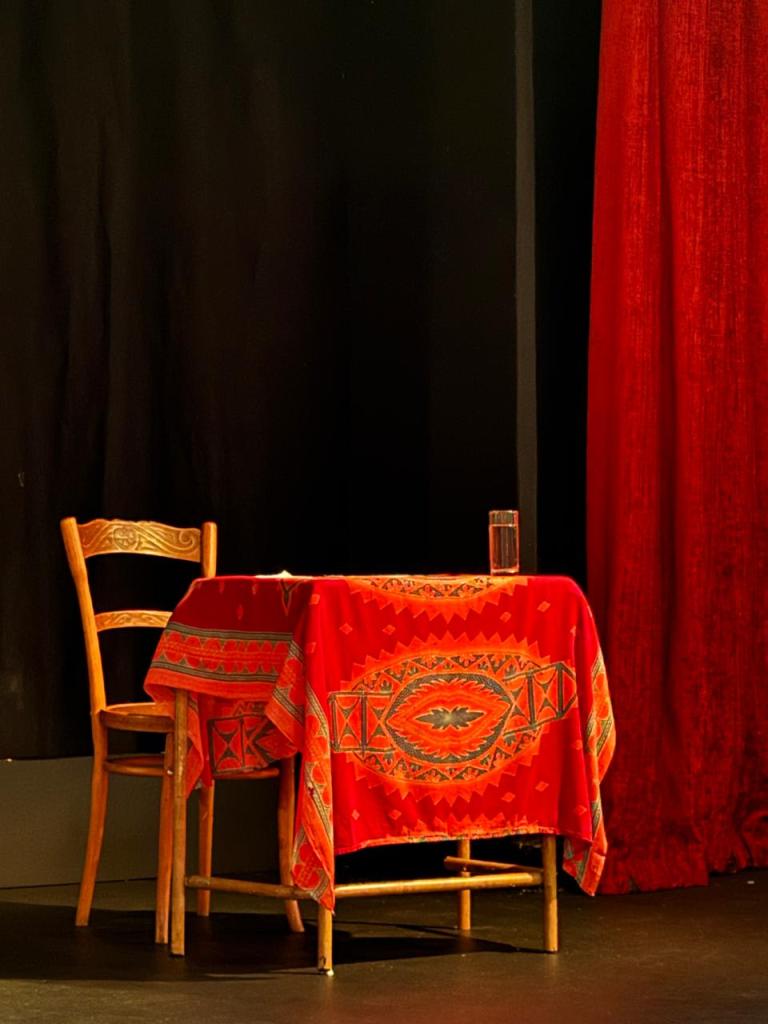
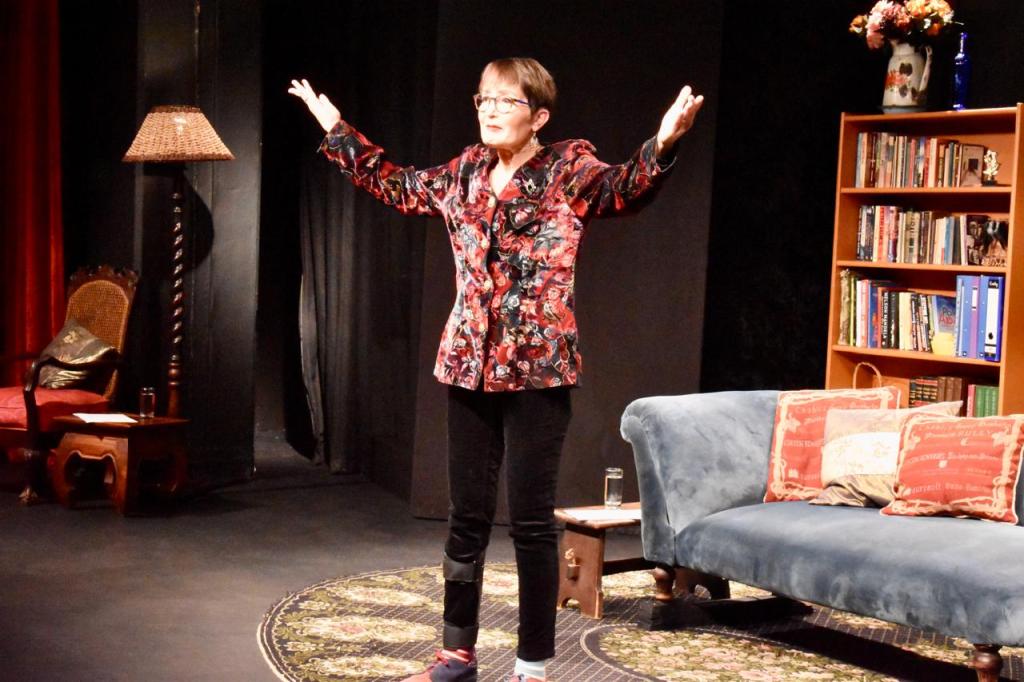
She tells her story with personality, humor, emotion and a lot of heart. She has an angel on the other side of the stage who helps her. She is engaging and captivating. The set is simple, I can only assume that it’s her living-room, with a stacked book shelf at the back, table and chair on either side and a blue resting chair in the middle. It is warm and intimate. The lighting just right, it moves the story. In the last scene Gaynor’s dog comes onto the stage and she embraces it with love and affection. A truly moving show.

Thank you Daphne Kuhn and Theatre on the square for bringing this to the stage.

Congratulations Maralin Vanrenen and the whole team for a great show and a deserved standing ovation.

📷: Phillip Kuhn and SamSays

The Tramp

The Tramp

On the square to watch The Tramp. Amanda Bothma, Daniel Anderson and Paul Ferreira – devastating triple threat! Stick to the secret formula, let’s get the people on their feet cheering and clapping.

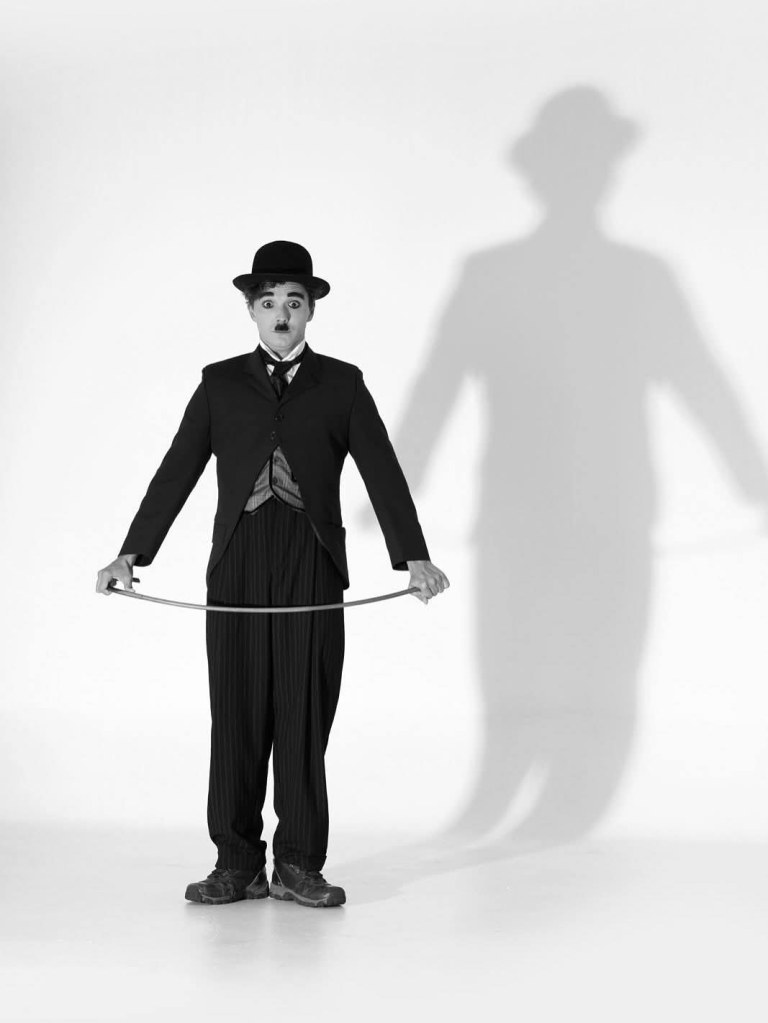
Amanda Botha on the script, good feelings, reverse engineering, biographical, sharp witted, with personality, contemplation and reflection. Paul Ferreira on piano, spotless without a blemish, backbone, the pulse silently beating to provide life and sustenance. The first time I ever saw Daniel Anderson perform, I thought “goat” and I managed to shake his hand and tell him to his face. The goat has struck again, back to back, within weeks to casually deliver another masterpiece. I maintain my stance, the greatest performer of all time, it’s amazing what he does on the stage, simply unbelievable. He has energy, expressive, animation and enjoyment on his face, he is mobile and on his feet, running, climbing on top of props, dancing, singing and telling a story all at once. Charisma so bullish, it ripples through the ceilings of charts. Fantastic endurance, breath-control and stamina. Singing and voice intonation is just world class. Captivates you from the first minute until the end, presence, commanding, enthralling. When he sang “If my friends could see me now” after Charlie Chaplin became the most famous person in the world, it connected. I loved smile.

Wonderful set design by Willem Disbergen, middle screen that provides visual cues, we see footage of Charlie Chaplin’s films, two big suitcases that are also screens and the wheelchair Chaplin reels in the show with as an old man at the start of the show. Paul is next to the steps, giving the stage to Daniel to fully optimize. Sonwa Sakuba provides the choreography, worked well with Daniel to match Chaplin’s mannerisms and movements.

Born in London, England Charlie Chaplin transcended and innovated the moving picture business and found his way to Hollywood where he was later exiled. Chaplin wrote, edited, directed, produced, starred and composed music for most of his films. He refused to work with sound films. The show explores Charlie Chaplin’s life, his ascent to the top, the construction of “The Tramp”, the silent era, his movies; The Kid, The Gold Rush and City Lights, the film with Adolf Hitler and how he became the most recognizable person in the world.

An outstanding show, Wela Kapela make me so excited. Daphne Kuhn and Theatre on the square deliver yet again, effortless.

Congratulations Amanda Bothma and the whole team for a great show and a deserved standing ovation.

Master Harold… and the boys

Master Harold… and the boys

On the square for the opening of “Master Harold… ” and the Boys. Filled to the brim, no space. Celebrities, celebrities, swimming all around, it’s a serious day for theatre, three performers at the top of their game delivering a Athol Fugard classic, RIP.

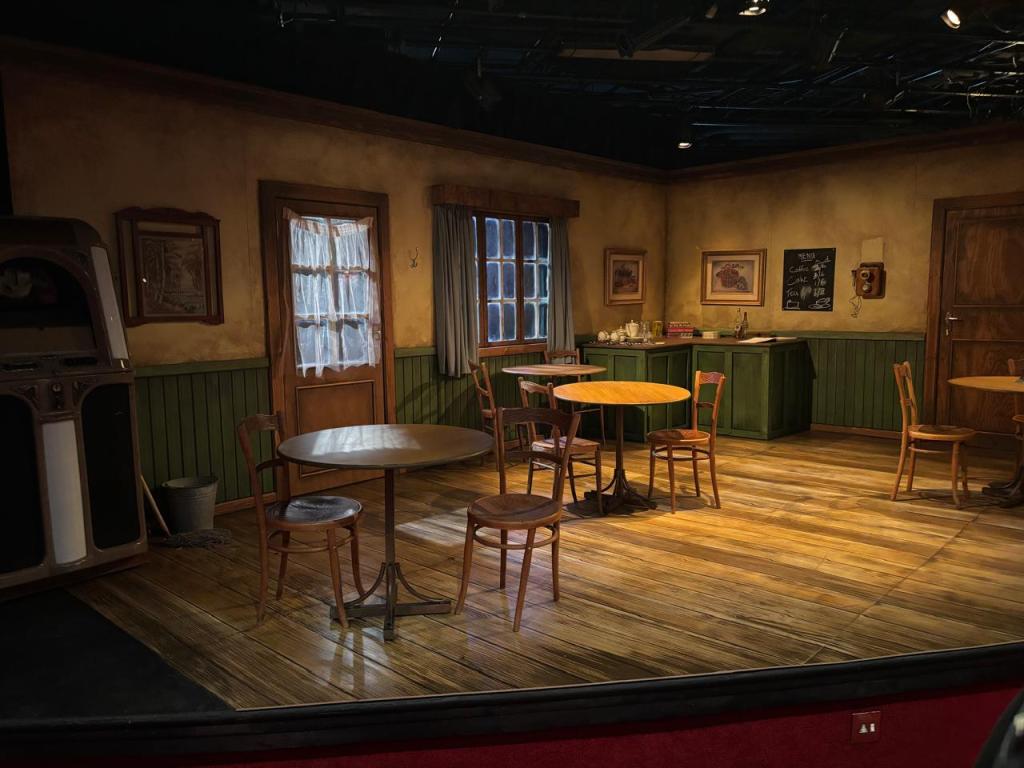
The story started off light with a comedic tone, with Willie and Sam conversing about the upcoming ballroom competition. Willie has high hopes of winning but he doesn’t have a partner. He beats his beloved Hilda, too much and too hard. Sam comes off as an expert. He teaches Willie a couple of moves. Hally, a white 17 year old, comes in and the atmosphere and relationship dynamic changes. Willie positions himself in the background, cleaning, keeping things moving. He calls Hally master. Hally even admonishes him and beats him with his ruler. Sam is more liberated, they talk about Leo Tolstoy’s War and Peace, Charles Darwin, Kites, and Dostoevsky. They seem familiar, they are in sync, there’s an understanding and then everything switches. Racism, hate, apartheid, I am better than you Kaffer, spilling this bottle of alcohol on the floor because I can, clean it up! Also you gonna have to start calling me master Harold, Kaffer. All bridges get burned when Hally does the unthinkable and spits on Sam’s face. Everything shatters, there’s no going back, what’s done is done. The play takes place in a small tea shop on a rainy afternoon. You hear the raindrops and we have the added sensation of seeing the rain. The rain sets the mood, it’s depressing, they do their best to amuse themselves, they are trapped in one room, Hally’s father is a cripple and his mother currently at the hospital, the mask peels off.

Sello Maake ka-Ncube plays Sam, a waiter at the coffee shop.

Daniel Anderson is “Hally”, oh sorry, master Harold.

Lebohang Motaung is “Willie”, the other waiter/cleaner.

Set designer by Wilhelm Disbergen, an awesome set that evoked the 1950s.

This is such a powerful show. Hats off to Daphne Kuhn and Theatre on the square for yet another banger! It starts off nice and slow and then it hits you with a vice grip. You can’t go anymore, you are trapped, there is nowhere to go. It’s triggering. An outstanding performance from the performers who told the story masterfully. Daniel Anderson shocked me to my core today.

Congratulations to Warona Seane and the whole team for a great show and a deserved standing ovation.

A dolls house pt. 2

A dolls house Pt. 2

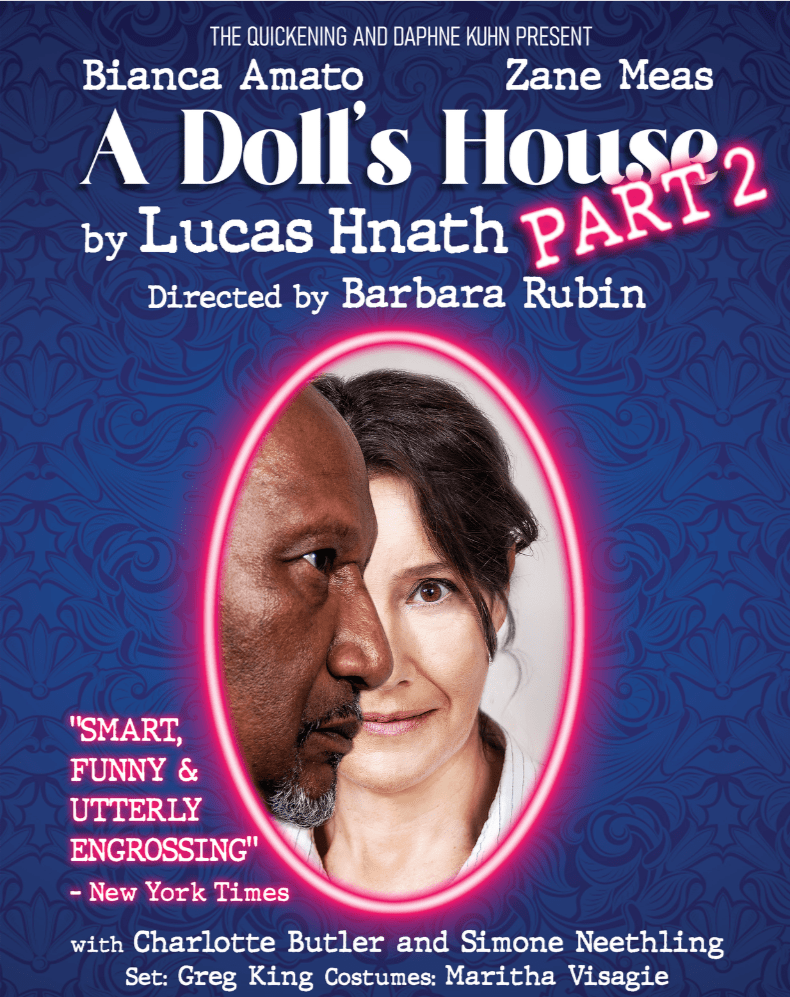
On the square for the opening of a dolls house pt. 2. Full house, the place is buzzing and excitement is in the air. Nothing is better than a filled up theatre on the square, the energy is contagious. It’s close knit, intimate and warm. The laughs rebound and echo in the auditorium, you can hear every sound, every gasp, every comment from the audience and the view is in your face, up close and personal, no matter which seat you take. Every seat is a great seat, even the seats close to the pillars.

The show is a great one, it captivated the audience throughout. It’s humorous and explores subjects on self-identity, marriage, traditional gender roles, love and freedom. Nora Helmer comes back after 15 years to the family she abandoned in search of herself. Not much has changed except that the children have grown. The helper (Anne Marie) stepped up in her absence and raised them, neglecting her own life and children in the process. It’s not like she had a choice, she’s not from money, she had to do whatever she could to survive. Nora became a successful author in that period, writing books that serves mainly the female demographic. She questions the institution of marriage and monogamy. Is it worth it? Does it make sense? Why is one partner enough for a lifetime? Surely, I am not the person you married because I’ve changed, you have changed. I am reduced to a role and expectations and I am not myself anymore. I don’t even know who I am anymore, I am subsumed by your domineering character. When relationships start out, it’s all fresh, it’s new, it’s exciting, we go out of our way to woe the other person, we role play, we do things that we will never do again to gain access into that person’s life and once we do, we relax, we become complacent, we stop trying so hard, the relationship stales up and we lose ourselves.

It is this type of writing that gets Nora in trouble with the law. It is this type of writing that empowers her female readers to leave their families. She also finds out that she is still married with her husband, she initially thought she was divorced but her husband didn’t post the paperwork. She wants a divorce but her husband Torvald won’t give it to her. She involves her daughter, hoping that she can convince her father. Eventually he relents and gives it to her but she doesn’t want it anymore.

This is a awesome play, it had the audience laughing out loud, there were also ironic stares from the cast to the audience, breaking the fourth wall, at times it was as if they were talking to us directly. Some uncomfortable laughs from the audience because of the realism of the content. There was range and different states in the performances. The performers had chemistry and overall flow – they were outstanding! The costumes were retro, they gave a 1800 – 1900 vibe. The story is perfectly paced and the scenes clear. The set, writing and lighting – all great!

Bianca Amato plays Nora
Zane Meas is Torvald
Charlotte Butler is Anne Marie
Simone Neethling is Emmy

Congratulations Barbara Rubin and the whole team for a great show and a deserved standing ovation!

THE PILLOWMAN

THE PILLOWMAN

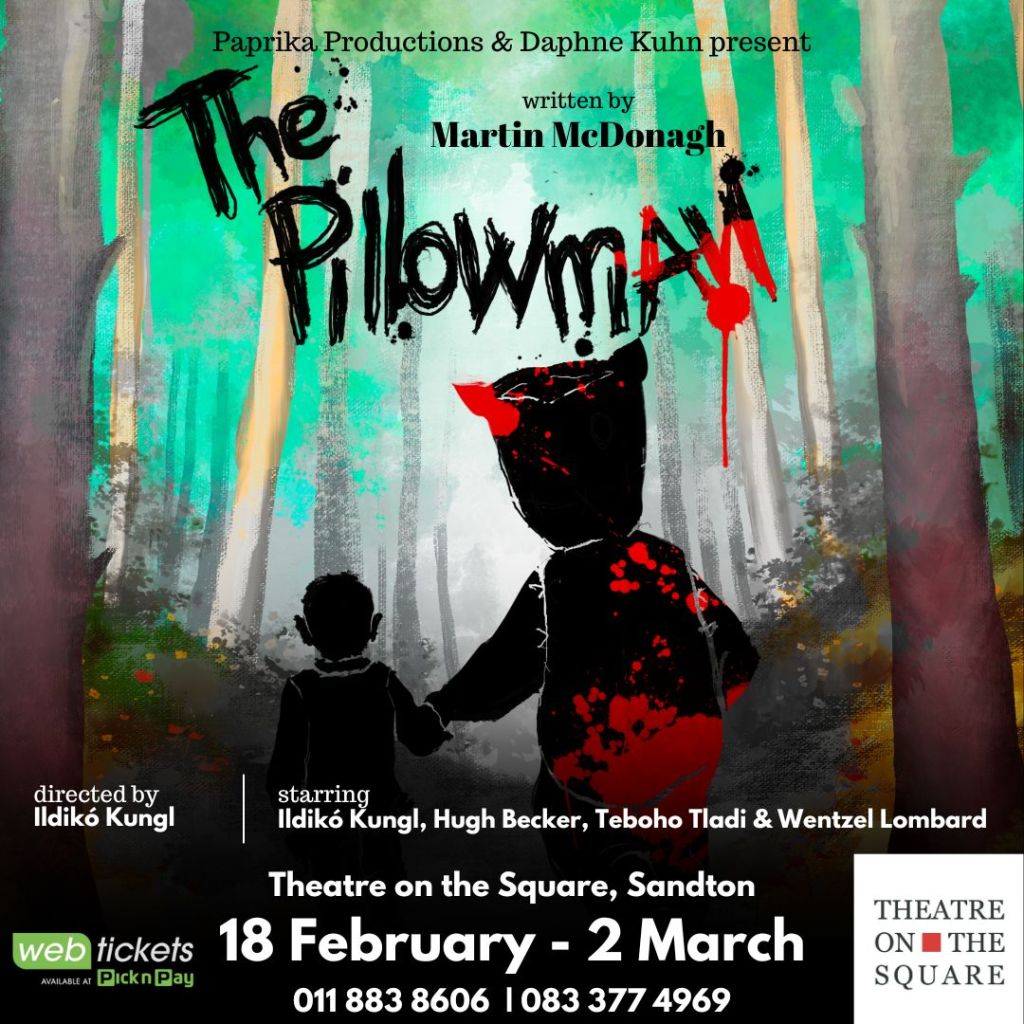
Set in a totalitarian state, that’s always fun. The subtext communicating that darkness and lack of control prevails. The story world is uncertain, suspicious and not sure of itself. It seeks resolution, justice and truth. The bounds of morality are put through a microscope. What’s right? What’s wrong? Are you right for suffocating your parents with a pillow because they abused you as child? Is taking another life ever justifiable? Definitely not a show for snowflakes. Murder, blood and torture are a running feature in the show. There’s indifference in the murders by the characters for humors sake and just sociopathy. The story starts off in an interrogation room when a writer Kutarian is questioned of the murder of children resembling and mirroring what he wrote in his short stories. The details of the murders and his stories are identical. The detectives even find tangible evidence in his house of the victims severed body parts. The deaths are gruesome and graphic, from razor blades shoved in the throat to toes being cut off leading to bleeding to death. The writer Kutarian claims innocence and the detectives Tupolski and Ariel press down on him heavily to get the truth out of him, deploying “good cop, bad cop” and torture techniques. Kutarian’s brother Michal is also in custody in another room awaiting the same brutish treatment. Michal is a “special” case and the words retard and slow are loosely used to describe him. It is revealed that he is the killer and not his brother. Finding out the truth, Kutarian murders his brother in a jail cell and takes the fall for everything, hoping to spare his brother torture and preserve his writing for years to come. In the end, he too is put to the sword but his work survives for another 50 years.

Unbelievable story, I simply loved everything about the show. The subject matter dark and uncomfortable but it was under the hands of expert storytellers. A couple of hours with an interval, we went deep into the story and understood what motivated the characters. The writer Martin McDonagh is the real hero. The writing is simply exquisite! The pacing of the show, the dark humor, the sharp wit and sarcasm – it contributed some comic relief to a tense storyline. The miniature stories told throughout the story using animation and art projected on the screen was a great touch. We had visual aids, we could see the stories the performers told. That was such a cool experience, I’ve never experienced theatre like that, it’s risky, unsettling, cringe and out of the comfort zone theatre. The show was captivating, a real thriller, I was locked in that world. The performers were outstanding, they stayed in role even after the show was over. They didn’t even take a bow, the story and ending didn’t call for them to take a bow. Darkness just permeated until the auditorium was lit indicating that the show was over. If I were to rate it, I’d give it perfect stars – all the stars! It was an immensely satisfying show.

My hat goes off to Hugh Becker who played Katurian, the writer who initiated all the chaos. Ildi Kungl who played Tupolski, detective number 1 and good cop. Tebogo Tladi who played Ariel, detective number 2 and bad cop and Wentzel Lombard who was untouchable as Michal. Congratulations Paprika Productions for an amazing show, definitely coming back for a second run. Thank you Daphne Kuhn and Theatre on the square for another classic.

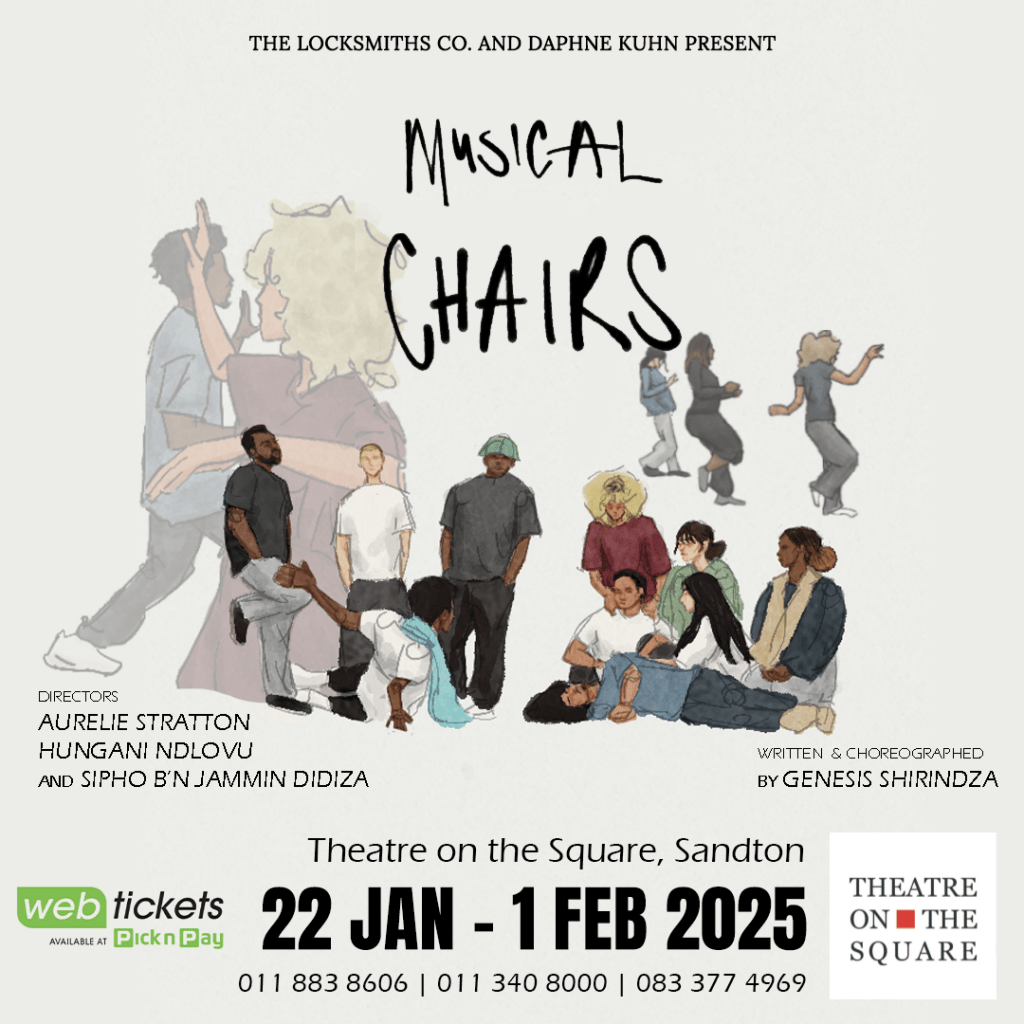
Musical Chairs

Musical Chairs

I’ve been struggling with my own significance for the whole day. 11:11 when I checked my phone, angel numbers, everything is in perfect alignment. I know the ego is a fabrication of the mind. A dirty trick that makes me believe I matter. How many people would miss me if everything turned to black? Who will remember me? What legacy did I leave behind? Nothing, I don’t exist. 4:44 time to prepare for the theatre, Musical Chairs is on. I get to Sandton, almost On the square, the Gautrain station in sight, then out of nowhere, with a lot of speed, from a corner, a car approaches me, I duck but it connects and hits my left leg, shook but I regain my balance, it’s not bad and I don’t fall but it hurts. I look in the distance thinking it’s a hit and run but the driver reverses. White guy, white Hyandai, in a hurry, he wasn’t paying attention. I am relieved, at least he has some humanity. It’s awkward for him, he doesn’t know what to say. I reassure him and thank him for coming back to check up on me. I tell him it’s cool, it’s okay, I can still walk but you hurt me. I was so close to the theatre, I am basically there, I let it go, I escaped, what’s done is done. I shook his hand and limped my way to the theatre to go watch Musical Chairs.

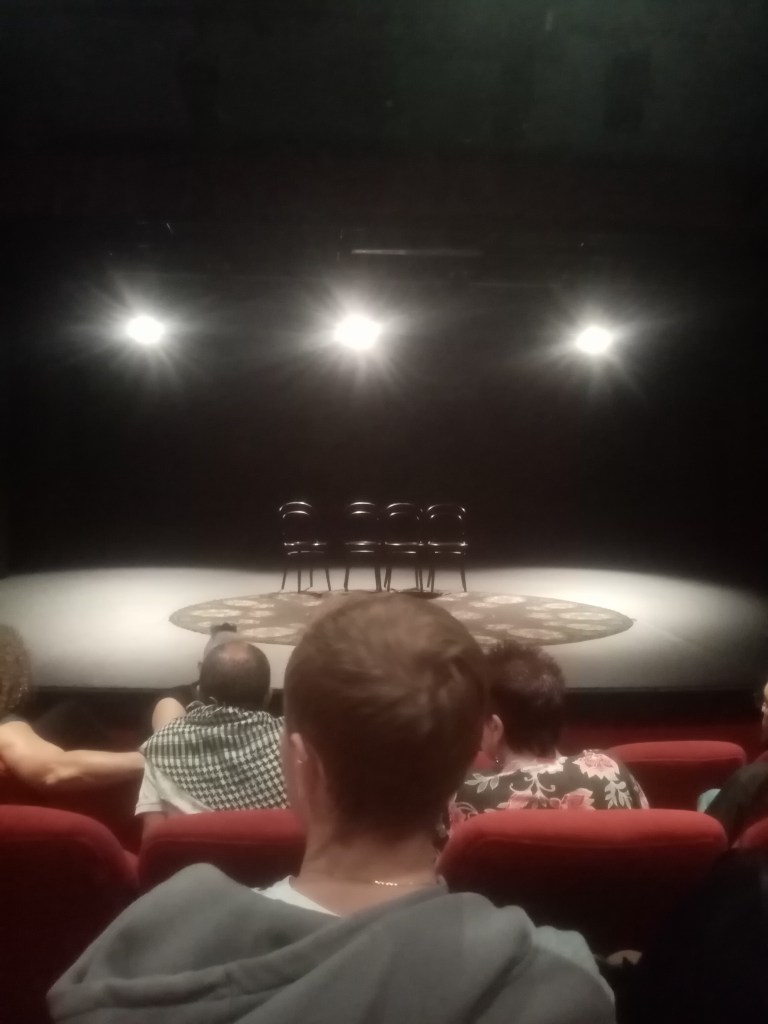
11:11 the show was stunning. From the lighting, music, dancing and minimalistic set. It was spellbinding, attention glued, difficult to take your eyes off the stage. I don’t think I even took a sip of my water. Everything lost relevance, the stage was the center of the Universe. Nothing mattered but the performers on the stage, they were simply amazing. It is story-telling like I have never seen before. No dialogue, no words, just dance and movement. It was expressive, energetic and moving. You understood the story, the story about inclusion, exclusion, relevance, validation – please like me, see me, I matter. For most of the show, the dancers fight for seats because there aren’t enough. A seat means you are a part of the group, a clique, relevance, validation, you matter. When you don’t have a seat, you are excluded, out in the cold, no one cares about you. Sophisticated metaphor about the world of social media. Social media is the pulse of the show. You want that seat, the performers on the stage fight to get that seat. Different dance styles and music genres are incorporated in the show. The performers are 3 dimensional, performing with a lot of energy and passion. They feel it. They are in the moment. They are sweating on stage. They are giving everything they have. Totally in sync, perfect cheography and wonderful chemistry – they love what they do. Now I understand the 4:44, it was a nudge from the Universe, all is linked, synchronicity, I read Jung, everything is in perfect alignment, it was a great day.

Thank you Daphne Kuhn and Theatre on the square for yet another fantastic experience. The theatre is my heaven.

Congratulations Aurelie Stratton, Hungani Ndlovu, Sipho Didiza and the whole team for an amazing show and a deserved standing ovation.

the assembly improv show

The Assembly Improv show

Improv – make something up, think on the spot, go with the flow, zen, Bruce Lee, be like water, be formless, quick witted, puns, irony, sacarsm and it has to be humorous! Let’s break the fourth wall, you there, yes you reading this, listening to this, yes hi, happy new year, acknowledge me, make things easier for yourself, I am not going anywhere.

On the square for the Assembly Improv show, filled to the brim, full house. Was with SamSays, it was a great show, unpredictable, spontaneous, quick witted and so funny. We couldn’t stop laughing, we were entertained from the first minute to the last. What I found to be most effective in Improv, is calm. You have to let things process, be in the moment, respond not react. Reactions are filled with anxious energy and that’s not humorous because you bulldoze the act and spoil the tone of the scene. Relax, let other performers have the spotlight. You don’t have to be in every scenario. Listen – don’t bulldoze and overpower others. Anxiety is nervous and not sure of itself, it roams around everywhere, attempts to do everything, please everyone, and it ends up having the opposite effect because it hinders the performance of the other performers to flourish. Calm is controlled, it exudes power, charisma and assurance. When you are calmer, you can be playful and ironic and your punchlines carry more weight. You listen to respond and not to strengthen your view. There were moments of calm and anxiety in the show. I understood the anxiety, entertaining a full house can be exhausting and emotionally draining. It was still a great show, light-hearted, filled with humor and completely unexpected. The show comprised off 6 acts. They improvised about chicken, boyfriend builders, being a little gay, earthworms and burning your mother’s tyre’s.

I loved the two sisters of Case Closed, Megan and Tash Casey. They had a lot of chemistry and complimented each other. They were quick witted, quirky and humorous. The girls of Mechanics of Chaos were simply outstanding! They stole the show, the audience couldn’t stop laughing, they were totally in sync, they complimented each other, they built on each other’s scenes, they listened and added to each other’s scenes, they stuck to performing the scenario the audience gave them; the boyfriend builder and they looked like they were having a lot of fun. I loved them because they were not searching for laughs, anxiety was not a factor, they were in the moment, they loved performing for the audience and it reflected with their performance. Shout-out Itu Chiloane, Mmasehume Raphiri, S’bahle (Sparkles) Hlophe, Sonia Mayor, Tafadzwa Chakanya, Unathi Shongwe and Zanele Sokatsha for a wonderful set. Shout-out to everybody, the gradient, the off cuts and thirst trap. Thank you Daphne Kuhn and the team for the whole experience. Yet another one from Bronwen and B-Sharp entertainment – thank you. Congratulations to The Assembly Improv show and a deserved standing ovation.