SHOCKWAVE: The Closet, the Church and the Cruelty of Conditional Love
Antakalipa | Consciousness of culture.
“I can’t change who I am. God made me this way. Love who you love, because life isn’t guaranteed.”
There are moments in theatre when the stage stops being a stage and becomes a mirror. You arrive expecting a story, perhaps a little entertainment, perhaps a few hours away from the demands of ordinary life. And then something happens. A line lands differently. An object on the stage begins to carry the weight of an entire lifetime. A character’s silence becomes louder than the words spoken around them. Suddenly, you are no longer simply watching somebody else’s life. You are confronting something about your own.
At the Market Theatre, SHOCKWAVE, written by Chantal Stanfield and directed by David Dennis, invites us into precisely this uncomfortable territory. Set in apartheid South Africa during P.W. Botha’s State of Emergency, the production explores sexuality, religion, identity, morality, prejudice and the desperate human desire to belong. Its central character, Larry, is a closeted gay librarian trying to survive in a society in which his sexuality could make him a target of discrimination, rejection and humiliation.
But the genius of this premise is that the closet is not merely a physical or psychological space. It is a social construction. It is the room society builds around you when it cannot accept the person you are. It is the silence imposed upon you by people who insist they love you, provided you never become too honest about yourself.
SHOCKWAVE asks a devastating question: what kind of love requires another human being to disappear?

A country at war with itself
To understand Larry, we must first understand the world that surrounds him.
The 1980s were a turbulent period in South Africa. Apartheid’s machinery of racial oppression was met with intensifying resistance, and the State of Emergency declared by P.W. Botha in 1986 brought extraordinary restrictions, police powers and repression. The political atmosphere was one of surveillance, uncertainty and fear. The state wanted to determine where people could go, how they could organise, what they could say and whether their bodies could be free.
Yet SHOCKWAVE looks beyond the familiar images of political resistance. It turns its attention to another kind of imprisonment: the restrictions placed upon private intimacy.
Larry is a gay man living in a society that already has an elaborate system for deciding who deserves dignity and who does not. Apartheid has organised human beings into racial categories and attached rights, privileges and humiliations to those classifications. Within this same society, religious and social conventions dictate which expressions of sexuality are considered acceptable. Freedom is discussed as a political ideal, but it remains frighteningly conditional when the subject is a man’s right to love another man.
The play’s historical setting is therefore not decorative. It is the pressure cooker in which its characters are forced to live.
The spectre of the so-called “gay plague” adds another layer of terror. The early AIDS crisis generated profound anxiety, misinformation and stigma, and gay men were frequently treated as symbols of a supposed moral catastrophe rather than as human beings facing a public-health crisis. Fear became a convenient weapon. It gave prejudice the appearance of public concern.
There is a particular cruelty in a society that can turn illness into an accusation and vulnerability into evidence of guilt.
Larry’s predicament is consequently larger than his individual circumstances. He is living through a period in which the country is struggling over the meaning of freedom, yet he cannot be certain that freedom will include him. The liberation of the nation and the liberation of the individual are not automatically the same thing.
That is one of the most important contributions of Stanfield’s writing. She brings South Africa’s queer history into a conversation too often dominated by the better-known narratives of political resistance. As director David Dennis has observed in discussing the production, liberation meant more than changing the political order; it also required dismantling discrimination in people’s personal lives.
History is never as simple as the photographs in our textbooks suggest. There are always people living in its margins, carrying stories that the dominant narrative has not made enough room to hear.
Trapped in the closet
Larry’s tragedy begins with the fact that he cannot safely be himself.
He is a librarian, a profession associated with knowledge, literature, learning and the preservation of stories. There is an irony in this character spending his life among books while being unable to tell the most important truth about himself. He works in a world of words, yet his own identity is governed by silence.
The closet becomes an exhausting performance. It demands vigilance. Every conversation becomes a calculation. Every friendship carries the possibility of exposure. Every expression of affection must be measured against the danger of being discovered.
What happens when a person must continually edit himself to remain acceptable to others? What happens when survival requires the suppression of joy?
The answer is that a person can become a stranger to himself.
The phrase “I can’t change who I am” is powerful because it rejects the assumption that identity is a moral defect requiring correction. Larry is not asking society for permission to become a different person. He is asking for the freedom to live as the person he already is.
And this is where the play becomes brutally relevant beyond its historical setting. The laws may change. The political climate may change. The language of public morality may change. Yet the pressure to conceal one’s identity can survive inside families, churches, workplaces and communities long after the official machinery of oppression has been dismantled.
A closet does not always have a door. Sometimes it is a congregation that makes you afraid to speak. Sometimes it is a parent whose love comes with conditions. Sometimes it is the knowledge that the people who embrace you in public would reject you if they knew the whole truth.
The most frightening thing about prejudice is not simply that it hates. It is that it can persuade its victims to participate in their own disappearance.

Sister Debbie: faith, loneliness and the human heart
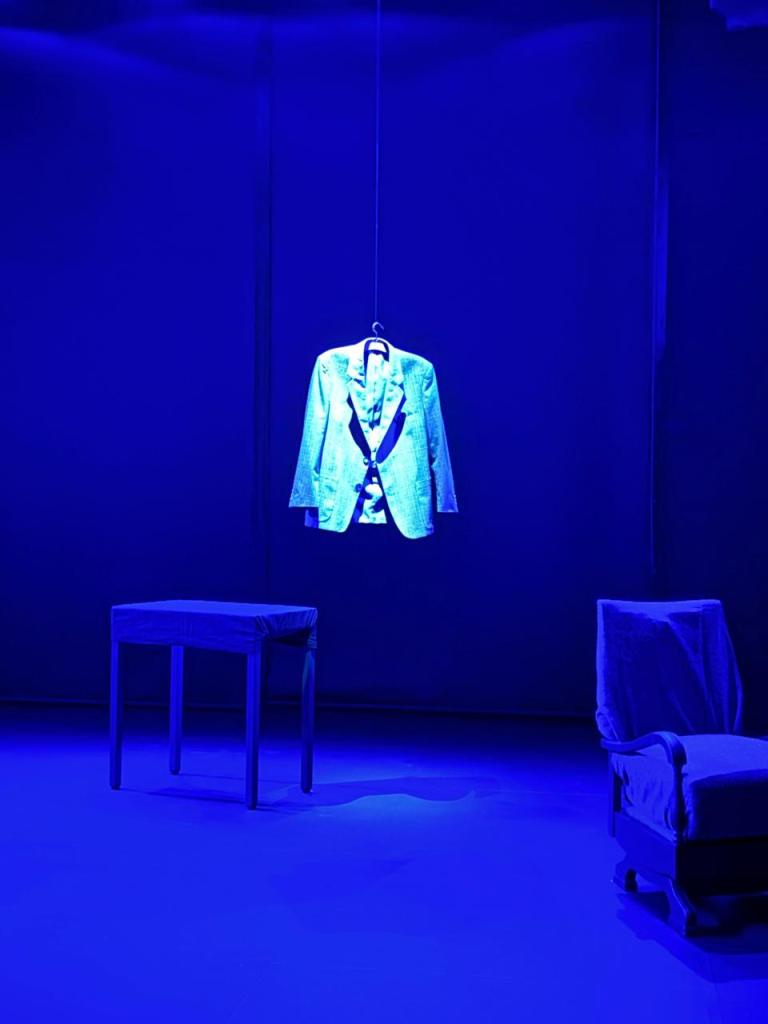
Larry’s search for accommodation brings him into the home of Sister Debbie, a deeply religious widow living on the Cape Flats. Her husband, David, is dead, and his military jacket remains hanging on one of the hooks in the house.
The arrangement brings two lonely people together, but loneliness does not immediately make them understand one another.
Sister Debbie belongs to a world of religious convictions, familiar domestic routines and social expectations. Larry arrives carrying a truth that this world has taught him to hide. Each has something the other cannot fully understand: she has lost the person with whom she shared her life, while he is struggling to establish a life in which he can be loved without pretending.
It would be easy to make Sister Debbie a caricature of religious intolerance. It would also be easy to make Larry a flawless victim and everyone around him a villain. The more interesting possibility is that both characters are products of their circumstances, shaped by grief, inherited beliefs, fear and the communities to which they belong.
Religion can offer comfort, fellowship, ritual and the promise that suffering has meaning. For many people, faith is an indispensable source of strength. But faith can also become an instrument of punishment when human beings appoint themselves guardians of God’s supposed preferences.
The contradiction is glaring: a religion that preaches love can be used to justify the rejection of someone who needs love most.
When does religious conviction become cruelty? At what point does defending morality become an excuse for denying another person dignity?
These are not abstract questions for Larry. He has to live with the consequences.
The play’s strength lies in the possibility of transformation. Sister Debbie is not simply a symbol of the church or a representative of an older generation. She is a woman who has experienced loss and must confront another human being whose suffering does not fit neatly into her established understanding of the world.
Her loneliness matters because it allows us to recognise a shared vulnerability. Beneath the labels, the arguments and the fear, these are people who need companionship.
The challenge is whether companionship can survive the truth.
The military jacket: a small object carrying an enormous meaning
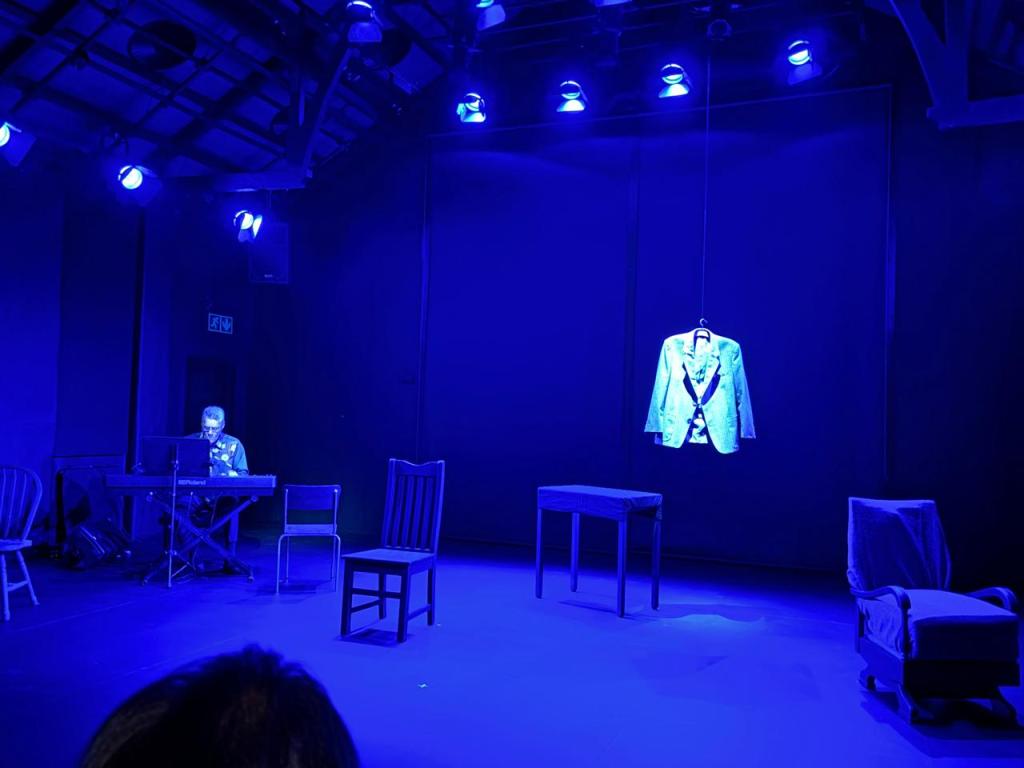
One of the most affecting images in SHOCKWAVE is David’s military jacket, left hanging in the house after his death.
A jacket is an ordinary object. It protects the body, carries the scent and shape of its wearer, and becomes familiar through years of use. When its owner dies, however, it can become something else entirely: a relic, a memory, a physical connection to somebody who can no longer return.
David is absent, but his jacket remains.
For Sister Debbie, the garment is tied to the life she shared with her husband and the world that existed before bereavement. It is a reminder of intimacy, companionship and the permanence of loss. For Larry, who is struggling to find a place where he can exist without fear, the possibility of receiving that jacket carries a different significance.
When Sister Debbie eventually relinquishes her husband’s military jacket to a homosexual man, the gesture becomes one of the production’s most eloquent statements.
A garment associated with a deceased husband is passed to someone whose sexuality might have made him an object of contempt in the world that garment represents.
What does it mean to inherit something from a person you never knew? What does it mean to receive a gift from someone who may not fully understand your life, but has begun to recognise your humanity?
The jacket becomes a bridge between two people whose experiences initially seem incompatible. It allows memory to move forward rather than remain locked in grief. It becomes an act of recognition: you may not be the person I expected to welcome into my home, but you are a person, and your life has value.
There is also a beautiful contradiction in the military symbolism. A military jacket evokes discipline, authority, masculinity and a world historically associated with rigid ideas about gender and sexuality. Yet here it can be offered as an expression of tenderness.
An object that might once have represented conformity becomes a gift that makes room for difference.
Perhaps this is what compassion looks like when it finally becomes practical. It is no longer a sermon delivered from a pulpit. It is something you take off a hook and place in another person’s hands.

The familiar house: old-school couches and the architecture of memory
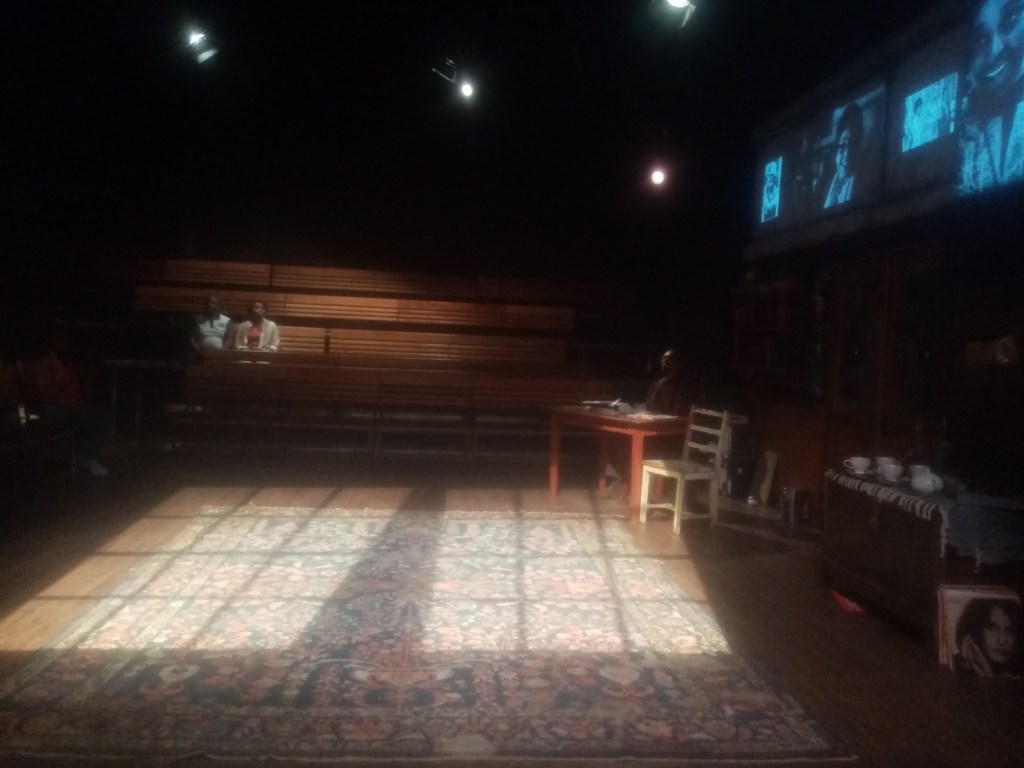
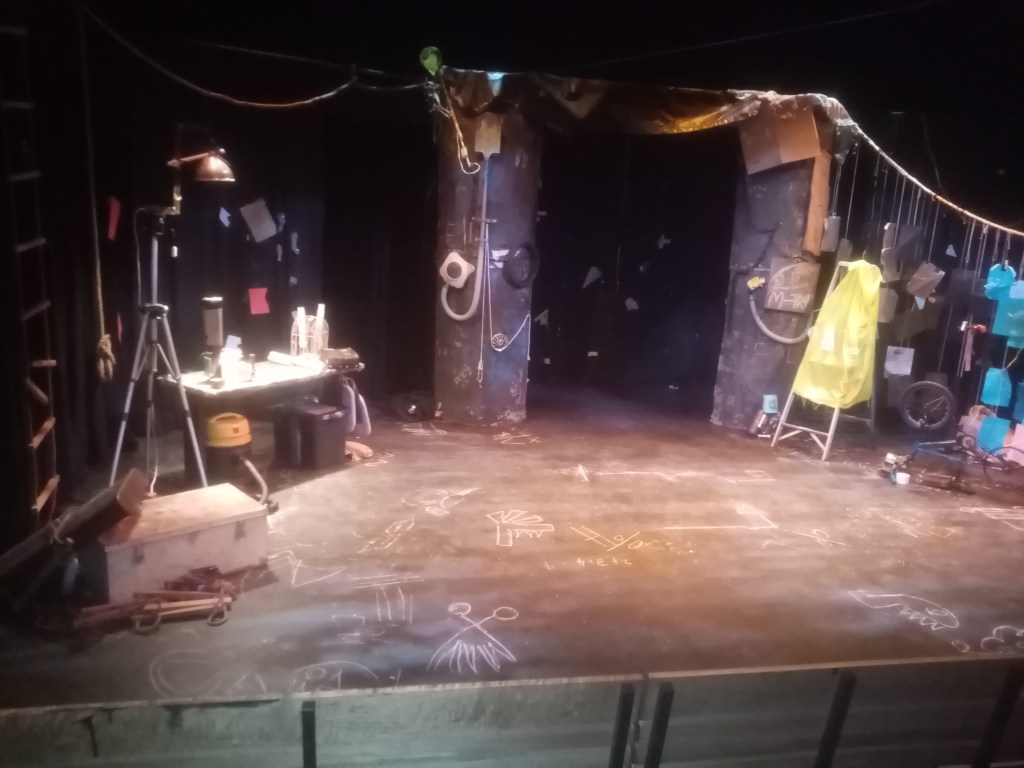
The set design contributes significantly to the play’s emotional atmosphere. The old-school couches, familiar domestic furnishings and motherly costumes evoke a recognisable South African home, one that feels lived in rather than assembled for theatrical display.
There is nostalgia here, but it is not nostalgia without complications.
These furnishings evoke the domestic worlds many of us recognise: the sitting room where family gathers, the couch that has survived decades of conversations, the carefully maintained household in which routines provide a sense of order. They suggest a world in which respectability matters, appearances carry social meaning and the home is expected to be a sanctuary.
But what happens when the home becomes another place where a person must hide?
The domestic setting is important precisely because it is ordinary. The violence of prejudice does not always arrive with a uniform, a weapon or an official declaration. Sometimes it is expressed through a disapproving look, an uncomfortable silence or the withdrawal of affection. Sometimes it is concealed beneath the rituals of respectable family life.
The familiar furniture therefore does more than establish the period. It makes the audience feel how easily exclusion can inhabit ordinary spaces.
The home can shelter you, but it can also police you.
The motherly costumes and traditional domestic atmosphere similarly evoke a particular social order, one in which femininity, religious respectability and community belonging are intertwined. They give the characters a visual world of familiarity and social expectation, reinforcing the tension between the comfort of tradition and the harm that tradition can sometimes perpetuate.
The set is not merely a backdrop to the conflict. It is part of the conflict itself.
This is the unsettling achievement of grounding such a politically charged story in recognisable domestic surroundings. The audience is not invited to imagine prejudice as something practised only by distant, monstrous strangers. We are asked to recognise how it can live in places that feel like home.

“Moffie” and the policing of masculinity
The shadow of Moffie hangs over SHOCKWAVE, evoking the violence of a culture that equates masculinity with conformity and treats homosexuality as a threat to social order.
The term itself is loaded with humiliation. It reduces a human being to a derogatory label and suggests that his sexuality somehow disqualifies him from the respect granted to other men.
The military setting is particularly significant in this regard. The apartheid state demanded obedience and promoted a rigid social hierarchy. Within that broader system, expectations about masculinity could become another mechanism for disciplining bodies and behaviour.
To be a man was expected to mean a particular set of things. To depart from those expectations was to invite suspicion, ridicule or punishment.
Larry’s predicament exposes the absurdity of this arrangement. His sexuality does not erase his intelligence, his capacity for affection, his work or his humanity. Yet the society around him is prepared to make this one aspect of his identity the defining fact of his existence.
That is prejudice at its most destructive: it takes a person with an entire universe inside him and insists that he can be reduced to one word.
The play’s political force lies in showing how the struggle for dignity extends into these intimate definitions of who is allowed to count as a man, a believer, a citizen or a respectable member of society.
Music: the memories we share when words fail
Music is among the production’s most important emotional threads. The characters’ shared affection for the South African rock and soul band The Invaders brings warmth and humour into a story surrounded by political tension and personal anxiety. David Dennis has highlighted the music and comedy as important elements in making the production both entertaining and deeply human.
The music matters because it allows the characters to meet somewhere beyond their disagreements.
A song can take us back to a time, a place or a person with extraordinary speed. A melody heard after many years can bring an entire world back into focus: the room in which we first heard it, the people who were there, the hopes we carried and the things we did not yet know we would lose.
Music is memory made audible.
It also reminds us that people who disagree about religion, sexuality and morality can still share cultural experiences. They can remember the same songs, laugh at the same moments and recognise the same beauty. Their lives are not divided into entirely separate human universes.
This is where music becomes a quiet act of resistance. It refuses to let ideology account for everything a person is.
The music player Larry leaves behind at the end of the play is especially poignant. He leaves to pursue freedom, but he does not leave without a trace. The device remains, carrying the suggestion of a life that has occupied this home, disturbed its assumptions and changed the emotional landscape of the people who encountered him.
The object becomes a residue of presence. Larry may have departed, but the encounter cannot simply be erased.
There is something profoundly human about leaving music behind. Songs outlive particular moments, just as memories outlive the people who made them. And sometimes the things we leave behind become the only way others can understand what we meant to them.
The music player is not merely a prop. It is a small archive of connection.
Morality, sexuality and the hypocrisy of judgement
SHOCKWAVE is not afraid to place religion and sexuality in direct confrontation. Its questions are uncomfortable because they challenge the assumptions people often inherit without examining them.
Who decides what is moral? Is morality measured by conformity to social expectations, or by the way we treat other human beings? Can a person claim to defend goodness while participating in the humiliation of someone who has done nothing to deserve it?
The play does not require us to dismiss religion in order to recognise religious hypocrisy. Nor does it suggest that every religious person is prejudiced. Its more demanding proposition is that faith must be judged, at least in part, by the humanity it produces.
If a doctrine leads someone to deny another person shelter, dignity or companionship, the consequences deserve scrutiny. Good intentions cannot automatically absolve cruelty.
The same applies to society’s wider moral codes. Communities often present their expectations as natural, timeless and unquestionable. But history demonstrates that what one generation treats as an unquestionable truth may later be recognised as an injustice.
The criminalisation and stigmatisation of homosexuality in apartheid-era South Africa were not simply private opinions. They existed within a wider legal and political environment that reinforced exclusion. The shame Larry experiences is therefore not merely personal insecurity; it is produced by a society that has made his identity dangerous.
And yet the play also asks us to consider what happens when people begin to challenge the beliefs that have shaped them.
Change does not always arrive through a grand declaration. Sometimes it begins when somebody stays in a room they would previously have left, listens to a person they would previously have condemned or performs a small act of kindness that contradicts everything they have been taught to fear.
The old woman and the gay librarian are not required to have identical beliefs or histories. They are required to recognise one another as human beings.
That is a much more difficult task than simply agreeing to disagree.
The courage to leave
Larry’s eventual departure is one of the play’s most important decisions.
His elopement represents a movement towards freedom, away from a world in which his identity has been treated as a problem to be managed. It is an act of self-preservation, but also a refusal to accept that a life of permanent concealment is the only life available to him.
There is sadness in this decision because freedom comes at a cost. He cannot simply transform the society around him. He cannot guarantee that the people he leaves behind will understand him. He cannot recover the time spent living in fear.
But he can choose not to surrender the rest of his life.
This is where the play’s central ideas converge. Identity without freedom becomes a private prison. Love without acceptance becomes a conditional arrangement. Faith without compassion becomes judgement. Morality without empathy becomes punishment.
Larry’s departure does not magically resolve these contradictions. It exposes them.
And perhaps that is why the music player matters so much. He leaves an object behind, but he does not leave his entire self behind to satisfy the expectations of others. He chooses a future, however uncertain, in which he might finally live without having to apologise for existing.
There is courage in staying and attempting to change a hostile environment. There is also courage in recognising when staying means sacrificing too much of yourself.
Sometimes leaving is not an act of abandonment. Sometimes it is the first honest act of love a person can perform for himself.
The cast: bringing the human conflict to life
The production features Renate Stuurman and Trevor Lynch, with Lois du Plessis and Duane Behrens in supporting roles. Together, they bring to the stage a story that depends on the friction between private feeling and public expectation.
Stuurman’s presence is central to the production’s exploration of domestic life, grief, religious conviction and the possibility of change. The character of Sister Debbie must be more than an emblem of intolerance: she must remain a woman with a history, a home and an emotional life of her own. Her eventual gesture with David’s jacket carries its meaning because it emerges from a human relationship rather than from an abstract argument.
Lynch’s Larry embodies the exhausting contradiction of being compelled to conceal an essential part of oneself while continuing to live, work and seek companionship. His character is not simply a representative of queer suffering. He is a man with a future to imagine, music to love and a life that cannot be reduced to the prejudices surrounding him.
Du Plessis and Behrens contribute to the broader social world of the play, helping to give shape to the religious and cultural environment in which Larry’s story unfolds.
What makes the ensemble’s task particularly demanding is the need to balance the drama’s serious historical subject matter with its humour, nostalgia and moments of ordinary connection. A play like this cannot survive on misery alone. It must show us what makes life worth protecting in the first place.
That means allowing its characters to be funny, contradictory, frustrating, vulnerable and recognisably human.
The production’s creative leadership is equally important. Stanfield’s writing brings a personal and historical perspective to a subject that has too often been silenced. Dennis’s direction situates the story within the politics of the 1980s while keeping its emotional focus on the people living through that history. Greg Homann, Artistic Director of the Market Theatre Foundation, was involved in the play’s development as dramaturg during Stanfield’s work with How Now Brown Cow’s Writers Collective in 2021.
That developmental history matters. It places SHOCKWAVE within a process of South African playwriting that takes time to interrogate the stories we tell about ourselves and the stories we have neglected.
The Market Theatre has long been associated with work that confronts South Africa’s political and social realities. This production continues that tradition by expanding the frame of historical memory to include the intimate lives of people whose experiences were not always acknowledged in the dominant narrative of liberation.

Why SHOCKWAVE matters now
South Africa has travelled a considerable distance from the period depicted in the play. The country adopted a Constitution that explicitly protects equality and prohibits discrimination on the grounds of sexual orientation. In 2006, it became the first country in Africa to legalise same-sex marriage.
These milestones matter. They represent the hard-won recognition that a person’s sexuality should not determine whether they can participate in the life of a nation with dignity.
But legislation cannot, on its own, eliminate prejudice. A constitutional right does not guarantee acceptance at the family dinner table. Legal equality does not automatically dissolve religious condemnation, social exclusion or the fear of being rejected by the people whose love matters most.
This is why historical theatre remains essential. It helps us understand that rights are not abstract privileges. They shape the everyday experiences of people trying to find somewhere to live, someone to love and a community in which they can feel safe.
It also prevents us from congratulating ourselves too easily. We cannot simply look backwards, declare the past terrible and assume that the present has resolved all its contradictions.
The question is not only whether we have changed our laws. It is whether we have changed the ways we recognise one another.
SHOCKWAVE asks us to consider the distance between tolerating somebody and accepting them. Tolerance can be an arrangement in which the powerful agree not to interfere, provided the person they dislike remains discreet. Acceptance requires something more generous: a willingness to recognise another person’s humanity without demanding that they become smaller to accommodate our comfort.
That distinction remains urgent.
Final thoughts: Love who you love
There is something beautifully ordinary about the world of SHOCKWAVE. The couches, the costumes, the music, the memories and the jacket hanging in the house all evoke the familiar details through which human beings construct their lives. This is not a story taking place in some distant, incomprehensible universe. It is a story about people trying to live in a home, find companionship, hold on to their beliefs and make sense of a world that can be cruel.
And that ordinariness is precisely what gives the play its force.
The closet is not simply Larry’s problem. It is a reflection of the society that has made honesty dangerous. The religious household is not merely a place of judgement. It is also a space where grief, loneliness and the possibility of compassion coexist. The military jacket is not merely a memory of a dead husband. It becomes a gesture towards a future in which kindness can cross the boundaries that prejudice has constructed.
The music reminds us that we are capable of sharing joy even when our beliefs differ. The ending reminds us that a person cannot spend an entire lifetime waiting for the world to give permission to be free.
And the play’s most profound challenge is directed at those who believe themselves to be on the right side of morality: what good is your righteousness if it leaves another person feeling unworthy of love?
There is no virtue in making somebody suffer for a truth they did not choose and cannot simply change. There is no greatness in demanding that another person live a lie so that the rest of us can remain comfortable. And there is no meaningful freedom in a society that celebrates liberation while leaving certain people afraid to be themselves.
We are all temporary visitors in this world. The people we love will not be here forever. The rooms in which we gather will eventually hold different memories. The music will continue playing long after some of the people who first heard it are gone.
Life is not guaranteed.
So love who you love. Give people the dignity of being known. Question the convictions that make cruelty seem respectable. Let grief soften you rather than close you off. And when somebody trusts you enough to reveal the truth of who they are, do not make them regret it.
Sometimes the most revolutionary thing we can offer another human being is a place to sit, a song to remember and the assurance that they do not have to disappear to deserve a home.
At the Market Theatre, SHOCKWAVE reminds us that the struggle for freedom is never complete while somebody is still trapped in a closet built by the fears of others.
Because the ultimate measure of our humanity is not whom we condemn, but whom we allow ourselves to love.

Catch SHOCKWAVE at the Market Theatre
Written by: Chantal Stanfield
Directed by: David Dennis
Cast: Renate Stuurman, Trevor Lynch, Lois du Plessis and Duane Behrens
Venue: Mannie Manim Theatre, Market Theatre, Newtown, Johannesburg
Dates: 15 October – 8 November 2026
Tickets: Advertised prices range from R110 to R220, subject to the available booking options.
Book through Webtickets and consult the official Market Theatre production page for production information.
SHOCKWAVE is the kind of theatre that asks us to look at the past without forgetting the people who are still living with its consequences. Go and see it. Listen to its music. Sit with its uncomfortable questions. And remember that every person deserves the freedom to live a life that is genuinely their own.
Antakalipa — Consciousness of culture.