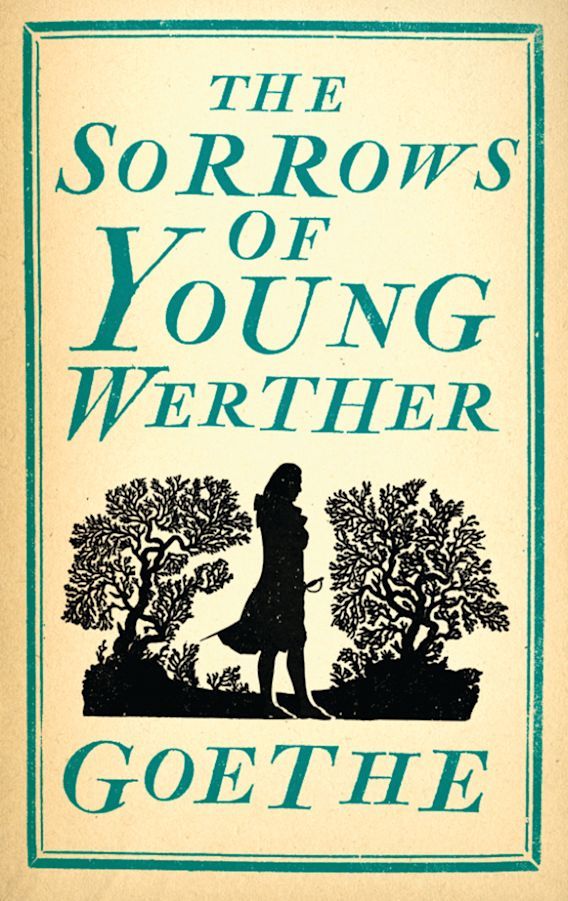
The Sorrows of Young Werther

The Sorrows of Young Werther: Love, Impracticality, and the Romance That Could Never Survive

From the moment Werther begins to write, his fate is already sealed. Not because Charlotte belongs to another man, nor because society is cruel, but because Werther mistakes intensity for truth and feeling for destiny.

The Sorrows of Young Werther presents itself as a love story, but it is, more precisely, a story about what happens when love is entrusted to someone who cannot live in the world as it is.

Goethe wants us to feel with Werther. He succeeds brilliantly. But whether Werther deserves our full sympathy is another matter entirely.

A Heart Too Open for Its Own Good

Werther arrives in Wahlheim emotionally unguarded. He does not observe life; he absorbs it whole. Early diary entries pulse with delight:

“I am so happy, my dear friend, so absorbed in the exquisite sense of mere tranquil existence, that I neglect my talents.”

This line is charming — and already alarming. Werther abandons usefulness without hesitation. He does not seek balance. He seeks immersion.

His love story does not begin with Charlotte. It begins with a philosophy: life is meant to be felt, not managed.

That belief makes him magnetic. It also makes him unlivable.

Charlotte Appears — and Reality Quietly Enters

Charlotte is introduced not as a dream, but as a figure of action: feeding her siblings, organizing the household, moving easily between affection and responsibility. She is warmth anchored by duty.

Werther falls instantly. But crucially, Charlotte does not change her life to accommodate this love.

Albert exists from the beginning. Charlotte never hides this fact. Werther simply refuses to accept its implications.

What he loves in Charlotte is not merely her tenderness — it is her order. Yet he has no intention of sharing that order. He wants to orbit it, admire it, be transformed by it — without adopting its discipline.

This asymmetry dooms the romance before it fully begins.

Love Without Practicality

Werther’s letters soon reveal a dangerous pattern: emotion escalates, but action stagnates.

“Why must that which makes a man happy also become the source of his misery?”

The question is poetic — and evasive. 

Werther never asks what he might do differently. He does not seek distance, redirection, or restraint. He seeks justification.

Charlotte asks for boundaries. Werther experiences boundaries as violence.

Albert, by contrast, is quietly practical. He builds a life. He plans. He commits. Goethe does not portray him as cruel or small-minded — only unromantic.

Werther’s tragedy is not that Charlotte chooses Albert. It is that Werther could never be Albert — nor would he want to be.

Goethe’s Seduction of the Reader

This is where Goethe’s genius — and manipulation — becomes evident.

We read only Werther’s voice. We feel his anguish without interruption. His despair sounds noble because it is beautifully phrased.

“I have so much, and yet without her all is nothing.”

It is devastating. It is also untrue.

Werther has options: work, distance, friendship, change. But Goethe ensures we do not feel them emotionally, because Werther does not feel them himself.

Our sympathy is engineered.

Charlotte’s silence grows. Albert recedes into the background. The world narrows until only feeling remains.

The Return — and the Collapse

When Werther returns to Wahlheim after his failed attempt at professional life, something has hardened. His love has lost its innocence. It has become insistence.

Charlotte now actively resists. She asks him to stop visiting. She fears what his presence does to them both.

This is not romantic tension — it is danger.

Werther reads Ossian aloud, flooding the room with tragic longing, pushing emotion past the point of beauty into excess. 

Charlotte weeps. She begs him to leave.

And still, Werther does not choose withdrawal.

Werther’s Fate

Werther’s suicide is not impulsive. It is prepared, deliberate, almost ceremonious.

“I shall go before you… I shall see you again, and without the veil.”

Goethe frames the act as a final gesture of consistency. Werther remains true to himself — and that is precisely the problem.

He chooses death not because love was impossible, but because he could not imagine a version of himself that survived disappointment.

This is where sympathy must break.

Werther does not die for Charlotte. He dies for his idea of love — one that allows no compromise, no endurance, no growth beyond intensity.

A Romance Doomed from the Start

The love affair was never viable because it required Charlotte to abandon responsibility and Werther to acquire it.

Neither happens.

Charlotte chooses life as it must be lived. Werther chooses feeling as it wishes to be felt.

Goethe may invite us to weep for Werther, but he also leaves us with an uncomfortable realization: romantic excess can be as selfish as it is sincere.

Werther does not ask what love demands of him — only what it entitles him to feel.

Conclusion: Loving Too Much, Living Too Little

The Sorrows of Young Werther endures not because it celebrates romanticism, but because it exposes its limits. Goethe captures the intoxication of loving without restraint — and then follows it to its logical end.

Werther’s fate is tragic, yes. But it is also avoidable.

To read Werther honestly is to feel his pain — and then to step back and ask whether love that cannot survive reality deserves to be immortalized.

Perhaps Goethe’s true achievement is this tension: he lets us fall in love with Werther’s heart, even as he quietly reveals why such a heart cannot last.
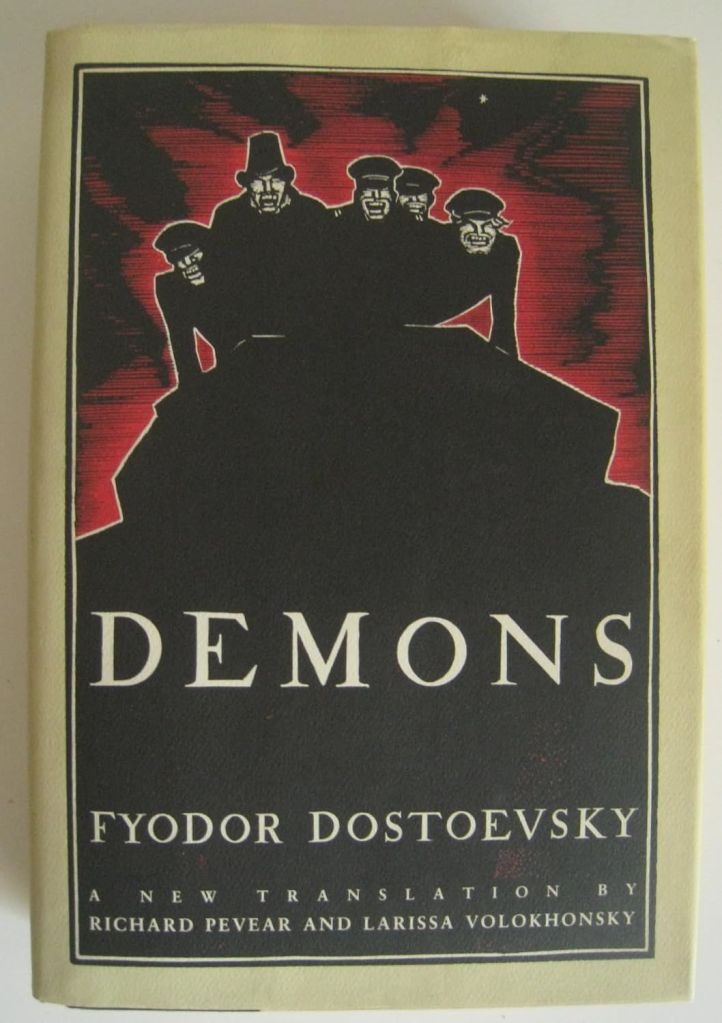
Demons

Stavrogin and Pyotr Verkhovensky: The Void and the Virus

Suicide, Silence, and the Refusal of God in Dostoevsky’s Demons

In Demons, Dostoevsky no longer asks why a man commits a crime or how guilt destroys the soul. He asks something far more terrifying: What happens when belief itself becomes diseased? The novel marks a shift from individual psychological collapse to collective possession. Here, ideas do not persuade—they infect. They hollow people out, animate them, and drive them toward destruction with mechanical inevitability.

At the center of this catastrophe stand two figures who never fully merge yet cannot exist without each other: Nikolai Stavrogin, the void, and Pyotr Verkhovensky, the virus. Stavrogin represents moral emptiness—the absence of belief, remorse, or commitment. Pyotr represents ideological contagion—pure movement without truth, manipulation without conviction. Together, they form Dostoevsky’s bleakest prophecy: a world where emptiness invites possession, and possession replaces conscience.

Stavrogin: The Terror of Moral Emptiness

Stavrogin is not a villain in the traditional sense. He does not rage like Raskolnikov, argue like Ivan Karamazov, or suffer like Prince Myshkin. What makes Stavrogin terrifying is precisely what he lacks: moral gravity. He does not struggle; he does not resist. He observes his own depravity with cold detachment, as though watching another man commit atrocities.

Everyone in Demons orbits Stavrogin. They project onto him leadership, depth, and power. Yet Stavrogin himself believes in nothing—not God, not humanity, not even nihilism as a cause. He is not a revolutionary; he is not a reactionary. He is an absence that attracts meaning, a blank screen onto which others cast their fantasies.

Dostoevsky understood something deeply modern here: emptiness can be more dangerous than conviction. A man who believes in something may still be restrained by doubt or conscience. A man who believes in nothing becomes infinitely adaptable. Stavrogin can commit evil not because he is driven by passion, but because nothing within him says no.

His silence is crucial. Stavrogin refuses confession not out of pride, but indifference. Even when he reveals his crimes, it is without repentance, as though truth itself has lost its moral weight. This silence is not peace—it is spiritual death.

Pyotr Verkhovensky: Ideology as Infection

If Stavrogin is empty, Pyotr Verkhovensky is full—but full of nothing substantial. Pyotr does not believe in revolution, justice, or equality. He believes only in movement, disruption, and control. Ideas are tools to him, interchangeable and disposable. Truth is irrelevant; effect is everything.

Pyotr understands that people do not need coherent philosophy—they need permission. Permission to destroy, to humiliate, to kill. He creates secret cells not to advance a cause, but to bind people together through shared guilt. Violence becomes the glue of community.

This is where Demons becomes prophetic. Pyotr anticipates the modern extremist: not a fanatic driven by belief, but a strategist who weaponizes belief in others. He spreads chaos not as an end, but as a method. Disorder creates dependency, and dependency creates power.

Pyotr does not create the void—but he exploits it. Stavrogin’s emptiness gives Pyotr legitimacy. Pyotr needs Stavrogin as a symbol, a silent authority who never contradicts him. In this sense, the virus requires the void. Ideology needs spiritually empty hosts to survive.

Kirillov and the Logic of Suicide

Running beneath Stavrogin and Pyotr is a darker philosophical current, embodied most explicitly in Kirillov. Kirillov’s suicide is not despair—it is metaphysics. He believes that if God does not exist, then the highest expression of human freedom is self-annihilation. By killing himself voluntarily, Kirillov seeks to become God.

This is the most chilling idea in Demons: suicide as theological rebellion.

Kirillov’s logic is flawless and horrifying. If there is no God, then there is no moral order beyond human will. If that is true, then death is merely another choice. Suicide becomes the ultimate assertion of autonomy. Freedom consumes itself.

Dostoevsky understood that when God is rejected, something else rushes in to fill the vacuum—not reason, but absolutism. Kirillov does not arrive at peace; he arrives at fanatic clarity. His death is not tragic because it is painful, but because it is meaningless while pretending to be profound.

Stavrogin’s Silence and the Failure of Confession

Unlike Kirillov, Stavrogin does not articulate a philosophy of suicide—but he embodies it. His final act is not a declaration, but a withdrawal. Where Kirillov dies loudly, Stavrogin dies quietly. His suicide is the natural conclusion of emptiness: when nothing binds you to life, life becomes optional.

Stavrogin cannot repent because repentance requires belief in moral order. He cannot love because love requires commitment. He cannot live because life requires purpose beyond self-will. His death is not an escape from guilt—it is the final expression of indifference.

Dostoevsky is merciless here. Stavrogin’s intelligence, charm, and self-awareness do not save him. On the contrary, they accelerate his destruction. Consciousness without faith becomes self-consuming.

The Possessed World

What Demons ultimately reveals is that the death of God does not lead to freedom—it leads to possession. When conscience disappears, ideology takes its place. When meaning dissolves, violence provides structure. When silence replaces prayer, chaos speaks.

Stavrogin shows us the danger of inner emptiness. Pyotr shows us how that emptiness becomes contagious. Kirillov shows us the final logic of absolute freedom. Together, they form a single system: void, virus, and self-destruction.

Dostoevsky was not warning against revolution alone. He was warning against a world where ideas are severed from the soul, where belief becomes technique, and where freedom is defined as the absence of restraint rather than the presence of meaning.

Conclusion: A Novel for Our Time

Demons is not a historical novel. It is a diagnosis. Stavrogin exists wherever moral detachment is mistaken for sophistication. Pyotr exists wherever chaos is mistaken for progress. Kirillov exists wherever autonomy is mistaken for transcendence.

The demons Dostoevsky describes are not supernatural—they are philosophical. They enter through silence, grow through emptiness, and destroy through certainty.

And once possessed, a society no longer needs tyrants.

It destroys itself.