The Master and Margarita: Chaos, Comedy, and the Cosmic Order
Mikhail Bulgakov’s The Master and Margarita is a literary masterpiece in which satire, fantasy, romance, and metaphysics converge. It is at once a social critique, a philosophical fable, and a love story, and it resists simple categorization. The novel captures the absurdities of human society, the existential dilemmas of moral silence, and the consequences of refusing God or higher truth. Central to its brilliance is the interplay between characters—the Master, Margarita, Woland, Pontius Pilate, and the extraordinary ensemble of Muscovites—whose actions and misadventures illuminate the delicate balance between chaos and order, comedy and tragedy.
The story opens in Moscow during the 1930s, where a city of bureaucrats, writers, and petty officials becomes the stage for surreal chaos. Strange events unfold after the arrival of Woland, a mysterious foreigner who is, in fact, the Devil. Accompanied by a retinue of grotesque and fantastical beings—Koroviev, the sardonic, painted-clown-like assistant; the fanged, violent Azazello; and the enormous, gun-toting, catlike Behemoth—Woland transforms the city into a theater of cosmic comedy. Office meetings collapse into absurdity, greedy moneylenders vanish, and literary critics are publicly humiliated. Bulgakov’s Moscow becomes a living, breathing caricature, reflecting the absurdities of a society where ideology, ambition, and self-interest mask moral emptiness. Through humor and hyperbolic events, Bulgakov exposes the consequences of human selfishness, cowardice, and moral silence.
At the heart of the novel is the tragic yet luminous love between the Master and Margarita. The Master, a tormented writer, has created a novel about Pontius Pilate that is rejected, censored, and ultimately destroyed. His despair drives him toward suicide, illustrating the profound spiritual cost of living in a world indifferent to truth, beauty, and conscience. In his silence and withdrawal, the Master embodies Bulgakov’s exploration of existential void: a soul abandoned by society, yet still tethered to love and creative ambition. Margarita, by contrast, represents courage, loyalty, and moral engagement. When she learns of the Master’s despair, she confronts the supernatural directly, making a pact with Woland to save him. By participating in his otherworldly ball, wielding magic, and defying societal and cosmic constraints, Margarita becomes an agent of redemption. Her intervention emphasizes the novel’s assertion that human courage and devotion can counter despair and restore moral balance, even amid chaos.
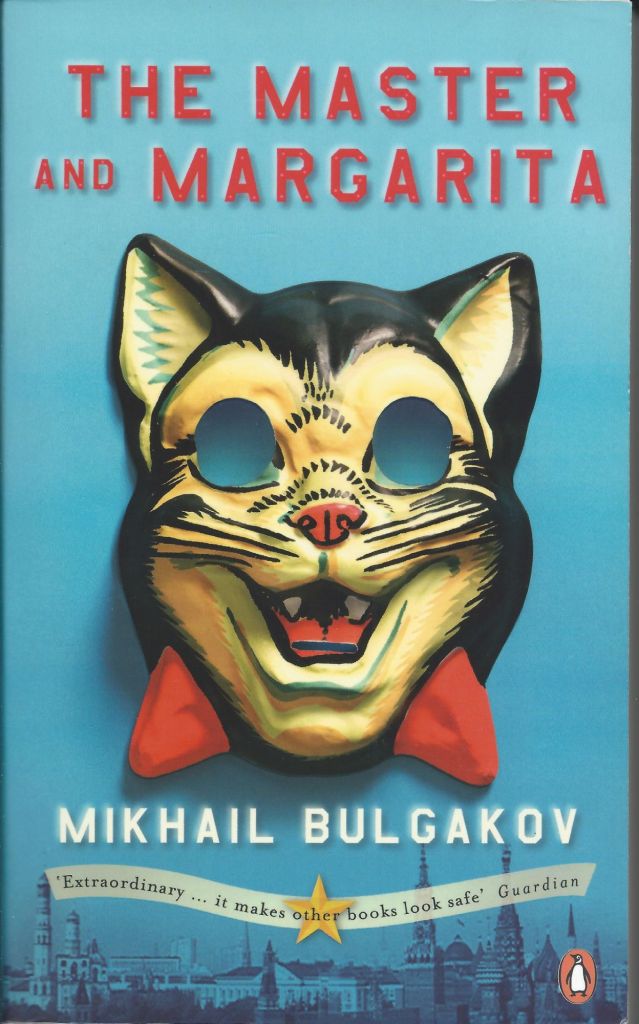
Woland himself is a study in contrasts, embodying both terror and dark humor. He is a shapeshifter, alternately sophisticated gentleman, menacing judge, and mischievous trickster, capable of bending reality to his will. His actions are unpredictable: he orchestrates spectacles of destruction, yet maintains a strict moral code, punishing cruelty, cowardice, and greed while sparing those who demonstrate integrity or courage. Woland’s shapeshifting amplifies the novel’s themes: evil is neither simplistic nor uniform; it can be comic, terrifying, and instructive all at once. Behemoth, the enormous black cat who walks upright, speaks, wields firearms, and performs slapstick violence, brings chaos and laughter to every scene he touches, revealing Bulgakov’s genius in blending horror and humor. Azazello, with his fangs and fire, enforces punishment with terrifying precision, while Koroviev’s sardonic wit critiques Moscow society with ironic flair.
One of the novel’s most memorable episodes, Woland’s grand ball, combines spectacle, horror, and philosophical insight. Margarita’s attendance at the Devil’s ball is both surreal and transformative. Here, Bulgakov stages a moral universe in which choices, courage, and integrity are tested in extreme circumstances. The ball is a microcosm of the cosmic order: the grotesque, supernatural, and absurd coalesce to reveal the consequences of human vice and virtue. Margarita’s participation, in which she navigates fear and power, asserts the redemptive possibilities of courage and love. In this scene, Bulgakov dramatizes the tension between chaos and moral responsibility: even in the realm of the demonic, human actions carry weight.
Parallel to the Moscow narrative is the story of Pontius Pilate, narrated through the Master’s novel. Pilate’s moral paralysis in condemning Yeshua Ha-Notsri parallels the Master’s despair, revealing the consequences of silence and moral cowardice. Pilate, aware of Yeshua’s innocence, chooses expedience over justice, refusing to act according to conscience. This silence results in suffering and guilt that reverberates across time. Bulgakov juxtaposes this historical and metaphysical narrative with the chaos in contemporary Moscow, emphasizing that the refusal of God—or the abdication of moral responsibility—carries consequences both personal and universal. The contrast between Pilate’s silence and Margarita’s action highlights Bulgakov’s central moral claim: engagement, courage, and devotion are necessary to counter despair, injustice, and chaos.
Humor permeates the novel, balancing its philosophical and tragic themes. The absurdities of Soviet life—greedy bureaucrats, deluded literary critics, and petty officials—are exposed in scenes of grotesque comedy. Behemoth’s antics, from shooting a cashier to performing slapstick chaos in Woland’s retinue, combine humor and critique, making Moscow’s corruption palpable. Bulgakov’s laughter is never mere levity; it is moral commentary. By exaggerating human folly and societal absurdity, he both entertains and instructs, revealing the consequences of vanity, selfishness, and ideological blindness.
Themes of suicide, silence, and the refusal of God weave through both Moscow and biblical narratives. The Master’s contemplation of suicide is a response to spiritual and moral abandonment, illustrating the void created by a society indifferent to truth and artistic integrity. Pilate’s silence in the face of injustice shows the psychological and moral consequences of refusing moral responsibility. Even minor characters, from the fearful bureaucrats to the greedy merchants, demonstrate the dangers of avoiding ethical choice. Bulgakov suggests that indifference, cowardice, and the refusal of higher truth invite chaos, suffering, and spiritual desolation.
Conversely, Margarita’s courage and loyalty demonstrate that human action, even amid supernatural and societal absurdity, can restore balance, reaffirm moral order, and transcend despair.
The novel’s conclusion reinforces these themes. Woland grants the Master and Margarita peace, allowing them to escape suffering and isolation. Yet this resolution is not a triumph over evil; rather, it affirms the necessity of moral courage, love, and artistic integrity in a world where absurdity and chaos are ever-present. Bulgakov’s cosmic vision is neither simplistic nor deterministic: human choice matters, love redeems, and silence or cowardice has profound consequences.
The Master and Margarita is ultimately a meditation on human freedom, moral responsibility, and the interplay between chaos and order. Its humor, supernatural spectacle, and intricate plotting serve not merely to entertain, but to illuminate the human condition. Suicide, silence, and refusal of God are ever-present threats, yet Bulgakov demonstrates that engagement, courage, and devotion can counter despair and moral void. Characters such as the Master, Margarita, Woland, Pilate, and the fantastical retinue embody this interplay of human frailty, moral courage, and cosmic order. Through laughter, horror, and wonder, Bulgakov affirms the resilience of the human spirit and the enduring power of love, integrity, and artistic creation.
By weaving together comedy, horror, romance, and philosophy, Bulgakov creates a novel that is at once fantastical and profoundly human. Its enduring appeal lies in its capacity to illuminate the absurdities and moral challenges of existence, offering both warning and consolation. In The Master and Margarita, Bulgakov presents a universe in which chaos and evil exist, but the courage to love, create, and act with integrity allows the human spirit to endure. The novel is a celebration of imagination, moral clarity, and the transformative power of love—an artistic triumph that continues to resonate as one of the greatest achievements of twentieth-century literature.