The denial of death

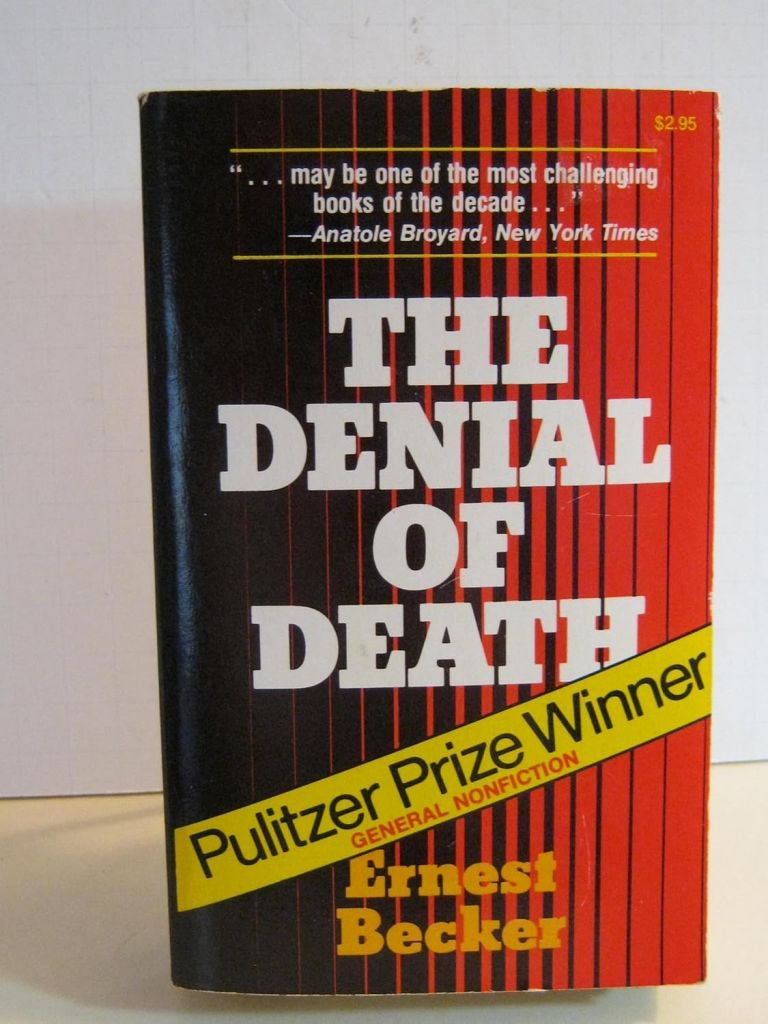
The Terror Beneath Civilization: Ernest Becker and the Denial of Death

Human beings are the only animals who know they will die. From this unbearable knowledge, Ernest Becker argues, everything else follows. The Denial of Death is not merely a work of psychology or anthropology; it is an indictment of civilization itself. Beneath our achievements, moral codes, love stories, political systems, and religious faiths lies a single, unspoken terror: the certainty of our own extinction.

For Becker, consciousness is not a triumph but a tragedy. To be self-aware is to stand at a distance from nature, to recognize one’s fragile body as temporary, replaceable, and doomed. The human mind, unable to tolerate this truth directly, constructs elaborate symbolic systems to protect itself. Culture is not an ornament of human life; it is a defense mechanism. Civilization, in Becker’s stark formulation, is a collective effort to deny death.

This is Becker’s unsettling claim: we do not live as we do because we seek truth, goodness, or beauty. We live as we do because we cannot bear the terror of being animals who must die.

Consciousness as a Curse

The human condition is paradoxical. We are biological organisms driven by instinct, hunger, and fear, yet we possess symbolic consciousness that allows us to imagine eternity, meaning, and transcendence. This split—between body and symbol, animal and god—is the source of our anxiety. We are “gods with anuses,” as Becker memorably puts it: capable of imagining immortality while rotting from within.

Unlike other animals, humans cannot simply live in the present. We remember the past, anticipate the future, and project ourselves into a world beyond our own lifetimes. This capacity for symbolic thought gives rise to art, language, and religion—but also to neurosis, guilt, and violence. Consciousness exposes us to a truth we are not equipped to endure: that everything we love, including ourselves, will disappear.

The problem is not death itself, but the awareness of it. Becker insists that human psychology is fundamentally shaped by this awareness. Our minds evolve not to confront mortality honestly, but to keep it at bay. Mental health, in this sense, is not a state of truthfulness but of successful repression.

Immortality Projects: How Humans Cheat Death

Becker’s most enduring concept is that of the immortality project. These are symbolic systems through which individuals seek to transcend death—not physically, but meaningfully. If the body must perish, then the self must be preserved in another form: legacy, reputation, nation, soul, or memory.

Religion offers literal immortality through the promise of an afterlife. Art offers symbolic immortality through lasting creation. Nation and ideology offer participation in something larger and more enduring than the individual. Even the modern career, with its obsession with achievement and recognition, functions as an immortality project: proof that one mattered, that one left a mark.

Becker does not dismiss these projects as childish illusions. On the contrary, he insists they are psychologically necessary. Without some form of symbolic transcendence, the individual collapses into despair. Depression, anxiety, and nihilism emerge when a person’s hero system—his sense of cosmic significance—fails.

What makes Becker dangerous is not that he exposes immortality projects, but that he refuses to romanticize them. These projects sustain life, but they also generate conflict. When one person’s symbolic meaning clashes with another’s, violence becomes inevitable.

Heroism and the Need to Matter

At the heart of every immortality project is heroism. Becker redefines heroism not as bravery or virtue, but as the belief that one’s life has objective significance in the universe. To live without heroism is to live with the unbearable sense that one’s existence is arbitrary and disposable.

Modern society has not eliminated this need; it has merely fragmented it. Where ancient cultures offered shared hero systems—religion, myth, sacred tradition—modernity leaves individuals to invent their own. The result is a proliferation of fragile identities constantly in need of validation.

Social media offers a perfect contemporary example: a digital arena for micro-heroism, where visibility, outrage, and moral performance substitute for lasting meaning. To be seen is to exist; to be ignored is to vanish. Becker helps explain why humiliation feels existential and why public recognition feels salvific. These are not trivial emotional reactions—they are encounters with symbolic death.

When a hero system collapses, the individual experiences not disappointment, but annihilation. Rage, fanaticism, and despair follow. This is not pathology at the margins of human behavior; it is its psychological core.

Love as a Dangerous Immortality Project

Perhaps Becker’s most disturbing insight concerns romantic love. In a secular age, love becomes the primary site of transcendence. We turn our lovers into gods, expecting them to redeem us from insignificance and mortality. The beloved becomes the guarantor of meaning, the witness who makes life real.

This burden is impossible to bear. No human being can sustain godhood. When the lover fails—as all humans must—love curdles into resentment, control, or despair. What begins as devotion becomes domination. Becker’s analysis exposes the dark underside of romantic idealism: love does not save us from death; it merely relocates our terror onto another person.

This insight resonates deeply with the great novels of psychological realism, where love so often becomes destructive. Becker offers the theory behind the tragedy: love collapses under the weight of immortality.

Evil as a Defense Against Death

Becker’s theory of evil is radical in its simplicity. People do not commit evil because they are cruel, irrational, or broken. They commit evil because they are defending their immortality projects. When another person or group threatens one’s symbolic universe, annihilation feels justified—even necessary.

War, genocide, ideological purges, and moral crusades all follow this pattern. The enemy must be destroyed not merely because they are wrong, but because they threaten meaning itself. Becker reveals that moral righteousness often masks existential panic. Violence becomes sacred when it is framed as a defense of ultimate values.

This is why evil is so often accompanied by certainty. Doubt weakens hero systems; fanaticism reinforces them. The more fragile the symbolic structure, the more violently it must be defended.

God Without Consolation

Becker’s relationship to religion is complex and frequently misunderstood. He does not simply reject God; he rejects religious systems that function as denial rather than confrontation. A God who exists merely to soothe anxiety becomes another psychological shield—dangerous not because it is false, but because it evades responsibility.

In this sense, Becker stands closer to Dostoevsky than to secular atheism. Like Ivan Karamazov, Becker refuses a God who excuses suffering or sanitizes terror. Faith that denies death becomes complicit in violence; faith that acknowledges terror without illusion may foster humility.

Becker does not offer salvation. He offers clarity—and that clarity is tragic.

Living with the Terror

Can human beings live without illusions? Becker’s answer is brutally honest: no. Complete confrontation with mortality would paralyze us. The goal is not to abolish denial, but to soften it—to recognize the symbolic nature of our hero systems without absolutizing them.

Wisdom, for Becker, lies in humility. To know that one’s meaning is constructed is not to abandon it, but to hold it lightly. Less certainty may mean less violence. Less cosmic self-importance may mean greater compassion.

The Denial of Death leaves us with no comforting resolution. It offers no program, no therapy, no redemption arc. It simply insists that beneath our most cherished ideals lies a terrified animal clinging to meaning. To face this truth is not to despair, but to see ourselves clearly—tragic, creative, and dangerous.

Civilization is built on denial. But within that denial, Becker suggests, lies the possibility of a quieter courage: not the courage to conquer death, but the courage to live honestly in its shadow.

The Idiot

Prince Myshkin and Nastasya Filippovna: Absolute Goodness and the Will to Self-Destruction in The Idiot

Dostoevsky’s The Idiot is not a novel about innocence misunderstood; it is a novel about goodness that arrives too early, too naked, and too unarmed for the world it enters. Prince Lev Nikolaevich Myshkin is not a fool, nor is he a saint in the conventional sense. He is an ethical anomaly — a man whose moral transparency exposes the violent mechanics of social life. Opposite him stands Nastasya Filippovna, a woman whose intelligence, beauty, and psychological lucidity have been fused with trauma into a single, lethal self-image. Their encounter forms the novel’s tragic axis: absolute goodness meets a soul that believes it deserves destruction.

Myshkin’s tragedy is not that he is rejected; it is that he is believed, briefly, and then found unbearable. Society does not crucify him — it diagnoses him. His compassion is read as weakness, his honesty as social incompetence, his mercy as naïveté. Yet Dostoevsky is careful: Myshkin sees more clearly than anyone else in the novel. He understands human vanity, cruelty, and fear with devastating precision. What he lacks is not intelligence, but defensive illusion. He cannot lie in the way society requires one to lie in order to survive.

This becomes catastrophic when Myshkin encounters Nastasya Filippovna — a woman whose trauma has taught her that love is always a prelude to ownership, humiliation, or punishment. Nastasya is not destroyed by society’s cruelty alone; she has internalized its verdict. She believes herself irredeemable, not because she lacks moral awareness, but because she possesses too much of it. Her self-destruction is not impulsive — it is principled. She seeks to expose the hypocrisy of a world that desires her beauty while condemning her existence.

Myshkin’s love for Nastasya is radically different from the love offered by others. He does not desire her, nor does he seek to rescue her in the heroic sense. He recognizes her suffering without attempting to rewrite it. In modern terms, Myshkin offers witness rather than cure. This is precisely why his goodness becomes unbearable. Nastasya cannot accept love that does not punish her. To accept Myshkin’s mercy would require her to abandon the identity she has constructed around her suffering — and that identity is all she has left.

Here Dostoevsky articulates a terrifying psychological truth: trauma does not merely wound — it organizes the self. Nastasya’s oscillation between Myshkin and Rogozhin is not romantic indecision; it is a repetition compulsion. Myshkin represents unconditional recognition without possession. Rogozhin represents violent desire, ownership, and annihilation. Between them, Nastasya chooses not happiness, but coherence. Rogozhin confirms what she already believes about herself: that she is an object to be consumed and destroyed.

Myshkin’s goodness fails not because it is false, but because it demands too much of a wounded soul. Absolute goodness does not negotiate with self-hatred; it dissolves the very narrative that sustains it. For Nastasya, to be loved without condition would mean confronting the possibility that her suffering was unjust — and that possibility is more terrifying than death. It would mean that the world is not merely cruel, but wrong. And if the world is wrong, then her pain demands a reckoning that cannot be satisfied by self-destruction alone.

This is why Myshkin’s presence accelerates Nastasya’s collapse rather than preventing it. Goodness, when it is complete, exposes evil without containing it. Myshkin does not possess the authority of Christ, only the vulnerability. He can forgive, but he cannot redeem. He can love, but he cannot save. His goodness is human — and therefore tragic.

Dostoevsky stages this tragedy with surgical precision. Each time Myshkin approaches Nastasya with compassion, she responds with theatrical cruelty — mocking herself, humiliating her suitors, sabotaging her own escape. These acts are not madness; they are protest. Nastasya refuses to be redeemed quietly. If she is to be destroyed, she will ensure that the spectacle indicts everyone watching.

The novel’s final convergence — Myshkin and Rogozhin keeping vigil over Nastasya’s corpse — represents the collapse of all moral binaries. Love as possession and love as mercy meet in silence. Neither triumphs. Myshkin’s mind breaks not because he has failed, but because he has seen too much without the power to intervene. Absolute goodness, confronted with absolute despair, does not become heroic — it becomes mute.

The Idiot thus dismantles a comforting illusion: that goodness is inherently salvific. Dostoevsky insists on something far more disturbing. Goodness, when it is unprotected by power, tradition, or authority, is fragile. It reveals truth without enforcing it. And truth, once revealed, does not automatically heal — it often destroys.

Prince Myshkin is not the savior of the novel; he is its ethical measure. Nastasya Filippovna is not merely a tragic woman; she is the novel’s moral accusation. Together, they form Dostoevsky’s bleakest question: What happens when perfect compassion meets a soul that cannot survive without self-condemnation?

The answer is not redemption. It is tragedy — not because goodness is insufficient, but because the world is not yet capable of receiving it.

Crime and punishment

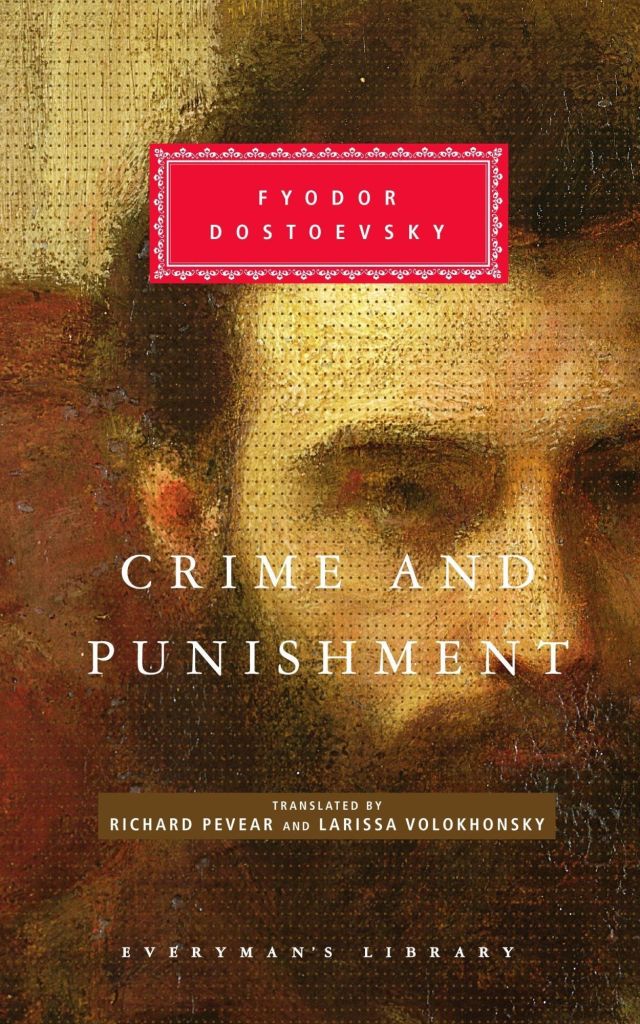
Crime and Punishment: When an Idea Commits a Murder

Fyodor Dostoevsky’s Crime and Punishment is often misread as a novel about guilt, redemption, or the psychology of crime. While it contains all these elements, at its core the book is something far more unsettling: a novel about an idea that takes physical form—and kills.

Dostoevsky does not begin with murder. He begins with thought. Specifically, with a modern thought: that reason, if pushed far enough, can replace morality.

Rodion Romanovich Raskolnikov is not merely poor, desperate, or unbalanced. He is intellectually intoxicated. His crime emerges not from impulse but from theory—from the belief that humanity is divided into two categories: the ordinary and the extraordinary. The former must obey the law; the latter may transgress it in the service of a higher purpose. History, he believes, is moved forward by such men. Napoleon becomes his unspoken model: a figure whose crimes were retroactively sanctified by success.

This belief marks Raskolnikov as the true heir of modern consciousness. Where the Underground Man remained paralyzed by self-awareness, Raskolnikov crosses the threshold into action. Dostoevsky escalates the philosophical problem posed in Notes from Underground: what happens when a man stops arguing with morality and attempts to overcome it?

The answer is not liberation. It is collapse.

The murder of the pawnbroker Alyona Ivanovna is not portrayed as dramatic or cathartic. It is clumsy, panicked, almost banal. Worse still, it does not go according to plan. Lizaveta’s unexpected appearance forces Raskolnikov into a second, unintended murder—already undermining the fantasy of rational control. The idea that crime can be clean, purposeful, and justified collapses at the very moment it is enacted.

From this point onward, Crime and Punishment becomes less a narrative and more a psychological autopsy.

Raskolnikov does not emerge empowered. He becomes feverish, disoriented, fragmented. His body rebels against his mind. He sleeps excessively, rambles incoherently, oscillates between arrogance and despair. Dostoevsky insists on a crucial truth: the psyche is not neutral territory. It cannot accommodate the lie that one is beyond good and evil.

This is one of Dostoevsky’s most radical claims. Punishment does not begin in the courtroom or the prison. It begins immediately, internally, and involuntarily. Long before the law reaches Raskolnikov, truth does.

What makes Raskolnikov’s suffering particularly modern is that it is not rooted in remorse for the victim. His torment stems from something more corrosive: the realization that he is not who he imagined himself to be. He wanted to prove his extraordinariness. Instead, he discovers his ordinariness in the most humiliating way possible—through weakness, confusion, and guilt.

Dostoevsky frames this as a metaphysical failure. Raskolnikov’s crime exposes the falsehood at the heart of rationalist morality: that human beings can reduce life to calculations without consequence. The novel relentlessly dismantles this notion. Every attempt Raskolnikov makes to justify himself only deepens his isolation.

Against him stands Sonya Marmeladova—perhaps the most misunderstood character in the novel. Sonya is often reduced to a symbol of Christian purity or passive suffering. In reality, she represents a radical ethical alternative to Raskolnikov’s logic.

Sonya does not justify suffering; she bears it. Forced into prostitution to support her family, she embodies moral degradation without moral corruption. Where Raskolnikov commits violence in the name of an abstract future good, Sonya sacrifices herself in the present for the survival of others. Dostoevsky places them in direct opposition: reason without love versus love without justification.

Crucially, Sonya never argues Raskolnikov out of his theory. She does not debate him. She listens, weeps, and remains. Dostoevsky suggests that salvation is not intellectual but relational. Truth does not arrive as a concept; it arrives as a presence.

This is why Raskolnikov’s confession does not occur in the interrogation room but in Sonya’s company. She gives him the cross not as a symbol of dogma but as a burden to be accepted. To suffer consciously, Dostoevsky implies, is already to begin returning to reality.

Porfiry Petrovich, the examining magistrate, represents another crucial dimension of the novel. Unlike conventional detectives, Porfiry does not rely on evidence alone. He relies on time, pressure, and psychological insight. He understands that Raskolnikov’s real enemy is not the law but himself.

Porfiry’s brilliance lies in his patience. He knows that guilt seeks expression, that the mind cannot indefinitely conceal what the soul knows. His interrogations are philosophical traps rather than procedural ones. In Porfiry, Dostoevsky anticipates modern psychology: crime as a form of confession delayed.

Yet even Porfiry does not complete the arc of punishment. That belongs to Siberia.

One of the novel’s most misunderstood aspects is its ending. Readers often expect a dramatic conversion or spiritual revelation. Instead, Dostoevsky offers something far more restrained—and far more honest. Raskolnikov does not suddenly become virtuous. He remains proud, resistant, emotionally distant. Redemption is not instantaneous; it is embryonic.

This is vital. Dostoevsky refuses cheap transcendence. Punishment, in the novel, is not the sentence imposed by the state but the slow dismantling of a false self. Siberia is not hell; it is exposure. Removed from his intellectual fantasies, Raskolnikov is finally forced to inhabit time, labor, and suffering alongside others.

Only at the very end does Dostoevsky allow the possibility—not the certainty—of renewal. The emphasis is deliberate. Redemption is not a narrative conclusion but a lifelong process. What matters is that Raskolnikov has ceased to believe in his own exceptionality.

This is the novel’s ultimate warning.

Crime and Punishment is not merely about murder; it is about what happens when human beings believe they can stand above moral law without paying a psychological and spiritual price. Dostoevsky foresaw a world increasingly governed by systems, ideologies, and rational justifications for violence. His novel asks a question that remains urgently relevant: what happens when ideas forget the human beings they consume?

Raskolnikov’s tragedy is not that he kills an old woman. It is that he tries to live as if love, conscience, and suffering are negotiable. Dostoevsky answers him with brutal clarity: they are not.

In the end, Crime and Punishment is not a condemnation of thought, but of thought severed from compassion. It insists that no theory, no matter how elegant, can absolve a human being from the reality of other human lives. And when an idea commits a murder, it does not remain intact. It destroys the mind that carried it.

That is Dostoevsky’s enduring terror—and his enduring truth.

Notes from Underground

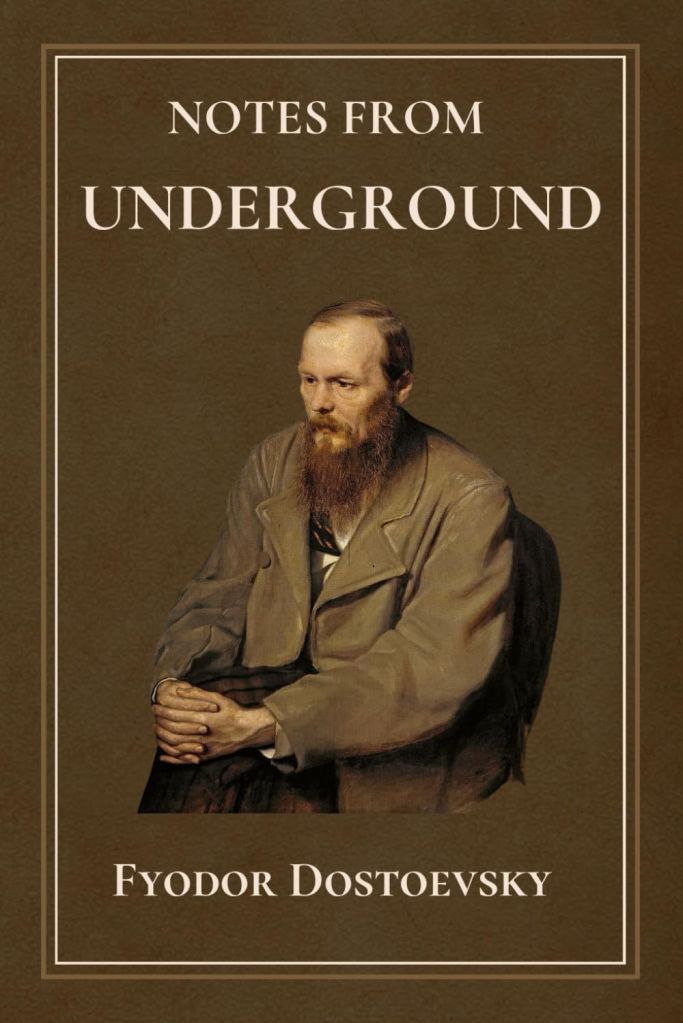
Notes from Underground and the Birth of Modern Consciousness

There is a reason Notes from Underground feels less like a novel than an exposure. It does not invite sympathy, nor does it offer development or redemption. Instead, it stages a consciousness that knows too much, feels too sharply, and cannot move without tripping over itself. What Dostoevsky gives us here is not a character to be understood, but a mode of being that would come to define modernity.

The Underground Man is not mad. He is not mistaken. He is, disturbingly, lucid. And it is this lucidity — corrosive, recursive, merciless — that makes him feel so contemporary. In him, Dostoevsky inaugurates a form of consciousness that no longer trusts reason, no longer believes in progress, and no longer experiences the self as unified or innocent. This is not the romantic self, nor the rational Enlightenment subject. It is something darker: a self conscious of its own consciousness, and trapped inside it.

Hyper-consciousness as Illness

“I am a sick man… I am a spiteful man.”

The opening declaration is not metaphorical. The Underground Man’s illness is not physical, nor even psychological in the clinical sense. It is excess awareness. He feels everything too much, thinks everything too far, anticipates every possible humiliation before it occurs. Action becomes impossible because action would require simplification, and simplification feels dishonest.

This is the first crucial break Dostoevsky introduces: consciousness is no longer a tool for clarity, but a source of paralysis. To be aware is not to be free; it is to be immobilised by competing motives, imagined judgments, and retrospective shame.

The Underground Man knows the reasons for action — and knows equally well the reasons against them. Every impulse is instantly undermined by reflection. Every desire is followed by contempt for having desired at all. What remains is inertia, accompanied by an inner monologue that never rests.

Modern consciousness begins here: not with doubt, but with self-surveillance.

The Collapse of Rational Optimism

Dostoevsky is writing against something very specific: the 19th-century belief that human beings, if shown their true interests, will act rationally and morally. The Crystal Palace — the utopian symbol of perfect rational organisation — looms in the background as an unspoken antagonist.

The Underground Man refuses this vision with fury.

He insists, scandalously, that human beings will choose suffering over happiness if happiness is imposed. That they will act against reason simply to prove they are free. That two times two equalling four is not liberation, but a wall.

This rejection is not philosophical abstraction; it is existential. A life governed entirely by rational calculation leaves no room for unpredictability, contradiction, or desire. It reduces the human being to a mechanism. The Underground Man’s spite is, at its core, a protest against being explained away.

Here, modern consciousness announces its rebellion: I would rather be wrong than reduced.

Freedom as Negativity

What is striking about the Underground Man is that he does not advocate an alternative system. He offers no better ethics, no new social arrangement. His freedom is purely negative. It exists only as refusal.

He will not be cured.

He will not be reconciled.

He will not be made happy by force.

This is not heroic resistance. It is ugly, self-defeating, often cruel. But it is recognisably modern. Freedom is no longer experienced as harmony between self and world, but as the ability to say no — even when that no leads to suffering.

The Underground Man prefers conscious misery to unconscious contentment. At least misery belongs to him.

This is a profound shift in the understanding of agency. Freedom becomes inseparable from self-sabotage. Choice is validated not by outcomes, but by its capacity to negate expectation.

Memory as a Weapon Turned Inward

If hyper-consciousness paralyses the Underground Man in the present, memory tortures him endlessly. He does not remember selectively; he remembers obsessively. Every slight is preserved, replayed, reimagined. Past humiliations are not digested — they are cultivated.

This is not nostalgia. It is a form of self-harm.

The Underground Man rehearses conversations that ended years ago, sharpening insults that were never delivered, reliving moments of shame with increasing cruelty toward himself. Memory becomes a private theatre of accusation, with the self as both defendant and prosecutor.

Here, Dostoevsky anticipates something deeply modern: the inability to let experience settle. The past does not recede; it accumulates. Identity becomes a sediment of unresolved moments.

Modern consciousness, in this sense, is haunted consciousness.

Self-Knowledge Without Consolation

What makes Notes from Underground so unsettling is that the Underground Man is rarely wrong about himself. He sees his own pettiness, his cowardice, his cruelty — and this insight does not redeem him. It merely adds another layer of contempt.

This is not the Socratic faith that self-knowledge leads to virtue. It is its inversion. Knowing oneself can deepen despair. Reflection does not heal; it corrodes.

Dostoevsky refuses the comforting arc in which awareness leads to growth. Instead, he presents consciousness as a closed circuit, feeding on itself. The Underground Man is not deluded — he is incapable of forgetting himself.

In this, Dostoevsky anticipates the crisis of modern subjectivity: when introspection no longer promises salvation, only endless recursion.

The Birth of the Anti-Hero

Before the Underground Man, literature gave us rebels, sinners, romantics, outcasts — but rarely this. This is not rebellion against society, but rebellion against coherence itself. The Underground Man does not want to belong, but neither does he want to escape. He wants to remain underground, where contradiction can be preserved without resolution.

He is not admirable. He is not instructive. He is not tragic in the classical sense. He is something new: an anti-hero whose defining trait is consciousness itself.

From this figure will descend a lineage of modern voices: fractured narrators, unreliable selves, interior monologues that expose rather than clarify. The Underground Man marks the moment when literature stops reassuring us that understanding leads somewhere better.

Why He Still Disturbs Us

The enduring discomfort of Notes from Underground lies in its refusal to distance the reader. The Underground Man does not represent a pathology safely contained in fiction. He articulates impulses we recognise and would rather deny: the pleasure of resentment, the intimacy of grievance, the strange comfort of self-inflicted misery.

He speaks from a place that modern life continually reproduces: the isolated self, over-informed, over-aware, inwardly verbose, outwardly inert. A consciousness flooded with explanations but starved of meaning.

Dostoevsky does not ask us to agree with the Underground Man. He forces us to acknowledge that this form of consciousness exists — and that it may be closer to us than we care to admit.

Conclusion: A Beginning, Not an Ending

Notes from Underground is not a diagnosis and not a prophecy. It is a beginning. With it, Dostoevsky cracks open the modern self and refuses to close it again.

The Underground Man is what remains when rational optimism collapses, when faith is wounded, when freedom turns inward and becomes destructive. He is the cost of consciousness without transcendence, awareness without grace.

In giving him a voice, Dostoevsky does not solve the problem of modern consciousness. He names it. And once named, it becomes impossible to ignore.

The underground is not beneath us.

It is within us.

The Discovery of the unconscious

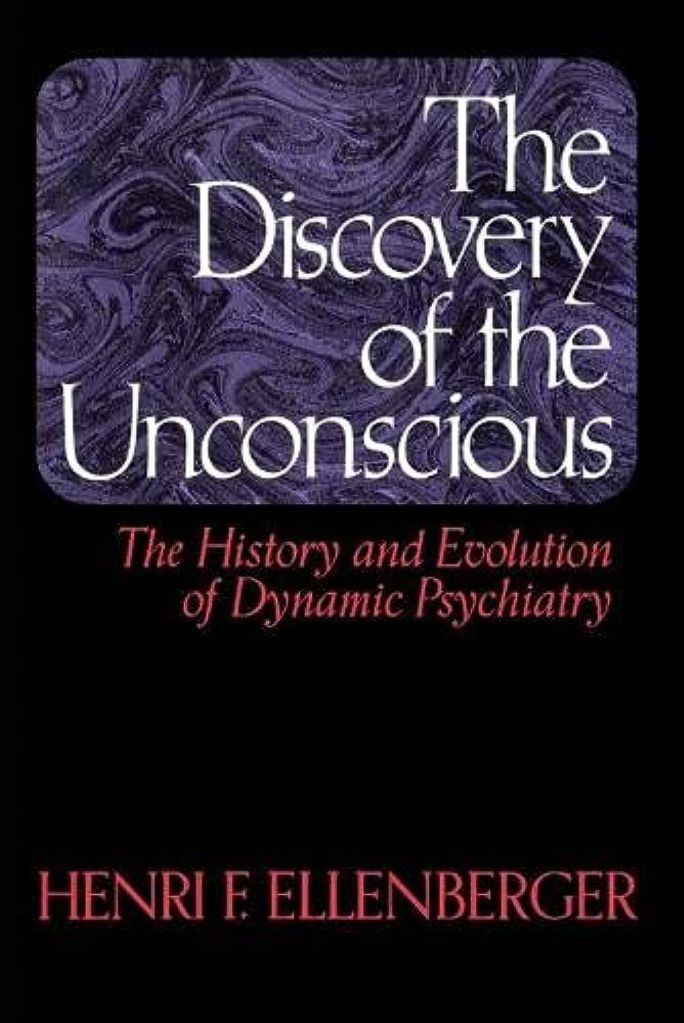
The Discovery of the Unconscious: A Divided Inheritance

There is a temptation to speak of the unconscious as though it were a single territory—mapped, named, conquered. But what the history of depth psychology actually reveals is something more unsettled: the unconscious was not discovered once, but repeatedly, and each discovery contradicted the last.

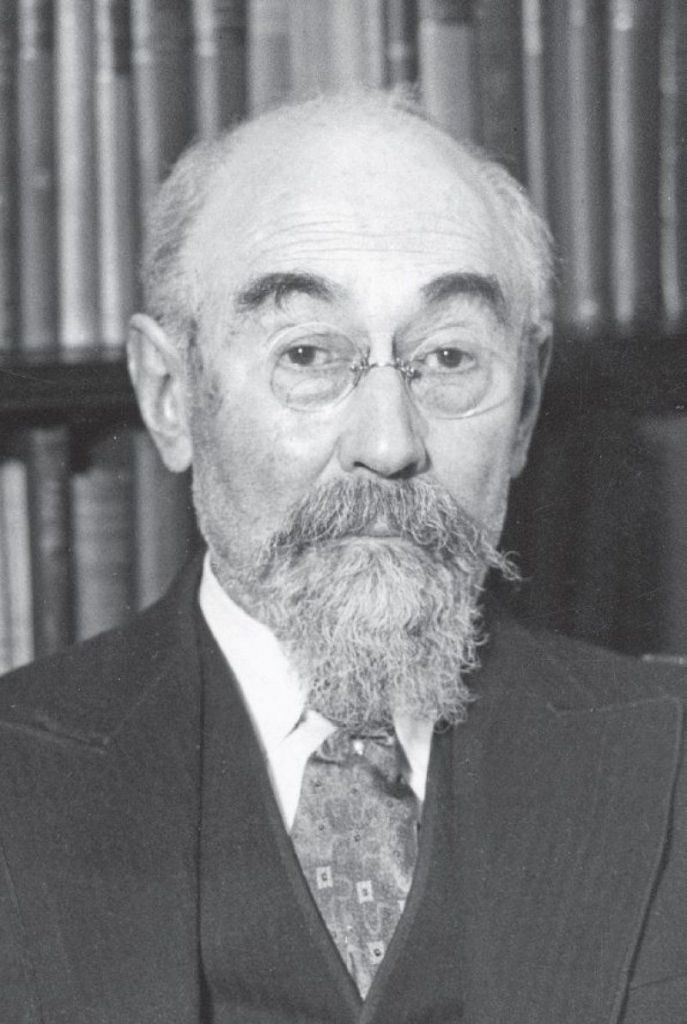
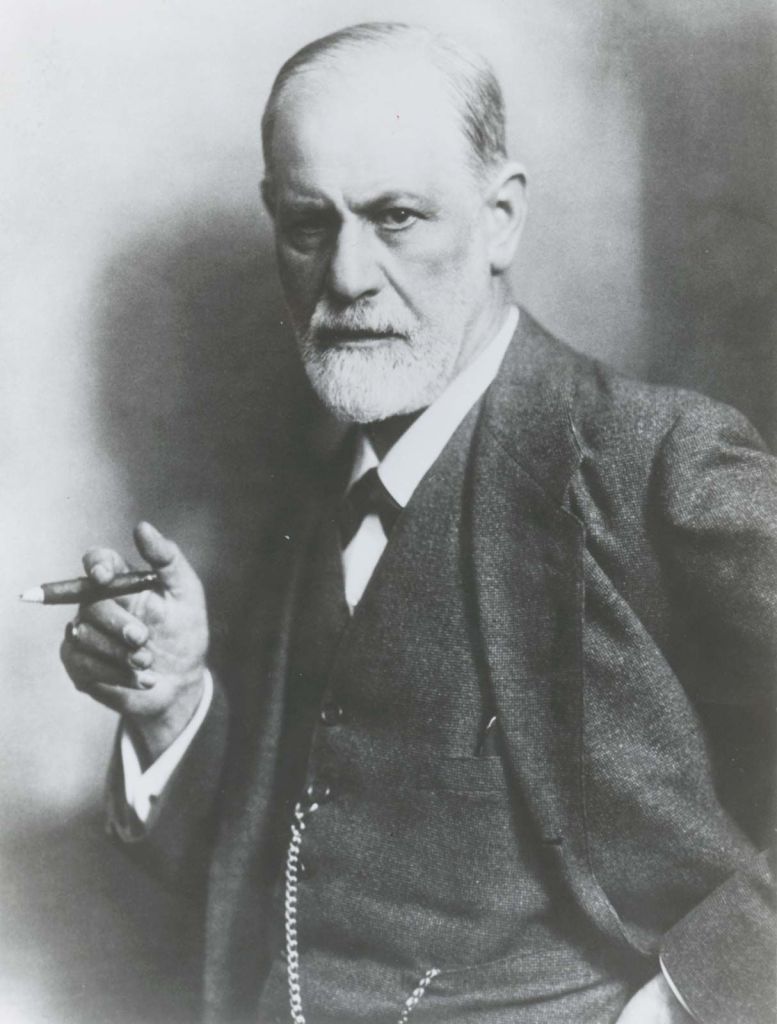
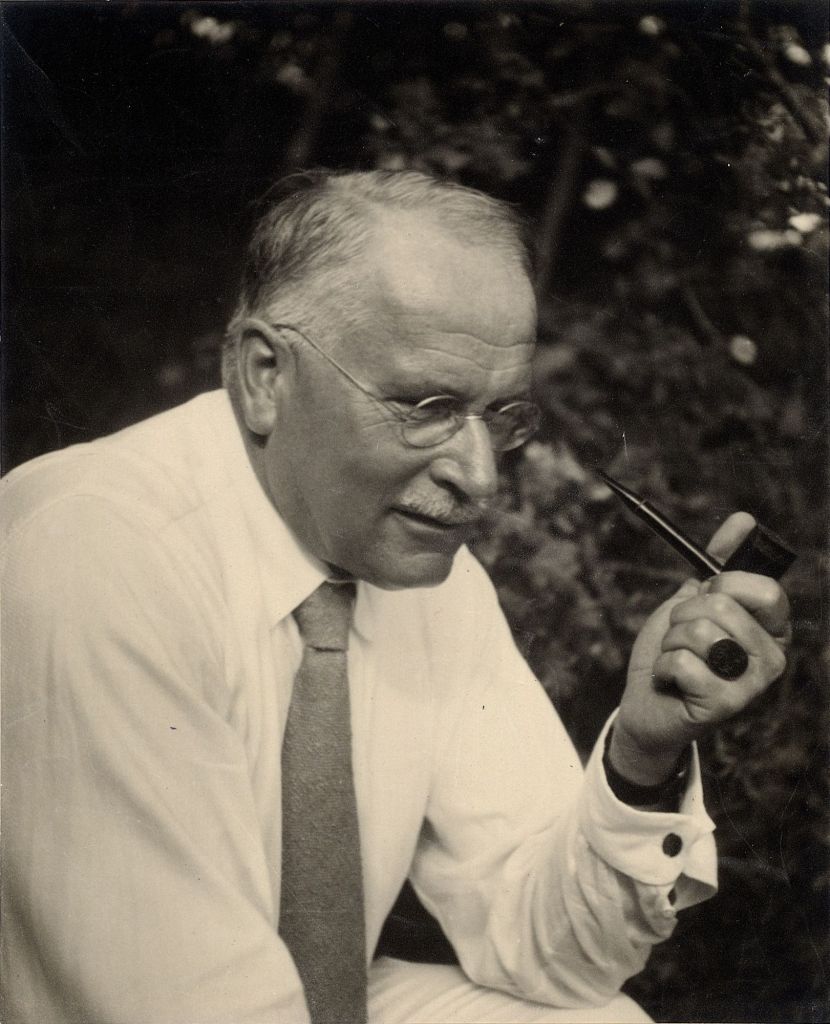
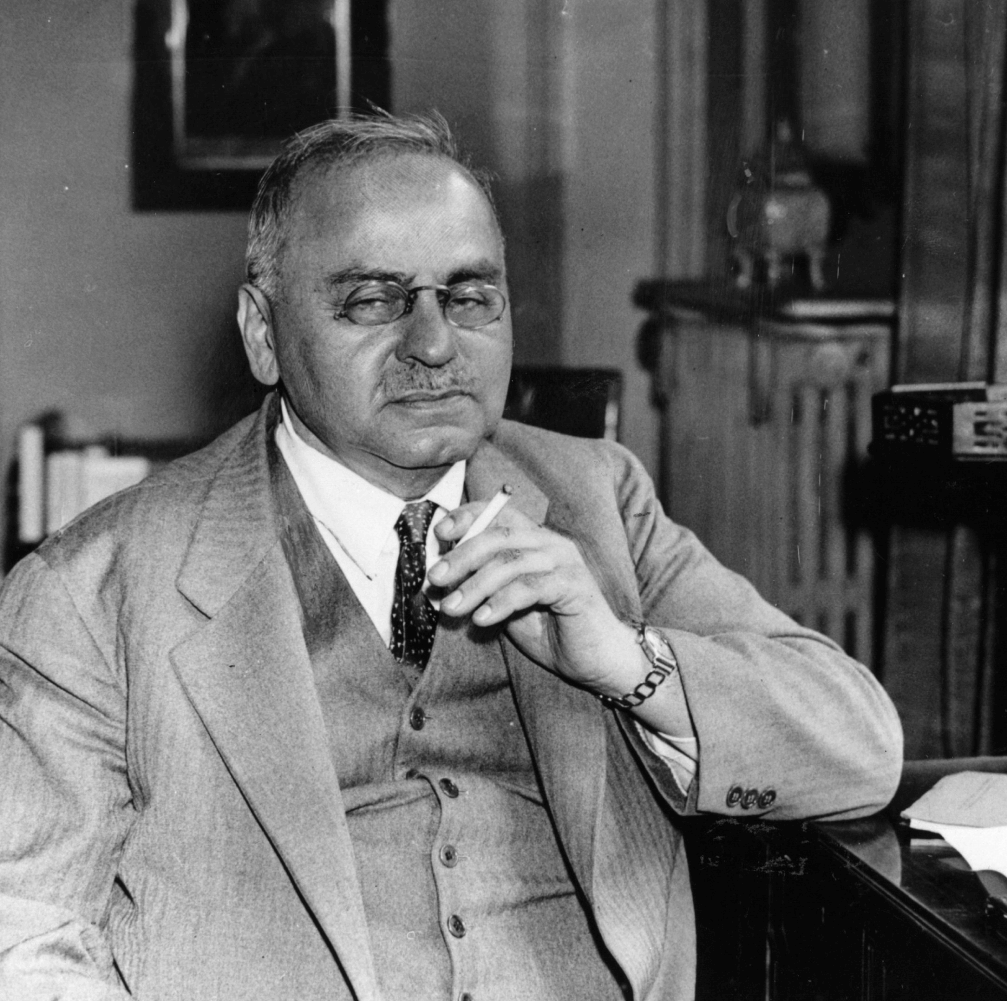
What emerged between the late nineteenth and early twentieth centuries was not a unified theory of the hidden mind, but a series of competing visions of what it means to be human beneath consciousness. Freud, Jung, Janet, Adler, and Charcot were not collaborators in a single project; they were rivals in a struggle over meaning, causality, and agency. What they disagreed about—often bitterly—was not whether the unconscious existed, but what kind of thing it was.

Was it a storehouse of forbidden desire?

A fracture caused by trauma?

A symbolic inheritance older than the individual?

A mistaken life plan shaped by social striving?

Or simply a neurological mystery expressed through the body?

Each answer reshaped the modern self.

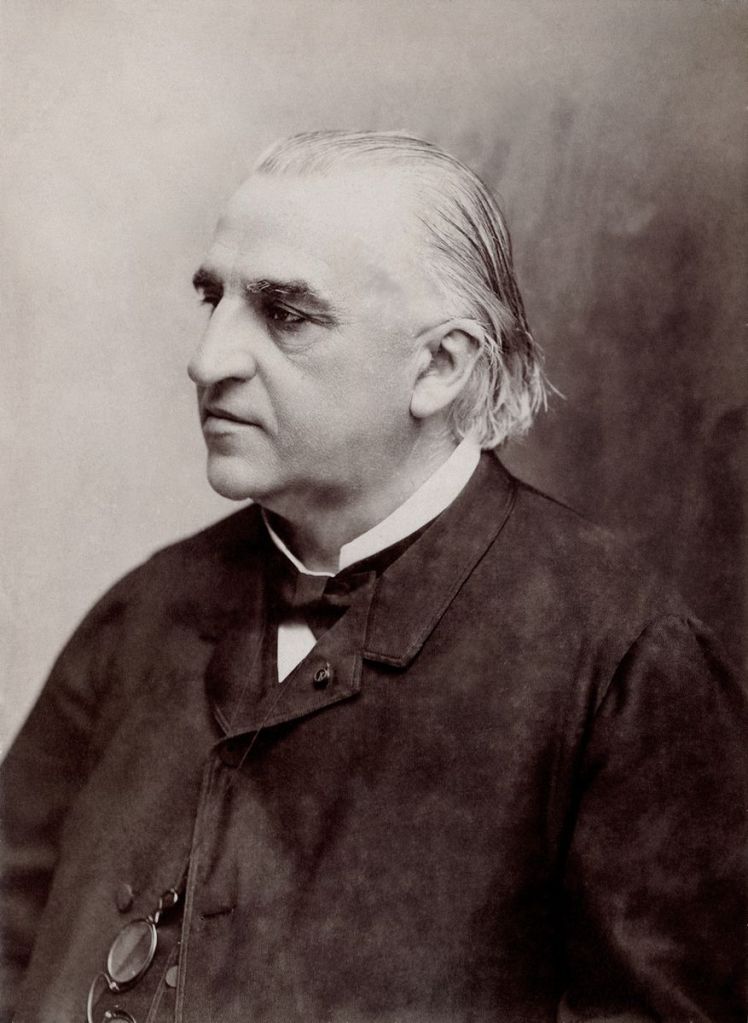
Charcot: Making the Invisible Visible

Jean-Martin Charcot stands at the threshold of the unconscious, not as its theorist, but as its exhibitor. At the Salpêtrière Hospital in Paris, Charcot demonstrated something deeply unsettling: the body could produce paralysis, convulsions, blindness, and pain without any organic lesion. Symptoms appeared, disappeared, and migrated under hypnosis.

This alone was enough to rupture the medical imagination of the time.

Charcot treated hysteria as a neurological condition, but his work undermined neurology itself. If suggestion could provoke symptoms, then symptoms were not merely mechanical failures. The body, it seemed, was responding to meanings it could not articulate.

Charcot did not ask why the symptoms appeared. He asked how they could be produced and reproduced. In doing so, he created the clinical space in which the unconscious could later be interpreted. He did not give it language, but he gave it a stage of evidence.

The discovery here was not theoretical. It was epistemological: what cannot be consciously intended can still act.

Janet: The Unconscious as Breakdown

Pierre Janet moved the inquiry inward. Where Charcot revealed the symptom, Janet investigated the structure of the mind that produced it. His central concept—dissociation—offered a vision of the unconscious radically different from Freud’s.

For Janet, the unconscious was not a reservoir of hidden wishes. It was the consequence of psychological failure.

Trauma, in Janet’s view, overwhelms the mind’s capacity to integrate experience. Certain memories, sensations, or impulses become split off, operating as autonomous systems. These dissociated elements do not seek expression; they repeat mechanically. Symptoms are not symbolic disguises but psychological automatisms.

What is striking about Janet’s model is its austerity. There is no drama of desire, no mythic depth. There is only a weakened capacity for synthesis. The unconscious is not mysterious—it is unfinished.

Janet’s therapy aimed not at interpretation but at restoration: strengthening consciousness, reconnecting fragments, stabilising attention. In many ways, his work anticipates contemporary trauma psychology, which treats symptoms less as messages than as frozen responses.

In Janet’s hands, the unconscious is not a secret life. It is what happens when experience exceeds the mind’s ability to hold it.

Freud: The Unconscious as Conflict

Freud inherits Charcot’s symptoms and Janet’s fragmentation—but transforms both into psychological drama. What Freud adds is meaning, and with it, conflict.

For Freud, the unconscious is dynamic. It does not merely contain forgotten material; it actively resists consciousness. Its contents—wishes, impulses, fantasies—are repressed because they are incompatible with social law, morality, or the ego’s self-image.

Symptoms, then, are compromises. They are the distorted fulfilment of forbidden desires. Dreams, slips of the tongue, neurotic rituals—all become expressions of a psyche divided against itself.

This is Freud’s radical move: he universalises the unconscious. It is not the result of trauma alone, nor a sign of weakness. It is constitutive of subjectivity.

To be human is to be in conflict with oneself.

Freud’s unconscious is also deeply historical. Childhood becomes the origin point of adult life, sexuality the organising force of the psyche. Whether one accepts these specifics or not, Freud’s larger claim endures: reason is not sovereign. Insight is hard-won, resisted, and never complete.

What Freud discovered was not simply the unconscious, but the unsettling idea that self-knowledge has an enemy within.

Jung: The Unconscious as Inheritance

Jung breaks with Freud at the point where desire becomes too small a language. For Jung, the unconscious cannot be reduced to personal history alone. Beneath the personal unconscious lies a deeper layer: the collective unconscious, structured by archetypes.

These archetypes are not inherited ideas but inherited forms—patterns of experience that shape how humans imagine, fear, love, and transform. Dreams, myths, and religious symbols are not disguises of repressed wishes; they are expressions of a psyche oriented toward meaning.

Where Freud sees conflict, Jung sees dialogue. Where Freud interprets, Jung listens.

Jung’s unconscious is not only disruptive; it is compensatory. It corrects the one-sidedness of consciousness, offering images that guide the individual toward wholeness. The goal is not mastery, but individuation: the slow integration of conscious and unconscious life.

This vision re-sacralises the psyche without returning to theology. It treats the unconscious as a source of wisdom—but at a cost. Jung’s symbolic language risks abstraction, and his universals can flatten historical and social specificity.

Still, Jung preserves something Freud discards: the idea that the unconscious is not merely a problem to be solved, but a dimension of being.

Adler: The Unconscious as Strategy

Alfred Adler offers the most pragmatic revision of depth psychology. Rejecting both Freud’s libido theory and Jung’s mythic structures, Adler reframes the unconscious in terms of purpose.

For Adler, behaviour is not driven by buried causes but by hidden goals. The unconscious is not where the past hides—it is where unexamined life strategies operate.

Feelings of inferiority, experienced early and universally, give rise to compensations. Personality becomes a creative response to perceived weakness. Symptoms, in this view, are not expressions of repressed desire or symbolic messages; they are mistaken solutions to life’s problems.

Adler’s emphasis on social interest grounds psychology in ethics and community. He insists that mental life cannot be understood in isolation from relational contexts. The unconscious is not a private abyss but a socially shaped orientation.

What Adler loses in depth, he gains in agency. His psychology asks not “What happened to you?” but “What are you trying to achieve?”

A Fragmented Discovery

What Ellenberger’s history makes unavoidable is this: the unconscious has no single essence. Each thinker discovers what their method allows them to see.

Charcot finds the body responding to meaning.

Janet finds minds split by overload.

Freud finds conflict and repression.

Jung finds symbols and inheritance.

Adler finds strategy and striving.

Together, they dismantle the illusion of a unified self. The modern subject emerges as layered, divided, goal-oriented, symbolic, and socially embedded—all at once.

Perhaps the true discovery of the unconscious is not any particular theory, but the recognition that selfhood is unstable, and that understanding ourselves requires multiple, incompatible languages.

The unconscious resists closure because it names not a place, but a limit: the point where consciousness fails to account for what we do, feel, and become.

And that limit, once discovered, cannot be undiscovered.

Interpretation of dreams #2

Interpretation of dreams #2

I dreamed I am Spiderman but my webs are not strong enough, sometimes they are not coming out, it’s stressful. Its a nightmare, I keep falling, I can’t catapult. My mask has been taken away from me by another Spiderman, I am not worthy. Everyone can see who I am, my identity is exposed, it’s raining, rain is in my eyes. So much expectations out of me because I am Spiderman, but I can’t do anything, I am falling apart, I can’t beat the bad guy. My webs are not strong enough, too weak and fragile. Sometimes they don’t come out, so I fall and jump. I am exposed, everyone can see my face. So I am running, swinging. I am running away from myself. A longtime friend shouts out my name in attempts to get me back to my path but I web his mouth to shut him up. He doesn’t understand, my webs are not strong enough and I am exposed. I can’t do anything. I can’t save anybody. I am weak. I keep wishing there is a redemption arc, I want the dream to process faster, but it doesn’t, it’s a nightmare and rain is in my eyes. I keep swinging, running away from myself with echoes of my name rebounding around me. Then I wake up. I didn’t like this dream.

I have to watch “The Amazing Spiderman 2”, it’s the only Spiderman movie I haven’t seen, everything was cool and the dream was structured around Andrew Garfield. I was watching, a spectator and suddenly everything changed, it became about me. Spiderman lost his power and the other Spiderman was relentless in getting his mask. The other Spiderman was in pursuit of the original Spiderman. He couldn’t be evaded, he was patient and cunning, jumping, leaping and swinging vertically, horizontally and strategically to make the space smaller so he can corner the other Spiderman. His web strands are thick and strong. He is faster. So much focus and dedication to unmask the other Spiderman. He won and took off the mask of the other Spiderman and escaped. The unmasked Spiderman ceased being Andrew Garfield, it was me and I was exposed and disgraced. The whole dream, I tried getting back to Andrew’s level but I failed. I was not worthy. My webs are not strong enough and everybody can see my face. Everybody can see my shame. I woke up – what a nightmare!

Analysis: It has been raining quite a lot over the past couple of days. My door is damp and damaged from all the rain. I can’t fix it or buy another one because I don’t have the money, I feel helpless to do anything. I applied for a writing masterclass from the John Kani Institute and was met with a “unfortunately…”. And would you look at that? I wake up to a broken fridge and kettle. Immaculate timing as always, thank you so much City Power and Eskom – I can’t fix that too. My feelings of insufficiency and unworthiness breaking charts. I am a weak ass Spiderman and everybody can see. I can’t beat the bad guy, my cover has been blown and my webs strands are not strong enough, they keep breaking and sometimes they don’t come out. I also can’t run away from myself and the rain is in my eyes. A lot of shame in this dream.

Goddammit!! My luck has to change, I need happier dreams. Dreams about love and making lots of money. God, Universe, give me a break man! This Spiderman stuff is bullshit!

Interpretation of dreams

Interpretation of dreams

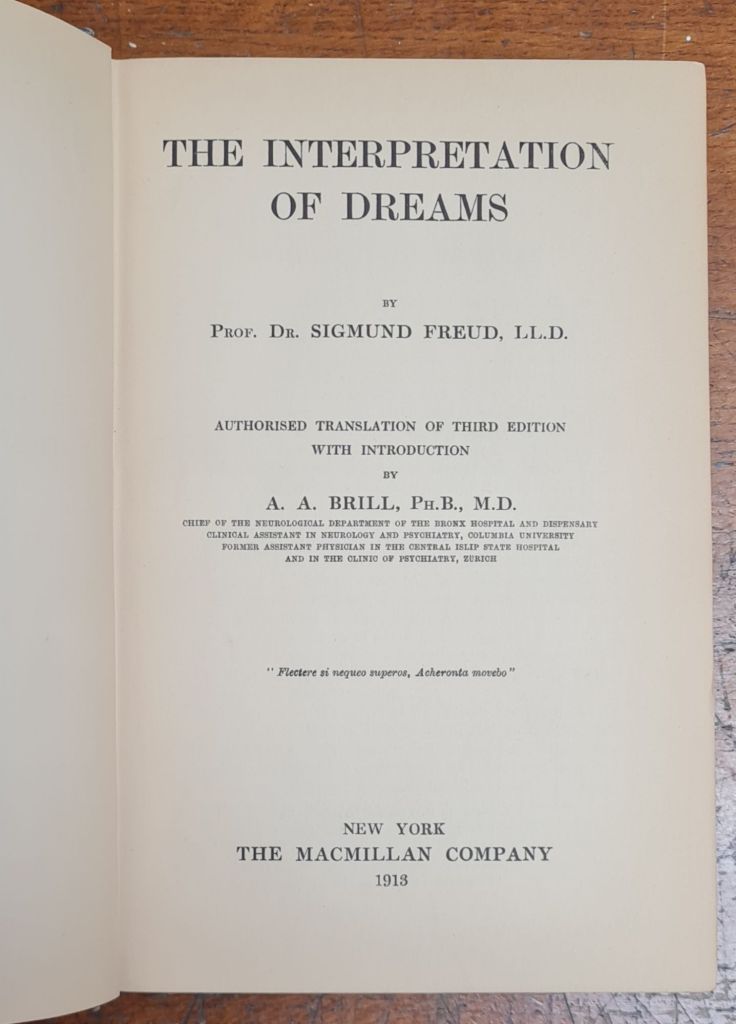
Ever since I started reading “The Interpretation of dreams” by Sigmund Freud, I have a relationship with my dreams. I am understanding myself a bit better. I should keep a dream journal. The dream as wish-fulfillment. The dream I had today was interesting. My interpretation of the dream is one of fatigue. In the dream I was walking long distances, I am with someone, female, identity not clear but we get along. We both walking but we are fatigued. The act of walking long distance is not a sacrifice, we both love it but we are still fatigued. Something has to give, we can’t keep doing this, there is no reason to keep doing this, there is no incentive to keep doing this, love is not enough, we can’t keep walking, we are fatigued but we are still cheerful and happy.

Intuitively I understand the dream, I’ve been feeling so limited. Feeling so boxed in and disillusioned with life and everything. I do feel fatigued, I can’t keep walking the extra mile. I can’t keep putting people over when they turn a blind eye to my needs. I am fatigued, I am tired. Why do I feel so tired? I think I feel undervalued and unappreciated.

My friends recently went to Durban and they left me behind. I didn’t have the money to take the trip but that can’t be the determining factor. They had transport, they had enough. They left me behind. They never would have done that in the past. It’s like there’s a bridge between me and them and I can’t get over. I don’t feel close to anyone anymore. This bridge is frustrating! It’s a metaphor for my life, I can’t get over and make money in my professional life and yet I am still walking. There’s something in between, hindering me from getting to my destination. It induces feelings of unworthiness, I feel stuck, I have feelings of shame, I am isolated, I have no connections. I am tired, fatigued, nothing I do is bringing the desired effects, even my lifelong friends are indifferent towards me. I am cool with not having gone to Durban, I wouldn’t want anyone to harber secret resentments towards me because I went and didn’t pay – that would be so horrible! However, the trip did have an impact on my thoughts and apparent dream.

I do think the dream is addressing my people pleasing tendencies. It’s a big saboteur, it’s draining me and hence the fatigue. I may secretly yearn for validation from others and hence the cheerful disposition from walking long distances despite my fatigue. The dream is both literal and figurative. Oh Freud, what a mess!

Literary genius

Literary genius

Just as I feared, Fyodor Dostoevsky has ruined Literature for me. I read other books and authors and it’s not the same. They are too surface level, no depth, no risk, lazy, PG, predictable. I don’t finish reading the books because they bore me. Everything is mediocre after Dostoevsky. Maybe I will never get somebody as great as Dostoevsky. His characters are multilayered, they have fears, flaws and motivations. Fyodor Dostoevsky illuminates the darkside of human nature. Siberia made him a genius. He was scheduled to be at executed but at the very last minute, the order was changed to life imprisonment instead. Those final minutes, those last seconds when he thought he was going to die made him the writer he ultimately became. In those last moments, the colors of plants and nature were fuller, the sun was shinning just for him, for the last time, he gained clarity, he negotiated with God, begging him for another chance. He would become a new man, he now saw life as gift, something he should embrace and be grateful for. If God gave him another chance, he would do good in the world, he wouldn’t take anything for granted. Thank God, he saved Fyodor Dostoevsky. “Notes from Underground” was my first Dostoevsky book, short read, about 100 pages, I had never read anything like that in my life. It is psychological, reflective, honest, self-aware and conscious. “Notes from Underground” is brilliant! The Underground man is pitiful, weak, spiteful and pathetic. He wants to avenge himself against a man who wronged him but he is too cowardly. Dostoevsky doesn’t sugarcoat the human condition, life is suffering and difficult and we are all going to die. The storyworld and tone is dark and filled with insecurities. We get into the head of the underground man and he is pathetic, weak and flawed. I initially thought “Crime and Punishment” was the greatest book in the history of humanity. I couldn’t put it down, I loved it, it thoroughly satisfied me. “Wow” was the last thing I said after I finished the book. Then I read “The Brothers Karamazov” – I don’t think there’s a book in existence or in human history that’s better or on par with “The Brothers Karamazov”. It explores religion, atheism, love, patricide and murder. There’s also the fact that Dostoevsky is a master storyteller and unbelievable writer. I strongly believe “The Brothers Karamazov” is the greatest book of all time. His other books “The Idiot” and “Demons” are great, they all get full stars. In fact if you made a case about one of them being better, no one would argue, it’s perspective, besides all his books are masterpieces. The original psychologist, philosopher, a master of human nature and just a literary genius! He set the bar too high, his work is too great, he helped me see life differently, has inspired me so much and ruined literature for me. But I am hopeful, there has to be someone who can rival Dostoevsky.

Haters IV: Idiot, mutt

Haters IV: Idiot, mutt.

Better haters please, I am still here, confidence bulletproof, they took shots but no holes and you can see the proof. Improved effort, better than the last batch of haters. I extend my congratulations, this time I saw the manipulation tactics, gaslighting, labeling, smear campaigns, the blatant lies, all the stuff that usually works, but you dealing with the great man here. Better haters please, you can’t get me to react. Tantrums and blowing like a blowfish won’t get me to react. All that hot air gets you carried away, floating, soaring out of control. Labels? Who you trying to control? Damn! Just when you thought you had all the answers, I changed the questions. Idiot, mutt, what did you do? Why would I listen to you? Better haters please, the last batch was predictable. Moves transparent and textbook but you dangerous and unpredictable? Walked away without a scratch but we were at war? Figured I was in trouble when you said you were going to go raw?

Really? Come on! No! Try harder.

Better haters please, better haters please, KWAAL and jealously only reflects back like a mirror, you thought you were pointing at me but 3 fingers were pointing at ya. Idiot, mutt, you hanged yourself with your own rope. Better haters please, better haters please, the last batch were prideful and weak. Arrogant and smug, they showed all their colors, I didn’t have to do a thing! Better haters please, the last batch couldn’t do anything, I am getting stronger. It’s like their negativity fuels me, I am getting stronger! Idiot, mutt, I never needed you, I don’t need your stuff, I am content with mine, if we gotta split our labor, we’ll do it in a way that’s fine. Still no favors, you get what’s yours and I get what’s mine. Better haters please, the last batch were out of control, emotionally illiterate, sophistication please, so I can at least win a debate. Idiot, mutt, the last word isn’t the last judgment. Better haters please, better haters please, I crushed these ones just like I did the other ones. They were not on my level, I didn’t even have to do much, If you don’t have haters you ain’t doing much, if I were overzealous with the trigger it would be a bit much, but it’s a mass suicide, for death, lunch. Idiot, mutt, I am bored.

Stop killing yourself! Give me something to do!

Better haters please, let’s get in somebody who will really keep me engaged. Idiot, mutt, would you dare come up against me? This I guarantee, I’ll crush you! Better haters please, better haters please, just for practice, I love my haters, they are my vocation. Idiot, mutt, make my day.

POWER II

POWER II

What did I learn about power from Game of Thrones, Game of Power? You can’t rule without love, fear or wealth. Love influences and can mobilize people to get them to do what you want. Fear involves repercussions and punishment, an effective way to rule because if you don’t do what I ask of you I’ll take your head off your shoulders and put it on a spike. Wealth incentivies and rewards playing on our greed and our primal desires, do this for me and you’ll get all the gold you’ll ever need in your lifetime. But beware, a man that can be bought with gold will betray you for a bigger bag of gold. Better align yourself with loyal servants who have character and good morality. Even that’s not enough because they can turn on you if it serves their best interests. As a general rule, blood is thicker than water, ensure the bloodline is protected and make provisions for the offspring, this will grow the family name and keep the power within. No outsiders, your seed marries my seed and my seed marries your seed, that’s how you keep the power concentrated. Power, depend upon your own arms. Power, avoid committing to anybody, stay formless like water, but if you have to choose, go with the option that furthers your goals. Power, to attain it, you need to get your hands dirty, make a bold statement, cross the line, decapitate heads, put them on spikes, flay your enemies, conquer nations, make civilians your slaves and keep them dependent on you, no weakness poeticize your reign. Power is power, morality and ethics aren’t attached to it, if you have incriminating information on me and I am higher on the spectrum, I can just have your life and avoid the leak. Power, being a goody two-shoes will only get you in a body bag, you’re soft, you’re weak, you’re not willing to do what it takes. Power is about manipulation and self-preservation, no one attains power with the aim of relinquishing it one day, you have a little power to get more, your appetite never gets quenched. Power involves war and war is about men fighting and dying. That’s all that war is, a good general is the one who has mastered the art of dying because death comes for everyone, if you can embrace your fate then all the better, you’ll scale right to the top. Power, you need to crush your enemy completely, show no mercy, you don’t attack to maim because the enemy will get better and come at you with everything’s his got, no showboating, stick to the task at hand, celebrate when the body is cold. Power is deception, make the enemy think you are strong when you are weak and weak when you are strong, never show your true hand. Let them think they are ahead and then counter with a flanking maneuver to catch them off guard. Power, make your enemy see what they want to see, use smokescreens and theatricalies to make yourself elusive and attack when they least expect it. Power, find your enemy’s weak points and weaknesses, infiltrate using spies and double-agents, don’t be a fortress, isolation is dangerous. Power, what you have conquered, conquers you, it’s a double edged sword. Power is political and you need alliances, more men dedicated to your cause will improve your odds of victory. Power, even king’s get slaughtered like sheep, there is no blueprint because we all succumb to our mortal decaying bodies. Power, it hates a vacuum, when a reign ends another succeeds it immediately. Power, it’s all a game, it’s not fair, it’s not pretty, it’s in different, it just is. Power, because the whole world is a power struggle, that’s what Darwin meant when he stated survival of the fittest. Power, it is what we humans do best, beating you into submission makes me your master, I own you, you are my bitch now. Power, ever wonder why ruthless manipulative monsters are on top? Now you know – POWER!