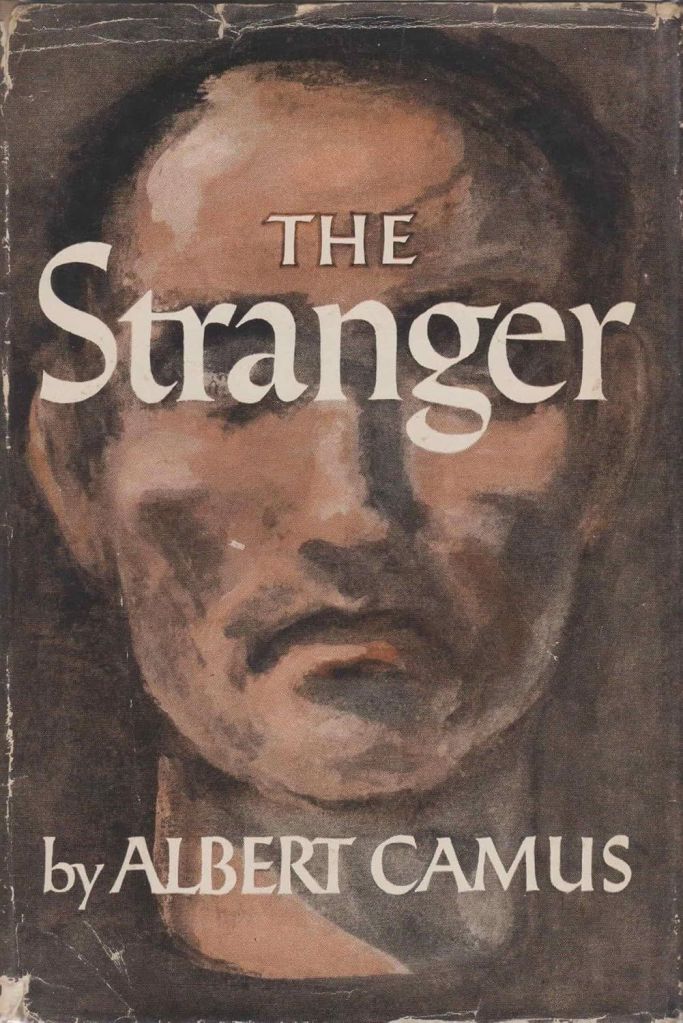
The Stranger

Meursault, the Sun, and the Crime of Indifference

Alienation, Absurdity, and Moral Judgment in Albert Camus’s The Stranger

Albert Camus’s The Stranger is one of the most unsettling novels of the twentieth century, not because of what its protagonist does, but because of what he refuses to do. Meursault does not grieve properly, does not lie convincingly, does not explain himself, and above all, does not pretend that life has an inherent meaning. For this, he is judged more harshly than for murder. In The Stranger, Camus stages a quiet but devastating trial—not only of Meursault, but of society itself, exposing how moral systems rely less on justice than on emotional conformity.

At its core, The Stranger is a novel about the crime of indifference. Meursault’s failure is not ethical in the traditional sense; it is existential. He does not deny morality—he simply experiences the world without illusion. In doing so, he becomes intolerable to a society that demands performance, sentiment, and metaphysical reassurance.

The Opening Shock: A World Without Consolation

“Mother died today. Or maybe yesterday, I don’t know.”

Few openings in modern literature are as famously dispassionate. From the first line, Camus establishes Meursault as a man fundamentally estranged from expected emotional responses. This is not cruelty, nor is it repression—it is a radical honesty. Meursault reports facts, not feelings. He experiences the world as a sequence of physical sensations: heat, light, fatigue, hunger, pleasure.

The funeral scene is crucial. Meursault does not cry. He smokes, drinks coffee with milk, notices the sun, and feels irritated by the heat. To the reader—and later to the courtroom—this behavior appears monstrous. Yet Camus subtly suggests something more disturbing: Meursault’s reactions are not false. They are simply unedited.

Society does not demand grief; it demands the appearance of grief. Meursault’s crime begins here, long before the murder, because he refuses to lie about what he feels—or does not feel.

The Sun as Fate: The Murder Without Motive

The murder of the Arab on the beach is one of the most discussed acts in modern literature precisely because it resists interpretation. There is no hatred, no ideology, no personal vendetta. Meursault does not kill out of anger or revenge. He kills because of the sun.

The heat is unbearable. The light blinds him. The knife flashes. The moment collapses into sensory overload. Camus strips the act of psychological depth, forcing us to confront a horrifying possibility: not all violence is meaningful.

This is Camus’s most radical claim. The universe does not operate according to moral logic. Events happen without reason, and humans desperately impose narratives afterward to make them bearable. The murder is absurd not because it is trivial, but because it lacks justification. It simply is.

When Meursault fires the gun, then fires four more shots into the lifeless body, it is less an escalation than a rupture—a moment where the absurd reveals itself fully. The sun, indifferent and overwhelming, becomes the true antagonist of the novel.

Love Without Illusion: Marie and Emotional Honesty

Meursault’s relationship with Marie further complicates our judgment of him. He enjoys her company, desires her physically, and experiences happiness with her. When she asks if he loves her, he answers honestly: it doesn’t mean anything, but he probably doesn’t.

This answer horrifies us—not because it is cruel, but because it violates the ritual language of love. Meursault does not pretend that emotions have metaphysical weight. He experiences pleasure, not transcendence.

Camus is not suggesting that Meursault is ideal; rather, he is asking whether lying about love is morally superior to telling the truth about it. Society prefers comforting falsehoods to uncomfortable sincerity. Marie accepts Meursault’s indifference more easily than the court does, because her expectations are human, not ideological.

The Trial: Judged for Not Crying

The second half of The Stranger transforms into a grotesque parody of justice. Meursault is not truly tried for murder; he is tried for failing to conform. The prosecutor focuses obsessively on Meursault’s behavior at his mother’s funeral, portraying him as a monster incapable of moral feeling.

This is the novel’s most devastating insight: society punishes emotional heresy more severely than violence. Meursault’s honesty threatens the symbolic order. If grief is optional, if love is contingent, if God is silent, then the foundations of meaning begin to crumble.

The courtroom becomes a theater of moral outrage, where sincerity is irrelevant and symbolism reigns supreme. Meursault is condemned not because he killed a man, but because he did not cry for his mother. The verdict is predetermined; the narrative must be preserved.

God, Refusal, and the Final Awakening

In prison, Meursault is offered one final escape: faith. The chaplain insists on repentance, on God, on eternal meaning. Meursault refuses violently. His outburst is not nihilistic—it is lucid.

He recognizes, finally and fully, that the universe is indifferent. And in that recognition, he experiences freedom. If life has no ultimate meaning, then it belongs entirely to the present moment. The absurd is not despair; it is clarity without consolation.

Meursault’s final wish—that the crowd greet his execution with cries of hatred—is often misunderstood. It is not masochism. It is coherence. He wants the universe to be honest with him, just as he has been honest with it. No false compassion. No illusions.

The Stranger as Existential Mirror

The Stranger endures because it asks a question that remains deeply uncomfortable: How much of morality is genuine, and how much is performance? Meursault is not a hero, but he is a mirror—reflecting the fragility of our moral certainties.

Camus does not ask us to imitate Meursault. He asks us to confront the absurdity we conceal beneath rituals, sentiments, and narratives. Meursault’s refusal to lie makes him intolerable, but it also makes him free.

In the end, The Stranger is not about murder, grief, or atheism. It is about the cost of honesty in a world that demands meaning. Meursault pays that cost with his life, but he dies awake—having finally embraced the gentle indifference of the world.

And perhaps that, Camus suggests, is the most honest ending available to us.
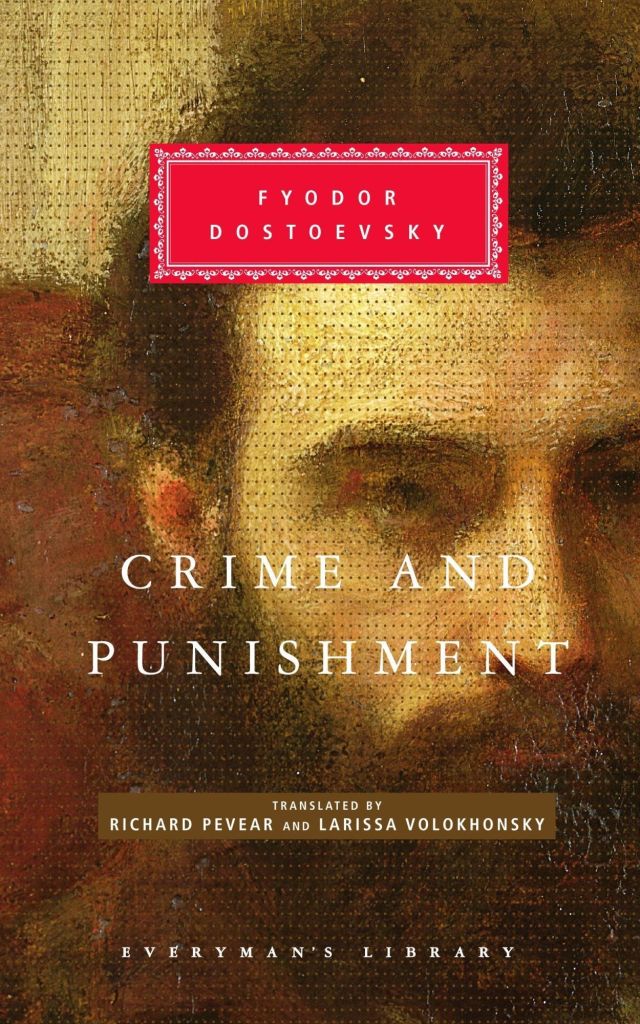
Crime and punishment

Crime and Punishment: When an Idea Commits a Murder

Fyodor Dostoevsky’s Crime and Punishment is often misread as a novel about guilt, redemption, or the psychology of crime. While it contains all these elements, at its core the book is something far more unsettling: a novel about an idea that takes physical form—and kills.

Dostoevsky does not begin with murder. He begins with thought. Specifically, with a modern thought: that reason, if pushed far enough, can replace morality.

Rodion Romanovich Raskolnikov is not merely poor, desperate, or unbalanced. He is intellectually intoxicated. His crime emerges not from impulse but from theory—from the belief that humanity is divided into two categories: the ordinary and the extraordinary. The former must obey the law; the latter may transgress it in the service of a higher purpose. History, he believes, is moved forward by such men. Napoleon becomes his unspoken model: a figure whose crimes were retroactively sanctified by success.

This belief marks Raskolnikov as the true heir of modern consciousness. Where the Underground Man remained paralyzed by self-awareness, Raskolnikov crosses the threshold into action. Dostoevsky escalates the philosophical problem posed in Notes from Underground: what happens when a man stops arguing with morality and attempts to overcome it?

The answer is not liberation. It is collapse.

The murder of the pawnbroker Alyona Ivanovna is not portrayed as dramatic or cathartic. It is clumsy, panicked, almost banal. Worse still, it does not go according to plan. Lizaveta’s unexpected appearance forces Raskolnikov into a second, unintended murder—already undermining the fantasy of rational control. The idea that crime can be clean, purposeful, and justified collapses at the very moment it is enacted.

From this point onward, Crime and Punishment becomes less a narrative and more a psychological autopsy.

Raskolnikov does not emerge empowered. He becomes feverish, disoriented, fragmented. His body rebels against his mind. He sleeps excessively, rambles incoherently, oscillates between arrogance and despair. Dostoevsky insists on a crucial truth: the psyche is not neutral territory. It cannot accommodate the lie that one is beyond good and evil.

This is one of Dostoevsky’s most radical claims. Punishment does not begin in the courtroom or the prison. It begins immediately, internally, and involuntarily. Long before the law reaches Raskolnikov, truth does.

What makes Raskolnikov’s suffering particularly modern is that it is not rooted in remorse for the victim. His torment stems from something more corrosive: the realization that he is not who he imagined himself to be. He wanted to prove his extraordinariness. Instead, he discovers his ordinariness in the most humiliating way possible—through weakness, confusion, and guilt.

Dostoevsky frames this as a metaphysical failure. Raskolnikov’s crime exposes the falsehood at the heart of rationalist morality: that human beings can reduce life to calculations without consequence. The novel relentlessly dismantles this notion. Every attempt Raskolnikov makes to justify himself only deepens his isolation.

Against him stands Sonya Marmeladova—perhaps the most misunderstood character in the novel. Sonya is often reduced to a symbol of Christian purity or passive suffering. In reality, she represents a radical ethical alternative to Raskolnikov’s logic.

Sonya does not justify suffering; she bears it. Forced into prostitution to support her family, she embodies moral degradation without moral corruption. Where Raskolnikov commits violence in the name of an abstract future good, Sonya sacrifices herself in the present for the survival of others. Dostoevsky places them in direct opposition: reason without love versus love without justification.

Crucially, Sonya never argues Raskolnikov out of his theory. She does not debate him. She listens, weeps, and remains. Dostoevsky suggests that salvation is not intellectual but relational. Truth does not arrive as a concept; it arrives as a presence.

This is why Raskolnikov’s confession does not occur in the interrogation room but in Sonya’s company. She gives him the cross not as a symbol of dogma but as a burden to be accepted. To suffer consciously, Dostoevsky implies, is already to begin returning to reality.

Porfiry Petrovich, the examining magistrate, represents another crucial dimension of the novel. Unlike conventional detectives, Porfiry does not rely on evidence alone. He relies on time, pressure, and psychological insight. He understands that Raskolnikov’s real enemy is not the law but himself.

Porfiry’s brilliance lies in his patience. He knows that guilt seeks expression, that the mind cannot indefinitely conceal what the soul knows. His interrogations are philosophical traps rather than procedural ones. In Porfiry, Dostoevsky anticipates modern psychology: crime as a form of confession delayed.

Yet even Porfiry does not complete the arc of punishment. That belongs to Siberia.

One of the novel’s most misunderstood aspects is its ending. Readers often expect a dramatic conversion or spiritual revelation. Instead, Dostoevsky offers something far more restrained—and far more honest. Raskolnikov does not suddenly become virtuous. He remains proud, resistant, emotionally distant. Redemption is not instantaneous; it is embryonic.

This is vital. Dostoevsky refuses cheap transcendence. Punishment, in the novel, is not the sentence imposed by the state but the slow dismantling of a false self. Siberia is not hell; it is exposure. Removed from his intellectual fantasies, Raskolnikov is finally forced to inhabit time, labor, and suffering alongside others.

Only at the very end does Dostoevsky allow the possibility—not the certainty—of renewal. The emphasis is deliberate. Redemption is not a narrative conclusion but a lifelong process. What matters is that Raskolnikov has ceased to believe in his own exceptionality.

This is the novel’s ultimate warning.

Crime and Punishment is not merely about murder; it is about what happens when human beings believe they can stand above moral law without paying a psychological and spiritual price. Dostoevsky foresaw a world increasingly governed by systems, ideologies, and rational justifications for violence. His novel asks a question that remains urgently relevant: what happens when ideas forget the human beings they consume?

Raskolnikov’s tragedy is not that he kills an old woman. It is that he tries to live as if love, conscience, and suffering are negotiable. Dostoevsky answers him with brutal clarity: they are not.

In the end, Crime and Punishment is not a condemnation of thought, but of thought severed from compassion. It insists that no theory, no matter how elegant, can absolve a human being from the reality of other human lives. And when an idea commits a murder, it does not remain intact. It destroys the mind that carried it.

That is Dostoevsky’s enduring terror—and his enduring truth.