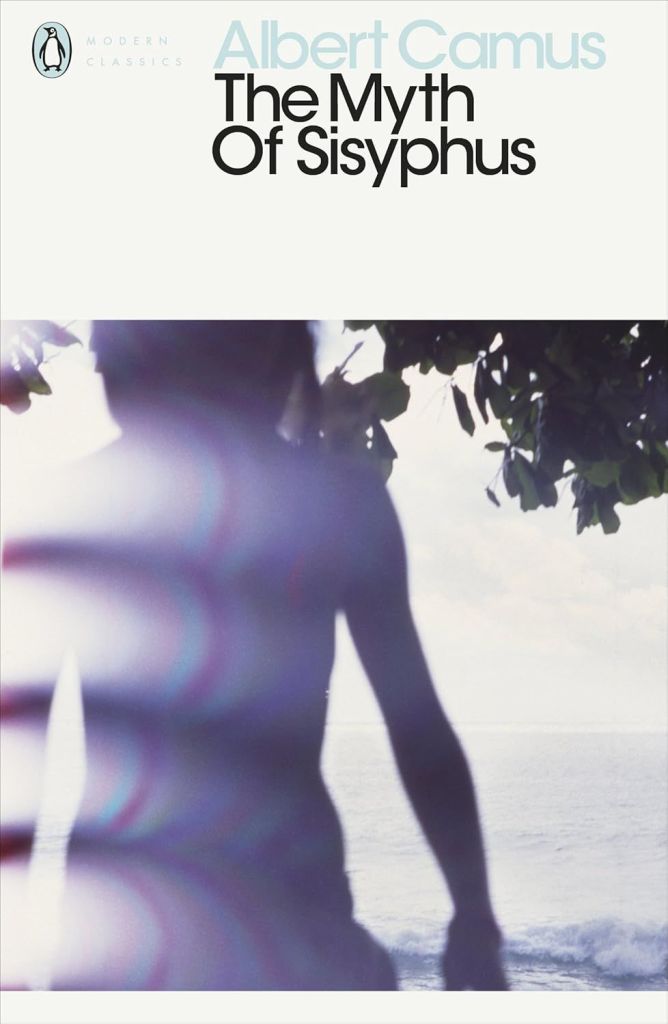
The myth of Sisyphus

Meursault and Sisyphus: Living Without Appeal in an Absurd World

Albert Camus’s The Stranger and The Myth of Sisyphus are not merely companion texts; they are two expressions of the same philosophical act. One dramatizes the absurd through narrative, the other theorizes it through philosophy. Together, they offer Camus’s most uncompromising answer to the problem of meaning in a world stripped of transcendence, God, and final justification. If The Myth of Sisyphus asks whether life is worth living once meaning collapses, The Stranger shows us what such a life looks like when lived to its bitter end.

At the heart of both works lies Camus’s concept of the absurd: the confrontation between humanity’s desperate need for meaning and the silent indifference of the universe. The absurd is not a feeling, nor a property of the world alone, but a relationship—a tension that cannot be resolved without either intellectual dishonesty or self-destruction. Camus insists that this tension must be lived, not escaped.

Meursault, the protagonist of The Stranger, is not a philosopher. He never articulates the absurd. He embodies it.

The Absurd Man: From Theory to Flesh

In The Myth of Sisyphus, Camus introduces the figure of the absurd man—one who lives fully aware that life has no ultimate meaning, yet refuses both suicide and false consolation. Suicide, for Camus, is a confession that life is not worth the trouble. Religion and metaphysical hope are equally evasive, offering answers where none exist. What remains is revolt: a constant, lucid defiance against meaninglessness.

Meursault is often misunderstood as apathetic, robotic, or emotionally deficient. But this reading misses Camus’s deeper intention. Meursault is not incapable of feeling; he simply refuses to lie. He does not pretend grief at his mother’s funeral. He does not feign belief in God when faced with death. He does not manufacture meaning where none presents itself. In this sense, Meursault lives the absurd condition more honestly than anyone around him.

His crime is not murder—society forgives murder easily enough—but refusal of illusion. He will not say that his mother’s death devastated him. He will not say that killing the Arab had a metaphysical cause. He will not say that he regrets life itself. In the courtroom, Meursault is judged less for what he did than for what he did not pretend to feel.

This is precisely the danger Camus identifies in The Myth of Sisyphus: society cannot tolerate those who expose its comforting fictions.

The Trial of Meaning

Meursault’s trial is not a legal proceeding; it is a metaphysical inquisition. The prosecutor reconstructs a narrative in which Meursault’s failure to cry at his mother’s funeral becomes proof of his moral monstrosity. The sun, the heat, the physical discomfort that Meursault cites as the immediate cause of the shooting are dismissed as absurd excuses—yet these are the only honest explanations available.

Camus is ruthless here. The court does not want truth; it wants coherence. It wants motive, remorse, redemption. In The Myth of Sisyphus, Camus argues that humans cannot bear a world that does not explain itself. Faced with the absurd, we rush to impose meaning—even if it must be fabricated.

Meursault’s refusal to cooperate with this fabrication seals his fate. He will not perform grief. He will not rehearse repentance. He will not appeal to God.

And so he must die.

Suicide, Execution, and the Refusal of Escape

The opening line of The Myth of Sisyphus is famously stark: “There is but one truly serious philosophical problem, and that is suicide.” Camus’s answer is unambiguous: suicide is an escape, not a solution. It annihilates the very consciousness that experiences the absurd tension.

Meursault, facing execution, arrives at the same conclusion without philosophy. He does not cling to hope of reprieve. He does not seek absolution. When the chaplain urges him to turn to God, Meursault explodes—not in fear, but in clarity. He recognizes that hope itself is the final lie.

This moment is crucial. Meursault does not despair. He awakens.

He accepts that the universe is indifferent—and in that acceptance, he feels free. For the first time, he understands that nothing has ever promised meaning, and therefore nothing has been taken from him.

Like Sisyphus, he reaches the summit.

Sisyphus and the Happiness of Defiance

In Greek myth, Sisyphus is condemned to roll a stone up a mountain for eternity, only to watch it fall back down. For Camus, this is the perfect image of the human condition. The labor is meaningless, repetitive, and eternal. And yet Camus concludes his essay with a startling assertion: “One must imagine Sisyphus happy.”

Why happy? Because Sisyphus knows his fate. He does not hope for escape. He does not pray for mercy. The moment he walks back down the mountain, conscious of his condition, the rock becomes his task. The gods’ punishment fails because Sisyphus refuses despair.

Meursault reaches the same state in his prison cell. Awaiting execution, he opens himself to the “gentle indifference of the world.” He wishes for a crowd of spectators who will greet his death with cries of hatred—not because he seeks suffering, but because hatred would confirm his final connection to life, to reality as it is, unsoftened by illusion.

This is not nihilism. It is revolt.

Living Without Appeal

Both The Stranger and The Myth of Sisyphus insist on a radical ethical position: live without appeal. Do not appeal to God, to destiny, to history, or to future redemption. Live with full awareness of death, contingency, and meaninglessness—and yet live intensely.

Meursault loves swimming, sex, sunlight, cigarettes, and the physical immediacy of the present moment. He does not live less than others; he lives more honestly. His tragedy is not that he dies, but that society cannot tolerate someone who exposes the groundlessness beneath its moral theatre.

Camus does not offer comfort. He offers clarity.

In a world without transcendence, dignity is found not in hope, but in lucidity. Not in resignation, but in revolt. Not in meaning, but in presence.

Meursault is Sisyphus without the mountain. Sisyphus is Meursault without the guillotine. Both teach us the same lesson: that even in an indifferent universe, the human refusal to lie—to oneself above all—remains a form of freedom.

And that freedom, fragile and fleeting as it is, is enough.
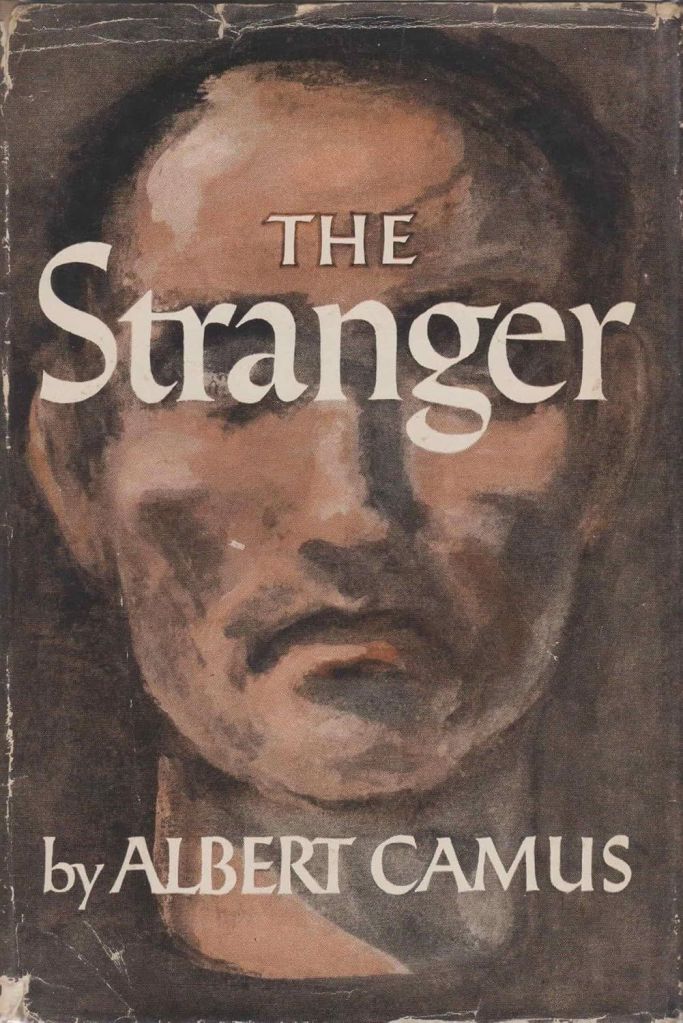
The Stranger

Meursault, the Sun, and the Crime of Indifference

Alienation, Absurdity, and Moral Judgment in Albert Camus’s The Stranger

Albert Camus’s The Stranger is one of the most unsettling novels of the twentieth century, not because of what its protagonist does, but because of what he refuses to do. Meursault does not grieve properly, does not lie convincingly, does not explain himself, and above all, does not pretend that life has an inherent meaning. For this, he is judged more harshly than for murder. In The Stranger, Camus stages a quiet but devastating trial—not only of Meursault, but of society itself, exposing how moral systems rely less on justice than on emotional conformity.

At its core, The Stranger is a novel about the crime of indifference. Meursault’s failure is not ethical in the traditional sense; it is existential. He does not deny morality—he simply experiences the world without illusion. In doing so, he becomes intolerable to a society that demands performance, sentiment, and metaphysical reassurance.

The Opening Shock: A World Without Consolation

“Mother died today. Or maybe yesterday, I don’t know.”

Few openings in modern literature are as famously dispassionate. From the first line, Camus establishes Meursault as a man fundamentally estranged from expected emotional responses. This is not cruelty, nor is it repression—it is a radical honesty. Meursault reports facts, not feelings. He experiences the world as a sequence of physical sensations: heat, light, fatigue, hunger, pleasure.

The funeral scene is crucial. Meursault does not cry. He smokes, drinks coffee with milk, notices the sun, and feels irritated by the heat. To the reader—and later to the courtroom—this behavior appears monstrous. Yet Camus subtly suggests something more disturbing: Meursault’s reactions are not false. They are simply unedited.

Society does not demand grief; it demands the appearance of grief. Meursault’s crime begins here, long before the murder, because he refuses to lie about what he feels—or does not feel.

The Sun as Fate: The Murder Without Motive

The murder of the Arab on the beach is one of the most discussed acts in modern literature precisely because it resists interpretation. There is no hatred, no ideology, no personal vendetta. Meursault does not kill out of anger or revenge. He kills because of the sun.

The heat is unbearable. The light blinds him. The knife flashes. The moment collapses into sensory overload. Camus strips the act of psychological depth, forcing us to confront a horrifying possibility: not all violence is meaningful.

This is Camus’s most radical claim. The universe does not operate according to moral logic. Events happen without reason, and humans desperately impose narratives afterward to make them bearable. The murder is absurd not because it is trivial, but because it lacks justification. It simply is.

When Meursault fires the gun, then fires four more shots into the lifeless body, it is less an escalation than a rupture—a moment where the absurd reveals itself fully. The sun, indifferent and overwhelming, becomes the true antagonist of the novel.

Love Without Illusion: Marie and Emotional Honesty

Meursault’s relationship with Marie further complicates our judgment of him. He enjoys her company, desires her physically, and experiences happiness with her. When she asks if he loves her, he answers honestly: it doesn’t mean anything, but he probably doesn’t.

This answer horrifies us—not because it is cruel, but because it violates the ritual language of love. Meursault does not pretend that emotions have metaphysical weight. He experiences pleasure, not transcendence.

Camus is not suggesting that Meursault is ideal; rather, he is asking whether lying about love is morally superior to telling the truth about it. Society prefers comforting falsehoods to uncomfortable sincerity. Marie accepts Meursault’s indifference more easily than the court does, because her expectations are human, not ideological.

The Trial: Judged for Not Crying

The second half of The Stranger transforms into a grotesque parody of justice. Meursault is not truly tried for murder; he is tried for failing to conform. The prosecutor focuses obsessively on Meursault’s behavior at his mother’s funeral, portraying him as a monster incapable of moral feeling.

This is the novel’s most devastating insight: society punishes emotional heresy more severely than violence. Meursault’s honesty threatens the symbolic order. If grief is optional, if love is contingent, if God is silent, then the foundations of meaning begin to crumble.

The courtroom becomes a theater of moral outrage, where sincerity is irrelevant and symbolism reigns supreme. Meursault is condemned not because he killed a man, but because he did not cry for his mother. The verdict is predetermined; the narrative must be preserved.

God, Refusal, and the Final Awakening

In prison, Meursault is offered one final escape: faith. The chaplain insists on repentance, on God, on eternal meaning. Meursault refuses violently. His outburst is not nihilistic—it is lucid.

He recognizes, finally and fully, that the universe is indifferent. And in that recognition, he experiences freedom. If life has no ultimate meaning, then it belongs entirely to the present moment. The absurd is not despair; it is clarity without consolation.

Meursault’s final wish—that the crowd greet his execution with cries of hatred—is often misunderstood. It is not masochism. It is coherence. He wants the universe to be honest with him, just as he has been honest with it. No false compassion. No illusions.

The Stranger as Existential Mirror

The Stranger endures because it asks a question that remains deeply uncomfortable: How much of morality is genuine, and how much is performance? Meursault is not a hero, but he is a mirror—reflecting the fragility of our moral certainties.

Camus does not ask us to imitate Meursault. He asks us to confront the absurdity we conceal beneath rituals, sentiments, and narratives. Meursault’s refusal to lie makes him intolerable, but it also makes him free.

In the end, The Stranger is not about murder, grief, or atheism. It is about the cost of honesty in a world that demands meaning. Meursault pays that cost with his life, but he dies awake—having finally embraced the gentle indifference of the world.

And perhaps that, Camus suggests, is the most honest ending available to us.