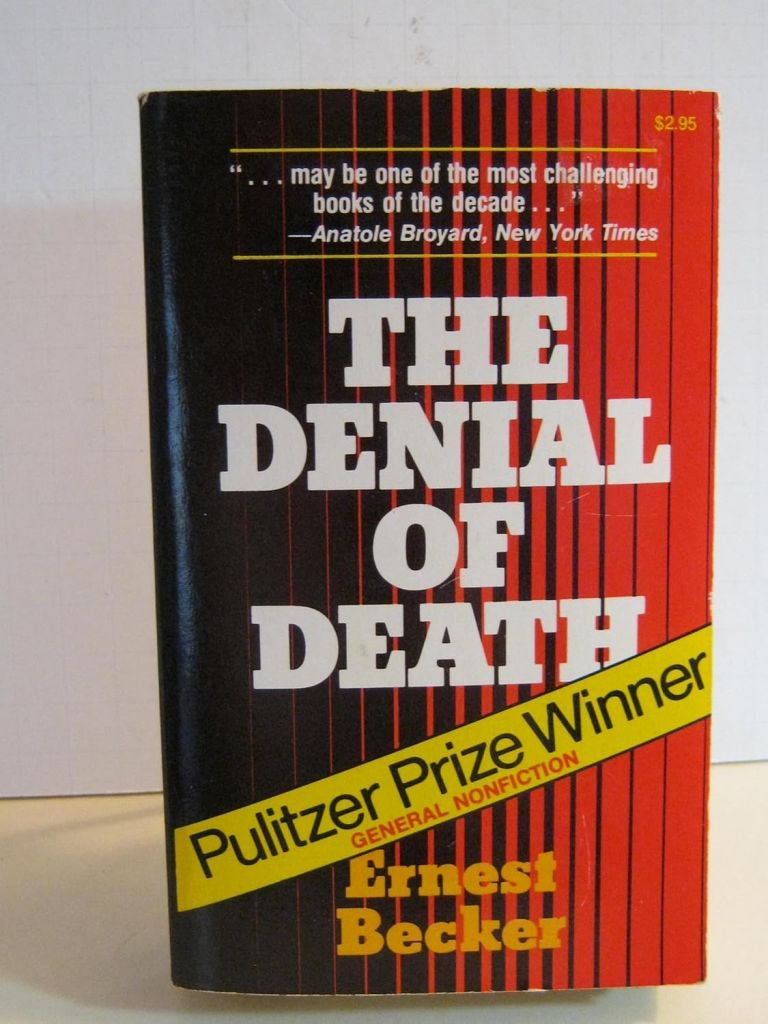
The denial of death

The Terror Beneath Civilization: Ernest Becker and the Denial of Death

Human beings are the only animals who know they will die. From this unbearable knowledge, Ernest Becker argues, everything else follows. The Denial of Death is not merely a work of psychology or anthropology; it is an indictment of civilization itself. Beneath our achievements, moral codes, love stories, political systems, and religious faiths lies a single, unspoken terror: the certainty of our own extinction.

For Becker, consciousness is not a triumph but a tragedy. To be self-aware is to stand at a distance from nature, to recognize one’s fragile body as temporary, replaceable, and doomed. The human mind, unable to tolerate this truth directly, constructs elaborate symbolic systems to protect itself. Culture is not an ornament of human life; it is a defense mechanism. Civilization, in Becker’s stark formulation, is a collective effort to deny death.

This is Becker’s unsettling claim: we do not live as we do because we seek truth, goodness, or beauty. We live as we do because we cannot bear the terror of being animals who must die.

Consciousness as a Curse

The human condition is paradoxical. We are biological organisms driven by instinct, hunger, and fear, yet we possess symbolic consciousness that allows us to imagine eternity, meaning, and transcendence. This split—between body and symbol, animal and god—is the source of our anxiety. We are “gods with anuses,” as Becker memorably puts it: capable of imagining immortality while rotting from within.

Unlike other animals, humans cannot simply live in the present. We remember the past, anticipate the future, and project ourselves into a world beyond our own lifetimes. This capacity for symbolic thought gives rise to art, language, and religion—but also to neurosis, guilt, and violence. Consciousness exposes us to a truth we are not equipped to endure: that everything we love, including ourselves, will disappear.

The problem is not death itself, but the awareness of it. Becker insists that human psychology is fundamentally shaped by this awareness. Our minds evolve not to confront mortality honestly, but to keep it at bay. Mental health, in this sense, is not a state of truthfulness but of successful repression.

Immortality Projects: How Humans Cheat Death

Becker’s most enduring concept is that of the immortality project. These are symbolic systems through which individuals seek to transcend death—not physically, but meaningfully. If the body must perish, then the self must be preserved in another form: legacy, reputation, nation, soul, or memory.

Religion offers literal immortality through the promise of an afterlife. Art offers symbolic immortality through lasting creation. Nation and ideology offer participation in something larger and more enduring than the individual. Even the modern career, with its obsession with achievement and recognition, functions as an immortality project: proof that one mattered, that one left a mark.

Becker does not dismiss these projects as childish illusions. On the contrary, he insists they are psychologically necessary. Without some form of symbolic transcendence, the individual collapses into despair. Depression, anxiety, and nihilism emerge when a person’s hero system—his sense of cosmic significance—fails.

What makes Becker dangerous is not that he exposes immortality projects, but that he refuses to romanticize them. These projects sustain life, but they also generate conflict. When one person’s symbolic meaning clashes with another’s, violence becomes inevitable.

Heroism and the Need to Matter

At the heart of every immortality project is heroism. Becker redefines heroism not as bravery or virtue, but as the belief that one’s life has objective significance in the universe. To live without heroism is to live with the unbearable sense that one’s existence is arbitrary and disposable.

Modern society has not eliminated this need; it has merely fragmented it. Where ancient cultures offered shared hero systems—religion, myth, sacred tradition—modernity leaves individuals to invent their own. The result is a proliferation of fragile identities constantly in need of validation.

Social media offers a perfect contemporary example: a digital arena for micro-heroism, where visibility, outrage, and moral performance substitute for lasting meaning. To be seen is to exist; to be ignored is to vanish. Becker helps explain why humiliation feels existential and why public recognition feels salvific. These are not trivial emotional reactions—they are encounters with symbolic death.

When a hero system collapses, the individual experiences not disappointment, but annihilation. Rage, fanaticism, and despair follow. This is not pathology at the margins of human behavior; it is its psychological core.

Love as a Dangerous Immortality Project

Perhaps Becker’s most disturbing insight concerns romantic love. In a secular age, love becomes the primary site of transcendence. We turn our lovers into gods, expecting them to redeem us from insignificance and mortality. The beloved becomes the guarantor of meaning, the witness who makes life real.

This burden is impossible to bear. No human being can sustain godhood. When the lover fails—as all humans must—love curdles into resentment, control, or despair. What begins as devotion becomes domination. Becker’s analysis exposes the dark underside of romantic idealism: love does not save us from death; it merely relocates our terror onto another person.

This insight resonates deeply with the great novels of psychological realism, where love so often becomes destructive. Becker offers the theory behind the tragedy: love collapses under the weight of immortality.

Evil as a Defense Against Death

Becker’s theory of evil is radical in its simplicity. People do not commit evil because they are cruel, irrational, or broken. They commit evil because they are defending their immortality projects. When another person or group threatens one’s symbolic universe, annihilation feels justified—even necessary.

War, genocide, ideological purges, and moral crusades all follow this pattern. The enemy must be destroyed not merely because they are wrong, but because they threaten meaning itself. Becker reveals that moral righteousness often masks existential panic. Violence becomes sacred when it is framed as a defense of ultimate values.

This is why evil is so often accompanied by certainty. Doubt weakens hero systems; fanaticism reinforces them. The more fragile the symbolic structure, the more violently it must be defended.

God Without Consolation

Becker’s relationship to religion is complex and frequently misunderstood. He does not simply reject God; he rejects religious systems that function as denial rather than confrontation. A God who exists merely to soothe anxiety becomes another psychological shield—dangerous not because it is false, but because it evades responsibility.

In this sense, Becker stands closer to Dostoevsky than to secular atheism. Like Ivan Karamazov, Becker refuses a God who excuses suffering or sanitizes terror. Faith that denies death becomes complicit in violence; faith that acknowledges terror without illusion may foster humility.

Becker does not offer salvation. He offers clarity—and that clarity is tragic.

Living with the Terror

Can human beings live without illusions? Becker’s answer is brutally honest: no. Complete confrontation with mortality would paralyze us. The goal is not to abolish denial, but to soften it—to recognize the symbolic nature of our hero systems without absolutizing them.

Wisdom, for Becker, lies in humility. To know that one’s meaning is constructed is not to abandon it, but to hold it lightly. Less certainty may mean less violence. Less cosmic self-importance may mean greater compassion.

The Denial of Death leaves us with no comforting resolution. It offers no program, no therapy, no redemption arc. It simply insists that beneath our most cherished ideals lies a terrified animal clinging to meaning. To face this truth is not to despair, but to see ourselves clearly—tragic, creative, and dangerous.

Civilization is built on denial. But within that denial, Becker suggests, lies the possibility of a quieter courage: not the courage to conquer death, but the courage to live honestly in its shadow.

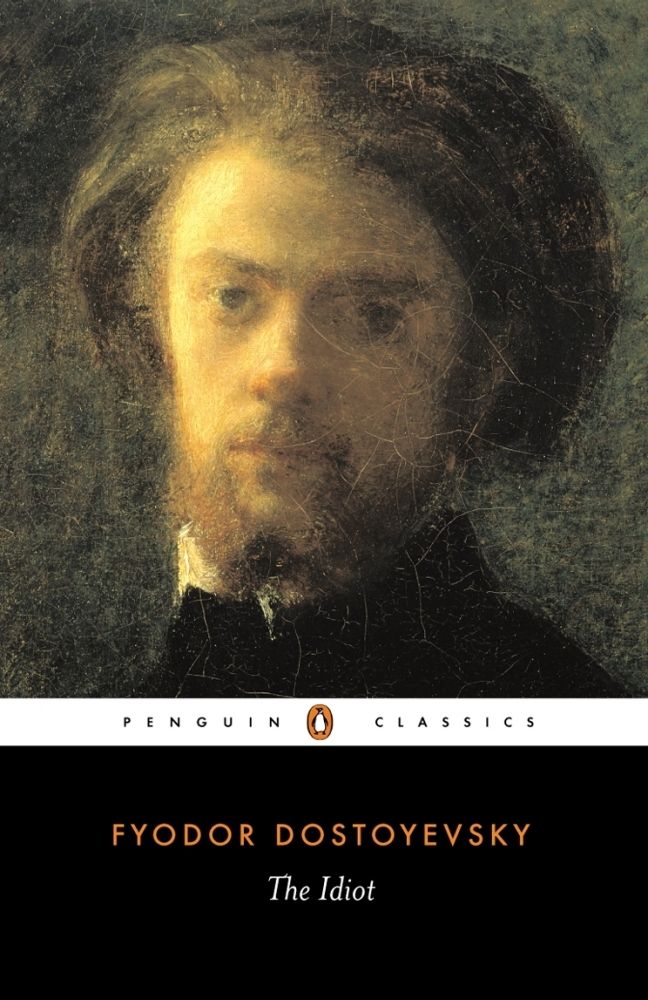
The Idiot

Prince Myshkin and Nastasya Filippovna: Absolute Goodness and the Will to Self-Destruction in The Idiot

Dostoevsky’s The Idiot is not a novel about innocence misunderstood; it is a novel about goodness that arrives too early, too naked, and too unarmed for the world it enters. Prince Lev Nikolaevich Myshkin is not a fool, nor is he a saint in the conventional sense. He is an ethical anomaly — a man whose moral transparency exposes the violent mechanics of social life. Opposite him stands Nastasya Filippovna, a woman whose intelligence, beauty, and psychological lucidity have been fused with trauma into a single, lethal self-image. Their encounter forms the novel’s tragic axis: absolute goodness meets a soul that believes it deserves destruction.

Myshkin’s tragedy is not that he is rejected; it is that he is believed, briefly, and then found unbearable. Society does not crucify him — it diagnoses him. His compassion is read as weakness, his honesty as social incompetence, his mercy as naïveté. Yet Dostoevsky is careful: Myshkin sees more clearly than anyone else in the novel. He understands human vanity, cruelty, and fear with devastating precision. What he lacks is not intelligence, but defensive illusion. He cannot lie in the way society requires one to lie in order to survive.

This becomes catastrophic when Myshkin encounters Nastasya Filippovna — a woman whose trauma has taught her that love is always a prelude to ownership, humiliation, or punishment. Nastasya is not destroyed by society’s cruelty alone; she has internalized its verdict. She believes herself irredeemable, not because she lacks moral awareness, but because she possesses too much of it. Her self-destruction is not impulsive — it is principled. She seeks to expose the hypocrisy of a world that desires her beauty while condemning her existence.

Myshkin’s love for Nastasya is radically different from the love offered by others. He does not desire her, nor does he seek to rescue her in the heroic sense. He recognizes her suffering without attempting to rewrite it. In modern terms, Myshkin offers witness rather than cure. This is precisely why his goodness becomes unbearable. Nastasya cannot accept love that does not punish her. To accept Myshkin’s mercy would require her to abandon the identity she has constructed around her suffering — and that identity is all she has left.

Here Dostoevsky articulates a terrifying psychological truth: trauma does not merely wound — it organizes the self. Nastasya’s oscillation between Myshkin and Rogozhin is not romantic indecision; it is a repetition compulsion. Myshkin represents unconditional recognition without possession. Rogozhin represents violent desire, ownership, and annihilation. Between them, Nastasya chooses not happiness, but coherence. Rogozhin confirms what she already believes about herself: that she is an object to be consumed and destroyed.

Myshkin’s goodness fails not because it is false, but because it demands too much of a wounded soul. Absolute goodness does not negotiate with self-hatred; it dissolves the very narrative that sustains it. For Nastasya, to be loved without condition would mean confronting the possibility that her suffering was unjust — and that possibility is more terrifying than death. It would mean that the world is not merely cruel, but wrong. And if the world is wrong, then her pain demands a reckoning that cannot be satisfied by self-destruction alone.

This is why Myshkin’s presence accelerates Nastasya’s collapse rather than preventing it. Goodness, when it is complete, exposes evil without containing it. Myshkin does not possess the authority of Christ, only the vulnerability. He can forgive, but he cannot redeem. He can love, but he cannot save. His goodness is human — and therefore tragic.

Dostoevsky stages this tragedy with surgical precision. Each time Myshkin approaches Nastasya with compassion, she responds with theatrical cruelty — mocking herself, humiliating her suitors, sabotaging her own escape. These acts are not madness; they are protest. Nastasya refuses to be redeemed quietly. If she is to be destroyed, she will ensure that the spectacle indicts everyone watching.

The novel’s final convergence — Myshkin and Rogozhin keeping vigil over Nastasya’s corpse — represents the collapse of all moral binaries. Love as possession and love as mercy meet in silence. Neither triumphs. Myshkin’s mind breaks not because he has failed, but because he has seen too much without the power to intervene. Absolute goodness, confronted with absolute despair, does not become heroic — it becomes mute.

The Idiot thus dismantles a comforting illusion: that goodness is inherently salvific. Dostoevsky insists on something far more disturbing. Goodness, when it is unprotected by power, tradition, or authority, is fragile. It reveals truth without enforcing it. And truth, once revealed, does not automatically heal — it often destroys.

Prince Myshkin is not the savior of the novel; he is its ethical measure. Nastasya Filippovna is not merely a tragic woman; she is the novel’s moral accusation. Together, they form Dostoevsky’s bleakest question: What happens when perfect compassion meets a soul that cannot survive without self-condemnation?

The answer is not redemption. It is tragedy — not because goodness is insufficient, but because the world is not yet capable of receiving it.

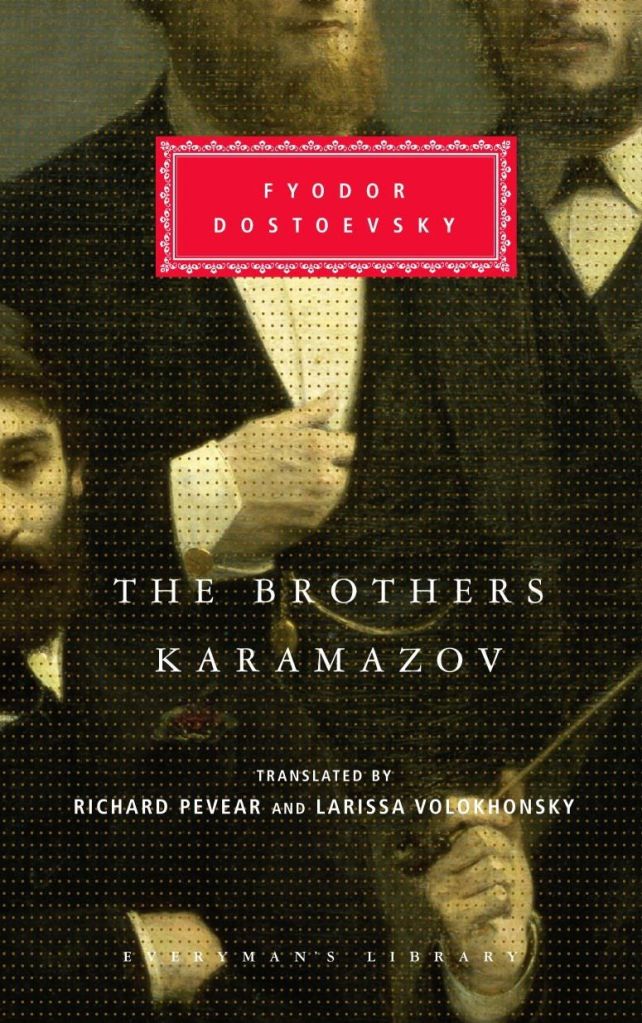
The Brothers Karamazov

The Three Brothers as One Divided Soul: Psychological Fragmentation in The Brothers Karamazov

Dostoevsky did not write The Brothers Karamazov to tell the story of three brothers. He wrote it to expose the fracture at the heart of modern humanity. 

Dmitri, Ivan, and Alyosha are not simply siblings shaped by circumstance; they are embodiments of a single divided soul—passion, reason, and faith torn apart and forced to live separately. Their tragedy is not merely familial but existential: what happens when the human self can no longer hold its contradictions together?

Fyodor Pavlovich Karamazov, their father, is less a character than a moral vacuum. He bequeaths his sons not guidance or love, but chaos. In this absence of paternal authority—ethical, emotional, and spiritual—each brother develops one aspect of humanity in isolation. The result is not wholeness but extremity.

Dmitri: The Tyranny of Desire

Dmitri Karamazov is the most visibly alive of the brothers—and the least integrated. He lives in his body, in sensation, in appetite. His passions erupt uncontrollably: love and hatred, generosity and cruelty, ecstasy and despair coexist without mediation. Dmitri does not calculate; he confesses. He does not conceal his excess; he suffers it openly.

Yet Dostoevsky does not reduce Dmitri to mere hedonism. Beneath his sensuality lies a desperate hunger for moral purity. Dmitri longs to be redeemed even as he sabotages himself. He experiences guilt not as reflection but as torment. His conscience burns rather than instructs.

Dmitri’s tragedy is that his moral intuition is stronger than his self-control. He knows good and evil viscerally, but he lacks the inner structure to choose consistently between them. As a result, he becomes the perfect scapegoat. Society condemns him not because he is guilty of murder, but because he looks guilty. His chaos makes him believable as a criminal.

Dmitri represents what happens when desire is severed from reason and faith: passion becomes self-destructive, even when it yearns for goodness.

Ivan: The Sovereignty of Reason

Ivan Karamazov lives at the opposite pole. Where Dmitri is excess, Ivan is restraint. Where Dmitri erupts, Ivan withdraws. He seeks moral clarity through intellect, believing that if the world can be understood, it can be endured.

Ivan’s brilliance is undeniable. He sees through sentimental pieties and refuses easy consolations. His rebellion against God is rooted in compassion, not pride. He refuses a universe that demands the suffering of innocents as its price.

Yet Ivan’s reason becomes tyrannical. By isolating intellect from love and humility, he transforms moral outrage into metaphysical despair. His famous conclusion—“everything is permitted”—is not a declaration of freedom but a logical abyss. Without transcendence, moral law dissolves into personal will.

Ivan’s breakdown reveals the limits of reason when it bears the entire weight of existence. His hallucinations and conversations with the devil are not signs of superstition but of psychological collapse. Reason, when forced to answer questions it cannot resolve, turns against itself.

Ivan represents modern consciousness at its most honest—and most vulnerable. He exposes the cracks in rational morality but offers no shelter from the storm he unleashes.

Alyosha: The Courage of Faith

Alyosha Karamazov appears, at first, to be the least dramatic brother. He is gentle, attentive, and spiritually inclined. Yet this apparent simplicity is deceptive. Alyosha is not naïve; he is courageous. His faith is not inherited certainty but chosen vulnerability.

Alyosha does not deny the reality of evil. He witnesses cruelty, hypocrisy, and suffering without retreating into abstraction. Unlike Ivan, he does not demand cosmic justification. Unlike Dmitri, he does not surrender to passion. Instead, he responds with what Dostoevsky calls “active love”—a love that acts without assurance of success or reward.

Crucially, Alyosha’s faith is tested and nearly shattered. The corruption of Zosima’s body undermines the expectation of sanctity. No miracle intervenes. Faith survives not because it is proven, but because Alyosha chooses to remain open to love despite disappointment.

Alyosha represents the integration that the other brothers lack: faith that does not suppress reason or deny desire, but orders them toward compassion.

One Soul, Three Failures

Read together, the brothers form a psychological trinity. Dmitri is will without discipline. Ivan is intellect without mercy. Alyosha is love without domination. None is complete alone.

Dostoevsky’s genius lies in refusing to let any single brother represent the “correct” way to live. Dmitri’s passion contains moral sincerity; Ivan’s reason contains ethical rigor; Alyosha’s faith contains humility. Yet each, in isolation, fails.

The novel suggests that modern humanity suffers not from the absence of values, but from their fragmentation. We think too much without loving, desire too much without understanding, believe too much without acting—or act without believing. 

The result is inner civil war.

Patricide as Psychic Event

The murder of Fyodor Pavlovich is the novel’s central crime—but it is also a symbolic act. Each brother, in his own way, desires the father’s death. Dmitri through rage and rivalry. Ivan through intellectual detachment and moral abdication. Alyosha through spiritual transcendence.

Smerdyakov commits the act, but he does so as the embodiment of the brothers’ disowned impulses. He is their shadow—the consequence of fragmentation. When responsibility is divided, guilt becomes collective.

This is Dostoevsky’s most unsettling insight: when the self fractures, moral agency disperses. No one feels fully responsible, and evil becomes easier to commit.

Toward Wholeness

The Brothers Karamazov is not a novel about choosing between faith, reason, or passion. It is a novel about the necessity of holding them together. Wholeness, Dostoevsky suggests, is not purity but integration.

Alyosha points toward this possibility, but even he is not its completion. The novel ends not with resolution, but with a call—to remember, to take responsibility, to love actively in an imperfect world.

The three brothers are not rivals; they are fragments searching for reunion. And in recognizing ourselves in each of them, we confront the deepest question Dostoevsky asks: can the modern soul survive its own division?

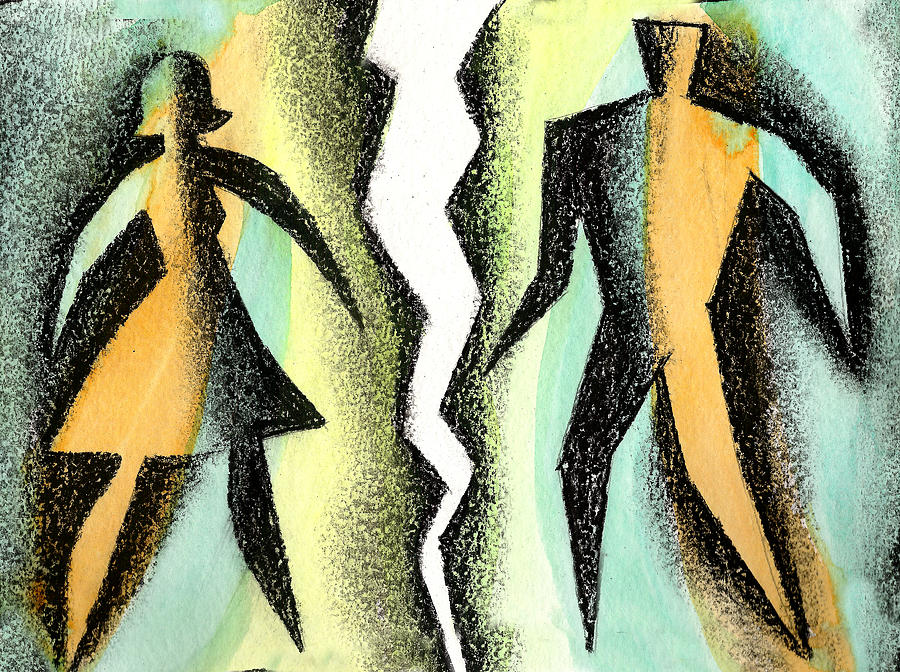
happily single

Happily single

Happily single, unattached without staples, we act like relationships are everything, well I am turning the tables. Fixated on long held beliefs, of people living in the past who couldn’t conceive, of the 21st century and what living in this time really means. Who said life is a checklist? Ticking items down like a wishlist. Marriage, kids before 30 is that on your list? Useless if you don’t meet the list? Working hard to sustain a myth that won’t give you peace. What happens when your imagined life won’t give you peace? Divorce, custody, yea it’s hard to keep the peace. Happily single, it needs to be about me. Single-minded and selfish but I am trying to get the cream. Providing for Africa is my dream. It’s a waste of time starring in somebody else’s dream. They be trying to change me to their specifications like my reality ain’t what it seems. Happily single, we act like children can’t be the spoke on the wheel, sure you can love the kid but is there denying that it’s slowing you down? Life is a steep hill battle and you can’t make it out of town. Formula milk exorbitant, that will drop your crown. Sure you love your kid but he can be a mistake, one to make you drown. Happily single, wasting my time chasing expectations, trying to fill a role, being someone society expects just to get a vote. Validation can’t come from the outside, it needs to be about me, that’s my quote. Redefining what my life should be and it’s strictly my vote. Can’t be chasing illusions and ghosts, visiting life when I am the host. Happily single, look at me, I am vibrant, I am free, doing things that come naturally to me, splurging on materials and not having to worry about the fees. Doing what I want not having to say please. Happily single, my ambition is me, working on all the things that interest me, putting myself first because it’s all about me. Happily single, self-love, in my prime, nobody can make me happy but me, willing to branch out but it starts with me. Happily single, the world doesn’t care about you as you get older, it’s liberation, so I mingle.

Happily single, unattached without staples, we act like relationships are everything, well I am turning the tables.

Spiteful bitch

Spiteful bitch

Spiteful bitch you made me stronger. I am laughing because you thought my back was against the wall but I couldn’t be more stronger. Should have believed you when you spewed hate against me but I was younger, vulnerable, confused, looking for your validation, when your heart was on vacation. You didn’t care, left me abandoned like a building occupied by drug addicts. Maybe I was an addict, craving for your love, that was never given. Instead you played the victim, when you are the one who opened your legs for that big dick. Should have wore a condom and avoided the leak from that big prick. What dreams? Don’t make me sick. Spiteful bitch you made me stronger, overplayed your hand, using the same maneuver, you became predictable, thought you were my God, how predictable. Searching for my weaknesses with a microscope so you can use them against me, weaponizing food to get at me. The presence of mind to know what works on you like Cain when he killed Able to spite God. Will never forget the schadenfreude on your face when I lost weight, it was your doing, you caused my fate. Not anymore it ain’t, will never give you that power because you are insane. Spiteful bitch you made me stronger, because of you I stand stronger. Will never let anyone play me like a fiddle, picking sides, nah, I’d rather stay in the middle. Acting big when you really are just little. Petty, prideful, egotistical, pointing fingers and sitting on the stands but never getting physical. You are right and everybody is wrong, how’s that for nonsensical? Control freak, power hungry, always has to be the one who speaks. Spiteful bitch, I believe you, you are clearly a cunt. Staying in role, you are even spiteful as a aunt. Hateful demeanor, stirring trouble, using people as pawns for your personal amusement. Everything is just a game to you isn’t it? Some sort of entertainment. Mine, mine, mine, it’s a sign, sign, sign of your immaturity and spiteful nature. Take it all, you spiteful bitch! We done! Spiteful bitch, you made me stronger.

Superstar II 🌟: OnlyFans

Superstar II 🌟: OnlyFans

This was never my dream nor the plan. I have a degree, I was a teacher, I had purpose. Nowadays, not so much. It’s difficult to love myself but I do my best. I have to concede, I miss it, teaching, having a purpose, contributing something of substance to humanity. I miss being around students and how their eyes would light up after achieving a milestone. I am swerving off the road but I remember when a student of mine got his drivers license, the next day he came up to me and he shared his news, his eyes beamed with excitement, satistifation and pride, possibilities opened up for him and he couldn’t wait for the future. That’s what I miss the most, youthful exuberance. I miss teaching Shakespeare, I love Shakespeare, Othello, Macbeth, Hamlet. This was never the plan, I loved my job, I had purpose, I come from a religious background, I grew up a devot Christian, I never wanted to dance nude on camera for the internet. But life did it’s thing, I was drowning in student loans and credit card debts. The cost of living is too high and inflation a bitch, consumer products keep rising, meanwhile my salary is stagnant. I can’t do anything, I am trapped in a loop and I am also 3 months from being homeless. This was not the plan, dancing and posing on camera for the internet but I had to do it, for the money, the validation and a better life. OnlyFans was my only salvation, at first I hid my face, I tried to be anonymous but somehow it leaked on Twitter. I am guessing someone was looking me up and somehow put 2 and 2 together because next thing I knew, I was trending, I live in a small town, everybody knew. I was suspended and later fired from work, OnlyFans became the center of my universe. Digital prostitution, I am one of the lucky ones, a lot of girls are lured into this life and don’t make much money. Some of these girls end their lives after they realize it’s not as glamorous as advertised. Cause you selling your ass on the internet and sometimes you just don’t move any units but the cost of production haunts you for the rest of your life. Last year I made a cool 2 million. Maybe luck is the wrong word, you gotta invest in the platform, market yourself, produce quality content, you can’t do much with 12 pictures and 3 videos, men are visual creatures, you have to stimulate their imagination, give them something they don’t get from other creators, set yourself a part, keep them coming to see your content. Pornography is free and rife on the internet, how are you going to distinguish yourself? Just some advice, more than 200 pictures and 60 videos is good when you are starting out. Bikini shots and nudes but you have to pick your platforms, for example, you can’t post naked pictures on Instagram, that will get your account removed but you can get away with it on Twitter. Do what you can, fuck who you need to fuck, get your money and reinvest in another area. That’s what I did, I went into Real Estate and bought a farm. It’s futile to delete your account because the internet is forever so I keep it active. If simps want to give me their money, who am I to say no? I get private requests and I execute if the money is right. I never understood the pissing and shitting stuff, still don’t, but I do have the content. I do have boundaries though, like one time some sick weirdo wanted me to fuck a dog. I told him no, I don’t go out of my species. I do this for money and a bit of validation. I love it when men call me a Goddess. I remember when my mother said “it’s a good thing you have a good personality because you are not attractive”, what a horrible thing to say to your daughter. That stayed with me for life. On my OnlyFans, the men think I am attractive and they pay me a premium for proof, that’s good enough for me. I don’t have regrets, I had to and my life is better financially. As long as men keep paying me to see me naked, I am happy to keep dancing and posing for them on camera. Yes, I don’t have friends and my family disowned me but my money keeps me company. We take sex too seriously, like it’s a taboo but it isn’t because we all do it. Does it matter that you do it behind doors and me publicly for everyone in the world to see? I don’t need them in any case, they are hypocrites. I know that my pictures will be on the internet for all of humanity to jerk off to, I know that I have a lot to explain to my daughter who is currently 3 years old but the world is changing, the money is good and I am one of the lucky ones. I am up to it even though it will follow me for a lifetime. This was never my dream nor the plan. I have a degree, I was a teacher, I had purpose.

antakalipa – Superstar II 🌟: OnlyFans

Amor Fati

Amor Fati

The love of fate, love life, cause life isn’t life until you live it. Be content in your own skin, cherish what you have, love your destiny, your fate. Amor Fati, the love of fate, love everything about your life, your history, heritage, your ancestors, all the circumstances that carved your destiny. Be present, do what you can with the time that you have, life is in your hands, like a sculptor you have everything you need to mould it into what you desire. Amor Fati, the love of fate, love even the bad moments in your life, they present a chance to be resilient, they offer an opportunity to learn something, to know something of substance about yourself, to grow. How can you appreciate the good times when you have never experienced the bad, life exists in dualities, polaritites, one day you are red hot and the next blue ice. This is just a state, conditions don’t last, people do. Amor Fati, the love of fate, busk in your failures, rejoice in your inadequacies, time is forever fleeting, no time to wallow or feel sorry for yourself, the world doesn’t really care about you. Amor Fati, the love of fate, take time to smell the roses, endure the stank of bullshit. You only have one life, you have the make-up that will never be replicated in all of existence, 8 billion people in existence, billions more have perished, you are unique, nothing like you will ever happen again. Don’t waste your energy comparing yourself to a fabricated standard when you are already a standard. There’s no such thing as a life that’s better than yours. No one can ever be better than you. Money and status is illusion, your soul is forever. Amor Fati, take the time to study the manipulators, they will teach you something about yourself, live in your pain, it will prepare you for an euphoric moment, crush your enemies if the moment demands, it will teach you combat, entertain your nihilistic thoughts, it will teach you about God. Amor Fati, every moment is valid, every second is an opportunity, love your life, love your fate, live in a state of creation, nourish the universe with your laughter, stretch out, reach out, help, be a blessing in somebody’s life, embody the change that you want to see. Amor Fati, the love of fate, love everything in your map of experience, even the moments that make you tremble in fear or sob in sadness. Every emotion is valid, you are blessed by the God’s. Love this very moment you are spending with me. Thank you God for the gift of life. Amor Fati, the love of fate, cause life isn’t life until you live it. Don’t waste your life living somebody’s life.

Maestro

Maestro

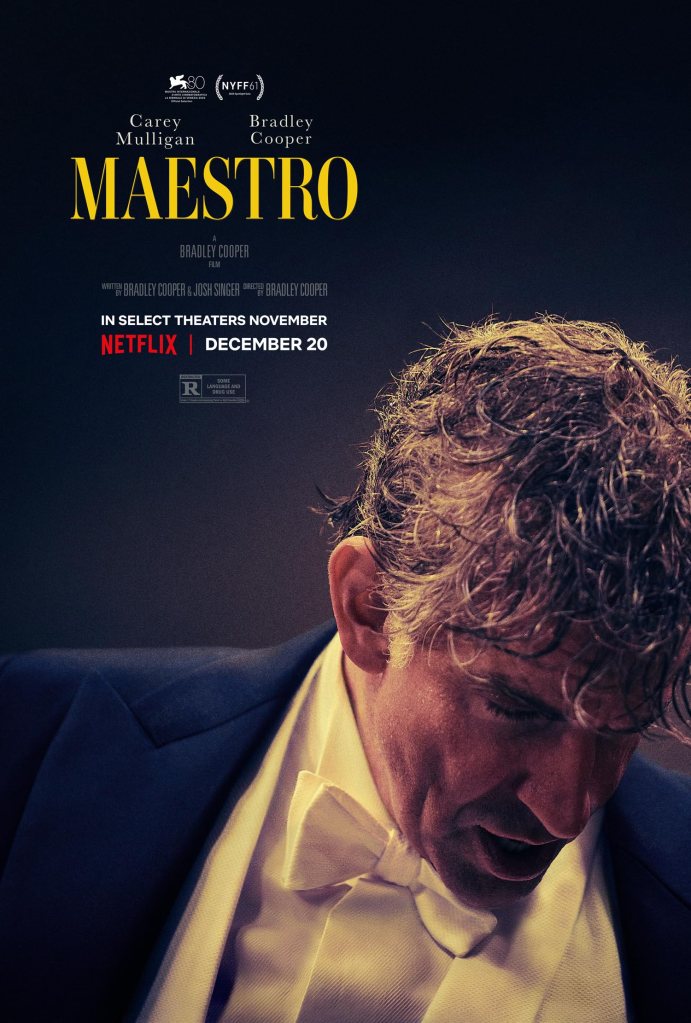
Will never understand how Bradley Cooper never got an Oscar for this film. What did he do wrong? Did he campaign too much? Was desperation reeking from his pores that it turned people off? Did he want that Oscar too much? I can’t find fault with this film, it’s a masterpiece. Bradley Cooper was excellent, he was on the form of his life, he was amazing, so talented. He did everything right with this film. The story and writing is perfect down to the beats, scenes and sequences. The tone and pacing is perfect, chronicles Leonard Bernstein’s life beautifully, the movie runs in black and white for sometime to convey and evoke that nostalgic feeling and then switches to color to indicate that time has elapsed. The artistic decisions were spot on. The acting superb. He wrote, directed and produced it. If that’s not enough, he enlisted help from Martin Scorsese and Steven Speilberg. I understand the decision to hand Oppenheimer some awards, it was a great movie and Christopher Nolan and his team deserve all the acclaim. But really? Not even one award for Bradley Cooper? Just a clean sweep for Oppenheimer? That’s not a fair representation of the year and the work that was done. 2023 was a great year for movies. Killers of the Flower Moon also didn’t win. I think it’s obsurd. Nominations are simply not enough, Cooper did everything right. Maestro is perfect. How could the Academy not even give him one award? If he doesn’t win with Maestro, what will he win with? How do you even win an Oscar? It seems impossible and untenable to me. Must be political. I am scratching my head, I just don’t understand. Nonetheless, I loved it, gets my stamp of approval and Bradley Cooper is a winner in my eyes. If he lost because he wanted it so bad then okay.

Spring Awakening

smart

Spring Awakening

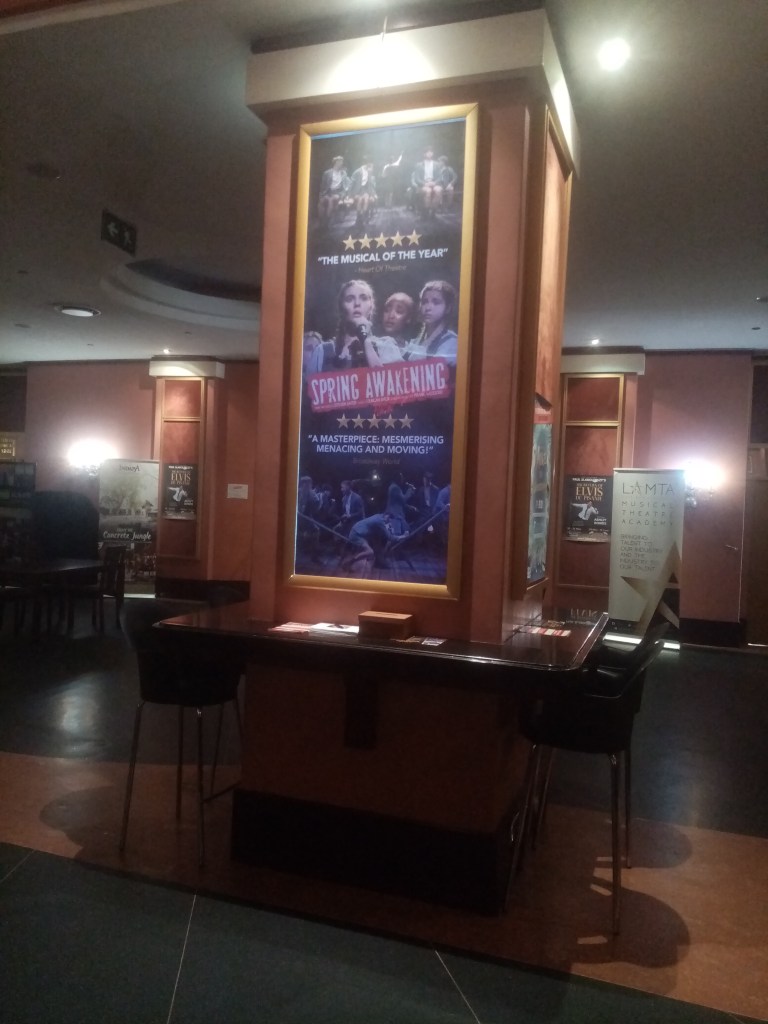
Best show ever! Honestly, it’s better than great. It is amazing story-telling. Everything tells a story, from the lights, to the sound and the effects. You don’t even have time to be bored, your mind doesn’t wander, you just hooked from the first moment the actors get on stage. Masterful story-telling, the details, the tone, everything was deliberate and meant to contribute or convey something to the story, it’s content on another level, an example of world-class theatre. It’s Sylvaine Strike, she’s the common denominator, she’s the one with the magic wand, the conductor, I got the same feeling after watching “The Promise”, the feeling of this is the greatest day of my life. Wow! That was a great show! I enjoyed every moment. Ah, It’s beautiful to be young even in Germany, I didn’t think you could do that on the stage, clears throat – Coitus, it was certainly saucy, that moment certainly got my full attention. Thoroughly satisfied, happy there was an interval for a little breather, happy with the overall length of the show, happy with everything, I am in love with theatre. The show is captivating, your eyes are locked to the stage, everything disappears, you get immersed in the story, it’s an experience. She’s the best director in the world. The actors on the stage were amazing, so talented, so in love with their craft. The singing was amazing and the cheography perfect. Everything was perfect. Again, the lighting and sound effects! Everything was on cue. The hours and practice it must have took to create that! They worked hard. It’s amazing, they created magic on the stage with a minimal set. The actors made use of the stage to perfection. It’s Sylvaine Strike, she’s the common denominator, she makes great art, a master storyteller, a theatre world champion, the greatest of all time. A deserved standing ovation and congratulations on the whole team for creating a masterpiece. Thank you Sam for yet another great pass ♥️. SamSays on the credits.

My favorite Broadway

Jonathan Roxmouth

At the Teatro for the Jonathan Roxmouth My favorite Broadway show. Seats so good, you stay seated when someone ahead of you is on their feet. Literally eyeball-to-eyeball with Jonathan and you can see the Maestro’s shoes. Thank you Belinda Howard and as always SamSays on the credits.

Charisma, presence, composure, calm, warmth are adjectives to describe Roxmouth. He keeps you engaged, he is captivating and the delivery masterful. Last time I was at the Teatro, I was watching “Swinging Las Vegas” – high octane show with hits galore! Came back for the Maestro and Jonathan Roxmouth for new memories. It’s ridiculous how good Jonathan is, he commands the stage, has comedic timing and spellbinding on the mic. Songs about love and a couple of ABBA classics – thank you for the music! He sings with passion, love and attention for his craft. You are at his mercy, the world stops for him. His voice melts on the pan like butter. It is soothing like a lullaby and keeps you awake like Redbull – energizing, you can listen to him the whole day. You get lost in his voice, he has the capability of making you daydream but you are lucid so you applaud after the song.

Roxmouth is joined by Maestro Adam Howard and the Egoli Symphonic Orchestra who are too great to encapsulate with words. I need to update my music vocabulary and acclimatize myself to the jargon, then maybe I’ll have a better chance of expressing myself. Then again, you play music, it was never meant to be serious. The stage has the Egoli Symphonic Orchestra concentrated in the middle and they spread to the sides. Behind the Orchestra are screens, one in the middle and one on either side. The screens provide a backdrop and themes of the songs performed. Jonathan Roxmouth changes costumes three times, different colored suits with sequins. The part where he tap-dances with the other Jonathan’s on the screen is awesome, humorous, I enjoyed that there was female representation, perfect choreography and completely in sync. Maestro Adam Howard expertly leads procedures. He is in charge, present, perfect, there is no show without him. I am with Momo, he has Maestro Adam Howard by his side, but I do recognize Kabza’s greatness.

Great show, a privilege to behold Roxmouth’s mastery on the stage. Chicago is up next!

Congratulations Jonathan Roxmouth and the whole team for a great show and a deserved standing ovation.

📷: Crowther Fourie

📷: Elena Samuels