Demons

Stavrogin and Pyotr Verkhovensky: The Void and the Virus

Suicide, Silence, and the Refusal of God in Dostoevsky’s Demons

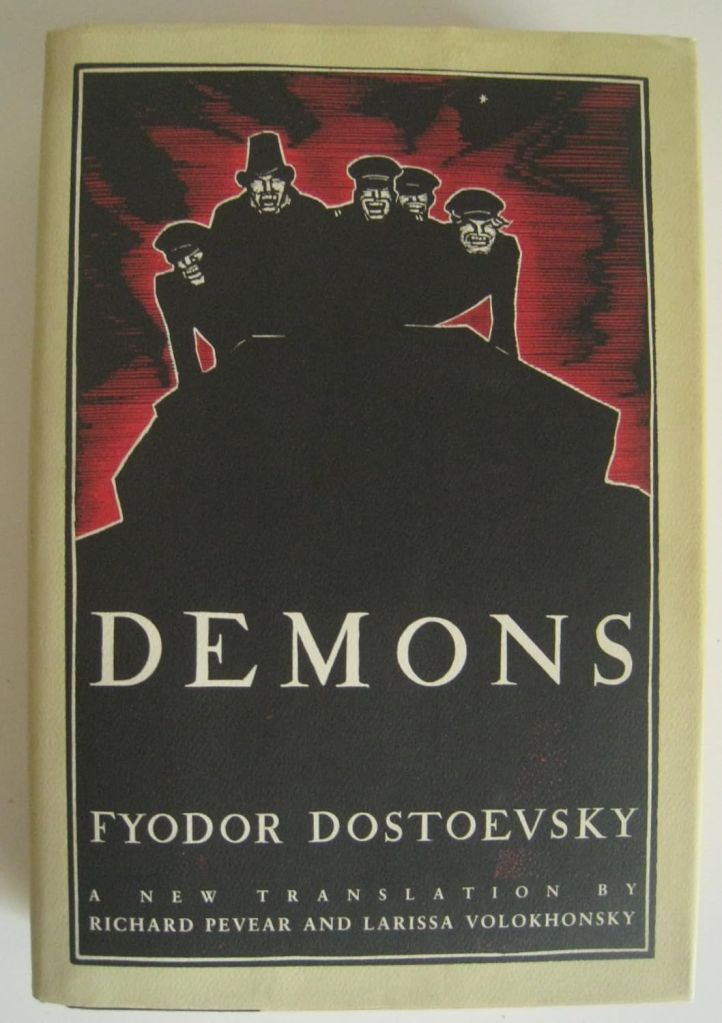
In Demons, Dostoevsky no longer asks why a man commits a crime or how guilt destroys the soul. He asks something far more terrifying: What happens when belief itself becomes diseased? The novel marks a shift from individual psychological collapse to collective possession. Here, ideas do not persuade—they infect. They hollow people out, animate them, and drive them toward destruction with mechanical inevitability.

At the center of this catastrophe stand two figures who never fully merge yet cannot exist without each other: Nikolai Stavrogin, the void, and Pyotr Verkhovensky, the virus. Stavrogin represents moral emptiness—the absence of belief, remorse, or commitment. Pyotr represents ideological contagion—pure movement without truth, manipulation without conviction. Together, they form Dostoevsky’s bleakest prophecy: a world where emptiness invites possession, and possession replaces conscience.

Stavrogin: The Terror of Moral Emptiness

Stavrogin is not a villain in the traditional sense. He does not rage like Raskolnikov, argue like Ivan Karamazov, or suffer like Prince Myshkin. What makes Stavrogin terrifying is precisely what he lacks: moral gravity. He does not struggle; he does not resist. He observes his own depravity with cold detachment, as though watching another man commit atrocities.

Everyone in Demons orbits Stavrogin. They project onto him leadership, depth, and power. Yet Stavrogin himself believes in nothing—not God, not humanity, not even nihilism as a cause. He is not a revolutionary; he is not a reactionary. He is an absence that attracts meaning, a blank screen onto which others cast their fantasies.

Dostoevsky understood something deeply modern here: emptiness can be more dangerous than conviction. A man who believes in something may still be restrained by doubt or conscience. A man who believes in nothing becomes infinitely adaptable. Stavrogin can commit evil not because he is driven by passion, but because nothing within him says no.

His silence is crucial. Stavrogin refuses confession not out of pride, but indifference. Even when he reveals his crimes, it is without repentance, as though truth itself has lost its moral weight. This silence is not peace—it is spiritual death.

Pyotr Verkhovensky: Ideology as Infection

If Stavrogin is empty, Pyotr Verkhovensky is full—but full of nothing substantial. Pyotr does not believe in revolution, justice, or equality. He believes only in movement, disruption, and control. Ideas are tools to him, interchangeable and disposable. Truth is irrelevant; effect is everything.

Pyotr understands that people do not need coherent philosophy—they need permission. Permission to destroy, to humiliate, to kill. He creates secret cells not to advance a cause, but to bind people together through shared guilt. Violence becomes the glue of community.

This is where Demons becomes prophetic. Pyotr anticipates the modern extremist: not a fanatic driven by belief, but a strategist who weaponizes belief in others. He spreads chaos not as an end, but as a method. Disorder creates dependency, and dependency creates power.

Pyotr does not create the void—but he exploits it. Stavrogin’s emptiness gives Pyotr legitimacy. Pyotr needs Stavrogin as a symbol, a silent authority who never contradicts him. In this sense, the virus requires the void. Ideology needs spiritually empty hosts to survive.

Kirillov and the Logic of Suicide

Running beneath Stavrogin and Pyotr is a darker philosophical current, embodied most explicitly in Kirillov. Kirillov’s suicide is not despair—it is metaphysics. He believes that if God does not exist, then the highest expression of human freedom is self-annihilation. By killing himself voluntarily, Kirillov seeks to become God.

This is the most chilling idea in Demons: suicide as theological rebellion.

Kirillov’s logic is flawless and horrifying. If there is no God, then there is no moral order beyond human will. If that is true, then death is merely another choice. Suicide becomes the ultimate assertion of autonomy. Freedom consumes itself.

Dostoevsky understood that when God is rejected, something else rushes in to fill the vacuum—not reason, but absolutism. Kirillov does not arrive at peace; he arrives at fanatic clarity. His death is not tragic because it is painful, but because it is meaningless while pretending to be profound.

Stavrogin’s Silence and the Failure of Confession

Unlike Kirillov, Stavrogin does not articulate a philosophy of suicide—but he embodies it. His final act is not a declaration, but a withdrawal. Where Kirillov dies loudly, Stavrogin dies quietly. His suicide is the natural conclusion of emptiness: when nothing binds you to life, life becomes optional.

Stavrogin cannot repent because repentance requires belief in moral order. He cannot love because love requires commitment. He cannot live because life requires purpose beyond self-will. His death is not an escape from guilt—it is the final expression of indifference.

Dostoevsky is merciless here. Stavrogin’s intelligence, charm, and self-awareness do not save him. On the contrary, they accelerate his destruction. Consciousness without faith becomes self-consuming.

The Possessed World

What Demons ultimately reveals is that the death of God does not lead to freedom—it leads to possession. When conscience disappears, ideology takes its place. When meaning dissolves, violence provides structure. When silence replaces prayer, chaos speaks.

Stavrogin shows us the danger of inner emptiness. Pyotr shows us how that emptiness becomes contagious. Kirillov shows us the final logic of absolute freedom. Together, they form a single system: void, virus, and self-destruction.

Dostoevsky was not warning against revolution alone. He was warning against a world where ideas are severed from the soul, where belief becomes technique, and where freedom is defined as the absence of restraint rather than the presence of meaning.

Conclusion: A Novel for Our Time

Demons is not a historical novel. It is a diagnosis. Stavrogin exists wherever moral detachment is mistaken for sophistication. Pyotr exists wherever chaos is mistaken for progress. Kirillov exists wherever autonomy is mistaken for transcendence.

The demons Dostoevsky describes are not supernatural—they are philosophical. They enter through silence, grow through emptiness, and destroy through certainty.

And once possessed, a society no longer needs tyrants.

It destroys itself.
The Idiot

Prince Myshkin and Nastasya Filippovna: Absolute Goodness and the Will to Self-Destruction in The Idiot

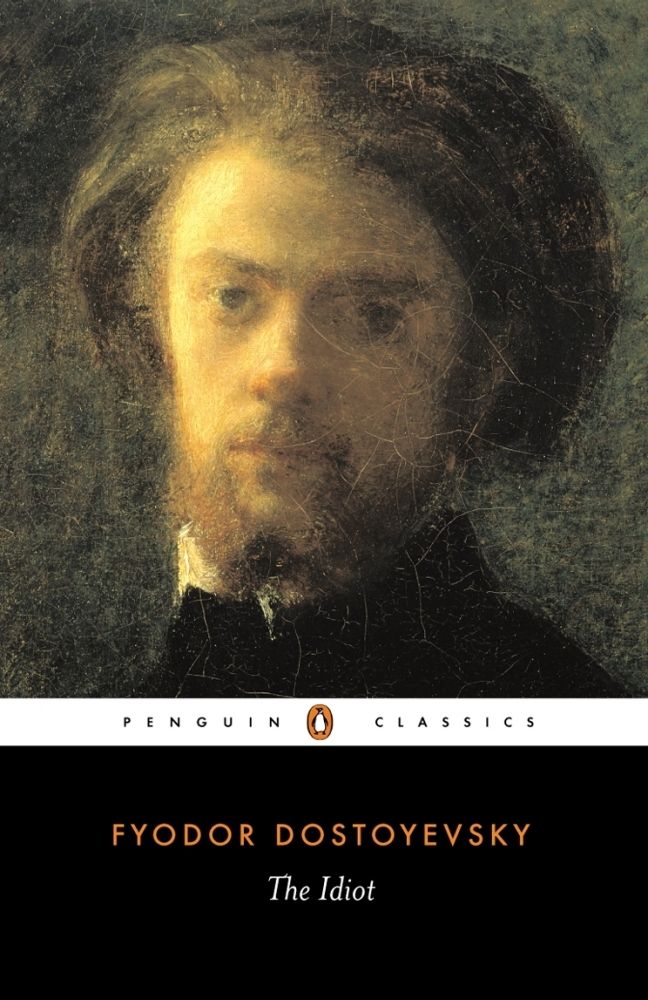
Dostoevsky’s The Idiot is not a novel about innocence misunderstood; it is a novel about goodness that arrives too early, too naked, and too unarmed for the world it enters. Prince Lev Nikolaevich Myshkin is not a fool, nor is he a saint in the conventional sense. He is an ethical anomaly — a man whose moral transparency exposes the violent mechanics of social life. Opposite him stands Nastasya Filippovna, a woman whose intelligence, beauty, and psychological lucidity have been fused with trauma into a single, lethal self-image. Their encounter forms the novel’s tragic axis: absolute goodness meets a soul that believes it deserves destruction.

Myshkin’s tragedy is not that he is rejected; it is that he is believed, briefly, and then found unbearable. Society does not crucify him — it diagnoses him. His compassion is read as weakness, his honesty as social incompetence, his mercy as naïveté. Yet Dostoevsky is careful: Myshkin sees more clearly than anyone else in the novel. He understands human vanity, cruelty, and fear with devastating precision. What he lacks is not intelligence, but defensive illusion. He cannot lie in the way society requires one to lie in order to survive.

This becomes catastrophic when Myshkin encounters Nastasya Filippovna — a woman whose trauma has taught her that love is always a prelude to ownership, humiliation, or punishment. Nastasya is not destroyed by society’s cruelty alone; she has internalized its verdict. She believes herself irredeemable, not because she lacks moral awareness, but because she possesses too much of it. Her self-destruction is not impulsive — it is principled. She seeks to expose the hypocrisy of a world that desires her beauty while condemning her existence.

Myshkin’s love for Nastasya is radically different from the love offered by others. He does not desire her, nor does he seek to rescue her in the heroic sense. He recognizes her suffering without attempting to rewrite it. In modern terms, Myshkin offers witness rather than cure. This is precisely why his goodness becomes unbearable. Nastasya cannot accept love that does not punish her. To accept Myshkin’s mercy would require her to abandon the identity she has constructed around her suffering — and that identity is all she has left.

Here Dostoevsky articulates a terrifying psychological truth: trauma does not merely wound — it organizes the self. Nastasya’s oscillation between Myshkin and Rogozhin is not romantic indecision; it is a repetition compulsion. Myshkin represents unconditional recognition without possession. Rogozhin represents violent desire, ownership, and annihilation. Between them, Nastasya chooses not happiness, but coherence. Rogozhin confirms what she already believes about herself: that she is an object to be consumed and destroyed.

Myshkin’s goodness fails not because it is false, but because it demands too much of a wounded soul. Absolute goodness does not negotiate with self-hatred; it dissolves the very narrative that sustains it. For Nastasya, to be loved without condition would mean confronting the possibility that her suffering was unjust — and that possibility is more terrifying than death. It would mean that the world is not merely cruel, but wrong. And if the world is wrong, then her pain demands a reckoning that cannot be satisfied by self-destruction alone.

This is why Myshkin’s presence accelerates Nastasya’s collapse rather than preventing it. Goodness, when it is complete, exposes evil without containing it. Myshkin does not possess the authority of Christ, only the vulnerability. He can forgive, but he cannot redeem. He can love, but he cannot save. His goodness is human — and therefore tragic.

Dostoevsky stages this tragedy with surgical precision. Each time Myshkin approaches Nastasya with compassion, she responds with theatrical cruelty — mocking herself, humiliating her suitors, sabotaging her own escape. These acts are not madness; they are protest. Nastasya refuses to be redeemed quietly. If she is to be destroyed, she will ensure that the spectacle indicts everyone watching.

The novel’s final convergence — Myshkin and Rogozhin keeping vigil over Nastasya’s corpse — represents the collapse of all moral binaries. Love as possession and love as mercy meet in silence. Neither triumphs. Myshkin’s mind breaks not because he has failed, but because he has seen too much without the power to intervene. Absolute goodness, confronted with absolute despair, does not become heroic — it becomes mute.

The Idiot thus dismantles a comforting illusion: that goodness is inherently salvific. Dostoevsky insists on something far more disturbing. Goodness, when it is unprotected by power, tradition, or authority, is fragile. It reveals truth without enforcing it. And truth, once revealed, does not automatically heal — it often destroys.

Prince Myshkin is not the savior of the novel; he is its ethical measure. Nastasya Filippovna is not merely a tragic woman; she is the novel’s moral accusation. Together, they form Dostoevsky’s bleakest question: What happens when perfect compassion meets a soul that cannot survive without self-condemnation?

The answer is not redemption. It is tragedy — not because goodness is insufficient, but because the world is not yet capable of receiving it.

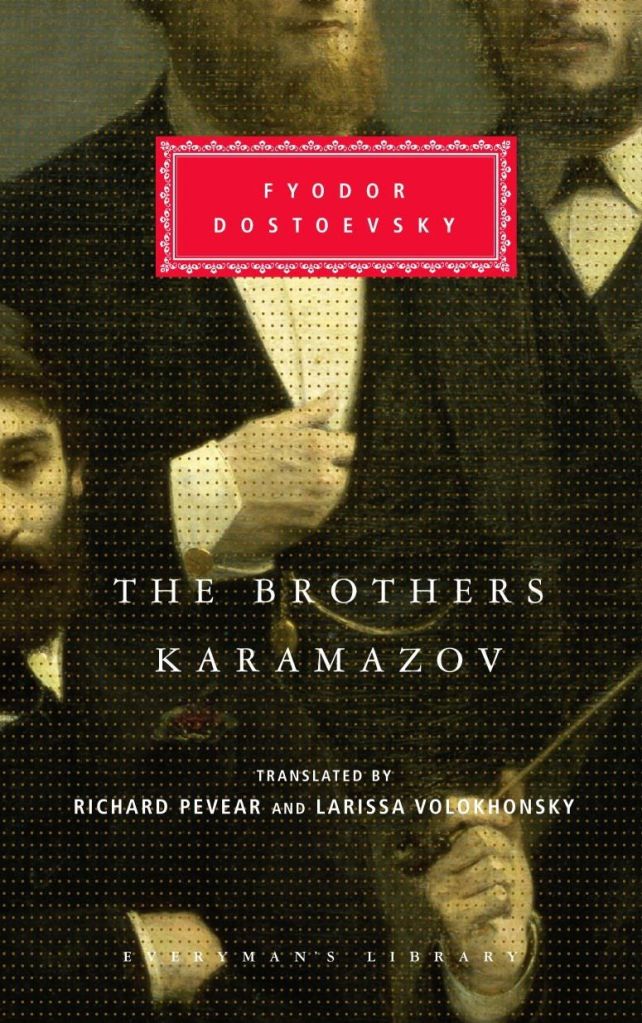
The Brothers Karamazov

The Three Brothers as One Divided Soul: Psychological Fragmentation in The Brothers Karamazov

Dostoevsky did not write The Brothers Karamazov to tell the story of three brothers. He wrote it to expose the fracture at the heart of modern humanity. 

Dmitri, Ivan, and Alyosha are not simply siblings shaped by circumstance; they are embodiments of a single divided soul—passion, reason, and faith torn apart and forced to live separately. Their tragedy is not merely familial but existential: what happens when the human self can no longer hold its contradictions together?

Fyodor Pavlovich Karamazov, their father, is less a character than a moral vacuum. He bequeaths his sons not guidance or love, but chaos. In this absence of paternal authority—ethical, emotional, and spiritual—each brother develops one aspect of humanity in isolation. The result is not wholeness but extremity.

Dmitri: The Tyranny of Desire

Dmitri Karamazov is the most visibly alive of the brothers—and the least integrated. He lives in his body, in sensation, in appetite. His passions erupt uncontrollably: love and hatred, generosity and cruelty, ecstasy and despair coexist without mediation. Dmitri does not calculate; he confesses. He does not conceal his excess; he suffers it openly.

Yet Dostoevsky does not reduce Dmitri to mere hedonism. Beneath his sensuality lies a desperate hunger for moral purity. Dmitri longs to be redeemed even as he sabotages himself. He experiences guilt not as reflection but as torment. His conscience burns rather than instructs.

Dmitri’s tragedy is that his moral intuition is stronger than his self-control. He knows good and evil viscerally, but he lacks the inner structure to choose consistently between them. As a result, he becomes the perfect scapegoat. Society condemns him not because he is guilty of murder, but because he looks guilty. His chaos makes him believable as a criminal.

Dmitri represents what happens when desire is severed from reason and faith: passion becomes self-destructive, even when it yearns for goodness.

Ivan: The Sovereignty of Reason

Ivan Karamazov lives at the opposite pole. Where Dmitri is excess, Ivan is restraint. Where Dmitri erupts, Ivan withdraws. He seeks moral clarity through intellect, believing that if the world can be understood, it can be endured.

Ivan’s brilliance is undeniable. He sees through sentimental pieties and refuses easy consolations. His rebellion against God is rooted in compassion, not pride. He refuses a universe that demands the suffering of innocents as its price.

Yet Ivan’s reason becomes tyrannical. By isolating intellect from love and humility, he transforms moral outrage into metaphysical despair. His famous conclusion—“everything is permitted”—is not a declaration of freedom but a logical abyss. Without transcendence, moral law dissolves into personal will.

Ivan’s breakdown reveals the limits of reason when it bears the entire weight of existence. His hallucinations and conversations with the devil are not signs of superstition but of psychological collapse. Reason, when forced to answer questions it cannot resolve, turns against itself.

Ivan represents modern consciousness at its most honest—and most vulnerable. He exposes the cracks in rational morality but offers no shelter from the storm he unleashes.

Alyosha: The Courage of Faith

Alyosha Karamazov appears, at first, to be the least dramatic brother. He is gentle, attentive, and spiritually inclined. Yet this apparent simplicity is deceptive. Alyosha is not naïve; he is courageous. His faith is not inherited certainty but chosen vulnerability.

Alyosha does not deny the reality of evil. He witnesses cruelty, hypocrisy, and suffering without retreating into abstraction. Unlike Ivan, he does not demand cosmic justification. Unlike Dmitri, he does not surrender to passion. Instead, he responds with what Dostoevsky calls “active love”—a love that acts without assurance of success or reward.

Crucially, Alyosha’s faith is tested and nearly shattered. The corruption of Zosima’s body undermines the expectation of sanctity. No miracle intervenes. Faith survives not because it is proven, but because Alyosha chooses to remain open to love despite disappointment.

Alyosha represents the integration that the other brothers lack: faith that does not suppress reason or deny desire, but orders them toward compassion.

One Soul, Three Failures

Read together, the brothers form a psychological trinity. Dmitri is will without discipline. Ivan is intellect without mercy. Alyosha is love without domination. None is complete alone.

Dostoevsky’s genius lies in refusing to let any single brother represent the “correct” way to live. Dmitri’s passion contains moral sincerity; Ivan’s reason contains ethical rigor; Alyosha’s faith contains humility. Yet each, in isolation, fails.

The novel suggests that modern humanity suffers not from the absence of values, but from their fragmentation. We think too much without loving, desire too much without understanding, believe too much without acting—or act without believing. 

The result is inner civil war.

Patricide as Psychic Event

The murder of Fyodor Pavlovich is the novel’s central crime—but it is also a symbolic act. Each brother, in his own way, desires the father’s death. Dmitri through rage and rivalry. Ivan through intellectual detachment and moral abdication. Alyosha through spiritual transcendence.

Smerdyakov commits the act, but he does so as the embodiment of the brothers’ disowned impulses. He is their shadow—the consequence of fragmentation. When responsibility is divided, guilt becomes collective.

This is Dostoevsky’s most unsettling insight: when the self fractures, moral agency disperses. No one feels fully responsible, and evil becomes easier to commit.

Toward Wholeness

The Brothers Karamazov is not a novel about choosing between faith, reason, or passion. It is a novel about the necessity of holding them together. Wholeness, Dostoevsky suggests, is not purity but integration.

Alyosha points toward this possibility, but even he is not its completion. The novel ends not with resolution, but with a call—to remember, to take responsibility, to love actively in an imperfect world.

The three brothers are not rivals; they are fragments searching for reunion. And in recognizing ourselves in each of them, we confront the deepest question Dostoevsky asks: can the modern soul survive its own division?

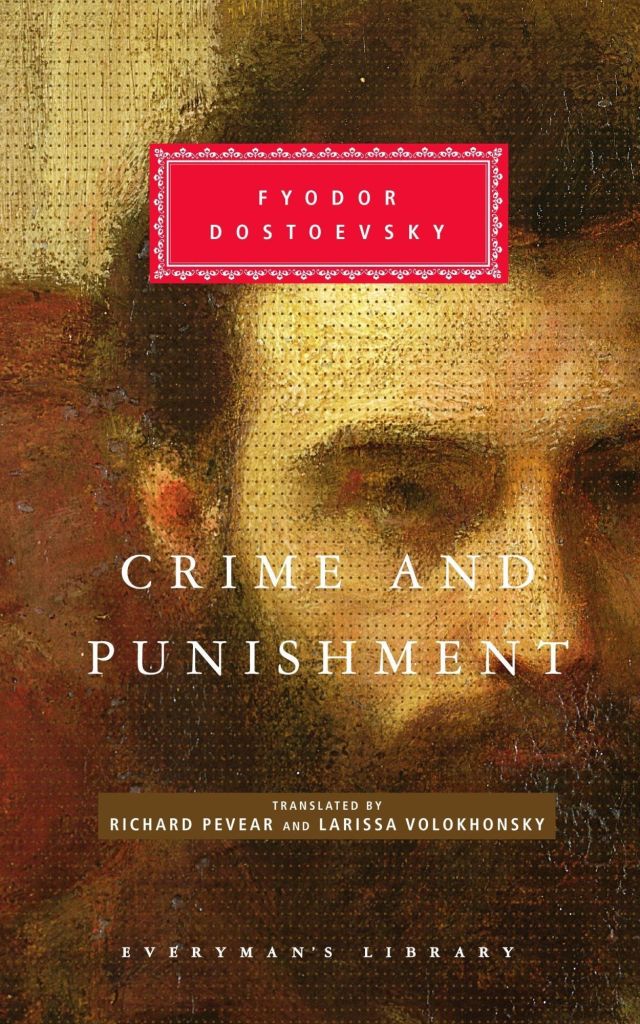
Crime and punishment

Crime and Punishment: When an Idea Commits a Murder

Fyodor Dostoevsky’s Crime and Punishment is often misread as a novel about guilt, redemption, or the psychology of crime. While it contains all these elements, at its core the book is something far more unsettling: a novel about an idea that takes physical form—and kills.

Dostoevsky does not begin with murder. He begins with thought. Specifically, with a modern thought: that reason, if pushed far enough, can replace morality.

Rodion Romanovich Raskolnikov is not merely poor, desperate, or unbalanced. He is intellectually intoxicated. His crime emerges not from impulse but from theory—from the belief that humanity is divided into two categories: the ordinary and the extraordinary. The former must obey the law; the latter may transgress it in the service of a higher purpose. History, he believes, is moved forward by such men. Napoleon becomes his unspoken model: a figure whose crimes were retroactively sanctified by success.

This belief marks Raskolnikov as the true heir of modern consciousness. Where the Underground Man remained paralyzed by self-awareness, Raskolnikov crosses the threshold into action. Dostoevsky escalates the philosophical problem posed in Notes from Underground: what happens when a man stops arguing with morality and attempts to overcome it?

The answer is not liberation. It is collapse.

The murder of the pawnbroker Alyona Ivanovna is not portrayed as dramatic or cathartic. It is clumsy, panicked, almost banal. Worse still, it does not go according to plan. Lizaveta’s unexpected appearance forces Raskolnikov into a second, unintended murder—already undermining the fantasy of rational control. The idea that crime can be clean, purposeful, and justified collapses at the very moment it is enacted.

From this point onward, Crime and Punishment becomes less a narrative and more a psychological autopsy.

Raskolnikov does not emerge empowered. He becomes feverish, disoriented, fragmented. His body rebels against his mind. He sleeps excessively, rambles incoherently, oscillates between arrogance and despair. Dostoevsky insists on a crucial truth: the psyche is not neutral territory. It cannot accommodate the lie that one is beyond good and evil.

This is one of Dostoevsky’s most radical claims. Punishment does not begin in the courtroom or the prison. It begins immediately, internally, and involuntarily. Long before the law reaches Raskolnikov, truth does.

What makes Raskolnikov’s suffering particularly modern is that it is not rooted in remorse for the victim. His torment stems from something more corrosive: the realization that he is not who he imagined himself to be. He wanted to prove his extraordinariness. Instead, he discovers his ordinariness in the most humiliating way possible—through weakness, confusion, and guilt.

Dostoevsky frames this as a metaphysical failure. Raskolnikov’s crime exposes the falsehood at the heart of rationalist morality: that human beings can reduce life to calculations without consequence. The novel relentlessly dismantles this notion. Every attempt Raskolnikov makes to justify himself only deepens his isolation.

Against him stands Sonya Marmeladova—perhaps the most misunderstood character in the novel. Sonya is often reduced to a symbol of Christian purity or passive suffering. In reality, she represents a radical ethical alternative to Raskolnikov’s logic.

Sonya does not justify suffering; she bears it. Forced into prostitution to support her family, she embodies moral degradation without moral corruption. Where Raskolnikov commits violence in the name of an abstract future good, Sonya sacrifices herself in the present for the survival of others. Dostoevsky places them in direct opposition: reason without love versus love without justification.

Crucially, Sonya never argues Raskolnikov out of his theory. She does not debate him. She listens, weeps, and remains. Dostoevsky suggests that salvation is not intellectual but relational. Truth does not arrive as a concept; it arrives as a presence.

This is why Raskolnikov’s confession does not occur in the interrogation room but in Sonya’s company. She gives him the cross not as a symbol of dogma but as a burden to be accepted. To suffer consciously, Dostoevsky implies, is already to begin returning to reality.

Porfiry Petrovich, the examining magistrate, represents another crucial dimension of the novel. Unlike conventional detectives, Porfiry does not rely on evidence alone. He relies on time, pressure, and psychological insight. He understands that Raskolnikov’s real enemy is not the law but himself.

Porfiry’s brilliance lies in his patience. He knows that guilt seeks expression, that the mind cannot indefinitely conceal what the soul knows. His interrogations are philosophical traps rather than procedural ones. In Porfiry, Dostoevsky anticipates modern psychology: crime as a form of confession delayed.

Yet even Porfiry does not complete the arc of punishment. That belongs to Siberia.

One of the novel’s most misunderstood aspects is its ending. Readers often expect a dramatic conversion or spiritual revelation. Instead, Dostoevsky offers something far more restrained—and far more honest. Raskolnikov does not suddenly become virtuous. He remains proud, resistant, emotionally distant. Redemption is not instantaneous; it is embryonic.

This is vital. Dostoevsky refuses cheap transcendence. Punishment, in the novel, is not the sentence imposed by the state but the slow dismantling of a false self. Siberia is not hell; it is exposure. Removed from his intellectual fantasies, Raskolnikov is finally forced to inhabit time, labor, and suffering alongside others.

Only at the very end does Dostoevsky allow the possibility—not the certainty—of renewal. The emphasis is deliberate. Redemption is not a narrative conclusion but a lifelong process. What matters is that Raskolnikov has ceased to believe in his own exceptionality.

This is the novel’s ultimate warning.

Crime and Punishment is not merely about murder; it is about what happens when human beings believe they can stand above moral law without paying a psychological and spiritual price. Dostoevsky foresaw a world increasingly governed by systems, ideologies, and rational justifications for violence. His novel asks a question that remains urgently relevant: what happens when ideas forget the human beings they consume?

Raskolnikov’s tragedy is not that he kills an old woman. It is that he tries to live as if love, conscience, and suffering are negotiable. Dostoevsky answers him with brutal clarity: they are not.

In the end, Crime and Punishment is not a condemnation of thought, but of thought severed from compassion. It insists that no theory, no matter how elegant, can absolve a human being from the reality of other human lives. And when an idea commits a murder, it does not remain intact. It destroys the mind that carried it.

That is Dostoevsky’s enduring terror—and his enduring truth.

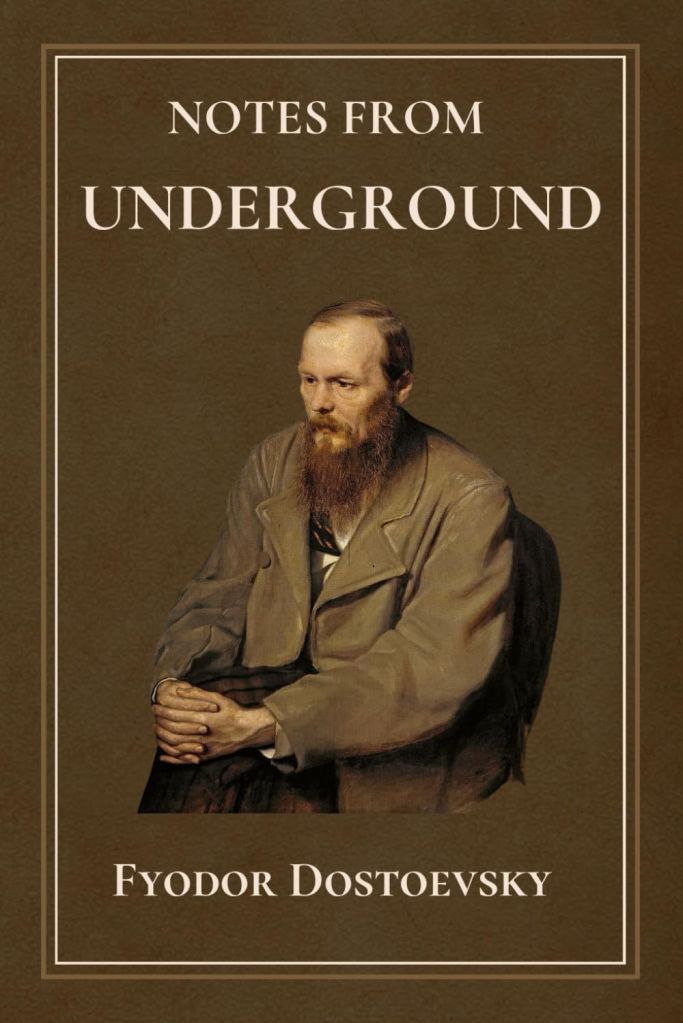
Notes from Underground

Notes from Underground and the Birth of Modern Consciousness

There is a reason Notes from Underground feels less like a novel than an exposure. It does not invite sympathy, nor does it offer development or redemption. Instead, it stages a consciousness that knows too much, feels too sharply, and cannot move without tripping over itself. What Dostoevsky gives us here is not a character to be understood, but a mode of being that would come to define modernity.

The Underground Man is not mad. He is not mistaken. He is, disturbingly, lucid. And it is this lucidity — corrosive, recursive, merciless — that makes him feel so contemporary. In him, Dostoevsky inaugurates a form of consciousness that no longer trusts reason, no longer believes in progress, and no longer experiences the self as unified or innocent. This is not the romantic self, nor the rational Enlightenment subject. It is something darker: a self conscious of its own consciousness, and trapped inside it.

Hyper-consciousness as Illness

“I am a sick man… I am a spiteful man.”

The opening declaration is not metaphorical. The Underground Man’s illness is not physical, nor even psychological in the clinical sense. It is excess awareness. He feels everything too much, thinks everything too far, anticipates every possible humiliation before it occurs. Action becomes impossible because action would require simplification, and simplification feels dishonest.

This is the first crucial break Dostoevsky introduces: consciousness is no longer a tool for clarity, but a source of paralysis. To be aware is not to be free; it is to be immobilised by competing motives, imagined judgments, and retrospective shame.

The Underground Man knows the reasons for action — and knows equally well the reasons against them. Every impulse is instantly undermined by reflection. Every desire is followed by contempt for having desired at all. What remains is inertia, accompanied by an inner monologue that never rests.

Modern consciousness begins here: not with doubt, but with self-surveillance.

The Collapse of Rational Optimism

Dostoevsky is writing against something very specific: the 19th-century belief that human beings, if shown their true interests, will act rationally and morally. The Crystal Palace — the utopian symbol of perfect rational organisation — looms in the background as an unspoken antagonist.

The Underground Man refuses this vision with fury.

He insists, scandalously, that human beings will choose suffering over happiness if happiness is imposed. That they will act against reason simply to prove they are free. That two times two equalling four is not liberation, but a wall.

This rejection is not philosophical abstraction; it is existential. A life governed entirely by rational calculation leaves no room for unpredictability, contradiction, or desire. It reduces the human being to a mechanism. The Underground Man’s spite is, at its core, a protest against being explained away.

Here, modern consciousness announces its rebellion: I would rather be wrong than reduced.

Freedom as Negativity

What is striking about the Underground Man is that he does not advocate an alternative system. He offers no better ethics, no new social arrangement. His freedom is purely negative. It exists only as refusal.

He will not be cured.

He will not be reconciled.

He will not be made happy by force.

This is not heroic resistance. It is ugly, self-defeating, often cruel. But it is recognisably modern. Freedom is no longer experienced as harmony between self and world, but as the ability to say no — even when that no leads to suffering.

The Underground Man prefers conscious misery to unconscious contentment. At least misery belongs to him.

This is a profound shift in the understanding of agency. Freedom becomes inseparable from self-sabotage. Choice is validated not by outcomes, but by its capacity to negate expectation.

Memory as a Weapon Turned Inward

If hyper-consciousness paralyses the Underground Man in the present, memory tortures him endlessly. He does not remember selectively; he remembers obsessively. Every slight is preserved, replayed, reimagined. Past humiliations are not digested — they are cultivated.

This is not nostalgia. It is a form of self-harm.

The Underground Man rehearses conversations that ended years ago, sharpening insults that were never delivered, reliving moments of shame with increasing cruelty toward himself. Memory becomes a private theatre of accusation, with the self as both defendant and prosecutor.

Here, Dostoevsky anticipates something deeply modern: the inability to let experience settle. The past does not recede; it accumulates. Identity becomes a sediment of unresolved moments.

Modern consciousness, in this sense, is haunted consciousness.

Self-Knowledge Without Consolation

What makes Notes from Underground so unsettling is that the Underground Man is rarely wrong about himself. He sees his own pettiness, his cowardice, his cruelty — and this insight does not redeem him. It merely adds another layer of contempt.

This is not the Socratic faith that self-knowledge leads to virtue. It is its inversion. Knowing oneself can deepen despair. Reflection does not heal; it corrodes.

Dostoevsky refuses the comforting arc in which awareness leads to growth. Instead, he presents consciousness as a closed circuit, feeding on itself. The Underground Man is not deluded — he is incapable of forgetting himself.

In this, Dostoevsky anticipates the crisis of modern subjectivity: when introspection no longer promises salvation, only endless recursion.

The Birth of the Anti-Hero

Before the Underground Man, literature gave us rebels, sinners, romantics, outcasts — but rarely this. This is not rebellion against society, but rebellion against coherence itself. The Underground Man does not want to belong, but neither does he want to escape. He wants to remain underground, where contradiction can be preserved without resolution.

He is not admirable. He is not instructive. He is not tragic in the classical sense. He is something new: an anti-hero whose defining trait is consciousness itself.

From this figure will descend a lineage of modern voices: fractured narrators, unreliable selves, interior monologues that expose rather than clarify. The Underground Man marks the moment when literature stops reassuring us that understanding leads somewhere better.

Why He Still Disturbs Us

The enduring discomfort of Notes from Underground lies in its refusal to distance the reader. The Underground Man does not represent a pathology safely contained in fiction. He articulates impulses we recognise and would rather deny: the pleasure of resentment, the intimacy of grievance, the strange comfort of self-inflicted misery.

He speaks from a place that modern life continually reproduces: the isolated self, over-informed, over-aware, inwardly verbose, outwardly inert. A consciousness flooded with explanations but starved of meaning.

Dostoevsky does not ask us to agree with the Underground Man. He forces us to acknowledge that this form of consciousness exists — and that it may be closer to us than we care to admit.

Conclusion: A Beginning, Not an Ending

Notes from Underground is not a diagnosis and not a prophecy. It is a beginning. With it, Dostoevsky cracks open the modern self and refuses to close it again.

The Underground Man is what remains when rational optimism collapses, when faith is wounded, when freedom turns inward and becomes destructive. He is the cost of consciousness without transcendence, awareness without grace.

In giving him a voice, Dostoevsky does not solve the problem of modern consciousness. He names it. And once named, it becomes impossible to ignore.

The underground is not beneath us.

It is within us.

Literary genius

Literary genius

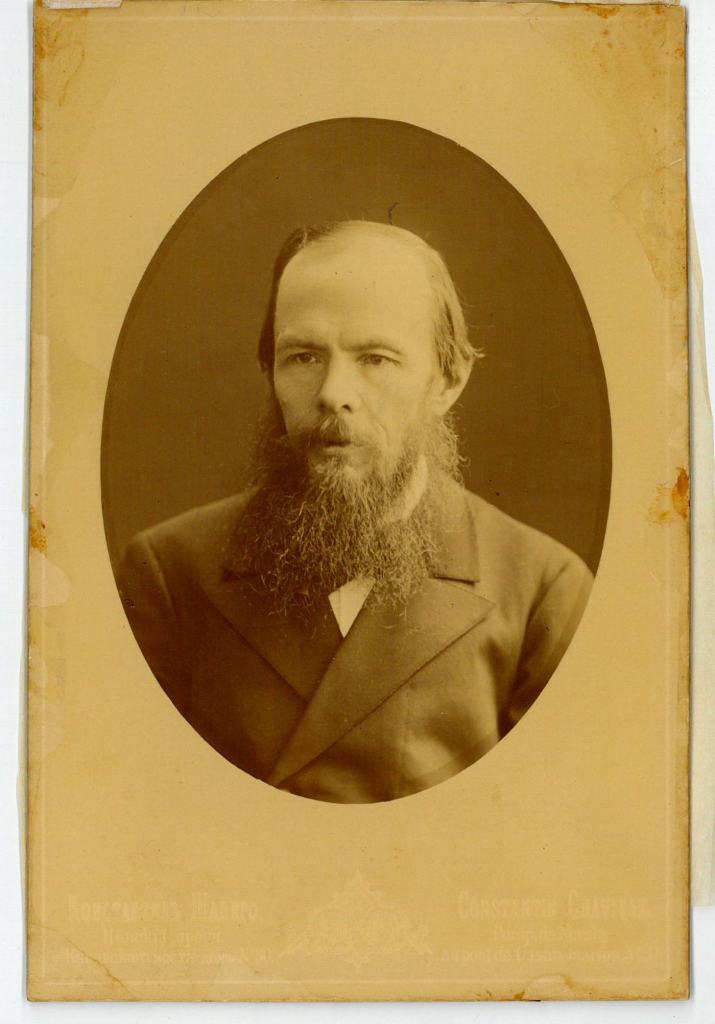
Just as I feared, Fyodor Dostoevsky has ruined Literature for me. I read other books and authors and it’s not the same. They are too surface level, no depth, no risk, lazy, PG, predictable. I don’t finish reading the books because they bore me. Everything is mediocre after Dostoevsky. Maybe I will never get somebody as great as Dostoevsky. His characters are multilayered, they have fears, flaws and motivations. Fyodor Dostoevsky illuminates the darkside of human nature. Siberia made him a genius. He was scheduled to be at executed but at the very last minute, the order was changed to life imprisonment instead. Those final minutes, those last seconds when he thought he was going to die made him the writer he ultimately became. In those last moments, the colors of plants and nature were fuller, the sun was shinning just for him, for the last time, he gained clarity, he negotiated with God, begging him for another chance. He would become a new man, he now saw life as gift, something he should embrace and be grateful for. If God gave him another chance, he would do good in the world, he wouldn’t take anything for granted. Thank God, he saved Fyodor Dostoevsky. “Notes from Underground” was my first Dostoevsky book, short read, about 100 pages, I had never read anything like that in my life. It is psychological, reflective, honest, self-aware and conscious. “Notes from Underground” is brilliant! The Underground man is pitiful, weak, spiteful and pathetic. He wants to avenge himself against a man who wronged him but he is too cowardly. Dostoevsky doesn’t sugarcoat the human condition, life is suffering and difficult and we are all going to die. The storyworld and tone is dark and filled with insecurities. We get into the head of the underground man and he is pathetic, weak and flawed. I initially thought “Crime and Punishment” was the greatest book in the history of humanity. I couldn’t put it down, I loved it, it thoroughly satisfied me. “Wow” was the last thing I said after I finished the book. Then I read “The Brothers Karamazov” – I don’t think there’s a book in existence or in human history that’s better or on par with “The Brothers Karamazov”. It explores religion, atheism, love, patricide and murder. There’s also the fact that Dostoevsky is a master storyteller and unbelievable writer. I strongly believe “The Brothers Karamazov” is the greatest book of all time. His other books “The Idiot” and “Demons” are great, they all get full stars. In fact if you made a case about one of them being better, no one would argue, it’s perspective, besides all his books are masterpieces. The original psychologist, philosopher, a master of human nature and just a literary genius! He set the bar too high, his work is too great, he helped me see life differently, has inspired me so much and ruined literature for me. But I am hopeful, there has to be someone who can rival Dostoevsky.

Witness For The Prosecution

Witness For The Prosecution

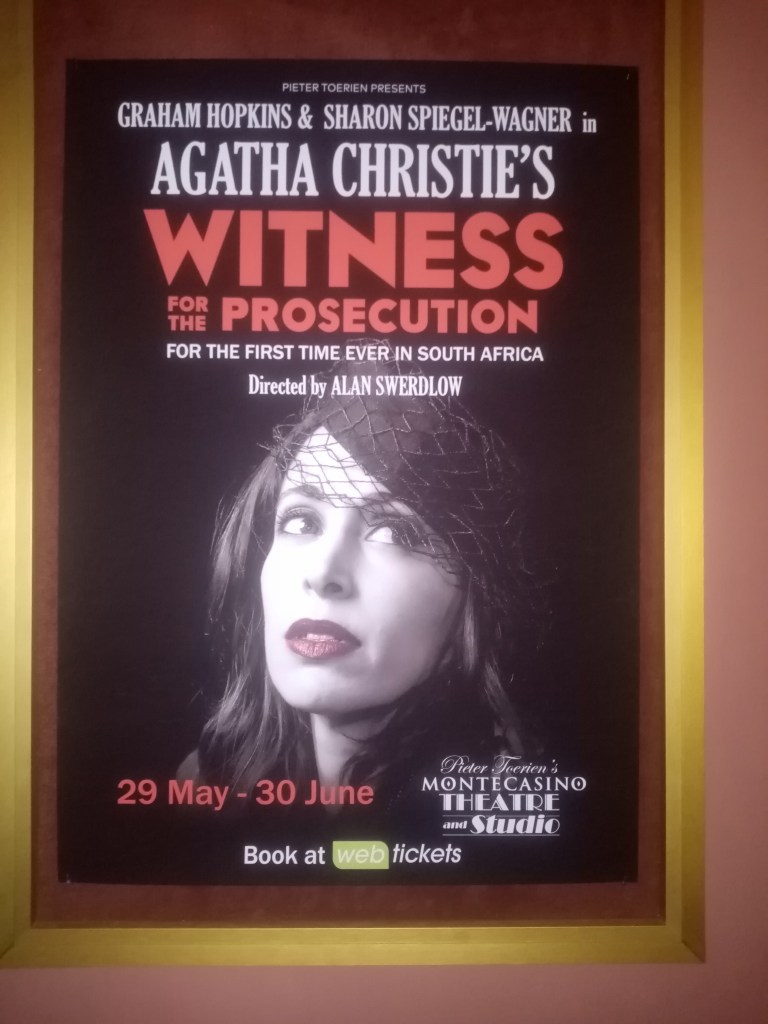
Well, I didn’t expect that, so many twists and turns. I really thought Mr. Vole was innocent, I thought he was set up for sure. He pleaded his case with defiance. There’s no ways he could have murdered Mrs. French in cold blood, she was his friend. So what he inherited all her money and was looking at boats the week before her death. These things happen, besides death comes for all of us. Yes, Mr. Vole is a young handsome man with his whole life ahead, is unemployed and had everything to gain from Mrs. French’s death but it’s lazy to label him a murderer. He could have been framed. I was suspicious of everyone earlier in the play. Myself and the gentleman sitting next to me were not convinced of the charge brought against Mr. Vole and when his devoted wife Romaine, was called up as a witness for the prosecution, the alarm bells rang louder. The beautiful foreign girl lied to the jury and was a poor alibi. Instead of helping her husband, she made things worse! She fabricated details whilst his husband was protesting. I felt sorry for Mr. Vole, he vehemently protested his innocence, he was sweating, he was lively, active, on his feet, letting the jury know that he did not kill Mrs. French. That’s when I knew that he was innocent and that it was his wife Romaine who had murdered Mrs. French, the gentleman next to me concurred. Romaine played by the super talented Sharon Spiegel-Wagner is clearly a femme fatale, she oozes sexuality, is dressed in red and when we are first introduced to her, smoke is released from the stage and she makes her grand entrance, music in the background and she takes her sweet time walking. She’s a siren, a real work of art, it’s easy to see why “Leonard kisses the ground she walks on”. She strikes me as the murderer because of the fact that she’s a foreigner and her dubious character. It’s also revealed that she is not even married to Mr. Vole, she’s actually a Helm, still married to her husband living in Belgium. I disliked Romaine more and more as the play went on, a big cognitive dissonance. Sir. Wilfrid played by Graham Hopkins and his junior counsel John Mayhew played by Craig Jackson work exceedingly hard to prove Mr. Voles innocence. They succeed as the jury deliver their verdict – NOT GUILTY! But there’s a twist, it turns out he was guilty and his wife knew, she protected him and fabricated evidence to get him out of the hook earning charges of perjury in the process. That’s not all, it turns out Mr. Vole has a blonde mistress she was planning to elope with, leaving Romaine behind. In a heated exchanged, Romaine stabs and kills his husband. All this happens while still in court with Sir. Wilfrid and his assistant watching in the distance. So in addition to her perjury charge, Romaine will also be trialed for the murder of her husband Leonard Vole.

Unbelievable show! I didn’t know where to look, what to expect. Shocking! Thriller! Drama! Suspense! Agatha Christie is a master, great show. Respect to Graham Hopkins, a true legend, his acting was a masterclass, how he delivers his words, the accent, his posture, mannerisms and stature, it was his show, everything revolved around him, he killed it! Shout-out Peter Terry who plays Mr. Justice Wainwright and Mike Huff as Mr. Myers.

I thought the show had Dostoevsky’s “Crime and Punishment” influence. It’s centers around the same topics, murder and human nature. It’s clear I don’t have a clear understanding of both, I thought Mr. Vole was innocent despite the overwhelming evidence against him. Dostoevsky’s character Raskolnikov, doesn’t murder to inherit a fortune, he murders in cold blood because he is vile, ugly and because he can. He murders because he is in a position of power over the elderly woman, because he doesn’t see the use of the elderly woman living, because God won’t stop him. Dostoevsky documents Raskolnikov’s psyche, he is in a mess, he is haunted, he can’t sleep, he loses weight, he is sick, he is overwhelmed with guilt – the magistrate in charge of murders and equipped with a shrewd understanding of criminal psychology sees all of this, he torments him with his appearance, questions, he sees right through him. Ultimately Raskolnikov confesses and hands himself over. Leonard Vole didn’t exhibit all of this behavior, could he be a sociopath? Stories like this teach you a lot about human nature, it’s interesting to contrast them. “Witness For The Prosecution” is a thought-provoking show that depicts how absurd the human condition is, Albert Camus would be so proud.

I am not going to act like Sharon Spiegel-Wagner isn’t my Achilles heel, she’s the best and she delivered yet again. If I had my way, I’d see her every day. She’s an incredible, amazing, beautiful, talented woman and the show is exhibit A. She performs at a high level and everyone shines. Graham Hopkins and Craig Jackson are the pulse, they hold the show together, some of the shows best dialogue comes from them, they have amazing chemistry and synergy. Greta, played by Dianne Simpson was one of my favorite characters, she was amazing and funny. Brett Kruger as Leonard Vole is excellent. The show was well-written, the performers were amazing and the direction and lighting perfect. The lighting and smoke was pretty awesome! It’s an experience, I felt like I was in that courtroom. I loved that the set was not fixed, it kept on changing, that was appealing to my eyes and it helped with the mood that the director tried to evoke and convey. Some actors committed to double shifts, playing more than one character, wow, the mastery you have to achieve to do that, unbelievable craftsmanship. Congratulations to Alan Swerdlow and the whole team for a great, great show and a deserved standing ovation!

antakalipa – Witness For The Prosecution