Midnight In Parys

Midnight in Parys: A Meditation on Life, Death, Compassion and the Human Heart

There are evenings in the theatre that entertain. There are evenings that impress. And then there are evenings that stay with you long after the curtain call, following you home, lingering in your thoughts, demanding reflection and conversation.

Midnight in Parys, the latest play by South African theatrical giant Paul Slabolepszy, belongs firmly in that final category.

Presented at the intimate Studio Theatre of Pieter Toerien’s Montecasino Theatre complex and directed with precision and sensitivity by Bobby Heaney, this production is a triumph of writing, performance and humanity. Starring Bianca Amato and Paul Slabolepszy himself, Midnight in Parys is at once thoughtful, witty, heartbreaking and profoundly compassionate. It is a play that refuses easy answers while offering something perhaps even more valuable: understanding.

For those fortunate enough to have attended the opening performance, the experience felt less like watching a play and more like being invited into the private lives of two deeply complex individuals whose stories slowly unfold before us.

And what stories they are.

The Master at Work

Paul Slabolepszy occupies rare territory within South African theatre.

Over decades he has built a body of work distinguished not by spectacle or gimmickry but by his unwavering commitment to character. His greatest gift as a playwright has always been his ability to write people rather than archetypes.

His characters breathe.

They contradict themselves.

They make mistakes.

They carry wounds.

They reveal truths accidentally.

They hide behind humour.

They speak the language of real human beings.

In Midnight in Parys, Slabolepszy demonstrates once again why he stands among the most important playwrights South Africa has ever produced. The play’s dialogue is rich with wit, observation and emotional intelligence. Every revelation feels earned. Every conversation feels authentic.

The script trusts its audience.

Rather than overwhelming viewers with exposition, it allows relationships to develop organically. We spend time with the characters. We learn who they are. We begin to understand what motivates them. Then, just when we believe we have figured them out, new revelations emerge that reshape everything we thought we knew.

This is writing of the highest order.

Not because it is flashy.

Because it is honest.

“Thabiso” – A Personal Beginning

The evening began with a moment that immediately established a unique connection.

Early in the performance, the name “Thabiso” is mentioned and explored.

“It means joy.”

For me, that moment landed with unexpected force.

I am Thabiso.

To hear my own name spoken from the stage, and to hear its meaning acknowledged, created an instant bond with the work. It felt personal. It felt intimate.

I was overjoyed.

I was smiling before the story had even properly begun.

And from that moment forward I was completely invested.

Theatre possesses a unique ability to make audiences feel seen. Sometimes this happens through grand themes. Sometimes it happens through a single word.

That brief moment reminded me why live performance remains so powerful.

The stage reached out and shook hands with my own life.

I was hooked from the very beginning.

The Characters: Strangers Who Become Family

One of the production’s greatest achievements lies in its patient construction of character.

As audience members, we do not merely observe these individuals.

We come to know them.

The play grants us access to their fears, regrets, humour and vulnerabilities. Through carefully structured conversations and revelations, layers are peeled away until the audience finds itself emotionally invested in every decision and every confession.

The brilliance of the script lies in the fact that neither character exists simply to advance a plot.

Instead, the plot emerges from who they are.

Their histories matter.

Their choices matter.

Their emotional scars matter.

Their hopes matter.

As the evening progresses, the audience moves closer and closer to them until certain revelations provoke genuine gasps. Not because the twists are sensational, but because they carry emotional weight.

We care.

And because we care, the discoveries hit harder.

Exploring Euthanasia, Dignity and Moral Complexity

At its heart, Midnight in Parys grapples with profound questions.

Among the most significant is euthanasia and the difficult moral territory surrounding end-of-life decisions.

These are not simple issues.

Nor does the play pretend that they are.

Instead, Slabolepszy approaches the subject with remarkable empathy and intelligence. The script explores the tension between suffering and dignity, autonomy and responsibility, compassion and consequence.

It asks difficult questions.

Who gets to decide when suffering has become unbearable?

What does mercy truly mean?

Can helping someone die ever be an act of love?

Where do morality and compassion intersect?

The play offers no simplistic verdict.

Instead, it trusts audiences to wrestle with these questions themselves.

That trust is one of the work’s greatest strengths.

Self-Defence, Survival and Human Choice

The production also explores the concept of self-defence and the circumstances that push ordinary people toward extraordinary actions.

Again, Slabolepszy avoids easy judgement.

His characters are not symbols in an argument.

They are human beings confronting impossible situations.

The audience is invited to consider how individuals respond when placed under pressure and what choices become possible when survival is at stake.

The result is a work that feels deeply humane.

Rather than asking viewers to condemn or excuse, it asks them to understand.

Bianca Amato: A Performance of Extraordinary Depth

Having previously witnessed Bianca Amato in A Doll’s House, Part 2, I arrived with high expectations.

She exceeded them.

Amato delivers a performance of remarkable intelligence and emotional precision. Every line feels considered. Every silence carries meaning. Every gesture reveals character.

She possesses that rare ability to command attention without demanding it.

Her performance unfolds gradually, allowing emotional truths to emerge naturally rather than being forced upon the audience.

As revelations accumulate, she navigates the shifting emotional landscape with extraordinary confidence.

There is tremendous technical skill on display, but what audiences ultimately remember is the humanity.

The character feels real.

Completely real.

And that is perhaps the highest compliment one can offer an actor.

Paul Slabolepszy: The Playwright as Performer

Seeing Paul Slabolepszy perform his own work is a special experience.

The words carry an additional resonance because they originate from the very person speaking them.

Yet what makes his performance memorable is not the novelty of the playwright appearing on stage.

It is the quality of the acting itself.

Slabolepszy brings warmth, vulnerability, humour and emotional authenticity to the role. Decades of theatrical experience are evident in every moment.

His command of timing is masterful.

His understanding of silence is impeccable.

His ability to move between comedy and pathos feels effortless.

This was my first opportunity to watch him perform live.

It was an honour.

It was a privilege.

And it offered a powerful reminder that great playwrights often possess a profound understanding of performance because they understand people.

Bobby Heaney’s Direction

A script this rich requires direction that understands restraint.

Bobby Heaney provides exactly that.

His work never overshadows the material.

Instead, it elevates it.

The pacing allows tension to build naturally. Emotional moments are given room to breathe. Revelations land with impact because the production understands the value of patience.

The direction trusts both the actors and the audience.

In an age where many productions fear stillness, Heaney embraces it.

The result is a production that feels confident, mature and deeply engaging.

The Set: Intimacy as Strength

The Studio Theatre at Pieter Toerien proves the perfect home for this production.

The intimate environment creates a sense of closeness rarely achievable in larger venues.

There is nowhere to hide.

Not for the actors.

Not for the audience.

Every expression becomes visible.

Every shift in emotion becomes meaningful.

Every silence becomes palpable.

The set design complements this intimacy beautifully.

Rather than distracting from the story, it serves it. The environment feels lived in, believable and emotionally resonant.

The audience is not simply watching a location.

They are inhabiting it alongside the characters.

Lighting and Atmosphere

The lighting design deserves special praise.

Subtle and purposeful, it shapes mood without drawing attention to itself.

Changes in tone and emotional temperature are reflected through carefully considered lighting choices that guide the audience’s experience almost subconsciously.

The result is an atmosphere that feels immersive and emotionally textured.

Combined with the intimacy of the venue, the lighting helps create a world that feels simultaneously theatrical and deeply real.

A Play That Understands Humanity

Perhaps the greatest achievement of Midnight in Parys is its empathy.

The play understands people.

It understands loneliness.

It understands fear.

It understands regret.

It understands compassion.

Most importantly, it understands that human beings are rarely simple.

The work does not divide the world into heroes and villains.

Instead, it presents flawed individuals doing their best within circumstances that are often messy and painful.

There is healing in that perspective.

There is comfort in being reminded that complexity is part of being human.

The play feels.

The play listens.

The play understands.

And in understanding its characters, it understands its audience as well.

A Night to Remember

The opening performance of Midnight in Parys was more than an evening of theatre.

It was an encounter with great writing.

Great acting.

Great direction.

And great humanity.

It reminded me why Paul Slabolepszy remains one of South Africa’s theatrical immortals.

It confirmed Bianca Amato’s place among the country’s finest performers.

It showcased Bobby Heaney’s skill as a director of intelligence and restraint.

Most importantly, it demonstrated the enduring power of theatre to bring strangers together and allow them, for a few precious hours, to share in the emotional lives of others.

I attended the performance with SamSays, whose name fittingly appears in the credits, and together we witnessed something special.

Not merely a play.

An experience.

One of the finest days I have spent in a theatre.

A production that challenged, moved and inspired.

A production that left me thinking long after the final bow.

A production that reminded me exactly why we keep coming back to the theatre.

Because sometimes, in a darkened room, surrounded by strangers, we find pieces of ourselves reflected back from the stage.

And when that happens, theatre becomes something more than entertainment.

It becomes joy.

It becomes understanding.

It becomes healing.

It becomes unforgettable.

Congratulations Bobby Heaney for a great show and a deserved standing ovation.

📸 : SamSays 

Midnight In Parys

Midnight in Parys: A Meditation on Life, Death, Compassion and the Human Heart

There are evenings in the theatre that entertain. There are evenings that impress. And then there are evenings that stay with you long after the curtain call, following you home, lingering in your thoughts, demanding reflection and conversation.

Midnight in Parys, the latest play by South African theatrical giant Paul Slabolepszy, belongs firmly in that final category.

Presented at the intimate Studio Theatre of Pieter Toerien’s Montecasino Theatre complex and directed with precision and sensitivity by Bobby Heaney, this production is a triumph of writing, performance and humanity. Starring Bianca Amato and Paul Slabolepszy himself, Midnight in Parys is at once thoughtful, witty, heartbreaking and profoundly compassionate. It is a play that refuses easy answers while offering something perhaps even more valuable: understanding.

For those fortunate enough to have attended the opening performance, the experience felt less like watching a play and more like being invited into the private lives of two deeply complex individuals whose stories slowly unfold before us.

And what stories they are.

The Master at Work

Paul Slabolepszy occupies rare territory within South African theatre.

Over decades he has built a body of work distinguished not by spectacle or gimmickry but by his unwavering commitment to character. His greatest gift as a playwright has always been his ability to write people rather than archetypes.

His characters breathe.

They contradict themselves.

They make mistakes.

They carry wounds.

They reveal truths accidentally.

They hide behind humour.

They speak the language of real human beings.

In Midnight in Parys, Slabolepszy demonstrates once again why he stands among the most important playwrights South Africa has ever produced. The play’s dialogue is rich with wit, observation and emotional intelligence. Every revelation feels earned. Every conversation feels authentic.

The script trusts its audience.

Rather than overwhelming viewers with exposition, it allows relationships to develop organically. We spend time with the characters. We learn who they are. We begin to understand what motivates them. Then, just when we believe we have figured them out, new revelations emerge that reshape everything we thought we knew.

This is writing of the highest order.

Not because it is flashy.

Because it is honest.

“Thabiso” – A Personal Beginning

The evening began with a moment that immediately established a unique connection.

Early in the performance, the name “Thabiso” is mentioned and explored.

“It means joy.”

For me, that moment landed with unexpected force.

I am Thabiso.

To hear my own name spoken from the stage, and to hear its meaning acknowledged, created an instant bond with the work. It felt personal. It felt intimate.

I was overjoyed.

I was smiling before the story had even properly begun.

And from that moment forward I was completely invested.

Theatre possesses a unique ability to make audiences feel seen. Sometimes this happens through grand themes. Sometimes it happens through a single word.

That brief moment reminded me why live performance remains so powerful.

The stage reached out and shook hands with my own life.

I was hooked from the very beginning.

The Characters: Strangers Who Become Family

One of the production’s greatest achievements lies in its patient construction of character.

As audience members, we do not merely observe these individuals.

We come to know them.

The play grants us access to their fears, regrets, humour and vulnerabilities. Through carefully structured conversations and revelations, layers are peeled away until the audience finds itself emotionally invested in every decision and every confession.

The brilliance of the script lies in the fact that neither character exists simply to advance a plot.

Instead, the plot emerges from who they are.

Their histories matter.

Their choices matter.

Their emotional scars matter.

Their hopes matter.

As the evening progresses, the audience moves closer and closer to them until certain revelations provoke genuine gasps. Not because the twists are sensational, but because they carry emotional weight.

We care.

And because we care, the discoveries hit harder.

Exploring Euthanasia, Dignity and Moral Complexity

At its heart, Midnight in Parys grapples with profound questions.

Among the most significant is euthanasia and the difficult moral territory surrounding end-of-life decisions.

These are not simple issues.

Nor does the play pretend that they are.

Instead, Slabolepszy approaches the subject with remarkable empathy and intelligence. The script explores the tension between suffering and dignity, autonomy and responsibility, compassion and consequence.

It asks difficult questions.

Who gets to decide when suffering has become unbearable?

What does mercy truly mean?

Can helping someone die ever be an act of love?

Where do morality and compassion intersect?

The play offers no simplistic verdict.

Instead, it trusts audiences to wrestle with these questions themselves.

That trust is one of the work’s greatest strengths.

Self-Defence, Survival and Human Choice

The production also explores the concept of self-defence and the circumstances that push ordinary people toward extraordinary actions.

Again, Slabolepszy avoids easy judgement.

His characters are not symbols in an argument.

They are human beings confronting impossible situations.

The audience is invited to consider how individuals respond when placed under pressure and what choices become possible when survival is at stake.

The result is a work that feels deeply humane.

Rather than asking viewers to condemn or excuse, it asks them to understand.

Bianca Amato: A Performance of Extraordinary Depth

Having previously witnessed Bianca Amato in A Doll’s House, Part 2, I arrived with high expectations.

She exceeded them.

Amato delivers a performance of remarkable intelligence and emotional precision. Every line feels considered. Every silence carries meaning. Every gesture reveals character.

She possesses that rare ability to command attention without demanding it.

Her performance unfolds gradually, allowing emotional truths to emerge naturally rather than being forced upon the audience.

As revelations accumulate, she navigates the shifting emotional landscape with extraordinary confidence.

There is tremendous technical skill on display, but what audiences ultimately remember is the humanity.

The character feels real.

Completely real.

And that is perhaps the highest compliment one can offer an actor.

Paul Slabolepszy: The Playwright as Performer

Seeing Paul Slabolepszy perform his own work is a special experience.

The words carry an additional resonance because they originate from the very person speaking them.

Yet what makes his performance memorable is not the novelty of the playwright appearing on stage.

It is the quality of the acting itself.

Slabolepszy brings warmth, vulnerability, humour and emotional authenticity to the role. Decades of theatrical experience are evident in every moment.

His command of timing is masterful.

His understanding of silence is impeccable.

His ability to move between comedy and pathos feels effortless.

This was my first opportunity to watch him perform live.

It was an honour.

It was a privilege.

And it offered a powerful reminder that great playwrights often possess a profound understanding of performance because they understand people.

Bobby Heaney’s Direction

A script this rich requires direction that understands restraint.

Bobby Heaney provides exactly that.

His work never overshadows the material.

Instead, it elevates it.

The pacing allows tension to build naturally. Emotional moments are given room to breathe. Revelations land with impact because the production understands the value of patience.

The direction trusts both the actors and the audience.

In an age where many productions fear stillness, Heaney embraces it.

The result is a production that feels confident, mature and deeply engaging.

The Set: Intimacy as Strength

The Studio Theatre at Pieter Toerien proves the perfect home for this production.

The intimate environment creates a sense of closeness rarely achievable in larger venues.

There is nowhere to hide.

Not for the actors.

Not for the audience.

Every expression becomes visible.

Every shift in emotion becomes meaningful.

Every silence becomes palpable.

The set design complements this intimacy beautifully.

Rather than distracting from the story, it serves it. The environment feels lived in, believable and emotionally resonant.

The audience is not simply watching a location.

They are inhabiting it alongside the characters.

Lighting and Atmosphere

The lighting design deserves special praise.

Subtle and purposeful, it shapes mood without drawing attention to itself.

Changes in tone and emotional temperature are reflected through carefully considered lighting choices that guide the audience’s experience almost subconsciously.

The result is an atmosphere that feels immersive and emotionally textured.

Combined with the intimacy of the venue, the lighting helps create a world that feels simultaneously theatrical and deeply real.

A Play That Understands Humanity

Perhaps the greatest achievement of Midnight in Parys is its empathy.

The play understands people.

It understands loneliness.

It understands fear.

It understands regret.

It understands compassion.

Most importantly, it understands that human beings are rarely simple.

The work does not divide the world into heroes and villains.

Instead, it presents flawed individuals doing their best within circumstances that are often messy and painful.

There is healing in that perspective.

There is comfort in being reminded that complexity is part of being human.

The play feels.

The play listens.

The play understands.

And in understanding its characters, it understands its audience as well.

A Night to Remember

The opening performance of Midnight in Parys was more than an evening of theatre.

It was an encounter with great writing.

Great acting.

Great direction.

And great humanity.

It reminded me why Paul Slabolepszy remains one of South Africa’s theatrical immortals.

It confirmed Bianca Amato’s place among the country’s finest performers.

It showcased Bobby Heaney’s skill as a director of intelligence and restraint.

Most importantly, it demonstrated the enduring power of theatre to bring strangers together and allow them, for a few precious hours, to share in the emotional lives of others.

I attended the performance with SamSays, whose name fittingly appears in the credits, and together we witnessed something special.

Not merely a play.

An experience.

One of the finest days I have spent in a theatre.

A production that challenged, moved and inspired.

A production that left me thinking long after the final bow.

A production that reminded me exactly why we keep coming back to the theatre.

Because sometimes, in a darkened room, surrounded by strangers, we find pieces of ourselves reflected back from the stage.

And when that happens, theatre becomes something more than entertainment.

It becomes joy.

It becomes understanding.

It becomes healing.

It becomes unforgettable.

Congratulations Bobby Heaney for a great show and a deserved standing ovation.

📸 : SamSays 
My favorite Broadway

Jonathan Roxmouth

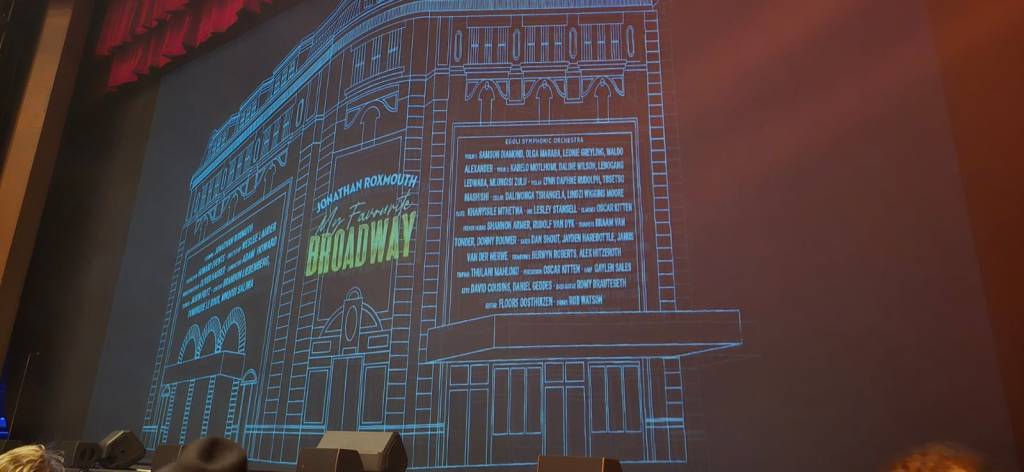
At the Teatro for the Jonathan Roxmouth My favorite Broadway show. Seats so good, you stay seated when someone ahead of you is on their feet. Literally eyeball-to-eyeball with Jonathan and you can see the Maestro’s shoes. Thank you Belinda Howard and as always SamSays on the credits.

Charisma, presence, composure, calm, warmth are adjectives to describe Roxmouth. He keeps you engaged, he is captivating and the delivery masterful. Last time I was at the Teatro, I was watching “Swinging Las Vegas” – high octane show with hits galore! Came back for the Maestro and Jonathan Roxmouth for new memories. It’s ridiculous how good Jonathan is, he commands the stage, has comedic timing and spellbinding on the mic. Songs about love and a couple of ABBA classics – thank you for the music! He sings with passion, love and attention for his craft. You are at his mercy, the world stops for him. His voice melts on the pan like butter. It is soothing like a lullaby and keeps you awake like Redbull – energizing, you can listen to him the whole day. You get lost in his voice, he has the capability of making you daydream but you are lucid so you applaud after the song.

Roxmouth is joined by Maestro Adam Howard and the Egoli Symphonic Orchestra who are too great to encapsulate with words. I need to update my music vocabulary and acclimatize myself to the jargon, then maybe I’ll have a better chance of expressing myself. Then again, you play music, it was never meant to be serious. The stage has the Egoli Symphonic Orchestra concentrated in the middle and they spread to the sides. Behind the Orchestra are screens, one in the middle and one on either side. The screens provide a backdrop and themes of the songs performed. Jonathan Roxmouth changes costumes three times, different colored suits with sequins. The part where he tap-dances with the other Jonathan’s on the screen is awesome, humorous, I enjoyed that there was female representation, perfect choreography and completely in sync. Maestro Adam Howard expertly leads procedures. He is in charge, present, perfect, there is no show without him. I am with Momo, he has Maestro Adam Howard by his side, but I do recognize Kabza’s greatness.

Great show, a privilege to behold Roxmouth’s mastery on the stage. Chicago is up next!

Congratulations Jonathan Roxmouth and the whole team for a great show and a deserved standing ovation.

📷: Crowther Fourie

📷: Elena Samuels

Bitter Winter

Bitter Winter

The tedium of going to castings, you risk it all and gain nothing for your efforts, you saw people who are just like you in the waiting room, some even prettier than you, willing to do the same job, what’s done is done. The casting director lady has seen it all, the frizzling enthusiasm of youth vanish. First couple of months, you had the spirit, but lately you just coming in to mark the register, until you win or lose hope. You thought you did your best and that you’d get the part, so you wait and wait for a call that never comes. Indifference, it’s like you don’t exist. Agitated and flooding with anxiety, you offered to shoot the scene again but were met with “No thanks, that’s not necessary, we have everything we need”. There’s nothing you can do, it’s not in your hands. They decided against you the moment you left the room, meanwhile you’re living in hope, painting dreams in your mind that never come to fruition. Broke. A nobody. That call back is everything, you get another chance, the chance to meet the director, this could be it.

I was at the Pieter Toerien Theatre for the opening of the Paul Slabolepszy’s, play “Bitter Winter”. Amazing play, brilliant in it’s execution. I was with SamSays, we were in B3 and B4 – at the very front. Thank you Collett Dawson for the weekend. Alan Committee was super great the day before with his show “Olympic Gold”. He is up on the podium with a Gold medal with that performance: incredible delivery, quick witted, energetic, on his feet, interactive, very humorous and just a straight-up banger! Comedians are the cleverest people, providing social commentary, reflecting reality in a humorous undertone and helping us mould our human existence in an environment where everything goes, I was laughing throughout, it takes a lot of hard work and mastery to be Alan Committee, he makes it look so easy, so effortless, the show is just pure comedy gold.

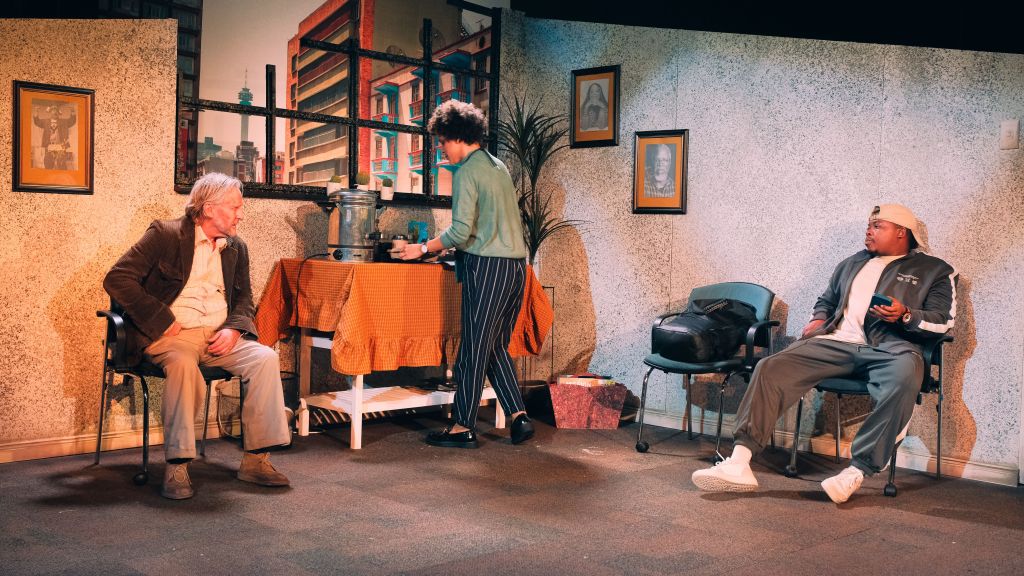
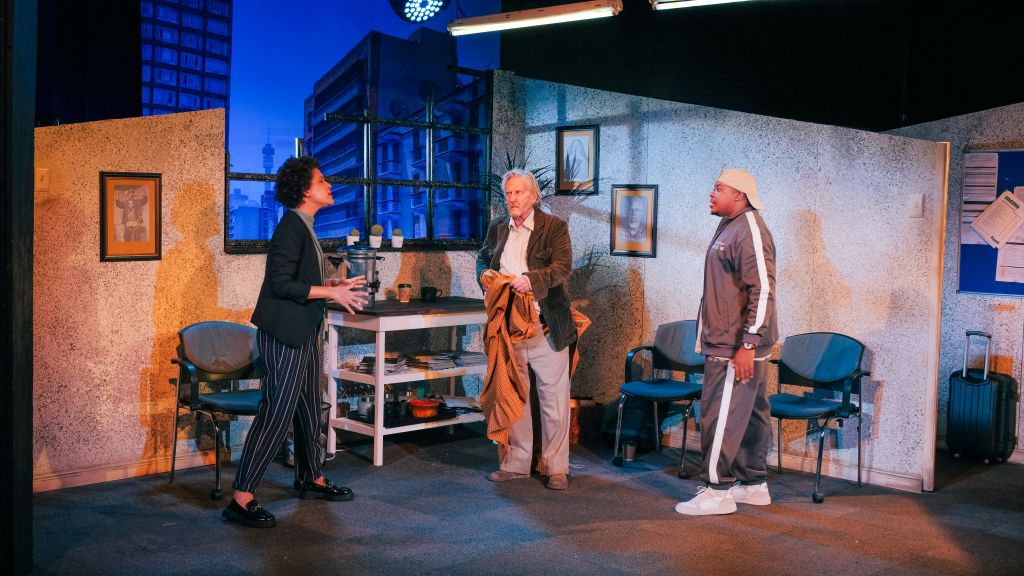
The play is set in a Casting directors office, call back, two guys are cast, old has been guy, with present guy. Present guy is angry and hostile at first, his character arc progresses and he opens up to the old has been guy, that’s when he starts being open with us, the audience, music on his headphones is off and put away. He walks in the scene avoident and closed off, secluded, trapped on his phone, listening to music on his phone – Kendrick Lamar “Money Trees”. Present guy is cast as the main guy, the old man is led into believing that he is cast for the role, only to reveal in the last minute that he is not cast. Someone from overseas filled the role. The play has a lot of heart. It is beaufully craft, perfect in a way that only art can be, excuted by performers who love what they do – the performers were extraordinary, performing with purpose, being in the moment, embodying the craft. The show has personality and quirks, it is relatable and humorous. As the play progressed we learned about the protagonists lives, their families, their past, we became invested. The set was office-like, backdrop, Jozi. Andre Odendaal plays Jean-Louis Lourens, the old has been guy. Oarabile Ditsele plays Prosper Mangane, the present guy. Chantal Stanfield plays Felicia Willemse, the casting director lady. The play is just brilliant. Congratulations Lesedi Job and the whole team and a deserved standing ovation.

Sharon Spiegel-Wagner

Sharon Spiegel-Wagner

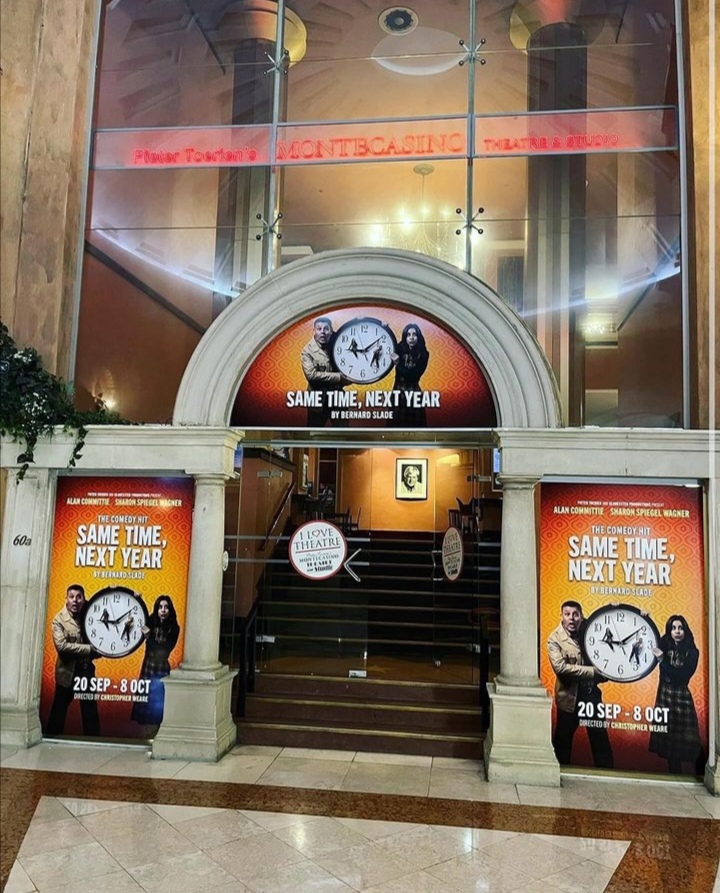
Sharon has been practicing her art for more than 30 years. She’s an absolute master at her craft, an elite storyteller, a walking skyscraper. She is the craft, she is content, she is theatre. When you see her on the stage, there is no doubt you are witnessing greatness. Her talent is extraordinary. She is amazing. She’s literally the Beyonce of her craft, she’s been doing this ever since she was a child. There’s no ways you are beating Beyonce at being Beyonce. Hell no you beating Sharon! She’s a natural, everything comes easy to her. You can see the happiness in her eyes when she’s on the stage. She lights up, she becomes bigger than life. When you are in her presence, you feel the literal hand of God blessing you because you are amongst one of his mythical creatures. I’ll admit, I love Sharon but who wouldn’t/doesn’t? Yes, Amy Winehouse was a big factor because when I heard Sharon sing for the first time, she was singing “Back to Black” and I was mesmerized. Amy was alive again and she lived in Sharon so I did the most logical thing, I projected onto her. The verdict? Excellent! Sharon is a star and unlike Amy, she doesn’t have destructive tendencies. I love you Amy but Sharon will takeover. There’s also the minor case, have you seen Sharon Spiegel-Wagner upclose and in real life? T.V and the internet are cool but they don’t reflect her nuances and subtleties, this woman is beautiful beyond comprehension, you feel nervous when you are in her presence, she looks better in real life. No one can blame me for being in love with Sharon because everyone is already in love with her. I would do anything for Sharon. Man, she’s so cool, I forgot she’s a celebrity, she’s been treating me so good, with respect, attention and love. I was reminded of her star power on the opening day of her show in Montecasino, a full house, everyone esteemed was in attendance, I am talking about famous actors, directors, producers, artists and the upper echelon of society, they all came in to see her and she didn’t disappoint. She got her customary standing ovation after the show. I am amazed with what Sharon can do on the stage, the roles she can play, the different persona’s she can inhabit, how well she can execute different accents, how comedic and witty she is, the cadence in her words, her acting range and she can sing – she is a master! Her mastery comes out in everything she does, she cares! She works hard, is analytical, comes in early to prepare, is consistent and professional. This I witnessed firsthand, her greatness is deliberate. Man, I swear reading Proust changed everything for me cause now I get to appreciate Sharon Spiegel-Wager on the stage. I was blessed this year, I got to be around greatness, I witnessed greatness. Sharon changed everything for me, I can get to my goal, it’s there, I can’t unsee it, I just have to work harder and stay consistent. Warren Buffet had Kay Graham and I have Sharon Spiegel-Wagner, I am not Buffet but I love my chances. She is the best I’ve seen, she’s my scapegoat, she’s the greatest of all time. “Same Time, Next Year” a classic like everything she has done before.