Alice in Wonderland

ALICE IN WONDERLAND — A WONDERLAND OF COLOUR, CHAOS AND THEATRE MAGIC

Janice Honeyman’s Pantomime | Joburg Theatre

Oh, what a wonderful world it is when theatre allows us to be children again!

There is something rather special about pantomime. It is theatrical mischief in its most beautiful form. It is a celebration of imagination, a feast of colour, an invitation to laughter and an opportunity to temporarily abandon the seriousness of everyday life. It is theatre that does not apologise for being extravagant, eccentric, ridiculous or delightfully over the top. And when Janice Honeyman is at the helm, you know you are in very capable hands.

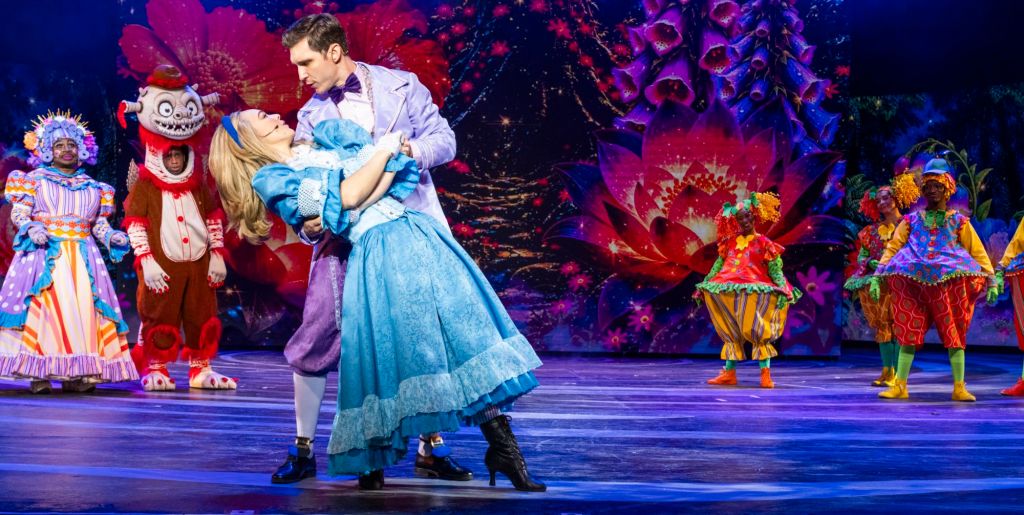
I was at the Joburg Theatre for the opening of Janice Honeyman’s Alice in Wonderland, and ladies and gentlemen, this is the Panto! What an absolute spectacle. Bright colours, infectious enthusiasm, beautiful singing, energetic choreography, eccentric characters, hilarious South African references and an abundance of theatrical imagination. It is everything a pantomime should be and then some.

Written and directed by the legendary Janice Honeyman, this production takes Lewis Carroll’s beloved literary imagination and transforms it into a distinctly South African theatrical experience. Wonderland becomes a playground for creativity, where absolutely anything can happen, where logic takes a holiday and where the audience is invited to surrender to the madness.

And surrender we do!

THE MAGIC OF PANTOMIME: WHEN EVERYONE IS INVITED TO PLAY

Pantomime occupies a rather interesting place in the theatrical landscape. It is a tradition that embraces spectacle, audience participation, comedy, music, exaggerated characters and a wonderful willingness to break the fourth wall. It does not necessarily demand that everything make sense. In fact, the less sense it makes, the more entertaining it can become!

But beneath the silliness lies a remarkable theatrical discipline. It takes an enormous amount of coordination, timing, creativity and performance energy to make something this extravagant appear effortless.

Alice follows the White Rabbit into Wonderland, embarking on an extraordinary adventure populated by peculiar characters, strange encounters and increasingly ridiculous situations. The journey is divided into two acts, taking us from the riverbank and Lewis Carroll’s study, down the rabbit hole and into the Mushroom Forest, before introducing us to the Mad Hatter’s tea party and the Queen’s royal madness.

The second act takes the spectacle even further, with the troublesome Tweedles, the Queen’s Kitsch Chamber, the royal kitchen, the courtroom and the Battle of the Jabberwock. Eventually, we find ourselves back up the rabbit hole, ready for the singalong and a glorious finale.

It is an adventure that moves at an exhilarating pace. There is always something happening, something to look at, someone to laugh at and another surprise waiting around the corner.

THE CAST: A WONDERLAND OF PERSONALITIES

A production of this magnitude needs performers who understand that pantomime requires something rather extraordinary. You cannot simply perform a character; you must inhabit the madness, embrace the exaggeration and give the audience a reason to fall in love with the world you have created.

This cast understands the assignment.

Ashley Scott takes on the central role of Alice, our curious traveller through this extraordinary universe. She provides the audience with an anchor amid the chaos, carrying us through the adventure and allowing us to experience Wonderland through her eyes.

Russel Savadier plays Lewis Carroll, guiding the narrative and introducing us to the world of his imagination. It is a wonderful theatrical device to have the author himself become part of the adventure.

And then there is Desmond Dube!
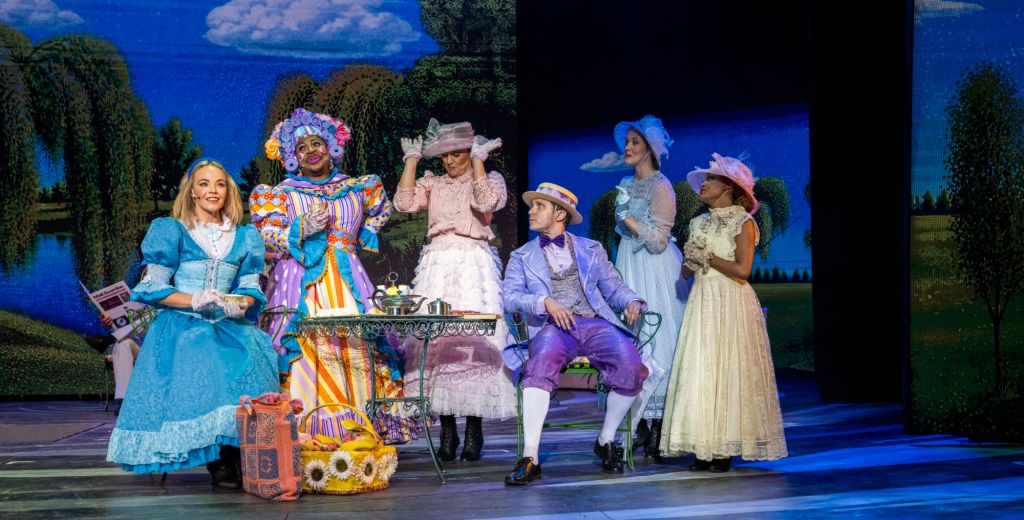
DESMOND DUBE: DAME FANNY FLOPPALOT

Oh, Desmond Dube! What would a Janice Honeyman pantomime be without a Dame?

As Dame Fanny Floppalot, Dube is an absolute delight. The extravagant dresses, colourful costumes, dramatic make-up, flamboyant personality and wonderfully eccentric presentation are essential ingredients of the pantomime experience.

There is something particularly wonderful about watching a performer completely surrender to the ridiculousness of a character. Dube understands the assignment. He embraces the theatrical freedom of the Dame, giving us a character who is colourful, outrageous, humorous and impossible to ignore.

The Dame is one of pantomime’s most cherished traditions. It is a role that allows performers to play with gender presentation, exaggeration, physical comedy and audience expectations. It is deliberately larger than life, and Dube makes the most of every opportunity.

One particularly warm and amusing moment comes when he incorporates a Clientele Life endorsement into the performance. It is South African popular culture finding its way into Wonderland, and the result is wonderfully funny. These are the little moments that make local pantomime so enjoyable. We recognise the references, understand the joke and share in the collective laughter.

Dube is essential. Long may the Dame reign!

Brendan Van Rhyn brings the Queen of Hearts to life, giving us another wonderfully theatrical personality to contend with. The Queen is the embodiment of royal excess, authority and unreasonable demands. In Wonderland, apparently, the simplest disagreement can become a matter of national importance!

Bongi Archi as the White Rabbit is another important presence, setting the adventure in motion. Danny Meaker plays Jack of Hearts, while Lesedi Rich brings the Caterpillar into the mix.

Siya Makakane is the Cheshire Cat, a character whose mysterious and mischievous nature is perfectly suited to the peculiarities of Wonderland.

Charlie Bouguenon takes on the Mad Hatter, one of Carroll’s most recognisable creations. His eccentric world is an invitation to theatrical absurdity, and what would Wonderland be without an absolutely ridiculous tea party?

Noluthando Mathebula plays the Dormouse, while Ntshikeng Matooane appears as the March Hare.

And then we have the Tweedles! Kiruna-Lind Devar as Tweedledum, Zim Mphefu as Tweedledee, Bo Molefe as Tweedleduh and Raymond Skinner as Tweedledof. A wonderful collection of characters adding another layer of madness to this already wonderfully peculiar universe.

Everyone deserves recognition. The ensemble contributes enormously to the production’s energy, filling the stage with movement, personality and enthusiasm. There is no shortage of commitment here. Every performer appears to understand that pantomime is a collective exercise in generosity.
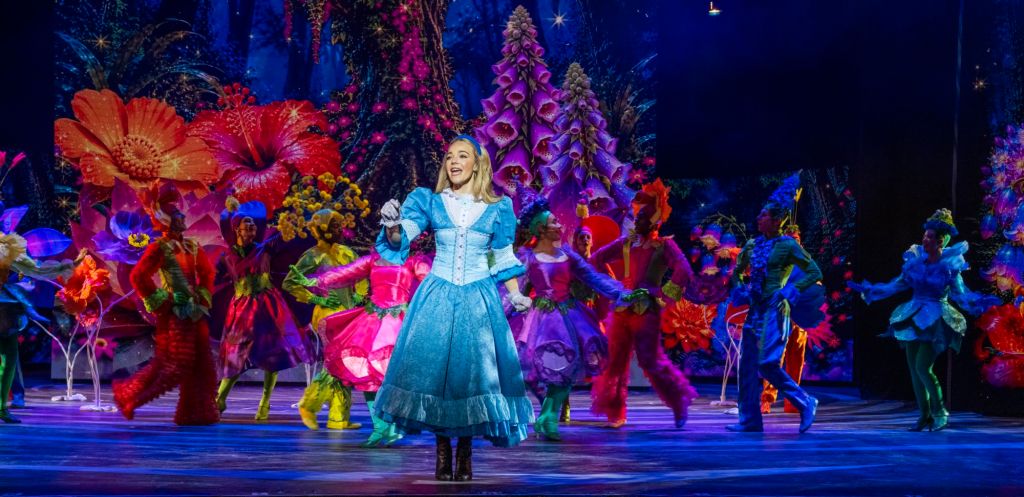
THE VISUAL SPECTACLE: SETS, COSTUMES AND IMAGINATION

If there is one thing that immediately announces itself in this production, it is the visual spectacle.

The sets are a burst of imagination. Wonderland is not simply a backdrop against which actors perform; it is an entire theatrical universe. Strange doors, peculiar spaces, oversized furniture and unexpected objects transform the stage into a world where the impossible becomes perfectly ordinary.

The production plays wonderfully with scale. We encounter enormous tables and enormous chairs, only to be transported into spaces where everything becomes miniature. Alice’s encounters with the mysterious drinks and mushrooms, her shrinking and extraordinary growth, are brought into the theatrical experience through imaginative visual storytelling.

There is even muthi on the table! Alice drinks, changes size and finds herself navigating a world where proportions and expectations have completely abandoned reality.

These are precisely the kinds of theatrical moments that make live performance magical. We know we are watching theatre, but we allow ourselves to believe in the illusion. The imagination does the rest.

The sets are inventive, playful and full of surprises. Enos Ramoroko’s work as set designer and builder deserves particular appreciation. The production’s visual world requires considerable ingenuity, and the physical environment gives the performers an extraordinary playground.

The visual presentation is further elevated by the graphics and audiovisual elements. The graphics are incredible. They add another dimension to the storytelling, creating a constantly changing visual environment that complements the physical sets rather than competing with them.

The AV design and production design are important components of this experience, and the overall visual language is exceptionally effective.
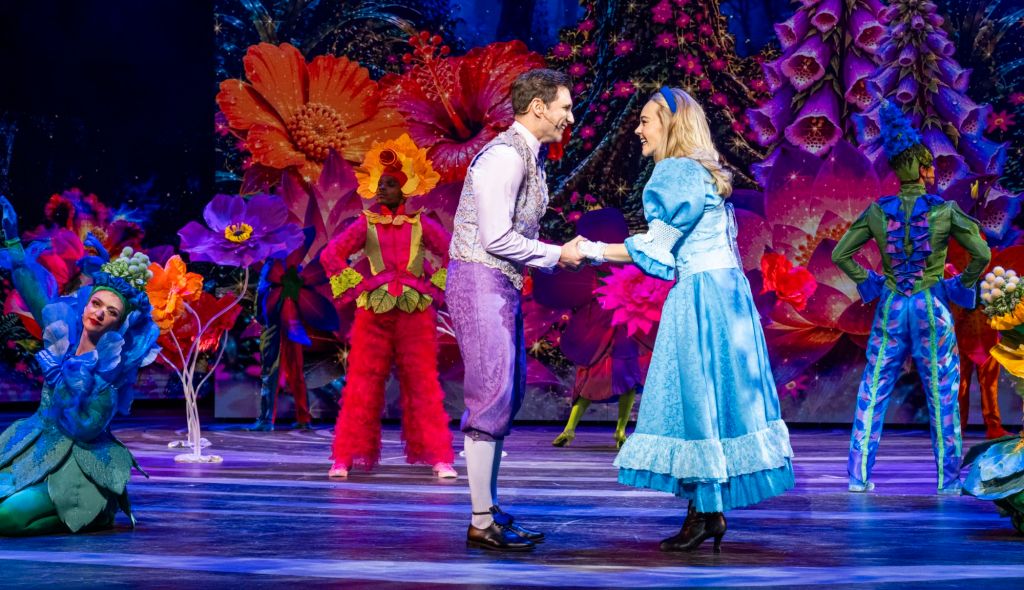
COSTUMES: AN ABSOLUTE FEAST!

Mariska Meyer and the costume department deserve enormous praise.

Absolutely magnificent!

Pantomime is a celebration of exaggeration, and costumes are central to that celebration. These are not ordinary clothes. They are extensions of character, personality, fantasy and theatrical identity.

The colours are vibrant, the designs are extravagant and the visual personalities are wonderfully distinctive. Every character belongs to this peculiar universe, and the costumes help establish that identity before a performer even utters a word.

From the Dame’s flamboyant presentation to the eccentric inhabitants of Wonderland, there is an extraordinary amount of detail and imagination on display.

Costume design in a production like this requires more than making beautiful clothes. It requires an understanding of movement, character, visual storytelling and the demands of a fast-moving stage production. These costumes must work under theatrical lighting, accommodate choreography and communicate clearly to an audience.

Mariska Meyer and her team have delivered something truly special.

The costume department deserves its flowers. A standing ovation!
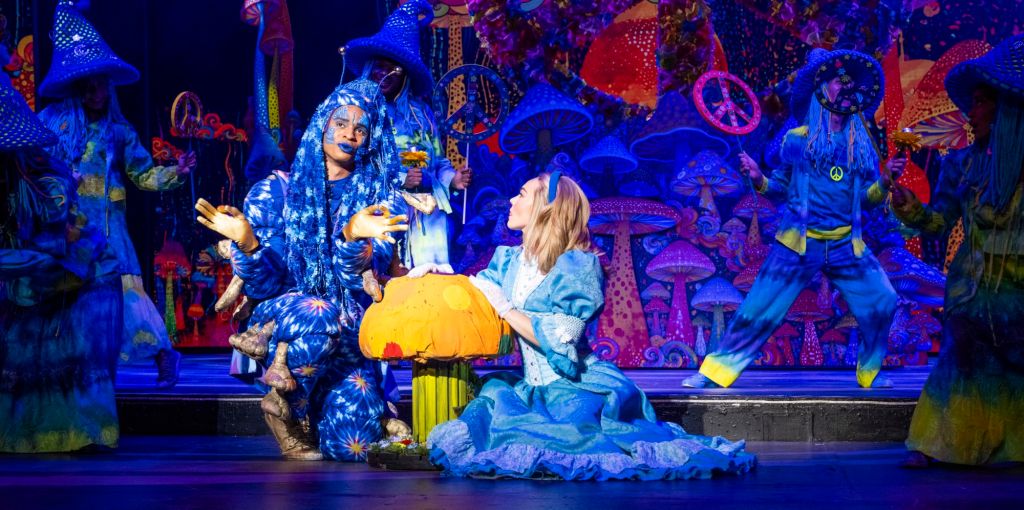
MUSIC, SOUND AND CHOREOGRAPHY: THE HEARTBEAT OF WONDERLAND

There is a tremendous amount of singing and music throughout this production. The energy is infectious, and the musical numbers provide much of the show’s momentum.

The band deserves particular recognition because these musicians hold the show together.

Live music is one of theatre’s greatest gifts. There is something immediate and exciting about watching musicians perform alongside actors and dancers. The music breathes with the production. It responds to the action, supports the storytelling and creates an atmosphere that recorded playback cannot quite replicate.

Dale Ray leads the musical department as Musical Director and first keyboard player, supported by Tshepo Tsotetsi as Assistant Musical Director.

The band comprises:

  • Dale Ray — Musical Director and First Keyboard
  • Tshepo Tsotetsi — Assistant Musical Director
  • Saxola Ketshengane — Second Keyboard
  • Pieter Steyn — Guitar
  • Mthosisi Keith Marisheni — Drums
  • Viwe Mkizwana — Bass

These musicians deserve to be celebrated. Their contribution is fundamental to the production’s rhythm, atmosphere and theatrical excitement.

The sound design by Akhona Bozo is another important achievement. Sound must be clear, balanced and powerful enough to support the music, dialogue and effects without overwhelming the performers. Here, the sound is excellent.

The lighting design by Johan Ferreira adds another layer of visual magic. Wonderland is a world of constant transformation, and lighting helps establish its different moods, spaces and theatrical surprises.

Then there is the choreography by Khaya Ndlovu Mpehle. The movement is energetic, colourful and wonderfully suited to the spirit of pantomime. The performers bring tremendous enthusiasm to the musical sequences, and the choreography helps sustain the production’s infectious momentum.

Every department is working towards the same objective: creating an immersive theatrical experience.

And it shows.

THE CREATIVE TEAM: EVERY DETAIL MATTERS

It is easy to applaud the actors because they are the faces we see on stage. But productions of this scale are built by people whose work often happens away from the spotlight.

The production team deserves recognition:

  • Janice Honeyman — Writer and Director
  • Andrew Timm — Production Designer
  • Adino Trapani — Assistant Production
  • Enos Ramoroko — Set Designer and Builder
  • Akhona Bozo — Sound Designer
  • Johan Ferreira — Lighting Designer
  • Mariska Meyer — Costume Designer
  • Khaya Ndlovu Mpehle — Choreographer

The production design, audiovisual presentation, scenery, costumes, lighting, sound, music and choreography all contribute to the final experience.

Theatre is collaboration. It is an extraordinary meeting of different disciplines, talents and imaginations. When every department understands the vision and executes its responsibilities with such enthusiasm, the audience gets to experience something wonderful.

And this production is a reminder that the magic we see on stage is the result of an enormous amount of work behind it.

JANICE HONEYMAN: THE QUEEN OF SOUTH AFRICAN PANTOMIME

There is a reason Janice Honeyman’s name has become synonymous with South African pantomime.

She understands the tradition, its conventions and, perhaps most importantly, its audience. She understands that pantomime must entertain children while giving adults something to enjoy as well. It must be silly without being careless, extravagant without losing its structure and familiar without becoming predictable.

Her Alice in Wonderland is a celebration of imagination and theatrical freedom.

What I particularly appreciate is the distinctly South African personality of the production. The popular-culture references, the local humour and the little recognisable moments make this Wonderland feel like our own.

It is not simply Lewis Carroll transported onto a South African stage. It is a conversation between a beloved international story and our own cultural identity.

That is the beauty of theatre. We can inherit stories from elsewhere, reinterpret them, make them our own and share them with new generations.

Janice Honeyman continues to protect and celebrate a theatrical tradition that deserves to remain an important part of our cultural calendar.
THE FINAL WORD: THIS IS THE PANTO!

I had a wonderful time at the Joburg Theatre.

The colours, the singing, the costumes, the sets, the graphics, the music, the humour and the sheer enthusiasm of the performers made this a thoroughly enjoyable theatrical experience.

There is something rather beautiful about a production that gives an audience permission to laugh without restraint. To embrace the ridiculous. To enjoy the unexpected. To celebrate imagination without constantly demanding an explanation.

Perhaps that is one of the most important things Alice in Wonderland reminds us: the world does not always have to make sense for us to find beauty in it.

Sometimes we simply need to follow the rabbit.

And what a rabbit hole this is!

Congratulations to Janice Honeyman, Desmond Dube, the entire cast, the musicians, the creative team, the technical departments and everyone who contributed to bringing this spectacular Wonderland to life.

The costumes deserve a standing ovation. The band deserves its flowers. The sets and graphics are magnificent. The performers are full of life. And the production as a whole is a wonderful celebration of theatrical imagination.

Take the children. Take your parents. Take your friends. Take someone who needs a little laughter in their life.

But whatever you do, do not miss this one.

This is the Panto!

Antakalipa — Consciousness of culture.

📸 : enroC photo and video

📸 : antakalipa


PRODUCTION INFORMATION

Production: Janice Honeyman’s Alice in Wonderland
Written and Directed by: Janice Honeyman
Venue: Joburg Theatre — Mandela Theatre, Braamfontein, Johannesburg
Season: 28 October – 24 December 2026
Tickets: R170 – R390 (subject to performance and booking category)
Booking: www.joburgtheatre.com
Genre: Pantomime / Family Theatre

IPerformance dates and times vary. Consult Joburg Theatre’s booking schedule before attending. Parental guidance is advised, as the production includes some adult humour.

Mr Duiker Sang the Blues

Mr. Duiker Sang the Blues: When Grief Takes the Stage

There are performances that entertain you.

There are performances that impress you.

And then there are performances that sit inside you.

They follow you out of the theatre. They occupy the silence of the drive home. They return to you when the lights are off and the world has become quiet enough for you to hear your own thoughts.

Mr. Duiker Sang the Blues is one of those performances.

At the Market Theatre, from 13 September to 4 October 2026, Dyondzo Kwinika’s award-winning short story has found a new life on stage. The work, winner of the inaugural 2025 DALRO Can Themba Merit Award, has been adapted for theatre by Kwinika and Greg Homann, with Homann directing. The production emerges from a literary tradition that places South African storytelling, memory and human complexity at the centre of the theatrical experience.

But describing Mr. Duiker Sang the Blues as simply a play about grief would be to make it smaller than it is.

This is a play about love.

It is about guilt.

It is about fathers and sons.

It is about the things people cannot say while there is still time to say them.

It is about mental health, suffering, masculinity, memory, shame and death.

And perhaps most painfully, it is about what happens when love arrives too late.

The Desmond Dube I Didn’t Know

I grew up watching Desmond Dube on Dube on 2 on SABC 2.

That Desmond Dube was funny.

He was light.

He was mischievous.

He understood the rhythm of a joke and the beautiful simplicity of making people laugh. He became familiar to generations of South Africans as an entertainer who could enter our living rooms and make the heaviness of the world disappear for a little while.

Then I sat in the Market Theatre and watched another Desmond Dube.

This Desmond Dube did not make me laugh.

He made me hurt.

He cried.

He mourned.

He felt.

He collapsed.

He sobbed uncontrollably.

And there was something almost startling about witnessing such a familiar entertainer stripped of the comedic armour through which so many of us had known him.

The actor disappears.

The character remains.

Desmond Dube becomes Ebenezer Duiker, a father carrying an unbearable weight. His performance is not built around grand theatrical declarations. It is built around emotional exposure. The body becomes an instrument of grief. The voice cracks. The face changes. The physicality deteriorates.

This is not the Desmond Dube of the television screen I grew up with.

This is a father who has been broken by loss.

And watching him break was devastating.

A Father, a Son and the Unbearable

At the heart of Mr. Duiker Sang the Blues is a family tragedy.

The story gradually brings us closer to these people until they cease being characters and become people we feel we know.

Ebenezer.

Evelyn.

Maru.

Josh.

The production allows us to understand them before it asks us to mourn them.

That distinction matters.

We are not simply told that something terrible has happened.

We are taken there.

We live inside the memories.

We encounter relationships.

We discover wounds.

We begin to understand the spaces between people.

And then the tragedy arrives with its full weight.

The father who crippled his son.

The son whose suffering becomes inseparable from the suffering of those around him.

The guilt that refuses to die.

The love that survives even when everything else has collapsed.

This is where Kwinika’s writing becomes particularly painful. The story does not make grief abstract. Grief has faces. It has names. It has history.

The people on stage are not symbols pretending to be human.

They are human beings carrying symbols of their own.

And by the time death becomes unavoidable, the audience has become invested.

We knew them.

Therefore, we mourned them.

The Cost of Silence

One of the most affecting elements of the play is its relationship with silence.

There are things that people say.

There are things that people leave unsaid.

And then there are things that become impossible to say because too much time has passed.

Kwinika’s original story was written from a place of guilt, silence and the unbearable, and the stage adaptation retains that emotional centre. The production’s official description similarly positions grief, memory, family and mental health at its core.

The silence in Mr. Duiker Sang the Blues therefore does not feel empty.

It feels occupied.

Occupied by regret.

Occupied by memory.

Occupied by everything that should have been said.

There is an uncomfortable truth buried within the play: sometimes the people closest to us are the people we understand least.

Sometimes love is present but poorly expressed.

Sometimes people hurt the people they love.

Sometimes suffering is hidden behind appearances.

Sometimes the person who appears strong is the person barely surviving.

And sometimes a family only begins to understand the full magnitude of someone’s pain after they are gone.

The Horned Animal

And then there is the animal.

The horned creature standing over the stage and looking into the performance space.

Looking at us.

Watching.

It is impossible not to notice it.

It almost feels divine.

A presence above the human drama.

An observer.

A witness.

God-like.

And yet there is something deeply significant about what this animal represents.

It is not a predator.

It eats grass.

It does not need to consume flesh to survive.

It exists in a completely different relationship with violence than the human beings whose story unfolds beneath its gaze.

That contrast becomes haunting.

Human beings carry violence within themselves.

We wound one another.

We carry resentment.

We punish.

We judge.

We misunderstand.

We destroy things we love.

And above all of this sits the animal.

Watching.

Perhaps the creature becomes a mirror.

Perhaps it becomes God.

Perhaps it becomes nature.

Perhaps it becomes the silent witness that human beings desperately want when their own lives have become too complicated to understand.

Or perhaps its meaning is deliberately left open.

That is the beauty of theatre.

A symbol does not always need to announce its answer.

Sometimes it simply needs to watch.

And the animal watches.

The stage watches.

The audience watches.

And suddenly we become aware that we too are witnesses.

Theatre Without Distance

The intimacy of the production is extraordinary.

The stage is positioned within the audience.

There is no enormous gulf separating performer from spectator.

No comfortable distance.

No great theatrical wall.

The performers are close.

They are almost eyeball to eyeball with us.

And that changes everything.

We are not merely watching these people.

We are in their space.

We are implicated in their pain.

The theatre becomes personal.

The room becomes smaller.

The story becomes closer.

Every breath matters.

Every movement matters.

Every silence becomes louder.

This is theatre stripped of unnecessary distance.

It is theatrical, poetic and deeply personal.

And because the audience is so close, performance becomes incredibly important.

There is nowhere to hide.

The actors cannot disappear behind spectacle.

The emotions have to be truthful.

The performances have to carry the room.

And they do.

Desmond Dube as Ebenezer

Desmond Dube’s Ebenezer is the emotional centre of the production.

His grief is physical.

It lives in his shoulders.

It lives in his voice.

It lives in his face.

It lives in the way his body seems to surrender to the enormity of what has happened.

There are moments when he appears to have no strength left to carry himself.

And then the tears come.

Not cinematic tears.

Not theatrical tears designed to tell the audience, this is the sad part.

These feel like tears from somewhere much deeper.

Dube allows Ebenezer to be ugly in his grief.

And that is important.

Grief is not always beautiful.

Sometimes it is embarrassing.

Sometimes it is violent.

Sometimes it is exhausting.

Sometimes it makes people behave in ways they never imagined possible.

Sometimes grief leaves a person lying on the floor because standing has become too difficult.

Dube gives us that man.

The broken man.

The father.

The human being.

And suddenly the actor I remember from comedy becomes an entirely different theatrical force.

Evelyn, Maru and Josh

Nomathamsanqa Ngoma brings Evelyn into the emotional architecture of the story with sensitivity and presence.

Tankiso Mamabolo’s Maru contributes to the complicated network of relationships through which the story unfolds, while William Harding’s Josh becomes part of the painful emotional landscape that the production gradually reveals.

Together, the four performers create something important: an ensemble.

Nobody exists merely to decorate another person’s story.

Everybody contributes to the emotional history of the room.

That is why the audience becomes invested.

We are not simply waiting for the plot to reach its conclusion.

We are discovering people.

And when you discover people, you become vulnerable to their loss.

Greg Homann and the Architecture of Grief

Greg Homann’s direction understands that this story does not need to be shouted.

The material already carries enormous weight.

The direction therefore allows the emotional power to emerge through proximity, movement, silence, music and performance.

The result is a production that feels intimate rather than excessive.

It trusts the audience.

It allows us to sit with uncomfortable moments.

It allows grief to breathe.

The adaptation by Dyondzo Kwinika and Greg Homann is particularly important because this is a story that began as literature.

The task of taking a short story from the page and placing it inside a room full of living bodies is enormous.

Words must become movement.

Memory must become theatrical action.

Description must become design.

Interior thought must become performance.

And Mr. Duiker Sang the Blues demonstrates what can happen when literature is allowed to become theatre rather than simply being transferred from one medium to another.

The Market Theatre has a long tradition of bringing significant literary works into theatrical form, and this production continues that relationship between South African writing and the stage.

The Poetry of Sound

The blues are not merely in the title.

They are in the atmosphere.

Yogin Sullaphen’s work as Sound Designer, Co-Composer and Musician, alongside Petunia Msani as Co-Composer and Chorus, gives the production an additional emotional language.

Music does not simply accompany the story.

It helps carry it.

There are moments when words cannot adequately express what the characters are experiencing.

Music enters that space.

The sound becomes memory.

The sound becomes mourning.

The sound becomes the emotional pulse underneath the dialogue.

And this is fitting for a story centred on an artist and the psychological price of artistic life.

The official production description calls the work a play-with-music and highlights its live, experimental and narrative-driven musical component.

There is something inherently blues-like about the emotional world of Mr. Duiker Sang the Blues.

The blues understands pain without requiring pain to become spectacle.

It understands longing.

It understands loss.

It understands the human need to turn suffering into sound.

Light, Space and the Living Stage

Thabo Pule’s lighting design deserves particular praise.

In an intimate production such as this, lighting cannot simply illuminate actors.

It has to sculpt emotional space.

It has to determine where our eyes go.

It has to create transitions between memory and presence.

It has to make the stage feel different even when the physical space has barely changed.

And the lighting here contributes enormously to the atmosphere.

Hailey Chisholm’s set design works in harmony with that intimacy.

There is no need for an enormous physical world when the emotional world is already enormous.

The stage becomes a psychological landscape.

Nelisiwe Xaba’s movement direction further expands that language, allowing bodies to communicate things that words cannot.

This is why the production feels poetic.

Its poetry is not only in the dialogue.

It is in the bodies.

The light.

The music.

The silence.

The space.

The gaze of the animal.

The audience sitting close enough to see everything.

Costume as Character

Noluthando “Texture” Lobese’s costume design contributes another layer to the world of the play.

Costume can tell us where people belong.

It can tell us how they see themselves.

It can establish time, identity and social context.

But more importantly, in a character-driven production, costume helps actors inhabit people.

The performers do not simply wear clothes.

They enter another emotional reality.

Every element of the production therefore feels connected.

Nothing exists entirely on its own.

Sound speaks to movement.

Movement speaks to lighting.

Lighting speaks to space.

Costume speaks to character.

And performance brings all of it to life.

Mental Health Without the Mask

Perhaps the most important conversation within Mr. Duiker Sang the Blues is the conversation about mental health.

Especially because artists are often expected to perform happiness.

The world loves the entertainer.

It loves the musician when the musician is on stage.

It loves the actor when the actor is making people laugh.

It loves the artist when the artist gives.

But what happens when the artist is suffering?

What happens when the performer goes home?

What happens when applause disappears?

What happens when the person behind the public image cannot perform anymore?

The production asks difficult questions about the cost of living with inner demons while the outside world expects talent, productivity, charisma and perfection.

The Market Theatre itself describes the play as an exploration of the psychological cost of creative talent and the ways mental-health challenges within the creative community can be hidden beneath performative joy and the pursuit of perfection.

This is an important conversation.

Because the artist is still a person.

The comedian still has sadness.

The musician still has fear.

The actor still has wounds.

The celebrated person still needs love.

And perhaps the most dangerous thing society can do is mistake someone’s ability to entertain us for evidence that they are okay.

The Audience Becomes Family

By the end, something remarkable has happened.

The audience has become emotionally involved.

We have laughed where there was laughter.

We have listened.

We have watched people struggle.

We have witnessed relationships fracture.

We have watched a father carry an almost impossible burden.

And eventually, we mourn.

Not because the production tells us to mourn.

Because it has made us care.

That is the difference between witnessing tragedy and experiencing it theatrically.

The play earns its emotional ending.

It takes us from beginning to end.

It tells us who these people are.

It allows us to understand their relationships.

It reveals the wounds.

It gives us enough time to become invested.

And then it asks us to confront the consequences.

That is storytelling.

When the Blues Become a Language for Grief

There is a reason the title stays with you.

Mr. Duiker Sang the Blues.

The blues are often understood as music born from suffering, but suffering is not the whole story.

The blues is also survival.

It is the transformation of pain into expression.

It is the decision to give suffering a voice.

That is what this production does.

It takes grief and gives it bodies.

It takes guilt and gives it language.

It takes mental anguish and gives it movement.

It takes death and gives it memory.

It takes a short story and gives it a stage.

And perhaps most importantly, it takes people who could easily become statistics in a conversation about mental health and turns them back into human beings.

People with names.

People with histories.

People who loved.

People who failed.

People who suffered.

People who hurt one another.

People who wanted to be understood.

People who deserved more time.

The Legacy of a Story

There is something fitting about Mr. Duiker Sang the Blues arriving at the Market Theatre through the Can Themba legacy.

The DALRO Can Themba Merit Award was created to nurture South African short-story writing and connect literary creation with further opportunities for writers. Kwinika’s story was selected from more than 250 submissions and published in When Water Wants To, before being developed for the stage.

That journey matters.

A story begins on a page.

Then somebody reads it.

Someone believes in it.

An award gives it another life.

A theatre gives it bodies.

Actors give it voices.

Designers give it an environment.

Musicians give it rhythm.

A director gives it shape.

And eventually an audience sits in the dark.

And listens.

This is how culture survives.

This is how stories travel.

This is how one person’s imagination becomes part of the collective memory.

A Must-See

Mr. Duiker Sang the Blues is poetic.

It is intimate.

It is beautifully performed.

It is deeply moving.

It is painful without being gratuitous.

It is theatrical without losing the humanity of its characters.

It is a story about death, but it is ultimately concerned with life: how we love, how we fail, how we suffer, how we remember and how we carry the people we have lost.

Desmond Dube gives us a performance that challenges everything I thought I knew about his range.

Nomathamsanqa Ngoma, Tankiso Mamabolo and William Harding complete an ensemble that gives the story emotional depth and humanity.

Greg Homann’s direction understands the power of intimacy.

Dyondzo Kwinika’s writing gives the production its soul.

Hailey Chisholm, Yogin Sullaphen, Petunia Msani, Noluthando “Texture” Lobese, Nelisiwe Xaba and Thabo Pule build the world around that soul through set, sound, music, costume, movement and light.

And somewhere above them all, that horned animal continues to watch.

It eats grass.

It does not eat flesh.

It watches humanity wrestle with itself.

Perhaps that is God.

Perhaps it is nature.

Perhaps it is memory.

Perhaps it is simply a witness.

But it watches.

And we watch.

And for a little while, inside the intimate darkness of the Market Theatre, four actors become a family, a story becomes a wound, music becomes mourning, and grief becomes theatre.

I walked into Mr. Duiker Sang the Blues expecting a play.

I walked out having mourned people I had never met.

That is the power of theatre.

That is the power of storytelling.

That is the blues.