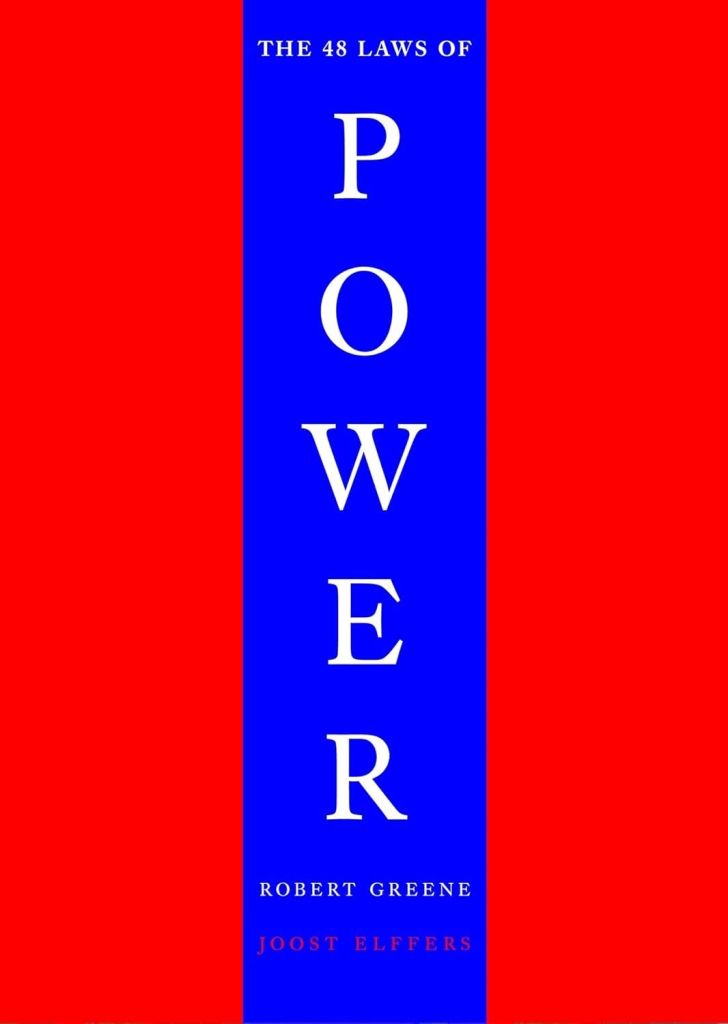
The 48 Laws of Power

The 48 Laws of Power: A Moral Anatomy of Power, Illusion, and Human Nature

Power is one of the last great taboos of moral discourse. We speak endlessly about justice, virtue, and empathy, yet shy away from the raw mechanisms by which influence is gained, maintained, and lost. Robert Greene’s The 48 Laws of Power enters this forbidden territory unapologetically. It does not ask how humans should behave, but how they do behave when status, survival, and dominance are at stake. This distinction explains both the book’s enduring popularity and the moral outrage it provokes.

Greene’s work is not a handbook for villains so much as a mirror held up to civilization. The laws are drawn from courts, empires, revolutions, and corporate boardrooms, revealing power as a theatrical, psychological, and deeply irrational force. Like Machiavelli before him, Greene understands that morality often dissolves under pressure—and that ignorance of power dynamics is itself a form of vulnerability.

The Illusion of Morality in Power Games

The first and perhaps most unsettling lesson Greene offers is this: power does not operate according to moral logic. Law 1—Never outshine the master—immediately contradicts meritocratic ideals. Talent, intelligence, and effort do not guarantee safety. In fact, they may provoke envy and retaliation. This is echoed later in Law 46—Never appear too perfect—a reminder that excellence can be as dangerous as incompetence.

Power thrives on appearances, not truths. Law 5—So much depends on reputation—guard it with your life—underscores how perception precedes reality. A single scandal can undo decades of achievement, while a carefully cultivated myth can sustain authority long after competence fades. Greene repeatedly insists that image is power, a theme reinforced by Law 27—Play on people’s need to believe to create a cult-like following—and Law 34—Be royal in your own fashion: act like a king to be treated like one.

These laws reveal a disturbing insight: humans prefer symbols over substance, confidence over honesty, and certainty over truth.

Power as Psychological Warfare

Many of the laws operate less on strategy than on psychology. Law 6—Court attention at all costs—anticipates the modern attention economy, where visibility often outweighs value. Law 13—When asking for help, appeal to people’s self-interest, never to their mercy—dispels the comforting illusion that altruism governs human behavior. Greene argues that even generosity is often transactional, an expression of power rather than kindness.

Manipulation becomes explicit in Law 14—Pose as a friend, work as a spy—and Law 33—Discover each man’s thumbscrew. 

These laws strip away romantic notions of trust, portraying social life as a battlefield of hidden motives. Yet Greene does not present this cynically; he presents it diagnostically. To ignore these dynamics is to be naïve, not noble.

Silence, too, is a weapon. Law 4—Always say less than necessary—and Law 38—Think as you like but behave like others—emphasize restraint, concealment, and adaptability. Power rarely announces itself; it insinuates. Those who reveal too much lose control over interpretation.

Envy, Fear, and the Fragility of Authority

At the heart of Greene’s philosophy lies a dark truth Dostoevsky understood well: envy is more dangerous than hatred. Law 2—Never put too much trust in friends, learn how to use enemies—warns that familiarity breeds resentment. Friends compare themselves to you; enemies are predictable. This logic resurfaces in Law 19—Know who you’re dealing with—do not offend the wrong person—a reminder that misjudging pride can be fatal.

Power is fragile precisely because it provokes desire. Law 15—Crush your enemy totally—is perhaps the most controversial, yet Greene argues that partial victories invite revenge. Mercy, in power politics, is often mistaken for weakness. History, from Caesar to Napoleon, confirms this brutal consistency.

Fear, however, must be calibrated. Law 36—Disdain things you cannot have—teaches detachment as a form of dominance, while Law 39—Stir up waters to catch fish—encourages controlled chaos to destabilize rivals. Yet too much unpredictability leads to collapse, which is why Law 48—Assume formlessness—concludes the book. Power must adapt or die.

The Seduction of Strategy and the Cost of Power

Greene does not pretend power is free. Laws like 18—Do not build fortresses to protect yourself— isolation is dangerous—and 25—Re-create yourself—highlight the emotional toll of constant vigilance. Power demands performance. One must always be watching, adjusting, and calculating.

Law 10—Infection: avoid the unhappy and unlucky—and Law 24—Play the perfect courtier—expose the emotional discipline required to survive hierarchies. 

Authenticity, so prized in modern discourse, is treated here as a liability. Instead, Greene champions adaptability, a theme echoed in Law 31—Control the options—and Law 35—Master the art of timing.

Perhaps the most psychologically revealing law is Law 47—Do not go past the mark you aimed for; in victory, learn when to stop. Power intoxicates. Success breeds overreach. Greene repeatedly returns to this tragic arc, reminding readers that downfall is often self-inflicted.

Power, Freedom, and the Reader’s Responsibility

Critics accuse Greene of promoting amorality, but this misunderstands his project. The 48 Laws of Power is descriptive before it is prescriptive. Greene offers no commandments, only patterns. Like Nietzsche, he forces the reader to confront uncomfortable truths about domination, desire, and fear.

The real danger is not reading Greene, but reading him uncritically—or not reading him at all. Those unaware of power dynamics are most easily exploited by them. Law 12—Use selective honesty and generosity to disarm your victim—is unsettling precisely because it works. Ignoring this does not make one virtuous; it makes one vulnerable.

Yet Greene also embeds warnings. Law 41—Avoid stepping into a great man’s shoes—and Law 42—Strike the shepherd and the sheep will scatter—illustrate how power systems devour individuals. Law 21—Play a sucker to catch a sucker—and Law 44—Disarm and infuriate with the mirror effect—reveal how easily manipulation escalates into paranoia.

Conclusion: Power as a Human Constant

In the end, The 48 Laws of Power is not a celebration of domination but an anatomy of it. Greene forces us to confront a sobering reality: power is not an aberration of human nature—it is an expression of it. Envy, fear, ambition, and insecurity shape our institutions as much as our ideals.

To reject this knowledge is comforting. To accept it is unsettling—and necessary.

Greene does not ask us to become tyrants. He asks us to wake up. In a world where appearances triumph over truth, where silence often speaks louder than honesty, and where innocence is frequently punished, understanding power is not a moral failure. It is a form of self-defense.

Power will exist whether we acknowledge it or not. The only question Greene leaves us with is this: will we remain blind to its laws—or learn to see clearly, and choose our battles wisely?
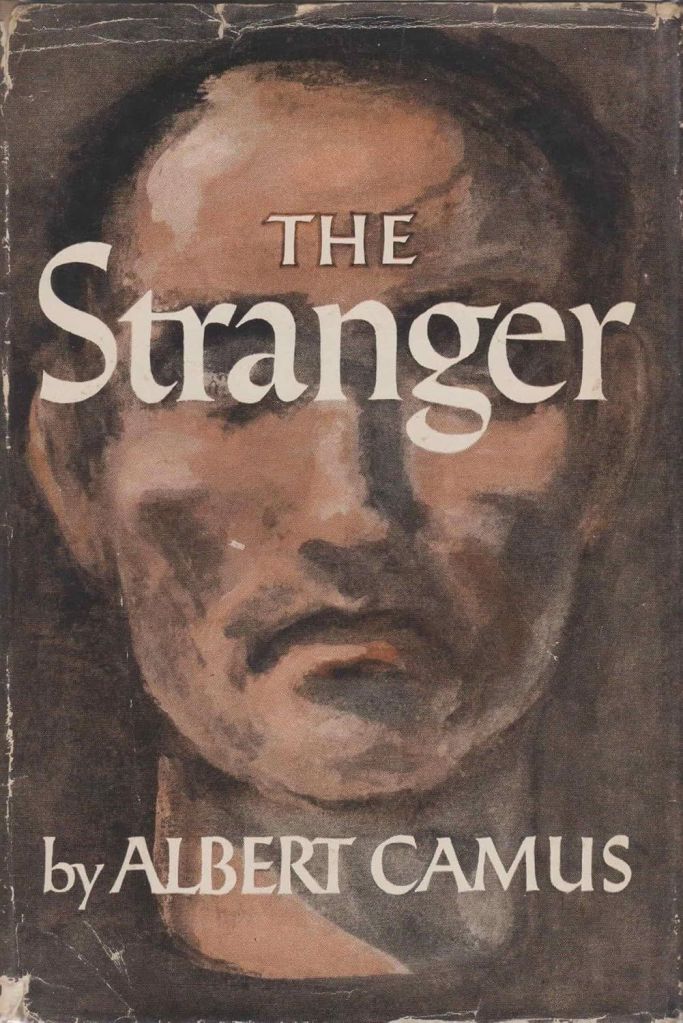
The Stranger

Meursault, the Sun, and the Crime of Indifference

Alienation, Absurdity, and Moral Judgment in Albert Camus’s The Stranger

Albert Camus’s The Stranger is one of the most unsettling novels of the twentieth century, not because of what its protagonist does, but because of what he refuses to do. Meursault does not grieve properly, does not lie convincingly, does not explain himself, and above all, does not pretend that life has an inherent meaning. For this, he is judged more harshly than for murder. In The Stranger, Camus stages a quiet but devastating trial—not only of Meursault, but of society itself, exposing how moral systems rely less on justice than on emotional conformity.

At its core, The Stranger is a novel about the crime of indifference. Meursault’s failure is not ethical in the traditional sense; it is existential. He does not deny morality—he simply experiences the world without illusion. In doing so, he becomes intolerable to a society that demands performance, sentiment, and metaphysical reassurance.

The Opening Shock: A World Without Consolation

“Mother died today. Or maybe yesterday, I don’t know.”

Few openings in modern literature are as famously dispassionate. From the first line, Camus establishes Meursault as a man fundamentally estranged from expected emotional responses. This is not cruelty, nor is it repression—it is a radical honesty. Meursault reports facts, not feelings. He experiences the world as a sequence of physical sensations: heat, light, fatigue, hunger, pleasure.

The funeral scene is crucial. Meursault does not cry. He smokes, drinks coffee with milk, notices the sun, and feels irritated by the heat. To the reader—and later to the courtroom—this behavior appears monstrous. Yet Camus subtly suggests something more disturbing: Meursault’s reactions are not false. They are simply unedited.

Society does not demand grief; it demands the appearance of grief. Meursault’s crime begins here, long before the murder, because he refuses to lie about what he feels—or does not feel.

The Sun as Fate: The Murder Without Motive

The murder of the Arab on the beach is one of the most discussed acts in modern literature precisely because it resists interpretation. There is no hatred, no ideology, no personal vendetta. Meursault does not kill out of anger or revenge. He kills because of the sun.

The heat is unbearable. The light blinds him. The knife flashes. The moment collapses into sensory overload. Camus strips the act of psychological depth, forcing us to confront a horrifying possibility: not all violence is meaningful.

This is Camus’s most radical claim. The universe does not operate according to moral logic. Events happen without reason, and humans desperately impose narratives afterward to make them bearable. The murder is absurd not because it is trivial, but because it lacks justification. It simply is.

When Meursault fires the gun, then fires four more shots into the lifeless body, it is less an escalation than a rupture—a moment where the absurd reveals itself fully. The sun, indifferent and overwhelming, becomes the true antagonist of the novel.

Love Without Illusion: Marie and Emotional Honesty

Meursault’s relationship with Marie further complicates our judgment of him. He enjoys her company, desires her physically, and experiences happiness with her. When she asks if he loves her, he answers honestly: it doesn’t mean anything, but he probably doesn’t.

This answer horrifies us—not because it is cruel, but because it violates the ritual language of love. Meursault does not pretend that emotions have metaphysical weight. He experiences pleasure, not transcendence.

Camus is not suggesting that Meursault is ideal; rather, he is asking whether lying about love is morally superior to telling the truth about it. Society prefers comforting falsehoods to uncomfortable sincerity. Marie accepts Meursault’s indifference more easily than the court does, because her expectations are human, not ideological.

The Trial: Judged for Not Crying

The second half of The Stranger transforms into a grotesque parody of justice. Meursault is not truly tried for murder; he is tried for failing to conform. The prosecutor focuses obsessively on Meursault’s behavior at his mother’s funeral, portraying him as a monster incapable of moral feeling.

This is the novel’s most devastating insight: society punishes emotional heresy more severely than violence. Meursault’s honesty threatens the symbolic order. If grief is optional, if love is contingent, if God is silent, then the foundations of meaning begin to crumble.

The courtroom becomes a theater of moral outrage, where sincerity is irrelevant and symbolism reigns supreme. Meursault is condemned not because he killed a man, but because he did not cry for his mother. The verdict is predetermined; the narrative must be preserved.

God, Refusal, and the Final Awakening

In prison, Meursault is offered one final escape: faith. The chaplain insists on repentance, on God, on eternal meaning. Meursault refuses violently. His outburst is not nihilistic—it is lucid.

He recognizes, finally and fully, that the universe is indifferent. And in that recognition, he experiences freedom. If life has no ultimate meaning, then it belongs entirely to the present moment. The absurd is not despair; it is clarity without consolation.

Meursault’s final wish—that the crowd greet his execution with cries of hatred—is often misunderstood. It is not masochism. It is coherence. He wants the universe to be honest with him, just as he has been honest with it. No false compassion. No illusions.

The Stranger as Existential Mirror

The Stranger endures because it asks a question that remains deeply uncomfortable: How much of morality is genuine, and how much is performance? Meursault is not a hero, but he is a mirror—reflecting the fragility of our moral certainties.

Camus does not ask us to imitate Meursault. He asks us to confront the absurdity we conceal beneath rituals, sentiments, and narratives. Meursault’s refusal to lie makes him intolerable, but it also makes him free.

In the end, The Stranger is not about murder, grief, or atheism. It is about the cost of honesty in a world that demands meaning. Meursault pays that cost with his life, but he dies awake—having finally embraced the gentle indifference of the world.

And perhaps that, Camus suggests, is the most honest ending available to us.

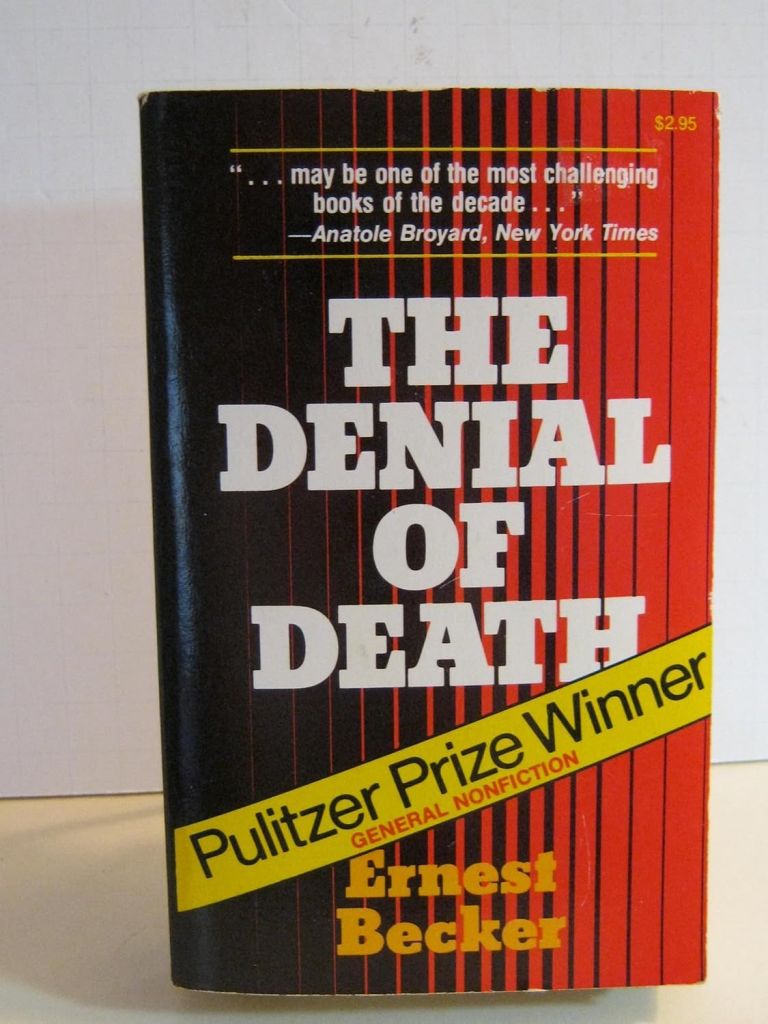
The denial of death

The Terror Beneath Civilization: Ernest Becker and the Denial of Death

Human beings are the only animals who know they will die. From this unbearable knowledge, Ernest Becker argues, everything else follows. The Denial of Death is not merely a work of psychology or anthropology; it is an indictment of civilization itself. Beneath our achievements, moral codes, love stories, political systems, and religious faiths lies a single, unspoken terror: the certainty of our own extinction.

For Becker, consciousness is not a triumph but a tragedy. To be self-aware is to stand at a distance from nature, to recognize one’s fragile body as temporary, replaceable, and doomed. The human mind, unable to tolerate this truth directly, constructs elaborate symbolic systems to protect itself. Culture is not an ornament of human life; it is a defense mechanism. Civilization, in Becker’s stark formulation, is a collective effort to deny death.

This is Becker’s unsettling claim: we do not live as we do because we seek truth, goodness, or beauty. We live as we do because we cannot bear the terror of being animals who must die.

Consciousness as a Curse

The human condition is paradoxical. We are biological organisms driven by instinct, hunger, and fear, yet we possess symbolic consciousness that allows us to imagine eternity, meaning, and transcendence. This split—between body and symbol, animal and god—is the source of our anxiety. We are “gods with anuses,” as Becker memorably puts it: capable of imagining immortality while rotting from within.

Unlike other animals, humans cannot simply live in the present. We remember the past, anticipate the future, and project ourselves into a world beyond our own lifetimes. This capacity for symbolic thought gives rise to art, language, and religion—but also to neurosis, guilt, and violence. Consciousness exposes us to a truth we are not equipped to endure: that everything we love, including ourselves, will disappear.

The problem is not death itself, but the awareness of it. Becker insists that human psychology is fundamentally shaped by this awareness. Our minds evolve not to confront mortality honestly, but to keep it at bay. Mental health, in this sense, is not a state of truthfulness but of successful repression.

Immortality Projects: How Humans Cheat Death

Becker’s most enduring concept is that of the immortality project. These are symbolic systems through which individuals seek to transcend death—not physically, but meaningfully. If the body must perish, then the self must be preserved in another form: legacy, reputation, nation, soul, or memory.

Religion offers literal immortality through the promise of an afterlife. Art offers symbolic immortality through lasting creation. Nation and ideology offer participation in something larger and more enduring than the individual. Even the modern career, with its obsession with achievement and recognition, functions as an immortality project: proof that one mattered, that one left a mark.

Becker does not dismiss these projects as childish illusions. On the contrary, he insists they are psychologically necessary. Without some form of symbolic transcendence, the individual collapses into despair. Depression, anxiety, and nihilism emerge when a person’s hero system—his sense of cosmic significance—fails.

What makes Becker dangerous is not that he exposes immortality projects, but that he refuses to romanticize them. These projects sustain life, but they also generate conflict. When one person’s symbolic meaning clashes with another’s, violence becomes inevitable.

Heroism and the Need to Matter

At the heart of every immortality project is heroism. Becker redefines heroism not as bravery or virtue, but as the belief that one’s life has objective significance in the universe. To live without heroism is to live with the unbearable sense that one’s existence is arbitrary and disposable.

Modern society has not eliminated this need; it has merely fragmented it. Where ancient cultures offered shared hero systems—religion, myth, sacred tradition—modernity leaves individuals to invent their own. The result is a proliferation of fragile identities constantly in need of validation.

Social media offers a perfect contemporary example: a digital arena for micro-heroism, where visibility, outrage, and moral performance substitute for lasting meaning. To be seen is to exist; to be ignored is to vanish. Becker helps explain why humiliation feels existential and why public recognition feels salvific. These are not trivial emotional reactions—they are encounters with symbolic death.

When a hero system collapses, the individual experiences not disappointment, but annihilation. Rage, fanaticism, and despair follow. This is not pathology at the margins of human behavior; it is its psychological core.

Love as a Dangerous Immortality Project

Perhaps Becker’s most disturbing insight concerns romantic love. In a secular age, love becomes the primary site of transcendence. We turn our lovers into gods, expecting them to redeem us from insignificance and mortality. The beloved becomes the guarantor of meaning, the witness who makes life real.

This burden is impossible to bear. No human being can sustain godhood. When the lover fails—as all humans must—love curdles into resentment, control, or despair. What begins as devotion becomes domination. Becker’s analysis exposes the dark underside of romantic idealism: love does not save us from death; it merely relocates our terror onto another person.

This insight resonates deeply with the great novels of psychological realism, where love so often becomes destructive. Becker offers the theory behind the tragedy: love collapses under the weight of immortality.

Evil as a Defense Against Death

Becker’s theory of evil is radical in its simplicity. People do not commit evil because they are cruel, irrational, or broken. They commit evil because they are defending their immortality projects. When another person or group threatens one’s symbolic universe, annihilation feels justified—even necessary.

War, genocide, ideological purges, and moral crusades all follow this pattern. The enemy must be destroyed not merely because they are wrong, but because they threaten meaning itself. Becker reveals that moral righteousness often masks existential panic. Violence becomes sacred when it is framed as a defense of ultimate values.

This is why evil is so often accompanied by certainty. Doubt weakens hero systems; fanaticism reinforces them. The more fragile the symbolic structure, the more violently it must be defended.

God Without Consolation

Becker’s relationship to religion is complex and frequently misunderstood. He does not simply reject God; he rejects religious systems that function as denial rather than confrontation. A God who exists merely to soothe anxiety becomes another psychological shield—dangerous not because it is false, but because it evades responsibility.

In this sense, Becker stands closer to Dostoevsky than to secular atheism. Like Ivan Karamazov, Becker refuses a God who excuses suffering or sanitizes terror. Faith that denies death becomes complicit in violence; faith that acknowledges terror without illusion may foster humility.

Becker does not offer salvation. He offers clarity—and that clarity is tragic.

Living with the Terror

Can human beings live without illusions? Becker’s answer is brutally honest: no. Complete confrontation with mortality would paralyze us. The goal is not to abolish denial, but to soften it—to recognize the symbolic nature of our hero systems without absolutizing them.

Wisdom, for Becker, lies in humility. To know that one’s meaning is constructed is not to abandon it, but to hold it lightly. Less certainty may mean less violence. Less cosmic self-importance may mean greater compassion.

The Denial of Death leaves us with no comforting resolution. It offers no program, no therapy, no redemption arc. It simply insists that beneath our most cherished ideals lies a terrified animal clinging to meaning. To face this truth is not to despair, but to see ourselves clearly—tragic, creative, and dangerous.

Civilization is built on denial. But within that denial, Becker suggests, lies the possibility of a quieter courage: not the courage to conquer death, but the courage to live honestly in its shadow.

Young Proust

Young Proust

Young Proust moving with the times,
rolling,
trying out new combinations,
conquering different nations,
winning,
seeing the same results.

Still with the petty insults?
Flipping overboard to land me like moonsault.
Your punches are too light to be assault.

Reality is weird isn’t it,
cause one moment its there and the next it’s gone,
discombobulated,
entropy,
destruction.

Young Proust remains,
Tea and madeleines the basis of what remains,
Life-bearing and conclusive to get your mama laid.

Young Proust moving with the times,
I’ve been here since day one and I am never gonna stop.
Young Proust consistent and always on top.

Acknowledge Me,
make things easier for yourself,
I am not going anywhere.

Young Proust moving with the times,
Every day is my time,
I am the greatest of all time.