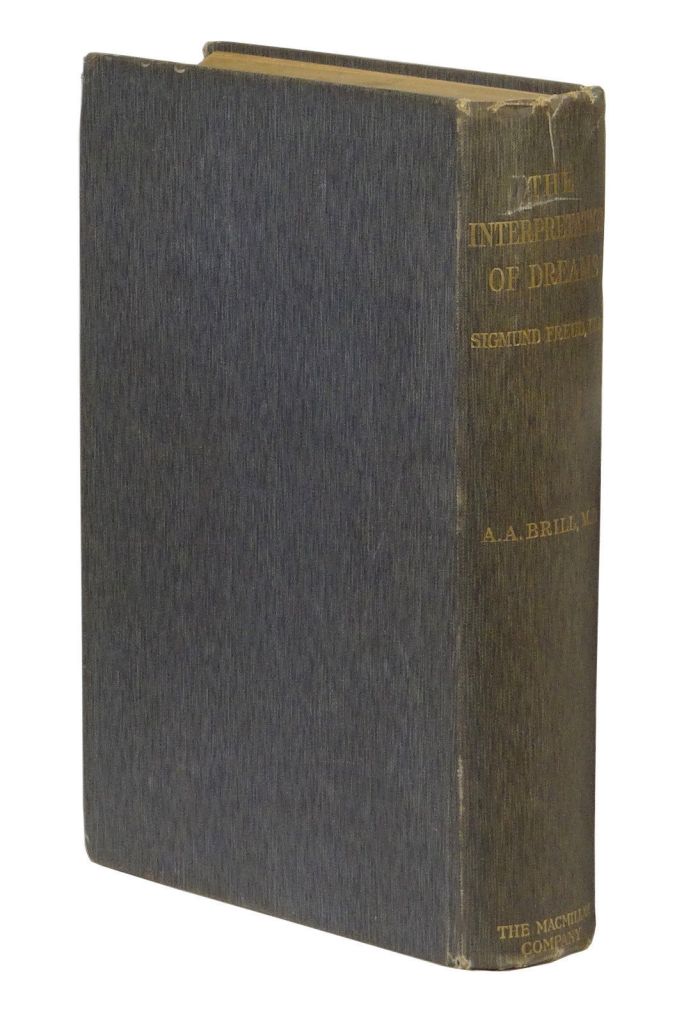
Just as I feared, Fyodor Dostoevsky has ruined Literature for me. I read other books and authors and it’s not the same. They are too surface level, no depth, no risk, lazy, PG, predictable. I don’t finish reading the books because they bore me. Everything is mediocre after Dostoevsky. Maybe I will never get somebody as great as Dostoevsky. His characters are multilayered, they have fears, flaws and motivations. Fyodor Dostoevsky illuminates the darkside of human nature. Siberia made him a genius. He was scheduled to be at executed but at the very last minute, the order was changed to life imprisonment instead. Those final minutes, those last seconds when he thought he was going to die made him the writer he ultimately became. In those last moments, the colors of plants and nature were fuller, the sun was shinning just for him, for the last time, he gained clarity, he negotiated with God, begging him for another chance. He would become a new man, he now saw life as gift, something he should embrace and be grateful for. If God gave him another chance, he would do good in the world, he wouldn’t take anything for granted. Thank God, he saved Fyodor Dostoevsky. “Notes from Underground” was my first Dostoevsky book, short read, about 100 pages, I had never read anything like that in my life. It is psychological, reflective, honest, self-aware and conscious. “Notes from Underground” is brilliant! The Underground man is pitiful, weak, spiteful and pathetic. He wants to avenge himself against a man who wronged him but he is too cowardly. Dostoevsky doesn’t sugarcoat the human condition, life is suffering and difficult and we are all going to die. The storyworld and tone is dark and filled with insecurities. We get into the head of the underground man and he is pathetic, weak and flawed. I initially thought “Crime and Punishment” was the greatest book in the history of humanity. I couldn’t put it down, I loved it, it thoroughly satisfied me. “Wow” was the last thing I said after I finished the book. Then I read “The Brothers Karamazov” – I don’t think there’s a book in existence or in human history that’s better or on par with “The Brothers Karamazov”. It explores religion, atheism, love, patricide and murder. There’s also the fact that Dostoevsky is a master storyteller and unbelievable writer. I strongly believe “The Brothers Karamazov” is the greatest book of all time. His other books “The Idiot” and “Demons” are great, they all get full stars. In fact if you made a case about one of them being better, no one would argue, it’s perspective, besides all his books are masterpieces. The original psychologist, philosopher, a master of human nature and just a literary genius! He set the bar too high, his work is too great, he helped me see life differently, has inspired me so much and ruined literature for me. But I am hopeful, there has to be someone who can rival Dostoevsky.
Sometimes a Mufasa will come out of nowhere to steal your throne, you kill him, they blame you when he was the one that triggered you. I am gonna kill me a king, I am kingslayer. Heroes get set up to take the fall. Making them easy targets, the ones to save the demsel in distress, crocodile tears flooding the ocean, drowning to save a lost course.
Sometimes a Mufasa will steal your girl when you already called dibs on her, you betray him, they blame you when he was the one who did it first. You gotta hand out receipts, sometimes the disrespect gets rampant, shaking reality that they don’t see who they are next to, a little taste of their medicine levels out the playing field.
Sometimes a Mufasa will come out of nowhere to disturb the peace, you start smear campaigns and plot against him, they blame you. When you were next in line. How you gonna let an insignificant creature come out of nowhere to beat you in rank? Convincing everyone of his legibility and taking all the stanks. Running through everything like he got a full tank.
Sometimes a Mufasa will actually win the battle, you can’t blame him, it was his moment. Let him have the glory, the war is long. He will get complacent, it’s inevitable, it’s that kings disease. You let him get comfortable and busk in his false victory, wait for him to show all his weaknesses and you strike when he least expects it to regain the Throne. It’s the game, to be in it is to play it.
Mufasa, Mufasa, why do you stand in my way? Mufasa, Mufasa, what do I have to do to make you go away?
Got a lot of hate in my heart, a lot of impure, grimy thoughts so I’ll transfer it to Mufasa. He wants to be the maryr, typical Mufasa.
Dear Lord help me control my rage, I know everyone I meet is only a version of me, he makes me see the dirt in me, the scumbag in me, give me peace, prolong my reaction speed, help me see the broader picture, give me patience, to weather this storm, flood me with love so it can dilute this hate. Mufasa is my brother, help me see him as such. He is my mirror, may he be reflected as such. I don’t want to feel resentment, set me free, of the pain, entitlement, ego and the urge to control. I put everything in your hands, I am nothing, a mere sinner, crippled by thoughts that will never make me a winner. Purify my thoughts so I don’t have to be a sinner. Mufasa is my brother, help me see him as such. He is my mirror, my he be reflected as such.
I used to love this album. It had a purity about it, it was innocent, it came from a source that was not tainted by anything, it was all love songs and as a poet, I loved all the poetry about girls and love. I understood and connected with Justin all the way. He was born in 94 and I was born in 95, a big selling point. I remember I had a friend, Nkosana Thusi, who loved his music. He had the “Somebody to love” remix with Usher on his phone as an mp3 when it came out – no one had that, that was the video version, everyone had the original version, the remix was highly sought after. The gents back then weren’t open to consuming some Justin Bieber content, everyone was closeted but he had no problem blasting “Baby” featuring Ludacris for all to hear. I would never listen to Justin Bieber out in the open like that! Wouldn’t want the girls in school to think I was “soft” and “sensitive”. Oh hell no, street cred and reputation is everything! Kanye West “POWER” was my jam and just hip-hop in general. Nkosana was comfortable with himself, he enjoyed Bieber’s music, he would play it every time, in the open, didn’t care who was watching or what his peers would think of him. No one had a problem really, it was all in my head, I learned not to project weakness. Singing soprano or just straining your voice as a gent is definitely weakness – put some bass in it! The girls in class loved Justin Bieber and they all gravited towards him. Him listening to Justin Bieber was genius! I always think of Nkosana Thusi when I hear a song off the album, we called him “Big Show”, the gentle giant who loved “One time”, “Somebody to Love”, “Baby” and “U Smile”. RIP Nkosana “Big Show” Thusi.
Big Show got me into Justin Bieber, I liked that Bieber confidence and swag but I still didn’t show it publicly. Publicly was always Kanye West “POWER” but I got all the Bieber singles from him. I ended up purchasing the album and I fell in love with it – double disk, unskippable, just press play. I loved “Favorite girl”, “Up”, “That should be me”, “Overboard” and “Eenie Meenie” with Sean Kingston – Sean Kingston was Dope! I downloaded the album again last week because all my CDs are lost in Limpopo; what can I say, I was chasing dreams, I am rueful, I lost a lot of my CDs, my collection of music that I was accumulating over the years. That Justin Bieber My Worlds album still gives me the same feelings, same emotions, it’s still great, still pure, still a classic, I understand why I loved it so much. This is the only Justin Bieber album I’ve ever listened to, that I bought, that I can endorse, before the tattoos, before the press, before the fame, before the smokescreens and facades. It’s like a time capsule, time sure flys. I am happy Nkosana was in my life.
Happy birthday to you. Thank you for voicing out your concerns, feedback from the world always helps. I have to be honest, I am also concerned and worried about you. Despite what you may say, you are not an old man, in fact you are operating at the peak of your powers. One might say “in your prime”. You need to get better, you can’t carry on living like that. Dignity – empower yourself, you need to start making your own money. Stop feeling sorry for yourself, life goes on, trapped in the same loop since 2009. All my friends have guidance and help to get through life and I have had nothing from you – just birthday texts, nothing that will help me progress in the real world. I am confused. Why are you worried? You never helped. Why do you have a voice? You never gave me any choice. Where’s your job? How did it turn out for you? What gives you the right to be critical? Oh, I get it, the annual “Happy birthday to you”. Passive aggressive tendencies, deeply concerned and worried and yet sitting on the sidelines, definition of theatrics, crocodile tears. Happy birthday to you, Imposing your viewpoint on me, using hypotheticals to get at me, comparing me to people to get under my skin. Happy birthday to you, it’s not enough, send something tangible, give me power, give me money, enable me with your metric of success to garner more of it. Tight fisted but you want to get it from me. I have had to start from scratch on all fronts because I’ve had no support. I am also worried, you have been stuck on the same level for years. I haven’t been able to rely on you for years. The thing about pointing fingers is that you have three pointing back. Happy birthday to you, thank you for initiating dialogue, I also have a couple of things to get off my chest. I hope we will be able to talk about these things more freely and openly. High expectations with no input, claim you want to help but won’t empower or meet me halfway. “Happy birthday to you” never bought any house. I have been lenient, too understanding, an enabler, made you feel like Superman when you struggling to just be man. Happy birthday to you, you have the gift that keeps on giving – the great man antakalipa, just press play. Made me the target because I’ve been silent, well congratulations, the target is out of it’s hole with a bang! Take your shot! The advice was to be humble but pride took over and now I have to reflect it back. Happy birthday to you, here are the receipts to go with it. Concerned, worried, definition of theatrics, crocodile tears. Worried but you never call, concerned yet you always drop the ball. Cognitive dissonance, saying one thing and doing another. Thank you for voicing out your concerns, I’ll do the same. I’ll live my life the way I see fit. Never asked for your advice, it’s counterfeit. “Happy birthday to you” once a year and you think you are fit.
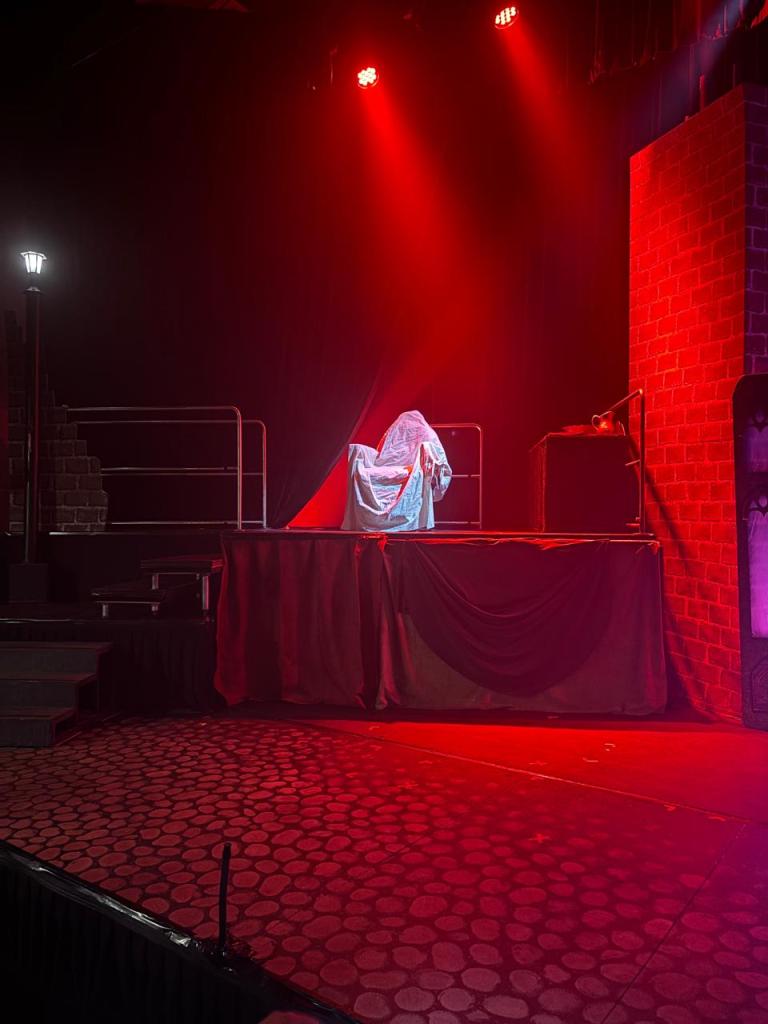
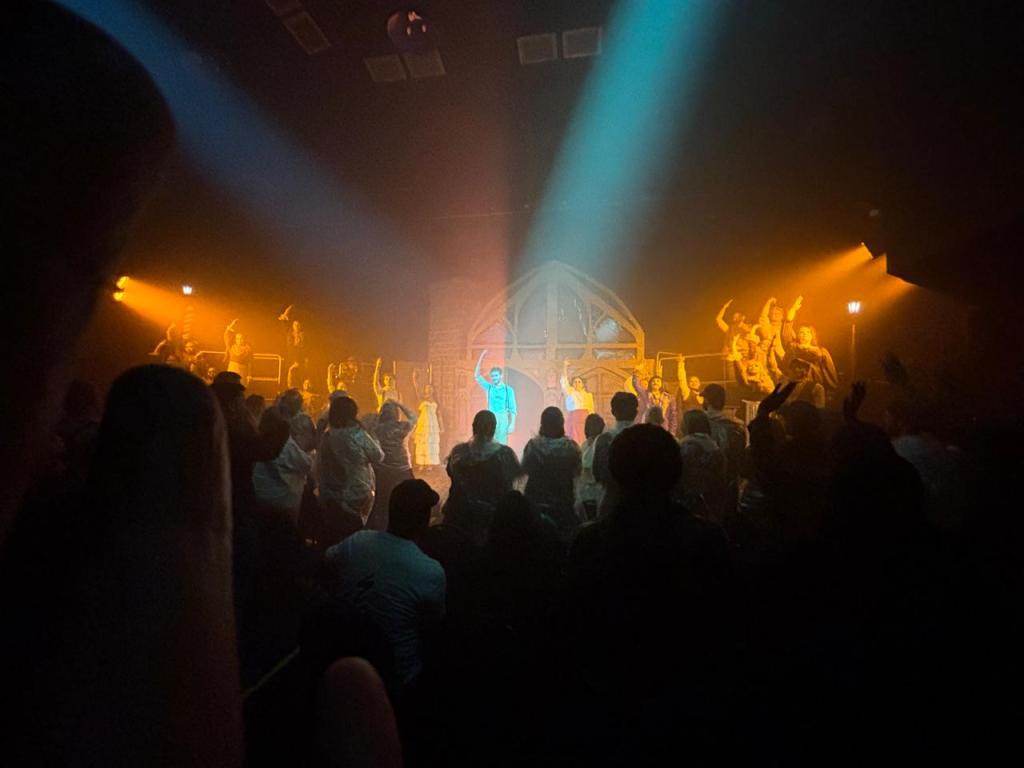
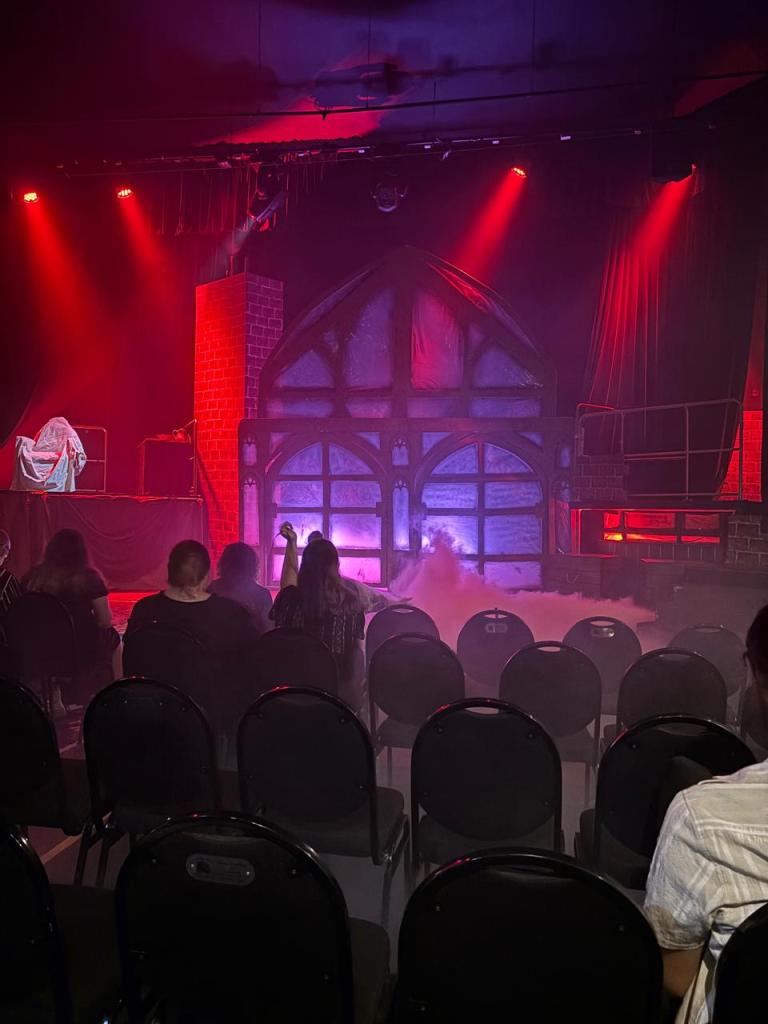
There is something quietly thrilling about seeing performers outside the frame that first introduced them to you. It disrupts familiarity. It redraws the boundaries of expectation. Sitting inside the theatre for the final dress rehearsal of An Ode to Motown, that disruption came early â and it came powerfully.
Lerato Mvelase was the first revelation. Known to many through the language of television â where her craft is contained within the borders of a camera lens â she arrived on stage as something altogether different. A vocalist. A narrator. A commanding presence. Her performance didnât merely interpret the material; it carried it. She threaded the history of Motown through her voice with conviction and personality, revealing vocal depth and range that transformed surprise into admiration. On stage she expanded â larger, freer, and more electric â embodying the kind of theatrical vitality that only live performance can hold.
Opposite her stood Liesl Penniken, whose presence was striking before a single note landed. Beauty alone rarely sustains attention, but presence does â and hers commanded it. Watching her live felt immersive, as though the distance between performer and audience dissolved. Yet what defined the stage was not a singular spotlight but collective radiance: Tamara Dey, Hlengiwe Pearl, Anele Precious Mthethwa â artists whose elegance, charisma, and technical command recreated Motownâs romantic canon with confidence and swagger.
Their selections leaned into the emotional architecture that built the labelâs legacy â love songs, yearning songs, songs of devotion and desire. Classics associated with Marvin Gaye and the Jackson 5 floated through the auditorium with warmth and familiarity. When âLovinâ Youâ appeared â its softness and melodic intimacy filling the space â it reminded everyone present that the emotional centre of Motown has always been affection: romantic, communal, and nostalgic. These are songs designed to reconnect people with memory, and the audience responded instinctively, singing along without hesitation.
Seeing Tamara Dey return to the stage carried its own resonance â a reminder of artistic longevity and reinvention. Meanwhile, Hlengiwe Pearl and Anele Precious Mthethwa radiated vitality, balancing vocal strength with visual poise, demonstrating the precision and confidence that anchor ensemble work of this nature.
If the first act glowed with elegance and romance, the second shifted its gravitational centre. The entrance of the male performers altered the energy immediately â grounding the sound with bass, momentum, and physical dynamism. Familiar faces, possibly members of iComplete, stepped forward in tailored black attire that signalled cohesion and intent. Their presence sharpened the showâs rhythm, adding contrast and propulsion that elevated the production into full theatrical stride. It was here that the performance felt as though it truly lifted off â voices interlocking, choreography tightening, the atmosphere thickening with collective electricity.
Beyond the performers themselves, the production design deserves equal recognition. Sequined costumes, sculpted wigs, and textured styling evoked the visual mythology of Motown without slipping into imitation. The aesthetic achieved suggestion rather than replication â conjuring an aura rather than recreating a museum piece. It allowed nostalgia to exist not as reenactment, but as living memory.
That nostalgia became the emotional undercurrent of the evening. The theatre transformed into a communal archive of sound, where audience members sang freely, recollected openly, and shared in musical remembrance. Motownâs catalogue transcends generational boundaries; it is social glue disguised as melody. The rehearsal space, even in its unfinished state, vibrated with this shared participation.
One of the productionâs most intriguing gestures arrived through its intellectual layering â weaving philosophical and historical fragments into the musical journey. References touching on Nietzsche and the inclusion of Martin Luther King Jr.âs voice expanded the narrative scope beyond entertainment, situating Motown within broader conversations about identity, struggle, joy, and human aspiration. These insertions reminded viewers that the music emerged from a particular historical consciousness â one shaped by resistance, imagination, and collective hope.
Anchoring the entire production was the live band â exceptional in both sensitivity and precision. Their musicianship ensured that the show never drifted into pastiche. They did not merely accompany; they animated, guided, and textured every transition. Live instrumentation granted the music immediacy, breathing elasticity and emotional responsiveness into songs that have lived decades beyond their origins.
What ultimately lingers after witnessing An Ode to Motown is not a singular performance moment but a composite feeling. The show operates as tribute, celebration, and emotional time capsule simultaneously. It honours the past while energising the present. It invites memory while delivering immediacy. And above all, it affirms that Motownâs spirit â its romance, its confidence, its communal joy â remains timeless.
This production does not simply revisit the music. It reminds audiences why it never left them.
Choreography: Lulu Mlangeni
Musical direction: Margaret Motsage
Live band
Mpho Kodisang – Piano
Earl Joseph Baartman – Bass
Urbano Bay Nobela – Guitar
Tshepa Diale
Congratulations James Ngcobo and the whole team for a great show and a deserved standing ovation.
The Quiet Exit and the Loud Legacy: J. Coleâs The Fall Off
Hip-hop has always loved a spectacle. It thrives on the rupture â on the clash of egos, on the public disintegration of giants, on the mythology of domination and defeat. In this theatre, decline is supposed to be dramatic. Artists burn out in the spotlight, or cling desperately to relevance long after the pulse has moved on. That narrative is deeply embedded in the genreâs psychology: legacy must be fought for, defended, or lost in public combat.
Yet The Fall Off refuses that script.
J. Coleâs closing chapter arrives not as collapse, but as authorship. It is the sound of a man choosing his exit rather than being escorted out. And because of that, the album must be read not only as music, but as philosophy â as a statement about ego, discipline, and survival in an era when hip-hop seemed ready to cannibalize itself for entertainment.
The cultural backdrop cannot be ignored. The genre had just endured one of its most exhausting spectacles in years: the DrakeâKendrick confrontation. It was captivating, yes, but also corrosive. Diss tracks blurred into personal excavation; artistry blurred into warfare. Public perception shifted dramatically, and collateral damage extended beyond charts and streams. In that moment, Cole briefly stepped into the storm â and then stepped back out.
His apology was treated as sacrilege. Hip-hop orthodoxy demands defiance, not reflection. The criticism came fast: he had lost competitive edge, forfeited stature, diminished himself. But hindsight, that great revealer, has been kinder. Because while two titans dismantled one another in public discourse, Cole preserved something rarer â narrative sovereignty. He refused to allow his artistic arc to be defined by spectacle.
And then he returned with The Fall Off.
What becomes immediately apparent is the albumâs sense of intentional scale. This is not a casual release. It is architecture â a double-length autobiographical structure that moves between memory and mortality. The first movement pulses with hunger, revisiting ambition and ascent. The second carries the gravity of retrospection, confronting fatherhood, aging, and inevitability. Together they form a temporal dialogue between the artist he was and the man he has become.
The sonic landscape is unmistakably Coleâs domain. Features are sparse and deliberate. Production feels intimate, cohesive, authored. This is not collaboration as spectacle; it is collaboration as texture. The album never relinquishes its central voice. It is his narrative, his cadence, his pen guiding every emotional turn. There is an almost stubborn insistence on self-containment â a reminder that the most compelling artistic statements are often those that resist dilution.
Technically, the record is a masterclass in discipline. Wordplay lands with precision. Metaphors spiral outward into unexpected cultural intersections. Internal rhyme schemes demonstrate effortless command of rhythm and breath. The cadence is confident without excess â measured, deliberate, assured. These are not the verses of someone chasing validation. They are the verses of someone already certain of their place in the lineage.
But technique alone does not sustain the project. What gives the album its resonance is storytelling â narrative coherence that stretches across tracks and themes. Cole revisits the formative environments that shaped him, interrogates masculinity with disarming honesty, and reflects on the weight of celebrity without romanticizing it. Vulnerability and bravado exist side by side, neither canceling the other. This tension is the emotional engine of the album.
Song Explorations â The Interior Landscapes of Departure
âThe Fall Off Is Evitableâ plays like the albumâs philosophical thesis. The title itself reframes inevitability into agency, suggesting decline is less destiny than decision. Cole approaches the track as manifesto â dissecting discipline, artistic hunger, and spiritual grounding as safeguards against erosion. The lyricism moves with a reflective intensity, emphasizing maintenance of craft over maintenance of brand. The cadence feels conversational yet resolute, as though speaking directly to younger artists tempted by shortcuts. Within the albumâs narrative structure, this song acts as ideological spine â asserting that survival in hip-hop requires interior work long before exterior recognition.
âWho TF Is Uâ shifts tone dramatically, reintroducing the competitive bite listeners associate with Cole at his sharpest. Here the pen tightens, the metaphors sharpen, and the delivery carries confrontational elasticity. Rather than naming targets, the track dismantles anonymity itself â questioning relevance, authenticity, and self-invention in the streaming era. Coleâs wordplay ricochets between dismissal and assertion, reminding listeners that humility and dominance can coexist. This track becomes crucial in the broader album context: it proves that stepping away from conflict never meant surrendering lyrical authority. The warrior is still present â simply selective about battlefields.
âLonely At The Topâ enters with a different emotional palette altogether. This is Cole at his most contemplative, meditating on isolation as the hidden tax of success. Fame is rendered not as triumph but altitude sickness â thin air, fragile connections, distance from grounding realities. His storytelling here is delicate and unguarded, unpacking friendships altered by power dynamics and the psychological quiet that follows public celebration. The pacing mirrors introspection, leaving space between thoughts. In the architecture of the album, this track humanizes the mythic figure constructed elsewhere, reminding listeners that elevation often arrives with emotional subtraction.
âDrum and Bassâ injects kinetic energy into the recordâs midpoint, demonstrating Coleâs rhythmic adaptability. The production pushes tempo and texture, and Cole responds with agile flow patterns that glide across percussive density. Yet beneath the sonic experimentation lies thematic continuity: movement, momentum, propulsion. The track symbolizes artistic evolution â refusal to calcify stylistically even while preparing farewell. His cadence dances rather than marches, showing elasticity of technique. Within the albumâs arc, it functions as proof of vitality: the artist departing still possesses curiosity and playfulness, qualities often lost long before retirement is contemplated.
âI Love Her Againâ provides emotional counterweight to the albumâs philosophical and technical displays. This is narrative storytelling at its most intimate, revisiting romance with maturity rather than nostalgia. Cole frames love as cyclical â rediscovered through growth, distance, and forgiveness. The lyricism softens, prioritizing sincerity over virtuosity, yet the craftsmanship remains unmistakable. This track grounds the album in relational humanity, expanding its thematic range beyond ego and legacy. In doing so, it underscores a central truth of the project: departure is not solely professional â it is personal, spiritual, relational. It is the closing of one life chapter to deepen another.
Closing Reflection
Moments like these transform the album from autobiography into meditation â a contemplation of what it means to endure without losing coherence of self. The comparisons to Jay-Zâs Reasonable Doubt feel symbolically appropriate, though inverted. That album crystallized potential at the beginning of a journey. The Fall Off crystallizes mastery at its close. Where one introduced a voice poised for ascension, the other preserves a voice refusing erosion.
And this is perhaps the albumâs most profound contribution to hip-hop discourse: it models an alternative mythology. Instead of conquest, composure. Instead of escalation, introspection. Instead of public victory, private equilibrium. Cole demonstrates that stepping away from confrontation did not diminish his authority â it sharpened his perspective. The clarity of this project could not have emerged from entanglement in endless rivalry.
In the end, The Fall Off does not signal disappearance. It signals control. It affirms that legacy is not measured solely by dominance in conflict, but by coherence in departure. Cole exits the arena with technical brilliance intact, narrative image preserved, and artistic voice undiluted.
Hip-hop may always celebrate those who fight the loudest. But this album reminds us that sometimes the most radical act is restraint â the refusal to let chaos dictate identity.
J. Cole did not fall off.
He simply chose the moment to leave â pen steady, cadence unbroken, and stature undiminished.
At the Joburg Theatre for the opening of Giselle. Angela Malan curated a masterpiece! I was thoroughly enthralled, the second act was mezmarrizing, Ryoko Yagyu was jumping on her toes, sticked the landing perfect, an impossible task she made look so easy and effortless. She takes my breath away. Monike Cristina is also there. All the dancers were unbelievable! So amazing. We also had a show at Interval, outside the auditorium, getting a drink, chilling, anticipating the final run. It was beautiful, in hindsight the costumes made sense. It was all there.
Happy 25th Birthday, Joburg Ballet!
There are evenings in the theatre when admiration quietly turns into awe â when what unfolds on stage transcends performance and becomes something close to revelation. Experiencing Giselle at the Joburg Theatre was one of those evenings. This cornerstone of Romantic ballet did not merely present technical excellence; it demonstrated the extraordinary capacity of the human body to transform into poetry, illusion, and emotional truth. Through its storytelling, staging, costuming, music, and â above all â the breathtaking commitment of its dancers, the production revealed why Giselle endures as one of balletâs most cherished works.
Giselle tells a story of love, deception, heartbreak, and ultimately forgiveness â all conveyed through movement rather than spoken dialogue. The narrative unfolds across two acts that feel almost like different universes.
The first act introduces Giselle as a young village girl whose joy lies in dancing, despite a delicate heart. The setting is pastoral and sunlit â a community space where rustic celebration and youthful flirtation shape the choreography. Here, the ballet language is buoyant and playful. The movement vocabulary leans into petit allegro â quick, intricate footwork â and the sensation of ballon, that fleeting suspension where dancers seem to hang weightlessly in the air during jumps.
Through these qualities, Giselleâs innocence and vitality are expressed physically rather than verbally.
Her romance with Albrecht appears idyllic until the revelation that he is a nobleman disguised as a villager. The emotional rupture leads to the balletâs famed mad scene, where classical structure dissolves into fractured gesture. Steps lose coherence, phrasing becomes unstable, and the choreography mirrors psychological collapse. This culminates in her death, closing the act in tragedy.
The second act shifts dramatically in tone and aesthetic. The warmth of village life gives way to a spectral forest inhabited by the Wilis â spirits of women betrayed before marriage. Their world is governed by eerie unity and relentless purpose: any man who enters must dance until death.
Giselle, now one of them, retains compassion and protects Albrecht when he arrives. Their duet unfolds as a dance of redemption â sustained, lyrical, and transcendent â lasting until dawn releases him and she returns to the realm of spirits.
For many viewers, this act stands as the emotional and visual pinnacle of the ballet. Its atmosphere is haunting yet exquisite â an embodiment of Romantic balletâs fascination with the supernatural.
It is not an exaggeration to call it among the most sublime theatrical experiences imaginable. The unity of the corps de ballet, the stillness of the night setting, and the spiritual quality of movement create an almost hypnotic state. It is here that ballet moves beyond narrative and enters something sacred.
The production design reinforces these contrasts. Act Iâs sets evoke rustic realism â cottages, earth tones, and a grounded sense of place that situates the audience in tangible human experience. Act II transforms the stage into a dreamscape. Moonlit forests, gauzy depth, and cool-toned lighting dissolve physical boundaries and evoke an intangible world where gravity itself feels suspended.
Costumes play a vital role in shaping this illusion. Peasant garments anchor Act I in reality, while the second act introduces flowing white Romantic tutus â long layers of tulle that blur movement and elongate line. Combined with pale lighting, these costumes make the Wilis appear almost immaterial, gliding rather than stepping. Pointe shoes, extensions of the dancersâ bodies, allow them to rise en pointe, redistributing weight onto the tips of their toes and creating the visual magic of floating motion.
The performance of Ryoko Yagyu in the role of Giselle captured the essence of this illusion. Her physical commitment embodied the discipline behind the beauty. Moments of elevation â rising onto pointe with delicate control â conveyed lightness that seemed to defy anatomy. She appeared to skip and travel on her toes, supporting her entire body on one leg while the other extended cleanly upward at ninety degrees, likely a sustained dĂŠveloppĂŠ or poised line reminiscent of an arabesque. Witnessing this balance firsthand challenges perception: what appears impossible becomes visibly achievable.
Across the stage, the technical arsenal of ballet unfolded in vivid detail. Pirouettes and chaĂŽnĂŠ turns carved circular momentum into space. Expansive grand allegro leaps stretched across the floor with amplitude and lift. Extensions opened into splits that emphasized line and flexibility. Yet what lingered was not virtuosity alone, but the seamless masking of effort. Classical ballet strives for the effacement of labor â the principle that difficulty must vanish beneath grace. The dancersâ poise, strength, finesse, and unwavering dedication transformed technique into pure sensation.
The music, composed by Adolphe Adam, binds all elements together. Its melodic warmth in Act I supports rhythmic vitality and pastoral charm, while the second act introduces sustained, atmospheric textures that cradle the choreographyâs adagio flow. The score breathes with the dancers, guiding phrasing and emotional tone so completely that movement and sound seem inseparable.
Emotionally, the audience journey is layered. Initial admiration arises from witnessing technical mastery â the sheer athleticism of bodies sustaining elevation, balance, and precision. This admiration deepens into wonder as physical boundaries appear suspended. Ultimately, empathy takes hold through narrative â Giselleâs vulnerability, the Wilisâ haunting presence, and the closing act of forgiveness that leaves a reflective stillness long after the curtain falls.
To witness Giselle performed with such commitment is to be reminded why ballet holds its place in the performing arts canon. It is not simply about steps or spectacle. It is about transformation â of movement into story, of discipline into beauty, and of impossibility into lived reality before an audienceâs eyes.
This production did justice not only to the legacy of the ballet itself but to the performers who embodied it. Their poise, strength, technique, and skill were nothing short of extraordinary. And in that moonlit second act â luminous, weightless, unforgettable â the art form revealed its highest potential. It was not merely beautiful. It was among the greatest theatrical moments imaginable.
The Cast
Giselle – Ryoko Yagyu
Albrecht – Ivan Domiciano
Hilarion, a forester – Mario Gaglione
The Duke of Courland – Nigel Hannah
Bathilde, his daughter – Monike Cristina
Wilfred, Albrecht’s Squire – Revil Yon
Berthe, Giselle’s mother – Anya Carstens
Peasant Pas de Quartre – Chloe Blair, Savannah Jacobson, Miles Carrott, Bruno Miranda
Myrthe, Queen of the Wills – Tammy Higgins
Moyna, attendant to Myrthe Cristina Nakos
Zulma, attendant to Myrthe – Gabriella Chiaroni
Peasants, Couriers, Wilis – Artists of Joburg Ballet
Congratulations Angela Malan and the whole team for a great show and a deserved standing ovation.
Beware of the stupid person, he will drag you down to hell. Reason is not his guiding factor, he causes harm to others and himself, leaving everybody worse off. Baffling, he even surprises himself. Stupid people are everywhere, social class, success, education and genes have nothing to do with it. You can find a stupid rich person, in fact they are everywhere. Academia is not a refuge either, the world is filled with stupid professors who are lauded by top Universities and have multiple degrees. They still cause harm to others, while gaining nothing themselves, leaving everybody worse off. Stupidity doesn’t discriminate. Attractive people also suffer from stupidity. Stupid people are worse in numbers, the most dangerous thing in the world, the greatest threat to humanity. More dangerous than all the armies in the world combined. More dangerous than criminals and bandits. You can predict the action of criminals and bandits, self-interest usually prevails. They aim to profit off your misfortunes, they target you for a payday. You know their motivations and so can deduce their patterns. Stupid people don’t have motivations, there is no thought pattern to their actions, they are irrational, delusional, no reason, just destruction and fire for everyone involved, themselves included, no foresight to see what happens next, everyone suffers, everybody is worse off. Beware of the stupid person, idiots too, it’s the same thing. They act counterproductive just for the fun of it. Consequences and results not factored in. They are not looking to gain anything, impossible to predict their actions and motivations, not guided by reason, morality or ethics. They are just stupid, they are not guided by anything. We underestimate the number of stupid people in society, we imagine everybody operates through reason but we are wrong, stupidity is more prevalent than we would like to believe, stupid people are everywhere, operating in every walk of life, ruining things for others while benefiting nothing themselves – leaving everybody worse off. We underestimate the damage a stupid person can cause, this is not something to take lightly. Physical harm, psychological trauma and even death is all too real when dealing with a stupid person. Beware of the stupid person, he is contagious and will attract more stupid people in your map, leading to a whirlpool effect and you at the bottom. Seek to be in the presence of an intelligent person. An intelligent person is the one who garners net positive results for everyone, himself included, he is an asset. Stupid people on the other hand are liabilities, rocking the boat that they are traveling in, ultimately leading to Titanic. Stupidity is everywhere, friends, family, partners, co-workers, bosses; beware of stupid people, don’t take them lightly, they are dangerous, avoid if you can, keep interactions light and simple if you can’t and don’t delegate responsibility, they will disappoint you and everyone else, while not benefiting themselves, leaving everybody worse off. Protect your peace, never try to change a stupid person, they can’t see that they are stupid, you can’t fight the unseen, limit contact, cut your losses and move on. Stupidity doesn’t benefit anybody not even the guilty party.
At the Teatro to watch a show about Cats. Cats are everywhere, fur naturalistic, fantastic make-up, the performers stayed in role the whole time. They were cats, inquisitive, sensual and alluring without meaning to.
Andrew Lloyd Webberâs Cats is built on T. S. Eliotâs Old Possumâs Book of Practical Cats, a collection of poems that already resist conventional narrative. Webber doesnât âadaptâ them into a linear storyâhe creates a ritual. What youâre watching is less a plot-driven musical and more a ceremonial gathering: the Jellicle Ball.
Once a year, the Jellicle cats assemble to present themselvesâbody, memory, instinct, desireâso that one may be chosen to ascend to the Heaviside Layer and be reborn. Thatâs it. No villain, no quest, no romance arc. The drama is existential.
And thatâs where cats become not just a choice, but the only possible choice.
Why cats? Why not people?
Cats exist in a perfect symbolic middle-ground:
They live with humans but are never owned by us in spirit.
They are domestic but untamed.
They are sensual without apology.
They are ancient, ritualistic, observant, and indifferent to morality.
In mythology and psychology, cats are liminal creaturesâthey cross thresholds. Think:
Humans on stage are burdened with social codes. Cats are not. By making the performers cats, Webber removes:
shame
realism
everyday morality
Whatâs left is pure archetype expressed through the body.
The archetypes on stage
Each Jellicle cat is not a âcharacterâ in the naturalistic senseâthey are aspects of being:
Grizabella â the fallen goddess / the exiled erotic self / memory and regret
Rum Tum Tugger â the trickster libido, chaos, sex appeal incarnate
Old Deuteronomy â the wise patriarch, time itself embodied
Macavity â the shadow archetype, criminal instinct
Munkustrap â the storyteller, the chorus, order and observation
They are not meant to âchange.â They present themselves. This is a parade of identities asking a cosmic question: Who deserves transcendence?
They stayed in rule as cats.
That discipline is everything.
The performers are not acting âsexy humans pretending to be cats.â They are humans suppressing their humanity to allow animal instinct to dominate. The choreography demands:
constant low center of gravity
prowling awareness
elastic spines
hands that behave like paws
eyes that never stop scanning
This creates a physical language that is:
predatory
playful
curious
unapologetically sensual
Cats donât flirt the way humans do.
They display. Stretching. Arching. Grooming. Staring. Retreating. Approaching again.
Sex appeal emerges not because itâs advertisedâbut because itâs inevitable.
Cats are erotic without intention. Thatâs the key difference. Thereâs no performance of desire for an audienceâthereâs just embodied confidence, physical intelligence, and instinctual presence.
The performers:
take up space without apology
move as if watched but unconcerned
exist in their bodies with ease and ownership
That reads as sexy because it taps into something ancient: desire before language.
Itâs closer to:
dance
ritual
courtship
animal magnetism
Not titillation. Not seduction. Vitality.
Cats doesnât want you to âbelieveâ in cats singing. It wants you to submit to a different logicâdream logic, myth logic, body logic.
the set is oversized (youâre inside a catâs world)
time feels suspended
the fourth wall dissolves
eye contact with the audience is frequent and unsettling
Youâre not watching animals. Youâre being observed by them.
They were nimble.
They were inquisitive.
They were agile.
And yes⌠they were sexy.
Because Cats is not about cats.
Itâs about what humans look like when they remember they are animals first đž
Music: Andrew Lloyd Webber
Based on “Old Possum’s Book of Practical cats by TS Eliot
Associate director and choreography: Chrissie Cartwright
Music supervisor: Peter McCarthy
Assistant Choreographer and Director: Matt Krzan
Musical director: Louis Zurnamer
Resident director: Duane Alexander
Sound designer: David Creasly
Lighting designer: Howard Eaton
Gimbie cat choreographer: Bill Deamer
Orchestations by: David Cullen and Andrew Lloyd Webber
Cast
Cindy-Ann Abrahams
King B
Phoebe Charles
Tatum Coleman
Noa Duckitt
Cassiel Eatock-Winnik
Ryan Flynn
Micheal Fullard
Che-Jean Jupp
Dylan Janse van Rensburg
Congratulations Duane Alexander and the whole team for a great show and a deserved standing.