GANGSTER III: The call of the void

GANGSTER III: The call of the void

So intrusive, the call of the void. I am thinking crime, conditioned to think that’s the only way somebody like me can get ahead. I watched too much TV to know it never works out. You can never break bad even if you are Gustavo Fring because a master manipulator like Heisenberg is in the background, pulling strings detonating bombs! Even if you avoid explosions and ignite them verbally like Saul Goodman they ultimately result in life imprisonment because you are sneaky, dishonest, a co-conspirator, a shape-shifter, silver tongue devil, a scumbag criminal lawyer!

The call of the void, so intrusive, destructive. I am thinking crime but I have watched enough Scorsese to know it never works out, even if you’re Henry Hill who aspired to be a gangster all his life. Cadillac’s and double-breasted suits and you are never secured. Living a life of paranoia, death can come from anywhere, a volitile existence, your murderers come with a smile. Once Goodfellas and now you gotta rat on your friends, it’s bye-bye if you don’t – you’re gonna get whacked!

The call of the void, so intrusive but it never works out even if you are Anthony Soprano. Rose from a soldier to a Capo, to the boss! Living the dream life in a mansion with a pool with your childhood sweetheart Carmella and married with two wonderful children. The crown is heavy, it’s difficult to be number 1, you are a constant moving target, other gangsters want your crown, plagued by constant nightmares, you are a mess psychologically, trust issues and once in a while you have to shed blood to maintain the peace or you will get toppled. No room for weakness. You still die in front of your family in the end and the screen turns to black before the end of your favorite song.

The call of the void, so intrusive, I am thinking crime but that never works out even if you avoid the wire and still run the streets with your shotgun like Omar Little, the legendary cocksucker. Mr. Rob drug dealers, it’s all in the game. The tune of his whistle and everyone in the streets scatters like flees. Induces fear and is respected by the most hardened criminals. Rock solid reputation. Still got taken out by a kid, a nobody because he doesn’t fear him nor his reputation – the new ushers out the old.

The call of the void, maybe Marlow, took out Proposition Joe and won his battle with the Barksdales but lost his muscle to jail. When he came out, the world had moved on, the streets didn’t know who he was. Despite his ruthless disposition and taking out all his competition, he didn’t leave a lasting legacy, couldn’t build a self-sustaining reputation – he became another player in the game who was at the helm for a while but fell off.

Call of the void, so intrusive, I am thinking crime like the Godfather but I could never be like Vito Corleone. A reasonable man, practical, patient, fair but ruthless. A master of human nature, a strategist who plans a 100 moves ahead, an immortal who survived five shots. He knew “the black hand” was phony, he settled for less money, he is not a real mafia, he threatened Vito with the police, where’s the code of Omerta? He is taking chances. Vito played the fool to catch him off guard and took him out to begin his ascent to the top. Vito Andolini Corleone, suffered the death of his father, mother and eldest brother to the mafia, the Don. Escaped to America, made a life for himself, rose up in rank, avenged the death of his family by later killing the Don and became the boss of all bosses of the criminal underworld. He died an old man playing with his grandson in his tomato garden but also lost his eldest son in a hail of bullets.

Call of the void, so intrusive, I am thinking crime but that never works out even if you are Tony Montana and think the world is yours. The cocaine gets to your head and you think you are invincible! You kill your best friend Manolo and a rival, Sosa sends assassins and kills your sister Gina. On top of the world because of the cocaine but you die in a hail of bullets in the fountain pool of your mansion – Sosa did tell you not to cross him!

Call of the void, so intrusive, I am thinking crime. I need money, I need to start a family, time is in a hurry and I am not getting any younger.
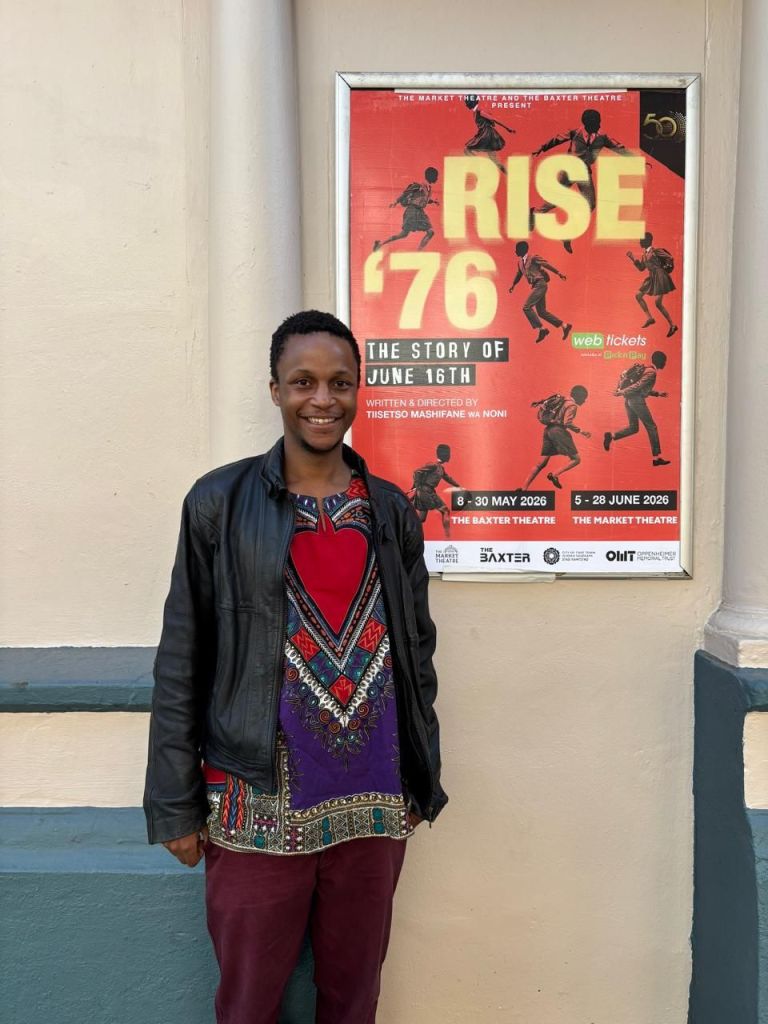
Rise ’76: The Story of June 16th — A Theatre Experience That Refuses To Let You Look Away

There are productions that entertain. There are productions that educate. And then there are productions like Rise ’76: The Story of June 16th, which reach beyond performance and become an act of collective mourning.

Currently staged at the Market Theatre, this devastating and deeply human production reconstructs the horrors of June 16, 1976 — the day school children marched against the forced implementation of Afrikaans as a medium of instruction under the apartheid government’s Bantu Education system. What begins as youthful resistance slowly descends into panic, violence and death. By the end, the audience is emotionally shattered.

Writer and director Tiisetso Mashifani wa Noni approaches the material with extraordinary care and urgency. The production understands that June 16 is not mythology. It is not a chapter in a textbook. It is trauma embedded into the DNA of South Africa. The play captures this with frightening intimacy.

The audience laughs early in the performance. There are moments of warmth, humour, innocence and youthful rebellion. The children dream. They tease one another. They speak with the fire and optimism of people who still believe change is possible. This is what makes the tragedy unbearable. The production deliberately allows the audience to fall in love with these young people before history crushes them.

Then the gunshots arrive.

And everything changes.

The sound design by Jannous Nkululeko Aukema is terrifying in its realism. Gunfire erupts through the theatre with shocking force. The screams are immediate. The panic spreads from stage to audience. In those moments, the production abandons theatrical comfort entirely. The audience does not merely observe violence — they feel trapped inside it.

Children are hunted.

Children are shot while running away.

Children as young as four years old become victims of a state that viewed Black education as a threat.

The production never sensationalises this brutality. Instead, it exposes the machinery of apartheid with brutal honesty. The police are not abstract villains here. They are agents of a violent system protecting oppression through bullets, intimidation and terror.

The cast delivers performances of astonishing discipline and emotional precision.

Alex Sono’s Bafana Buthelezi carries the emotional pulse of the production. There is vulnerability beneath the courage, and the performance beautifully captures the fear hidden inside youthful resistance.

Botlhale Mahlangu’s Alfie Ndlovu is deeply affecting, filled with spirit and innocence. The performance reminds the audience that the uprising was carried by ordinary children who simply wanted dignity.

Sbuja Dywili brings heartbreaking humanity to Melody Moloto, grounding the production emotionally and reminding audiences of the families destroyed by apartheid violence.

Zilungile Mbombo’s Sergeant Joseph “Razor” Tladi is chilling in authority and presence, while Ben Albertyn’s Constable Nicholaas De Villiers embodies the cold machinery of apartheid policing with frightening restraint.

Deon Lotz commands the stage as Lieutenant Colonel Theuns, portraying institutional power with unnerving realism, while Mfaneli Ntumbuka’s Kleynhans adds another layer to the system of intimidation and control surrounding the uprising.

What makes the ensemble exceptional is their ability to inhabit multiple characters seamlessly. The transformations happen in real time. Voices shift. Physicality changes. Energy transforms instantly. One moment a performer embodies humour and tenderness; the next, they become agents of terror or victims of unimaginable suffering. It is elite theatre craft.

The production moves with cinematic urgency, yet it never loses its theatrical soul.

Leopold Senekal’s set design is deceptively simple but emotionally loaded. The stage becomes classroom, township, protest route and battlefield through fluid transitions and carefully constructed spatial tension. The design never distracts from the performers; instead, it amplifies them. Every corner of the stage feels haunted by history.

Franky Steyn’s lighting design deserves enormous praise. Light becomes memory, fear and violence. Sudden shifts plunge scenes into chaos, while softer washes of light preserve fleeting moments of innocence before destruction arrives. During the protest sequences, the lighting traps the audience inside the confusion of the uprising itself. It becomes impossible to emotionally escape.

Noluthando “Texture” Lobese’s costume design roots the production firmly within the period while also preserving the humanity of the characters. The uniforms, civilian clothing and police attire become visual reminders of apartheid’s hierarchy and violence.

Yet perhaps the most devastating element of Rise ’76 is its connection to real people and real death.

No image from June 16 is more iconic than the photograph of Hector Pieterson — the dying thirteen-year-old boy carried by Mbuyisa Makhubo while Hector’s sister, Antoinette Sithole, runs beside them in anguish. The photograph, captured by photojournalist Sam Nzima, became one of the defining images of apartheid brutality and shocked the world.

The production understands the weight of this image.

It understands that Hector Pieterson was not merely a symbol. He was a child.

And it understands that even the man who carried him, Mbuyisa Makhubo, would eventually disappear into exile and tragedy, never fully escaping the trauma of that moment. His fate remains one of the painful unresolved stories of the uprising. Sam Nzima himself faced harassment and restrictions from the apartheid government after taking the photograph that exposed the regime’s cruelty to the world.

The play honours these histories without reducing them to museum pieces.

Instead, Rise ’76 asks urgent questions:

What happens when a government fears educated children?

What happens when language becomes a weapon?

What happens to parents forced to bury their children because those children demanded dignity?

These questions linger long after the final curtain.

That is the true achievement of this production. It does not simply teach history. It resurrects emotional memory.

The audience leaves emotionally exhausted, reflective and deeply moved.

At the Market Theatre — a venue historically intertwined with resistance art during apartheid — this production feels especially powerful. The theatre itself becomes part of the storytelling. Every silence inside the auditorium carries weight. Every gasp from the audience becomes part of the performance.

Rise ’76: The Story of June 16th is not easy theatre.

It is painful theatre.

Necessary theatre.

South African theatre at its absolute best.

This is the kind of production that reminds audiences why live performance matters. No film camera can replicate the tension of sharing physical space with performers recreating one of the darkest days in South African history. No screen can duplicate the collective silence of an audience processing grief together in real time.

The performers do not simply act.

They carry memory.

And they do so magnificently.

Congratulations Tiisetso Mashifane wa Noni and the whole team for a great show and a deserved standing ovation.

Book your tickets here

Interpretation of dreams

Interpretation of dreams

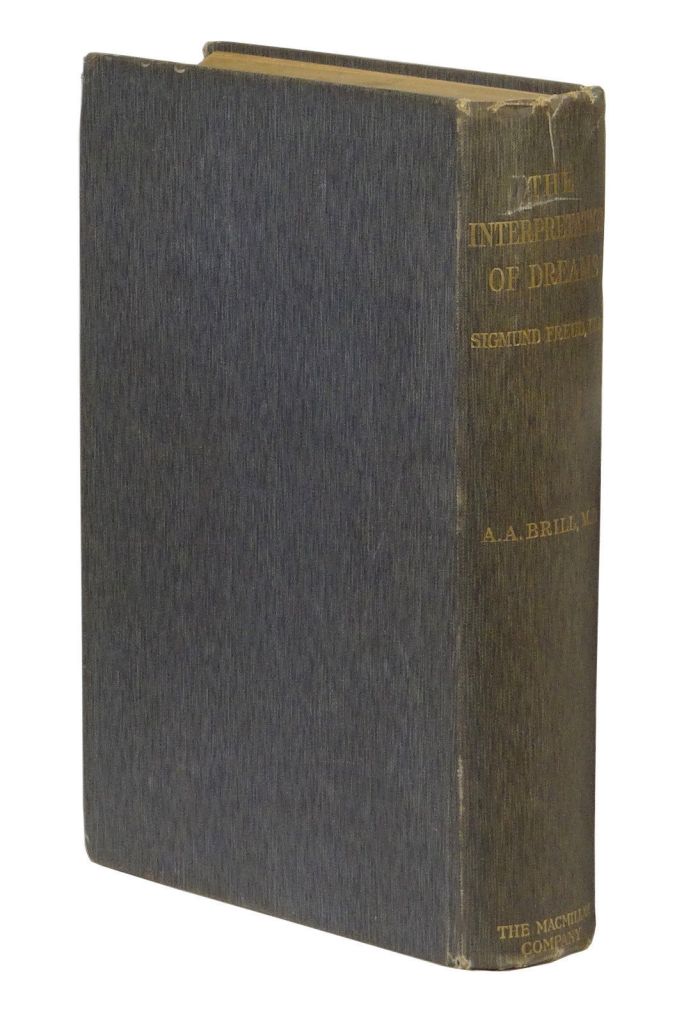
Ever since I started reading “The Interpretation of dreams” by Sigmund Freud, I have a relationship with my dreams. I am understanding myself a bit better. I should keep a dream journal. The dream as wish-fulfillment. The dream I had today was interesting. My interpretation of the dream is one of fatigue. In the dream I was walking long distances, I am with someone, female, identity not clear but we get along. We both walking but we are fatigued. The act of walking long distance is not a sacrifice, we both love it but we are still fatigued. Something has to give, we can’t keep doing this, there is no reason to keep doing this, there is no incentive to keep doing this, love is not enough, we can’t keep walking, we are fatigued but we are still cheerful and happy.

Intuitively I understand the dream, I’ve been feeling so limited. Feeling so boxed in and disillusioned with life and everything. I do feel fatigued, I can’t keep walking the extra mile. I can’t keep putting people over when they turn a blind eye to my needs. I am fatigued, I am tired. Why do I feel so tired? I think I feel undervalued and unappreciated.

My friends recently went to Durban and they left me behind. I didn’t have the money to take the trip but that can’t be the determining factor. They had transport, they had enough. They left me behind. They never would have done that in the past. It’s like there’s a bridge between me and them and I can’t get over. I don’t feel close to anyone anymore. This bridge is frustrating! It’s a metaphor for my life, I can’t get over and make money in my professional life and yet I am still walking. There’s something in between, hindering me from getting to my destination. It induces feelings of unworthiness, I feel stuck, I have feelings of shame, I am isolated, I have no connections. I am tired, fatigued, nothing I do is bringing the desired effects, even my lifelong friends are indifferent towards me. I am cool with not having gone to Durban, I wouldn’t want anyone to harber secret resentments towards me because I went and didn’t pay – that would be so horrible! However, the trip did have an impact on my thoughts and apparent dream.

I do think the dream is addressing my people pleasing tendencies. It’s a big saboteur, it’s draining me and hence the fatigue. I may secretly yearn for validation from others and hence the cheerful disposition from walking long distances despite my fatigue. The dream is both literal and figurative. Oh Freud, what a mess!