CELESTIAL BODIES II
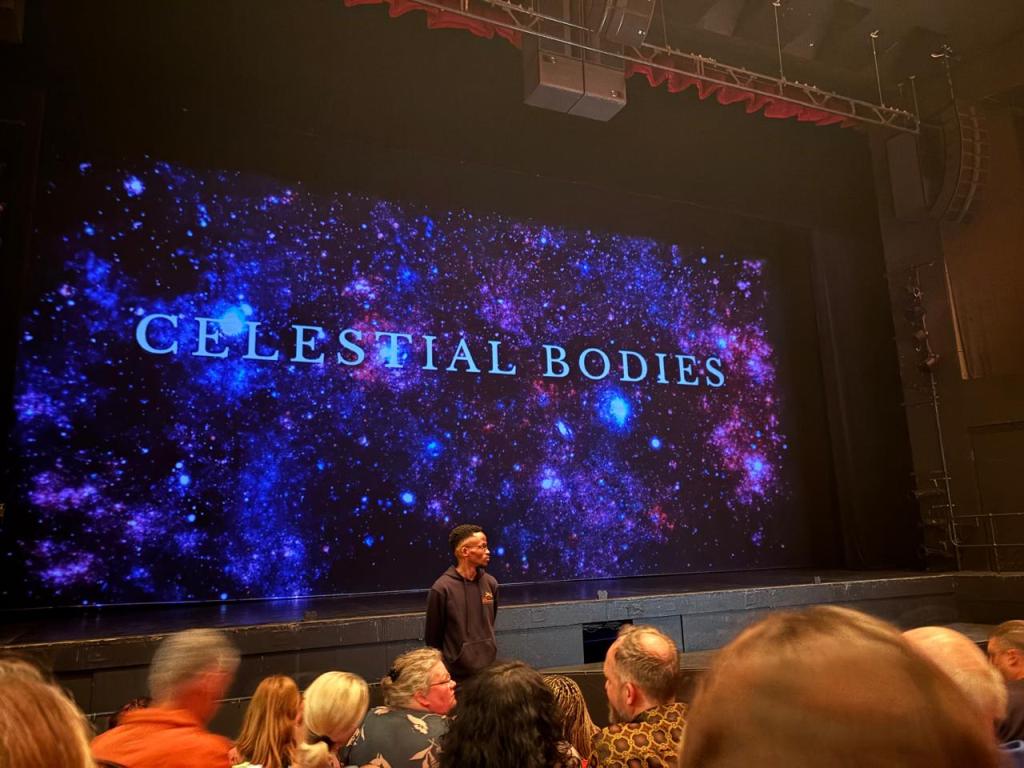
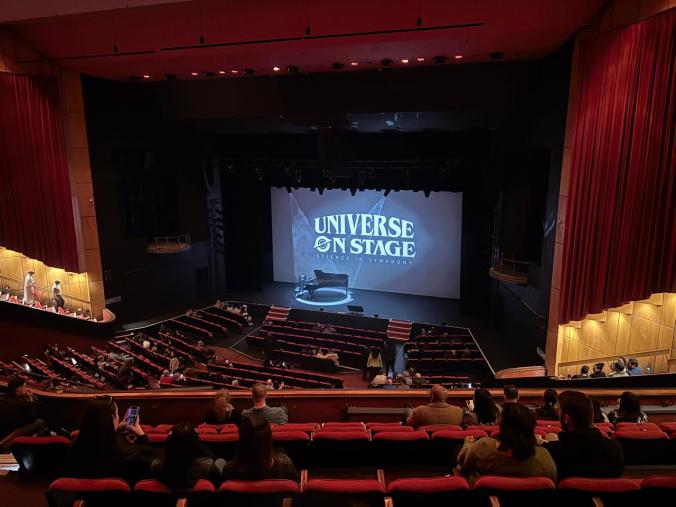
There are evenings that entertain you, and then there are evenings that rearrange something inside you—Celestial Bodies at the Keorapetse William Kgositsile Theatre, UJ Arts Centre did the latter.


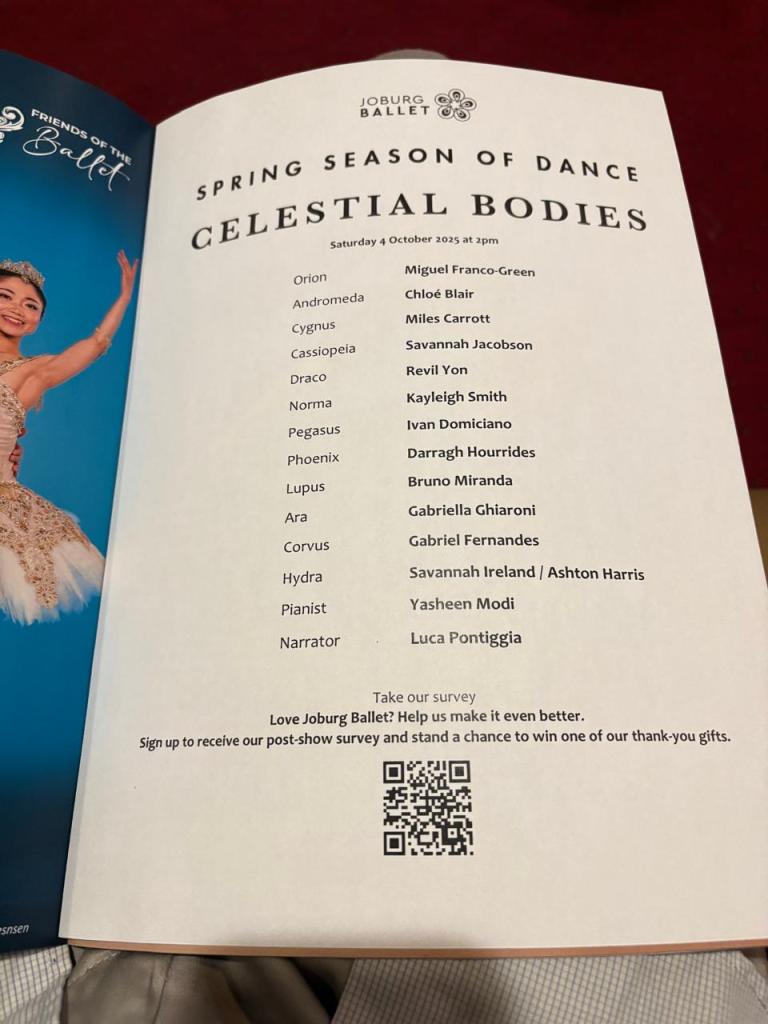
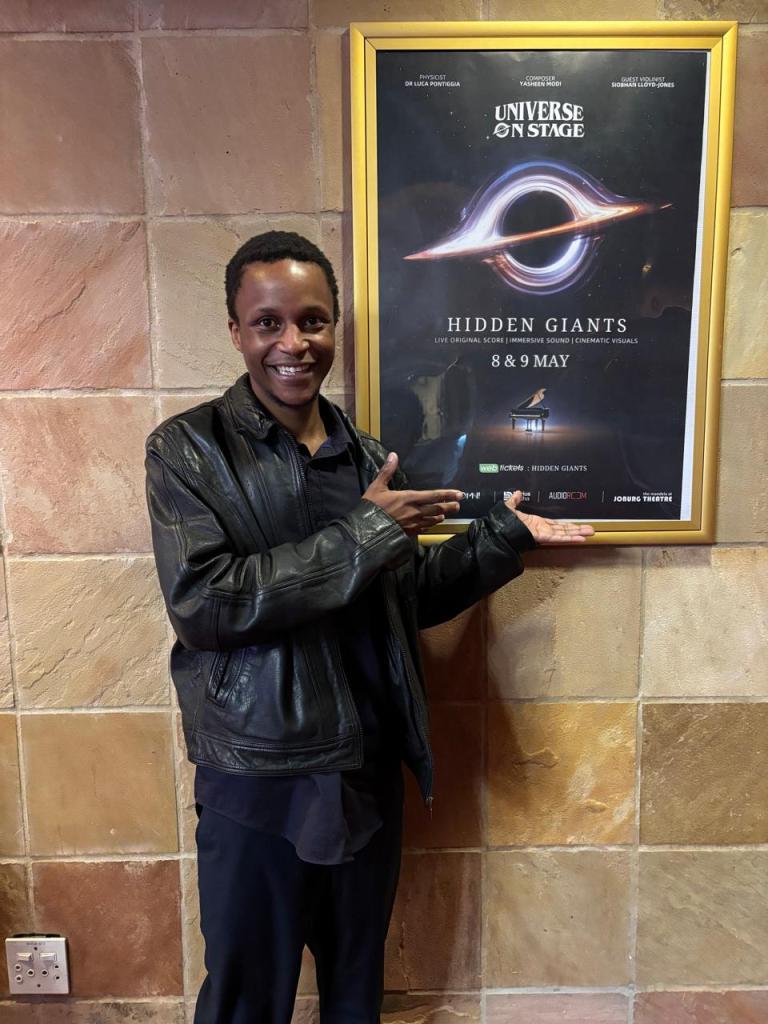
Having first encountered this collaboration at Joburg Theatre, I walked in with expectation—but also curiosity. That first staging was already a triumph: an ambitious fusion between Joburg Ballet and Universe on Stage, where physics met plié, and cosmology unfolded through corps de ballet formations. It was intellectually rich, anchored by the brilliance of Dr. Luca Pontiggia and the ever-commanding musical presence of Yasheen Modi. You learned. You admired. You were moved.
But this second experience? This was transcendence.

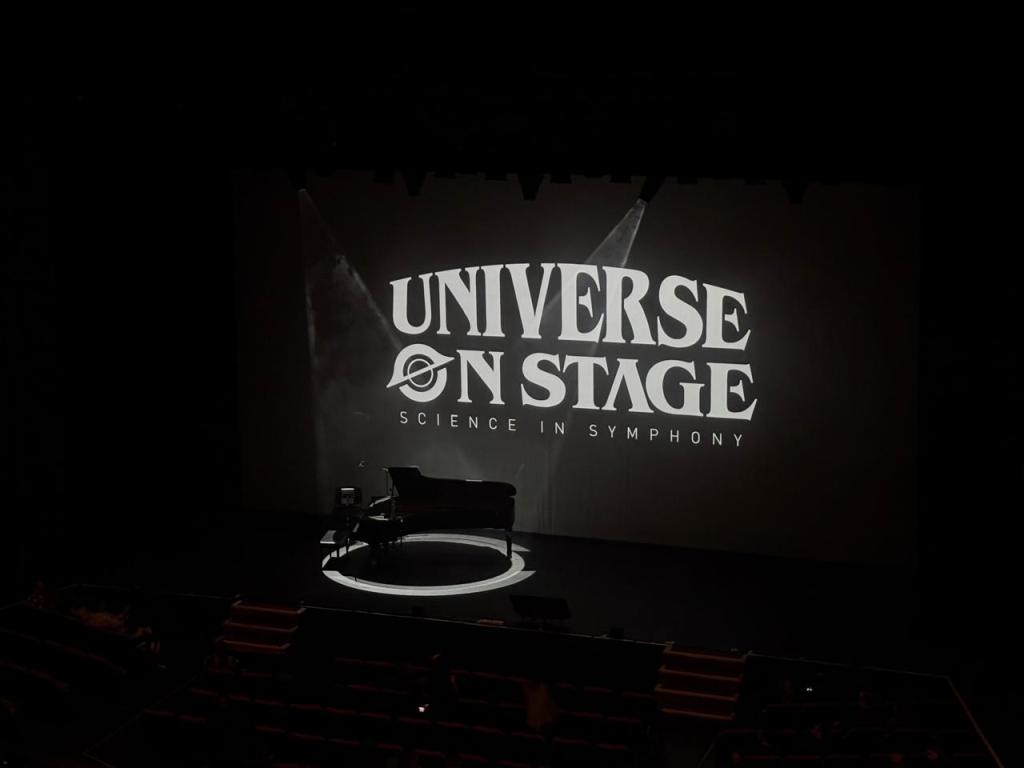
From the moment the auditorium dissolved into darkness—courtesy of Simon King’s restrained yet devastatingly effective lighting design—you felt it: this would lean deeper into movement, into embodiment. Less lecture, more language of the body. And that is exactly what unfolded.
The stage became a living cosmos.
Choreographed with striking clarity and imagination by Mario Gaglione, the work expanded into a more dance-forward interpretation of the universe’s grand narrative. Where the first leaned into exposition, this iteration trusted the dancers—their épaulement, their ballon, their breath—to tell the story. And they did, with staggering command.
Act II opened like a revelation.
Tammy Higgins, Monike Cristina, and Ryoko Yagyu entered not merely as performers, but as forces—gravitational, undeniable. Higgins carved space with precision; her lines were immaculate, her port de bras both fluid and declarative. Yagyu—still doing the impossible—defied physics itself, her turns sustained with a control that bordered on supernatural, her extensions reaching into that rare territory where technique dissolves into poetry.
And then, Monike Cristina.
There are moments in art where time folds in on itself. Watching her here brought back the first time—that moment in Charlie and the Chocolate Factory—when ballet ceased to be distant and became something visceral, something personal. She moves with an authority that doesn’t demand attention—it simply commands it. Her adagio work was hypnotic, each développé unfolding like a secret revealed in slow motion. Her presence? Regal. Her musicality? Innate. This wasn’t just a performance—it was a reunion with a kind of artistic truth that stays with you.
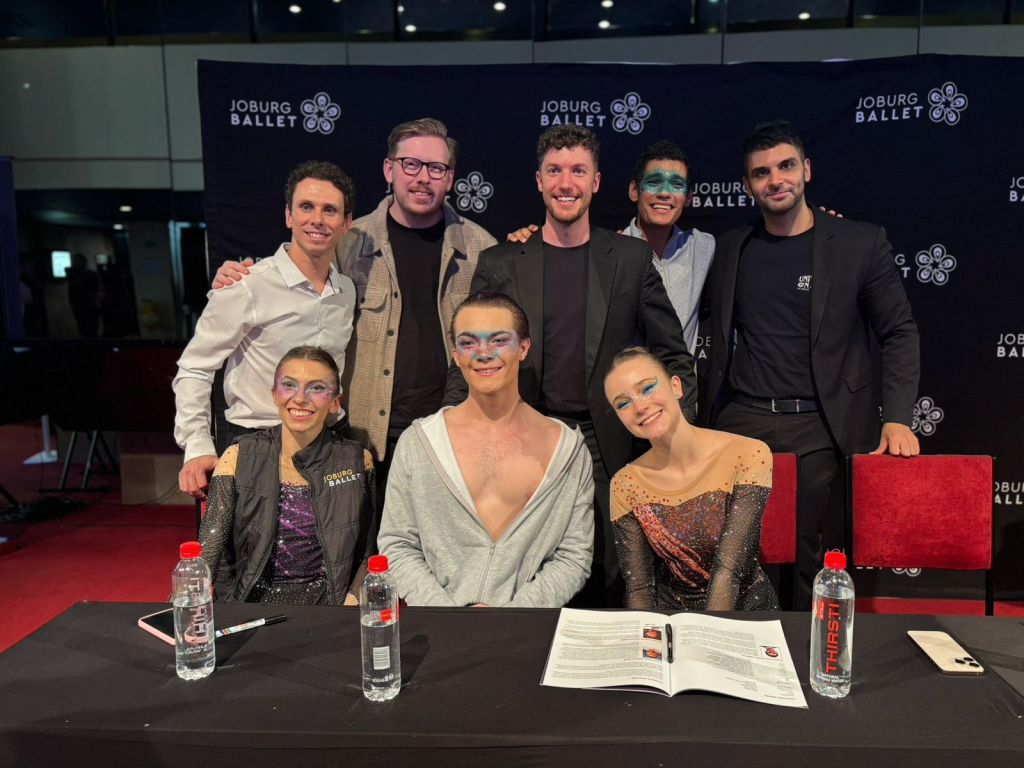
The ensemble—Chloe Blair, Latoya Mokoena, Savannah Jacobson, Kayleigh Smith, Gabriella Ghiaroni, Daria D’Orazio, Isabella Godhino, Revil Yon, Ivan Domiciano, Bruno Miranda, Miles Carrott, Miguel Franco Green—were nothing short of exceptional. The corps moved like constellations: unified yet individual, precise yet alive. Their allegro passages shimmered with synchronicity, their grand jetés slicing through space like comets, their pirouettes anchored in discipline but lifted by spirit.
What makes Celestial Bodies so singular is its seamless integration of disciplines.
Darius Botha’s visuals remain an unsung triumph—cosmic imagery that doesn’t overwhelm but elevates, allowing the dancers to exist within a universe that feels infinite yet intimate. The animation breathes with the choreography, never competing, always conversing.
The costumes by Mari Robinson and Mario Gaglione deserve their own ovation: celestial textures, flowing silhouettes, garments that respond to movement, amplifying each arabesque line and every suspension in mid-air.
And then there is the music.
Yasheen Modi does not accompany—he summons. His score is alive, responsive, deeply felt. At times thunderous, at times achingly delicate, it binds the entire production together. Watching him at the piano, just off to the side, is to witness another kind of choreography—fingers in perpetual motion, shaping emotion in real time.
Threading it all together is Dr. Luca Pontiggia, whose narration remains insightful and grounding—but in this iteration, wisely restrained. The science is still there—the Big Bang, the birth of stars, the terrifying beauty of black holes—but now it breathes. It gives space for interpretation, for feeling. The fear factor of science dissolves not just through explanation, but through embodiment.
Behind the scenes, Vanessa Nicolau ensures a production of remarkable cohesion—every cue, every transition, every moment landing with precision.
And that’s what defines this version: balance.
Where the first leaned toward the intellectual, this one surrenders to the emotional without losing its mind. It listens to its audience—the quiet murmurs after the first show, the shared desire for more dance, more immersion—and delivers, generously.
You don’t just watch Celestial Bodies.
You feel it in your chest. In your breath. In the silence between notes and the suspension at the peak of a jump. It is awe. It is wonder. It is gratitude.

Walking out of the theatre, there is a stillness—a rare, sacred calm. As if, for a moment, you’ve touched something infinite.
And somehow, impossibly, it touched you back.

Congratulations Joburg Ballet and Universe on Stage for a great show and a deserved standing ovation.