WHEN AFRICA SPEAKS, THE WORLD MUST LISTEN
Kaza Kamba, Cinema, Palestine, Sudan and a Day at the Market Theatre
There are days when you go to the theatre simply to watch something.
And then there are days when the theatre watches you.
It looks back at you.
It asks you questions.
It disturbs you.
It educates you.
It confronts the comfortable little assumptions you have carried around in your head and forces you to examine them beneath the harsh light of history.
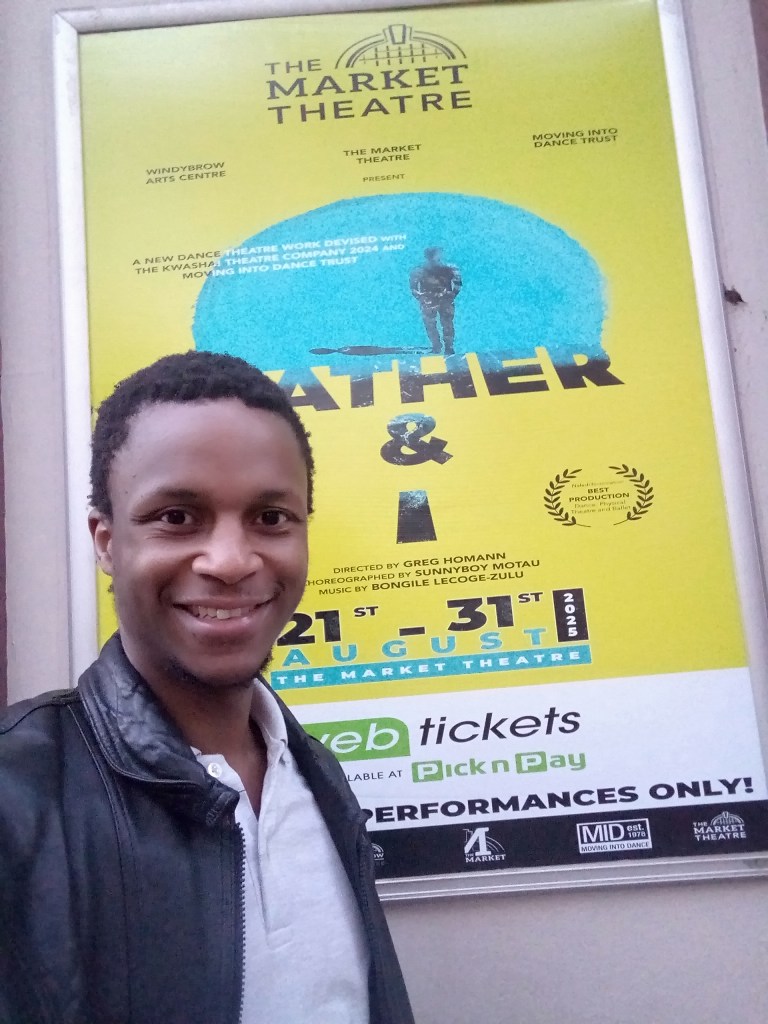
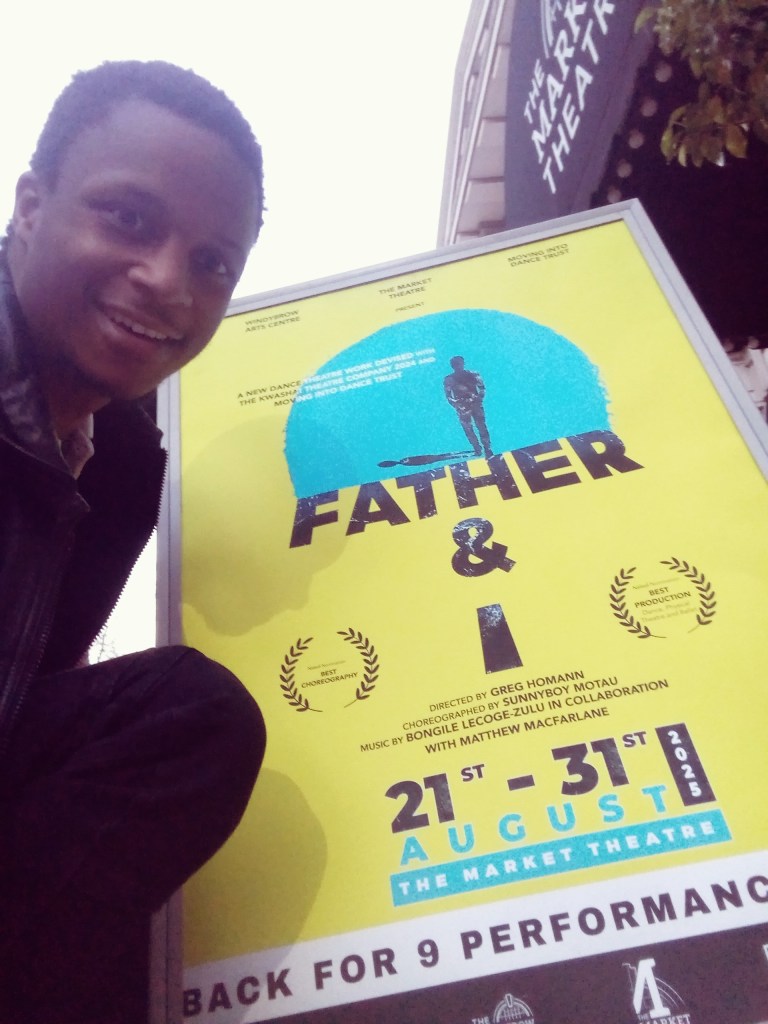
On Saturday, 22 August 2026, I arrived at the Market Theatre for the Kaza Kamba Pan African Theatre Festival, a festival curated by Bobby Rodwell and Lesego Rampolokeng, and I quickly realised that I was not merely attending a cultural festival.
I was entering a conversation with Africa.
A conversation conducted through theatre, cinema, literature, history, politics, fashion, food, memory, resistance and the restless imagination of a continent that refuses to be reduced to the stories others have historically told about it.
Having attended the inaugural edition of Kaza Kamba, I could already see the difference.
The festival is growing.
It is finding its voice.
It is becoming more confident in its ambition.
And perhaps most importantly, it is creating a space in which Africa is not being presented as an object to be studied from a distance, but as a living, breathing intellectual, artistic and political force.
The Market Theatre itself seemed to understand the assignment.
The precinct was alive.
Outside the theatre, hawkers and creatives had transformed the space into a small African marketplace. There were books, beads, necklaces, clothing, bags and food. There were colours everywhere. Textures. Fabrics. Voices. Movement.


Africa was not merely on the programme.
Africa was in the air.
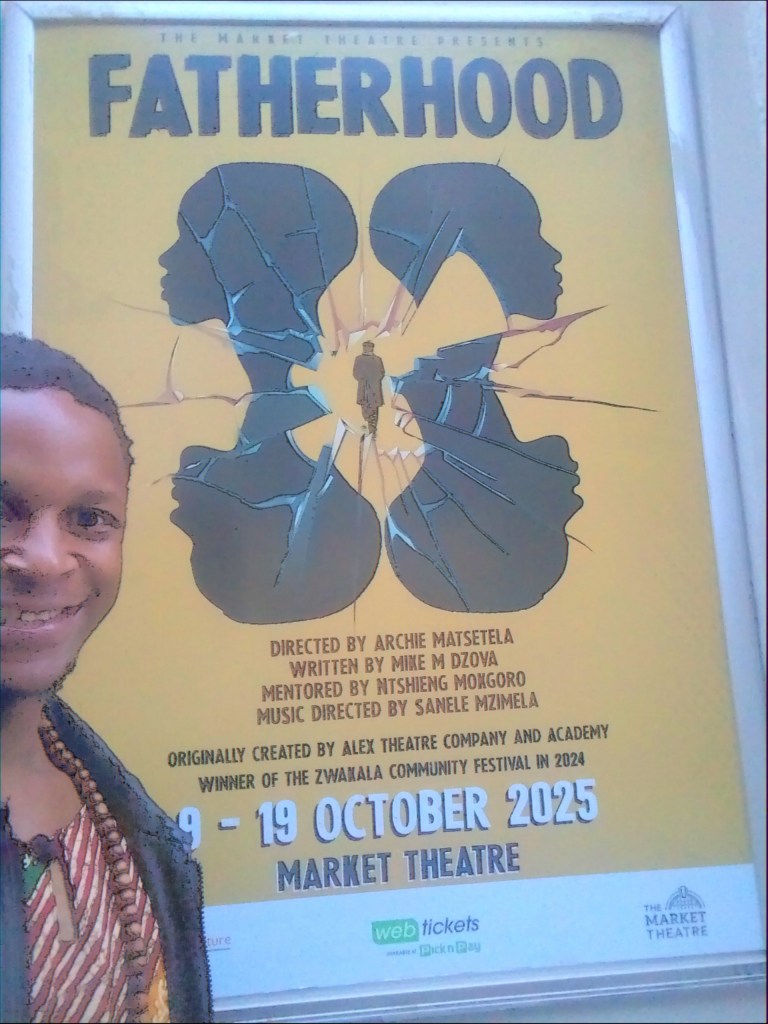
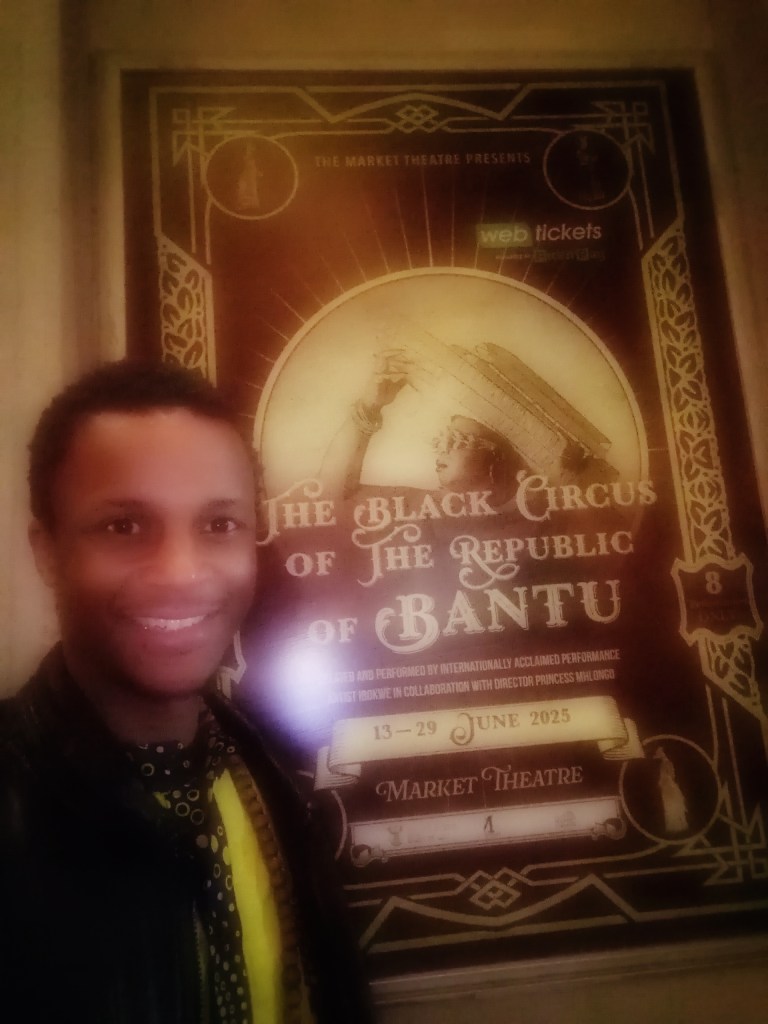
I bought myself a beautiful stone-green necklace.
It sat beautifully against my African-print shirt, as though the two had been waiting for each other.
And, because sometimes history is not complete without a photograph, I stopped to take a picture with the statue of the legendary Brenda Fassie.

But I digress.
Because at precisely 12H00, the day became something much heavier.
Something much deeper.
Something unforgettable.
—
THE BATTLE OF ALGIERS: WHEN A FILM BECOMES A WOUND
The Barney Simon Auditorium darkened.
The screen came alive.
And suddenly Johannesburg disappeared.
We were in Algeria.
Gillo Pontecorvo’s The Battle of Algiers (1966) is one of those films that makes you understand why cinema can be more than entertainment.
It can be testimony.
It can be political memory.
It can be a weapon.
It can be an archive.
It can make history feel dangerously close.
The film reconstructs the Algerian struggle against French colonial rule, concentrating particularly on the Battle of Algiers and the years of insurgency between 1954 and 1957. The Algerian War itself would ultimately end with independence in 1962.
But Pontecorvo does not make history feel safely historical.
He makes it feel immediate.
The film opens in 1957, with French paratroopers closing in on Ali La Pointe’s hiding place. A captured member of the resistance has revealed the location. The French soldiers surround the building.
Then Pontecorvo takes us backwards.
1954.
The beginning.
The beginning of an uprising.
The beginning of a transformation.
The beginning of a revolution that will consume bodies, streets, families and consciences.
And at the centre of it is Ali La Pointe, played by Brahim Hadjadj.
Ali begins as a petty criminal, a street hustler, a man whose life exists on the margins of colonial society. But imprisonment and humiliation awaken something within him. He becomes radicalised. He is recruited into the FLN and gradually transforms from a man surviving colonial Algeria into a man willing to die fighting it.
The film’s protagonist is therefore not born a revolutionary.
He becomes one.
That distinction matters.
Because Pontecorvo understands that revolutions are not simply produced by ideology.
They are produced by experience.
By humiliation.
By injustice.
By witnessing.
By the slow accumulation of wounds.
Ali’s transformation is therefore also the transformation of Algeria itself.

—
THE CASBAH AS A CHARACTER
One of the most extraordinary things about The Battle of Algiers is that Algiers itself seems to become a character.
The Casbah breathes.
It watches.
It hides people.
It protects them.
It betrays them.
It becomes a labyrinth of resistance.
Pontecorvo’s visual approach deliberately resembles documentary and newsreel footage. He used many non-professional actors, and the crowds of the Casbah were essential to the film’s sense of collective life. The film’s imagery is deliberately rough, grainy and immediate rather than polished.
This is not a beautiful war film in the conventional sense.
It is beautiful because it refuses to beautify war.
The camera does not give us the comforting distance of spectacle.
It puts us inside the crowd.
Inside the panic.
Inside the smoke.
Inside the faces.
Inside the screaming.
Inside the uncertainty.
Bombs explode.
People run.
Bodies fall.
Women disguise themselves.
Messages are passed.
Weapons move through hidden spaces.
French soldiers search houses.
The resistance disappears into the architecture of the Casbah.
The city itself becomes a battlefield.
And Pontecorvo constantly reminds us that the people who inhabit this battlefield are not abstractions.
They are human beings.

—
THE WOMEN OF THE RESISTANCE
The film’s treatment of women is particularly significant.
Djamila, Zohra and Hassiba become part of the FLN’s urban operations. They are shown navigating the colonial checkpoints and social expectations placed upon them, using clothing, appearance and movement to cross boundaries that might otherwise be inaccessible to male fighters.
Their bodies become part of the machinery of resistance.
The sequence in which the women prepare themselves to cross into the European quarter is extraordinary.
The revolutionary act is almost invisible.
Hair.
Clothes.
Make-up.
Posture.
Identity.
Transformation.
And then:
The bombs.
The film refuses to pretend that resistance is clean.
The FLN carries out bombings against civilians.
The French response becomes increasingly brutal.
Torture becomes institutionalised.
Executions occur.
People disappear.
The distinction between military strategy and civilian suffering becomes horrifyingly blurred.
And that is one of the film’s greatest strengths.
Pontecorvo does not allow the viewer the comfort of simple moral distance.
He forces us to confront the machinery of violence itself.

—
COLONIAL POWER AND THE TORTURE CHAMBER
Opposite Ali stands Lieutenant-Colonel Mathieu, played by Jean Martin.
Mathieu is not portrayed as a cartoon villain.
That makes him more frightening.
He is disciplined.
Intelligent.
Controlled.
Strategic.
He speaks the language of order.
He believes in the mission.
And he understands that the French military cannot defeat an invisible enemy without extracting information.
So interrogation becomes torture.
Torture becomes method.
Method becomes policy.
And policy becomes violence administered with bureaucratic efficiency.
The film’s torture scenes are devastating precisely because Pontecorvo refuses to sensationalise them.
There is no triumphant music.
No heroic framing.
No escape.
Only the cold machinery of domination.
Mathieu essentially embodies the logic of colonial counter-insurgency: if the population is the environment in which the resistance survives, control the population.
But the film asks an uncomfortable question:
What happens when a state destroys the very humanity it claims to be protecting?
And perhaps an even more uncomfortable one:
Can an empire maintain moral legitimacy while using brutality to preserve its power?

—
THE CINEMA OF VIOLENCE
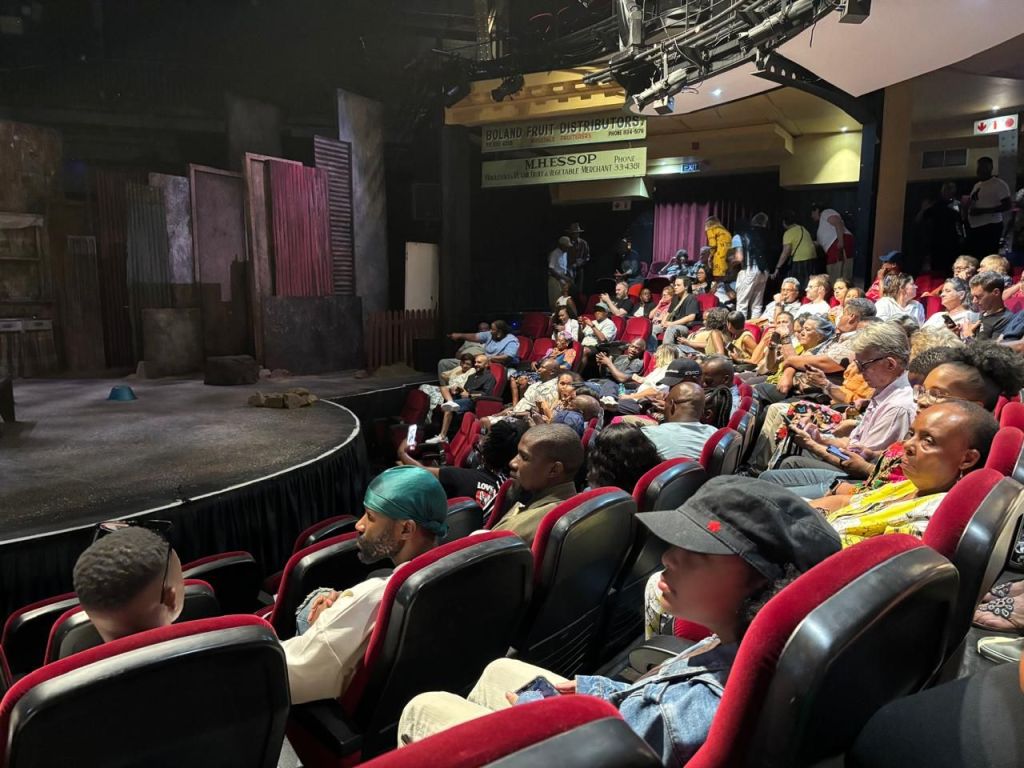
Watching The Battle of Algiers inside the Barney Simon Auditorium was an experience in itself.
The auditorium became a cinema.
The darkness was almost physical.
The screen became a window into another century.
And the audience was not passive.
There were people crying.
People sobbing.
People breathing heavily.
People sitting in silence.
Because violence on a screen can still become violence inside the body.
The film contains bombings, killings, torture, executions and death, but its deepest subject is not violence.
It is human dignity.
What does a person become when they are denied dignity?
What will a people do when they are denied self-determination?
How far will people go for freedom?
And what happens when the oppressor believes that freedom is something it has the right to deny?
These questions travelled far beyond Algeria.
They travelled across the decades.
And sitting there in Johannesburg in 2026, I could not help thinking about how many of Africa’s struggles continue to echo one another.
Algeria.
South Africa.
Namibia.
The Congo.
Western Sahara.
Sudan.
Palestine.
Different histories.
Different political circumstances.
Different languages.
Different decades.
And yet the vocabulary of domination often sounds disturbingly familiar.
Land.
Occupation.
Extraction.
Violence.
Erasure.
Resistance.
Memory.
Freedom.

—
AND THEN THERE WAS TARANTINO
As one of Quentin Tarantino’s biggest fans, I found myself thinking about Inglourious Basterds.
Not because the films are identical.
They are not.
But because there are moments when cinema seems to speak across generations.
There is something in The Battle of Algiers that feels strangely familiar to Tarantino’s cinematic universe.
The tension.
The claustrophobia.
The use of architecture.
Characters hiding inside confined spaces.
The sense that a secret location can become a death trap.
The sudden eruption of violence.
The juxtaposition of ordinary spaces with extraordinary brutality.
And, perhaps most importantly, the way violence can be staged with a terrible kind of visual precision.
The comparison is particularly interesting because Inglourious Basterds itself is a film obsessed with cinema, history and the possibility of rewriting history through cinematic imagination.
But we should be careful.
I could not find reliable evidence establishing that Tarantino specifically based those sequences on The Battle of Algiers.
So I would call it a cinematic kinship rather than a proven borrowing.
And perhaps that makes the connection even more fascinating.
Great filmmakers often speak to one another without necessarily speaking directly.
One filmmaker creates an image.
Decades later, another filmmaker creates another image.
And somewhere between them, cinema remembers.
—
THE BEAUTY INSIDE THE HORROR
There is a paradox at the heart of The Battle of Algiers.
It is horrifying.
And it is beautiful.
Not beautiful because the violence is beautiful.
Beautiful because the filmmaking is extraordinary.
Pontecorvo understands composition.
Rhythm.
Silence.
Crowd movement.
Faces.
Architecture.
Sound.
He understands that cinema can create meaning without explaining everything.
The black-and-white photography gives the film the texture of memory.
Sometimes it looks like documentary.
Sometimes like news footage.
Sometimes like stolen historical evidence.
The effect is devastating.
You forget that actors are performing.
You begin to feel that you are watching something that actually happened.
And in a sense, you are.
The film draws from historical events and from the experiences of people who participated in them. FLN commander Saadi Yacef, who appears in the film as El-Hadi Jaffar, was involved in the film’s production, while Brahim Hadjadj was selected to play Ali La Pointe despite having no professional acting background.
The result is cinema with dirt beneath its fingernails.
Cinema that smells of smoke.
Cinema that sweats.
Cinema that bleeds.

—
FROM ALGIERS TO PALESTINE
At 15H00, the conversation moved from cinema to literature.
We gathered for the launch of Rising for Palestine: Africans in Solidarity for Decolonisation and Liberation, edited by Raouf Farrah and Suraya Dadoo.
And suddenly the afternoon seemed to be answering the morning.
If The Battle of Algiers asked us to look at colonial violence through cinema, Rising for Palestine asked us to look at liberation through African intellectual memory.
The book is an anthology bringing together African and Palestinian scholars, writers, activists and intellectuals. Its central proposition is that African and Palestinian struggles cannot simply be understood as isolated tragedies; they are connected through histories of colonialism, apartheid, genocide, occupation, extraction and resistance.
The editors are themselves part of that conversation.
Raouf Farrah is an Algerian writer, researcher and activist whose work focuses on migration and geopolitics in North Africa and the Sahel.
Suraya Dadoo is a South African writer and researcher whose work focuses particularly on African solidarity with Palestine and Israeli diplomacy in Africa.
And the book is deliberately expansive.
Its contributors come from places including South Africa, Algeria, Namibia, the Democratic Republic of Congo, Kenya, Sudan, Uganda, Palestine and Western Sahara.
It is not a book asking Africa to look at Palestine as a distant problem.
It is asking Africa to recognise something of itself.

—
A BOOK OF ENTANGLED STRUGGLES
The structure of Rising for Palestine is revealing.
The first section, “Legacies of Violence: Genocide, Colonialism and Oppression,” places Palestine alongside histories of violence in Africa.
Ariella Aïsha Azoulay writes on genocide.
Jephta Uaravaera Nguherimo reflects on growing up under apartheid and occupation in Namibia.
Kambale Musavuli examines Congolese and Palestinian sovereignty.
Shahd Hammouri considers Palestine and international law.
Maha Abdallah examines settler colonialism, apartheid, genocide and the failure of international institutions.
The argument is not that every historical experience is identical.
It is that colonial systems can produce recognisable patterns.
The book asks us to notice those patterns.
Then comes “Solidarity and Resistance – Building Shared Struggles.”
Here the conversation widens.
Fethi Nimer examines internationalism.
Sean Jacobs considers South Africa’s evolving relationship with Palestine.
Saleh Hijazi looks at African institutions and solidarity.
Roshan Dadoo examines South Africa’s foreign-policy contradictions.
Zahid Rajan traces Kenya’s road from Mau Mau to Gaza.
Raouf Farrah connects the Maghreb, Palestine and the Casbah.
Abdal Karim Ewaida explores African and Palestinian quests for justice.
Malainin Lakhal considers Palestinian and Sahrawi struggles for self-determination.
The history begins to feel like a web.
Not a straight line.
A web.
One struggle touching another.
One memory awakening another.
One wound recognising another wound.

—
SOUTH AFRICA AND PALESTINE
For South Africans, this conversation carries a particular emotional weight.
We know apartheid.
We know what it means for a government to organise society through racial classification and spatial control.
We know what it means for land to be political.
We know what it means for a population to resist a system that has attempted to make injustice appear normal.
We know Sharpeville.
Soweto.
Robben Island.
We know Mandela.
We know the language of liberation.
And therefore the relationship between South African solidarity with Palestine and South Africa’s own history is not simply diplomatic.
It is historical.
Emotional.
Intellectual.
Political.
The book examines that relationship critically rather than pretending it is without contradiction. Roshan Dadoo’s contribution, for example, explicitly asks whether South African solidarity with Palestine can withstand its internal contradictions.
That is important.
Because solidarity should not mean surrendering one’s critical faculties.
True solidarity requires honesty.

—
THE AFRICAN QUESTION
One of the most powerful ideas emerging from the book is that liberation cannot be fragmented.
If we teach African history as a collection of isolated national tragedies, we lose the larger picture.
Namibia becomes Namibia.
The Congo becomes the Congo.
Western Sahara becomes Western Sahara.
Palestine becomes Palestine.
Sudan becomes Sudan.
But empire has never been so neatly divided.
Colonialism travelled.
Ideas travelled.
Weapons travelled.
Capital travelled.
Techniques of control travelled.
And resistance travelled too.
That is why Rising for Palestine contains discussions of Israeli engagement in Africa, Christian Zionism, surveillance technologies, media, climate crisis and the politics of international institutions.
The final section, “Reimagining Liberation – Decolonizing Our Future,” includes contributions on decolonising terrorism, climate justice, revolutionary media and Pan-African feminist solidarity.
The message is ultimately larger than Palestine.
It is about the kind of world we are willing to build.
—
MARCHING, SPEAKING, RISING
During our discussion, questions of demonstrations, Free Palestine, Afriphobia, Israel and African unity came into the room.
But what stayed with me was the idea that solidarity is not merely a slogan.
It is a practice.
It is memory.
It is education.
It is refusing to allow suffering to become ordinary.
It is understanding that political language has consequences.
And it is refusing the fragmentation that allows people to say:
“That’s their problem.”
Perhaps that is one of the great dangers of our time.
The multiplication of tragedies until we become numb.
Another war.
Another bombing.
Another photograph.
Another dead child.
Another refugee.
Another protest.
Another hashtag.
Another day.
Rising for Palestine pushes against that numbness.
It asks us to remember.
—
AND THEN SUDAN SPOKE
The day was not finished.
After the book launch, I returned to the cinema for Hind Meddeb’s Sudan, Remember Us (2024).
And suddenly the entire day came together.
Algeria had spoken.
Palestine had spoken.
Now Sudan spoke.
And Sudan did not whisper.
It sang.
It shouted.
It wrote poetry.
It painted.
It danced.
It marched.
It remembered.
It resisted.
Sudan, Remember Us follows a generation of young Sudanese activists and artists whose dreams of freedom emerged from the 2019 revolution that brought down Omar al-Bashir’s thirty-year dictatorship. Meddeb had travelled to Khartoum during the uprising and followed young people who believed that a democratic, civilian Sudan was possible.
Their revolution was extraordinary because it was not simply political.
It was cultural.
Young people used poetry.
Music.
Chants.
Murals.
Performance.
Art.
Words.
Their message was devastatingly simple:
Words are stronger than bullets.
And then the bullets came.

—
THE REVOLUTION THAT REFUSED TO DIE
There is something almost unbearable about watching hope being born and then watching power attempt to kill it.
In 2019, the streets of Khartoum became spaces of possibility.
People believed another Sudan was possible.
A Sudan not ruled by military dictatorship.
A Sudan governed by civilians.
A Sudan in which democracy was not an abstract word but a lived reality.
The dictator fell.
But the military did not disappear.
And the revolution was not allowed to simply become democracy.
The 2021 military coup shattered the fragile transition.
Then came war.
In April 2023, conflict erupted between the Sudanese Armed Forces and the Rapid Support Forces.
The country descended into devastation.
The revolution’s young dreamers suddenly found themselves living through another nightmare.
The streets that had once been filled with protest became landscapes of fear.
Empty streets.
Dust.
Smoke.
Gunfire.
A fighter jet.
Machine guns.
Bodies.
Exile.
Loss.
The documentary moves from the optimism of revolution into the horror of war. Its young subjects attempt to preserve the revolutionary imagination through poetry and music even as repression and violence close in around them.
And this is where Meddeb’s film becomes something more than a documentary.
It becomes an elegy.

—
ART AS A FORM OF SURVIVAL
The most beautiful thing about Sudan, Remember Us is that the young people refuse to surrender their imagination.
They are surrounded by violence.
And they create.
They are surrounded by death.
And they write.
They are surrounded by fear.
And they sing.
They are surrounded by destruction.
And they dream.
This is not naïveté.
It is resistance.
Because a regime can imprison a body.
It can kill a demonstrator.
It can destroy a building.
It can silence a street.
But imagination is harder to imprison.
A poem can survive.
A song can survive.
A photograph can survive.
A memory can survive.
A story can survive.
And once a story survives, the dead are not entirely gone.
They remain inside the memory of those who continue.

—
THE NILE
Yet the film’s hope exists alongside unimaginable brutality.
Demonstrators were killed.
Bodies were reportedly thrown into the Nile.
The river that has sustained civilisation becomes, in the horror of political violence, a repository for the dead.
There is something almost mythological about that image.
The Nile carries the bodies.
But it also carries memory.
Water moves.
History moves.
The dead move with it.
And perhaps that is why the title Sudan, Remember Us feels so important.
Remember us.
Remember that we were here.
Remember that we dreamed.
Remember that we marched.
Remember that we sang.
Remember that we believed.
Remember what was done to us.
Remember that we wanted democracy.
Remember that we wanted dignity.
Remember that we wanted a future.
Remember us.

—
THE Q&A: WHEN THE FILM LEAVES THE SCREEN
After the film, we had a Q&A.
A panel of Sudanese voices sat before us.
And suddenly the film was no longer something we could discuss from a safe distance.
The people in the room carried the history.
They spoke about war.
Death.
Assistance.
Loss.
Revolution.
Hope.
The experience of Sudan.
The pain of watching a country bleed.
And the stubbornness of continuing to believe that another future is possible.
This was perhaps the most important part of the screening.
Because documentaries can show us.
But conversation allows us to listen.
The film had given us images.
The panel gave those images human context.
The discussion became an extension of the film.
And once again, I found myself thinking about Algeria.
Palestine.
Sudan.
Three different histories.
Three different contexts.
But the same fundamental human demand:
Let us live.

—
ONE DAY. THREE COUNTRIES. ONE CONVERSATION.
And suddenly I understood the genius of my day at Kaza Kamba.
I had started with Algeria.
I moved into Palestine.
I ended in Sudan.
But perhaps I had never really left the same conversation.
The Battle of Algiers showed me people fighting colonial domination with guns, bombs, underground networks and sacrifice.
Rising for Palestine asked me to think intellectually about the connections between African liberation and Palestinian freedom.
Sudan, Remember Us showed me young people fighting for democracy with poetry, music, protest and imagination.
Three forms of resistance.
Three languages.
Three generations of history.
But one word kept returning:
Freedom.
—
THE MARKET THEATRE AS A PAN-AFRICAN SPACE
That is what made Kaza Kamba feel so important.
It did not merely tell us that Africa matters.
It demonstrated it.
The festival transformed the Market Theatre into something larger than a theatre building.
It became an archive.
A classroom.
A cinema.
A bookshop.
A marketplace.
A political forum.
A cultural gathering.
A place where ideas could collide.
And outside, the hawkers completed the picture.
Books.
Beads.
Necklaces.
Clothes.
Bags.
Food.
Commerce and culture existing side by side.
The festival reminded me that African culture has never existed only on a stage.
It lives in what we wear.
What we eat.
What we read.
What we sing.
What we remember.
What we sell.
What we preserve.
What we protest.
What we create.
And sometimes it sits around your neck as a beautiful stone-green necklace that happens to match your African-print shirt.

—
BRENDA FASSIE WATCHES OVER THE HOUSE
And then there was Brenda.
The statue of Brenda Fassie stands as one of those beautiful reminders that culture has its own revolutionaries.
Brenda did not need a political podium to change South Africa.
She had a microphone.
A voice.
A body.
A personality.
A rebellious spirit.
She became the voice of people who were often ignored.
And standing beside her statue, taking a photograph, I was reminded that resistance does not always arrive wearing military fatigues.
Sometimes it arrives singing.
Sometimes dancing.
Sometimes writing.
Sometimes acting.
Sometimes making films.
Sometimes selling books outside a theatre.
Sometimes wearing African print.
Sometimes wearing a necklace.
Sometimes standing in an auditorium and asking difficult questions.

—
KAZA KAMBA IS GROWING
Having attended the inaugural edition, I can safely say that Kaza Kamba is growing from strength to strength.
And that matters.
Because Africa needs spaces where its own intellectual, artistic and political conversations can breathe.
Not spaces that flatten Africa into a tourist postcard.
Not spaces that reduce African culture to rhythm and colour while stripping it of history.
But spaces willing to confront the difficult things.
Colonialism.
War.
Apartheid.
Genocide.
Occupation.
Military dictatorship.
Racism.
Afriphobia.
Extraction.
Resistance.
Memory.
Freedom.
And hope.
Especially hope.
Because if there is one thing that connected the three experiences of my day, it was the refusal to surrender hope.
The Algerians refused.
The Palestinians continue to demand recognition of their humanity and right to liberation.
The young people of Sudan continue to dream of civilian democratic rule.
And the artists continue to create.

—
THE ARTIST AS WITNESS
Perhaps that is what art does at its highest level.
It remembers for us.
It makes us feel what statistics cannot.
A history book can tell you that thousands died.
A film can make you hear the gunfire.
A photograph can make you look into someone’s eyes.
A poem can make you inhabit their grief.
A theatre performance can place a human body before you and say:
Look.
Look at us.
Look at what happened.
Look at what is happening.
Do not look away.
That is why the arts matter.
And that is why a Pan-African festival matters.
Because Africa has been documented by outsiders for centuries.
Now Africa is increasingly documenting itself.
Speaking for itself.
Interpreting itself.
Arguing with itself.
Remembering itself.
And imagining itself.


—
A CONTINENT THAT REMEMBERS
When I finally left the Market Theatre, the day felt much longer than the hours I had spent inside the building.
I had entered at 12H00.
I had watched Algeria burn.
I had listened to Africa and Palestine speak to one another.
I had watched Sudan dream.
I had heard Sudanese voices describe war and hope.
I had walked through a marketplace of African creativity.
I had bought a necklace.
I had photographed myself beside Brenda Fassie.
And somewhere between the cinema screen, the book launch and the Q&A, I realised that Kaza Kamba had given me something more valuable than entertainment.
It had given me perspective.
It had reminded me that history is not dead.
It lives in the present.
Algiers lives in Palestine.
Palestine lives in African memory.
Sudan lives in the conscience of anyone who believes that people should be allowed to govern themselves.
And Johannesburg becomes the meeting place where these histories can sit together.
That is the power of culture.
That is the power of art.
That is the power of a festival.

—
WHEN AFRICA SPEAKS
Perhaps the most beautiful thing about Kaza Kamba is its refusal to separate art from life.
The festival understands something fundamental:
Art is life.
Cinema is history.
Literature is memory.
Music is resistance.
Theatre is testimony.
Poetry is survival.
And culture is the place where a people tells the world:
We were here.
We are here.
We remember.
We resist.
We create.
We dream.
We mourn.
We love.
We survive.
We rise.
That is what I carried home from the Market Theatre.
Not merely memories of three films and a book launch.
I carried Algeria.
I carried Palestine.
I carried Sudan.
I carried the voices of young revolutionaries.
I carried the words of writers.
I carried the faces of people whose histories refuse to disappear.
I carried the sound of an audience collectively holding its breath.
I carried the tears shed inside the Barney Simon Auditorium.
I carried the silence that followed.
I carried the questions.
And I carried that beautiful stone-green necklace around my neck.
Perhaps that is what a great cultural festival should do.
It should send you home carrying something.
A book.
An image.
A question.
A wound.
A melody.
A memory.
A new understanding.
Or perhaps simply the courage to look at the world differently.
Kaza Kamba did that for me.
It reminded me that Africa is not a footnote to world history.
Africa is not merely a location.
Africa is not a backdrop.
Africa is a conversation.
A philosophy.
A memory.
A wound.
A rhythm.
A resistance.
A future.
And on this particular day at the Market Theatre, Africa spoke through Algeria.
It spoke through Palestine.
It spoke through Sudan.
It spoke through cinema.
It spoke through literature.
It spoke through poetry.
It spoke through protest.
It spoke through beads and clothes and food and books.
It spoke through Brenda Fassie.
It spoke through the artists.
It spoke through the audience.
And when the lights came back on, I realised something:
Africa had not finished speaking.
It had only just begun.
And perhaps the responsibility of those of us who listen is simple.
Remember.
Listen.
Learn.
Tell the story.
And when the moment comes—
rise.