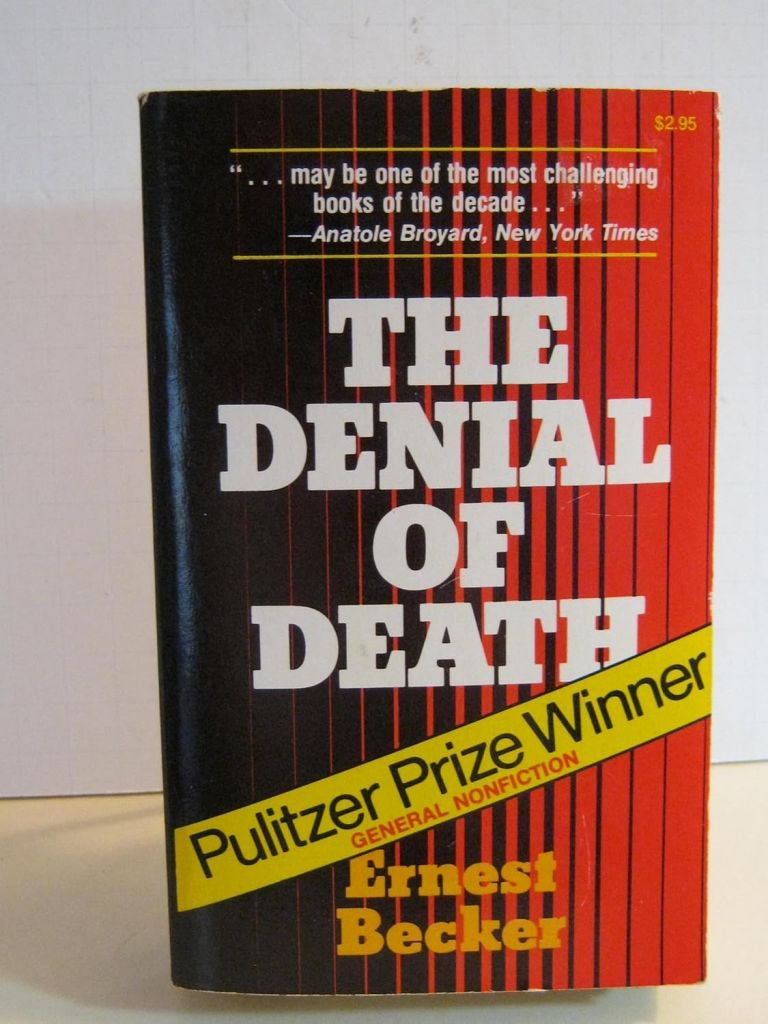
The Terror Beneath Civilization: Ernest Becker and the Denial of Death
Human beings are the only animals who know they will die. From this unbearable knowledge, Ernest Becker argues, everything else follows. The Denial of Death is not merely a work of psychology or anthropology; it is an indictment of civilization itself. Beneath our achievements, moral codes, love stories, political systems, and religious faiths lies a single, unspoken terror: the certainty of our own extinction.
For Becker, consciousness is not a triumph but a tragedy. To be self-aware is to stand at a distance from nature, to recognize one’s fragile body as temporary, replaceable, and doomed. The human mind, unable to tolerate this truth directly, constructs elaborate symbolic systems to protect itself. Culture is not an ornament of human life; it is a defense mechanism. Civilization, in Becker’s stark formulation, is a collective effort to deny death.
This is Becker’s unsettling claim: we do not live as we do because we seek truth, goodness, or beauty. We live as we do because we cannot bear the terror of being animals who must die.
Consciousness as a Curse
The human condition is paradoxical. We are biological organisms driven by instinct, hunger, and fear, yet we possess symbolic consciousness that allows us to imagine eternity, meaning, and transcendence. This split—between body and symbol, animal and god—is the source of our anxiety. We are “gods with anuses,” as Becker memorably puts it: capable of imagining immortality while rotting from within.
Unlike other animals, humans cannot simply live in the present. We remember the past, anticipate the future, and project ourselves into a world beyond our own lifetimes. This capacity for symbolic thought gives rise to art, language, and religion—but also to neurosis, guilt, and violence. Consciousness exposes us to a truth we are not equipped to endure: that everything we love, including ourselves, will disappear.
The problem is not death itself, but the awareness of it. Becker insists that human psychology is fundamentally shaped by this awareness. Our minds evolve not to confront mortality honestly, but to keep it at bay. Mental health, in this sense, is not a state of truthfulness but of successful repression.
Immortality Projects: How Humans Cheat Death
Becker’s most enduring concept is that of the immortality project. These are symbolic systems through which individuals seek to transcend death—not physically, but meaningfully. If the body must perish, then the self must be preserved in another form: legacy, reputation, nation, soul, or memory.
Religion offers literal immortality through the promise of an afterlife. Art offers symbolic immortality through lasting creation. Nation and ideology offer participation in something larger and more enduring than the individual. Even the modern career, with its obsession with achievement and recognition, functions as an immortality project: proof that one mattered, that one left a mark.
Becker does not dismiss these projects as childish illusions. On the contrary, he insists they are psychologically necessary. Without some form of symbolic transcendence, the individual collapses into despair. Depression, anxiety, and nihilism emerge when a person’s hero system—his sense of cosmic significance—fails.
What makes Becker dangerous is not that he exposes immortality projects, but that he refuses to romanticize them. These projects sustain life, but they also generate conflict. When one person’s symbolic meaning clashes with another’s, violence becomes inevitable.
Heroism and the Need to Matter
At the heart of every immortality project is heroism. Becker redefines heroism not as bravery or virtue, but as the belief that one’s life has objective significance in the universe. To live without heroism is to live with the unbearable sense that one’s existence is arbitrary and disposable.
Modern society has not eliminated this need; it has merely fragmented it. Where ancient cultures offered shared hero systems—religion, myth, sacred tradition—modernity leaves individuals to invent their own. The result is a proliferation of fragile identities constantly in need of validation.
Social media offers a perfect contemporary example: a digital arena for micro-heroism, where visibility, outrage, and moral performance substitute for lasting meaning. To be seen is to exist; to be ignored is to vanish. Becker helps explain why humiliation feels existential and why public recognition feels salvific. These are not trivial emotional reactions—they are encounters with symbolic death.
When a hero system collapses, the individual experiences not disappointment, but annihilation. Rage, fanaticism, and despair follow. This is not pathology at the margins of human behavior; it is its psychological core.
Love as a Dangerous Immortality Project
Perhaps Becker’s most disturbing insight concerns romantic love. In a secular age, love becomes the primary site of transcendence. We turn our lovers into gods, expecting them to redeem us from insignificance and mortality. The beloved becomes the guarantor of meaning, the witness who makes life real.
This burden is impossible to bear. No human being can sustain godhood. When the lover fails—as all humans must—love curdles into resentment, control, or despair. What begins as devotion becomes domination. Becker’s analysis exposes the dark underside of romantic idealism: love does not save us from death; it merely relocates our terror onto another person.
This insight resonates deeply with the great novels of psychological realism, where love so often becomes destructive. Becker offers the theory behind the tragedy: love collapses under the weight of immortality.
Evil as a Defense Against Death
Becker’s theory of evil is radical in its simplicity. People do not commit evil because they are cruel, irrational, or broken. They commit evil because they are defending their immortality projects. When another person or group threatens one’s symbolic universe, annihilation feels justified—even necessary.
War, genocide, ideological purges, and moral crusades all follow this pattern. The enemy must be destroyed not merely because they are wrong, but because they threaten meaning itself. Becker reveals that moral righteousness often masks existential panic. Violence becomes sacred when it is framed as a defense of ultimate values.
This is why evil is so often accompanied by certainty. Doubt weakens hero systems; fanaticism reinforces them. The more fragile the symbolic structure, the more violently it must be defended.
God Without Consolation
Becker’s relationship to religion is complex and frequently misunderstood. He does not simply reject God; he rejects religious systems that function as denial rather than confrontation. A God who exists merely to soothe anxiety becomes another psychological shield—dangerous not because it is false, but because it evades responsibility.
In this sense, Becker stands closer to Dostoevsky than to secular atheism. Like Ivan Karamazov, Becker refuses a God who excuses suffering or sanitizes terror. Faith that denies death becomes complicit in violence; faith that acknowledges terror without illusion may foster humility.
Becker does not offer salvation. He offers clarity—and that clarity is tragic.
Living with the Terror
Can human beings live without illusions? Becker’s answer is brutally honest: no. Complete confrontation with mortality would paralyze us. The goal is not to abolish denial, but to soften it—to recognize the symbolic nature of our hero systems without absolutizing them.
Wisdom, for Becker, lies in humility. To know that one’s meaning is constructed is not to abandon it, but to hold it lightly. Less certainty may mean less violence. Less cosmic self-importance may mean greater compassion.
The Denial of Death leaves us with no comforting resolution. It offers no program, no therapy, no redemption arc. It simply insists that beneath our most cherished ideals lies a terrified animal clinging to meaning. To face this truth is not to despair, but to see ourselves clearly—tragic, creative, and dangerous.
Civilization is built on denial. But within that denial, Becker suggests, lies the possibility of a quieter courage: not the courage to conquer death, but the courage to live honestly in its shadow.
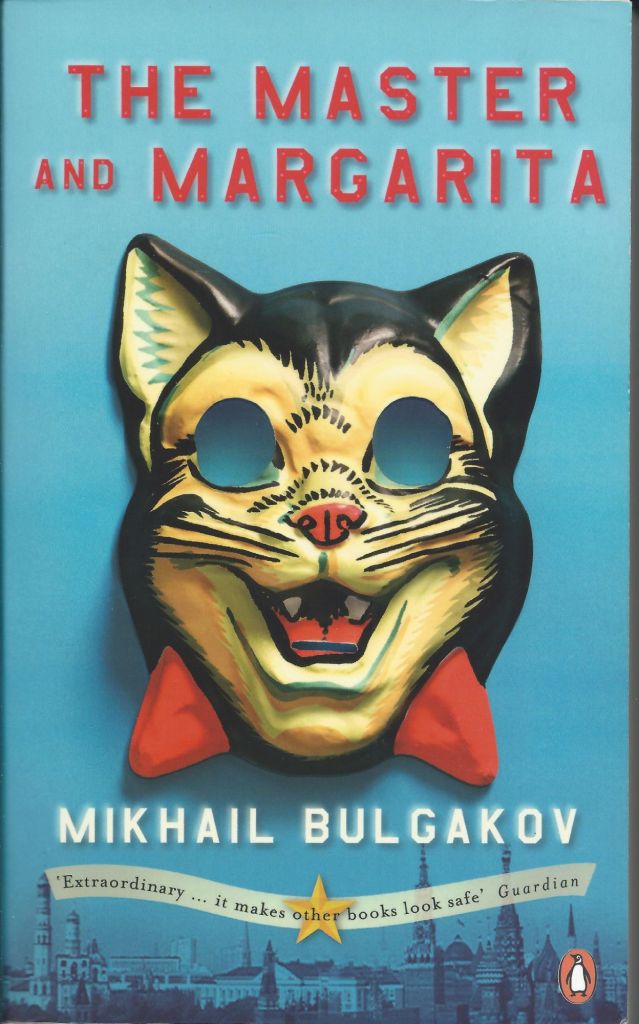
The Master and Margarita: Chaos, Comedy, and the Cosmic Order
Mikhail Bulgakov’s The Master and Margarita is a literary masterpiece in which satire, fantasy, romance, and metaphysics converge. It is at once a social critique, a philosophical fable, and a love story, and it resists simple categorization. The novel captures the absurdities of human society, the existential dilemmas of moral silence, and the consequences of refusing God or higher truth. Central to its brilliance is the interplay between characters—the Master, Margarita, Woland, Pontius Pilate, and the extraordinary ensemble of Muscovites—whose actions and misadventures illuminate the delicate balance between chaos and order, comedy and tragedy.
The story opens in Moscow during the 1930s, where a city of bureaucrats, writers, and petty officials becomes the stage for surreal chaos. Strange events unfold after the arrival of Woland, a mysterious foreigner who is, in fact, the Devil. Accompanied by a retinue of grotesque and fantastical beings—Koroviev, the sardonic, painted-clown-like assistant; the fanged, violent Azazello; and the enormous, gun-toting, catlike Behemoth—Woland transforms the city into a theater of cosmic comedy. Office meetings collapse into absurdity, greedy moneylenders vanish, and literary critics are publicly humiliated. Bulgakov’s Moscow becomes a living, breathing caricature, reflecting the absurdities of a society where ideology, ambition, and self-interest mask moral emptiness. Through humor and hyperbolic events, Bulgakov exposes the consequences of human selfishness, cowardice, and moral silence.
At the heart of the novel is the tragic yet luminous love between the Master and Margarita. The Master, a tormented writer, has created a novel about Pontius Pilate that is rejected, censored, and ultimately destroyed. His despair drives him toward suicide, illustrating the profound spiritual cost of living in a world indifferent to truth, beauty, and conscience. In his silence and withdrawal, the Master embodies Bulgakov’s exploration of existential void: a soul abandoned by society, yet still tethered to love and creative ambition. Margarita, by contrast, represents courage, loyalty, and moral engagement. When she learns of the Master’s despair, she confronts the supernatural directly, making a pact with Woland to save him. By participating in his otherworldly ball, wielding magic, and defying societal and cosmic constraints, Margarita becomes an agent of redemption. Her intervention emphasizes the novel’s assertion that human courage and devotion can counter despair and restore moral balance, even amid chaos.
Woland himself is a study in contrasts, embodying both terror and dark humor. He is a shapeshifter, alternately sophisticated gentleman, menacing judge, and mischievous trickster, capable of bending reality to his will. His actions are unpredictable: he orchestrates spectacles of destruction, yet maintains a strict moral code, punishing cruelty, cowardice, and greed while sparing those who demonstrate integrity or courage. Woland’s shapeshifting amplifies the novel’s themes: evil is neither simplistic nor uniform; it can be comic, terrifying, and instructive all at once. Behemoth, the enormous black cat who walks upright, speaks, wields firearms, and performs slapstick violence, brings chaos and laughter to every scene he touches, revealing Bulgakov’s genius in blending horror and humor. Azazello, with his fangs and fire, enforces punishment with terrifying precision, while Koroviev’s sardonic wit critiques Moscow society with ironic flair.
One of the novel’s most memorable episodes, Woland’s grand ball, combines spectacle, horror, and philosophical insight. Margarita’s attendance at the Devil’s ball is both surreal and transformative. Here, Bulgakov stages a moral universe in which choices, courage, and integrity are tested in extreme circumstances. The ball is a microcosm of the cosmic order: the grotesque, supernatural, and absurd coalesce to reveal the consequences of human vice and virtue. Margarita’s participation, in which she navigates fear and power, asserts the redemptive possibilities of courage and love. In this scene, Bulgakov dramatizes the tension between chaos and moral responsibility: even in the realm of the demonic, human actions carry weight.
Parallel to the Moscow narrative is the story of Pontius Pilate, narrated through the Master’s novel. Pilate’s moral paralysis in condemning Yeshua Ha-Notsri parallels the Master’s despair, revealing the consequences of silence and moral cowardice. Pilate, aware of Yeshua’s innocence, chooses expedience over justice, refusing to act according to conscience. This silence results in suffering and guilt that reverberates across time. Bulgakov juxtaposes this historical and metaphysical narrative with the chaos in contemporary Moscow, emphasizing that the refusal of God—or the abdication of moral responsibility—carries consequences both personal and universal. The contrast between Pilate’s silence and Margarita’s action highlights Bulgakov’s central moral claim: engagement, courage, and devotion are necessary to counter despair, injustice, and chaos.
Humor permeates the novel, balancing its philosophical and tragic themes. The absurdities of Soviet life—greedy bureaucrats, deluded literary critics, and petty officials—are exposed in scenes of grotesque comedy. Behemoth’s antics, from shooting a cashier to performing slapstick chaos in Woland’s retinue, combine humor and critique, making Moscow’s corruption palpable. Bulgakov’s laughter is never mere levity; it is moral commentary. By exaggerating human folly and societal absurdity, he both entertains and instructs, revealing the consequences of vanity, selfishness, and ideological blindness.
Themes of suicide, silence, and the refusal of God weave through both Moscow and biblical narratives. The Master’s contemplation of suicide is a response to spiritual and moral abandonment, illustrating the void created by a society indifferent to truth and artistic integrity. Pilate’s silence in the face of injustice shows the psychological and moral consequences of refusing moral responsibility. Even minor characters, from the fearful bureaucrats to the greedy merchants, demonstrate the dangers of avoiding ethical choice. Bulgakov suggests that indifference, cowardice, and the refusal of higher truth invite chaos, suffering, and spiritual desolation.
Conversely, Margarita’s courage and loyalty demonstrate that human action, even amid supernatural and societal absurdity, can restore balance, reaffirm moral order, and transcend despair.
The novel’s conclusion reinforces these themes. Woland grants the Master and Margarita peace, allowing them to escape suffering and isolation. Yet this resolution is not a triumph over evil; rather, it affirms the necessity of moral courage, love, and artistic integrity in a world where absurdity and chaos are ever-present. Bulgakov’s cosmic vision is neither simplistic nor deterministic: human choice matters, love redeems, and silence or cowardice has profound consequences.
The Master and Margarita is ultimately a meditation on human freedom, moral responsibility, and the interplay between chaos and order. Its humor, supernatural spectacle, and intricate plotting serve not merely to entertain, but to illuminate the human condition. Suicide, silence, and refusal of God are ever-present threats, yet Bulgakov demonstrates that engagement, courage, and devotion can counter despair and moral void. Characters such as the Master, Margarita, Woland, Pilate, and the fantastical retinue embody this interplay of human frailty, moral courage, and cosmic order. Through laughter, horror, and wonder, Bulgakov affirms the resilience of the human spirit and the enduring power of love, integrity, and artistic creation.
By weaving together comedy, horror, romance, and philosophy, Bulgakov creates a novel that is at once fantastical and profoundly human. Its enduring appeal lies in its capacity to illuminate the absurdities and moral challenges of existence, offering both warning and consolation. In The Master and Margarita, Bulgakov presents a universe in which chaos and evil exist, but the courage to love, create, and act with integrity allows the human spirit to endure. The novel is a celebration of imagination, moral clarity, and the transformative power of love—an artistic triumph that continues to resonate as one of the greatest achievements of twentieth-century literature.
Kaza Kamba, Cinema, Palestine, Sudan and a Day at the Market Theatre
There are days when you go to the theatre simply to watch something.
And then there are days when the theatre watches you.
It looks back at you.
It asks you questions.
It disturbs you.
It educates you.
It confronts the comfortable little assumptions you have carried around in your head and forces you to examine them beneath the harsh light of history.
On Saturday, 22 August 2026, I arrived at the Market Theatre for the Kaza Kamba Pan African Theatre Festival, a festival curated by Bobby Rodwell and Lesego Rampolokeng, and I quickly realised that I was not merely attending a cultural festival.
I was entering a conversation with Africa.
A conversation conducted through theatre, cinema, literature, history, politics, fashion, food, memory, resistance and the restless imagination of a continent that refuses to be reduced to the stories others have historically told about it.
Having attended the inaugural edition of Kaza Kamba, I could already see the difference.
The festival is growing.
It is finding its voice.
It is becoming more confident in its ambition.
And perhaps most importantly, it is creating a space in which Africa is not being presented as an object to be studied from a distance, but as a living, breathing intellectual, artistic and political force.
The Market Theatre itself seemed to understand the assignment.
The precinct was alive.
Outside the theatre, hawkers and creatives had transformed the space into a small African marketplace. There were books, beads, necklaces, clothing, bags and food. There were colours everywhere. Textures. Fabrics. Voices. Movement.
Africa was not merely on the programme.
Africa was in the air.
I bought myself a beautiful stone-green necklace.
It sat beautifully against my African-print shirt, as though the two had been waiting for each other.
And, because sometimes history is not complete without a photograph, I stopped to take a picture with the statue of the legendary Brenda Fassie.
But I digress.
Because at precisely 12H00, the day became something much heavier.
Something much deeper.
Something unforgettable.
—
THE BATTLE OF ALGIERS: WHEN A FILM BECOMES A WOUND
The Barney Simon Auditorium darkened.
The screen came alive.
And suddenly Johannesburg disappeared.
We were in Algeria.
Gillo Pontecorvo’s The Battle of Algiers (1966) is one of those films that makes you understand why cinema can be more than entertainment.
It can be testimony.
It can be political memory.
It can be a weapon.
It can be an archive.
It can make history feel dangerously close.
The film reconstructs the Algerian struggle against French colonial rule, concentrating particularly on the Battle of Algiers and the years of insurgency between 1954 and 1957. The Algerian War itself would ultimately end with independence in 1962.
But Pontecorvo does not make history feel safely historical.
He makes it feel immediate.
The film opens in 1957, with French paratroopers closing in on Ali La Pointe’s hiding place. A captured member of the resistance has revealed the location. The French soldiers surround the building.
Then Pontecorvo takes us backwards.
1954.
The beginning.
The beginning of an uprising.
The beginning of a transformation.
The beginning of a revolution that will consume bodies, streets, families and consciences.
And at the centre of it is Ali La Pointe, played by Brahim Hadjadj.
Ali begins as a petty criminal, a street hustler, a man whose life exists on the margins of colonial society. But imprisonment and humiliation awaken something within him. He becomes radicalised. He is recruited into the FLN and gradually transforms from a man surviving colonial Algeria into a man willing to die fighting it.
The film’s protagonist is therefore not born a revolutionary.
He becomes one.
That distinction matters.
Because Pontecorvo understands that revolutions are not simply produced by ideology.
They are produced by experience.
By humiliation.
By injustice.
By witnessing.
By the slow accumulation of wounds.
Ali’s transformation is therefore also the transformation of Algeria itself.
—
THE CASBAH AS A CHARACTER
One of the most extraordinary things about The Battle of Algiers is that Algiers itself seems to become a character.
The Casbah breathes.
It watches.
It hides people.
It protects them.
It betrays them.
It becomes a labyrinth of resistance.
Pontecorvo’s visual approach deliberately resembles documentary and newsreel footage. He used many non-professional actors, and the crowds of the Casbah were essential to the film’s sense of collective life. The film’s imagery is deliberately rough, grainy and immediate rather than polished.
This is not a beautiful war film in the conventional sense.
It is beautiful because it refuses to beautify war.
The camera does not give us the comforting distance of spectacle.
It puts us inside the crowd.
Inside the panic.
Inside the smoke.
Inside the faces.
Inside the screaming.
Inside the uncertainty.
Bombs explode.
People run.
Bodies fall.
Women disguise themselves.
Messages are passed.
Weapons move through hidden spaces.
French soldiers search houses.
The resistance disappears into the architecture of the Casbah.
The city itself becomes a battlefield.
And Pontecorvo constantly reminds us that the people who inhabit this battlefield are not abstractions.
They are human beings.
—
THE WOMEN OF THE RESISTANCE
The film’s treatment of women is particularly significant.
Djamila, Zohra and Hassiba become part of the FLN’s urban operations. They are shown navigating the colonial checkpoints and social expectations placed upon them, using clothing, appearance and movement to cross boundaries that might otherwise be inaccessible to male fighters.
Their bodies become part of the machinery of resistance.
The sequence in which the women prepare themselves to cross into the European quarter is extraordinary.
The revolutionary act is almost invisible.
Hair.
Clothes.
Make-up.
Posture.
Identity.
Transformation.
And then:
The bombs.
The film refuses to pretend that resistance is clean.
The FLN carries out bombings against civilians.
The French response becomes increasingly brutal.
Torture becomes institutionalised.
Executions occur.
People disappear.
The distinction between military strategy and civilian suffering becomes horrifyingly blurred.
And that is one of the film’s greatest strengths.
Pontecorvo does not allow the viewer the comfort of simple moral distance.
He forces us to confront the machinery of violence itself.
—
COLONIAL POWER AND THE TORTURE CHAMBER
Opposite Ali stands Lieutenant-Colonel Mathieu, played by Jean Martin.
Mathieu is not portrayed as a cartoon villain.
That makes him more frightening.
He is disciplined.
Intelligent.
Controlled.
Strategic.
He speaks the language of order.
He believes in the mission.
And he understands that the French military cannot defeat an invisible enemy without extracting information.
So interrogation becomes torture.
Torture becomes method.
Method becomes policy.
And policy becomes violence administered with bureaucratic efficiency.
The film’s torture scenes are devastating precisely because Pontecorvo refuses to sensationalise them.
There is no triumphant music.
No heroic framing.
No escape.
Only the cold machinery of domination.
Mathieu essentially embodies the logic of colonial counter-insurgency: if the population is the environment in which the resistance survives, control the population.
But the film asks an uncomfortable question:
What happens when a state destroys the very humanity it claims to be protecting?
And perhaps an even more uncomfortable one:
Can an empire maintain moral legitimacy while using brutality to preserve its power?
—
THE CINEMA OF VIOLENCE
Watching The Battle of Algiers inside the Barney Simon Auditorium was an experience in itself.
The auditorium became a cinema.
The darkness was almost physical.
The screen became a window into another century.
And the audience was not passive.
There were people crying.
People sobbing.
People breathing heavily.
People sitting in silence.
Because violence on a screen can still become violence inside the body.
The film contains bombings, killings, torture, executions and death, but its deepest subject is not violence.
It is human dignity.
What does a person become when they are denied dignity?
What will a people do when they are denied self-determination?
How far will people go for freedom?
And what happens when the oppressor believes that freedom is something it has the right to deny?
These questions travelled far beyond Algeria.
They travelled across the decades.
And sitting there in Johannesburg in 2026, I could not help thinking about how many of Africa’s struggles continue to echo one another.
Algeria.
South Africa.
Namibia.
The Congo.
Western Sahara.
Sudan.
Palestine.
Different histories.
Different political circumstances.
Different languages.
Different decades.
And yet the vocabulary of domination often sounds disturbingly familiar.
Land.
Occupation.
Extraction.
Violence.
Erasure.
Resistance.
Memory.
Freedom.
—
AND THEN THERE WAS TARANTINO
As one of Quentin Tarantino’s biggest fans, I found myself thinking about Inglourious Basterds.
Not because the films are identical.
They are not.
But because there are moments when cinema seems to speak across generations.
There is something in The Battle of Algiers that feels strangely familiar to Tarantino’s cinematic universe.
The tension.
The claustrophobia.
The use of architecture.
Characters hiding inside confined spaces.
The sense that a secret location can become a death trap.
The sudden eruption of violence.
The juxtaposition of ordinary spaces with extraordinary brutality.
And, perhaps most importantly, the way violence can be staged with a terrible kind of visual precision.
The comparison is particularly interesting because Inglourious Basterds itself is a film obsessed with cinema, history and the possibility of rewriting history through cinematic imagination.
But we should be careful.
I could not find reliable evidence establishing that Tarantino specifically based those sequences on The Battle of Algiers.
So I would call it a cinematic kinship rather than a proven borrowing.
And perhaps that makes the connection even more fascinating.
Great filmmakers often speak to one another without necessarily speaking directly.
One filmmaker creates an image.
Decades later, another filmmaker creates another image.
And somewhere between them, cinema remembers.
—
THE BEAUTY INSIDE THE HORROR
There is a paradox at the heart of The Battle of Algiers.
It is horrifying.
And it is beautiful.
Not beautiful because the violence is beautiful.
Beautiful because the filmmaking is extraordinary.
Pontecorvo understands composition.
Rhythm.
Silence.
Crowd movement.
Faces.
Architecture.
Sound.
He understands that cinema can create meaning without explaining everything.
The black-and-white photography gives the film the texture of memory.
Sometimes it looks like documentary.
Sometimes like news footage.
Sometimes like stolen historical evidence.
The effect is devastating.
You forget that actors are performing.
You begin to feel that you are watching something that actually happened.
And in a sense, you are.
The film draws from historical events and from the experiences of people who participated in them. FLN commander Saadi Yacef, who appears in the film as El-Hadi Jaffar, was involved in the film’s production, while Brahim Hadjadj was selected to play Ali La Pointe despite having no professional acting background.
The result is cinema with dirt beneath its fingernails.
Cinema that smells of smoke.
Cinema that sweats.
Cinema that bleeds.
—
FROM ALGIERS TO PALESTINE
At 15H00, the conversation moved from cinema to literature.
We gathered for the launch of Rising for Palestine: Africans in Solidarity for Decolonisation and Liberation, edited by Raouf Farrah and Suraya Dadoo.
And suddenly the afternoon seemed to be answering the morning.
If The Battle of Algiers asked us to look at colonial violence through cinema, Rising for Palestine asked us to look at liberation through African intellectual memory.
The book is an anthology bringing together African and Palestinian scholars, writers, activists and intellectuals. Its central proposition is that African and Palestinian struggles cannot simply be understood as isolated tragedies; they are connected through histories of colonialism, apartheid, genocide, occupation, extraction and resistance.
The editors are themselves part of that conversation.
Raouf Farrah is an Algerian writer, researcher and activist whose work focuses on migration and geopolitics in North Africa and the Sahel.
Suraya Dadoo is a South African writer and researcher whose work focuses particularly on African solidarity with Palestine and Israeli diplomacy in Africa.
And the book is deliberately expansive.
Its contributors come from places including South Africa, Algeria, Namibia, the Democratic Republic of Congo, Kenya, Sudan, Uganda, Palestine and Western Sahara.
It is not a book asking Africa to look at Palestine as a distant problem.
It is asking Africa to recognise something of itself.
—
A BOOK OF ENTANGLED STRUGGLES
The structure of Rising for Palestine is revealing.
The first section, “Legacies of Violence: Genocide, Colonialism and Oppression,” places Palestine alongside histories of violence in Africa.
Ariella Aïsha Azoulay writes on genocide.
Jephta Uaravaera Nguherimo reflects on growing up under apartheid and occupation in Namibia.
Kambale Musavuli examines Congolese and Palestinian sovereignty.
Shahd Hammouri considers Palestine and international law.
Maha Abdallah examines settler colonialism, apartheid, genocide and the failure of international institutions.
The argument is not that every historical experience is identical.
It is that colonial systems can produce recognisable patterns.
The book asks us to notice those patterns.
Then comes “Solidarity and Resistance – Building Shared Struggles.”
Here the conversation widens.
Fethi Nimer examines internationalism.
Sean Jacobs considers South Africa’s evolving relationship with Palestine.
Saleh Hijazi looks at African institutions and solidarity.
Roshan Dadoo examines South Africa’s foreign-policy contradictions.
Zahid Rajan traces Kenya’s road from Mau Mau to Gaza.
Raouf Farrah connects the Maghreb, Palestine and the Casbah.
Abdal Karim Ewaida explores African and Palestinian quests for justice.
Malainin Lakhal considers Palestinian and Sahrawi struggles for self-determination.
The history begins to feel like a web.
Not a straight line.
A web.
One struggle touching another.
One memory awakening another.
One wound recognising another wound.
—
SOUTH AFRICA AND PALESTINE
For South Africans, this conversation carries a particular emotional weight.
We know apartheid.
We know what it means for a government to organise society through racial classification and spatial control.
We know what it means for land to be political.
We know what it means for a population to resist a system that has attempted to make injustice appear normal.
We know Sharpeville.
Soweto.
Robben Island.
We know Mandela.
We know the language of liberation.
And therefore the relationship between South African solidarity with Palestine and South Africa’s own history is not simply diplomatic.
It is historical.
Emotional.
Intellectual.
Political.
The book examines that relationship critically rather than pretending it is without contradiction. Roshan Dadoo’s contribution, for example, explicitly asks whether South African solidarity with Palestine can withstand its internal contradictions.
That is important.
Because solidarity should not mean surrendering one’s critical faculties.
True solidarity requires honesty.
—
THE AFRICAN QUESTION
One of the most powerful ideas emerging from the book is that liberation cannot be fragmented.
If we teach African history as a collection of isolated national tragedies, we lose the larger picture.
Namibia becomes Namibia.
The Congo becomes the Congo.
Western Sahara becomes Western Sahara.
Palestine becomes Palestine.
Sudan becomes Sudan.
But empire has never been so neatly divided.
Colonialism travelled.
Ideas travelled.
Weapons travelled.
Capital travelled.
Techniques of control travelled.
And resistance travelled too.
That is why Rising for Palestine contains discussions of Israeli engagement in Africa, Christian Zionism, surveillance technologies, media, climate crisis and the politics of international institutions.
The final section, “Reimagining Liberation – Decolonizing Our Future,” includes contributions on decolonising terrorism, climate justice, revolutionary media and Pan-African feminist solidarity.
The message is ultimately larger than Palestine.
It is about the kind of world we are willing to build.
—
MARCHING, SPEAKING, RISING
During our discussion, questions of demonstrations, Free Palestine, Afriphobia, Israel and African unity came into the room.
But what stayed with me was the idea that solidarity is not merely a slogan.
It is a practice.
It is memory.
It is education.
It is refusing to allow suffering to become ordinary.
It is understanding that political language has consequences.
And it is refusing the fragmentation that allows people to say:
“That’s their problem.”
Perhaps that is one of the great dangers of our time.
The multiplication of tragedies until we become numb.
Another war.
Another bombing.
Another photograph.
Another dead child.
Another refugee.
Another protest.
Another hashtag.
Another day.
Rising for Palestine pushes against that numbness.
It asks us to remember.
—
AND THEN SUDAN SPOKE
The day was not finished.
After the book launch, I returned to the cinema for Hind Meddeb’s Sudan, Remember Us (2024).
And suddenly the entire day came together.
Algeria had spoken.
Palestine had spoken.
Now Sudan spoke.
And Sudan did not whisper.
It sang.
It shouted.
It wrote poetry.
It painted.
It danced.
It marched.
It remembered.
It resisted.
Sudan, Remember Us follows a generation of young Sudanese activists and artists whose dreams of freedom emerged from the 2019 revolution that brought down Omar al-Bashir’s thirty-year dictatorship. Meddeb had travelled to Khartoum during the uprising and followed young people who believed that a democratic, civilian Sudan was possible.
Their revolution was extraordinary because it was not simply political.
It was cultural.
Young people used poetry.
Music.
Chants.
Murals.
Performance.
Art.
Words.
Their message was devastatingly simple:
Words are stronger than bullets.
And then the bullets came.
—
THE REVOLUTION THAT REFUSED TO DIE
There is something almost unbearable about watching hope being born and then watching power attempt to kill it.
In 2019, the streets of Khartoum became spaces of possibility.
People believed another Sudan was possible.
A Sudan not ruled by military dictatorship.
A Sudan governed by civilians.
A Sudan in which democracy was not an abstract word but a lived reality.
The dictator fell.
But the military did not disappear.
And the revolution was not allowed to simply become democracy.
The 2021 military coup shattered the fragile transition.
Then came war.
In April 2023, conflict erupted between the Sudanese Armed Forces and the Rapid Support Forces.
The country descended into devastation.
The revolution’s young dreamers suddenly found themselves living through another nightmare.
The streets that had once been filled with protest became landscapes of fear.
Empty streets.
Dust.
Smoke.
Gunfire.
A fighter jet.
Machine guns.
Bodies.
Exile.
Loss.
The documentary moves from the optimism of revolution into the horror of war. Its young subjects attempt to preserve the revolutionary imagination through poetry and music even as repression and violence close in around them.
And this is where Meddeb’s film becomes something more than a documentary.
It becomes an elegy.
—
ART AS A FORM OF SURVIVAL
The most beautiful thing about Sudan, Remember Us is that the young people refuse to surrender their imagination.
They are surrounded by violence.
And they create.
They are surrounded by death.
And they write.
They are surrounded by fear.
And they sing.
They are surrounded by destruction.
And they dream.
This is not naïveté.
It is resistance.
Because a regime can imprison a body.
It can kill a demonstrator.
It can destroy a building.
It can silence a street.
But imagination is harder to imprison.
A poem can survive.
A song can survive.
A photograph can survive.
A memory can survive.
A story can survive.
And once a story survives, the dead are not entirely gone.
They remain inside the memory of those who continue.
—
THE NILE
Yet the film’s hope exists alongside unimaginable brutality.
Demonstrators were killed.
Bodies were reportedly thrown into the Nile.
The river that has sustained civilisation becomes, in the horror of political violence, a repository for the dead.
There is something almost mythological about that image.
The Nile carries the bodies.
But it also carries memory.
Water moves.
History moves.
The dead move with it.
And perhaps that is why the title Sudan, Remember Us feels so important.
Remember us.
Remember that we were here.
Remember that we dreamed.
Remember that we marched.
Remember that we sang.
Remember that we believed.
Remember what was done to us.
Remember that we wanted democracy.
Remember that we wanted dignity.
Remember that we wanted a future.
Remember us.
—
THE Q&A: WHEN THE FILM LEAVES THE SCREEN
After the film, we had a Q&A.
A panel of Sudanese voices sat before us.
And suddenly the film was no longer something we could discuss from a safe distance.
The people in the room carried the history.
They spoke about war.
Death.
Assistance.
Loss.
Revolution.
Hope.
The experience of Sudan.
The pain of watching a country bleed.
And the stubbornness of continuing to believe that another future is possible.
This was perhaps the most important part of the screening.
Because documentaries can show us.
But conversation allows us to listen.
The film had given us images.
The panel gave those images human context.
The discussion became an extension of the film.
And once again, I found myself thinking about Algeria.
Palestine.
Sudan.
Three different histories.
Three different contexts.
But the same fundamental human demand:
Let us live.
—
ONE DAY. THREE COUNTRIES. ONE CONVERSATION.
And suddenly I understood the genius of my day at Kaza Kamba.
I had started with Algeria.
I moved into Palestine.
I ended in Sudan.
But perhaps I had never really left the same conversation.
The Battle of Algiers showed me people fighting colonial domination with guns, bombs, underground networks and sacrifice.
Rising for Palestine asked me to think intellectually about the connections between African liberation and Palestinian freedom.
Sudan, Remember Us showed me young people fighting for democracy with poetry, music, protest and imagination.
Three forms of resistance.
Three languages.
Three generations of history.
But one word kept returning:
Freedom.
—
THE MARKET THEATRE AS A PAN-AFRICAN SPACE
That is what made Kaza Kamba feel so important.
It did not merely tell us that Africa matters.
It demonstrated it.
The festival transformed the Market Theatre into something larger than a theatre building.
It became an archive.
A classroom.
A cinema.
A bookshop.
A marketplace.
A political forum.
A cultural gathering.
A place where ideas could collide.
And outside, the hawkers completed the picture.
Books.
Beads.
Necklaces.
Clothes.
Bags.
Food.
Commerce and culture existing side by side.
The festival reminded me that African culture has never existed only on a stage.
It lives in what we wear.
What we eat.
What we read.
What we sing.
What we remember.
What we sell.
What we preserve.
What we protest.
What we create.
And sometimes it sits around your neck as a beautiful stone-green necklace that happens to match your African-print shirt.
—
BRENDA FASSIE WATCHES OVER THE HOUSE
And then there was Brenda.
The statue of Brenda Fassie stands as one of those beautiful reminders that culture has its own revolutionaries.
Brenda did not need a political podium to change South Africa.
She had a microphone.
A voice.
A body.
A personality.
A rebellious spirit.
She became the voice of people who were often ignored.
And standing beside her statue, taking a photograph, I was reminded that resistance does not always arrive wearing military fatigues.
Sometimes it arrives singing.
Sometimes dancing.
Sometimes writing.
Sometimes acting.
Sometimes making films.
Sometimes selling books outside a theatre.
Sometimes wearing African print.
Sometimes wearing a necklace.
Sometimes standing in an auditorium and asking difficult questions.
—
KAZA KAMBA IS GROWING
Having attended the inaugural edition, I can safely say that Kaza Kamba is growing from strength to strength.
And that matters.
Because Africa needs spaces where its own intellectual, artistic and political conversations can breathe.
Not spaces that flatten Africa into a tourist postcard.
Not spaces that reduce African culture to rhythm and colour while stripping it of history.
But spaces willing to confront the difficult things.
Colonialism.
War.
Apartheid.
Genocide.
Occupation.
Military dictatorship.
Racism.
Afriphobia.
Extraction.
Resistance.
Memory.
Freedom.
And hope.
Especially hope.
Because if there is one thing that connected the three experiences of my day, it was the refusal to surrender hope.
The Algerians refused.
The Palestinians continue to demand recognition of their humanity and right to liberation.
The young people of Sudan continue to dream of civilian democratic rule.
And the artists continue to create.
—
THE ARTIST AS WITNESS
Perhaps that is what art does at its highest level.
It remembers for us.
It makes us feel what statistics cannot.
A history book can tell you that thousands died.
A film can make you hear the gunfire.
A photograph can make you look into someone’s eyes.
A poem can make you inhabit their grief.
A theatre performance can place a human body before you and say:
Look.
Look at us.
Look at what happened.
Look at what is happening.
Do not look away.
That is why the arts matter.
And that is why a Pan-African festival matters.
Because Africa has been documented by outsiders for centuries.
Now Africa is increasingly documenting itself.
Speaking for itself.
Interpreting itself.
Arguing with itself.
Remembering itself.
And imagining itself.
—
A CONTINENT THAT REMEMBERS
When I finally left the Market Theatre, the day felt much longer than the hours I had spent inside the building.
I had entered at 12H00.
I had watched Algeria burn.
I had listened to Africa and Palestine speak to one another.
I had watched Sudan dream.
I had heard Sudanese voices describe war and hope.
I had walked through a marketplace of African creativity.
I had bought a necklace.
I had photographed myself beside Brenda Fassie.
And somewhere between the cinema screen, the book launch and the Q&A, I realised that Kaza Kamba had given me something more valuable than entertainment.
It had given me perspective.
It had reminded me that history is not dead.
It lives in the present.
Algiers lives in Palestine.
Palestine lives in African memory.
Sudan lives in the conscience of anyone who believes that people should be allowed to govern themselves.
And Johannesburg becomes the meeting place where these histories can sit together.
That is the power of culture.
That is the power of art.
That is the power of a festival.
—
WHEN AFRICA SPEAKS
Perhaps the most beautiful thing about Kaza Kamba is its refusal to separate art from life.
The festival understands something fundamental:
Art is life.
Cinema is history.
Literature is memory.
Music is resistance.
Theatre is testimony.
Poetry is survival.
And culture is the place where a people tells the world:
We were here.
We are here.
We remember.
We resist.
We create.
We dream.
We mourn.
We love.
We survive.
We rise.
That is what I carried home from the Market Theatre.
Not merely memories of three films and a book launch.
I carried Algeria.
I carried Palestine.
I carried Sudan.
I carried the voices of young revolutionaries.
I carried the words of writers.
I carried the faces of people whose histories refuse to disappear.
I carried the sound of an audience collectively holding its breath.
I carried the tears shed inside the Barney Simon Auditorium.
I carried the silence that followed.
I carried the questions.
And I carried that beautiful stone-green necklace around my neck.
Perhaps that is what a great cultural festival should do.
It should send you home carrying something.
A book.
An image.
A question.
A wound.
A melody.
A memory.
A new understanding.
Or perhaps simply the courage to look at the world differently.
Kaza Kamba did that for me.
It reminded me that Africa is not a footnote to world history.
Africa is not merely a location.
Africa is not a backdrop.
Africa is a conversation.
A philosophy.
A memory.
A wound.
A rhythm.
A resistance.
A future.
And on this particular day at the Market Theatre, Africa spoke through Algeria.
It spoke through Palestine.
It spoke through Sudan.
It spoke through cinema.
It spoke through literature.
It spoke through poetry.
It spoke through protest.
It spoke through beads and clothes and food and books.
It spoke through Brenda Fassie.
It spoke through the artists.
It spoke through the audience.
And when the lights came back on, I realised something:
Africa had not finished speaking.
It had only just begun.
And perhaps the responsibility of those of us who listen is simple.
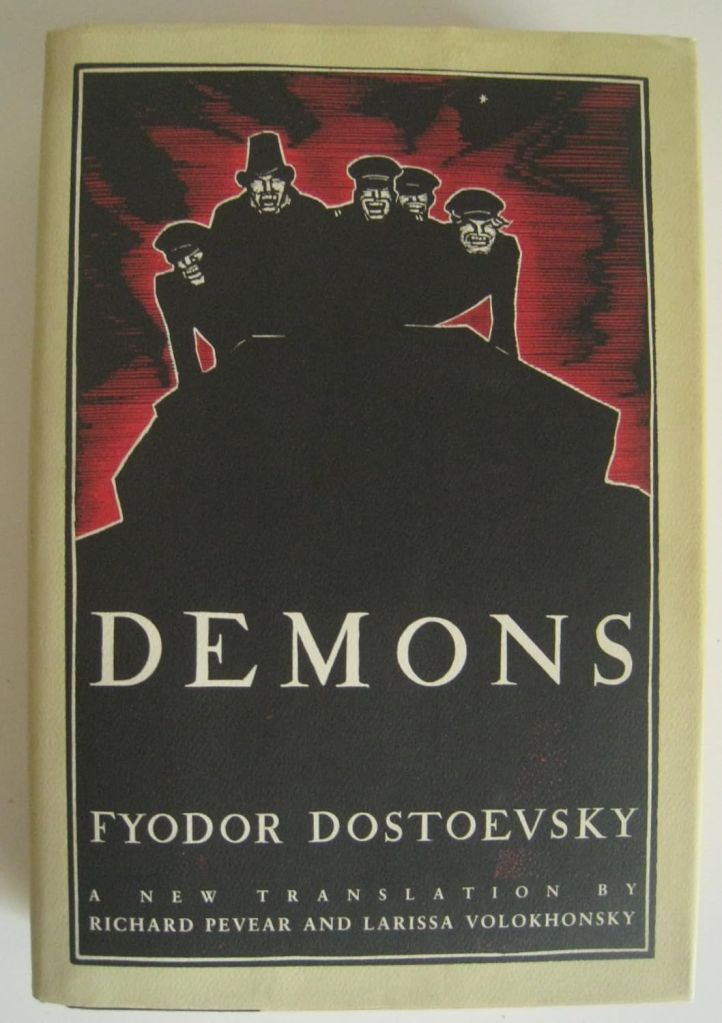
Stavrogin and Pyotr Verkhovensky: The Void and the Virus
Suicide, Silence, and the Refusal of God in Dostoevsky’s Demons
In Demons, Dostoevsky no longer asks why a man commits a crime or how guilt destroys the soul. He asks something far more terrifying: What happens when belief itself becomes diseased? The novel marks a shift from individual psychological collapse to collective possession. Here, ideas do not persuade—they infect. They hollow people out, animate them, and drive them toward destruction with mechanical inevitability.
At the center of this catastrophe stand two figures who never fully merge yet cannot exist without each other: Nikolai Stavrogin, the void, and Pyotr Verkhovensky, the virus. Stavrogin represents moral emptiness—the absence of belief, remorse, or commitment. Pyotr represents ideological contagion—pure movement without truth, manipulation without conviction. Together, they form Dostoevsky’s bleakest prophecy: a world where emptiness invites possession, and possession replaces conscience.
Stavrogin: The Terror of Moral Emptiness
Stavrogin is not a villain in the traditional sense. He does not rage like Raskolnikov, argue like Ivan Karamazov, or suffer like Prince Myshkin. What makes Stavrogin terrifying is precisely what he lacks: moral gravity. He does not struggle; he does not resist. He observes his own depravity with cold detachment, as though watching another man commit atrocities.
Everyone in Demons orbits Stavrogin. They project onto him leadership, depth, and power. Yet Stavrogin himself believes in nothing—not God, not humanity, not even nihilism as a cause. He is not a revolutionary; he is not a reactionary. He is an absence that attracts meaning, a blank screen onto which others cast their fantasies.
Dostoevsky understood something deeply modern here: emptiness can be more dangerous than conviction. A man who believes in something may still be restrained by doubt or conscience. A man who believes in nothing becomes infinitely adaptable. Stavrogin can commit evil not because he is driven by passion, but because nothing within him says no.
His silence is crucial. Stavrogin refuses confession not out of pride, but indifference. Even when he reveals his crimes, it is without repentance, as though truth itself has lost its moral weight. This silence is not peace—it is spiritual death.
Pyotr Verkhovensky: Ideology as Infection
If Stavrogin is empty, Pyotr Verkhovensky is full—but full of nothing substantial. Pyotr does not believe in revolution, justice, or equality. He believes only in movement, disruption, and control. Ideas are tools to him, interchangeable and disposable. Truth is irrelevant; effect is everything.
Pyotr understands that people do not need coherent philosophy—they need permission. Permission to destroy, to humiliate, to kill. He creates secret cells not to advance a cause, but to bind people together through shared guilt. Violence becomes the glue of community.
This is where Demons becomes prophetic. Pyotr anticipates the modern extremist: not a fanatic driven by belief, but a strategist who weaponizes belief in others. He spreads chaos not as an end, but as a method. Disorder creates dependency, and dependency creates power.
Pyotr does not create the void—but he exploits it. Stavrogin’s emptiness gives Pyotr legitimacy. Pyotr needs Stavrogin as a symbol, a silent authority who never contradicts him. In this sense, the virus requires the void. Ideology needs spiritually empty hosts to survive.
Kirillov and the Logic of Suicide
Running beneath Stavrogin and Pyotr is a darker philosophical current, embodied most explicitly in Kirillov. Kirillov’s suicide is not despair—it is metaphysics. He believes that if God does not exist, then the highest expression of human freedom is self-annihilation. By killing himself voluntarily, Kirillov seeks to become God.
This is the most chilling idea in Demons: suicide as theological rebellion.
Kirillov’s logic is flawless and horrifying. If there is no God, then there is no moral order beyond human will. If that is true, then death is merely another choice. Suicide becomes the ultimate assertion of autonomy. Freedom consumes itself.
Dostoevsky understood that when God is rejected, something else rushes in to fill the vacuum—not reason, but absolutism. Kirillov does not arrive at peace; he arrives at fanatic clarity. His death is not tragic because it is painful, but because it is meaningless while pretending to be profound.
Stavrogin’s Silence and the Failure of Confession
Unlike Kirillov, Stavrogin does not articulate a philosophy of suicide—but he embodies it. His final act is not a declaration, but a withdrawal. Where Kirillov dies loudly, Stavrogin dies quietly. His suicide is the natural conclusion of emptiness: when nothing binds you to life, life becomes optional.
Stavrogin cannot repent because repentance requires belief in moral order. He cannot love because love requires commitment. He cannot live because life requires purpose beyond self-will. His death is not an escape from guilt—it is the final expression of indifference.
Dostoevsky is merciless here. Stavrogin’s intelligence, charm, and self-awareness do not save him. On the contrary, they accelerate his destruction. Consciousness without faith becomes self-consuming.
The Possessed World
What Demons ultimately reveals is that the death of God does not lead to freedom—it leads to possession. When conscience disappears, ideology takes its place. When meaning dissolves, violence provides structure. When silence replaces prayer, chaos speaks.
Stavrogin shows us the danger of inner emptiness. Pyotr shows us how that emptiness becomes contagious. Kirillov shows us the final logic of absolute freedom. Together, they form a single system: void, virus, and self-destruction.
Dostoevsky was not warning against revolution alone. He was warning against a world where ideas are severed from the soul, where belief becomes technique, and where freedom is defined as the absence of restraint rather than the presence of meaning.
Conclusion: A Novel for Our Time
Demons is not a historical novel. It is a diagnosis. Stavrogin exists wherever moral detachment is mistaken for sophistication. Pyotr exists wherever chaos is mistaken for progress. Kirillov exists wherever autonomy is mistaken for transcendence.
The demons Dostoevsky describes are not supernatural—they are philosophical. They enter through silence, grow through emptiness, and destroy through certainty.
And once possessed, a society no longer needs tyrants.
When the Swans Took Flight: Cape Ballet Africa’s Swan Lake
There are performances you watch.
There are performances you experience.
And then there are performances that seem to suspend reality altogether — performances in which the theatre ceases to be a building, the stage ceases to be a stage, and the human body becomes something almost otherworldly.
At the Teatro at Montecasino, I watched Swan Lake.
Presented by Cape Ballet Africa and Global Star Events, this was not simply an evening of ballet. It was an encounter with beauty in its most disciplined form. Beauty sharpened by technique. Beauty strengthened by repetition. Beauty made possible by bodies pushed to the limits of human control.
Every suspended moment before a dancer descended from the air.
Every perfectly timed port de bras.
Every corps de ballet formation that seemed to breathe as a single organism.
The audience understood.
We were collectively spellbound.
And when the dancers finished, the applause seemed almost inadequate. Yet we clapped and clapped because sometimes applause is the only language an audience has when words have failed.
This was beautiful.
Beautiful, beautiful, beautiful.
Cape Ballet Africa’s production arrives in Johannesburg during a limited August season at the Teatro, bringing Tchaikovsky’s immortal ballet to the Montecasino stage in a production built around Elena Glurjidze’s staging and choreography.
But Swan Lake has never really belonged to one generation.
It belongs to anyone who has ever loved.
Anyone who has ever lost.
Anyone who has ever been deceived.
Anyone who has ever looked at something beautiful and feared that it might disappear.
And perhaps that is why, after all these years, we are still captivated by the sight of a woman becoming a swan.
A Curse Before the Story Begins
The production begins with the Prologue: Odette’s Curse.
Before romance, before celebration, before the palace and its splendour, there is darkness.
There is enchantment.
There is violation of the natural order.
Odette’s transformation is not merely a plot device. It is the wound around which the entire ballet is constructed.
She is trapped between two worlds — woman and swan, freedom and captivity, desire and destiny.
And already, the ballet begins speaking through the body.
Because ballet is uniquely capable of communicating suffering without words.
A dancer can lower her head and we understand grief.
A trembling arm can become desperation.
A sudden contraction can become fear.
A body reaching towards another body can become love.
This is the strange miracle of ballet: the body becomes language.
And nowhere is that language more powerful than in the figure of Odette.
Act I, Scene 1 — The Palace Gardens
Then comes the palace.
The world of Prince Siegfried.
The world of celebration, courtliness, youth and expectation.
And here, the production changes its temperature.
The darkness gives way to movement.
The ensemble fills the stage with life.
The dancers do not simply occupy the space; they construct it.
This is where the technical vocabulary of classical ballet becomes particularly intoxicating. The corps de ballet is not background decoration. It is architecture.
Bodies become patterns.
Lines become corridors.
Arms rise and fall together.
Feet articulate the floor.
The dancers move through formations with extraordinary precision, maintaining spacing, alignment and musicality while simultaneously performing the emotional life of the scene.
That synchronicity is harder than it looks.
When twenty dancers appear to move as one, the illusion is effortless.
But beneath that illusion is an enormous amount of discipline.
Every head must turn at the same moment.
Every port de bras must arrive together.
Every tendu must finish at the same musical point.
Every changement must land with clarity.
Every diagonal must travel with confidence.
The corps de ballet gives Swan Lake one of its greatest visual pleasures: the illusion that individuality has dissolved into collective movement.
Yet individual dancers remain visible within the collective.
That is the paradox.
The corps must disappear into unity while remaining artistically alive.
And Cape Ballet Africa achieved that beautifully.
The Prince
At the centre of this world is Gabriel Fernandes as Prince Siegfried.
Siegfried is not simply the romantic hero. He is a young man caught between duty and desire.
Fernandes brought the necessary nobility to the role, but also the physical authority required of a classical ballet prince.
Because the male dancer’s role in Swan Lake is demanding in a very particular way.
He must be powerful without becoming heavy.
Athletic without becoming vulgar.
Romantic without becoming sentimental.
He must lift, support, leap and turn, but the mechanics must disappear.
The audience should never think about the effort required to execute the movement.
We should only see the poetry.
That is the great deception of ballet.
And Fernandes understood it.
His partnering becomes particularly important because Siegfried’s love is expressed not only through his own body but through how carefully he supports Odette’s.
A ballerina’s body is trusting the danseur.
A lift is not merely strength.
It is communication.
Timing.
Trust.
Balance.
And Fernandes provided the physical foundation from which Savannah Ireland could fly.
A Court of Movement
The palace scenes also allowed the supporting dancers to breathe life into Siegfried’s world.
Kristin Wilson as the Queen, Siegfried’s mother, carried the authority and ceremonial presence of the royal court.
Then there was Aphiwe November as the Jester.
The Jester brings something essential to Swan Lake: mischief.
His movement breaks the rigid elegance of the court.
There is playfulness in his physicality, an elasticity and comic timing that reminds us that ballet can be theatrical in the fullest sense of the word.
The body can tell jokes too.
And November understood that.
The Pas de Trois — Gia Lipshitz, Gabriel Ravenscroft and Kaharu Numamoto — brought another dimension of classical brilliance.
The pas de trois is one of ballet’s great examinations of musicality and coordination. Three dancers must converse through movement, each maintaining individuality while remaining connected to the other two.
It is ballet as conversation.
One dancer initiates.
Another answers.
The third completes the thought.
And suddenly choreography becomes dialogue.
Act I, Scene 2 — At the Lake
And then—
the lake.
The world changes.
The palace disappears and the stage becomes dream.
This is where Swan Lake becomes Swan Lake.
The Odette we meet here is Savannah Ireland.
And I fell in love.
There is no other way to say it.
Savannah Ireland moved like a swan.
Not merely in imitation of one.
She seemed to understand the animal’s essence.
The elongated neck.
The softness of the wing.
The alertness.
The vulnerability.
The sudden violence hidden beneath apparent serenity.
Her movement possessed that extraordinary quality that great ballerinas have: effortlessness that is anything but effortless.
Her arabesque seemed to stretch beyond the physical limits of the body.
Her épaulement gave her movement emotional dimension.
Her port de bras was delicate without being weak.
Her balances carried an almost unbearable stillness.
And when she moved across the stage, there was the sensation that she was not walking upon the floor but gliding above it.
This is what makes Odette such a magnificent role.
The dancer must embody both human emotion and animal instinct.
She must be vulnerable without becoming passive.
She must be fragile without appearing powerless.
And Ireland found that balance.
She gave Odette a soul.
The Swans
Then came the moment I will remember for a long time.
Together with the wider corps de ballet of Cape Ballet Africa, they created one of the defining images of the production.
The famous swan formations are among the great achievements of classical ballet because they depend on an almost obsessive precision.
The dancers must be connected through peripheral vision, musical counting and spatial awareness.
A single arm moving too early can destroy the picture.
A single dancer arriving late can disturb an entire formation.
Yet when it works, something magical happens.
The dancers cease to look like separate people.
They become one creature.
One enormous swan.
One breathing organism.
The famous choreography associated with Marius Petipa and Lev Ivanov has survived precisely because it understands the power of collective movement.
And under Elena Glurjidze’s staging and choreography, that legacy feels alive rather than museum-like.
Glurjidze brings intimate knowledge of the role and the ballet itself; notably, her final performance with English National Ballet was as Odette/Odile in Swan Lake at London’s Coliseum in 2015.
You can feel that experience in the staging.
There is an understanding of where the eye must go.
There is something irresistibly charming about the Cygnets.
Their movement carries the innocence of youth while demanding the same precision that governs the larger corps.
The famous linked-arm choreography is deceptively difficult.
The dancers must remain together, maintaining rhythm, spacing and visual unity while negotiating intricate footwork.
It is a beautiful example of how ballet transforms technical difficulty into apparent simplicity.
The audience sees swans.
The dancers are executing mathematics.
And that is the magic.
Act II, Scene 3 — The Palace Ballroom
The darkness returns to the palace.
But now the stakes have changed.
Siegfried has fallen in love.
The ballroom becomes a place of deception.
And into that world comes Odile.
The same woman.
The opposite energy.
This is where Savannah Ireland’s performance becomes even more impressive.
Odette requires softness.
Odile requires seduction.
Odette is vulnerability.
Odile is calculation.
Odette seems to float.
Odile commands.
The ballerina must therefore transform not simply her costume or facial expression, but the entire quality of her movement.
This is where the celebrated dual role of Odette/Odile becomes one of ballet’s greatest challenges.
The famous 32 fouettés are only the most obvious technical test.
The real challenge is artistic.
Can one dancer make us believe these are two different women?
Ireland could.
And that contrast made her performance so compelling.
Von Rothbart
Opposite her stands Nicolas Laubscher as Baron Von Rothbart.
Rothbart is not simply a villain.
He is corruption given physical form.
Where the swans move with lyrical softness, Rothbart brings menace.
His physical vocabulary is larger, darker, more angular.
His body seems to occupy the stage differently.
There is weight where the swans have lightness.
Force where they have delicacy.
Threat where they have tenderness.
Laubscher understood that the villain in ballet must be physically legible.
The audience must be able to see danger before the story explains it.
And that is precisely what Rothbart provides.
The Costumes
Then there are the costumes.
Oh, the costumes.
Marcel Meyer deserves enormous praise.
They are sumptuous without becoming cumbersome, theatrical without overpowering the dancers.
The transformation between worlds is immediate.
The palace is elegance.
The lake is mystery.
The swans become creatures of moonlight.
And Odile’s blackness becomes the visual counterpoint to Odette’s whiteness.
The costume is not merely something the dancer wears.
It becomes part of the choreography.
A tutu changes the silhouette.
A sleeve changes the movement of an arm.
A feathered texture catches the light.
A flowing skirt magnifies rotation.
Every turn becomes larger because fabric continues moving after the body has initiated the movement.
Meyer understands that costume must dance too.
The production’s sumptuous costumes are part of a wider visual design collaboration with set designer Michael Mitchell, the same creative partnership behind Cape Ballet Africa’s The Nutcracker.
The Sets and Light
Michael Mitchell’s set design gives the ballet its physical universe.
The palace possesses grandeur.
The lake possesses mystery.
The stage seems capable of transformation without ever becoming cluttered.
And then comes Oliver Hauser’s lighting design.
Lighting is crucial to Swan Lake because the ballet lives between worlds.
Day and night.
Reality and enchantment.
Palace and forest.
Human and supernatural.
The lighting does not merely illuminate the dancers.
It shapes atmosphere.
It tells us when the world has changed.
A warmer environment can suggest courtly celebration.
A colder palette can transform the stage into the mysterious realm of the lake.
The dancers become silhouettes, shadows, apparitions.
And suddenly the theatre is no longer Johannesburg.
It is somewhere beyond geography.
Act II, Scene 4 — The Lake Once More
And finally, we return to the lake.
The story circles back to where it began.
Love has been tested.
Deception has been revealed.
The curse has tightened its grip.
And Tchaikovsky’s music carries everything towards catastrophe.
There is something almost cruel about the beauty of the ending.
Because Swan Lake does not give us uncomplicated happiness.
It gives us transcendence through tragedy.
The music rises.
The bodies move.
The lovers reach towards one another.
The swans gather.
And the audience watches the inevitable approach of the end.
Tchaikovsky’s score is the invisible character of the ballet.
It does not merely accompany the dancers.
It tells them what they feel.
The strings ache.
The brass announces danger.
The orchestra swells beneath moments of passion.
The melody seems to breathe with Odette herself.
This is why the score remains so powerful more than a century after its creation.
It understands that music can say what the body cannot.
The Discipline Behind the Dream
But perhaps what impressed me most was not simply the beauty.
It was the discipline behind it.
Ballet is merciless.
There is nowhere to hide.
The body must be trained until technique becomes instinct.
The feet must articulate.
The knees must turn out.
The core must stabilise.
The shoulders must remain controlled.
The head must know when to turn.
The eyes must communicate.
The arms must speak.
And somehow, after all of that physical violence imposed upon the body through years of training, the dancer must make everything look gentle.
That is mastery.
That is what I witnessed at the Teatro.
Not people merely performing steps.
Artists transforming technical vocabulary into emotion.
A Company in Full Flight
Cape Ballet Africa deserves enormous recognition for the collective quality of this production.
Debbie Turner, as Artistic Director, stands at the centre of the company’s artistic vision.
The dancers are the visible manifestation of that vision.
Savannah Ireland gave us an Odette/Odile I will not soon forget.
Gabriel Fernandes gave Siegfried nobility, athleticism and romantic vulnerability.
Nicolas Laubscher gave us a Rothbart capable of haunting the stage.
Aphiwe November injected the palace with humour and theatrical energy.
Kristin Wilson gave the royal court its authority.
Gia Lipshitz, Gabriel Ravenscroft and Kaharu Numamoto illuminated the Pas de Trois.
Abigail Obregon, Emily Fortuin, Cassandre Dinh Thao and Kyra Steyn brought charm and precision to the Cygnets.
Lara Gablinger, Leane Theunissen, Paige Mcelligott and Lily Pakula, together with the corps de ballet of Cape Ballet Africa, created the image that defines the ballet itself: the swans moving together, impossibly graceful, impossibly precise.
And behind them stood the creative architecture:
Elena Glurjidze — staging and choreography.
Marius Petipa and Lev Ivanov — the original choreography upon which this tradition rests.
Lindy Raizenburg and Diane van Schoor FISTD (CD), FRSA — additional choreography.
Michael Mitchell — sets.
Marcel Meyer — costumes.
Oliver Hauser — lighting.
And above it all, the immortal music of Pyotr Ilyich Tchaikovsky.
Every artist contributed a piece of the illusion.
When the Audience Became Part of the Ballet
And then there was us.
The audience.
We sat in darkness and watched human beings defy gravity.
We watched bodies become birds.
We watched love become movement.
We watched betrayal become choreography.
And when it ended, we clapped.
Not because etiquette demanded it.
Because we needed to.
Sometimes applause is more than applause.
It is gratitude.
It is recognition.
It is the audience saying:
We saw you.
We saw the hours of training.
We saw the discipline.
We saw the bruises hidden beneath costumes.
We saw the muscles trembling beneath apparent grace.
We saw the impossible made to look effortless.
And we appreciated it.
A Swan Remains
When I think back to this production, I will remember the spectacle.
The costumes.
The lake.
The palace.
The darkness.
The music.
The corps de ballet moving like a single creature.
But above all, I will remember Savannah Ireland.
I will remember the way she moved.
The way her arms seemed to unfold like wings.
The way her body stretched through space.
The way she could be delicate without ever seeming weak.
The way she could stand almost motionless and still command the stage.
She did not simply play a swan.
She made us believe she was one.
And perhaps that is the greatest compliment one can give a ballerina performing Swan Lake.
At the Teatro at Montecasino, I did not merely watch a story about a princess cursed to become a swan.
For a few extraordinary hours, I believed in transformation.
I believed that the human body could become poetry.
I believed that music could give wings to flesh.
I believed that dancers could make gravity negotiable.
And I understood again why ballet matters.
Because ballet takes the limitations of the human body and turns them into an argument for transcendence.
It says:
Look what we can become.
And as the final applause filled the theatre, I looked back towards the stage and thought about the image of those swans.
White against darkness.
Bodies moving together.
Grace emerging from discipline.
Beauty emerging from pain.
Love refusing to disappear.
And I knew that I had witnessed something special.
Something elegant.
Something powerful.
Something unforgettable.
Swan Lake.
A story centuries old.
A score that still breaks the heart.
A choreography that still astonishes.
And, in the hands of Cape Ballet Africa, a production that made the Teatro feel like a lake under moonlight.
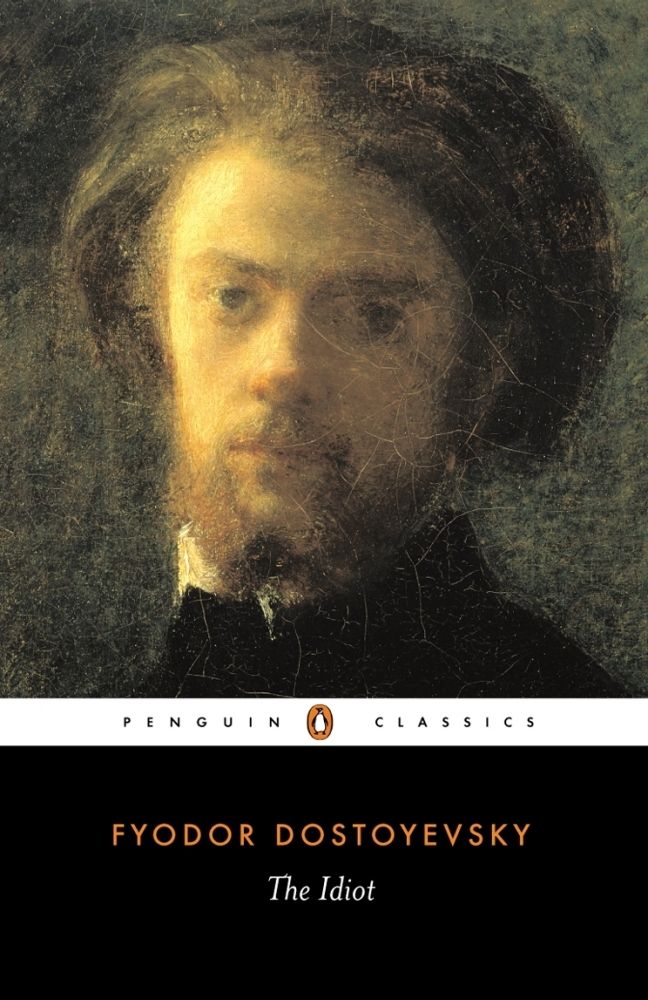
Prince Myshkin and Nastasya Filippovna: Absolute Goodness and the Will to Self-Destruction in The Idiot
Dostoevsky’s The Idiot is not a novel about innocence misunderstood; it is a novel about goodness that arrives too early, too naked, and too unarmed for the world it enters. Prince Lev Nikolaevich Myshkin is not a fool, nor is he a saint in the conventional sense. He is an ethical anomaly — a man whose moral transparency exposes the violent mechanics of social life. Opposite him stands Nastasya Filippovna, a woman whose intelligence, beauty, and psychological lucidity have been fused with trauma into a single, lethal self-image. Their encounter forms the novel’s tragic axis: absolute goodness meets a soul that believes it deserves destruction.
Myshkin’s tragedy is not that he is rejected; it is that he is believed, briefly, and then found unbearable. Society does not crucify him — it diagnoses him. His compassion is read as weakness, his honesty as social incompetence, his mercy as naïveté. Yet Dostoevsky is careful: Myshkin sees more clearly than anyone else in the novel. He understands human vanity, cruelty, and fear with devastating precision. What he lacks is not intelligence, but defensive illusion. He cannot lie in the way society requires one to lie in order to survive.
This becomes catastrophic when Myshkin encounters Nastasya Filippovna — a woman whose trauma has taught her that love is always a prelude to ownership, humiliation, or punishment. Nastasya is not destroyed by society’s cruelty alone; she has internalized its verdict. She believes herself irredeemable, not because she lacks moral awareness, but because she possesses too much of it. Her self-destruction is not impulsive — it is principled. She seeks to expose the hypocrisy of a world that desires her beauty while condemning her existence.
Myshkin’s love for Nastasya is radically different from the love offered by others. He does not desire her, nor does he seek to rescue her in the heroic sense. He recognizes her suffering without attempting to rewrite it. In modern terms, Myshkin offers witness rather than cure. This is precisely why his goodness becomes unbearable. Nastasya cannot accept love that does not punish her. To accept Myshkin’s mercy would require her to abandon the identity she has constructed around her suffering — and that identity is all she has left.
Here Dostoevsky articulates a terrifying psychological truth: trauma does not merely wound — it organizes the self. Nastasya’s oscillation between Myshkin and Rogozhin is not romantic indecision; it is a repetition compulsion. Myshkin represents unconditional recognition without possession. Rogozhin represents violent desire, ownership, and annihilation. Between them, Nastasya chooses not happiness, but coherence. Rogozhin confirms what she already believes about herself: that she is an object to be consumed and destroyed.
Myshkin’s goodness fails not because it is false, but because it demands too much of a wounded soul. Absolute goodness does not negotiate with self-hatred; it dissolves the very narrative that sustains it. For Nastasya, to be loved without condition would mean confronting the possibility that her suffering was unjust — and that possibility is more terrifying than death. It would mean that the world is not merely cruel, but wrong. And if the world is wrong, then her pain demands a reckoning that cannot be satisfied by self-destruction alone.
This is why Myshkin’s presence accelerates Nastasya’s collapse rather than preventing it. Goodness, when it is complete, exposes evil without containing it. Myshkin does not possess the authority of Christ, only the vulnerability. He can forgive, but he cannot redeem. He can love, but he cannot save. His goodness is human — and therefore tragic.
Dostoevsky stages this tragedy with surgical precision. Each time Myshkin approaches Nastasya with compassion, she responds with theatrical cruelty — mocking herself, humiliating her suitors, sabotaging her own escape. These acts are not madness; they are protest. Nastasya refuses to be redeemed quietly. If she is to be destroyed, she will ensure that the spectacle indicts everyone watching.
The novel’s final convergence — Myshkin and Rogozhin keeping vigil over Nastasya’s corpse — represents the collapse of all moral binaries. Love as possession and love as mercy meet in silence. Neither triumphs. Myshkin’s mind breaks not because he has failed, but because he has seen too much without the power to intervene. Absolute goodness, confronted with absolute despair, does not become heroic — it becomes mute.
The Idiot thus dismantles a comforting illusion: that goodness is inherently salvific. Dostoevsky insists on something far more disturbing. Goodness, when it is unprotected by power, tradition, or authority, is fragile. It reveals truth without enforcing it. And truth, once revealed, does not automatically heal — it often destroys.
Prince Myshkin is not the savior of the novel; he is its ethical measure. Nastasya Filippovna is not merely a tragic woman; she is the novel’s moral accusation. Together, they form Dostoevsky’s bleakest question: What happens when perfect compassion meets a soul that cannot survive without self-condemnation?
The answer is not redemption. It is tragedy — not because goodness is insufficient, but because the world is not yet capable of receiving it.
A haunting descent into love, war, betrayal, sexual violence and the unbearable intimacy of witnessing
There are plays you watch.
There are plays you experience.
And then there are plays that make you question the morality of sitting in a theatre seat at all.
SARAJEVO belongs to the last category.
I walked into Theatre on the Square in Sandton knowing that I was going to see an award-winning play. I knew the reputation. I knew the Naledi Awards had crowned it four times. I knew it had been celebrated for its writing, direction and performances.
I did not know that I would leave feeling as though I had witnessed something I was never supposed to see.
There is a warning waiting for you before you enter the auditorium:
“WARNING: THE PLAY DEPICTS THEMES OF SEXUAL VIOLENCE, EXPLICIT LANGUAGE AND THEMES OF AN ADULT NATURE.”
Believe it.
The warning is not decorative theatre etiquette. It is a door.
Behind that door are bullets, blood, profanity, desire, French kisses, nudity, fractured friendships, collapsing identities, sexual violence and human beings attempting to remain human while history tears the world apart.
And somehow, amid all of it, the most frightening thing is not the war.
It is how intimate everything feels.
The sex feels real.
The affection feels real.
The hatred feels real.
The friendships feel real.
The betrayal feels real.
And when violence arrives, it does not feel choreographed.
It feels lived.
That is the great achievement of SARAJEVO.
It does not simply tell us about war.
It makes us feel what it means to be close enough to smell it.
FOUR Naledis. ONE DEVASTATING PLAY.
The accolades tell their own story.
At the 21st Naledi Theatre Awards, covering productions staged during 2025, SARAJEVO won four major awards:
Best Production of a Play.
Best Director of a Play — Thorsten Wedekind.
Best Lead Performance in a Play (Female) — Aimée Mica Komorowsky.
Best Breakthrough Performance in a Play — Ivan Nedeljkovic.
It was also nominated in seven categories, including Best New South African Script/Adaptation, Best Supporting Performance in a Play (Male), and Best Theatre Set- and AV Design.
Those awards are impressive.
But after sitting through SARAJEVO, I understand something about awards:
Sometimes they are not really awards.
Sometimes they are attempts to put a frame around something that refuses to be contained.
SARAJEVO is one of those works.
Written by Aimée Mica Komorowsky and directed by Thorsten Wedekind, the play has its roots in the war-torn former Yugoslavia and centres on the collapse of friendship under the pressure of ideology, nationalism, fear and violence. The current production follows Mirela, Aleksander and Slobo, childhood friends whose shared world is progressively destroyed by conflict, while Peter, a South African photographer, enters their lives as an outsider and witness.
And that word matters:
witness.
Because ultimately, that is what the audience becomes.
Witnesses.
And SARAJEVO asks what happens when witnessing becomes unbearable.
BEFORE THE WAR: WHEN THEY WERE JUST PEOPLE
Before history turns them into categories, they are simply friends.
Mirela.
Aleksander.
Slobo.
Three people bound by childhood, familiarity and the ordinary intimacy of knowing another person before the world tells you what you are supposed to think about them.
That is what makes the destruction so painful.
They do not begin as enemies.
They begin as people who know one another.
They have memories.
They have jokes.
They have desire.
They have arguments.
They have bodies.
They have dreams.
They have a shared history.
And then Yugoslavia begins to fracture.
The political becomes personal.
National identity becomes weaponised.
Fear becomes a language.
The old world begins disappearing.
And the people who once occupied the same emotional territory suddenly discover that they are expected to belong to different sides.
This is one of the play’s most devastating insights:
war does not begin when the first bullet is fired.
It begins earlier.
It begins when people stop seeing one another as people.
It begins in suspicion.
In slogans.
In whispered accusations.
In the question of who belongs.
In the moment when someone’s name, ethnicity, religion or political identity becomes more important than the person carrying it.
The official production description speaks of “countless small fractures” — silences, suspicions and impossible choices — rather than one single event destroying the friendship.
And that is precisely why the play hurts.
The friendship does not simply explode.
It decays.
One crack.
Then another.
Then another.
Until eventually you look at the people who once loved one another and realise that the distance between them has become a battlefield.
ENTER PETER: THE CAMERA AND THE QUESTION OF WITNESSING
Then comes Peter.
A South African photographer entering this Balkan catastrophe from outside it.
He carries a camera.
And the camera is important.
Because Peter is not merely a character.
He is a question.
What does it mean to watch another person’s suffering?
What does it mean to photograph pain?
What does it mean to enter someone else’s war and then leave?
What does it mean to be an observer when observation itself changes the relationship between you and the people being observed?
Peter comes searching for something beyond the life he left behind, but the conflict gradually destroys the comfortable distinction between observer and participant.
And sitting in the auditorium, I felt the same problem being transferred onto me.
I was watching.
That was my job.
I had bought a ticket.
I had taken my seat.
The actors knew I was there.
The director wanted me there.
The theatre had invited me to witness.
But when the violence became unbearable, I began wondering whether witnessing is always morally innocent.
That is where SARAJEVO becomes psychologically dangerous.
Because it turns the audience into Peter.
We watch.
We cannot intervene.
We cannot stop the war.
We cannot rescue Mirela.
We cannot undo what has happened.
We cannot climb onto the stage and tell the characters that they are actors.
Because for approximately two hours, they do not feel like actors.
They feel like people.
And that is terrifying.
AIMÉE MICA KOMOROWSKY: NOT ACTING, BUT LIVING
I have watched great performances.
I have watched technically brilliant performances.
I have watched performances where I admired the actor’s control, timing, voice, physicality and emotional intelligence.
But Aimée Mica Komorowsky did something different to me.
She disappeared.
Mirela was not being performed in front of me.
Mirela was there.
Komorowsky is also the playwright, meaning the body inhabiting Mirela is the same artistic consciousness that created the world surrounding her. The Naledi judges recognised that extraordinary work by awarding her Best Lead Performance in a Play.
But an award does not explain what it feels like to watch her.
There were moments when I stopped seeing technique.
I stopped seeing choreography.
I stopped seeing theatre.
I saw a woman.
A woman loving.
A woman desiring.
A woman frightened.
A woman trying to understand what is happening to her country.
A woman trying to preserve some fragment of herself while the world around her becomes unrecognisable.
Her emotional life does not feel presented to us.
It feels exposed.
And that is why the performance is so devastating.
There is no protective glass between performer and audience.
She does not say:
“Look at me acting.”
She seems to say:
“Look at what happened to me.”
And that is a completely different relationship.
LOVE BEFORE DESTRUCTION
One of the reasons the play’s violence hits so hard is because SARAJEVO allows tenderness to exist first.
The lovers touch each other.
They kiss.
They flirt.
They laugh.
They fuck.
They desire.
There is nudity.
There are French kisses.
There is profanity so natural and constant that it becomes part of the texture of the world rather than some theatrical attempt to shock.
And this matters.
Because the play refuses to sanitise human beings.
War does not transform people into symbols.
They remain sexual beings.
They remain jealous.
They remain horny.
They remain affectionate.
They remain cruel.
They remain funny.
They remain frightened.
They remain capable of falling in love while bombs are falling around them.
This is one of the most important things SARAJEVO understands:
The body does not stop being a body because history becomes horrific.
People still want to touch.
They still want to be touched.
They still want to kiss someone.
They still want to sleep beside someone.
They still want to feel another human being against their skin and pretend, for a few seconds, that the outside world has disappeared.
And perhaps that is why the intimacy feels so dangerous.
The lovers are not merely having sex.
They are trying to preserve humanity.
THEN THE BULLETS BEGIN
The bullets become part of the soundtrack.
Not music.
Not melody.
Bullets.
Gunfire interrupts intimacy.
Violence interrupts conversation.
History interrupts desire.
The soundscape refuses to let the audience forget that somewhere beyond whatever private moment is occurring, the world is collapsing.
And that contrast is brutal.
A kiss.
A gunshot.
A touch.
A bullet.
A laugh.
A scream.
A moment of tenderness.
A moment of terror.
This is not war as spectacle.
It is war as intrusion.
The battlefield enters the bedroom.
The political enters the lovers’ embrace.
The national enters the personal.
And eventually there is nowhere left to hide.
THE RAPE: WHEN THE AUDIENCE BECOMES A BYSTANDER
Then comes the scene that I cannot simply describe as “disturbing.”
It is more complicated than that.
It is horrifying.
And what disturbed me most was not simply what was happening on stage.
It was the fact that I was watching it happen.
The warning had prepared me intellectually.
It did not prepare me emotionally.
The sexual violence is staged with an uncompromising physicality. The victim’s clothing is violently displaced; her bra is pulled down, her underwear is ripped away, and the assault proceeds before the audience.
There is no cinematic cutaway.
No convenient fade to black.
No comforting suggestion that something terrible has happened somewhere beyond our field of vision.
We see the violation.
We are forced to remain present.
And suddenly the theatre becomes morally uncomfortable.
Because the actor is not actually being raped.
I know that.
You know that.
The performer knows that.
But the image is real.
The humiliation is represented.
The body is exposed.
The struggle is visible.
The violence is communicated through physical action rather than safely narrated from a distance.
And the brain does something strange.
It understands the artifice while responding to the emotional reality.
That is where I became conflicted.
I felt like a bystander.
I felt complicit.
I wanted to look away.
But looking away felt like another form of participation.
And staying felt unbearable.
That is the genius — and the cruelty — of the staging.
The audience is denied the easy moral position of the spectator who can say:
“How terrible.”
We are made to experience something closer to:
“Why am I still sitting here?”
And then the answer arrives with brutal clarity:
Because I cannot stop it.
Because this is what bystanders experience.
Because watching violence without the power to intervene is its own psychological horror.
Because war creates millions of spectators who are not perpetrators, but who nevertheless find themselves standing near suffering with no ability to reverse it.
The scene is traumatic precisely because it does not allow sexual violence to become abstract.
It makes the violation bodily.
The pulled clothing.
The exposed flesh.
The forced penetration.
The struggle.
The terror.
The loss of control.
The humiliation.
And then the silence inside the audience.
That silence is almost as violent as the scene itself.
I could feel people processing what they had just seen.
No one knows what reaction is appropriate.
You do not laugh.
You do not applaud.
You do not want to breathe too loudly.
You sit there.
And you witness.
That is SARAJEVO at its most devastating.
It does not allow the audience to consume sexual violence comfortably.
It makes you sit with it.
And that is important because sexual violence in war is not simply about sex.
It is about power.
Possession.
Humiliation.
Control.
The destruction of dignity.
The reduction of a human being into a body that someone else believes they have the right to conquer.
The scene therefore becomes part of the larger argument of the play:
war does not only destroy buildings.
It destroys boundaries.
It invades bodies.
It corrupts intimacy.
It weaponises sex.
It turns the most private parts of human existence into battlefields.
And when the scene ends, the audience does not simply “move on.”
At least I couldn’t.
Something stays.
THE PSYCHOLOGY OF THE PLAY
The most frightening thing about SARAJEVO is that the violence is not its real subject.
Its real subject is what violence does inside people.
The play is psychological warfare disguised as historical drama.
Its battlefield is the mind.
The question is not merely:
Who is fighting whom?
It is:
What happens to a person when the world they understood collapses?
What happens when your childhood friend becomes your ideological enemy?
What happens when love becomes politically dangerous?
What happens when survival requires betrayal?
What happens when loyalty to your country conflicts with loyalty to your friend?
What happens when the person you once trusted becomes the person you fear?
And perhaps the darkest question:
How much of yourself can you surrender in order to survive before survival becomes another form of death?
That is where the play transcends Sarajevo.
It is about Sarajevo.
But it is not only about Sarajevo.
The production’s own creators describe its themes as identity, loyalty, betrayal and the human longing to hold onto something that is slipping away.
And those themes are universal.
Because every society has its versions of “us” and “them.”
Every generation invents categories.
Every political system can turn identity into ammunition.
Every friendship is vulnerable to ideology if the surrounding world becomes sufficiently poisonous.
THE COLLAPSE OF FRIENDSHIP
Perhaps the saddest character in SARAJEVO is not Mirela, Aleksander, Slobo or Peter.
Perhaps it is friendship itself.
Because friendship is supposed to exist before politics.
You know someone before you know their category.
You know how they laugh.
How they swear.
What they are afraid of.
What they look like when they are tired.
Who they love.
What makes them angry.
You know the human being.
Then society tells you:
No.
Forget the human being.
Look at the category.
Look at the flag.
Look at the ethnicity.
Look at the religion.
Look at the political allegiance.
And suddenly the person you once knew becomes a representative of something larger.
The friendship becomes impossible.
That is the tragedy.
War does not merely kill people.
Sometimes it kills the possibility that people can continue knowing one another.
THE SET: A WORLD THAT CANNOT REMAIN INTACT
The intimacy of Theatre on the Square becomes an important part of the production.
This is not a gigantic auditorium in which war can be safely converted into spectacle.
The theatre is close.
The audience is close.
The actors are close.
Bodies occupy the same emotional air as the spectators.
And that proximity makes everything more dangerous.
The stage becomes less like a constructed theatrical environment and more like a room in which something has gone horribly wrong.
The set does not need to compete with the actors.
It serves the psychological architecture of the play.
We are not invited into a museum reconstruction of Sarajevo.
We are brought into a world whose boundaries are constantly collapsing.
That is the appropriate visual metaphor.
The world itself is falling apart.
So the stage must feel unstable.
There is an extraordinary tension between the apparent simplicity of the theatrical environment and the enormous history being carried through it.
A room can become a home.
A home can become a place of intimacy.
That same intimacy can become a site of terror.
And suddenly the audience understands:
There is no safe room.
That is war.
LIGHTING: WHEN SAFETY DISAPPEARS
Lighting in a production like this cannot merely illuminate faces.
It has to manipulate psychological safety.
And SARAJEVO understands the power of darkness.
Light can create intimacy.
It can isolate a body.
It can expose.
It can conceal.
It can make a space feel private.
And then, in an instant, destroy that privacy.
That is particularly powerful when contrasted with the sexual intimacy of the play.
A kiss under one kind of light can feel almost sacred.
A body exposed under another can feel suddenly vulnerable.
The lighting therefore participates in the play’s central obsession:
visibility.
Who gets seen?
Who gets hidden?
Who is forced into the light?
Who disappears into darkness?
Peter carries a camera because he wants to see.
The audience sits in darkness because we want to see.
The characters are desperate to hide because being seen can become dangerous.
And the play keeps asking whether seeing is salvation or violation.
THE SOUND OF WAR
Then there are the bullets.
The gunfire is not merely an effect.
It becomes punctuation.
A sentence can be interrupted by a bullet.
A kiss can be interrupted by a bullet.
A memory can be interrupted by a bullet.
Silence can be interrupted by a bullet.
The sound of war becomes the sound of a world that no longer allows people to control the rhythm of their own lives.
And that is why the bullets become the soundtrack.
The war does not need a narrator.
It announces itself.
IVAN NEDELKOVIC: THE BREAKTHROUGH THAT HURTS
Ivan Nedeljkovic won the Naledi for Breakthrough Performance in a Play, while also being recognised in the Supporting Performance category for SARAJEVO.
And there is something remarkable about his presence.
Slobo is not simply another participant in a war.
He is another human being caught inside the machinery of history.
Nedelkjovic gives the character the instability that the play requires.
He can be affectionate.
He can be volatile.
He can be vulnerable.
He can become frightening.
He can seem like somebody you recognise.
And then something changes.
That change is essential.
Because the most terrifying monsters in history rarely begin as monsters.
They begin as people.
They begin with grievances.
With fears.
With loyalties.
With wounds.
With ideologies.
And then the ideology starts speaking louder than the human being.
That is what makes the performance so painful.
DAMON BERRY: THE OUTSIDER WHO CANNOT REMAIN OUTSIDE
As Peter, Damon Berry occupies the peculiar position of the outsider.
He is the camera.
The witness.
The foreign body inside this intimate catastrophe.
But the more he sees, the less possible it becomes for him to remain detached.
And that is another of the play’s great psychological ideas:
You cannot witness suffering forever without being changed by what you have witnessed.
Peter arrives with the possibility of observation.
He encounters reality.
Reality does not ask his permission before entering him.
ANDRÉ LÖTTER: ALEKSANDER AND THE HUMAN COST OF FRACTURE
André Lötter’s Aleksander exists at the centre of the play’s emotional architecture.
Because Aleksander is part of that original triangle.
The friendship matters because these people had a life before the war.
And that “before” becomes increasingly painful as the production proceeds.
Every memory becomes evidence of what has been lost.
Every moment of tenderness becomes a ghost.
The past does not disappear.
It becomes a haunting.
THORSTEN WEDEKIND: DIRECTION WITHOUT MERCY
Thorsten Wedekind won Best Director of a Play at the Naledi Awards.
After seeing SARAJEVO, I understand why.
Because he does not protect the audience.
He does not soften the ugliness.
He does not allow the production to become a tasteful historical drama about sad things that happened a long time ago.
He brings the audience dangerously close.
The production’s creators have described it as an intimate experience that asks audiences to come closer and hold their breath in shared silence.
That is exactly what the direction accomplishes.
Closer.
Closer to the actors.
Closer to the bodies.
Closer to the sex.
Closer to the profanity.
Closer to the violence.
Closer to the moral question.
And once we are close enough, there is nowhere to hide.
EXPLICITNESS AS TRUTH
Some audiences will be disturbed by the profanity.
Some will be shocked by the nudity.
Some will be uncomfortable with the sex.
Some will struggle with the violence.
Good.
Because SARAJEVO is not a play about comfortable people living in comfortable circumstances.
The explicitness is not there merely to titillate.
It creates texture.
People swear when they are frightened.
They swear when they are angry.
They swear when they fuck.
They swear when they are grieving.
They swear when they are trying not to cry.
The bodies are naked because bodies are naked.
People kiss because people kiss.
People have sex because people have sex.
People are violated because war destroys the boundaries that should protect the human body.
The play does not sterilise human existence.
And therefore, when the violence arrives, it does not feel like a sudden genre change.
It feels like the same world becoming monstrous.
THE CENTRAL QUESTION: WHAT DOES WAR DO TO LOVE?
This may be the question that stayed with me most.
Because SARAJEVO is not simply a war play.
It is a love story trapped inside a war.
And war is the ultimate enemy of intimacy.
Love says:
You are an individual.
War says:
You are a category.
Love says:
I know you.
War says:
I know what you represent.
Love says:
Come closer.
War says:
Choose a side.
And eventually the lovers, friends and witnesses are forced to decide whether they can continue seeing one another as human beings when the world around them insists that they see enemies.
That is the tragedy.
Not merely that people die.
But that people lose the ability to recognise one another.
WHY THE RAPE SCENE MATTERS
The sexual assault is not an ornamental shock tactic.
It is the moment when the play’s philosophy becomes physical.
Throughout SARAJEVO, the body is a place of intimacy.
The body kisses.
The body embraces.
The body desires.
The body makes love.
Then the body becomes a battlefield.
The rape destroys the meaning of touch.
That is why the scene is so traumatising.
A kiss earlier in the play communicates:
I trust you.
The assault communicates:
Your body no longer belongs to you.
The contrast is devastating.
The same physical language that previously expressed love becomes a language of domination.
And the audience is forced to witness the transformation.
That is not easy theatre.
It should not be.
Sexual violence should never be made comfortable.
THEATRE AS WITNESS
There is something uniquely cruel about live theatre.
A film can cut away.
A novel can turn the page.
A television series can pause.
But theatre happens in front of you.
The actor is breathing.
The audience is breathing.
The room is real.
The silence is real.
The bodies are physically present.
And so when SARAJEVO depicts violence, the mind knows it is theatre while the nervous system responds as though something real is unfolding in front of it.
That contradiction is the source of the production’s power.
I knew it was a play.
I knew nobody was actually being raped.
I knew the actors would eventually stand, breathe, change costumes and return to their lives.
But for those moments, the emotional truth was real.
And that is why I felt complicit.
The play had turned me into a witness.
And witnessing is uncomfortable because it carries responsibility.
What do we do with what we have seen?
What happens when the lights come back on?
Do we simply return to dinner?
Do we applaud?
Do we walk out into Sandton and continue our evening?
That is the uncomfortable brilliance of SARAJEVO.
It makes the distance between the theatre and the real world feel much smaller.
THE AFTERLIFE OF THE PERFORMANCE
The official material says the production is about friendship, love and the devastating human cost of war.
That is accurate.
But after experiencing it, I would add something:
It is about memory.
What survives when everything else has been destroyed?
A friendship?
A photograph?
A body?
A kiss?
A betrayal?
A name?
A story?
A theatre production?
The play itself becomes an act of remembering.
Its earlier iteration, Cheers to Sarajevo, was featured in the Routledge Handbook on Historical Reenactment and was connected to an international workshop examining sexual violence in war and its trans-generational effects. The work has also travelled internationally, including to festivals in Austria, Ottawa, Rwanda and Kosovo.
That history matters.
Because SARAJEVO is not simply pretending that something happened.
It is asking what it means to keep remembering that it happened.
And perhaps that is theatre’s most sacred function.
To refuse disappearance.
THE BEST PLAY IN SOUTH AFRICA?
After four Naledis, calling SARAJEVO one of South Africa’s best plays is not hyperbole.
The judges already made the institutional argument.
Best Production.
Best Director.
Best Lead Performance.
Best Breakthrough Performance.
But awards cannot explain the feeling of sitting in that auditorium.
For me, SARAJEVO became something more intimate.
It became the rare theatrical experience where I stopped analysing the craft because I was too busy surviving the experience.
I was not thinking:
Wonderful acting.
I was thinking:
Please let this end.
I was not thinking:
What clever staging.
I was thinking:
Why am I watching this?
I was not thinking:
What a convincing performance.
I was thinking:
This feels real.
And that is the highest compliment I can give Aimée Mica Komorowsky.
She did not make me believe that Mirela was real.
She made me forget that Mirela was fictional.
THE FINAL CURTAIN
When the lights eventually return, the war is not finished inside you.
The bullets have stopped.
The bodies are no longer moving.
The actors have become actors again.
The stage is a stage again.
The theatre is Theatre on the Square again.
Sandton is outside.
Johannesburg is outside.
The cars are moving.
People are talking.
Somebody is probably ordering dinner.
And yet something has changed.
Because for a short while, we were in Sarajevo.
We saw friendship disintegrate.
We saw ideology infect intimacy.
We saw love attempt to survive history.
We saw the human body become a battlefield.
We saw sexual violence represented without the comforting distance of abstraction.
We saw a photographer struggle with the morality of witnessing.
We saw people become strangers.
We saw strangers become witnesses.
And we were witnesses too.
That is what makes SARAJEVO haunting.
Not the bullets.
Not the nudity.
Not the profanity.
Not even the rape scene.
It is the realisation that the people on stage are not fundamentally different from us.
They want love.
They want safety.
They want belonging.
They want to be understood.
They want their friends to remain their friends.
They want to touch somebody and feel safe.
They want to wake up tomorrow.
And then history arrives.
That is all it takes.
History arrives.
And suddenly the ordinary becomes impossible.
SARAJEVO is a play about war, but its deepest subject is the fragile architecture of being human.
It asks how much violence a person can witness before they are changed.
How much ideology a friendship can withstand.
How much betrayal love can survive.
How much trauma a body can carry.
How much memory a generation can inherit.
And whether, after everything has been destroyed, we can still recognise one another.
That is why the warning at the entrance matters.
It tells you there will be sexual violence.
It tells you there will be explicit language.
It tells you there will be adult themes.
But it cannot warn you about the most devastating thing:
how real it will feel.
Because SARAJEVO does not feel acted.
It feels lived.
And perhaps that is why Aimée Mica Komorowsky’s Mirela broke something open in me.
Perhaps that is why the rape scene left me feeling like a bystander.
Perhaps that is why the intimacy felt almost indecent in its realism.
Perhaps that is why the bullets sounded less like theatrical effects and more like an invasion.
Perhaps that is why, when the curtain fell, I did not feel entertained.
I felt haunted.
And isn’t that what the greatest theatre sometimes does?
It does not give you an evening.
It gives you a wound.
SARAJEVO is that wound.
A wound shaped like friendship.
A wound shaped like war.
A wound shaped like love.
A wound shaped like a woman’s violated body.
A wound shaped like a photograph.
A wound shaped like a theatre seat from which you could do nothing but watch.
And when you finally walk back out into the world, you realise:
The play has ended.
But you are still its witness.
SARAJEVO
Written by: Aimée Mica Komorowsky Directed by: Thorsten Wedekind Mirela: Aimée Mica Komorowsky Slobo: Ivan Nedeljkovic Peter: Damon Berry Aleksander: André Lötter
Venue: Theatre on the Square, Sandton Return season: 5–22 August 2026 Awards: 4 × Naledi Theatre Awards
Best Production of a Play Best Director of a Play — Thorsten Wedekind Best Lead Performance in a Play (Female) — Aimée Mica Komorowsky Best Breakthrough Performance in a Play — Ivan Nedeljkovic
The Three Brothers as One Divided Soul: Psychological Fragmentation in The Brothers Karamazov
Dostoevsky did not write The Brothers Karamazov to tell the story of three brothers. He wrote it to expose the fracture at the heart of modern humanity.
Dmitri, Ivan, and Alyosha are not simply siblings shaped by circumstance; they are embodiments of a single divided soul—passion, reason, and faith torn apart and forced to live separately. Their tragedy is not merely familial but existential: what happens when the human self can no longer hold its contradictions together?
Fyodor Pavlovich Karamazov, their father, is less a character than a moral vacuum. He bequeaths his sons not guidance or love, but chaos. In this absence of paternal authority—ethical, emotional, and spiritual—each brother develops one aspect of humanity in isolation. The result is not wholeness but extremity.
Dmitri: The Tyranny of Desire
Dmitri Karamazov is the most visibly alive of the brothers—and the least integrated. He lives in his body, in sensation, in appetite. His passions erupt uncontrollably: love and hatred, generosity and cruelty, ecstasy and despair coexist without mediation. Dmitri does not calculate; he confesses. He does not conceal his excess; he suffers it openly.
Yet Dostoevsky does not reduce Dmitri to mere hedonism. Beneath his sensuality lies a desperate hunger for moral purity. Dmitri longs to be redeemed even as he sabotages himself. He experiences guilt not as reflection but as torment. His conscience burns rather than instructs.
Dmitri’s tragedy is that his moral intuition is stronger than his self-control. He knows good and evil viscerally, but he lacks the inner structure to choose consistently between them. As a result, he becomes the perfect scapegoat. Society condemns him not because he is guilty of murder, but because he looks guilty. His chaos makes him believable as a criminal.
Dmitri represents what happens when desire is severed from reason and faith: passion becomes self-destructive, even when it yearns for goodness.
Ivan: The Sovereignty of Reason
Ivan Karamazov lives at the opposite pole. Where Dmitri is excess, Ivan is restraint. Where Dmitri erupts, Ivan withdraws. He seeks moral clarity through intellect, believing that if the world can be understood, it can be endured.
Ivan’s brilliance is undeniable. He sees through sentimental pieties and refuses easy consolations. His rebellion against God is rooted in compassion, not pride. He refuses a universe that demands the suffering of innocents as its price.
Yet Ivan’s reason becomes tyrannical. By isolating intellect from love and humility, he transforms moral outrage into metaphysical despair. His famous conclusion—“everything is permitted”—is not a declaration of freedom but a logical abyss. Without transcendence, moral law dissolves into personal will.
Ivan’s breakdown reveals the limits of reason when it bears the entire weight of existence. His hallucinations and conversations with the devil are not signs of superstition but of psychological collapse. Reason, when forced to answer questions it cannot resolve, turns against itself.
Ivan represents modern consciousness at its most honest—and most vulnerable. He exposes the cracks in rational morality but offers no shelter from the storm he unleashes.
Alyosha: The Courage of Faith
Alyosha Karamazov appears, at first, to be the least dramatic brother. He is gentle, attentive, and spiritually inclined. Yet this apparent simplicity is deceptive. Alyosha is not naïve; he is courageous. His faith is not inherited certainty but chosen vulnerability.
Alyosha does not deny the reality of evil. He witnesses cruelty, hypocrisy, and suffering without retreating into abstraction. Unlike Ivan, he does not demand cosmic justification. Unlike Dmitri, he does not surrender to passion. Instead, he responds with what Dostoevsky calls “active love”—a love that acts without assurance of success or reward.
Crucially, Alyosha’s faith is tested and nearly shattered. The corruption of Zosima’s body undermines the expectation of sanctity. No miracle intervenes. Faith survives not because it is proven, but because Alyosha chooses to remain open to love despite disappointment.
Alyosha represents the integration that the other brothers lack: faith that does not suppress reason or deny desire, but orders them toward compassion.
One Soul, Three Failures
Read together, the brothers form a psychological trinity. Dmitri is will without discipline. Ivan is intellect without mercy. Alyosha is love without domination. None is complete alone.
Dostoevsky’s genius lies in refusing to let any single brother represent the “correct” way to live. Dmitri’s passion contains moral sincerity; Ivan’s reason contains ethical rigor; Alyosha’s faith contains humility. Yet each, in isolation, fails.
The novel suggests that modern humanity suffers not from the absence of values, but from their fragmentation. We think too much without loving, desire too much without understanding, believe too much without acting—or act without believing.
The result is inner civil war.
Patricide as Psychic Event
The murder of Fyodor Pavlovich is the novel’s central crime—but it is also a symbolic act. Each brother, in his own way, desires the father’s death. Dmitri through rage and rivalry. Ivan through intellectual detachment and moral abdication. Alyosha through spiritual transcendence.
Smerdyakov commits the act, but he does so as the embodiment of the brothers’ disowned impulses. He is their shadow—the consequence of fragmentation. When responsibility is divided, guilt becomes collective.
This is Dostoevsky’s most unsettling insight: when the self fractures, moral agency disperses. No one feels fully responsible, and evil becomes easier to commit.
Toward Wholeness
The Brothers Karamazov is not a novel about choosing between faith, reason, or passion. It is a novel about the necessity of holding them together. Wholeness, Dostoevsky suggests, is not purity but integration.
Alyosha points toward this possibility, but even he is not its completion. The novel ends not with resolution, but with a call—to remember, to take responsibility, to love actively in an imperfect world.
The three brothers are not rivals; they are fragments searching for reunion. And in recognizing ourselves in each of them, we confront the deepest question Dostoevsky asks: can the modern soul survive its own division?
Crime and Punishment: When an Idea Commits a Murder
Fyodor Dostoevsky’s Crime and Punishment is often misread as a novel about guilt, redemption, or the psychology of crime. While it contains all these elements, at its core the book is something far more unsettling: a novel about an idea that takes physical form—and kills.
Dostoevsky does not begin with murder. He begins with thought. Specifically, with a modern thought: that reason, if pushed far enough, can replace morality.
Rodion Romanovich Raskolnikov is not merely poor, desperate, or unbalanced. He is intellectually intoxicated. His crime emerges not from impulse but from theory—from the belief that humanity is divided into two categories: the ordinary and the extraordinary. The former must obey the law; the latter may transgress it in the service of a higher purpose. History, he believes, is moved forward by such men. Napoleon becomes his unspoken model: a figure whose crimes were retroactively sanctified by success.
This belief marks Raskolnikov as the true heir of modern consciousness. Where the Underground Man remained paralyzed by self-awareness, Raskolnikov crosses the threshold into action. Dostoevsky escalates the philosophical problem posed in Notes from Underground: what happens when a man stops arguing with morality and attempts to overcome it?
The answer is not liberation. It is collapse.
The murder of the pawnbroker Alyona Ivanovna is not portrayed as dramatic or cathartic. It is clumsy, panicked, almost banal. Worse still, it does not go according to plan. Lizaveta’s unexpected appearance forces Raskolnikov into a second, unintended murder—already undermining the fantasy of rational control. The idea that crime can be clean, purposeful, and justified collapses at the very moment it is enacted.
From this point onward, Crime and Punishment becomes less a narrative and more a psychological autopsy.
Raskolnikov does not emerge empowered. He becomes feverish, disoriented, fragmented. His body rebels against his mind. He sleeps excessively, rambles incoherently, oscillates between arrogance and despair. Dostoevsky insists on a crucial truth: the psyche is not neutral territory. It cannot accommodate the lie that one is beyond good and evil.
This is one of Dostoevsky’s most radical claims. Punishment does not begin in the courtroom or the prison. It begins immediately, internally, and involuntarily. Long before the law reaches Raskolnikov, truth does.
What makes Raskolnikov’s suffering particularly modern is that it is not rooted in remorse for the victim. His torment stems from something more corrosive: the realization that he is not who he imagined himself to be. He wanted to prove his extraordinariness. Instead, he discovers his ordinariness in the most humiliating way possible—through weakness, confusion, and guilt.
Dostoevsky frames this as a metaphysical failure. Raskolnikov’s crime exposes the falsehood at the heart of rationalist morality: that human beings can reduce life to calculations without consequence. The novel relentlessly dismantles this notion. Every attempt Raskolnikov makes to justify himself only deepens his isolation.
Against him stands Sonya Marmeladova—perhaps the most misunderstood character in the novel. Sonya is often reduced to a symbol of Christian purity or passive suffering. In reality, she represents a radical ethical alternative to Raskolnikov’s logic.
Sonya does not justify suffering; she bears it. Forced into prostitution to support her family, she embodies moral degradation without moral corruption. Where Raskolnikov commits violence in the name of an abstract future good, Sonya sacrifices herself in the present for the survival of others. Dostoevsky places them in direct opposition: reason without love versus love without justification.
Crucially, Sonya never argues Raskolnikov out of his theory. She does not debate him. She listens, weeps, and remains. Dostoevsky suggests that salvation is not intellectual but relational. Truth does not arrive as a concept; it arrives as a presence.
This is why Raskolnikov’s confession does not occur in the interrogation room but in Sonya’s company. She gives him the cross not as a symbol of dogma but as a burden to be accepted. To suffer consciously, Dostoevsky implies, is already to begin returning to reality.
Porfiry Petrovich, the examining magistrate, represents another crucial dimension of the novel. Unlike conventional detectives, Porfiry does not rely on evidence alone. He relies on time, pressure, and psychological insight. He understands that Raskolnikov’s real enemy is not the law but himself.
Porfiry’s brilliance lies in his patience. He knows that guilt seeks expression, that the mind cannot indefinitely conceal what the soul knows. His interrogations are philosophical traps rather than procedural ones. In Porfiry, Dostoevsky anticipates modern psychology: crime as a form of confession delayed.
Yet even Porfiry does not complete the arc of punishment. That belongs to Siberia.
One of the novel’s most misunderstood aspects is its ending. Readers often expect a dramatic conversion or spiritual revelation. Instead, Dostoevsky offers something far more restrained—and far more honest. Raskolnikov does not suddenly become virtuous. He remains proud, resistant, emotionally distant. Redemption is not instantaneous; it is embryonic.
This is vital. Dostoevsky refuses cheap transcendence. Punishment, in the novel, is not the sentence imposed by the state but the slow dismantling of a false self. Siberia is not hell; it is exposure. Removed from his intellectual fantasies, Raskolnikov is finally forced to inhabit time, labor, and suffering alongside others.
Only at the very end does Dostoevsky allow the possibility—not the certainty—of renewal. The emphasis is deliberate. Redemption is not a narrative conclusion but a lifelong process. What matters is that Raskolnikov has ceased to believe in his own exceptionality.
This is the novel’s ultimate warning.
Crime and Punishment is not merely about murder; it is about what happens when human beings believe they can stand above moral law without paying a psychological and spiritual price. Dostoevsky foresaw a world increasingly governed by systems, ideologies, and rational justifications for violence. His novel asks a question that remains urgently relevant: what happens when ideas forget the human beings they consume?
Raskolnikov’s tragedy is not that he kills an old woman. It is that he tries to live as if love, conscience, and suffering are negotiable. Dostoevsky answers him with brutal clarity: they are not.
In the end, Crime and Punishment is not a condemnation of thought, but of thought severed from compassion. It insists that no theory, no matter how elegant, can absolve a human being from the reality of other human lives. And when an idea commits a murder, it does not remain intact. It destroys the mind that carried it.
That is Dostoevsky’s enduring terror—and his enduring truth.
Notes from Underground and the Birth of Modern Consciousness
There is a reason Notes from Underground feels less like a novel than an exposure. It does not invite sympathy, nor does it offer development or redemption. Instead, it stages a consciousness that knows too much, feels too sharply, and cannot move without tripping over itself. What Dostoevsky gives us here is not a character to be understood, but a mode of being that would come to define modernity.
The Underground Man is not mad. He is not mistaken. He is, disturbingly, lucid. And it is this lucidity — corrosive, recursive, merciless — that makes him feel so contemporary. In him, Dostoevsky inaugurates a form of consciousness that no longer trusts reason, no longer believes in progress, and no longer experiences the self as unified or innocent. This is not the romantic self, nor the rational Enlightenment subject. It is something darker: a self conscious of its own consciousness, and trapped inside it.
Hyper-consciousness as Illness
“I am a sick man… I am a spiteful man.”
The opening declaration is not metaphorical. The Underground Man’s illness is not physical, nor even psychological in the clinical sense. It is excess awareness. He feels everything too much, thinks everything too far, anticipates every possible humiliation before it occurs. Action becomes impossible because action would require simplification, and simplification feels dishonest.
This is the first crucial break Dostoevsky introduces: consciousness is no longer a tool for clarity, but a source of paralysis. To be aware is not to be free; it is to be immobilised by competing motives, imagined judgments, and retrospective shame.
The Underground Man knows the reasons for action — and knows equally well the reasons against them. Every impulse is instantly undermined by reflection. Every desire is followed by contempt for having desired at all. What remains is inertia, accompanied by an inner monologue that never rests.
Modern consciousness begins here: not with doubt, but with self-surveillance.
The Collapse of Rational Optimism
Dostoevsky is writing against something very specific: the 19th-century belief that human beings, if shown their true interests, will act rationally and morally. The Crystal Palace — the utopian symbol of perfect rational organisation — looms in the background as an unspoken antagonist.
The Underground Man refuses this vision with fury.
He insists, scandalously, that human beings will choose suffering over happiness if happiness is imposed. That they will act against reason simply to prove they are free. That two times two equalling four is not liberation, but a wall.
This rejection is not philosophical abstraction; it is existential. A life governed entirely by rational calculation leaves no room for unpredictability, contradiction, or desire. It reduces the human being to a mechanism. The Underground Man’s spite is, at its core, a protest against being explained away.
Here, modern consciousness announces its rebellion: I would rather be wrong than reduced.
Freedom as Negativity
What is striking about the Underground Man is that he does not advocate an alternative system. He offers no better ethics, no new social arrangement. His freedom is purely negative. It exists only as refusal.
He will not be cured.
He will not be reconciled.
He will not be made happy by force.
This is not heroic resistance. It is ugly, self-defeating, often cruel. But it is recognisably modern. Freedom is no longer experienced as harmony between self and world, but as the ability to say no — even when that no leads to suffering.
The Underground Man prefers conscious misery to unconscious contentment. At least misery belongs to him.
This is a profound shift in the understanding of agency. Freedom becomes inseparable from self-sabotage. Choice is validated not by outcomes, but by its capacity to negate expectation.
Memory as a Weapon Turned Inward
If hyper-consciousness paralyses the Underground Man in the present, memory tortures him endlessly. He does not remember selectively; he remembers obsessively. Every slight is preserved, replayed, reimagined. Past humiliations are not digested — they are cultivated.
This is not nostalgia. It is a form of self-harm.
The Underground Man rehearses conversations that ended years ago, sharpening insults that were never delivered, reliving moments of shame with increasing cruelty toward himself. Memory becomes a private theatre of accusation, with the self as both defendant and prosecutor.
Here, Dostoevsky anticipates something deeply modern: the inability to let experience settle. The past does not recede; it accumulates. Identity becomes a sediment of unresolved moments.
Modern consciousness, in this sense, is haunted consciousness.
Self-Knowledge Without Consolation
What makes Notes from Underground so unsettling is that the Underground Man is rarely wrong about himself. He sees his own pettiness, his cowardice, his cruelty — and this insight does not redeem him. It merely adds another layer of contempt.
This is not the Socratic faith that self-knowledge leads to virtue. It is its inversion. Knowing oneself can deepen despair. Reflection does not heal; it corrodes.
Dostoevsky refuses the comforting arc in which awareness leads to growth. Instead, he presents consciousness as a closed circuit, feeding on itself. The Underground Man is not deluded — he is incapable of forgetting himself.
In this, Dostoevsky anticipates the crisis of modern subjectivity: when introspection no longer promises salvation, only endless recursion.
The Birth of the Anti-Hero
Before the Underground Man, literature gave us rebels, sinners, romantics, outcasts — but rarely this. This is not rebellion against society, but rebellion against coherence itself. The Underground Man does not want to belong, but neither does he want to escape. He wants to remain underground, where contradiction can be preserved without resolution.
He is not admirable. He is not instructive. He is not tragic in the classical sense. He is something new: an anti-hero whose defining trait is consciousness itself.
From this figure will descend a lineage of modern voices: fractured narrators, unreliable selves, interior monologues that expose rather than clarify. The Underground Man marks the moment when literature stops reassuring us that understanding leads somewhere better.
Why He Still Disturbs Us
The enduring discomfort of Notes from Underground lies in its refusal to distance the reader. The Underground Man does not represent a pathology safely contained in fiction. He articulates impulses we recognise and would rather deny: the pleasure of resentment, the intimacy of grievance, the strange comfort of self-inflicted misery.
He speaks from a place that modern life continually reproduces: the isolated self, over-informed, over-aware, inwardly verbose, outwardly inert. A consciousness flooded with explanations but starved of meaning.
Dostoevsky does not ask us to agree with the Underground Man. He forces us to acknowledge that this form of consciousness exists — and that it may be closer to us than we care to admit.
Conclusion: A Beginning, Not an Ending
Notes from Underground is not a diagnosis and not a prophecy. It is a beginning. With it, Dostoevsky cracks open the modern self and refuses to close it again.
The Underground Man is what remains when rational optimism collapses, when faith is wounded, when freedom turns inward and becomes destructive. He is the cost of consciousness without transcendence, awareness without grace.
In giving him a voice, Dostoevsky does not solve the problem of modern consciousness. He names it. And once named, it becomes impossible to ignore.