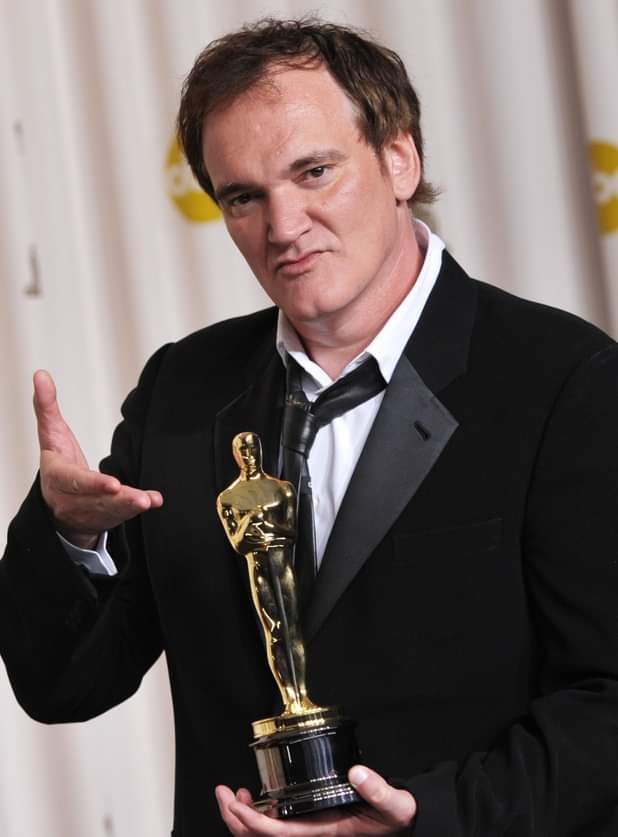
Quentin Tarantino
I have been a Quentin Tarantino fan all my life. From “Reservoir Dogs” all the way to “Once upon a time in Hollywood”. Admittedly, my first Quentin Tarantino film was “Kill Bill” in 2005. I remember the day like it were yesterday. It was on a Friday and it was playing on M-Net. The next Friday, M-Net would play “Kill Bill: Volume 2”. I watched both of them and my life was changed forever. It was film-making I had not seen before. The visuals blew me away, they were exceptionally great. They had a tendency to linger in your mind long after you had watched the movie. So clearly, I always remembered the “Pussy Wagon” and that epic yellow Bruce Lee jumpsuit that the bride was fighting in. That yellow jumpsuit is so iconic, it is memorable, it is imprinted and permanently engraved in the fabric of film – it is amazing creativity and vision from Quentin Tarantino. The fight on the snow between “Cotton-mouth” and “The Bride”; the atmosphere was so smooth and quiet – it was full of serenity and “Cotton-mouth” was in all-white complimenting the snow. The contrast in that fighting scene is amazing because it ends in blood and death. The anime scene on is something that hasn’t been done in film before. It is so epic! He incorporated Japanese taste and culture into the film. The film is surreal. It is a blend of different traditions and cultures infused into this one craft about revenge. The music, the Samari sword fights, the characters, the gore violence, the awesome dialogues, the authentic creativity and the underlying chaos that manifests itself when you least expect it – Quentin Tarantino knocked “Kill Bill” out the park. “Kill Bill” is cinematic excellence. It is an experience you will never forget. It is supremely entertaining!
What I love most about Quentin Tarantino movies is the professionalism. The characters are usually professionals that need to do a job and as such “morality” is exempted in the equation. Every action is justified. Quentin Tarantino doesn’t want you to morally judge his characters. There is no hero in a Quentin Tarantino movie instead he shows you different perspectives of different characters. To communicate this he uses nonlinear storylines and gives the characters in his movies more or less the same screen time. In this way there is neutrality for the professionals who serve as characters in his films. The story on “Reservoir Dogs” follows professional criminals who plan a heist, among them is a police officer who is undercover. The duality of the character of the professional criminal/police officer is the underlying chaos that gives the story its texture and the unpredictability and uncertainty of the plot – it is a texture that gives the story a feeling of “anything can happen”. We also see this type of double-agent play on “Jackie Brown” when a middle-aged flight attendant woman serves as a mole for his criminal boss and also as an informant for the police so that they can apprehend this criminal boss. Jackie Brown strategically plays both parties and in the end, walks away with a lot of money. The duality in the characters of Quentin Tarantino is a common feature in all his films. Again, we see Butch, a promising boxer on the highly acclaimed sophomore movie “Pulp Fiction” win a boxing match despite the fact that he was paid big money to lose. The match was rigged and Butch makes more money from bets. Something that makes his boss big Marcellus Wallace go on a manhunt to catch Butch and kill him. We also see this duality on “Inglorious Basterds”, Django Unchained” and “The Hateful Eight”. These characters are not what they say they are.
Further what makes a Quentin Tarantino movie unpredictable is it’s historical inaccuracies. Quentin Tarantino has a knack for changing historical events and telling his side instead. On “Inglorious Basterds”, the basterds kill Adolf Hitler in the premier of “Nation’s Pride” to end WWII. He over-stimulates the plot and adds his homemade spices. This he does for the sake of the viewer, to entertain and create an experience. He doesn’t mind letting the viewer know that we are watching a movie with characters in it. He is over the top and believes violence creates a better cinematic experience. So, in his movies more often you will see violence just for the sake of violence. Violence with no relevance or use to the plot of the story. A perfect example of this mindless yet entertaining violence can be seen on “Kill Bill” and “Django Unchained”. However, the thing that makes a Quentin Tarantino movie is the dialogue. The dialogues of his characters are unconventional in the sphere of film-making. They are often long, free-flowing and have nothing to do with the plot of the movie. They are entertaining, funny and reference a lot of popular culture as seen on “Pulp Fiction” when we are introduced to Jules and Vincent for the first time in that iconic “Royale with Cheese” dialogue. The opening scene of “Reservoir Dogs” when the professional criminals talk about “Like a virgin” and “Tipping” is the best thing you will ever experience on a movie. In his dialogues, Quentin Tarantino explores social conventions and ideologies – he is provocative, philosophical, engaging, thought-provoking and humorous. At heart, Quentin Tarantino is really a fan of films and movies. He approaches a film with the intent to dazzle and blow you away. He is a genius who can spin anything. This is seen on “Django Unchained” when the slave, flips the script around and becomes the hero who kills evil white men for money. Django also rescues his enslaved wife and literally blows-up the plantation. “Django Unchained” is a perspective we hadn’t seen when it comes to the subject of slavery. It was fresh, daring and exquisite. It was a different narrative, a perspective that was out of the box – it was a typical Quentin Tarantino movie. The characters were all professionals of their trades; a bounty hunter, a seasoned slaver and the house nigga. “Django Unchained” was grand and bold. It incorporated everything Tarantino, it had a Western theme, professionals, double agents, unpredictable and underlying chaos, gore violence, great dialogues and awesome soundtracks.
Quentin Tarantino draws his inspiration from other movies. He states that he copy’s from other movies. From camera angles and techniques to Western stand-offs. To movie sets in other movies to the costumes. His genius comes from the fact that he is obsessed with movies and the subject of film-making. Being obsessed, he incorporates what he loves from other movies to his to elevate them to greatness. All his films generate a cult-like following because of the fresh air they bring to the world. He always seems to resuscitate the film world with every release. The release of “Once upon a time in Hollywood” makes me sad because it’s almost time for him to close the curtains. His next movie will be his last. It’s hard saying goodbye to a legend, to a genius. The world is not ready, I am not ready. I wish we had more time. But it’s fine, at least I have all your movies. They have brought me so much happiness in the past and because they are classics, I have no doubt that they will carry on doing the same in the future. From the bottom of my heart, thank you for everything Quentin. Thank you for sharing yourself and your genius with the world. Thank you for giving us classics. Thank you for making me love movies. You started everything for me. I know creativity because I saw a Quentin Tarantino movie when I was 9.
Buy the great man Coffee :https://www.buymeacoffee.com/Antakalipa
 antakalipa