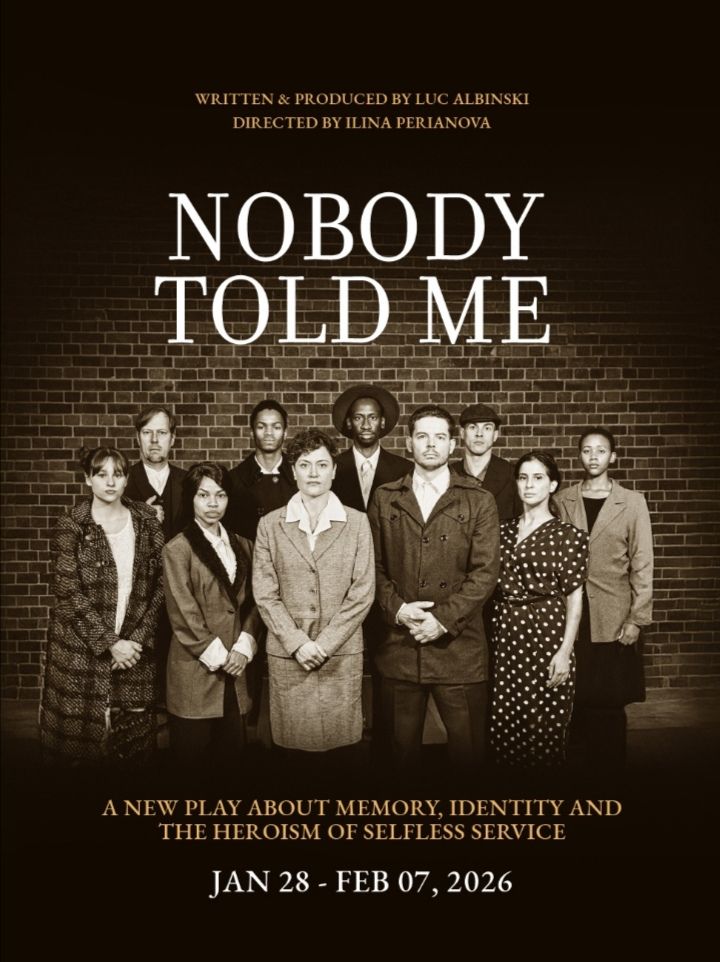
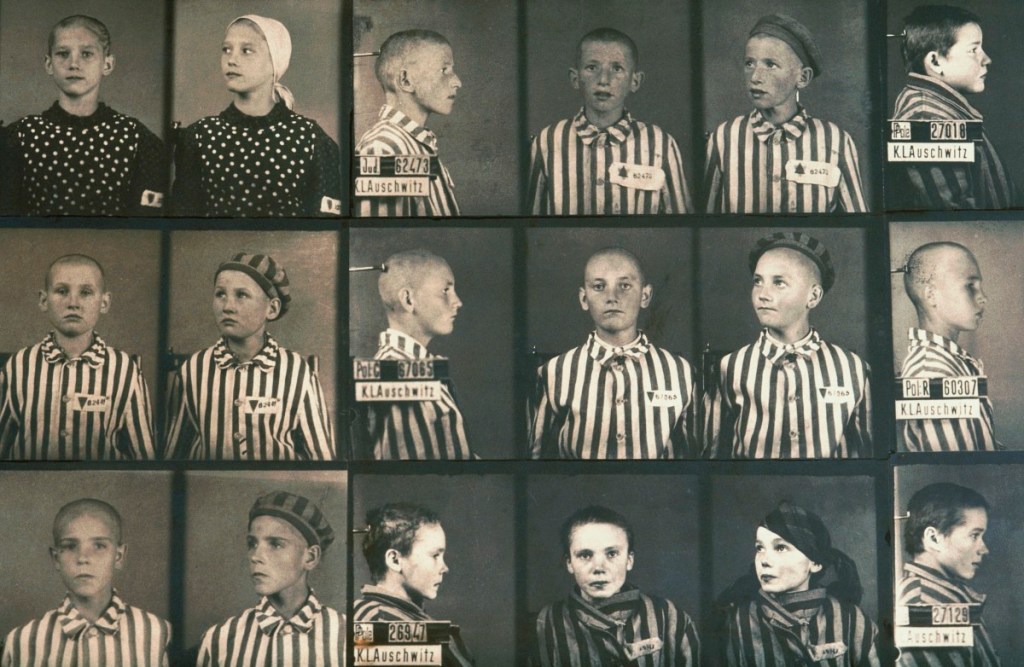
On the square to watch a Masterpiece “Nobody Told Me” , very early on and you are looking at a Production of the Year contender. A Poignant, reflective, wrenching and deeply compassionate play exploring life in the Warsaw Ghetto, Poland for Jewish residents under German occupation. Nazi’s the instigaters – Swastikas, German efficiency, in uniform, Poland, WWII, heil Hitler.
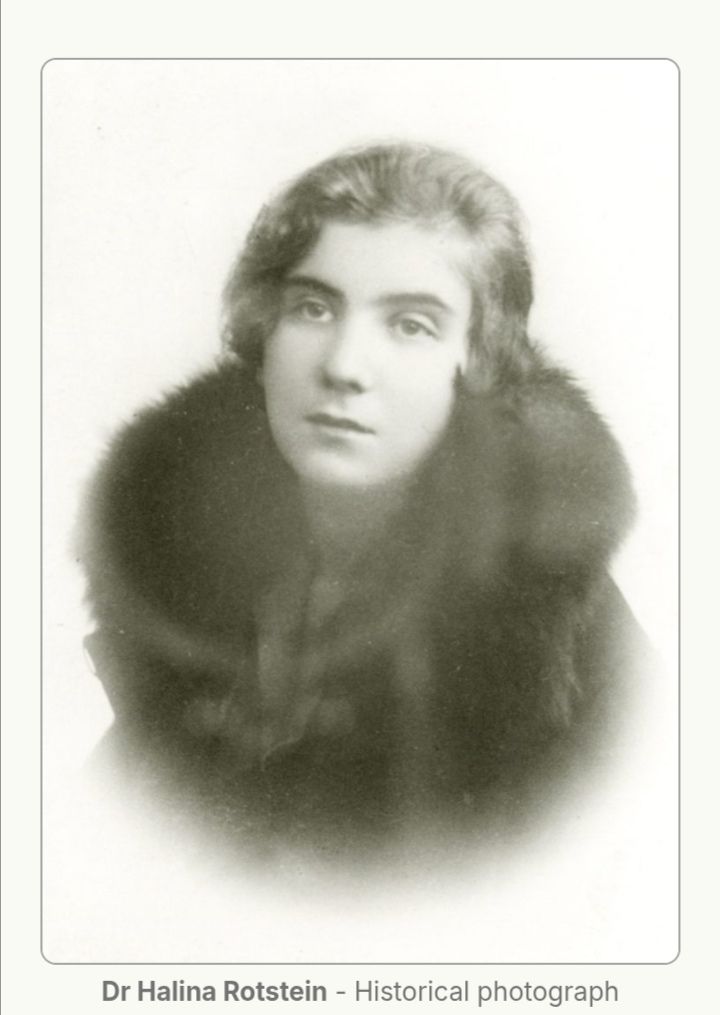
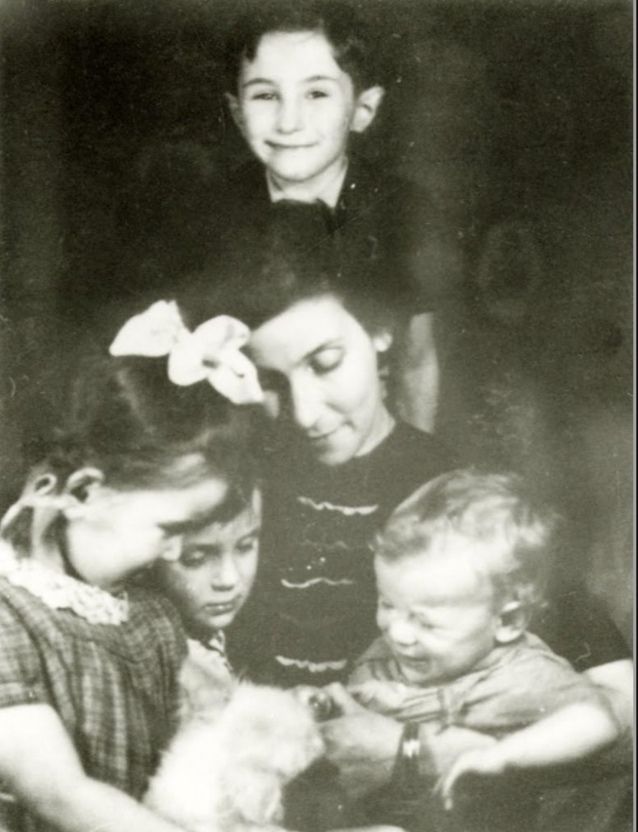
Nobody Told Me is a contemporary stage play written by Luc Albinski. It’s a dramatic theatrical work inspired by true family history and the experiences of a Jewish doctor in World War II Warsaw. It follows the emotional journey of Wanda, now in her 80s, and her son Luc (the playwright), as they explore long-buried family secrets about Wanda’s mother — Dr Halina Rotstein, a Jewish physician who worked in the Warsaw Ghetto’s Czyste Hospital during the Holocaust. The story shifts between present-day conversations and flashbacks to the 1930s–40s in Warsaw, showing how Halina and her circle of young doctors faced impossible moral choices while trying to care for others under Nazi oppression. Rather than simply recounting historical events, the play focuses on private emotional landscapes, memory, identity, survival, and silence — especially on how hidden histories shape later generations.
The play explores Dr. Halina’s relationship with her daughter. Halina’s relationship with her daughter is the emotional heart of Nobody Told Me. It is not a relationship built on warmth or easy intimacy, but on duty, silence, sacrifice, and deferred love—the kind of love that survives catastrophe by becoming disciplined, restrained, and often misunderstood.
Halina loves her daughter fiercely, but her love is filtered through survival. As a doctor in the Warsaw Ghetto, Halina lives in a world where sentimentality is a liability. Every day is an emergency. Every decision has consequences measured in lives lost or saved. In this context, motherhood cannot look like softness—it must look like control.
To her daughter, this can feel like emotional distance. Halina does not always explain herself. She does not narrate her fear. She does not confess her pain. Instead, she acts:
She chooses work over emotional presence.
She prioritizes survival over comfort.
She withholds information to protect her child from terror.
From the daughter’s perspective, this restraint can register as coldness. But from Halina’s perspective, love means keeping her child alive at all costs, even if that means being misunderstood forever.
This is one of the play’s cruelest truths: Sometimes love survives only by disguising itself as severity.
The production blends intimate storytelling with expressionistic, post-Brechtian and physical theatre conventions, aiming to make the audience feel the moral weight and human resilience beneath historical facts. Themes include memory and secrecy, duty versus survival, humanism in inhuman conditions, and the inheritance of identity. Music by Jeanne Zaidel-Rudolph and choreography by Vicky Friedman contribute to its immersive atmosphere. Wonderful design and sets by Wilhelm Desbergen and Gwendi Gourley.
Cast Members
Liezl de Kock
André Lötter
Aimèe Mika Komorowsky
Mamodibe Ramodibe
Damon Berry
Khuthadzo Ndou
Dihan Keun
Jade Scheepers
Andile Mgeyi
Ngwedi Ramphele
They are all outstanding performers, never a moment out of character – moving, emotive, poignant, heavy, nonchalant, murderous, heil Hitler. Soviets in the mix too.
The play is described as a tribute to those who healed others while facing immense danger, and as an exploration of silence and revelation within families and history.
It asks broader questions about identity, inherited silence, moral choices under oppression, and how stories once hidden can shape understanding in the present.
Congratulations Ilina Perianova with assistant director Renos Spanoudes and the whole team for a great show and a deserved standing.
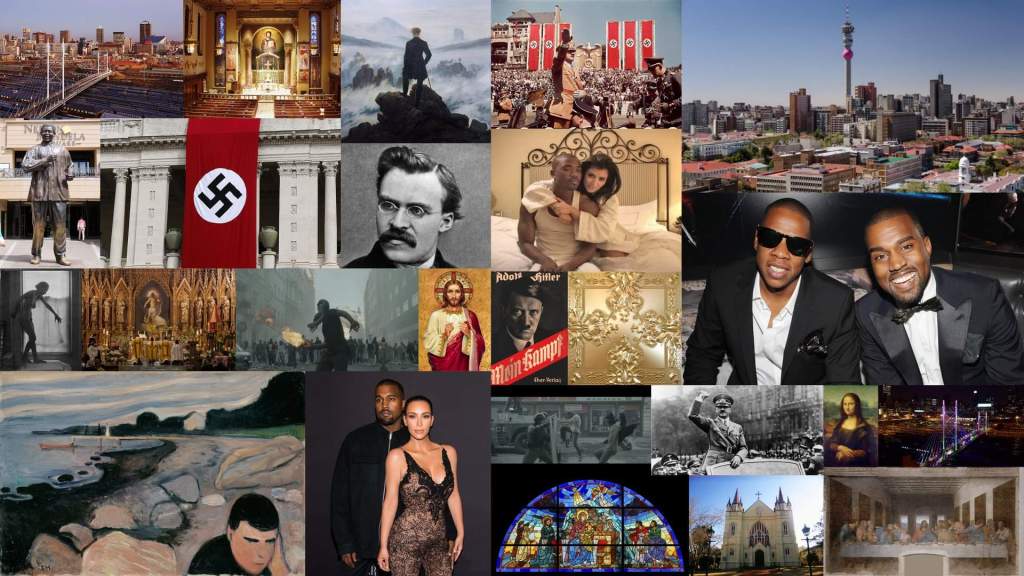
For over 3000 years art has been an effective instrument utilized to instigate and propagate propaganda. To communicate wealth, kings would have their thrones custom made in gold. They would have statues of themselves erected to signify dominance and unadulterated power. Art was grand and bold. Art was truthful. Art was forever. Propaganda means to tell one side of the story great. For that to be achieved, we need theatricality and a truckload of charisma. We need the narcissistic and egotistical character to impose himself on the world and lay claim to being a god. We need symbols with meanings, paintings of portraits and parades on the streets with people exhibiting their skills in an art form known as dance to communicate a feeling of happiness or to spread fear and flex muscles in the form of a military parade. Art is emotive. It makes us feel, it engages our feelings and regulates our emotions. Art is powerful. Art is dramatic, it has flair. The best utilization of art as propaganda can be found in history. Particularly in the 1930’s in Germany. Adolf Hitler’s Nazi party were at the helm of Germany. The aim was to restore Germany’s status in the world as a powerhouse. It had been crippled in World War one, and Hitler had ambitions of restoring it. To do this, everyone in Germany had to pledge allegiance to Hitler. Everyone had to be loyal to Hitler. Everyone had to give their lives to Hitler or simply run the risk of being killed. Hitler had a minister of propaganda who would propagate the word in the form movies and music. Children in primary school all the way to tertiary institutions started off the day singing a mandatory anthem about Hitler’s greatness and how he is Germany’s savior. Hitler proclaimed his book “Mein Kampf” as the bible of Germany and passed a law that every household in Germany should possess it and study it with great rigor and enthusiasm. The Nazi symbol (Swastika) bombarded every street and corner of Germany – it was all that people saw, all that they knew. With the aid of art, Adolf Hitler transformed himself into a literal God. He had real power, he was respected and he was feared. His military parades were so majestic and grandiose with the image of Swastikas in a form of flags and big posters everywhere; with the crowd cheering and saluting with their right hands in the air. Hitler was propaganda embodied and being an artist himself, he made it an art form.
Adolf Hitler is not the only person to use art as propaganda. Religion institutions like the Catholic Church are one of the best to ever do it. The statues they have erected are so beautiful. The architecture of their churches – it’s so sublime, so extraterrestrial and yet calming, conservative and reassuring. The inside of the church is spectacular – they have mini fountains, statues of personnel in the bible and the most beautiful paintings. Leonardo Da Vinci was one of the artists who contributed in the churches art. He painted one of the most remarkable and beautiful paintings ever, notably the last supper – it was realistic, alive, animated, spirited and energetic. The picture is exactly what God and bible were conveying. Leonardo Da Vinci did it, he hit the nail right on top of the head. The church has this impressive aura, from their paintings, the churches architecture, their statues, their props, the congregation – they are magnificent! In 2019, we still see propaganda propagated in widespread areas. In Gauteng, Sandton resides a bronze statue of first democratically elected president Nelson Mandela. It is huge and commemorative. Like the Grand Canyon, tourists from all parts of life frequent it to take pictures and busk in its glory and magnificence. There is also a majestic bridge located in Newtown, Johannesburg that is named after the great man. It is a beautiful piece of architecture that draws tourists in. It is grand and sublime. At night, it lights up in a way that almost takes your breath away – it is so beautiful. Nelson Mandela was a great man, however mortality meant that he was limited. Art and culture has elevated his name in the realm of immortality and gods.
Religion was created to help us with fundamental issues of existence namely ethics, morality and values. Like Philosophy it taught how to live – but in a reserved and calculated manner. It helped with nihilistic thoughts and depression. It gave us a reason to live. By negating the material world in favor of a Heaven or Utopia, it unloaded the burden on our shoulders and made us strive for an ideal. It was beautiful, subtle and effective. The world had an order. People’s behaviors could be predicted. There was harmony in communities. Conduct was born, to be different meant a transgression to society, so that was avoided by all means. Everyone strived to be a “good” person. Religion created that culture in communities, in all parts of the world. It created the culture of empathy and sympathy – the essence of being a good person, it created a culture of order and it created a culture of submissiveness. As a crowd management system, it had its frailties that were exposed in the dawn of the industrial revolution. People in their numbers now lived in the city. The city was confined and restricted with no trees or an ecosystem that supported life. Life in the city was stressful, demanding and expedient. Religion had protected people from the notion and truth that life was suffering and now everything was unfolding – people’s lives were falling apart. Religion did not have the tools or answers to help people deal with their demanding lives. Heaven as a consolation prize for the suffering evident and prevailing was not enough. This resulted in people having nihilistic thoughts. 21st Century philosopher Nietzsche professed that “God was dead!” on his amazing work “Thus Spoke Zarathustra”. It was a fair assessment of reality and the future.
Now in 2019, on the 4th industrial revolution with the emergence of artificially created life, we see the evidence of god’s death. More and more people now live in cities as opposed to small intimate villages in a community where everyone knows one another. Life is on the fast lane and church isn’t even in the car. It is trailing behind, losing a drag race by miles. Life is even more demanding, life is more stressful and life is more expedient. Thinking is a luxury! Loneliness and depression are the epidemics of the world. Suicide rates are skyrocketing. Crime at an all-time high and Capitalism – the new culture of the world destroying religion making sure that we feed on one another like cannibalistic life forms. The capitalistic system is god. The capitalistic system is culture. It has devoured religions ethics, morality and values leaving the population confused about their self-identity, about a self-campus on where to go. We are about in the wild chasing novelty after novelty. Lost. Empty. The song “No Church in the Wild” by Jay –Z & Kanye West explores our reality in great detail. It is about how everything is permitted in a world where god is dead. The visuals for this song is the most powerful thing you will ever see. Both Jay –Z & Kanye West are exempted from the video, instead we see a movie where there is a lot of chaos, fighting and death. It is the artist’s job to reflect the world to the people, a job Jay –Z and Kanye West did remarkably well with high distinction. It is a piece of art that will immortalize them. It is brilliant.
Kanye West is one of the few artists in the world to understand the role of art, to understand the power that it has. He is an intelligent man who aligns himself with the outlandish and provocative. He does this because he understands the order of the world. He does this because he knows culture, rules. To shift culture, you have to be unconventional, mysterious, unpredictable and a loose screw. Being unpredictable makes you powerful. This is a skill that Kanye West has mastered all his life. In 2007, Kim Kardashian released a sex-tape on the internet with then boyfriend “Ray J”. It was a strategic ploy on her side to attain power. It was a bold move, it was gritty, gutsy and it was scandalous! She became an instant star. She had a great body and her boyfriend was a celebrity. She was all the internet talked about. Fresh from the release of his mega successful album Graduation in 2007, Kanye West started courting Kim Kardashian. With the trajectory of his career on the ascendency he saw an opportunity. Kim Kardashian’s public persona was too good for him to pass up on, it was scandalous, promiscuous, bold, gutsy, sexy, forbidden and phallic. Kim Kardashian was extremely powerful and he (Kanye) knew this. Ultimately, he married Kim and Kim Kardashian married a successful, rapper and entrepreneur who graced the cover of “Times” magazine thus legitimizing her brand and image. The marriage was a perfect fit. As a couple, they had influence, they had power and they would be the talk of popular culture. 2013 saw the release of his sixth album “Yeezus”. Once again, he had aligned himself with a powerful figure “Jesus Christ”. It was typical Kanye who freed himself from all the barriers and boxes that contained everyone else. From that move, naturally he was all that people could talk about. With the aid of art, he became mythical. It was propaganda, by aligning himself with “Jesus Christ”, a cult-like following emerged and started creating pictures of him as Jesus. It was a frenzy. It made him powerful. Soon enough, everyone was imitating him – now the world had artists like “Reazus” and “Teezus”. Kanye West was idolized and worshipped.
The internet has bestowed on to people the power to be gods. Art is something we could use to improve that god-like status. The danger of the internet is that it has also created illusions. Being headstrong is a requirement. The “death of god” has to have a powerful effect on us. We have to do things for ourselves and have the courage to live life in its totality. We have to be brave and venture out in the world with a strong belief in ourselves and our abilities. God cannot do anything for us because everything was fabricated by culture – and culture is made up of people like me and you. Everything in the world is made up of culture and influence. Love is cultural invention – initially it was an escape from our loneliness and boredom. The internet has gifted us the opportunity to be better, to be influential, and to be gods.
The rise of consumerism is one of the reasons depression is so rife in the west and just about everywhere in the world. Consumerism is good for the capitalist system but not for the human spirit. This is because as human beings, we can’t help but to compare ourselves with others. It’s hardwired into our brains. Comparing is what creates meaning and it helps us classify things to see our progress in life. However it also creates anxiety because if I can’t get that German car my neighbor recently purchased then I feel worthless. The things you own end up owning you but a minimalistic life is not the answer either. Moderation is a big word in this context. Know yourself and what works for you and practice that. Don’t keep up with the Jones, keep up with your budget and responsibilities. I have simulated losing everything in my mind. This is a stoic exercise that helps me conquer fear, because if I am comfortable losing everything then I am free. Free to actualize, free to be what destiny intended.
Life is broader than material things. Life is emotions, perceptions and sensations. Life is awareness. Life is presence. Life is precious. Life is a miracle. Life is a beautiful process that keeps on getting better. Life is evolution and progression. Life is freedom. Life is creation. Life is love.
I realized a while back that earth was heaven. Heaven is not some Utopia that you get to, Heaven is already within. Heaven is what you create and God gave us complete control of our minds to create. Expression is creation and mind is expression. This is it. It doesn’t get better than this. You have the responsibility to create your own Heaven, simply because Heaven is a state of mind.
I’ve never really cared much for materials, I prefer creating experiences, they last longer. Still, I’ve always loved money. Money is power. Money buys a priceless commodity, time. But because money is external, it can be dangerous because of the imprints you attach to it. Money can repossess your soul, that’s if you identity with it and it’s difficult not to because society teaches us to do so.
Everyone thinks they’re right and in the process we lose our humanity and further surpress our mortality. We forget to love one another and act justly. Even Adolf Hitler thought he was right and he thought that he was going to live forever. He justified the atrocities that transpired in the 20th century to God. He vilified the Jews so much and propagated hate that everything he said made sense. He got supporters. The world fell under his hypnotic frame and genocide became accepted. It’s the same thing with white supremist groups like the KKK and slavery, everyone thinks they’re right and it also makes sense too. In elevating our status we demean the statuses of others and come to see them as weak, we believe we are superior, better, chosen and that we are going to live forever. The hate becomes our refuge and it protects us from the injustices of the world namely that life is suffering and there is no apparent reason for this suffering, so we commit more suffering since that creates some sort of meaning and justifies our existence. The thought that perhaps God doesn’t care about us is unbearable but we entertain it since if God doesn’t exist then all is permitted. Everyone thinks they’re right and there’s always a feedback loop that justifies their findings. Kaffers are dangerous and apartheid fair, while the negro is genetically built to serve his master, the white slaver. Jews are corrupt to the core and spread this plague like a virus throughout the world. Everyone thinks they’re are right and God is always on their side. I learned it’s not important to be right, in fact I don’t want to be right. I’d much rather be wrong and make my way up, as long as there’s breath in my lungs I have a chance to be less wrong. I want to be a good man and have love in my heart. My time is limited and so I meditate on that so I can practice my humanity and make the world a bit better than I found it. My mortality haunts me but it motivates me to be kind, loving and a good person. I don’t want to be right, I want to be just.
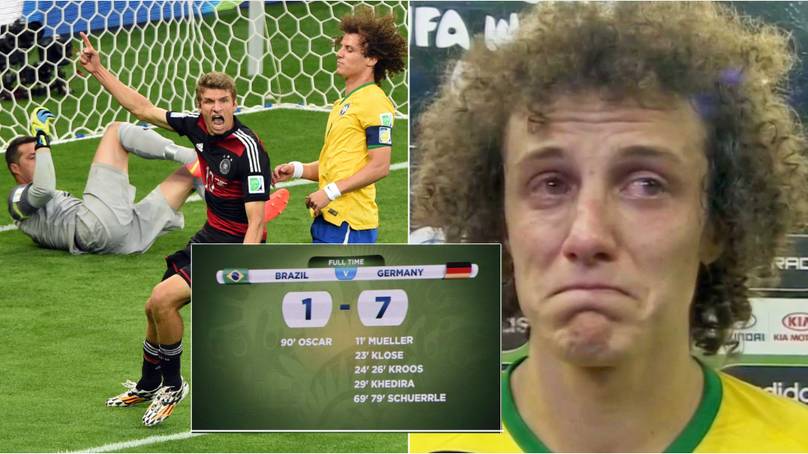
I want to explore a case study. In 2014, Brazil played host for the World Cup semi-finals against Germany. They were hot favorites to win the tournament. In this game more than 60 000 Brazilians filled the Belo Horizonte stadium. They (Brazil) were missing their key players like captain Thiago Silva and their golden boy Neymar Jr, through suspension and injury. Even with that, the concensus was still Brazil. When they sang their national anthem the whole stadium reverberated. They sang with a lot of zeal, passion and enthusiasm. It was inspiring and special. Some players even cried, they were playing for all of Brazil. The Germans on the other hand didn’t show any of this zeal. It was just another game for them and an opportunity to get to the finals. They were merely focused, relaxed and professional. They didn’t show the same energy Brazil showed. They didn’t overwhelm themselves, they didn’t show unnecessary emotions.
Brazil started the game like a house on fire. Attacking the Germans with everything they had with the crowd cheering and applauding them. It was peculiar, even David Luis, the spine of the defense for the Brazilian team was in offensive positions. Germany kept their shape and structure for the first 10 minutes of the game, getting the feel of the game. 15 minutes later the scoreline was 5-0 in favor of Germany and the Brazilians fans were in shock, crying. Germany had won the game in less than 30 minutes. At half-time Germany subbed of their best defender in Mats Hummels, they saved him for the final and he was too strong for Brazil in any case. At this rate Brazil would never score. Germany did the humanitarian thing and subbed him off. The game finished 7-1 in favor of the Germans, the biggest win by margin in the history of the World Cup tournament in the semi-final stage.
Moral of the story? Don’t just throw the sink at your opponent, don’t be emotional, don’t be expedient, plan, have structure and shape. A fast start doesn’t mean anything if you don’t win.

 antakalipa