In search of lost time

In search of lost time

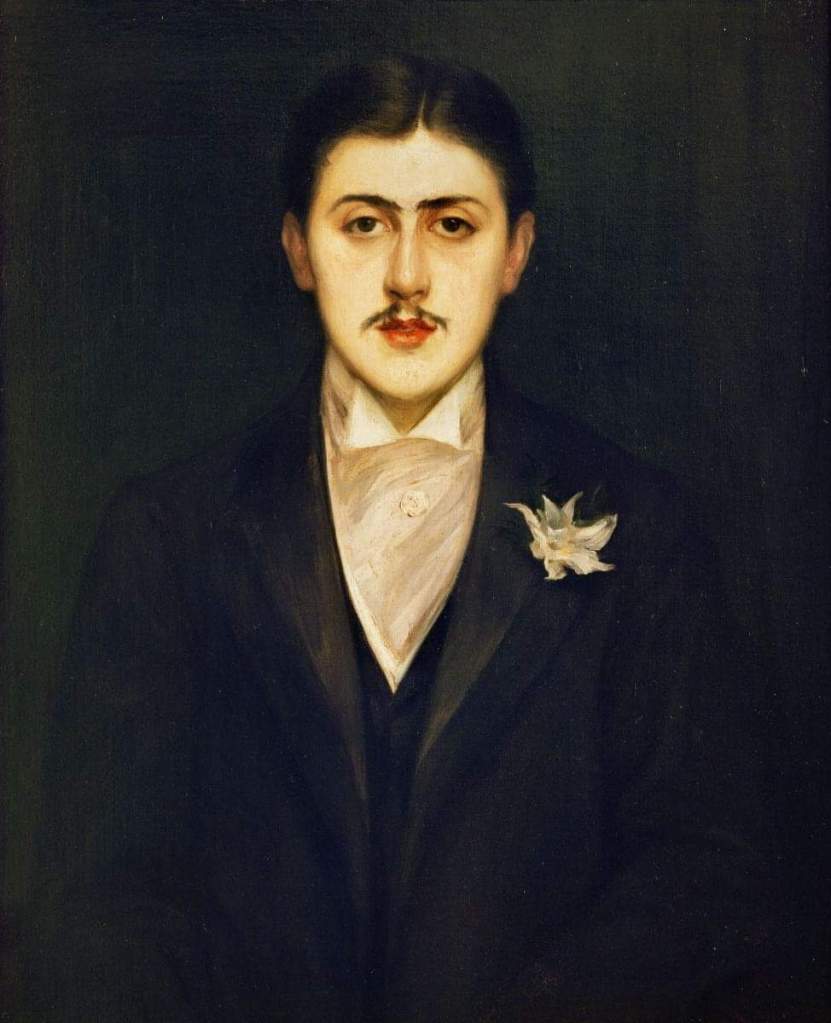
Easily one of the greatest books of all time. It follows the life of the author and his experiences throughout his life. “In search of lost time” covers the subjects of Love, homosexuality, death, old age, art, the Dreyfus case, social conventions, politics, family, friends, the war and lost time. It is such a masterpiece. If only I could write like Proust. He writes like a detailed painting. You can see the brush strokes in his words. You can see the different hues. His words are passionate and full of life like Spring. His words are so vivid, they evoke feelings and transport you to his time. He describes everything in its smallest detail. He is reflective and honest. He can make you laugh and he can make you sad. He makes you reflect about your life, your decisions, your future. He makes you see how tragic life really is. Even with all the money in the world and the most esteemed people by your side, it still doesn’t mean anything. The esteemed people in the highest positions in the world are still humans and they have a nature that is universal. They have fears, they are in a world in which they didn’t create, a world they cannot successfully navigate because there is no blueprint, they are vulnerable to sickness and death and despite their best efforts they don’t know what they are doing. Boredom is an inescapable fact of life and so they keep themselves occupied with social conventions. They attend parties and invite other celebrated individuals and talk art all day. They talk art, books, music, drama and fashion. At least that gives life meaning. It makes it bearable. I learned important social skills and emotional intelligence is important in the context of life. Social skills and Emotional intelligence is better than IQ. You can be high in IQ but if your peers and colleagues find your conduct undesirable you risk being stagnant and never moving in an upward trajectory. Social skills and Emotional skills is how you navigate your way through life. It is how you find desirable mates, it is how you increase your list of acquaintances. Acquaintances enable you to move up the social ladder. You must be able to perceive and regulate other people’s emotions. That is true intelligence because human beings are emotion creatures. The ability to regulate your impulses and act in a just manner will attract things to you, it will enable you to move up. Social skills and emotional intelligence are important because as you navigate the world you meet different people with different tastes and customs. You encounter foreign traditions, a high level of emotional intelligence will enable you to be open-minded as you won’t fall prey to your urge to exert you ego, this will enable you to communicate and project yourself with desirable effects. “In search of lost time” centers a lot around society and social conventions, it explores finding favor with people, undesirable qualities in individuals and how to be well-liked and adored. The characters in these social classes are intellectuals bred from the highest aristocratic families in the world, they are the elite. This doesn’t mean they are snobbish, although a couple of characters do exhibit this snobbery behavior but rather that they are finicky and know proper culture. They engage in stimulating and witty conversations. I have to admit I loved going to the Duchess Guermantes place. It was good and she was charming. Orianne oh, my beautiful Orianne. She was funny and witty and everyone loved being in her presence. She also didn’t just entertain anyone, you had to be of a certain pedigree, you had to be a master of your trade, you had to be cultured, you had to be interesting, you had to be special. The parties were quite exquisite and wonderful. I enjoyed being in the presence of great people and engaging with them. It was quite an experience!

“In search of lost time” also explores the subject of love and how peculiar it is. The first volume of the book covers the love affair between Charles Swann and Odette De Crecy. Swann an important man in the eyes of society falls in love with a peasant girl Odette. He loves her despite her infidelities. He is conscious of her infidelities and yet he still persists. He gives her money, he does absolutely everything for her. Odette makes him suffer through jealous streaks and unquenchable paranoia. This is what draws Swan to Odette, the suffering, it is familiar to him and he just can’t get over it. Swanns is repressed and as such his subconscious is doing all the navigating in the world. Swann loves Odette with all his heart and he figures that’s enough. Eventually, Odette will come around. This makes Swann a laughing stock in the eyes of society because evidently the peasant girl is using him for his money. Swann knows this and he accepts it since it enables him to be with Odette. This is the strange thing about love, we love what makes us suffer, we love what is familiar. Because love is a psychological phenomena, we love the repressed qualities of ourselves and project them onto another person. This is explored in the work of Carl Jung with his Amina and Animus. I am not attributing the Anima for Swanns situation but it is the most intelligeable option. Besides, consciousness is a difficult topic to explore because no one can account for it, at least work has been done on the subconscious mind. Love is difficult because it can be unconscious like most of our actions. And so the most intelligent conclusion would be to say that Swann didn’t know what he was doing neither did Odette. Swann was attracted to the suffering that Odette was inflicting on him. This says a lot about the human condition, the fact that we need suffering to feel alive, to be alive. Numerous other love affairs are covered in the book like the authors affair with Albertine, a Femme Fatale who almost leads Proust in the wrong direction. Albertine too makes Proust suffer and it is what reels him in. The book also covers the authors infatuation with the Duchess Guermantes. This infatuation locks him in a trance of behavior that he doesn’t understand. He becomes obsessed with her. He spies and gathers data about her and when she takes her walks. He ultimately falls in love with her and talks at great length about her features and fashion sense. He asks his friend to introduce him to her considering that they are family and everything blossoms from there onwards. This behavior exhibited by the author shows us that love is not logical. Love is the ego exerting itself. Love is selfish and consumes. Love possess like a demon. Love is the universal unconscious form exerting itself on life. It is pheromones in the air that accessing a unwilling host. It is a phenomenon that just happens to you. Popular culture often talks about “Love at first sight” perhaps there is scientific evidence in this notion. It would certainly explain the concept of homosexuality and the urge for young boys like the character M. De Charlus in book. Maybe Charles Darwin didn’t cover the whole scope of evolution. Surely, this is only De. Charlus’ nature. M. De. Charlus is portrayed like a zealot who engages in morally unjustified and elusive behavior, maybe the society in Prousts time is wrong. The fundamental question here is that do we choose who to love? Perhaps the idea of choice is our biggest illusion.

The book also covers our common ground, the destination we all share namely death and old age. It is a certainty that we are all going to die. That our family, friends and cherished acquaintances will all some day perish leaving nothing but a memory and even that isn’t much because they vanish and die down like smoke. Proust communicates to the reader how fragile life is, how nothing in this existence is ever guaranteed and the importance of orienting yourself to your passions. This is important because life goes where energy flows. For Proust writing brought him solace and he was able to navigate life because of this passion, it gave his life meaning in an otherwise meaningless life where we all experience boredom, suffering, old age and ultimately our demise. These ideas are also covered in Martin Scorsese classic movie “The Irishman” where death and old age follows us to its climax. This is useful because death can serve as a catalyst to show us how to live. Death inspires and teaches you how to appreciate life and live in the present. After all, the present is all we ever have, everything else is just an illusion. Urban poet Kanye West makes this point on his sophomore album “The Late Registration” on the song “Drive Slow” and he advises the listener to fully be present because you never really know what can happen tomorrow. He favors a life of meaning over expediency. In the book several of the authors close family members and acquaintances die including Aunt, grandmother, girlfriend and best friend. This serves as a reminder that nothing lasts forever. It serves as a reminder to never take life for granted. We also see Proust maturing in the eyes of society, we see him as a young man full of youthful exuberance and him maturing into an old man who is teased and made fun off by the current generation of youthfuls. We see the Duchess Guemantees lose her wit, charm and beauty because of time. We see her position replaced. We see countless marriages happen because of death and separations. We see people rise up to the top of society. We see people who had it all and lost it all. We see regrets, we see people never reaching their potential. Throughout the book humannature is put through the microscope and we observe people’s tendencies and habits. It is habits that make a person and we are judged by our actions. Words are used to deceive and don’t carry any weight. Proust teaches us that life is short. In today’s climate and world, the life expendency is 70 and we spend a third of that time sleeping. Another third of it is spent doing things like brushing our teeth, commuting to work, eating, entertainment and work. We have a third of that to ourselves, that third is less than 15 years. How do you plan on spending that? What habits can you caltivate to ensure you live a meaningful life? Is self-development important to you? Whose life are you living? Is your life worth living? These are the types of questions that Proust forces us to answer about our life. We are all going to die, the youth is going to force us into retire, we are all going to be insignificant, we are all going to be useless, we are all going to vanish and leave no trace of time. Time is an illusion anyways, time is a creation of man created as a means to dominate nature, everything is what it is. Proust teaches us to make the best of the present moment every chance we get. Proust teaches us to elevate our perspective, he teaches us that change is the only constant.

Thank you Marcel

Buy the great man Coffee :https://www.buymeacoffee.com/Antakalipa
Culture is God

Culture is God

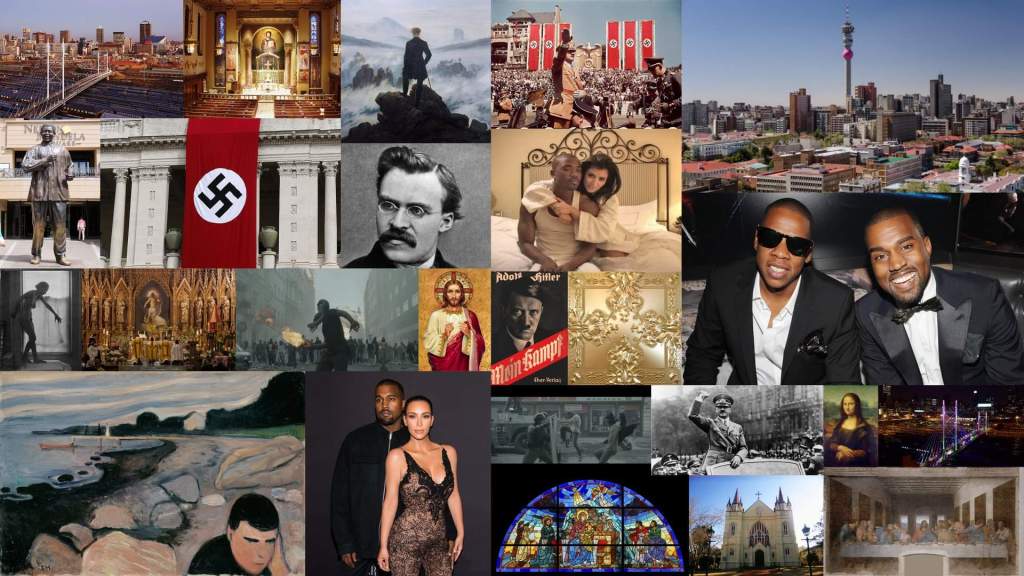
For over 3000 years art has been an effective instrument utilized to instigate and propagate propaganda. To communicate wealth, kings would have their thrones custom made in gold. They would have statues of themselves erected to signify dominance and unadulterated power. Art was grand and bold. Art was truthful. Art was forever. Propaganda means to tell one side of the story great. For that to be achieved, we need theatricality and a truckload of charisma. We need the narcissistic and egotistical character to impose himself on the world and lay claim to being a god. We need symbols with meanings, paintings of portraits and parades on the streets with people exhibiting their skills in an art form known as dance to communicate a feeling of happiness or to spread fear and flex muscles in the form of a military parade. Art is emotive. It makes us feel, it engages our feelings and regulates our emotions. Art is powerful. Art is dramatic, it has flair. The best utilization of art as propaganda can be found in history. Particularly in the 1930’s in Germany. Adolf Hitler’s Nazi party were at the helm of Germany. The aim was to restore Germany’s status in the world as a powerhouse. It had been crippled in World War one, and Hitler had ambitions of restoring it. To do this, everyone in Germany had to pledge allegiance to Hitler. Everyone had to be loyal to Hitler. Everyone had to give their lives to Hitler or simply run the risk of being killed. Hitler had a minister of propaganda who would propagate the word in the form movies and music. Children in primary school all the way to tertiary institutions started off the day singing a mandatory anthem about Hitler’s greatness and how he is Germany’s savior. Hitler proclaimed his book “Mein Kampf” as the bible of Germany and passed a law that every household in Germany should possess it and study it with great rigor and enthusiasm. The Nazi symbol (Swastika) bombarded every street and corner of Germany – it was all that people saw, all that they knew. With the aid of art, Adolf Hitler transformed himself into a literal God. He had real power, he was respected and he was feared. His military parades were so majestic and grandiose with the image of Swastikas in a form of flags and big posters everywhere; with the crowd cheering and saluting with their right hands in the air. Hitler was propaganda embodied and being an artist himself, he made it an art form.

Adolf Hitler is not the only person to use art as propaganda. Religion institutions like the Catholic Church are one of the best to ever do it. The statues they have erected are so beautiful. The architecture of their churches – it’s so sublime, so extraterrestrial and yet calming, conservative and reassuring. The inside of the church is spectacular – they have mini fountains, statues of personnel in the bible and the most beautiful paintings. Leonardo Da Vinci was one of the artists who contributed in the churches art. He painted one of the most remarkable and beautiful paintings ever, notably the last supper – it was realistic, alive, animated, spirited and energetic. The picture is exactly what God and bible were conveying. Leonardo Da Vinci did it, he hit the nail right on top of the head. The church has this impressive aura, from their paintings, the churches architecture, their statues, their props, the congregation – they are magnificent! In 2019, we still see propaganda propagated in widespread areas. In Gauteng, Sandton resides a bronze statue of first democratically elected president Nelson Mandela. It is huge and commemorative. Like the Grand Canyon, tourists from all parts of life frequent it to take pictures and busk in its glory and magnificence. There is also a majestic bridge located in Newtown, Johannesburg that is named after the great man. It is a beautiful piece of architecture that draws tourists in. It is grand and sublime. At night, it lights up in a way that almost takes your breath away – it is so beautiful. Nelson Mandela was a great man, however mortality meant that he was limited. Art and culture has elevated his name in the realm of immortality and gods.

Religion was created to help us with fundamental issues of existence namely ethics, morality and values. Like Philosophy it taught how to live – but in a reserved and calculated manner. It helped with nihilistic thoughts and depression. It gave us a reason to live. By negating the material world in favor of a Heaven or Utopia, it unloaded the burden on our shoulders and made us strive for an ideal. It was beautiful, subtle and effective. The world had an order. People’s behaviors could be predicted. There was harmony in communities. Conduct was born, to be different meant a transgression to society, so that was avoided by all means. Everyone strived to be a “good” person. Religion created that culture in communities, in all parts of the world. It created the culture of empathy and sympathy – the essence of being a good person, it created a culture of order and it created a culture of submissiveness. As a crowd management system, it had its frailties that were exposed in the dawn of the industrial revolution. People in their numbers now lived in the city. The city was confined and restricted with no trees or an ecosystem that supported life. Life in the city was stressful, demanding and expedient. Religion had protected people from the notion and truth that life was suffering and now everything was unfolding – people’s lives were falling apart. Religion did not have the tools or answers to help people deal with their demanding lives. Heaven as a consolation prize for the suffering evident and prevailing was not enough. This resulted in people having nihilistic thoughts. 21st Century philosopher Nietzsche professed that “God was dead!” on his amazing work “Thus Spoke Zarathustra”. It was a fair assessment of reality and the future.

Now in 2019, on the 4th industrial revolution with the emergence of artificially created life, we see the evidence of god’s death. More and more people now live in cities as opposed to small intimate villages in a community where everyone knows one another. Life is on the fast lane and church isn’t even in the car. It is trailing behind, losing a drag race by miles. Life is even more demanding, life is more stressful and life is more expedient. Thinking is a luxury! Loneliness and depression are the epidemics of the world. Suicide rates are skyrocketing. Crime at an all-time high and Capitalism – the new culture of the world destroying religion making sure that we feed on one another like cannibalistic life forms. The capitalistic system is god. The capitalistic system is culture. It has devoured religions ethics, morality and values leaving the population confused about their self-identity, about a self-campus on where to go. We are about in the wild chasing novelty after novelty. Lost. Empty. The song “No Church in the Wild” by Jay –Z & Kanye West explores our reality in great detail. It is about how everything is permitted in a world where god is dead. The visuals for this song is the most powerful thing you will ever see. Both Jay –Z & Kanye West are exempted from the video, instead we see a movie where there is a lot of chaos, fighting and death. It is the artist’s job to reflect the world to the people, a job Jay –Z and Kanye West did remarkably well with high distinction. It is a piece of art that will immortalize them. It is brilliant.

Kanye West is one of the few artists in the world to understand the role of art, to understand the power that it has. He is an intelligent man who aligns himself with the outlandish and provocative. He does this because he understands the order of the world. He does this because he knows culture, rules. To shift culture, you have to be unconventional, mysterious, unpredictable and a loose screw. Being unpredictable makes you powerful. This is a skill that Kanye West has mastered all his life. In 2007, Kim Kardashian released a sex-tape on the internet with then boyfriend “Ray J”. It was a strategic ploy on her side to attain power. It was a bold move, it was gritty, gutsy and it was scandalous! She became an instant star. She had a great body and her boyfriend was a celebrity. She was all the internet talked about. Fresh from the release of his mega successful album Graduation in 2007, Kanye West started courting Kim Kardashian. With the trajectory of his career on the ascendency he saw an opportunity. Kim Kardashian’s public persona was too good for him to pass up on, it was scandalous, promiscuous, bold, gutsy, sexy, forbidden and phallic. Kim Kardashian was extremely powerful and he (Kanye) knew this. Ultimately, he married Kim and Kim Kardashian married a successful, rapper and entrepreneur who graced the cover of “Times” magazine thus legitimizing her brand and image. The marriage was a perfect fit. As a couple, they had influence, they had power and they would be the talk of popular culture. 2013 saw the release of his sixth album “Yeezus”. Once again, he had aligned himself with a powerful figure “Jesus Christ”. It was typical Kanye who freed himself from all the barriers and boxes that contained everyone else. From that move, naturally he was all that people could talk about. With the aid of art, he became mythical. It was propaganda, by aligning himself with “Jesus Christ”, a cult-like following emerged and started creating pictures of him as Jesus. It was a frenzy. It made him powerful. Soon enough, everyone was imitating him – now the world had artists like “Reazus” and “Teezus”. Kanye West was idolized and worshipped.

The internet has bestowed on to people the power to be gods. Art is something we could use to improve that god-like status. The danger of the internet is that it has also created illusions. Being headstrong is a requirement. The “death of god” has to have a powerful effect on us. We have to do things for ourselves and have the courage to live life in its totality. We have to be brave and venture out in the world with a strong belief in ourselves and our abilities. God cannot do anything for us because everything was fabricated by culture – and culture is made up of people like me and you. Everything in the world is made up of culture and influence. Love is cultural invention – initially it was an escape from our loneliness and boredom. The internet has gifted us the opportunity to be better, to be influential, and to be gods.

Buy the great man Coffee :https://www.buymeacoffee.com/Antakalipa
Nietzsche II

Nietzsche II

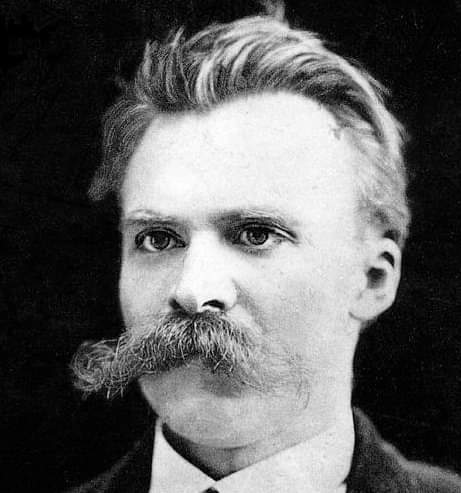
I think that Friedrich Nietzsche is the most beautiful person that has ever lived. He was incredible! I love Nietzsche. He was very peculiar, so out the box, so passionate. There’s so much meaning in a Nietzsche sentence; he was so skilled at painting a picture with words. You could feel the passion in the words – he used exclamation marks like they were full stops. And with every sentence you feel your spirit getting uplifted, you feel yourself becoming a better person. He is such a gift to humankind. “What doesn’t kill you, will only make you stronger” oh my goodness! That is so Nietzsche. He believed to really exist is to manifest your talents and virtues – “Becoming the person you really are.” It’s so amazing that he had all these thoughts considering that he lived in isolation most of his life. He was cheerful and upbeat for a person who suffered so much. He lived alone and was beastly sick throughout his adult life. He was rejected by the woman he loved after he proposed after an equivalence of 2 dates. He was an observer of human nature and a big reader. In fact doctors warned Nietzsche that his excessive reading and writing would make him blind. One of the philosophers he loved reading was Arthur Schopenhauer – a German philosopher who was so dull. Schopenhauer’s philosophy in my opinion has no end goal, no practical usage or element that can transform your life. It’s basically “Life is suffering” or “Why bother doing anything at all”. Here is a passage from the philosophy of Schopenhauer: “But you could just as well call this mode of life the greatest folly: for that which in a moment ceases to exist, which vanishes as completely as a dream cannot be worth any serious effort.” Not that his philosophy isn’t useful, I read and enjoy his work so did Nietzsche. I am just surprised that it didn’t depress Nietzsche like it depresses me. He had the most remarkable spirit. He recycled Arthur Schopenhauer’s philosophy and made it better, made it practical.

He also read Socrates and Plato. He didn’t agree with their ideas at all. In his very own writings he would viciously attack and disregard their theories. In his philosophical works Plato once stated: “The purpose of this earthly existence is to liberate one’s soul from the confines of the body and have it return to the reality of forms.” You see Nietzsche didn’t believe in “True World Destinations”. A true world destination is to enter a state of eternal bliss, a heaven, paradise or utopia. Hence true world philosophies give meaning to life by representing it as a journey, a journey towards redemption, towards an arrival that will more than make up for the stress and discomfort of the travelling. Socrates believed that the world was metaphysical and that it was more than this world of senses. Nietzsche believed that this notion devalued the world that we live in – that it was an excuse, an order to retain no goal, no reason, no task for our earthy reality – an attempt to try and escape the suffering that’s imminent in the world.

Because life is suffering. That’s the irrefutable truth. It’s clear. It’s basically what God tells Adam and Eve, immediately after he kicks them out of paradise. “Unto the woman he said, I will greatly multiply thy sorrow and thy conception; in sorrow thou shalt bring forth children; and thy desire shall be to thy husband, and he shall rule over thee. And unto Adam he said, Because thou hast hearkened unto the voice of thy wife, and hast eaten of the tree, of which I commanded thee, saying, Thou shalt not eat of it: cursed is the ground for thy sake; in sorrow shalt thou eat of it all the days of thy life; Thorns also and thistles shall it bring forth to thee; and thou shalt eat the herb of the field; By the sweat of your brow you will eat your food until you return to the ground, since from it you were taken; for dust you are and to dust you will return.” (Genesis 3:16-19. KJV)”

All the religions and philosophies of the world are in unison when it comes to this. Hence the inventions of “True World Destinations” to nullify nihilism. However, Nietzsche doesn’t believe in true world destinations – he believes in holding your destiny in your own hands by molding it and creating it to what you desire it to be. In a scathing attack to Plato on one of his books he said “Plato is a coward before reality, consequently he flees into the ideal.” Nietzsche believes the metaphysical world or true world destinations is a world fabricated solely from psychological needs. He believes to imagine another, more valuable world is an expression of hatred for the world that makes one suffer. Nietzsche believes in the idea of self-actualization –the concept of becoming who you are and that requires truth and self-inspection. For one to remain faithful to the earth and do not believe those who speak to you of other worldly hopes. Interestingly, Nietzsche doesn’t completely refute the existence of the metaphysical world – his on the fence on this one. He simply states that we should make the best out of the apparent world. A fair and justified point because no one has ever returned from heaven to tell the tale.

Nietzsche also loved art! He appreciated it. On one of his books “The birth of tragedy” he stated “The truly serious task of art is to save the eye from gazing into the horrors of the night and deliver the subject by the healing balm of illusion from the spasms of the agitations of the will.” My goodness! Another quote “For there to be art, for there to be any aesthetic doing and seeing, one physiological precondition is indispensable; Rausch! Rausch must first have enhanced the excitability of the whole machine: else there is no art! Rausch is a German world that means Intoxication and it basically means two things. Namely Rausch is the feeling of increased strength and fullness and the great stimulus to life! My goodness Nietzsche, you kill me every time. His words were so animated and full with life and passion!
Since Nietzsche believed in the concept of self-actualization and becoming the person you are meant to be. He had this beautiful phrase namely “Amor Fathi” which translates to “The love of fate” which means to accept the past with enthusiasm! To embrace the past, for it contained the building blocks that helped to create the person today – to move forward with a courageous spirit and great zeal. Nietzsche believed in individualism – for it is individuals who act! In one of his books he stated: Nobody can build the bridge for you to walk across the river of life, no one but you yourself alone. There are, to be sure, countless paths and bridges and demi-gods which would carry you across this river: but only at the cost of yourself; you would pawn yourself and lose. There is in the world only one way, on which nobody can go, except you: Where does it lead?” Nietzsche was provocative, he forced you to think and make decisions that benefited you as an individual. His philosophy taught you how to live as an individual in the world.

Nietzsche beautiful Friedrich Nietzsche predicted the Western world in the 21st Century. He predicted the death of God and the end of Christianity on his classic work “Thus Spoke Zarathustra”. “The end of Christianity – at the hands of its own morality which turns against the Christian God. The sense of truthfulness and mendaciousness of all Christian interpretations of the world and of history; rebounded from “God is truth” to the fanatical faith “All is false””. Oh Nietzsche you killing me! The start of widespread nihilism and trend of false prophets. He also talked about the herd in the 21st century where everybody wants the same thing, everyone is the same: whoever thinks otherwise goes voluntarily into the madhouse. And he gets around to “The Last Man” – “The condition of a people which has lost faith in its ancient history and has fallen into a restless and constant search for novelty after novelty”. Oh my goodness! Shocking! He perceived our world exactly. He hit the nail on top of the head. I mean the rife and outrageous consumerism, the inability of people to control their impulses and resort to instant gratification – the freely available pornography on the internet, Apps that enable us to get sex on the go, internet shopping, junk food on the go and a people who just want to be entertained all the time be it by Television, Social Media or Partying and excessive alcohol consumption because they want to be distracted.

Nietzsche described the last man as someone with no goals and no direction. An individual who is uncultured and has no sense of identity. A couch potato who has everything at a touch of a button. A person who is drowned out by the herd’s ideals and opinions. A useless person who’s life revolves around being entertained, excessive consumerism and watching online porn. A person who is merely born without roots. He states “The sense of well-being of a tree for its roots, the happiness to know oneself in a manner not entirely arbitrary and accidental, but someone who has grown out of a past as an heir, flower and fruit.” It’s incredible to read considering we are already there. So many people are passive in their activities that they don’t realize the destructive consequences they have. Internet companies like Facebook, Twitter and Instagram are all vying for our attention. Our attention spans decreased from 15 seconds to a lousy 6 seconds in a period of 10 years. This is due to the fact that there’s too much information that we are trying to break down. Every time we are on the internet, data is extracted from us. Algorithms know us better than we know ourselves. We spend an average of 4 hours on the internet every day bombarded by people’s thoughts and opinions that we lose sense of who we are. We lose our voice like we are in a stadium with the final of the world at play. Everything is readily available on the internet. Seduction has become a dead art. Nihilism is at a highest as religious institutions are losing their grip as a number of charismatics are forming their own cults and religious entities. The age of AI (Artificial Intelligence) is gaining momentum relieving humans of their daily tasks – the effect is felt worldwide. The last man epidemic is becoming rife by the minute. In his works Nietzsche stated: “When an individual no longer feels like they are the collaborator, let alone the center of becoming nihilism becomes a very real possibility.” With the emergence of AI humanity is in trouble in more ways than one.

Luckily Friedrich Nietzsche has a solution for this by becoming the “Übermensch” which translates to Superman or overman. “I teach you the Superman. Man is something that should be overcome. What have you done to overcome him? All gods are dead: now we want the Superman to live.” Übermensch or Superman is an ideal to aspire for – it is the hero in your soul that you have to keep holly. It is the will to want to do something, to be something! It requires direct self-observation and honest self-appraisal, it requires history for the past flows on within us in a hundred waves. It needs bravery. It requires being individualistic in your actions. Located in every single person is a seed of unrealized potential. It requires greatness. The concept of greatness entails being noble, wanting to be by oneself, being different, standing alone and having to live independently. It can be shown that every living thing does everything it can not to preserve itself but to become more! Being the “Übermensch” entails being MORE! Protect your mind! Improve your mind! Write down your goals and get busy with them – live, be content with who you are, strive, flourish! Our most primal inclinations are to be Gods – be God! Human existence is a curiosity – explore! Nietzsche stated in his book: “For the heights that one scales when one is able to look into the dreadful abysses of life, to experiment with the most painful thoughts and the most extreme form of nihilism and still be able to emerge from such depths and affirm life – saying YES to it in its totality is arguably the highest state a human being can attain! “

Buy the great man Coffee :https://www.buymeacoffee.com/Antakalipa
Role of the arts

Role of the arts

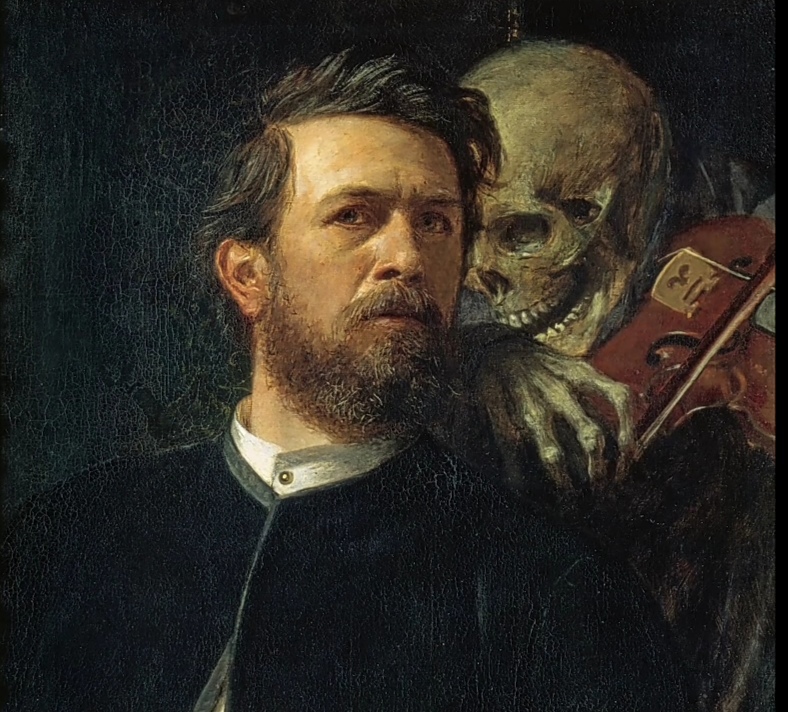
I have a picture of Van Goahs artwork as my wallpaper. It is a picture of a skull on the table. I have it as a wallpaper to remind me of my imminent death. It gives me solace and helps me put things into proper perspectives. It reminds me to not be passive, it reminds me that my time is limited and that I must do everything I can to be the man I want to become. It keeps me grounded and reminds me to not take life for granted, to be grateful for everything that I have and get better where I can. It helps me treat people well, to be compassionate and understanding because we all share this common ground. We are all born into a world we don’t understand and we don’t know the rules, we all doing our best with what we were given. No one knows anything real about this world, the Billionaires don’t know, the scientists don’t know, the philosophers don’t know, everyone is just speculating and it’s scary.

Looking at this picture everyday gives me hope because I know I can be anything I set my mind to. There’s hope, provided I work to develop myself constantly. That’s the role of the arts, to inspire, to motivate and to give you solace and peace. Art can capture the moment in a way reality can’t because it’s always fleeting, reality is an illusion, it vanishes right before your eyes can catch it, while art is permanent, forever. Art has memories, it has sadness, happiness, laughter, excitement, horror, wonder and hope. Art is how we make sense of the world, art is everything – literally. We need music, paintings, poetry and drama as a means to imitate life so we can make sense of it. Art represents expression and creation. Art teaches how to see, it is culture, perception and reality.

Buy the great man Coffee :https://www.buymeacoffee.com/Antakalipa